Category Archives: Shortwave Radio

Radio Nacional Arcangel San Gabriel receives a new shortwave transmitter

In the Photo: Adrian Korol , RAE Director , Alejandro Pont Lezica , Executive Director of Radio Nacional Argentina, Javier Gratz, donor of shortwave transmitter, Jorge Taiana, Minister of Defense Argentina Republic, and Lic. Rosario Lufrano, head or RTA (Radio and TV Argentina) during the ceremony.

Many thanks to SWLing Post contributor, Adrian Korol, who shares the following press release from RAE and LRA 36 [note that this article has been machine-translated into English]:

New Short Wave Transmitter for LRA 36 Radio Nacional Arcangel San Gabriel

Defense Minister Jorge Taiana, together with the Joint Antarctic Commander, Brigadier General Edgar Calandín, the head of Radio y Televisión Argentina SE (RTA), Rosario Lufrano, and the Executive Director of Radio Nacional, Alejandro Pont Lezica, headed a ceremony on the donation of a shortwave transmitter to radio LRA 36 “Arcángel San Gabriel”, located at the Antarctic Base Esperanza.

This action – which is part of a new collaboration between the Joint Antarctic Command (COCOANTAR) and public media entity RTA – will allow the station to significantly improve its coverage and signal’s quality, thus keeping its international reach and fulfilling the objective of disseminating the work of the Armed Forces and the scientific personnel stationed in Argentina’s Antarctic bases.

“This is an act of generosity, of solidarity with the Argentine people as a whole… it is also an act of patriotism, because it will make it possible for all of us to listen to radio broadcasts from Antarctica”, said Taiana.

For the Minister, “it is important for all Argentine men and women to have present, in their minds and hearts, that there is a part of our territory down there, and that there are Argentine men and women working hard in that continent”.

On his part, Lufrano said: “We have always said that our National Radio and Public TV must be broadcast by land, by sea, by air, and we are fulfilling that mission. It has been an honor to bring this piece of equipment on board of icebreaker ARA “Almirante Irízar” so that they could listen to all our programming, listen to our radio and watch our public television”.

In his turn, Brigadier General Calandín said: “For us it is a joy, an enormous satisfaction, to be able to show all that Radio Nacional and the Ministry of Defense have done to contribute to Argentine sovereignty in Antarctica”.

And he pointed out: “This transmitter will allow us to spread Argentine culture, all that Argentine culture means for Argentine sovereignty in Antarctica…this is essential to us”.

Javier Gratz, the donor of the transmitter, was present at the event and he stressed that the piece is entirely manufactured in Argentina.

The donation was preceded by a technical survey carried out at the Joint Antarctic Base Esperanza by Alejandro Petrecca (Head of Radio Nacional’s Transmission Plant in Pacheco) and Engineer Alejandro Alvarez, and promoted by the relationship they have with RAE (RadioDifusión Argentina al Exterior).

The event was broadcast by AM 870 and the entire public radio network throughout the country. The special program was attended by the director of Radio Nacional, Alejandro Pont Lezica; RAE director Adrián Korol; journalist Marcelo Ayala (who was in Antarctica earlier this year broadcasting from there) and hosts Mario Giorgi and Federica Pais.

LRA36 began transmissions on October 20, 1979 and since then has been operating non-stop from the Esperanza Base in Antarctica, Argentina. It is one of the most sought after stations by shortwave listeners from all over the world, and its signal has been picked up in places as distant as Alaska, Iceland, Japan, most European countries, and Latin America.

It is the only public radio station that broadcasts from Antarctica on shortwave, a characteristic that, added to the fact that it is operated by personnel of the Joint Antarctic Command, makes it unique in relation to the other stations of Radio Nacional, such as RAE.

In 2022, and for the first time, the entire LRA36 team was integrated by women only. The same happens this year and in 2024, as well.

Radio Nacional staff, teachers from the Universidad Nacional de Quilmes, RAE and the Antarctic Joint Command, under the coordination of Juan Carlos Benavente, all take part in the training of the station staff as well as in the general coordination.

Being a radio station of international scope, its goal is to disseminate Argentine culture, but above all, the work of our Armed Forces in the Antarctic bases, the scientific research work and, fundamentally, the long-running historical claim of Argentine sovereignty over this portion of Antarctic territory.

The transmitter will have a power of 10 kw and is expected to be working effectively during the Antarctic Campaign 2024.

Now time for a shortwave tea break

Hi all in SWLing Post land, Fastradioburst23 letting you know about the Imaginary Stations shows this Sunday 3rd September 2023. The first transmission will be beamed to Europe via the services of Shortwave Gold in Germany at 2000 utc on 6160 kHz and it will be WTBR, tea and biscuits radio. Expect an assortment of tunes, some musical crackers (without cheese) and a urn of the finest tea money can buy. It may not be 3pm where you are (or it may be) but make anytime a tea-time with WTBR!

Then later at 2200 hrs UTC on 9395 kHz  via WRMI we bring you another episode of CTRN for all of us who love that wonderful mode of transport, the train. We will bring you songs about level crossings, ticket machines and guard’s vans for all the trainspotters out there. So tune in, make yourself comfortable, please don’t put your feet on the seats, do have your tickets ready for inspection and enjoy a nice ride across the country by shortwave radio.

For more information on the shows please email [email protected] and check out our old shows here.

Carlos pulls headlines from Kyodo News radiofax

Many thanks to SWLing Post contributor, Carlos Latuff, who writes:

Kyodo News is a Japanese news agency, the only one in the world that still transmits news via radiofax to Japanese vessels, on shortwave frequency of 16971 kHz USB. The international radiofax transmission standard is 120 lines per minute, but the Kyodo News standard is 60 lines per minute.

However, the retransmission of the bulletin in English is done at a cadence of 120 lpm. I’m using an Android application called HF Weather Fax with which I’m decoding the radio signal coming from Japan and received in Porto Alegre, Brazil. The receiver is the Xhdata D-808 and the antenna is a magnetic loop. The image arrived this morning in Porto Alegre, at 4:10 am local time, quite noisy and with a lot of effort I managed to decipher some headlines.

Guest Post: Switching a Remote Antenna, Low Noise Amplifier, and an Antenna and Audio Between Two Radios

Many thanks to SWLing Post contributor, Bill Hemphill, who shares the following guest post:


Remote Antenna Switching Remote Low Noise Amplifier Switching and Switching an Antenna and Audio Between Two Radios

by Bill Hemphill, WD9EQD

Remote Antenna Switching

I have two YouLoop Antennas.  I had been placing them at right angles to each other.  I would then put one of them on the AirSpy software defined radio.  But manually switching from one antenna to the other was a real pain.  If only there were a way to electrically switch between the two antennas.

It would be nice to place the antennas remotely from the radio (and computers) and then have some sort of remote switch that would select an antenna and then a single feed line to the radio.  It was research time.

The YouLoop and the Airspy both use SMA connectors.  An SMA switch would be required.  A little research and I came across the following small board that can switch between two SMA antennas:

From Amazon Description:  50 Ohms RF Switch Module, 3-5V Remote Wireless RF Switch Single Pole Double Throw Board Input Output Impedance for DIY Electric Doors (HMC349)

This board is perfect for RECEIVE only projects.  Apply 5V to the board and then 5V to the VCC (control pin) to switch from RF1 to RF2.

Now that I had the SMA switch module, a way to actually do the switch remotely was required.  Maybe WI-Fi or Bluetooth module would do the trick.  I found a nice Wi-Fi module on Amazon that looked like it would do the trick:

Amazon Description:  DIYmalls SV Safe Low Voltage WiFi Wireless Switch Module DC 5V-24V Phone APP Remote Control Smart Home for Amazon Alexa Google Assistant

But do I really want to use a phone app to switch antennas.  Further investigation discovered a really neat module that uses a Car Fob type control:

Amazon Description:  RODOT Mini Relay Wireless Switch, 433Mhz Remote Control Relay Switch, DC 6V 12V 24V 1CH Channel Relay Wireless Secure RF Transmitter and Receiver kit, Momentary Toggle Latched Mode

BIngo!!  I could just press a button and switch antennas.  But a problem quickly arose.  I hadn’t fully read the description of the RODOT switch:

The blue output wire is ALWAYS Vcc (input voltage)! The device only switches the ground.

So the RODOT switches the ground but the HMC349 uses positive voltage to switch.  OOPS.  Next step was to place a latching relay to take the on/off ground and convert it to on/off positive.  Again, another nice board was found:

Amazon Description:  HiLetgo 2pcs 5V One Channel Relay Module Relay Switch with OPTO Isolation High Low Level Trigger

The nice thing about the Relay Module is that it can be latched either High or Low, so the RODOT switching ground can be used to latch the relay and then provide a positive voltage to the HMC349 antenna switch.

All modules are powered by 5V.  There are other modules available that use higher voltages.  But I wanted to be able to use a 5V power source for everything.

I learned a quick lesson on the first layout I did. I had directly connected the antenna cables to the HMC349 module.  A quick accidental side yank on one of the antenna cables and the SMA connector tore off the board.  A replacement board and some quick wiring and I had a workable antenna switch that with the press of the car fob button, either antenna could be selected.

I found a nice small plastic box that allowed for the HMC349 module to be suspended between SMA bulkhead connectors.  By using bulkhead connectors, there is no strain placed on the HMC349 connectors. The relay module was attached to the box lid.  The modules are mounted using brass standoffs.  The finished box is about 3”x4”x 2” high.  Either battery or a 5V wall module can be used to power it.

Overall, I’m quite pleased with the results.  I find that sometimes switching antennas (and their orientation) can make a big improvement in the signals.  Other times, there’s very little difference.

Remote Low Noise Amplifier along with Antenna Switching

Now that the antennas can be switched, it would be nice if a Low Noise Amplifier could be switched in and out of the circuit.  Something like the Lana HF Barebones LNA made by NooElec:

For testing purposes, I first did a quick layout of just using one antenna with the ability to switch the LNA in and out.  Note:  I took a gamble on hooking the antenna cables directly to the HMC349 modules.  Luckily, the SMA connects didn’t tear off the boards.

Two HMC349 modules are used.  The first module selects the bypass or the LNA.  Likewise, the second module also selects either the bypass or LNA.  Note that the second module is turned upside down so that the switches match up when activated.  Two modules were used so that the LNA is totally switched out of the circuit. Continue reading

Around the world, around the world

Hi to all of the SWLing community worldwide, Fastradioburst23 here with news about Imaginary Stations on the shortwaves this Sunday 27th August 2023. Our next show Skybird Radio International will be beamed to Europe via the services of Shortwave Gold in Germany at 2000 utc on 6160 khz (and 3975 kHz). You won’t need any baggage, airport parking or a plane ticket to enjoy this interesting international musical ride around the world.  For more information on our shows please email [email protected] and check out our old shows here.

Can you help Bob identify this mystery signal?

Many thanks to SWLing Post contributor, Bob (K7ZB), who shares the following note and recording: 

Hi Thomas,

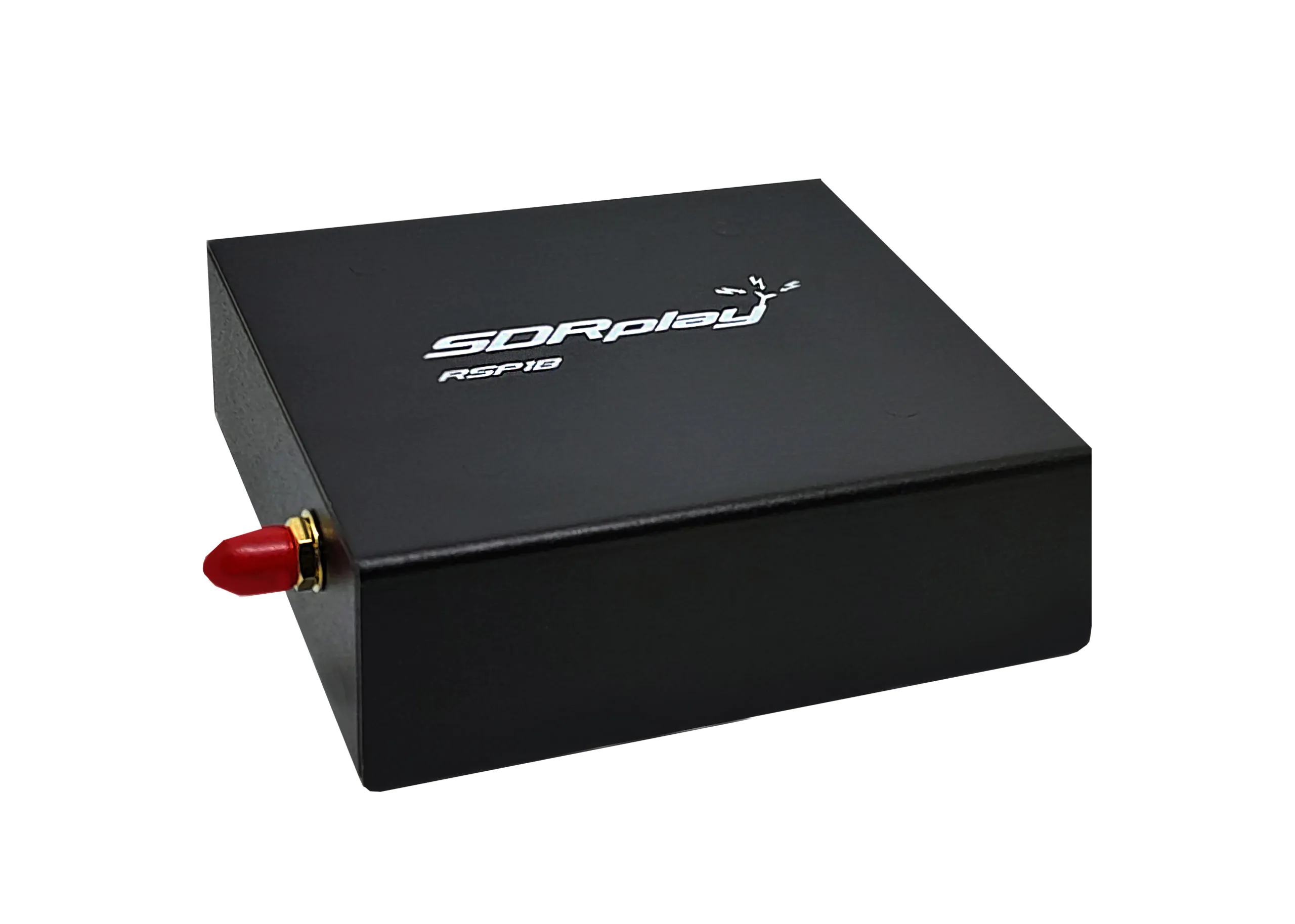
I recently started using an SDRplay RSP1A with their new software release SDRconnect.

Quite a nice piece of work and my first foray into SDR after 60 years of analog radio (K7ZB).

Today I was listening to WWV on 10MHz and it was being interfered with a strange type of digital signal that pretty much covered the band.

I finally tracked it down to 9.979MHz, recorded it and sent it to a friend who did a bit of audio analysis on it by expanding out the signal to look at individual bursts.

I certainly don’t recognize the modulation although it sounded like a form of CW in burst mode.

I am just curious if you have any insight on this signal or where I might go to find out more about it.

Thanks,

Bob
K7ZB
Gilbert, AZ

Post readers: Can you identify this signal? If so, please comment and thank you in advance!