Many thanks to SWLing Post contributor, Bill Hemphill, who shares the following guest post:
Remote Antenna Switching Remote Low Noise Amplifier Switching and Switching an Antenna and Audio Between Two Radios
by Bill Hemphill, WD9EQD
Remote Antenna Switching
I have two YouLoop Antennas. I had been placing them at right angles to each other. I would then put one of them on the AirSpy software defined radio. But manually switching from one antenna to the other was a real pain. If only there were a way to electrically switch between the two antennas.
It would be nice to place the antennas remotely from the radio (and computers) and then have some sort of remote switch that would select an antenna and then a single feed line to the radio. It was research time.
The YouLoop and the Airspy both use SMA connectors. An SMA switch would be required. A little research and I came across the following small board that can switch between two SMA antennas:
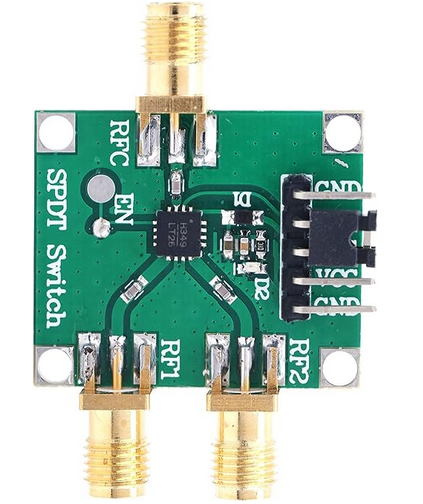 From Amazon Description: 50 Ohms RF Switch Module, 3-5V Remote Wireless RF Switch Single Pole Double Throw Board Input Output Impedance for DIY Electric Doors (HMC349)
This board is perfect for RECEIVE only projects. Apply 5V to the board and then 5V to the VCC (control pin) to switch from RF1 to RF2.
Now that I had the SMA switch module, a way to actually do the switch remotely was required. Maybe WI-Fi or Bluetooth module would do the trick. I found a nice Wi-Fi module on Amazon that looked like it would do the trick:
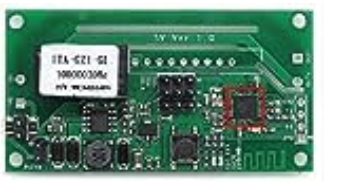 Amazon Description: DIYmalls SV Safe Low Voltage WiFi Wireless Switch Module DC 5V-24V Phone APP Remote Control Smart Home for Amazon Alexa Google Assistant
But do I really want to use a phone app to switch antennas. Further investigation discovered a really neat module that uses a Car Fob type control:
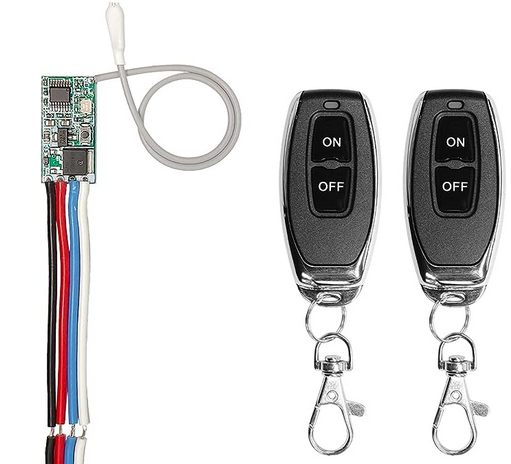 Amazon Description: RODOT Mini Relay Wireless Switch, 433Mhz Remote Control Relay Switch, DC 6V 12V 24V 1CH Channel Relay Wireless Secure RF Transmitter and Receiver kit, Momentary Toggle Latched Mode
BIngo!! I could just press a button and switch antennas. But a problem quickly arose. I hadn’t fully read the description of the RODOT switch:
The blue output wire is ALWAYS Vcc (input voltage)! The device only switches the ground.
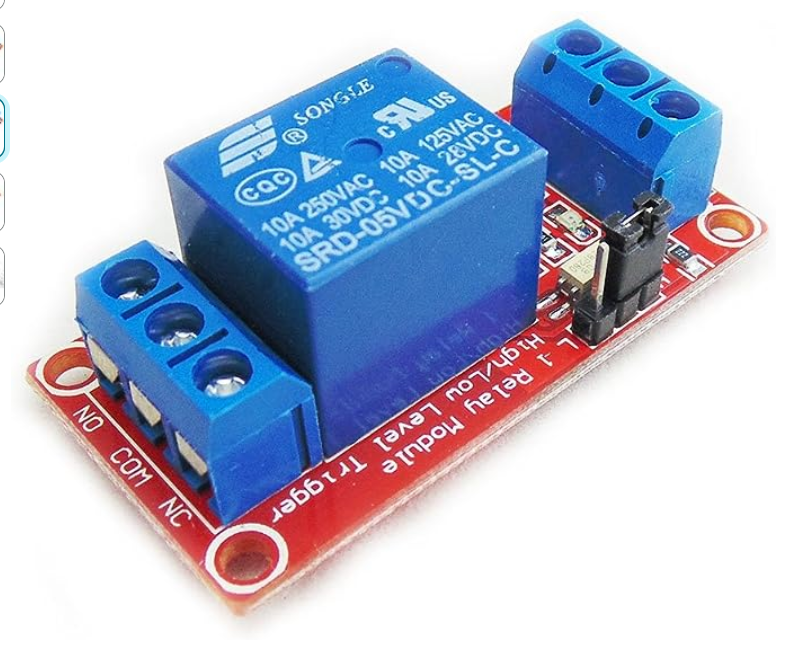
So the RODOT switches the ground but the HMC349 uses positive voltage to switch. OOPS. Next step was to place a latching relay to take the on/off ground and convert it to on/off positive. Again, another nice board was found:
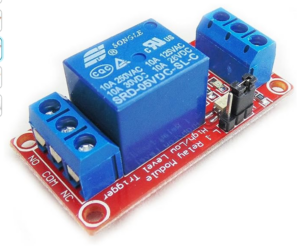 Amazon Description: HiLetgo 2pcs 5V One Channel Relay Module Relay Switch with OPTO Isolation High Low Level Trigger
The nice thing about the Relay Module is that it can be latched either High or Low, so the RODOT switching ground can be used to latch the relay and then provide a positive voltage to the HMC349 antenna switch.
All modules are powered by 5V. There are other modules available that use higher voltages. But I wanted to be able to use a 5V power source for everything.
I learned a quick lesson on the first layout I did. I had directly connected the antenna cables to the HMC349 module. A quick accidental side yank on one of the antenna cables and the SMA connector tore off the board. A replacement board and some quick wiring and I had a workable antenna switch that with the press of the car fob button, either antenna could be selected.
I found a nice small plastic box that allowed for the HMC349 module to be suspended between SMA bulkhead connectors. By using bulkhead connectors, there is no strain placed on the HMC349 connectors. The relay module was attached to the box lid. The modules are mounted using brass standoffs. The finished box is about 3”x4”x 2” high. Either battery or a 5V wall module can be used to power it.
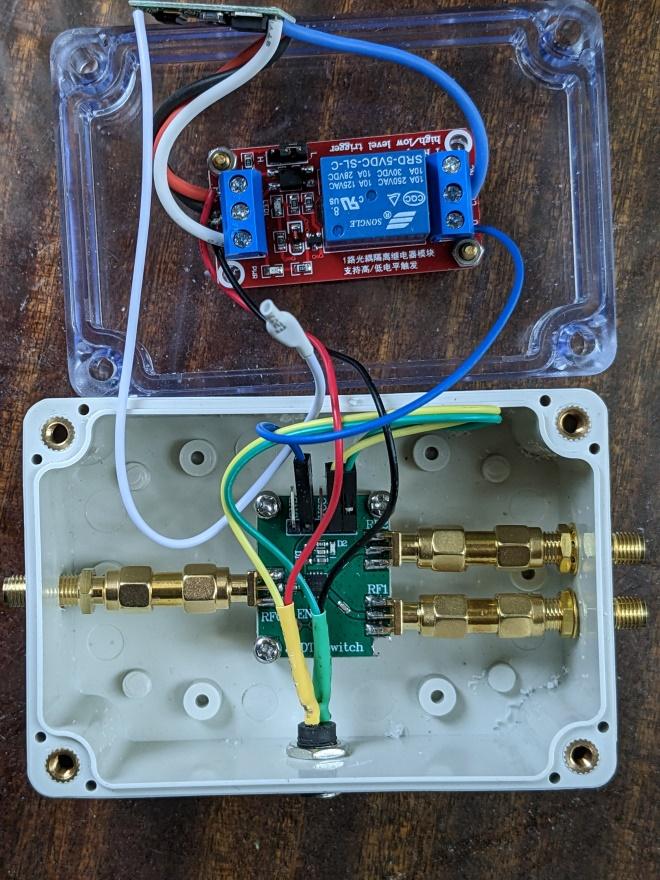
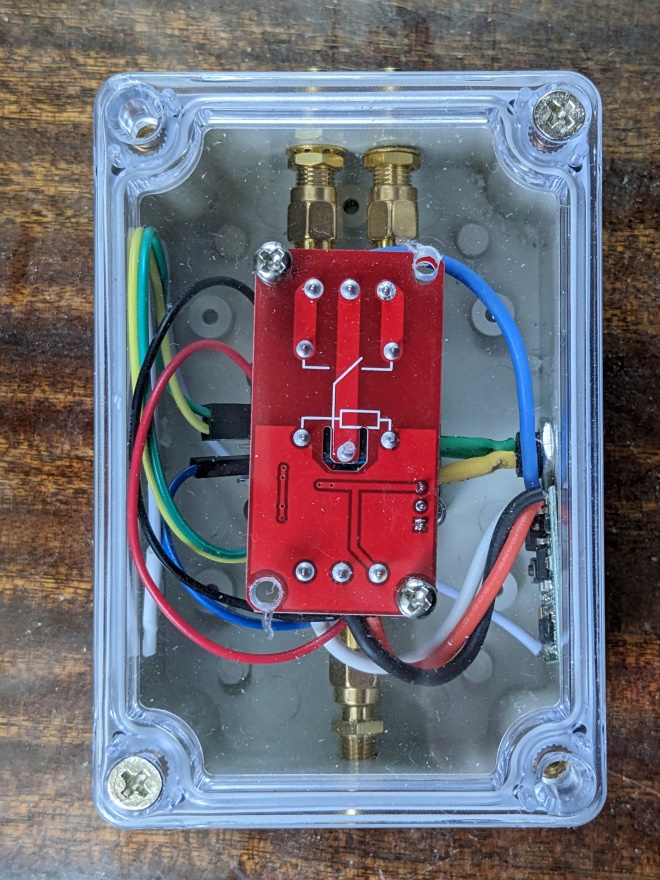 Overall, I’m quite pleased with the results. I find that sometimes switching antennas (and their orientation) can make a big improvement in the signals. Other times, there’s very little difference.
Remote Low Noise Amplifier along with Antenna Switching
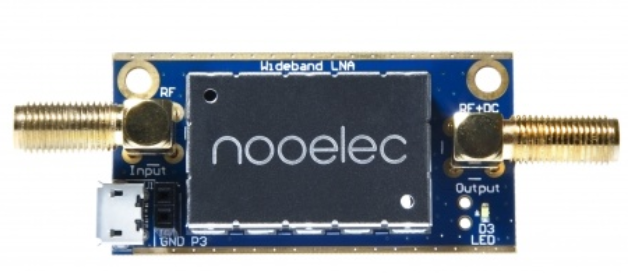
Now that the antennas can be switched, it would be nice if a Low Noise Amplifier could be switched in and out of the circuit. Something like the Lana HF Barebones LNA made by NooElec:
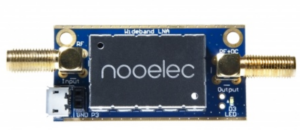 For testing purposes, I first did a quick layout of just using one antenna with the ability to switch the LNA in and out. Note: I took a gamble on hooking the antenna cables directly to the HMC349 modules. Luckily, the SMA connects didn’t tear off the boards.
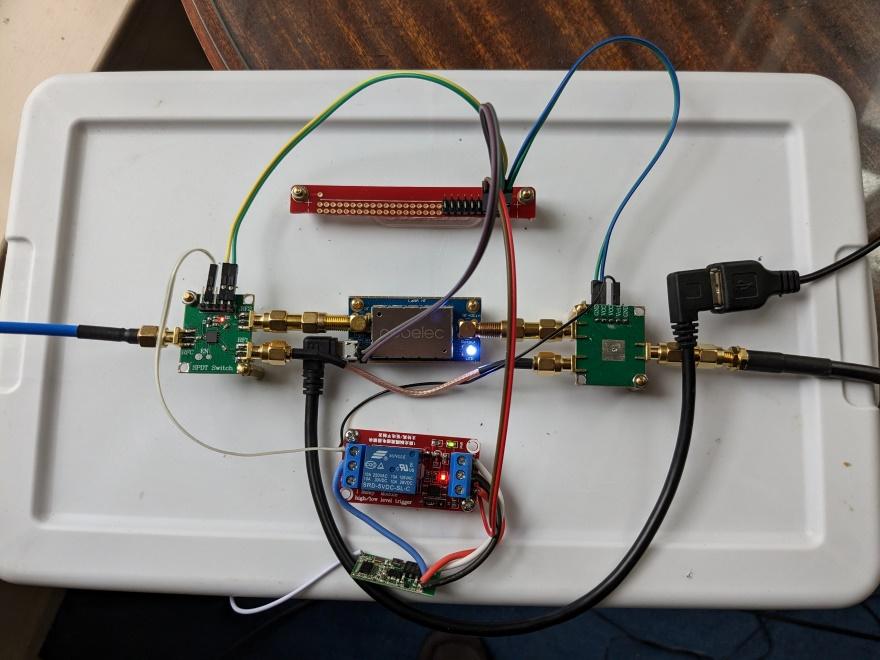 Two HMC349 modules are used. The first module selects the bypass or the LNA. Likewise, the second module also selects either the bypass or LNA. Note that the second module is turned upside down so that the switches match up when activated. Two modules were used so that the LNA is totally switched out of the circuit. Continue reading →

 Hi all in SWLing Post land, Fastradioburst23 letting you know about the Imaginary Stations shows this Sunday 3rd September 2023. The first transmission will be beamed to Europe via the services of Shortwave Gold in Germany at 2000 utc on 6160 kHz and it will be WTBR, tea and biscuits radio. Expect an assortment of tunes, some musical crackers (without cheese) and a urn of the finest tea money can buy. It may not be 3pm where you are (or it may be) but make anytime a tea-time with WTBR!
 Then later at 2200 hrs UTC on 9395 kHz via WRMI we bring you another episode of CTRN for all of us who love that wonderful mode of transport, the train. We will bring you songs about level crossings, ticket machines and guard’s vans for all the trainspotters out there. So tune in, make yourself comfortable, please don’t put your feet on the seats, do have your tickets ready for inspection and enjoy a nice ride across the country by shortwave radio.