Category Archives: Shortwave Radio

You’re invited to a garage sale

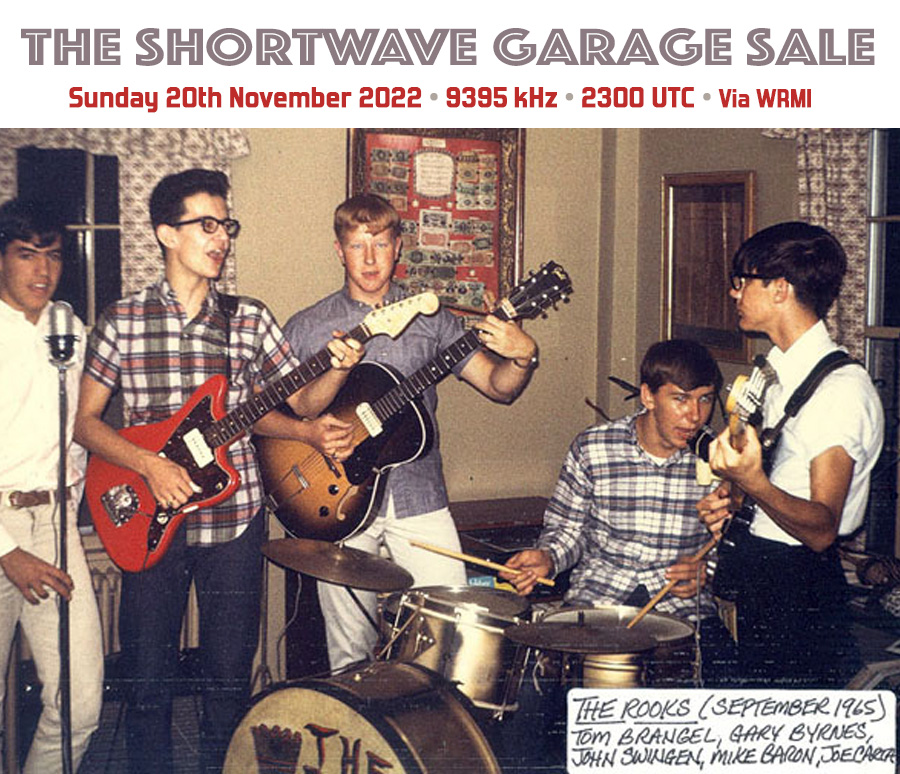
Hi SWLing post community and bargain hunters everywhere, Fastradioburst23 here letting you know of The Shortwave Garage Sale this weekend from the Imaginary Stations crew.

On Sunday 20th November 2022 from 2300 utc on 9395 kHz we will be opening the up and over door to reveal the first part of our Garage and Psyche special. Tune in and make sure the inspection pit is securely covered over as it will be an evening of music and dancing on shortwave.

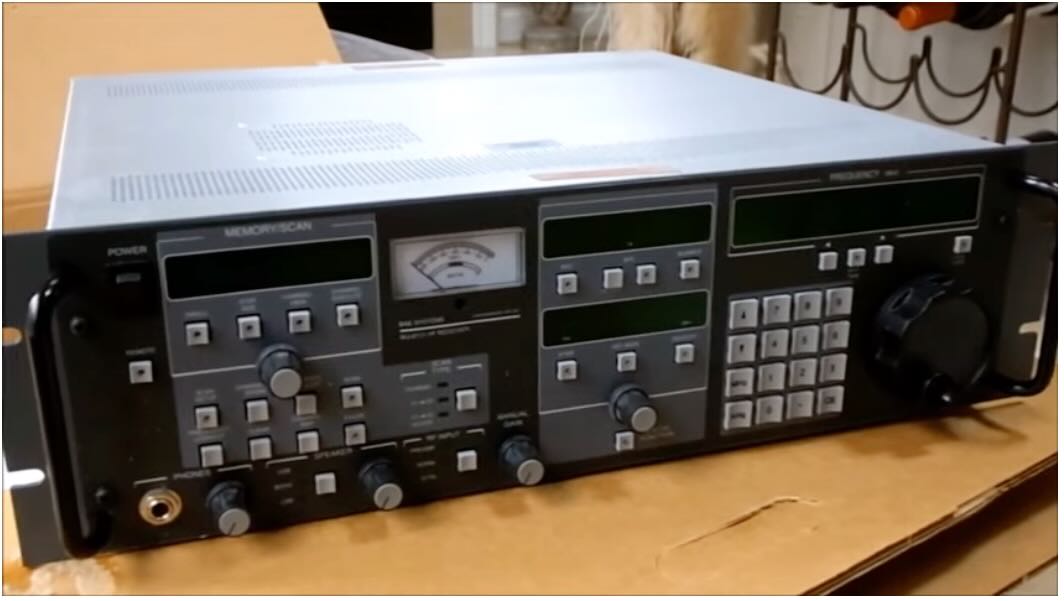
Video: Dan Unboxes a New-In-Box Watkins Johnson WJ 8711A

Many thanks to SWLing Post contributor, Dan Robinson, who shares the following video:

Click here to view on YouTube.

Dan, I’m not sure how you find these things, but wow! I know you had a lot of fun unboxing this NIB WJ 8711A! How amazing it is to turn on a radio like this that’s been in the original box for two decades!  I hope you have a lot of fun with it on the air. Thank you for sharing!

Frank reports on the Deshibo RD1860BT portable shortwave receiver

Many thanks to SWLing Post contributor, Frank, in Germany, who shares the following guest post and review of the Deshibo RD1860BT:
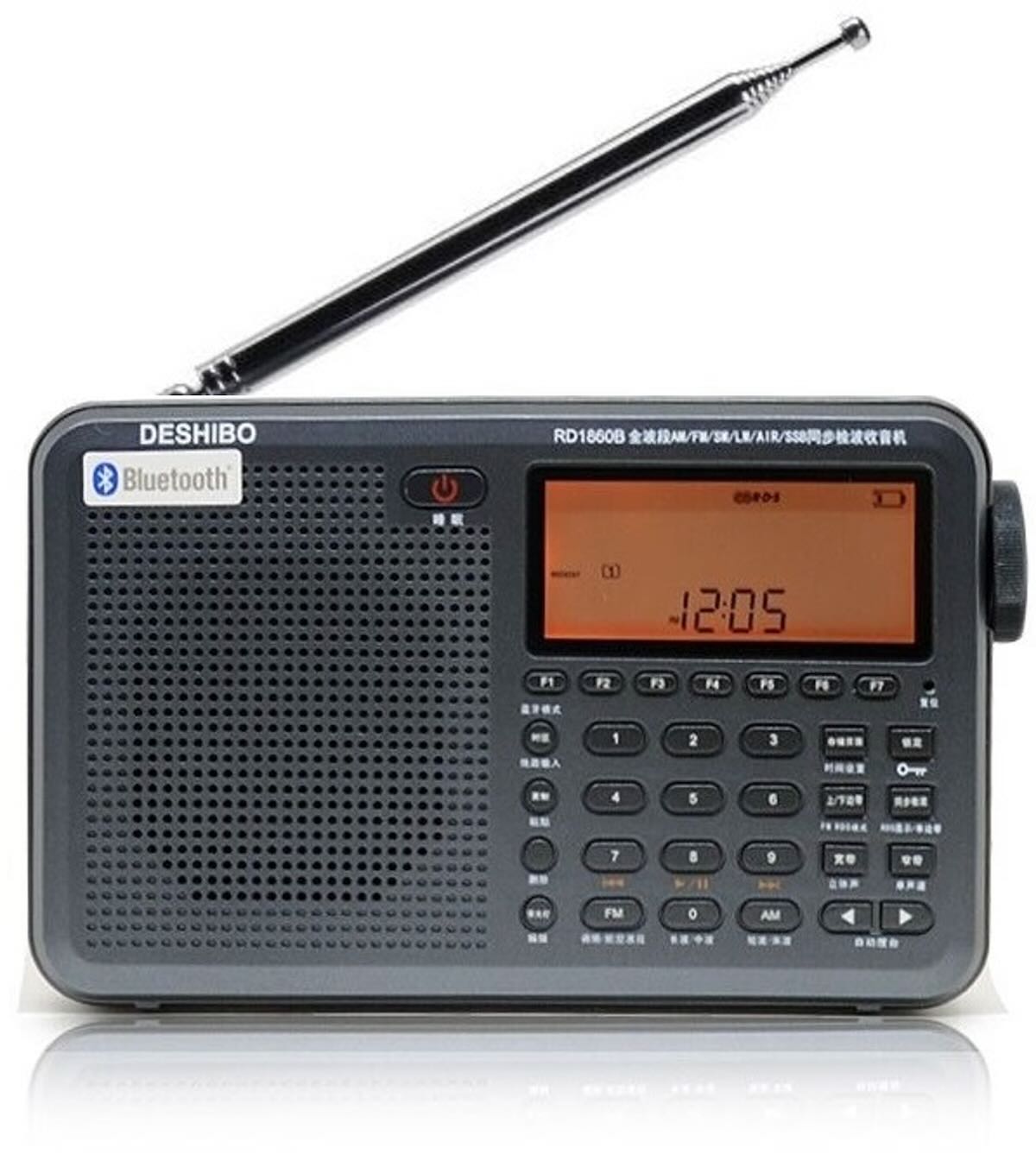

Deshibo RD1860BT report

Hello Thomas,

Today I would like to report on a new portable world receiver. Unfortunately, new devices have not been found on the shelves of electronics retailers for a long time, but now in the depths of the world wide web. And that’s how I came across the Deshibo RD1860BT.

Deshibo is certainly known to many from their GA450 loop antenna. But Deshibo has also produced several radios, including the RD1780L, which is probably a little better known. New to the segment is the RD1860BT, which initially seemed like an old friend to me. An Eton Elite Executive? Yes, there are external similarities, but also differences.

Many months ago I had an Eton Elite Executive for a short time. I had heard of its excellent reception properties, which I can confirm, but the design is reminiscent of older receivers from the 80s, is relatively heavy, operation is sometimes a bit cumbersome, the protective cover does not protect properly. I find the device to be portable overall difficult. We didn’t become friends, so I sold it on to a Swede, who in turn became a friend.

I still missed the Eton. RDS on VHF is not found in any Tecsun , nor are there memory banks that can be written on.

Then I discovered the RD1860BT and couldn’t resist. First of all: the Deshibo is only labeled in Chinese for important function keys. But the friendly dealer on eBay provided me with an English manual before I bought it. That was the deciding factor, because I was sure that after a little use , the Deshibo could be operated blindly.
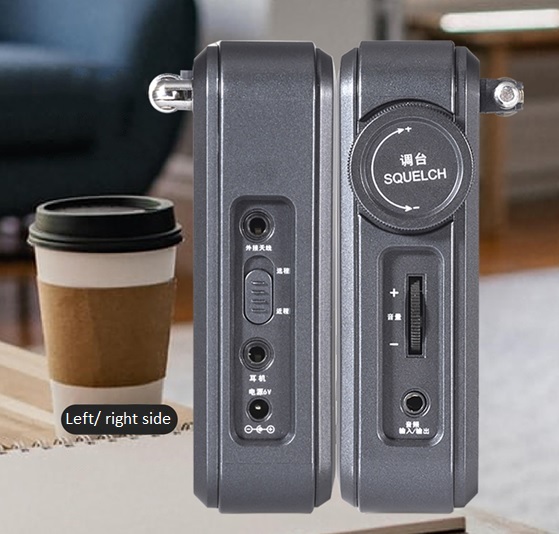
However, some questions have arisen in the user manual. Some things didn’t seem quite right, others were completely missing from the description. That’s why I decided to write my own manual on a journey of discovery of the new Deshibo. And so that it might also help others who might be interested in radio, I wrote it in English and attach it here.

Click here to download Frank’s version of the RD1860BT manual (PDF).

The Eton’s somewhat unsorted manual was very helpful, but I also added my own drawings. For example, I added an English-labeled keyboard as a back cover, so that the keys can be assigned without a long search.
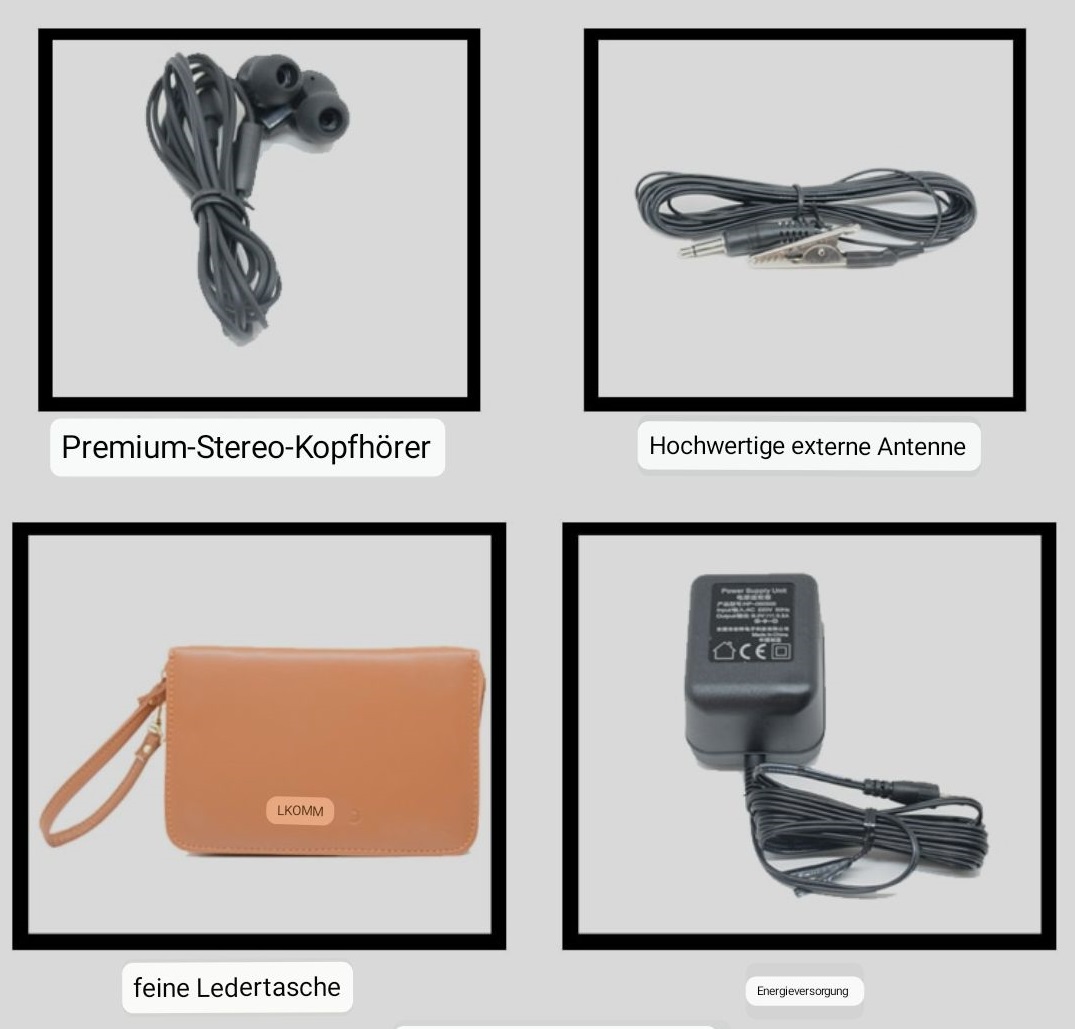
Here you can already find the first differences to the Eton: the keyboard layout is a bit more orderly. Also, the Deshibo doesn’t have a metallic speaker grille (which frankly I don’t like about the Eton). The display, not the writing, is backlit in orange on the Deshibo . Most importantly, the Deshibo is a lot lighter than the Eton ( around 500g if I researched correctly). And that means: the structure of the Deshibo must be different. Continue reading

Guest Post: Monitoring Digital Selective Calling (DCS) with YADD

Many thanks to SWLing Post contributor, Don Moore–noted author, traveler, and DXer–for the following guest post:


Photo by Borderpolar Photographer

Monitoring DSC with YADD

By Don Moore

(The following article was originally published in the April/May 2022 edition of the Great Lakes Monitor, bulletin of the Michigan Association of Radio Enthusiasts. An all-band listening club, MARE publishes a bi-monthly print bulletin and a weekly e-mail loggings tip-sheet. The club also holds regular get-togethers, picnics, and DXpeditions, generally in southeastern Michigan.)

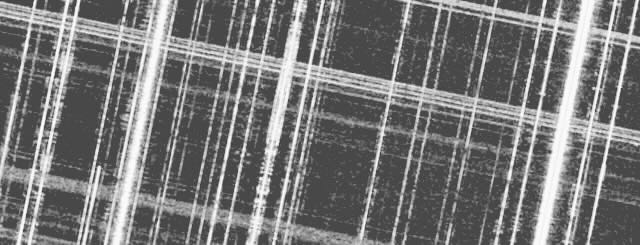
There are dozens if not hundreds of different digital modes used for communication on the MF and HF bands. These aren’t broadcasts you want to listen to unless you like to hear weird tones, beeps, warbles, and grinding noises interspersed with static. Digital modes are for monitoring, not listening. And monitoring them requires having software that does the listening for you and converts the noises into something meaningful – like the ID of the station you’re tuned to. The learning curve to DXing digital utilities can be steep. There are lots of modes to identify and the software can be complicated to learn. Some broadcasts are encrypted so you can’t decode them no matter how hard you try. But the reward is lots of new stations and even new countries that you wouldn’t be able to add to your logbook otherwise.

One of the easiest digital modes to DX is DSC, or Digital Selective Calling. DSC is a defined as “a standard for transmitting pre-defined digital messages.” Look online if you want to understand the technical specifications that specify the values, placement, and spacing of the tones. The result of those specifications is a string of three-digit numbers like this:

125 107 125 106 120 105 120 104 000 120 022 120 041 000 002 022 020 041 108 002 053 020 080 108 006 053 021 080 070 006 118 021 126 070 126 118 126 126 126 126 126 126 126 126 126 126 117 126 112 126 117 117 117 112 109 125 108 125

Each three-digit value represents either a digit or a key word and the positions of the values map to the various fields contained in the message. This message, which was received on 8414.5 kHz, is a test call from the tanker Brook Trout to the coastal station Coruña Radio in Spain. The sender and destination are not identified by name but rather by their nine-digit MMSI (Maritime Mobile Service Identity) numbers – 538006217 for the vessel and 002241022 for the coastal station.

GETTING STARTED WITH DSC

Logging DSC stations requires three pieces of software. First you need a decoder program that turns the noises into numbers and the numbers into meaning. There are several free and commercial options but the most popular one for beginners is YADD – Yet Another DSC Decoder. YADD is free and easy to set up and while YADD can be used by feeding the audio from a traditional radio into your computer, the most common use is with an SDR. That’s what I use and what I will describe here.

Second you need an SDR application and an SDR. I prefer HDSDR for most of my SDR use but I like SDR-Console for digital work. But any SDR program will work if you can feed the audio to a virtual audio cable. And that’s the final thing you need – a virtual audio cable to create a direct audio connection between your SDR application and YADD. There are several different ones available but I recommend VB-Cable. Your first VB-Cable is free and that is all you need to run a single instance of YADD. If you want to expand you can buy up to four more cables from them later. Continue reading

High-Frequency Trading Service: FCC posts two lobbying documents by DPA Mac

Many thanks to SWLing Post contributor, Benn Kobb (AK4AV), who notes that the FCC has posted for public inspection two lobbying documents by DPA Mac, applicant for a new DRM HF broadcast station with 2 kW of transmitter output power.

Benn notes:

“Regardless of DPA’s claims that its broadcasts will be free of charge and not encrypted, its non-broadcast high-frequency trading service will be for paying customers only.

“That is the purpose of this station and is why its target areas, as seen in a world map slide, are limited to the location of certain foreign exchanges. This despite its claim to be a worldwide service.

“There is little profit in SW broadcasting today, and what business there is available is accommodated by those existing US HF stations that can hang on through economic shifts. No, the DPA Mac station is not devoted to global information as a business venture. It wants a license to provide private telecommunications. The broadcasts to the public are just so it can get licensed, because there is no other radio service in the HF spectrum for private international data links.

“At this time no one knows what the FCC will do with this license application and two other similar applications. What is clear is that the applicants want to get on the air ASAP before any possible changes that may affect the HF broadcasting service.”

The FCC posted the following documents in an accessible place on their website yesterday morning:

https://www.fcc.gov/ecfs/document/1110171119378/1

https://www.fcc.gov/ecfs/document/1110171119378/2

Thank you for the update, Benn.

Has WTWW left shortwave?

I recently learned from a few reports on Twitter that WTWW left shortwave for good on November 9, 2022 and will now only broadcast over the internet. I missed this announcement on the air and WTWW’s website doesn’t seem to reflect this information yet.

The WTWW wikipedia page has already been updated, however, with WTWW’s services noted in the past tense and the following addition was made this week:

On November 9, 2022, WTWW announced it would discontinue all shortwave operations, with intent to continue streaming the programming as long as it was feasible. Ted Randall cited a massive increase in transmitter usage fees (the majority of that being from electricity cost) that the station could not realistically pay. The station signed off for the last time that night, with its final programming including a farewell message from Randall encouraging listeners to continue listening to the Web stream, a string of listener requests from WTWW’s automated system, and the final song being a rendition of “America the Beautiful” by one of Randall’s favorite recording artists, Ronnie Milsap.

Can anyone confirm if WTWW has indeed stopped all shortwave transmitting? Please comment.


Shortwave goes all chirpy chirpy, cheep cheep again

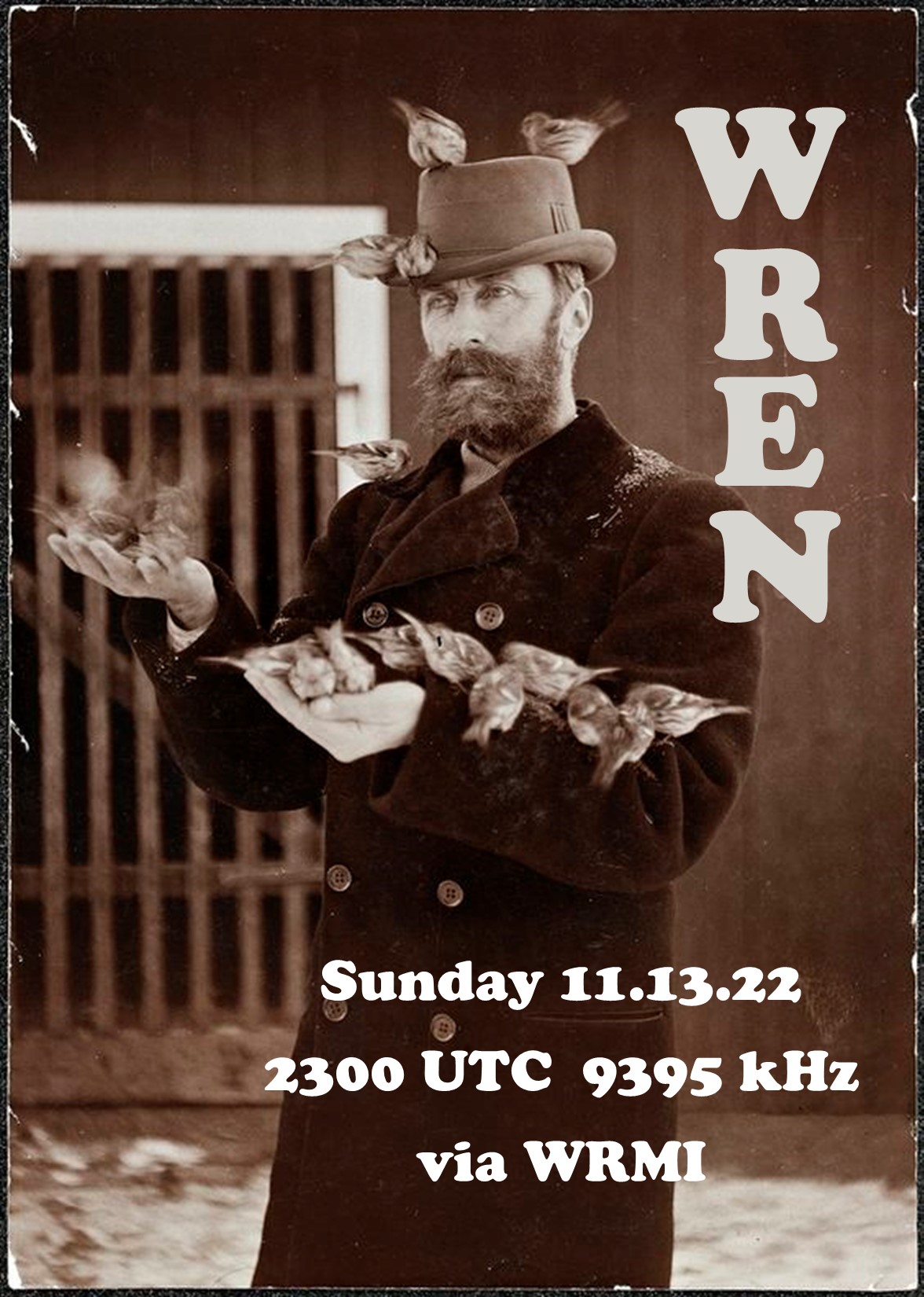
Hi SWLing post community and birdwatchers everywhere Fastradioburst23 here. Just to let you know if WRMI is on the air this Sunday (fingers crossed) after an encounter with yet another hurricame expect an additional programme of  WREN.

This week’s Imaginary Stations show on Sunday 13th November 2022 features our feathered friends again with lots of bird related classics and bird watching tips. Tune into 9395 kHz from 2300 utc onwards.