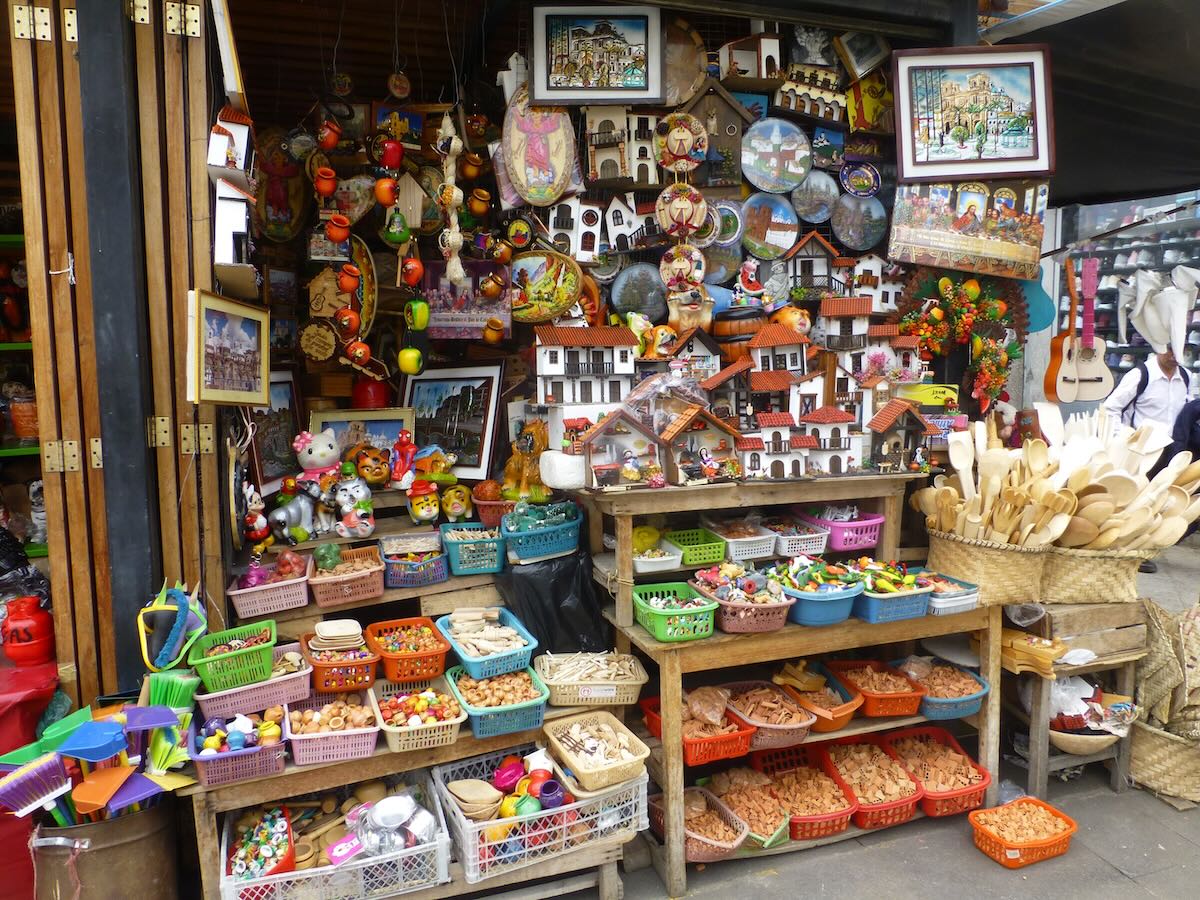
A Cuenca Artisan Market
Many thanks to SWLing Post contributor, Don Moore–noted author, traveler, and DXer–for the latest installment of his Photo Album guest post series:
Don Moore’s Photo Album: Cuenca, Ecuador (Part 2)
by Don Moore
In the song Por Eso Te Quiero Cuenca (That’s Why I Love You Cuenca) the singer recites a litany of the many reasons to love this city. What do I love about Cuenca? Well, unlike the song, I won’t include well-roasted guinea pig.
The elevation of 2560 meters (8,400 feet) gives Cuenca a comfortable spring-like climate year-round. Daily highs are usually around 20C/70F. Nights are chilly but not cold. Most days have at least several hours of sun, even during the rainy season (as it is now). There are numerous green parks and plazas including long tree-lined walking paths along the two main rivers that run through the city. The drinking water, which comes from high up in the mountains, is the best in South America. Yes, you can drink it right from the tap.
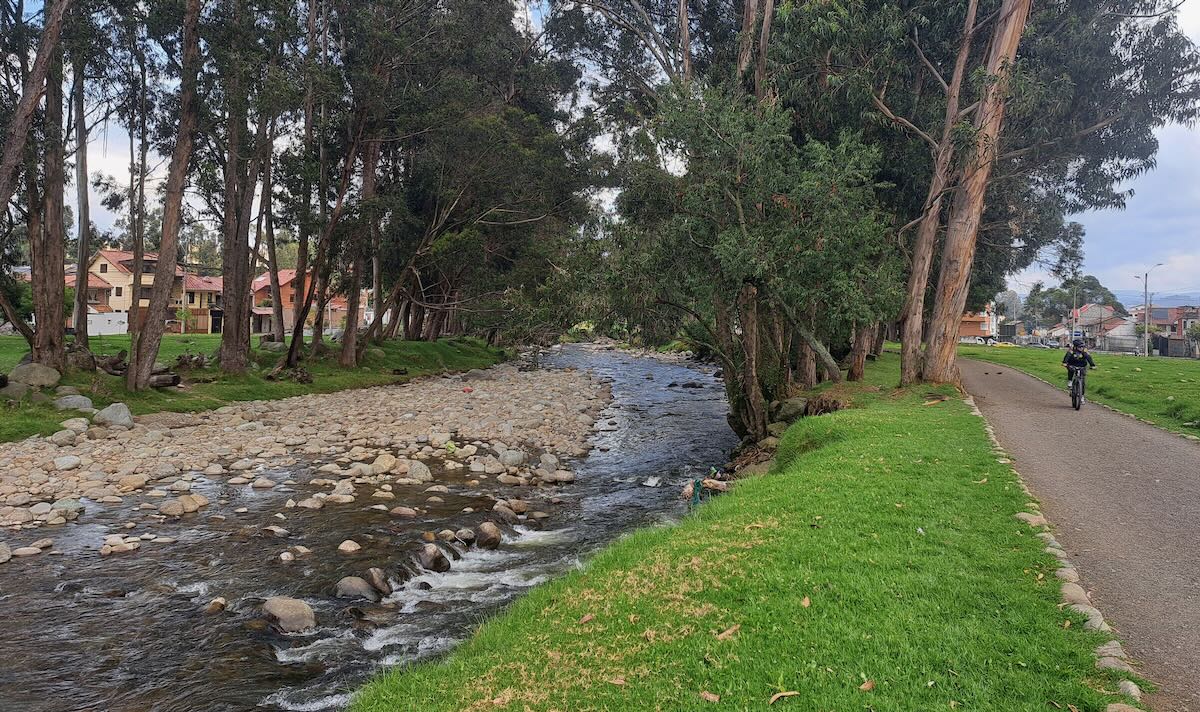
A walking/bike path runs along the Yanuncay River for over six kilometers through the south side of Cuenca. A similar path runs along the larger Tomebamba River in the center of town.
The people of Cuenca are among the friendliest I’ve found anywhere. It’s a well-run, educated city with lots of civic pride. The metro area population is only about a half-million so it’s small enough to easily get anywhere but large enough to have the benefits of a city. Cuenca has several good universities and theaters and the symphony orchestra gives free concerts most Friday evenings. It’s a pleasure to simply stroll through the beautiful architecture in the old centro neighborhood.
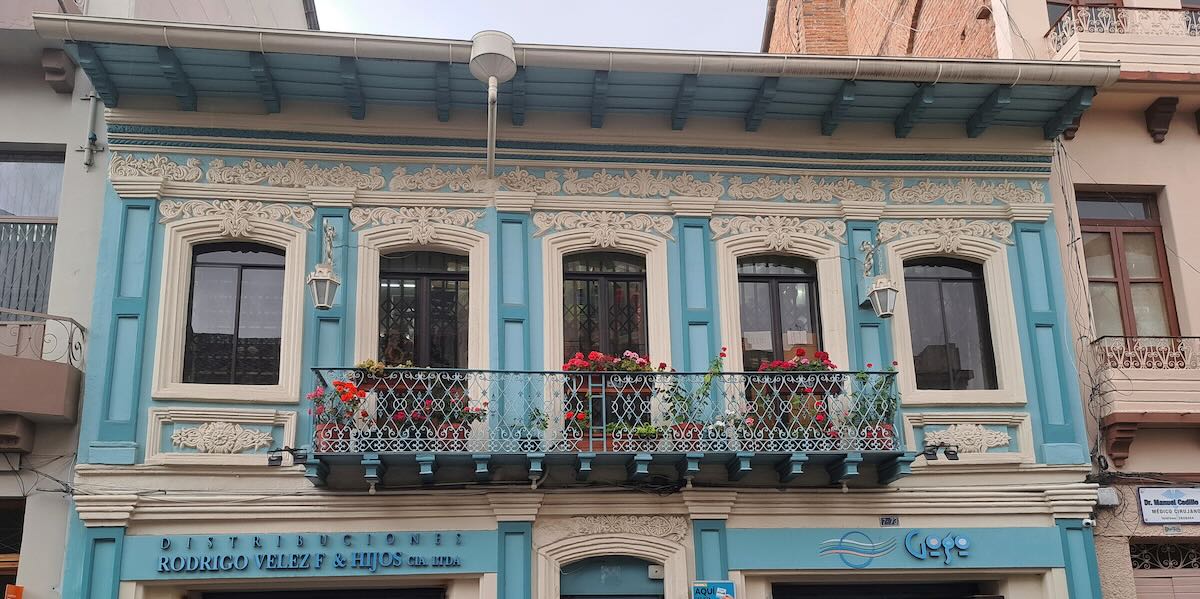
One of many beautifully restored buildings in Cuenca’s old centro.
Getting around Cuenca is easy. A ride on the excellent bus system costs just thirty cents and taxi rides usually run under two dollars. And, unlike the much larger cities of Quito and Guayaquil, Cuenca has a mass transit system. In 2013 city leaders voted to put in a light rail line. Doing so required digging up two of the main streets through the old downtown but rather than just dig up two streets they decided to dig up the entire old downtown … to replace the aging water and sewer systems, move all electric lines and cables underground, and install high-speed fiber optic Internet. (Fiber optic Internet was also run above ground in the newer neighborhoods outside the centro.) The result is one of the few places in Latin America where one can enjoy beautifully restored architecture and colonial churches without the views being marred by powerlines. And the Internet here is better than most places I’ve stayed at in the United States.
Those are just a handful of the reasons that I love Cuenca.
Early Radio in Cuenca
Radio broadcasting in Ecuador started in 1925 with Radio El Prado in Riobamba, a small city in the center of the country. Other stations soon started up in Guayaquil and Quito, including HCJB in 1931. Broadcasting came to Cuenca in 1934 when a group of friends purchased a homemade ten-watt transmitter from an engineer in Guayaquil and put it on the air as La Voz de Tomebamba. The name came from the main river flowing through Cuenca. At the time there were only four receivers in the city so the audience was rather sparse. La Voz de Tomebamba initially broadcast for only one or two hours a night and most of the musical selections were done live as there weren’t many 78 RPM records in town. Years later one early listener reminisced, “It was sixty percent noise. Only radio fanatics could be entertained by listening to such a thing.”

Old studio equipment from La Voz de Tomebamba
Gradually, the owners added new equipment and expanded the daily schedule. A fifty-watt transmitter was added in 1938 and by 1947 the power had been increased to two hundred watts. The first frequency listing that I’ve found for La Voz de Tomebamba was for 4200 kHz in a 1944 FBIS newsletter. The 1947 WRTH listed it as on the air from 0000 to 0430 GMT on 4200 kHz. And that was the station’s only frequency. Until the 1960s it was very common for radio stations in Ecuador to only broadcast on shortwave and not on medium wave. For example, the 1957 WRTH lists eighty Ecuadorian stations on shortwave (not counting HCJB) but only fifty-nine on medium wave.
Sometime in the early 1960s La Voz de Tomebamba made the switch to medium wave and left shortwave. Their 4200 kHz frequency is not listed in the 1965 WRTH, nor are they listed in any later ones. (I would be interested to hear from anyone who remembers listening to them on shortwave.) The changes may have had to do with financial problems the station was having. It closed in 1967 and remained off the air until returning under new ownership four years later. Today La Voz de Tomebamba is one of the most popular radio stations in town and has an excellent news department. Their sister station, Super Rock FM 94.9, is very popular with younger listeners.
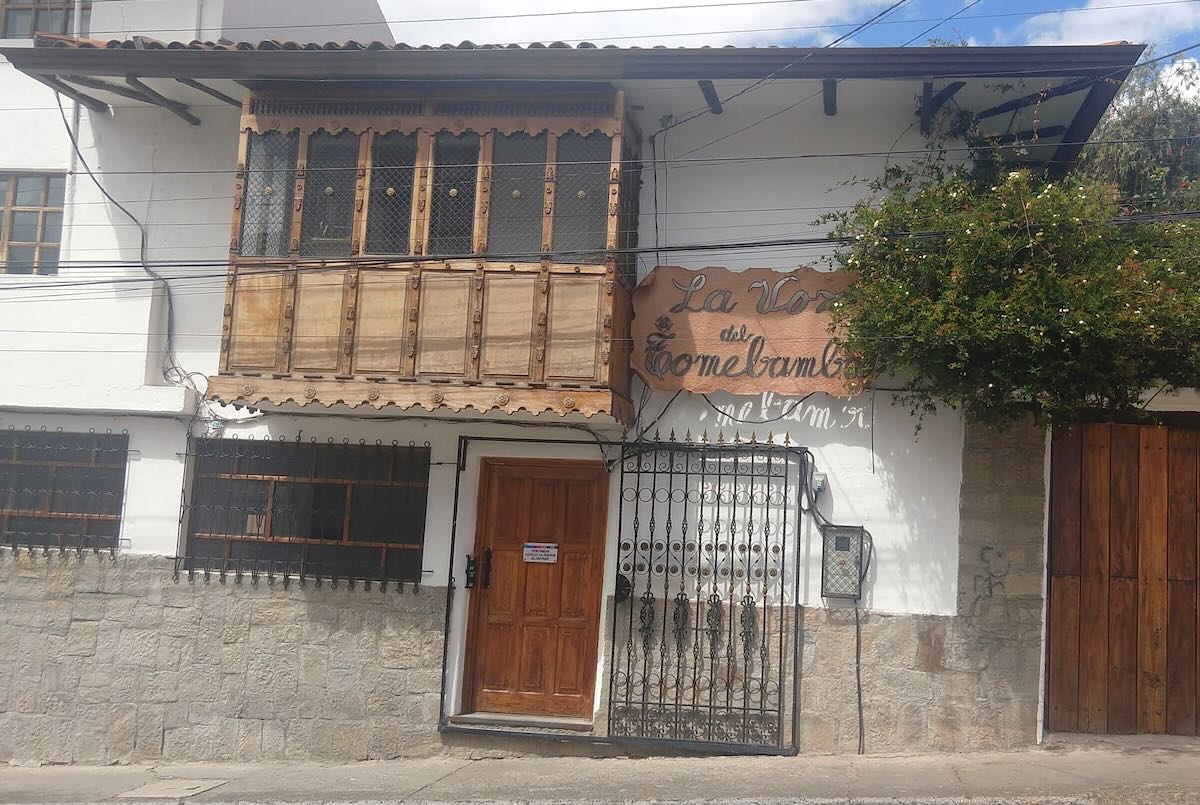
La Voz de Tomebamba today.
The second station in Cuenca was Radio Cuenca, which began broadcasting in October 1945 on 2830 kHz with two-hundred watts. It was included in a 1953 list of stations logged by the Universal Radio DX Club of Indiana. To the local audience, Radio Cuenca was best known for its many live music broadcasts. Continue reading