Category Archives: Shortwave Radio

1951 US Army Film: Independent Radio Station WMCA

Many thanks to SWLing Post contributor, Kris Partridge, who shares the following:
I belong to a FaceBook group “The Broadcasting Club” and [recently] there was posted a link to a YouTube video of a 70 year old 1951 US Army film called “The Independent Radio Station WMCA”. It’s worth a view to show what the thinking was 70 years ago:

From YouTube:

In 1951 the US Army made this film showing how an independent radio station operates. There was certainly a cold war propaganda motive for the US Army to produce this film, but today, when independent stations are a rarity, this film gives a detailed view of how a large market, independent radio station, WMCA New York, went about producing its programming and paying the bills in post war America.

If you enjoyed this video, consider becoming a member of the Antique Wireless Association at: https://antiquewireless.org/homepage/…

Subscribe to the Antique Wireless Museum channel and you’ll receive news of our latest video uploads.

Thank you so much for sharing this, Kris!

Help Carlos ID this mystery digital signal

Many thanks to SWLing Post contributor, Carlos Latuff, who shares the following:

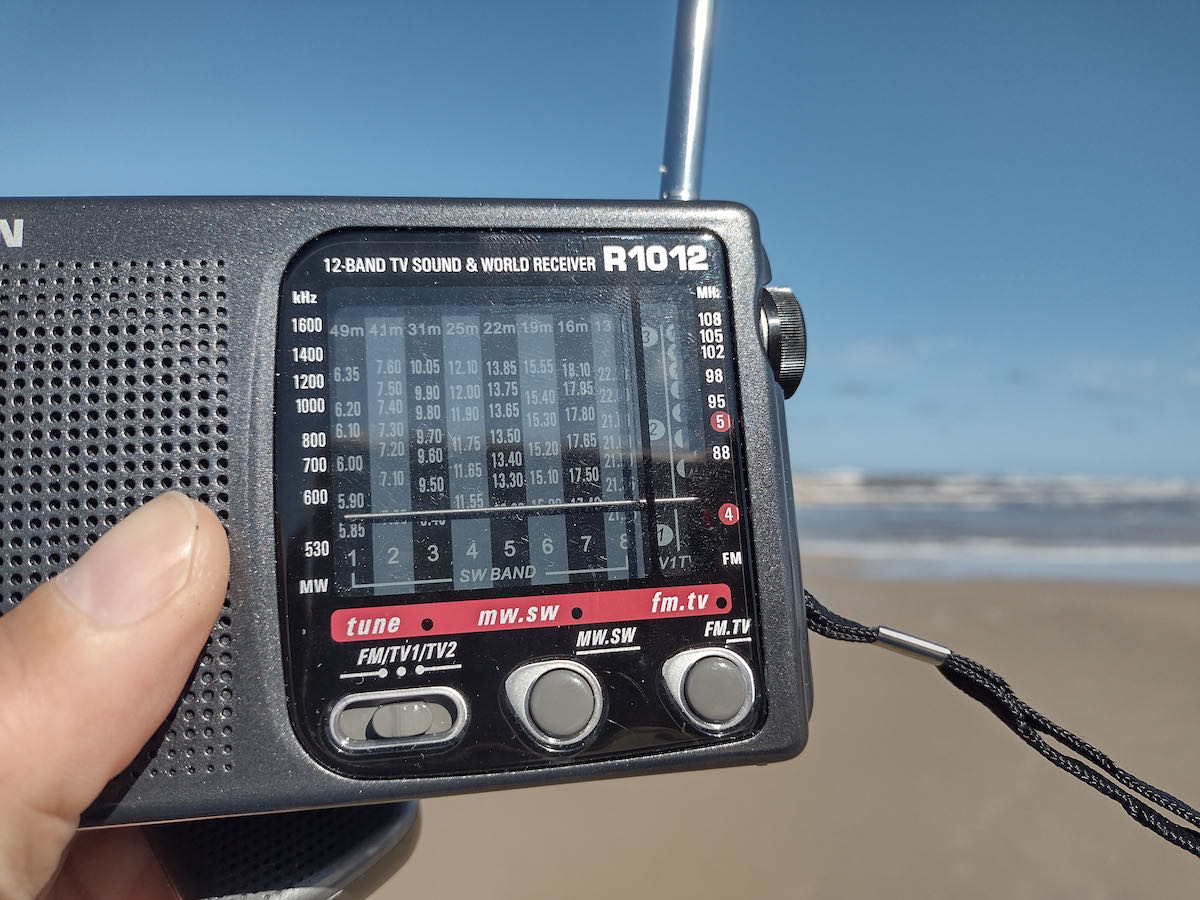
I bought a small analog radio and I’ve been listening with it.

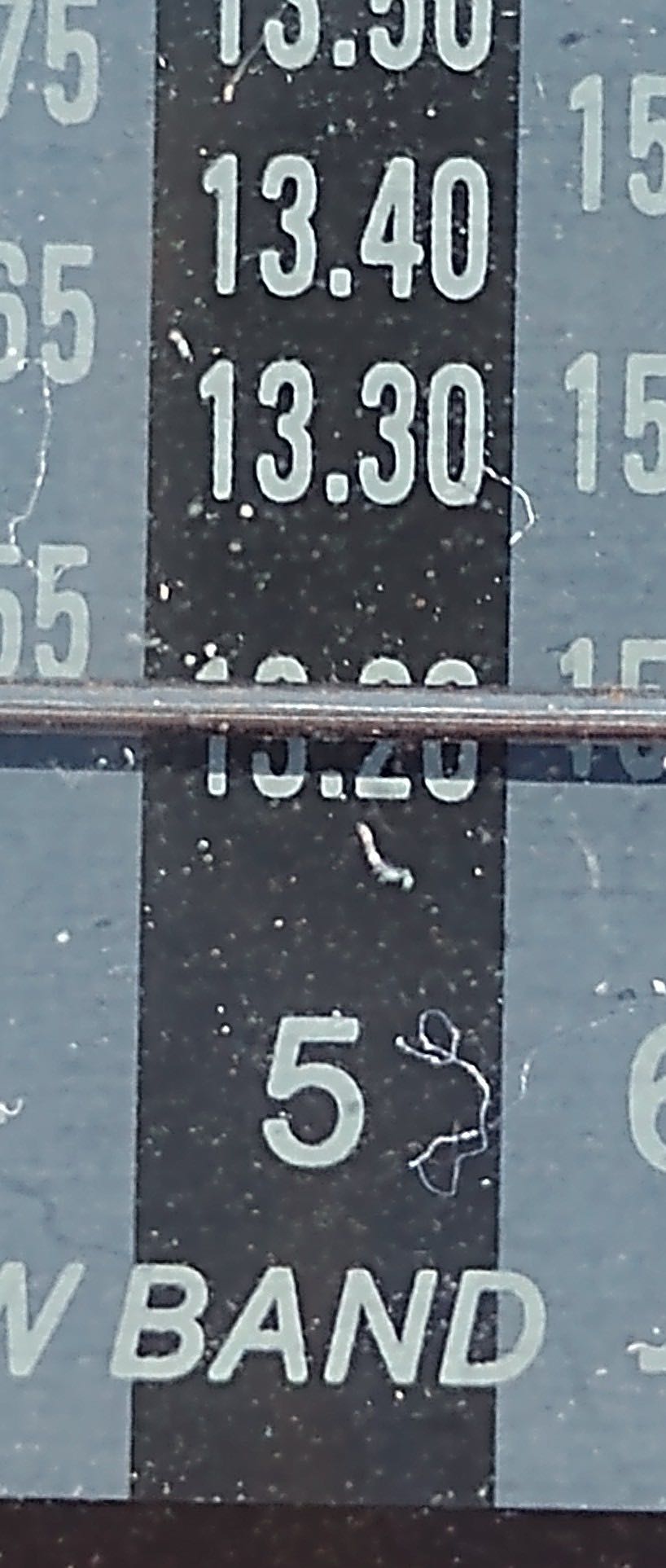
On September 4, around 17h48 UTC, I heard a strange signal on the band of 13 kHz, since it’s not a digital dial, I don’t know precisely the frequency but maybe if your readers may listen to the signal they may tell what it is about.

It almost sounds like the preamble to an SSTV message, but I’m not sure about that noise that’s in between. Readers, if you can help Carlos ID this signal, please comment!

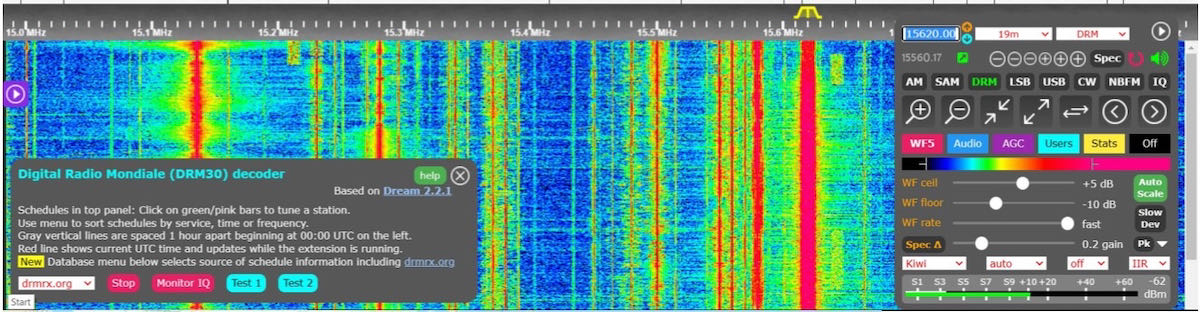
Short recording of BBC World Service in DRM

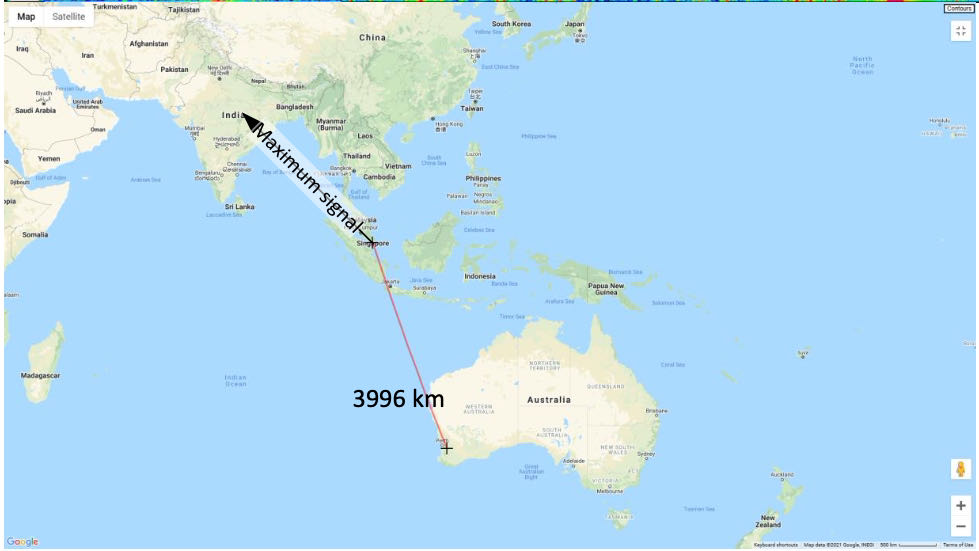
Many thanks to SWLing Post contributor, Mangosman, who shares the following off-air recording via the KiwiSDR network and notes:

Attached is a diagram showing the path and the receiver data, the end of a one hour daily broadcast is in the other file. They switched the transmitter back to AM before the end of the station promo.

I listened to the same broadcast on the previous day. It did not have any disturbances over that time. The quality was identical.

That’s a great decode of the BBC in DRM. Thanks for sharing! DRM is such an amazing mode when you get consistent and stable reception. Here in North America, that can be very difficult to achieve, but it’s fascinating when it does happen! Thanks for sharing!

Radio Waves: “Shady” 5G, Chip Shortage Affects Radio Tech, CW Contesting’s “Secret Storm,” ARRL to Cover Youth FCC App Fees, and ARRL Response to Insulin Pump Story

Radio Waves:  Stories Making Waves in the World of Radio

Because I keep my ear to the waves, as well as receive many tips from others who do the same, I find myself privy to radio-related stories that might interest SWLing Post readers.  To that end: Welcome to the SWLing Post’s Radio Waves, a collection of links to interesting stories making waves in the world of radio. Enjoy!

Many thanks to SWLing Post contributors Wilbur Forcier, Dan Van Hoy, and the Southgate ARC for the following tips:


Special operators are already dealing with a shady piece of Chinese technology the US has been warning about. (Business Insider via MSN)

  • The spread of 5G mobile communications technology is creating new problems for the US military.
  • Compromised networks could give adversaries an opportunity to monitor and attack US personnel.
  • See more stories on Insider’s business page.

In an increasingly interconnected world, the US military is facing new challenges in old stomping grounds.

Even though the US isn’t at war with China, competition with Beijing is already raging, and conventional and special-operations troops deployed around the world are exposed, either directly or through proxies, to Chinese technology that could hinder them in a conflict.

The worst offender is 5G, the same mobile communications technology ordinary people use or will be using in the future.

[…]However, Chinese firm Huawei – which is suspected of stealing its 5G technology from a Canadian firm through cyberattacks – has been deploying its 5G technology worldwide.

Given China’s peculiar national security laws, which require individuals and companies to cooperate with the Chinese security services, any Huawei technology around the world is a potential threat to privacy and national security. Through Huawei, Beijing could spy on or disrupt infrastructure and operations during peace or war.

Governments have realized the danger and have been banning Huawei from their networks. The British government did so in 2020, and the US Federal Communications Commission designated Huawei a national security threat in 2021, following several Chinese cyberattacks.[]

Chip Shortage Hits Radio Technology Marketplace (Radio World)

The severity of the global computer chip shortage has broadcast equipment manufacturers finding creative ways to manage supply channels while trying to meet product demand.

Despite the semiconductor shortages, people in the radio technology marketplace who spoke with Radio World say products are still being shipped, with mostly minor delays, thanks to prior planning. Equipment suppliers said they hope the semiconductor shortage will ease soon, perhaps by early 2022.

Continue reading

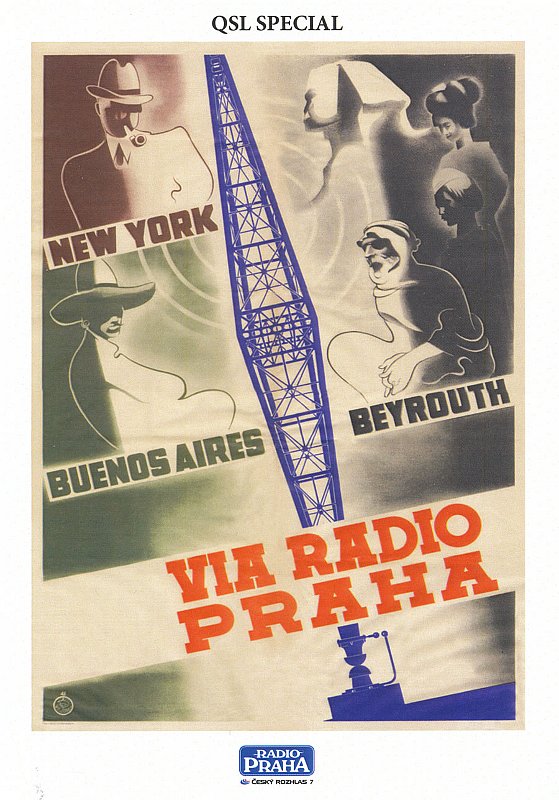
Radio Prague celebrates 85 years on the air

Many thanks to SWLing Post contributor, Jonathan Marks, who recommends this video tour of the Czech Radio Building from Radio Prague’s Facebook page.

Jonathan notes: “[The video os very] nicely done. It compliments episode 4 of the video I made with Olrich Cip”:

Many thanks for sharing this, Jonathan, and for documenting this important piece of our international broadcasting story.

Post readers: If you’d like more information about the 85th Anniversary of Radio Prague, check out this (and other) stories on the Radio Prague Website:

Radio Prague International celebrates 85 years on the airwaves

Although the origins of foreign language broadcasting on Czech Radio stretch as far back as 1926 – in the form of English and French lectures about Czechoslovakia – the birth of the foreign language service is traditionally dated to August 31, 1936, when the Technical Director of Czechoslovak Radio Eduard Svoboda officially announced the beginning of regular foreign language broadcasting.
Continue reading

Radio Waves: Old Gen FM Radio, Radio Burst Model Challenged, Iceland WebSDR, and Ida Destroys WZRH/KVDU Tower

Radio Waves:  Stories Making Waves in the World of Radio

Because I keep my ear to the waves, as well as receive many tips from others who do the same, I find myself privy to radio-related stories that might interest SWLing Post readers.  To that end: Welcome to the SWLing Post’s Radio Waves, a collection of links to interesting stories making waves in the world of radio. Enjoy!

Many thanks to SWLing Post contributors Dennis Dura, Troy Riedel, Dan Van Hoy, and the Southgate ARC for the following tips:


FM Radio, the choice of an old generation (Hackaday)

Had the pandemic not upended many of this summer’s fun and games, many of my friends would have made a trip to the MCH hacker camp in the Netherlands earlier this month. I had an idea for a game for the event, a friend and I were going to secrete a set of those low-power FM transmitters as numbers stations around the camp for players to find and solve the numerical puzzles they would transmit. I even bought a few cheap FM transmitter modules from China for evaluation, and had some fun sending a chiptune Rick Astley across a housing estate in Northamptonshire.

To me as someone who grew up with FM radio and whose teen years played out to the sounds of BBC Radio 1 FM it made absolute sense to do a puzzle in this way, but it was my personal reminder of advancing years to find that some of my friends differed on the matter. Sure, they thought it was a great idea, but they gently reminded me that the kids don’t listen to any sort of conventional broadcast radio these days, instead they stream their music, so very few of them would have the means for listening to my numbers stations. Even for me it’s something I only use for BBC Radio 4 in the car, and to traverse the remainder of the FM dial is to hear a selection of easy listening, oldies, and classical music. It’s becoming an older person’s medium, and it’s inevitable that like AM before it, it will eventually wane.

There are two angles to this that might detain the casual hacker; first what it will mean from a broadcasting and radio spectrum perspective, and then how it is already influencing some of our projects. [Continue reading…]

New observations challenge popular radio burst model (Sky and Telescope)

Strange behavior caught by two radio observatories may send theorists back to the drawing board.

Fourteen years ago, the first fast radio burst (FRB) was discovered. By now, many hundreds of these energetic, millisecond-duration bursts from deep space have been detected (most of them by the CHIME radio observatory in British Columbia, Canada), but astronomers still struggle to explain their enigmatic properties. A new publication in this week’s Nature “adds a new piece to the puzzle,” says Victoria Kaspi (McGill University, Canada). “In this field of research, surprising twists are almost as common as new results.”

Most astronomers agree that FRBs are probably explosions on the surfaces of highly magnetized neutron stars (so-called magnetars). But it’s unclear why most FRBs appear to be one-off events, while others flare repeatedly. In some cases, these repeating bursts show signs of periodicity, and scientists had come up with an attractive model to explain this behavior, involving stellar winds in binary systems.

However, new observations by European radio telescopes may rule out this model.

Astronomers knew that FRB 20180916B, located in a galaxy some 475 million light-years away, produces multiple bursts about every 16 days, during a ‘window’ that lasts for a few days. “The idea was that the magnetar is part of a binary system with a 16.29-day period,” says Inés Pastor-Marazuela (University of Amsterdam), the first author of the new paper. If the companion star had a thick stellar wind that absorbs radio waves, the bursts would only be visible when the magnetar was on ‘our’ side of the orbit, she explains. [Continue reading…]

New WebSDR in Iceland (Southgate ARC)

Iceland’s IRA reports on August 24 Karl Georg Karlsson TF3CZ connected a new receiver over the internet covering 24-1800 MHz

A translation of the IRA post reads:

QTH is Perlan in Öskjuhlíð in Reykjavík. These are Airspy R2 SDR receivers for 24-1800 MHz (on VHF and UHF). The antenna is a Diamond D-190.

Karl Georg stated the following on FB:
The extension is not just for 2m, it can only be on one band at a time. So if one user switches, others who are connected also move between bands. (However, you can listen to each frequency within the same band). The receiver automatically tunes to APRS QRG 144.800 MHz, see the APRS website: http://SDR.ekkert.org/map

URL of the receiver
http://perlan.utvarp.com/#freq=24890000,mod=usb,sql=-150

Thanks to Karl Georg for his valuable contribution. This is an important addition for radio amateurs who experiment in these frequency ranges, as well as listeners and anyone interested in the spread of radio waves.

IRA Board

Source Iceland’s national amateur radio society, the IRA
https://tinyurl.com/IcelandIRA

WZRH/KVDU Tower Destroyed By Hurricane Ida (Radio Insight)

The nearly 2000 foot tower utilized by Cumulus Media Alternative “Alt 92.3” WZRH LaPlace and iHeartMedia Variety Hits “104.1 The Spot” KVDU Houma LA was toppled by the winds of Hurricane Ida.

The 1999 foot structure was constructed in 1988 to host both signals. Only the bottom 150 to 200 feet remain standing. Both stations are licensed to operate with 100kW/591m, but have low powered auxiliary sites in downtown New Orleans. WZRH is located on the roof of Place St. Charles with 630w/200m. KVDU is on the Hancock Whitney Center with 1.2kW/220m.

In addition to KVDU, iHeartMedia Gospel 940 WYLD is silent at its cluster. The company reports that the remainder of its signals are now operational after all but 93.3 KQUE and 98.5 WYLD-FM were off the air on Monday.

Cumulus Media states that its entire cluster of WZRH, Adult R&B 102.9 KMEZ Belle Chasse, Country “106.1 Nash-FM” WRKN Picayune MS, and Hot AC “106.7 The Krewe” KKND Port Sulphur LA are off the air. [Continue reading…]


Do you enjoy the SWLing Post?

Please consider supporting us via Patreon or our Coffee Fund!

Your support makes articles like this one possible. Thank you!