Radio Waves: Stories Making Waves in the World of Radio
Because I keep my ear to the waves, as well as receive many tips from others who do the same, I find myself privy to radio-related stories that might interest SWLing Post readers. To that end: Welcome to the SWLing Post’s Radio Waves, a collection of links to interesting stories making waves in the world of radio. Enjoy!
Many thanks to SWLing Post contributors Ted Lipien, Josh Shepperd, Ronnie Smith, and Gary Butterworth, for the following tips:
WASHINGTON, D.C. — Michael Pack, CEO of the U.S. Agency for Global Media (USAGM), announced today that veteran civil servant Ted Lipien is returning to U.S. international broadcasting as CEO and President of Radio Free Europe/Radio Liberty (RFE/RL).
“Few people have a greater understanding than Ted of the multifaceted operation and mission of U.S. international broadcasting,” said CEO Pack. “Ted is an ardent and captivating advocate of democracy who will excel at sharing America’s founding principles and ideals with the world.”
“When I was a teenager in Communist Poland, I would listen to Radio Free Europe to find out what the government was not telling me,” said Mr. Lipien. “It had an enormous impact on my life, and on the lives of millions of others. I’m honored, and humbled, to be entrusted with helping this storied organization continue to break the hold of censorship and give voice to the silenced.”
Mr. Lipien has dedicated virtually his entire career to U.S. international broadcasting. He joined Voice of America (VOA) in 1973 and served as the network’s Polish Service Chief for 12 years, from 1981 to 1993, including the Solidarity labor union’s struggle for human rights and democracy in Soviet-communist-ruled Poland. From 1993 to 2003, he served as the Broadcasting Board of Governors’ Eurasia Marketing Specialist and Director, first in Munich and, later, in Prague. Mr. Lipien then rejoined VOA, serving as Eurasia Division Director from 2003 to 2005 and Acting Associate Director from 2005 to 2006. He has interviewed a number of eminent public figures, including Cardinal Karol Wojty?a (Pope John Paul II), Lech Wa??sa, George H.W. Bush, Zbigniew Brzezinski, and Czes?aw Mi?osz.
In 2008, after leaving the federal service, Mr. Lipien founded Free Media Online, a non-governmental organization committed to supporting free media worldwide. His pro-media freedom work has been noted in a variety of national publications, including the New York Times, Wall Street Journal, and Washington Post. His articles have appeared in National Review, Washington Times, and Washington Examiner. Mr. Lipien earned his bachelor’s degree in international relations with distinction from George Washington University.
RFE/RL, headquartered in Prague, is a non-federal network funded by the United States Congress through USAGM. Daisy Sindelar, who had been serving as Acting President of RFE/RL since June 2020, is returning to her former role as the network’s Vice President and Editor-in-Chief.[…]
The American Radio Archives, one of the world’s largest and most valuable collections of radio broadcasting will soon become part of the UC Santa Barbara Library’s Department of Special Collections.
Established by the Thousand Oaks Library Foundation (TOLF) in 1984, the archive is one of the first in the state and includes original recordings of Winston Churchill, as well as broadcast photographs, radio and television scripts, books and film dated as early as 1922.
“It is critical that such a wonderfully curated collection documenting the golden age of radio is preserved and accessible, said Thousand Oaks Mayor Claudia Bill-de la Peña. “UCSB has one of the largest collections of performing arts records, sound recordings and broadcast recordings on the West Coast as well as a state-of-the-art audio laboratory, making it our first choice and a natural fit for the American Radio Archives.”
The collection was established in 1984 and grew significantly with the purchase in 1987 of radio memorabilia from the estate of Rudy Valleé, one of the nation’s most popular singing bandleaders and personalities. Valleé documented his career, which took off in the1920s, through an extensive array of journals, photographs and original pieces of advertising.
The prominence of the Valleé collection attracted numerous celebrities and radio historians from around the world who gravitated toward the American Radio Archives. Among them were such luminaries as Norman Lear, Carl Reiner, Ron Howard, Ray Bradbury, Norman Corwin, Edward Asner, Walter Cronkite, Janet Waldo, Candice Bergen and William Shatner.
When Norman Corwin — dubbed America’s poet laureate of radio — donated his career files in 1990, it further increased esteem for the archives and generated significant interest among radio aficionados. As a result, many noteworthy collections were donated to TOLF, including, among others, those of radio station KNX-CBS; radio actor and radio historian Frank Bresee, who hosted “The Golden Days of Radio”; comedian Red Skelton; Carlton Morse, the creator of the long-running radio soap opera “One Man’s Family”; radio and television writers Milton and Barbara Merlin; and Allin Slate, a pioneer of the sports talk show format on KABC radio in Los Angeles.[…]
The coronavirus pandemic has made life difficult for everyone. On the plus side, however, it’s prompted creative solutions to work around the various roadblocks the pandemic has imposed. Volunteer Examiners in Grant County, Oregon, affiliated with the ARRL Volunteer Examiner Coordinator (VEC) put their heads together to overcome the adversity and hold a safe and secure exam session. Current health regulations in Oregon precluded both indoor and outdoor gatherings. Nonetheless, the Grant County Amateur Radio Club, the local ARES Group, and the Grant County Emergency Radio Infrastructure Coalition (ERIC) combined forces to offer five candidates the chance to obtain their first license or to upgrade their existing license, all from the comfort of their vehicles.
“Many amateur radio clubs have experimented with exams via the internet,” said Steve Fletcher, K7AA, who is the ARES Emergency Coordinator for Grant County. “In eastern Oregon, with the cooperation of the County Roads Department, we chose to hold a ‘drive-up’ exam session on Saturday, December 12. Under the circumstances, we used four ARRL VEs for the exam instead of the required three.” Wheeler County ARES loaned Stuart Bottom, K7FG, to help as the third required Amateur Extra-class Volunteer Examiner.
Fletcher reports three new Technician licensees and two new General-class radio amateurs resulted from the session.
Required ARRL VEC forms contained pre-printed data — including the FCC Registration Number (FRN) — were given to the candidates on a clipboard. Each candidate took the exam in the front seat of their own vehicle. Cell phones, papers, and anything not required for the exam were removed.
“Everyone dressed warmly, and most candidates had their heaters running,” Fletcher reported. A camper owned by Ronda Metler, KB5LAX, and a communications van owned by Fletcher served as sites to check results and sign forms.
The Grant County Roads Department loaned its parking area for the exam session.[…]
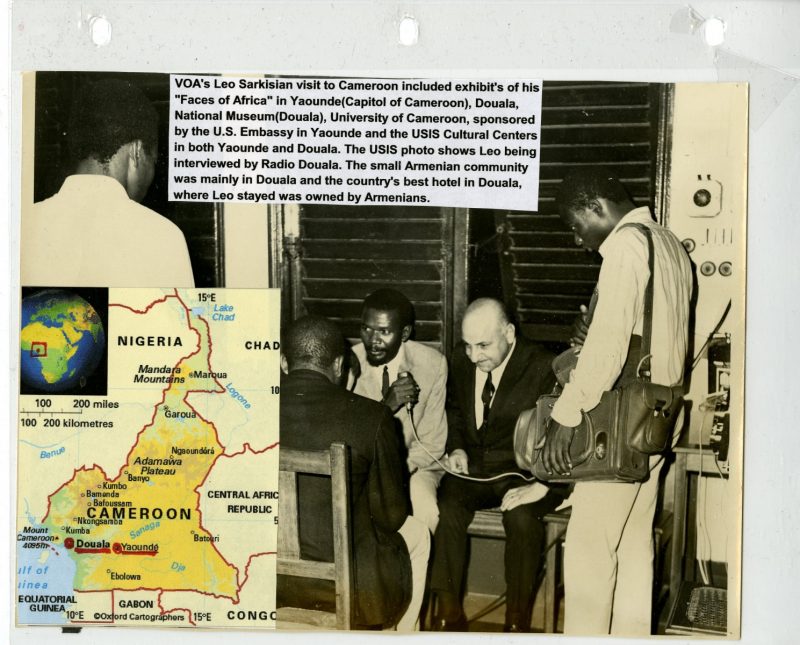
As the world observes International Migrants Day on December 18, Voice of America continues to enhance its operations to serve the growing refugee populations in Africa. UNHCR, the UN Refugee Agency, reports that, in just the past few weeks, 50,000 Ethiopian refugees have joined the world’s 80 million forcibly displaced people, including more than 18 million in sub-Saharan Africa.
Recognizing the deteriorating conditions in northern Ethiopia’s Tigray region in recent weeks, VOA rapidly added existing Tigrigna-language radio broadcasts to existing VOA FM radio stations in the Libyan cities of Tripoli and Misrata. These newscasts reach not only the newly displaced civilians, but also Eritreans in both cities who arrived prior to the current exodus and still have ties to the crisis-affected area. Newly created “micro sites” deliver digital content in Tigrigna, Amharic, Afan Oromo and English from VOA regional reporting teams.
In Kakuma, Kenya, site of one of the world’s oldest refugee camps, VOA launched a new FM station to provide both refugees and the local community with news, music, and educational content in English, Swahili, and Somali. For the Dadaab refugee complex near Kenya’s border with Somalia, a new VOA station offers local residents and refugees a mix of VOA English and Somali language content that airs in Somalia and Djibouti.
“VOA is committed to providing vital news and information to underserved populations worldwide, including refugees and other forcibly displaced persons,” said VOA Director Robert Reilly. “In particular, as the only international broadcaster with a presence in Kakuma, VOA serves as a critical lifeline for individuals in this region with access to few other reliable media resources.”
VOA’s efforts to reach at-risk refugee populations expanded exponentially in 2017 in south Asia and Latin America. VOA’s Bangla language service began broadcasting in Rohingya to reach refugees in Kutupalong, the world’s largest refugee camp. Nearly one million ethnic Rohingya, who fled persecution in neighboring Myanmar, inhabit the site. When Venezuelans began to flee President Nicolás Maduro’s regime, the VOA Spanish language service significantly increased its coverage of this unfolding crisis for audiences all across the region.
VOA FM Frequencies
Existing in Libya: Tripoli (106.6 MHz); Misrata (99.1 MHz)
New in Kenya: Kakuma (99.9 MHz); Dadaab (106.7 MHz)
Do you enjoy the SWLing Post?
Please consider supporting us via Patreon or our Coffee Fund!
Your support makes articles like this one possible. Thank you!