Category Archives: Shortwave Radio

The “Signal Sweeper”: How to build a portable Wellbrook loop antenna

Many thanks to SWLing Post contributor, Matt Blaze, for the following guest post:


The “Signal Sweeper”, a portable Wellbrook antenna setup

by Matt Blaze

Here’s a very simple construction project that’s really improved my travel shortwave and mediumwave listening experience.

When I go somewhere interesting (whether a day trip on my bike or a longer excursion to an exotic locale), the two things I’m sure to want with me are my camera gear and at least one good receiver. Fortunately, there are plenty of good quality shortwave receivers to choose from these days; the hard part is packing a suitably portable antenna that can do justice to the signals wherever it is I’m going.

I’ve long had a Wellbrook antenna on my roof at home. These wide-band amplified loops famously enjoy a reputation for excellent intermod and noise rejection, as well as an almost magical ability to pull in signals comparable to much larger traditional HF and MF receive antennas. A portable Wellbrook – something I could pack in my luggage that performs as well as the one on my roof, would be just ideal.

Fortunately, Wellbrook sells a “flex” version of their antenna intended for just this application, the model FLX1530LN. It’s essentially just the amplifier of their fixed-mount antennas, equipped with a pair of BNC connectors for you to attach a user-supplied ring of coaxial cable that serves as the antenna loop. This way, you don’t need to travel with the awkwardly large 1 meter diameter ring of aluminum tubing that makes up the normal Wellbrook. You can just bring a compact spool of coaxial cable and configure a loop out of it when you arrive at your destination.

The tricky part is how to actually form a stable loop out of coaxial cable without needing lot of unwieldy supporting hardware. In particularly, I wanted something that could be set up on a camera tripod to be freestanding and easily rotated wherever I happened to find myself wanting to play radio. The key would be finding or making some kind of mostly non-metalic support for the coaxial loop that could be folded down or collapsed to fit in my baggage or backpack for travel.

And then I found it: a humble 3-section telescoping broom handle sold on Amazon for about $15 that’s exactly the right size: the “O-Cedar Easywring Spin Mop Telescopic Replacement Handle“. It collapses to 22 inches (just short enough to fit in my suitcase), and extends to 48 inches (comfortably long enough for a one meter diameter loop).

Normally, a wire loop would need both vertical and horizontal supports in a cross configuration, but by using a reasonably stiff coaxial cable, I figured I could get away with just using the broom handle vertically. I found that LMR400 (the basic kind, not the “Ultraflex” version) holds its shape quite well in a one meter loop supported this way.

At this point, it was just a matter of the details of attaching and mounting everything together into a portable package.

A one meter diameter loop, which is the ideal size for the Wellbrook amp, can be made from 3.14 meters of cable (ask your middle-school math teacher). That’s about 10 feet for Americans like me. High precision is not required here, so I just cut 10 feet of LMR400.
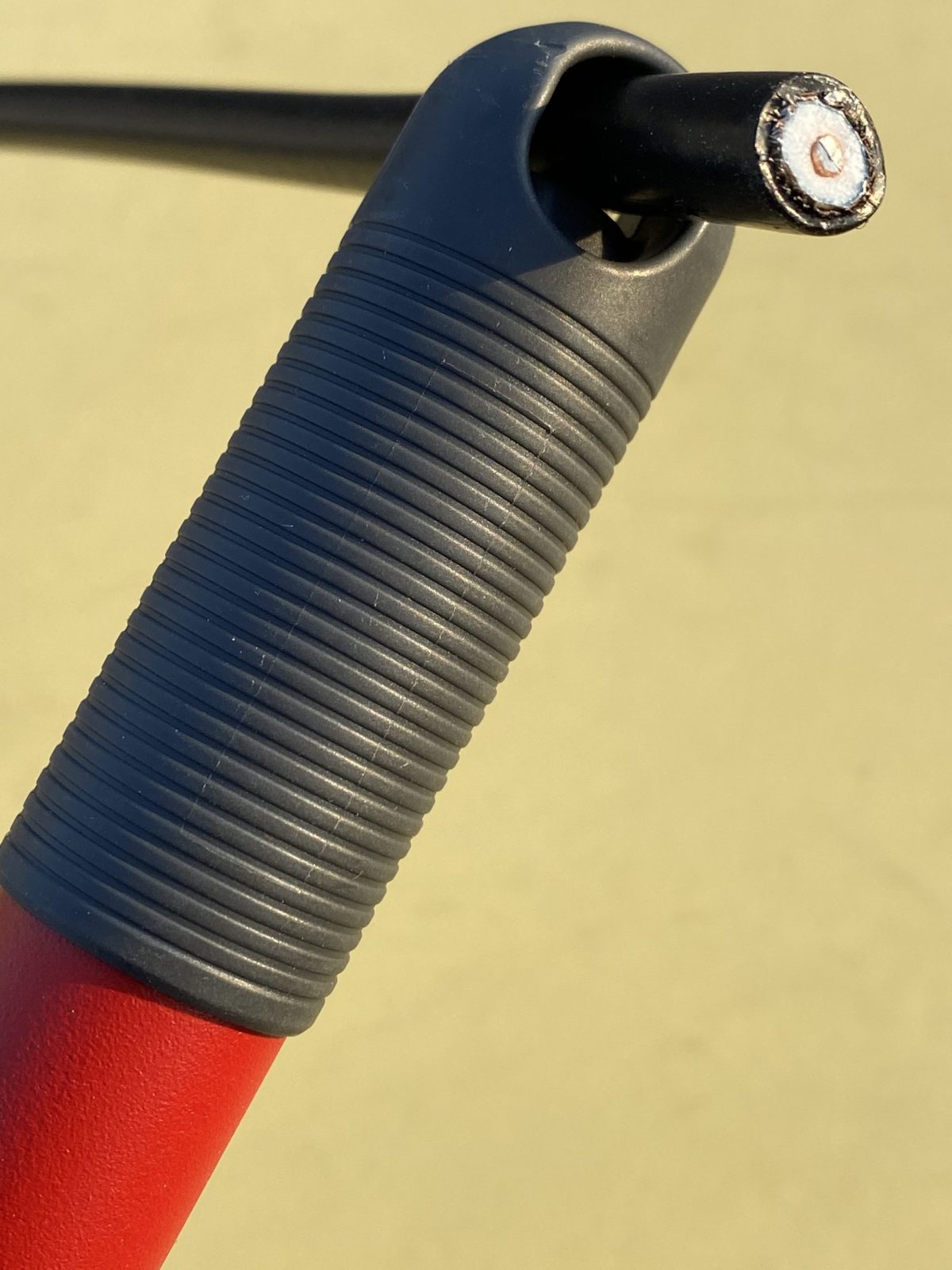
The next step is to attach the middle of the cable to the top of the broom handle. The O-Cedar handle has a loop at the end for hanging it on a hook in your broom closet. It happens to be just the right diameter for LMR400, but not with BNC connectors attached. So you’ll have to thread the cable through before you crimp or solder on the with connectors. (See photo above). I used the Times Microwave crimp-on BNC connectors, which I had some extras of lying around. I also put some shrink wrap on the cable at either side of the broom loop, just to keep it from slipping out and becoming unbalanced, but that was probably unnecessary.

Now I needed a way to to attach the Wellbrook amplifier to the other end of the handle, as well as some way of mounting the whole thing to a camera tripod. My first thought involved a lot of duct tape. But I wanted something more permanent and reusable.
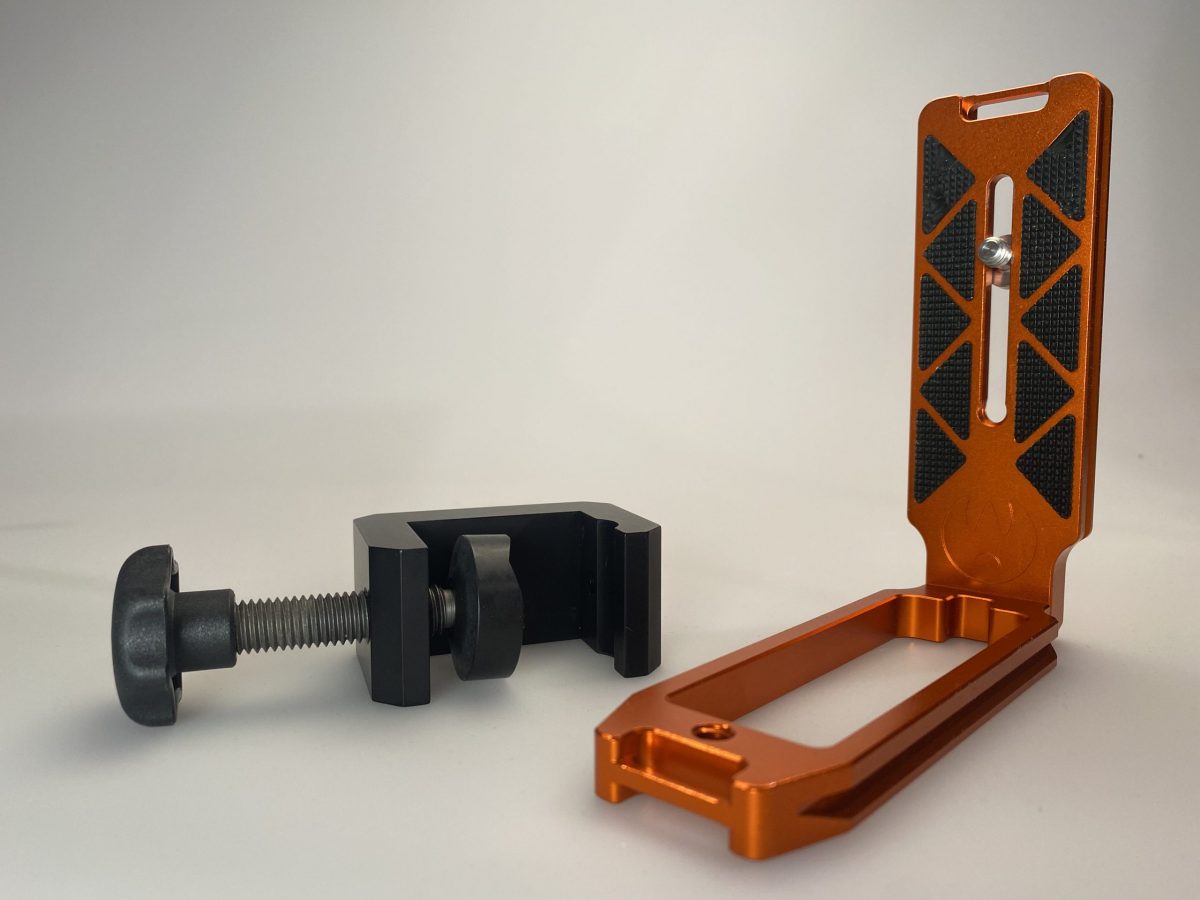
The key is something called an “L-Plate”, which is a piece of hardware intended to allow you to mount a camera to a tripod in either “landscape” or “portrait” mode. It’s basically two tripod dovetail mounts attached at a 90 degree angle. I used one that was in my junk box, but you can buy them new or used on eBay. I also needed a clamp to attach the L-plate to the broom handle. I used the Novoflex MiniClamp 26, which I got from B&H Photo. The clamp attaches to the inside of the L-plate with a captive screw. (See photos)
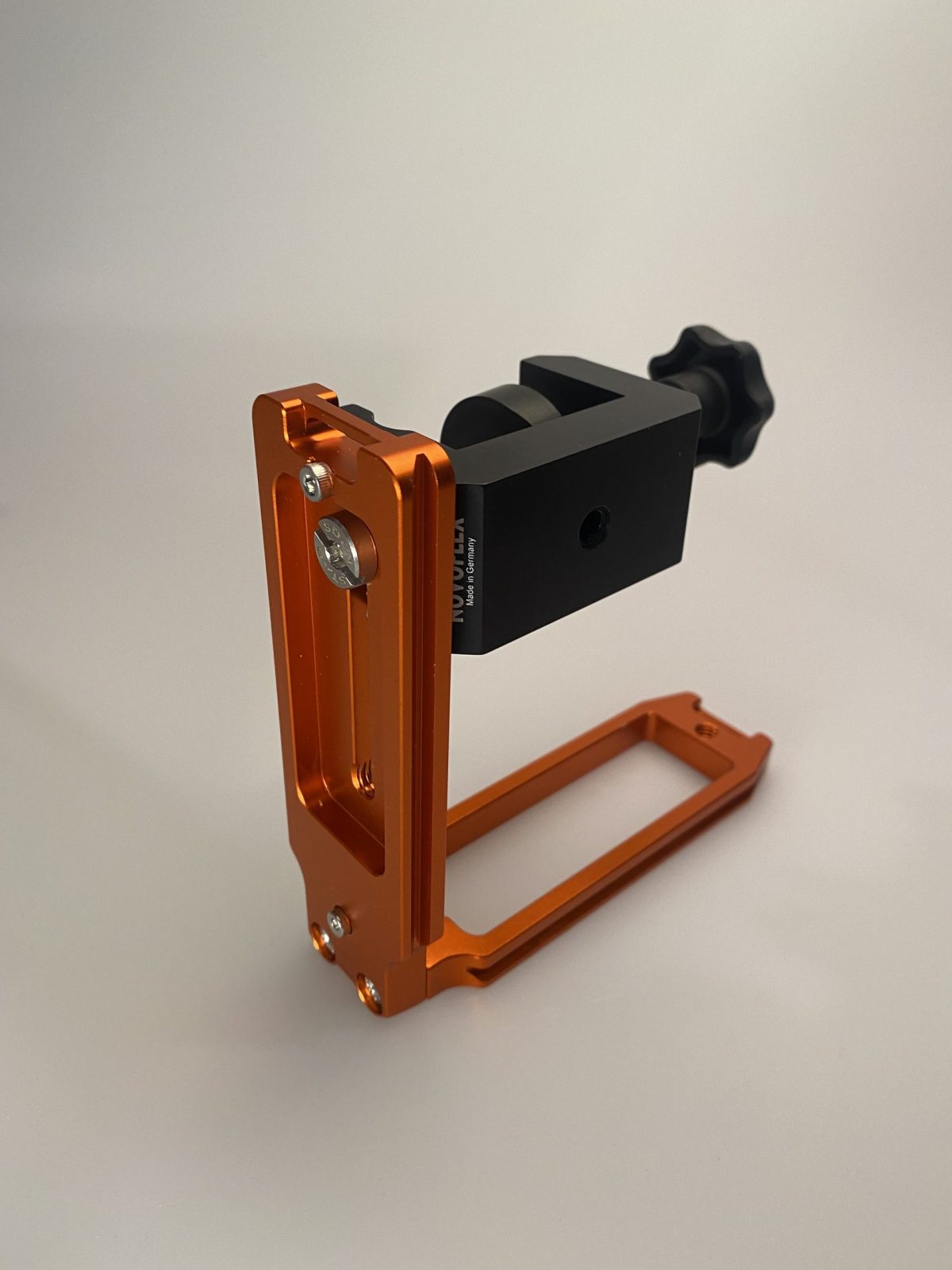
Next, I attached the amplifier to the other side of the L-plate using an ordinary screw-on hose clamp. Easy enough, and surprisingly sturdy.
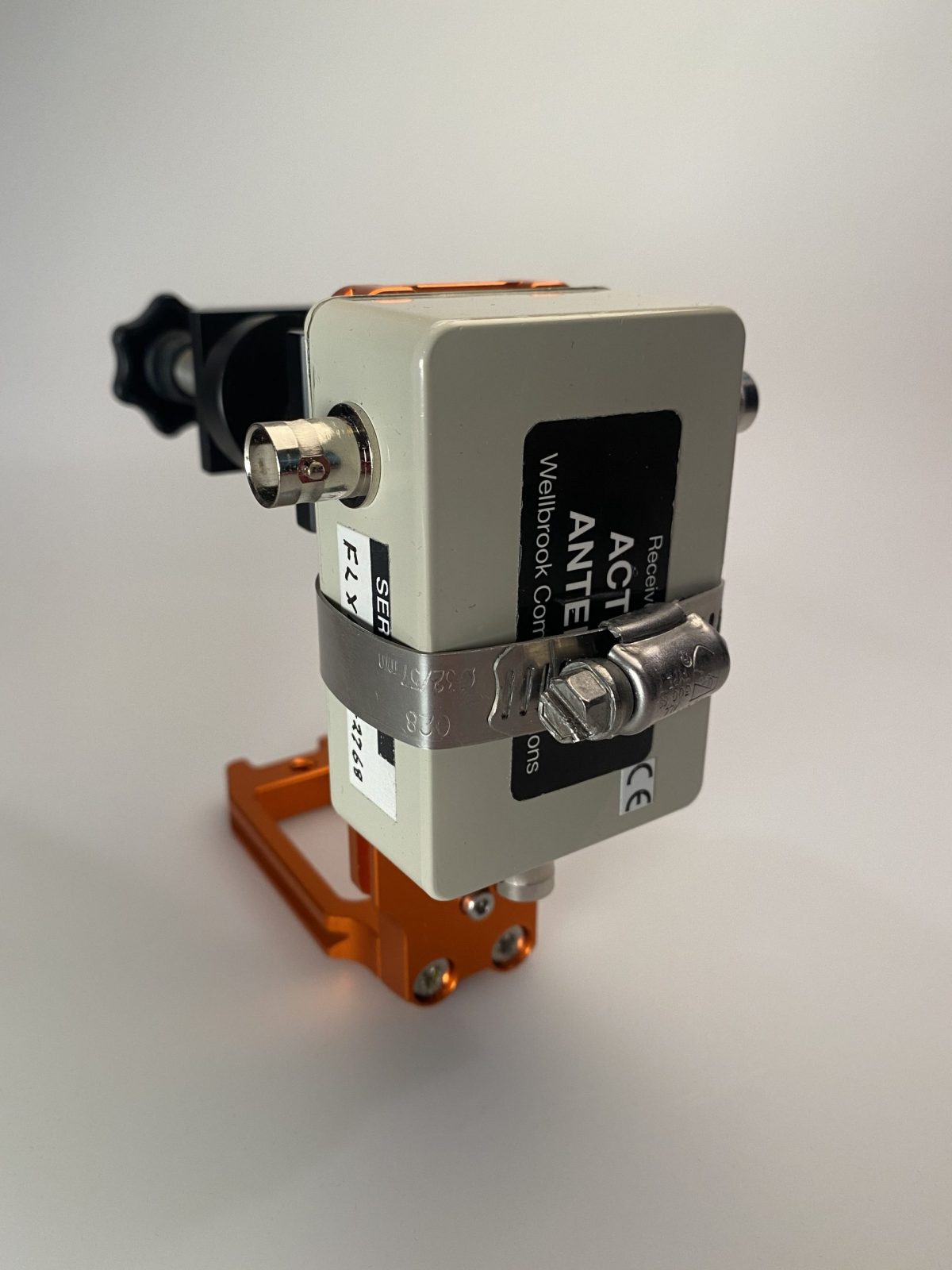
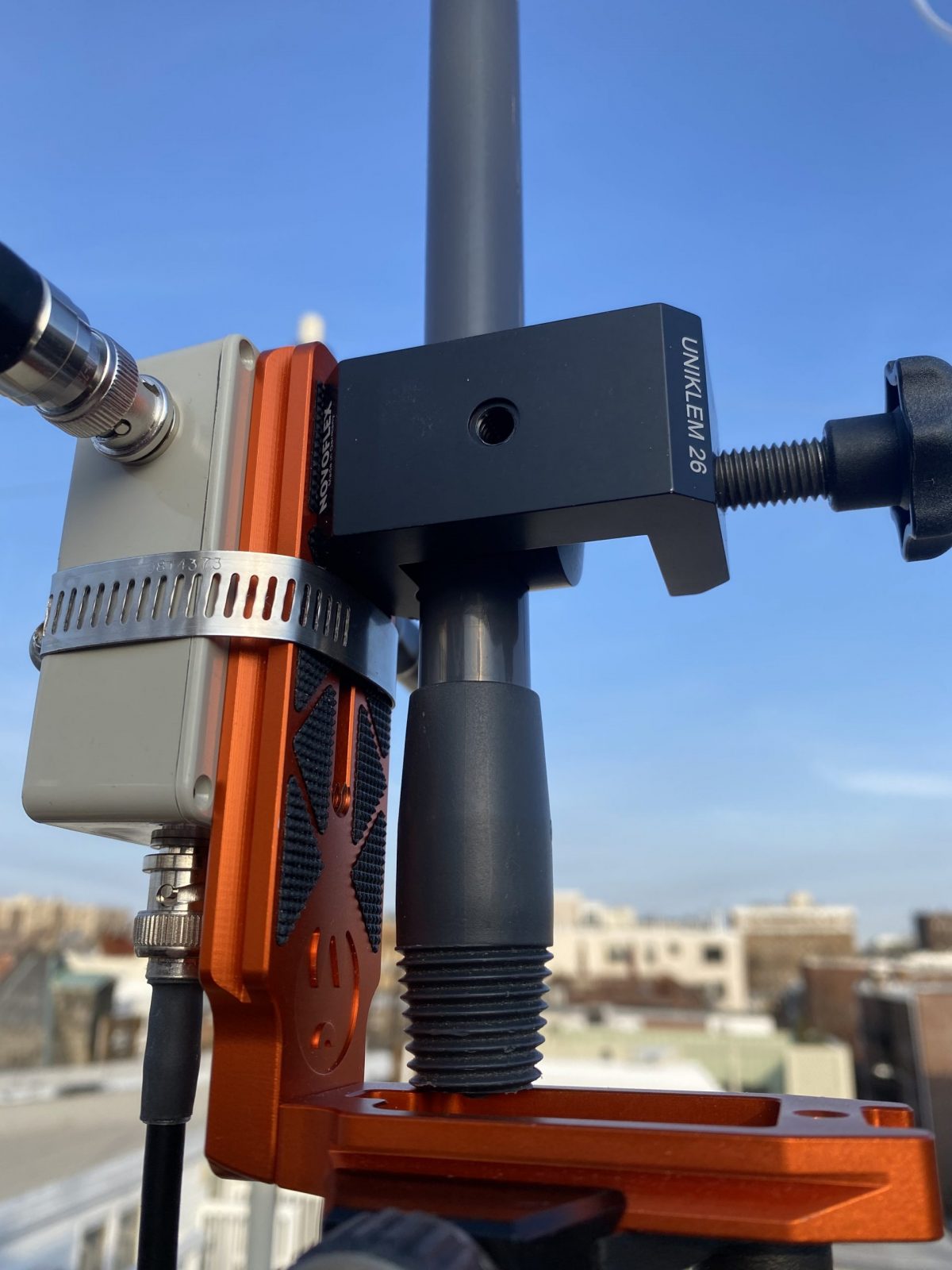
And that’s it. To assemble the antenna, just extend the broom handle to about one meter, allowing for a roughly one meter diameter loop that’s as round as you can make it with the amplifier at the bottom. Then clamp the L-plate to the bottom of the handle so that the handle is just above the base of the plate, and attach to the tripod. (See the photos).
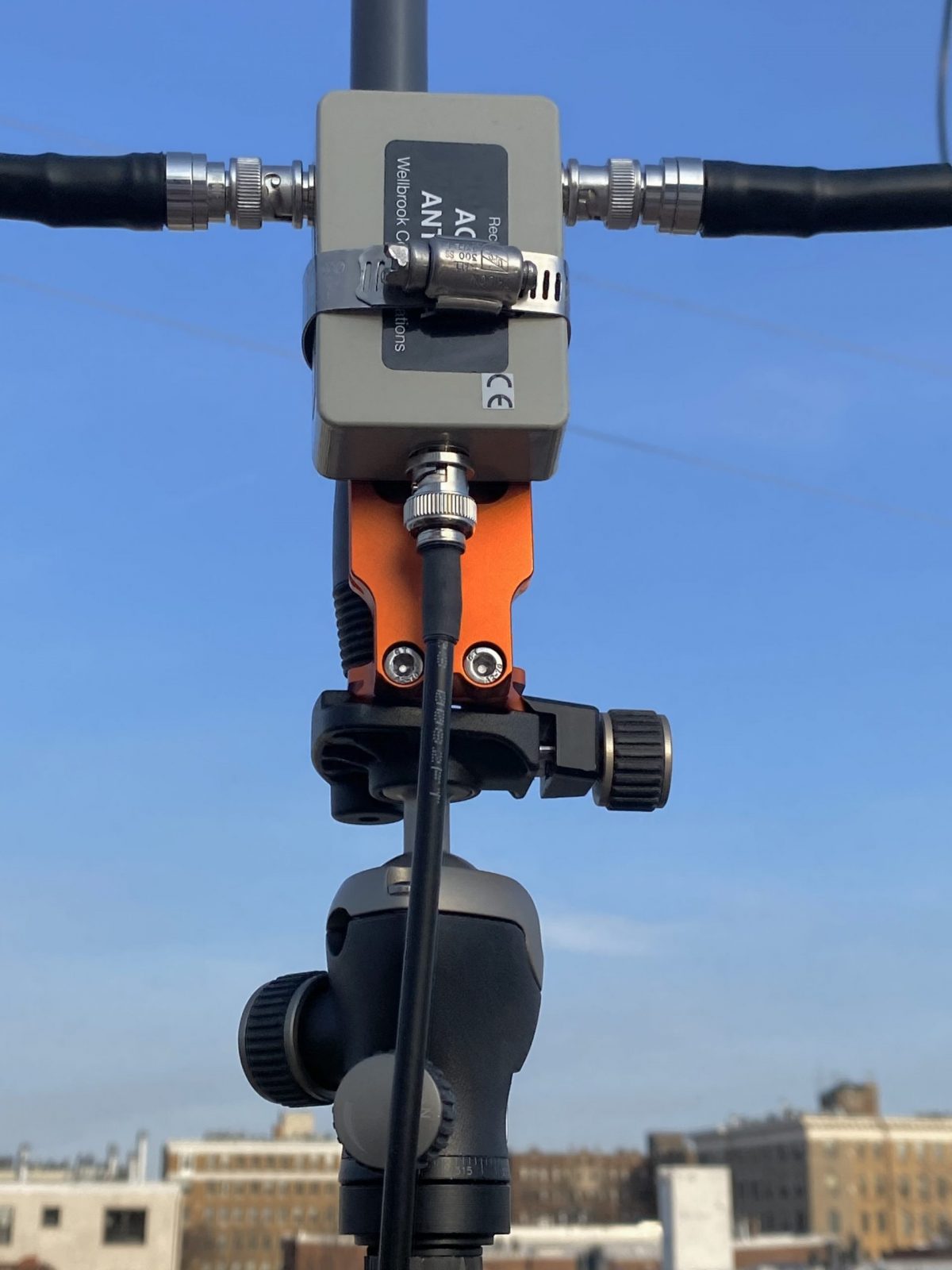
The Wellbrook is powered over the feedline with a 12VDC bias-T injector. So you need a clean source of 12 volts. I use a cheap Talent Cell battery pack (available on Amazon in various capacities). These actually deliver 11.1 VDC (3x 3.7V), rather than the 12V the Wellbrook calls for, but it works fine in practice. I can also use the same pack to power the radio and digital audio recorder.
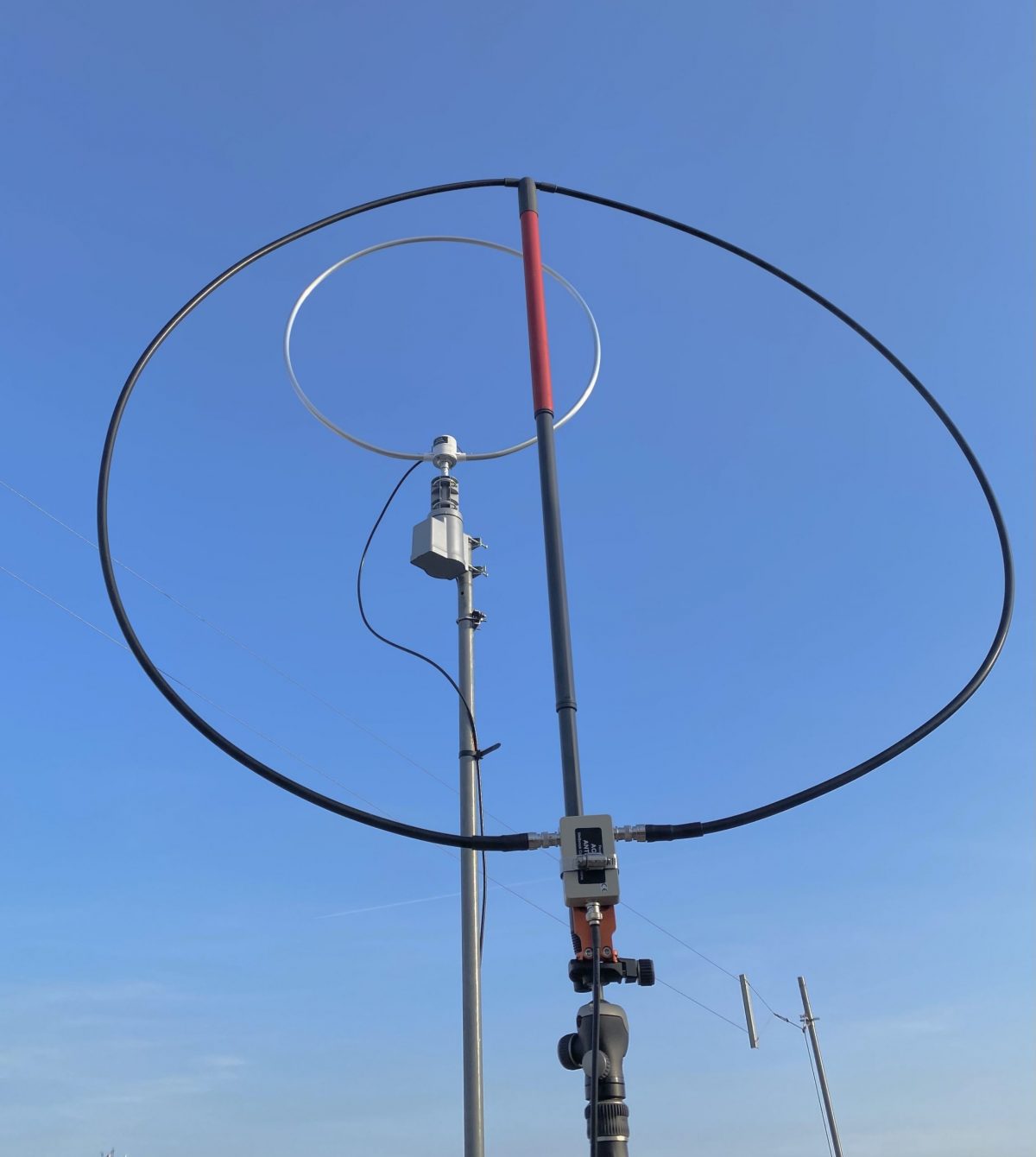
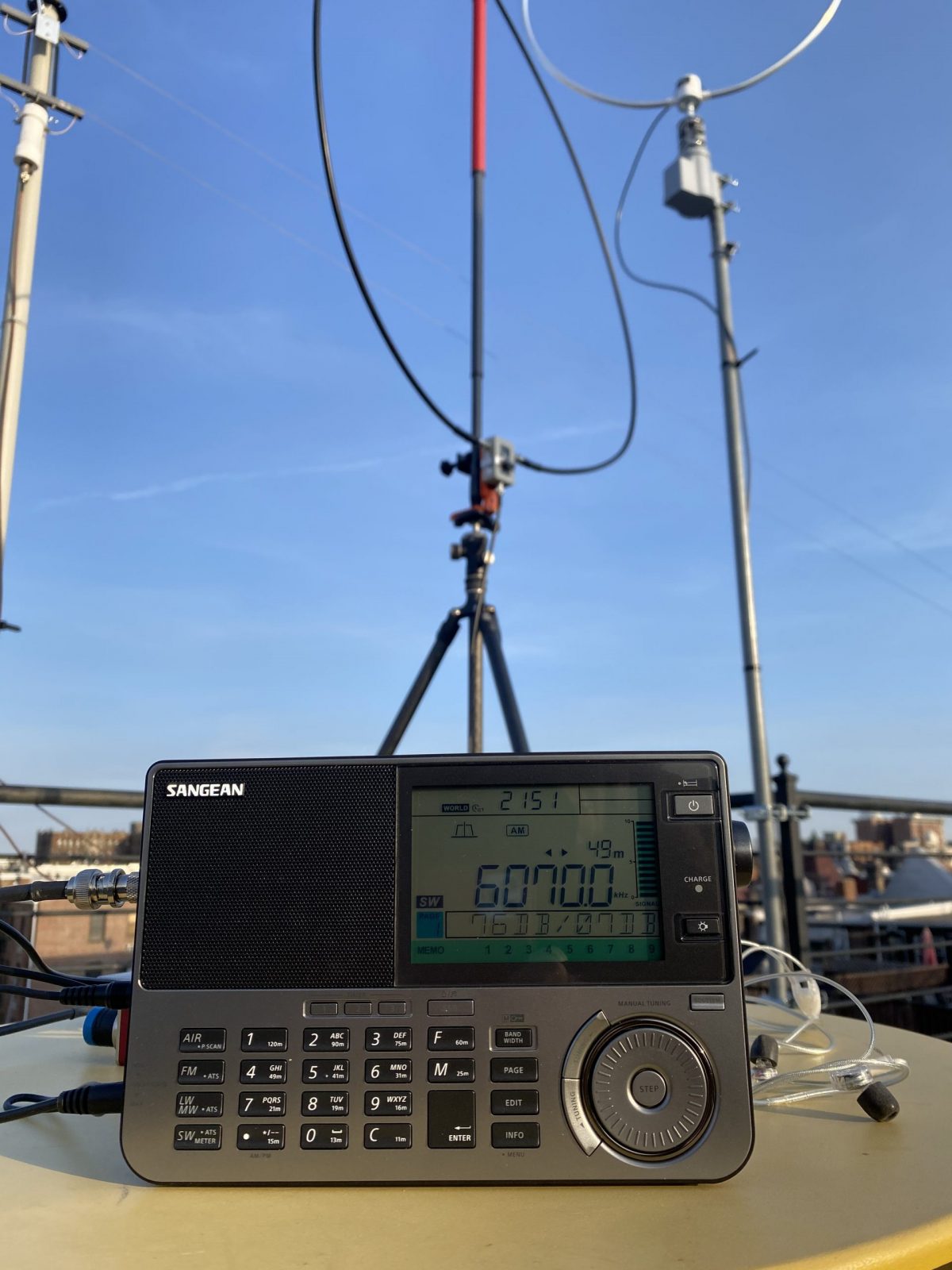
In the photos, you can see the finished antenna setup on my roof, with my permanent base Wellbrook on the rotor in the background. The performance of the two antennas is quite comparable.

(Note that there’s an eBay seller that makes a somewhat similar travel loop. The performance is quite good under normal conditions, but it is a bit more subject to MW overload when near a transmitter site. So I prefer the Wellbrook, which is much less susceptible to overload, I’ve found.)
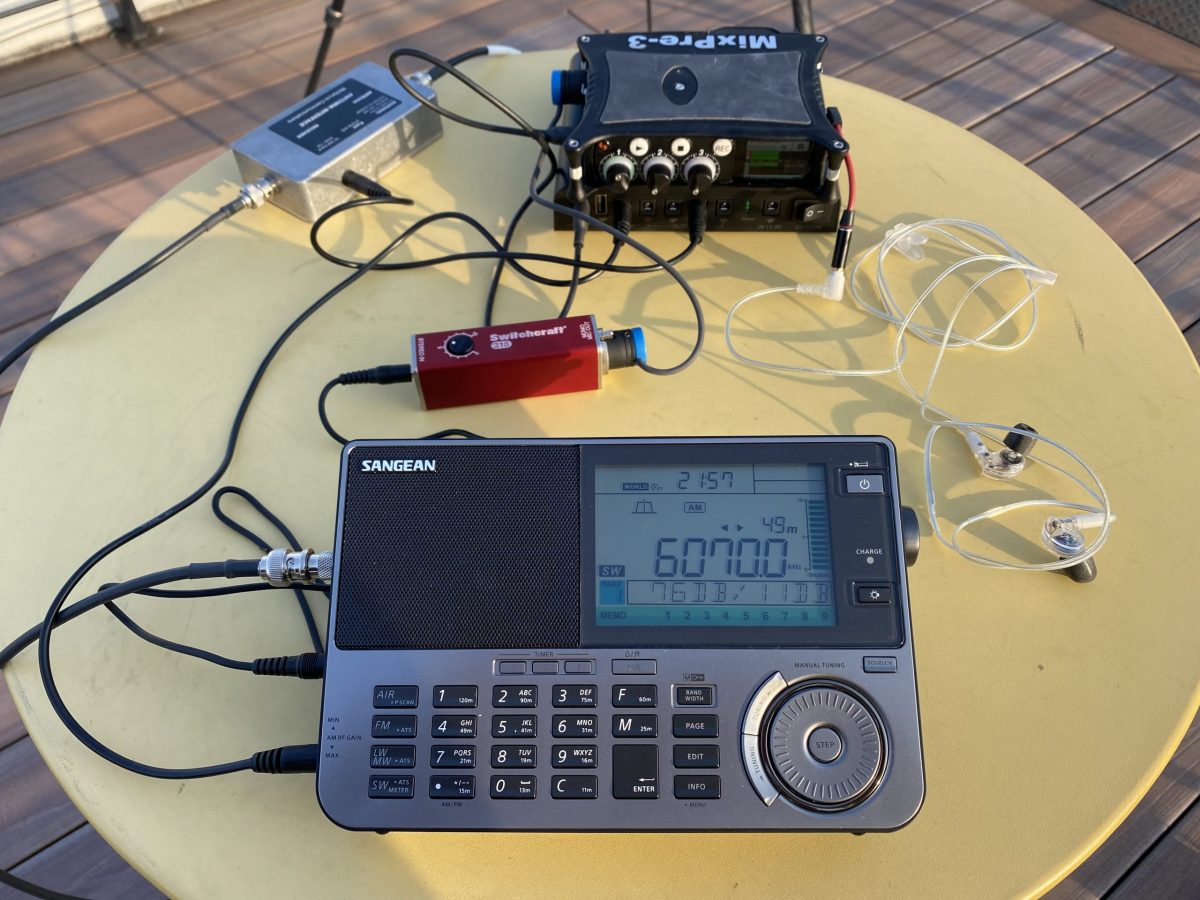
My usual complete travel setup is either a Reuter RDR Pocket C2 radio or a Sangean ATX-909X (recently upgraded to the X2 model). Both these radios work well with the Wellbrook. I use a Sound Devices Mixpre 3 to record airchecks in the field. In the photos, I’m on a rooftop DXpedition listening to Toronto traffic and weather from CFRX on 6070 kHz on a warm later winter afternoon.
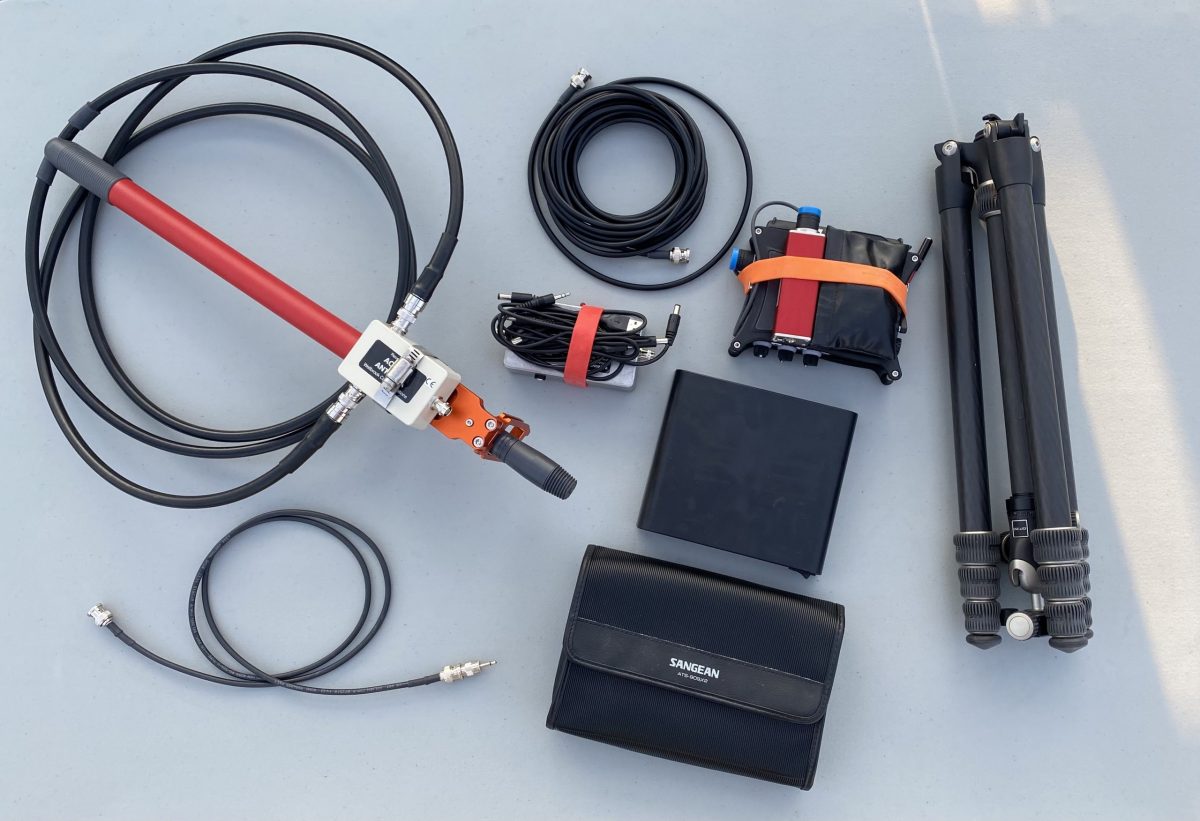
The whole setup breaks down for travel pretty easily, and fits easily in my suitcase, backpack, or bike bag (see photos). I usually bring a larger tripod than this if I’m also taking my camera.

The Wellbrook setup has really made bringing a receiver into the field a lot easier and less uncertain. There’s no worry about finding trees or other supports for wires, and packing and unpacking is quick and easy. Have fun!

Radio Northern Europe International Show #15

Many thanks to SWLing Post contributor, Roseanna, with Radio Northern Europe International who shares the following announcement:


Hei alle,

We have put together a packed show for March for all the wonderful RNEI listeners ?

We’ve got lots of extras including:

 Folk listening on-demand ? and on WRMI ? will get to hear a pretty piece of music from the game Unravel TWO along with a Feature from our new guest presenter, Stephen who also presents 16 Gwendoline Street on 9510KHz, 12:30UTC Sundays!

 Listeners tuned to Channel 292 or Radio Onda ? will get to hear another instalment of This is an Express Music Show featuring fantastic music and some MFSK 64 data!

 For those listening on shortwave ?: HamDRM data at the end of the show (292 & Onda) / hour(WRMI) & Comb Stereo encoding allowing a stereo version of the show to be heard over shortwave with a simple plugin, no special equipment needed! (https://rnei.org/stereo)

 For everyone: Some MFSK 64 data and fantastic show presented by me with music like:
 A haunting song from iris ?.
 Some cute Finnish ?? music.
 An Icelandic ?? bop.
 A massive Sea Shanty ?.
 Some pretty video game ? music.

Coverage Predictions

This is the last of the Winter times, Our summer schedule will be announced soon ?

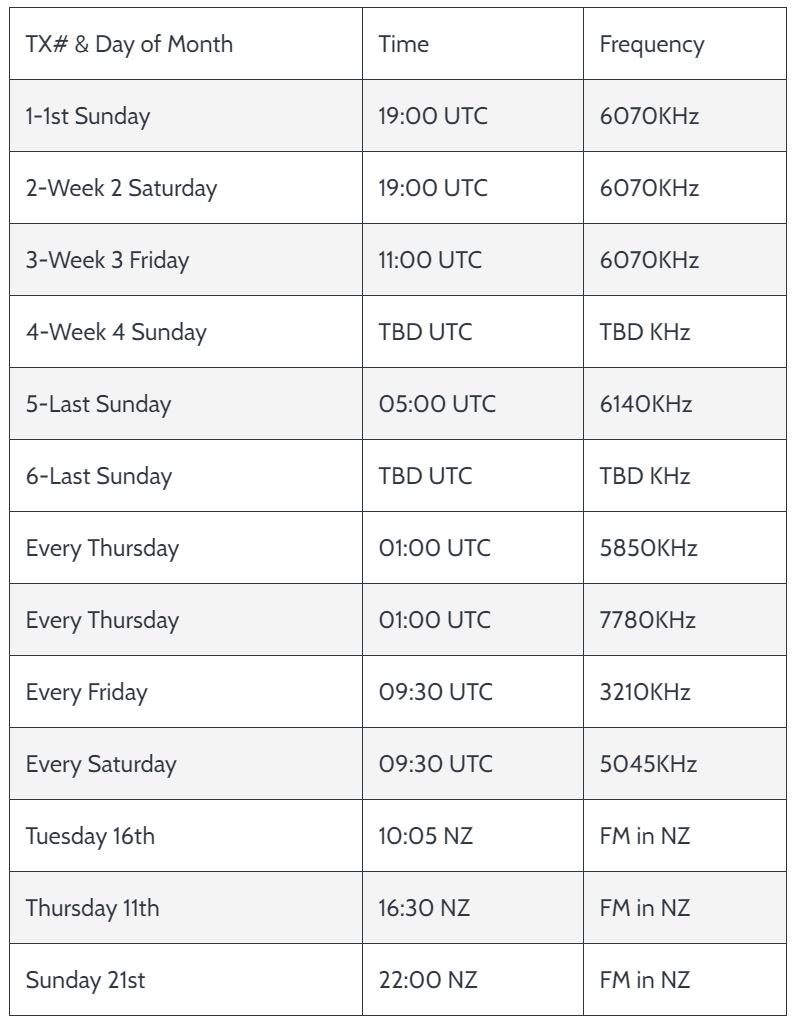
You can find our full up to date frequency schedule here: (https://rnei.org/listen)

Can’t tune into a radio or just want the music without the extras? We also have Spotify Playlists of all of our broadcasts available here: RNEI Spotify Profle with the latest show being added a few days after broadcasting!

Wishing you all the best for this month and look forward to hearing from you again,
Roseanna

Photos from an Antique Wireless Association meeting in 2000

Many thanks to SWLing Post contributor, David, who shares the following random photos he recently inherited and scanned. These were taken at an Antique Wireless Association meeting (AWA) from 2000. Click on images to enlarge:

Thank you for sharing these David!

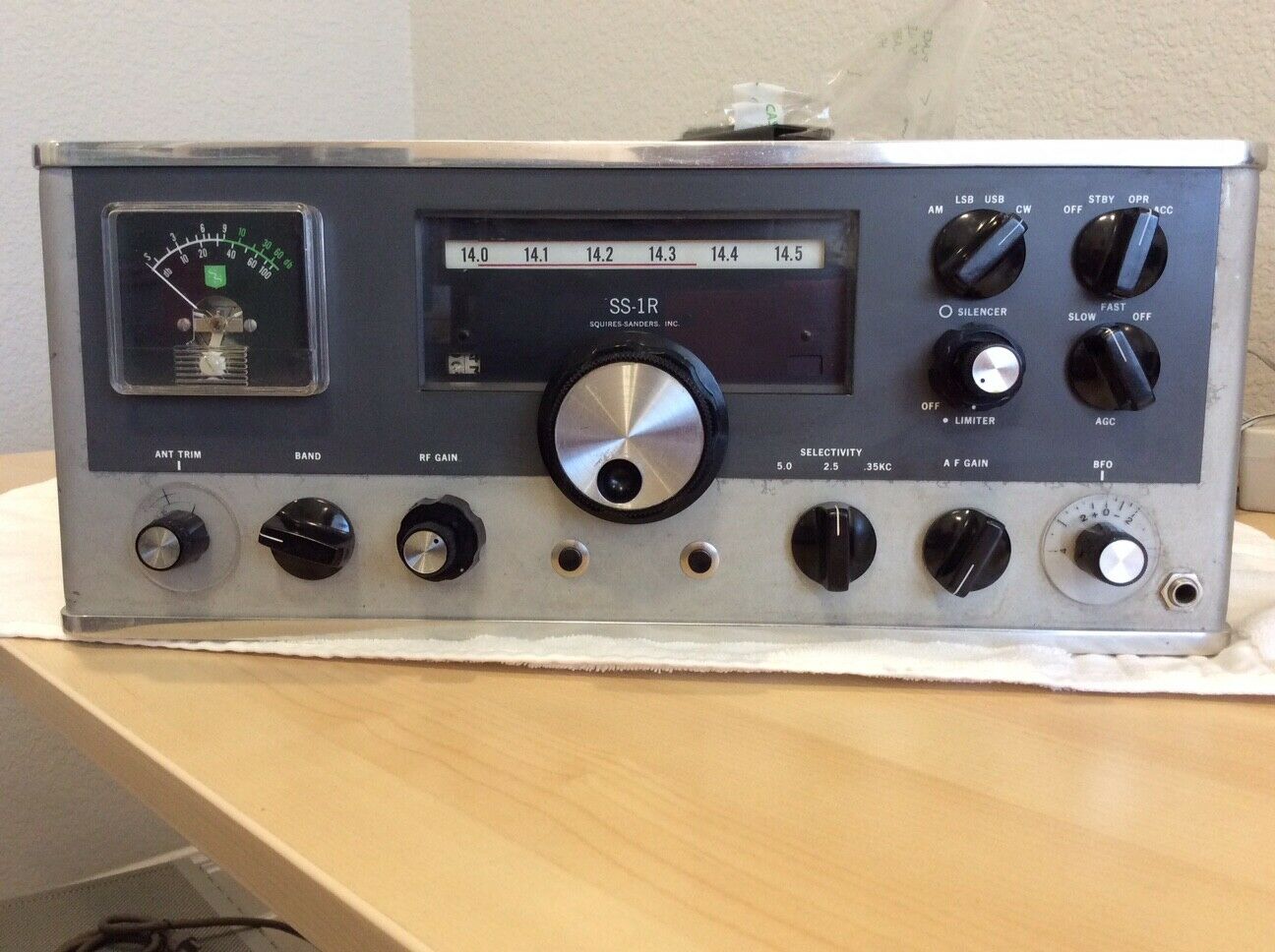
Dan discovers a Squires Sanders SS-1R on eBay

Many thanks to SWLing Post contributor, Dan Robinson who notes that there currently a Squires Sanders SS-1R on eBay. He notes:

Ultra rare amateur receiver. The only thing rarer is a SS-IBS, the SW bands version.

This is certainly a “fixer upper” in that it will need a re-stringing and likely at least a recapping. The chassis is super clean, though, and the internals look great.

Click here to check it out on eBay (partner link).

Ladies of Texas Music Tribute on WRMI starting tonight

(Source: Terry Colgan via FB)

LADIES OF TEXAS MUSIC TRIBUTE ON WRMI TONIGHT

Cap’n Ric is pleased to announce the artists featured in the upcoming Ladies of Texas Music

Tribute:
Jeanie C. Riley
Jamie Lin Wilson
Sunny Sweeney
Lisa Loeb
Norah Jones
Lydia Mendoza
Marcia Ball
Lucinda Williams
St. Vincent
Barbara Lynn
“Sippie” Wallace
“Big Mama” Thornton
Bessie Tucker
Janis Joplin
Lacey Sturm.

Cap’n wagers you haven’t heard of many of these female artists, and also wagers that you’ll enjoy their music.

The tribute program will air several times:
March 7 – 0200 UTC 5950 kHz via WRMI
March 20 – 0900 UTC 6070 kHz and 1800 UTC 3955 kHz via Channel 292 in Germany
March 28 – 0200 UTC 6160 kHz via WBCQ.

Third Mate Susan designed a special limited edition eQSL to be sent to listeners who submit correct reception reports to [email protected].

Radio Waves: Waves of Hope Presentation, More Radio Post-Pandemic, RTÉ to cease radio over DAB network, and Saving VOA Delano Relay DL-8

Radio Waves:  Stories Making Waves in the World of Radio

Because I keep my ear to the waves, as well as receive many tips from others who do the same, I find myself privy to radio-related stories that might interest SWLing Post readers.  To that end: Welcome to the SWLing Post’s Radio Waves, a collection of links to interesting stories making waves in the world of radio. Enjoy!

Many thanks to SWLing Post contributors David Iurescia, William Lee, and Radio Ado for the following tips:


Waves of Hope at Nutley Public Library (Tap Into Nutley)

Saturday, March 27 at 2:00 p.m. via Zoom – Learn the true and inspiring story of centenarian Agnes Joan Negra.  During World War II, using her shortwave radio from her home in Nutley, NJ, Agnes listened to Radio Berlin each night and notated the names of U.S. Prisoners of War as they were announced.  Agnes then went on to send personal letters to each family to inform them that their loved ones were still alive.  Author, Nutley native, and Son of Agnes, Ronald along with his wife Valerie, will discuss the creation of this book and this inspiring story of his mother.  You must register in advance at nutleypubliclibrary.org/waves-of-hope to attend.  When registering you will receive a confirmation and one day before the event you will receive an email with log-in instructions through Zoom.[]

People will be listening to more radio when the pandemic is over: Ciaran Davis (RadioInfo)

“People have learnt that they can listen to radio in new ways and they will be listening to more, not less, when the pandemic is over,” according to HT&E chief executive Ciaran Davis.

Speaking to radioinfo this week, Davis explained that the company had “a very tough second quarter” in 2020, but the rest of the year turned out better than expected.

“There was a huge improvement in quarters 3 and 4, compared with that horrible quarter 2 where radio revenue was back 46%,” said Davis.

With about 30 people losing their jobs at the height of the pandemic, “regular communication and honesty was important in getting the staff through the worst of the pandemic.” It was “a very unsettling time” but the company “kept people involved and focused on the positive,” which kept the company performing well despite the tough economic conditions.

After early pay cuts, salaries have now returned to normal. “The revenue book was empty, so we had to take the decision to cut pay, but radio listenership and advertising has come back strongly and more quickly than we thought it would then… we were looking at some troubling numbers if the pandemic had of kept going.”

Luckily, the worst fears were not realised. HT&E revenue was 22% down on the previous year, but could have been a lot worse. The outlook seems positive for 2021.

“I think there was a perception that radio would suffer the same fate as out of home because people were not listening in the car during lockdowns, but it didn’t.

“We in the industry knew that our content is engaging enough, strong enough, local and live enough to be resilient. The emotional bond between listeners and their favourite stations and personalities meant that they easily switched to new platforms when they were at home. It took some convincing for the ad market to understand that this had happened, but they understood in the end.

“This is an exciting time. I think people have learnt that they can listen to radio in new ways and they will be listening to more not less when the pandemic is over.”[…]

Read more at: https://www.radioinfo.com.au/news/people-will-be-listening-more-radio-when-pandemic-over-ciaran-davis © Radioinfo.com.au


RTÉ to cease radio transmission on DAB network (RTÉ)

RTÉ is to cease transmission of its radio services on the Digital Audio Broadcast (DAB) network on 31 March.

However, its digital radio services, RTÉ Gold, RTÉ 2XM, RTÉ Radio 1 Extra, RTÉ Pulse, and RTÉjr Radio, will remain available on other platforms.

In a statement, the broadcaster said the move to cease DAB transmission was driven by three main factors – the fact that DAB was the least utilised platform in Ireland; that RTÉ is the only Irish broadcaster on the DAB system, and cost avoidance.

A public information campaign will be held to show customers how they can continue to access the digital stations.

In 2019, RTÉ had announced that its digital radio services would cease transmission as part of cost cutting measures.

However, although the DAB service will stop in March, the stations will now still be available on other platforms.

The broadcaster said this is due to the value audiences still derive from them.

The latest JNLR report, Radio in a Digital World, compiled by Ipsos/ MRBI, found that while 8% of the population in Ireland (330,000 people) are accessing radio stations via digital means, the smallest number in this cohort opt for DAB.

According to the report, just under 5% of adults in Ireland listen to radio via a mobile device, 2% listen on a PC, around 1.5% listen on a smart speaker, 0.6% listen on a TV set and 0.5% DAB. 77% of adults in Ireland listen to radio on FM.

For details on how to continue to listen to RTÉ digital radio services visit www.rte.ie/keeplistening 

One Megawatt of Peak AM Power – Saving the Voice of America Delano Relay DL-8 (YouTube)

In 2007, the Voice of America ceased operations at the Delano Relay site in Central California. The site is destined to be bulldozed along with several relics of Collins Radio Company’s Broadcast Communications Division. The Collins Collectors Association, with assistance from the Antique Wireless Association, hatched a plan to retrieve one of the Collins 821A-1 250 KW Shortwave Transmitters from the site and place it on display for all to see. This presentation gives some history of VoA and the Delano site and follows the disassembly and relocation of Delano Relay DL-8.

Dennis Kidder, W6DQ, is a retired Aerospace Engineer, having spent nearly 45 years in System Engineering. His career spanned many fields – from building and operating large scale sound systems, computer systems used to publish newspapers and control communications satellites, 4 years as the Chief Telecom Engineer during the construction of the New Hong Kong International Airport, and finally, air defense radar systems and networked radio communications systems used by the military. First licensed as WN6NIA then WA6NIA over 50 years ago, Dennis was granted the callsign of one of his High School Elmers, Chek Titcomb (SK), W6DQ. Amateur Radio has been a nearly life-long passion.


Do you enjoy the SWLing Post?

Please consider supporting us via Patreon or our Coffee Fund!

Your support makes articles like this one possible. Thank you!