
Many thanks to SWLing Post contributor, Andrea Borgnino (IW0HK), who shares the following video–a 15 minute NSA documentary–about the FLR-9 “Elephant Cage” antenna in Anchorage, Alaska.

Many thanks to SWLing Post contributor, Andrea Borgnino (IW0HK), who shares the following video–a 15 minute NSA documentary–about the FLR-9 “Elephant Cage” antenna in Anchorage, Alaska.
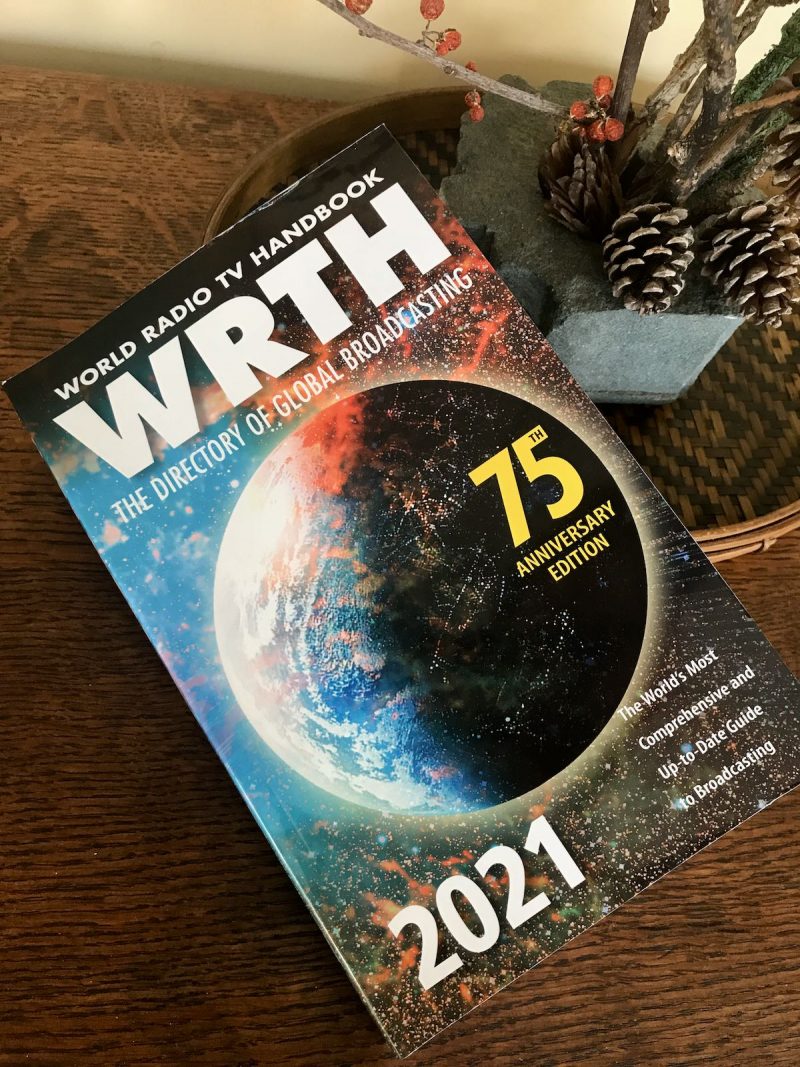
Last week, I received a long-awaited Christmas gift: the 2021 World Radio TV Handbook. Normally, I’d receive this annual guide in the December time frame, but because of delays in international postal services due to the Covid-19 pandemic, I took delivery a few weeks late.
I always look forward to receiving this excellent staple radio reference guide–and this is their 75th edition! As I say each year, the WRTH has never disappointed, so my expectations are always quite high.
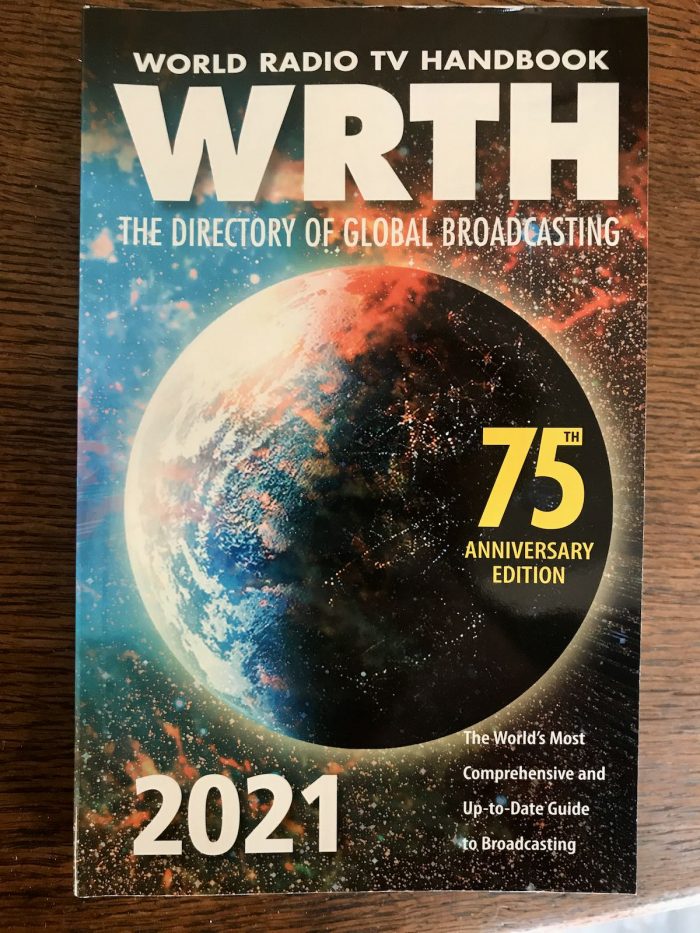
Once again, the WRTH lived up to my expectations.
WRTH’s team of noted DXers from around the world curate frequencies and broadcaster information by region; while I’m not sure how they orchestrate all of this, the end result is truly a symphony of radio information. In addition to broadcaster listings, WRTH’s radio reviews, feature articles, and annual HF report make for excellent reading.
But the WRTH isn’t just a frequency guide: the publication always devotes the first sixty or so pages to articles relating to various aspects of the radio hobby. Following, I offer a quick overview of these.
The first article always features a WRTH contributor: this year, they feature Stig Hartvig Nielson. His path to becoming a WRTH contributor began in his childhood when he said he was “tall enough to reach the radio tuning knob and tune away from dull Radio Denmark.” His love of radio lead him down the path of becoming a broadcaster. Many of us know him via his station, Radio208.
The second set of articles is always my favorite: WRTH receiver reviews.
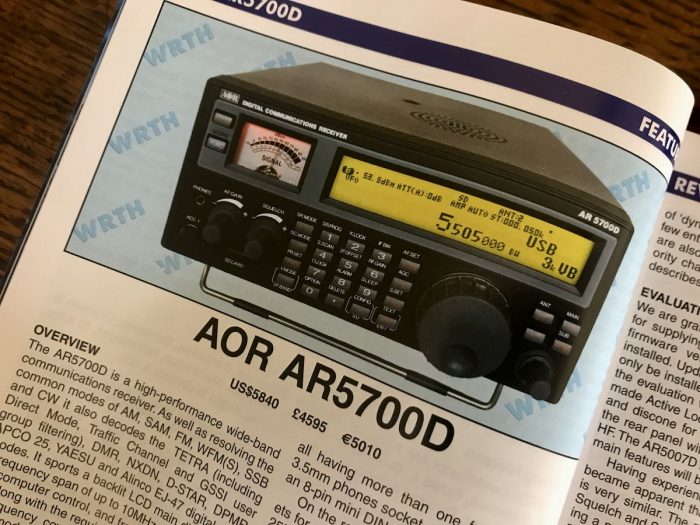
This year, WRTH begins with an in-depth review of the AOR AR5700D wideband communications receiver–a radio I’d likely never touch in real-life, so it’s wonderful to take such a deep dive. Next up is a review of the Bonito NTi MegaDipol MD300DX antenna which gets high marks for high gain, low noise, and good dynamic range. The following in-depth review is of the benchmark Icom IC-7610 general coverage transceiver. This was the first time I’ve read a review of this SDR transceiver with radio listeners in mind. WRTH then review the Bonito NTi CCMC30 common mode noise filter–a tool that can help radio enthusiasts mitigate RFI.
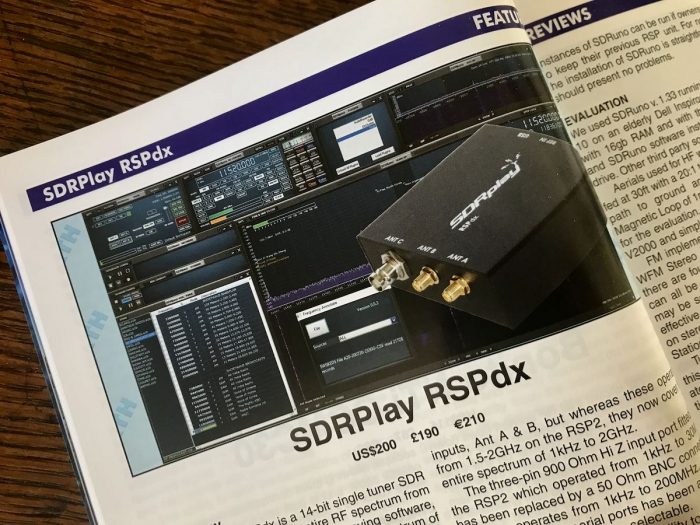
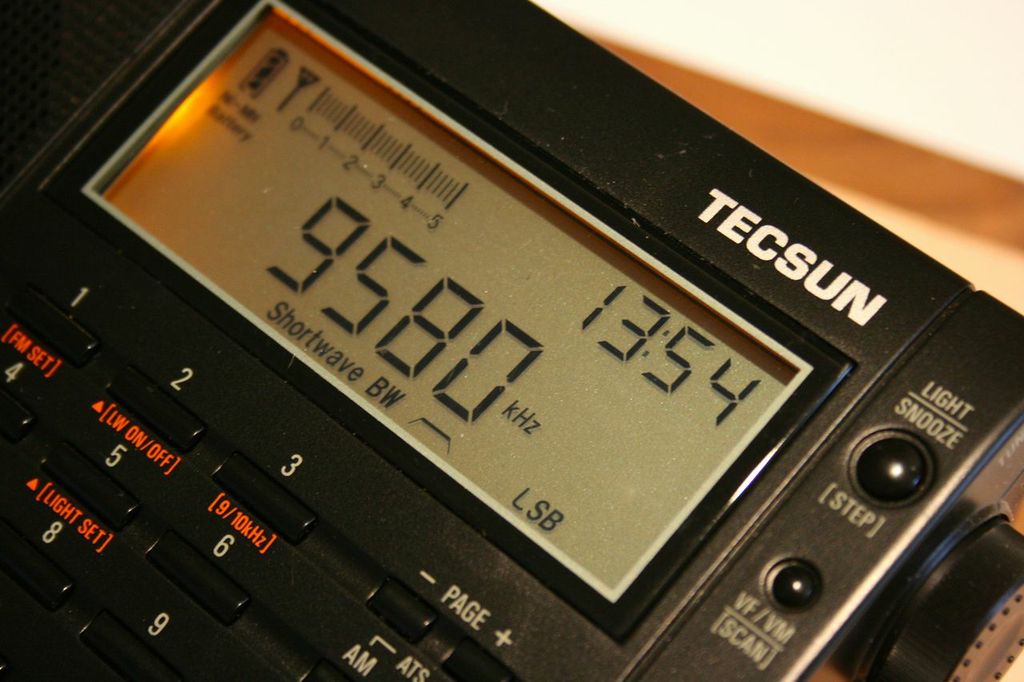
A review of the SDRplay RSPdx follows and the review speaks to the performance improvements included with the new HDR mode. The next review is actually one I authored of the Tecsun PL-990 portable radio–it’s always an honor to be in the pages of the WRTH!
The final review is of the Valent F(x) KiwiSDR; a little web-connected SDR receiver that has certainly transformed the nature and accessibility of remote listening.
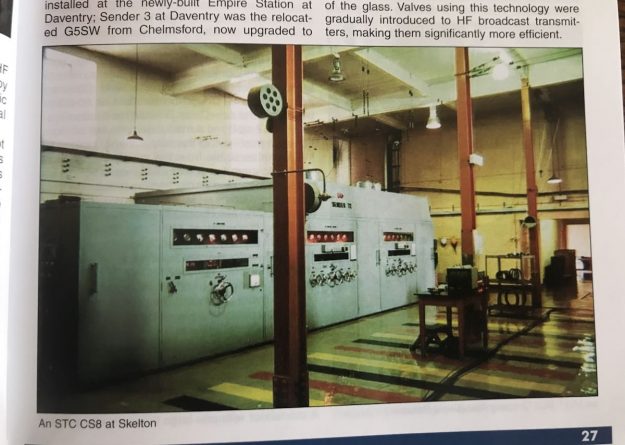 The first feature article, written by none other than Dave Porter, focuses on the development of HF broadcast transmitters. This article adds to the one he authored last year which focused on broadcast antennas. Dave is amazing because he has such an extensive history in the world of HF broadcasting and his experience and expertise are obvious in all of his writing. This is a must-read for those who want to know more about the “business side” of an international broadcast signal!
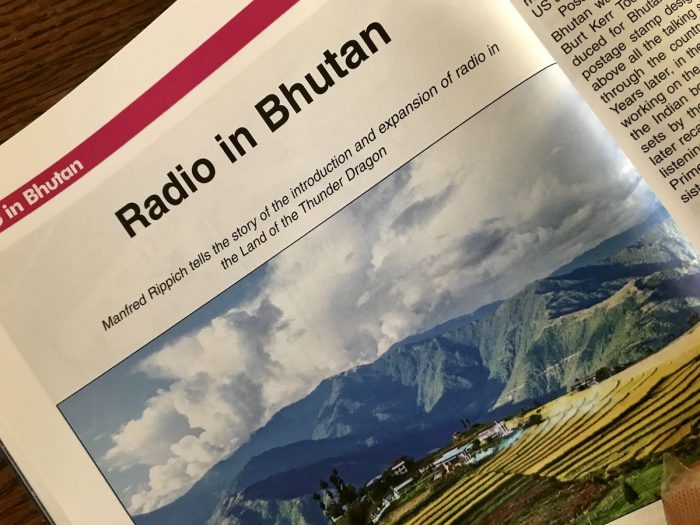
Manfred Rippich’s feature, Radio in Bhutan, explores the story of broadcasting in one of the most mountainous countries in the world where communities–including the capitol–are not easily accessible. Radio broadcasting plays an important role in this amazing country.
The following feature, Coastwatchers & the AWA Teleradio 3BZ written by Dr Martin Hadlow, takes a look at the importance of portable radios in the Pacific War. An absolutely fascinating piece for those of us who love radio history.
The final feature was written by Alan Pennington and explores the dynamic Scandinavian Weekend Radio. It’s hard to believe SWR has celebrated 20 years on the air as of 2020. Pennington’s article explores the grassroots energy of this unique broadcaster!
The final article–a tradition–is the WRTH HF propagation report/forecast by Ulf-Peter Hoppe. Always an informative read especially as we continue to work our way out of a long-term solar slump.
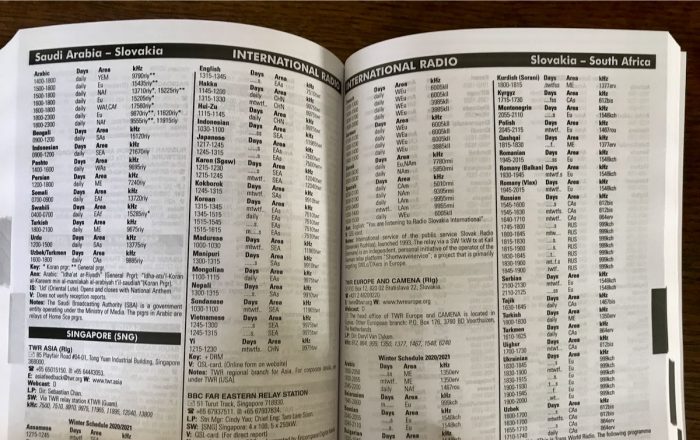
The 75th is another fantastic edition of the World Radio TV Handbook. As I say every year, I’ve never been disappointed with WRTH. Their publishing standards are such that the quality of their reviews, their writing, and (most importantly) their broadcast listings are simply unparalleled.
For DXers who collect QSL cards, you’ll find that broadcaster contact information in WRTH is often more up-to-date than a broadcaster’s own website. When readers contact me asking for QSL information from an obscure broadcaster, the first place I search is the current WRTH. Remember: their information is based on volunteer contributors who specialize in specific regions of the world–the most knowledgeable regional DXers keep this publication accurate.
Purchase your copy of WRTH 2020 directly from WRTH’s publishers, or from a distributor like Universal Radio (US) , Amazon.com (US), or the Book Depository (international).
Many thanks to SWLing Post contributor, Mei Tao, who shares the following photos of Tecsun’s chairman, Mr. Wei Liang:

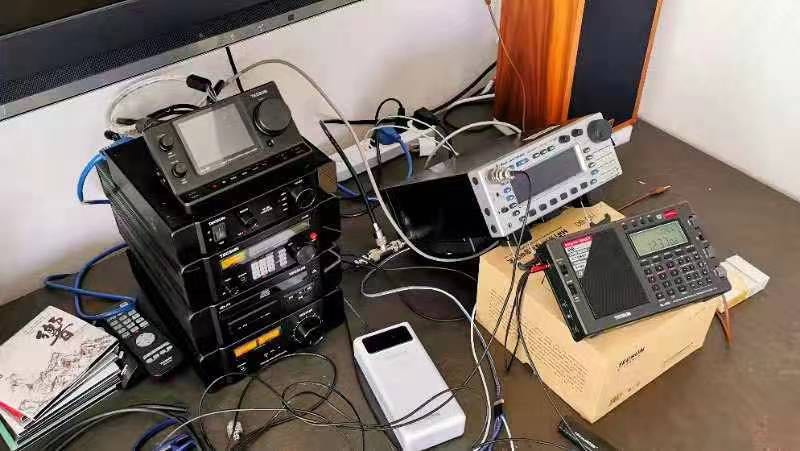
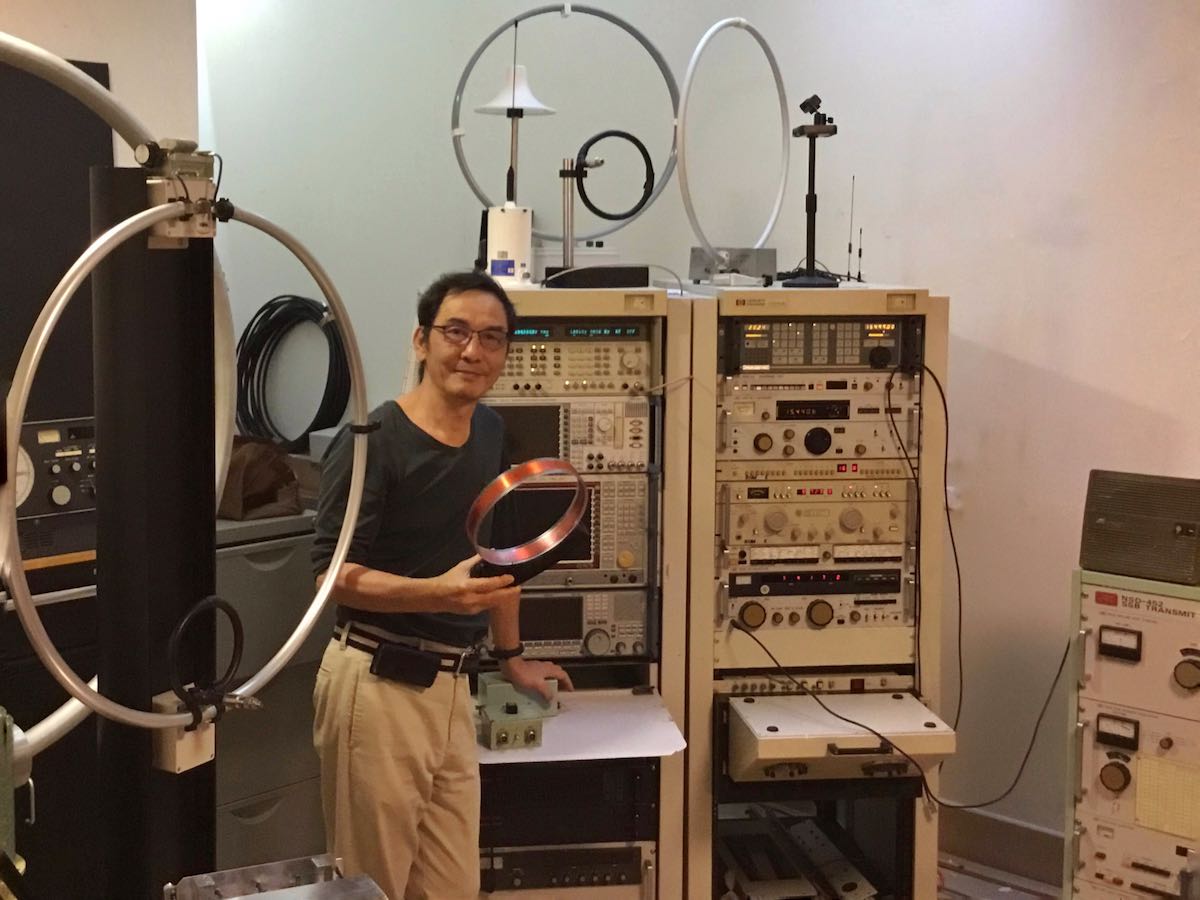
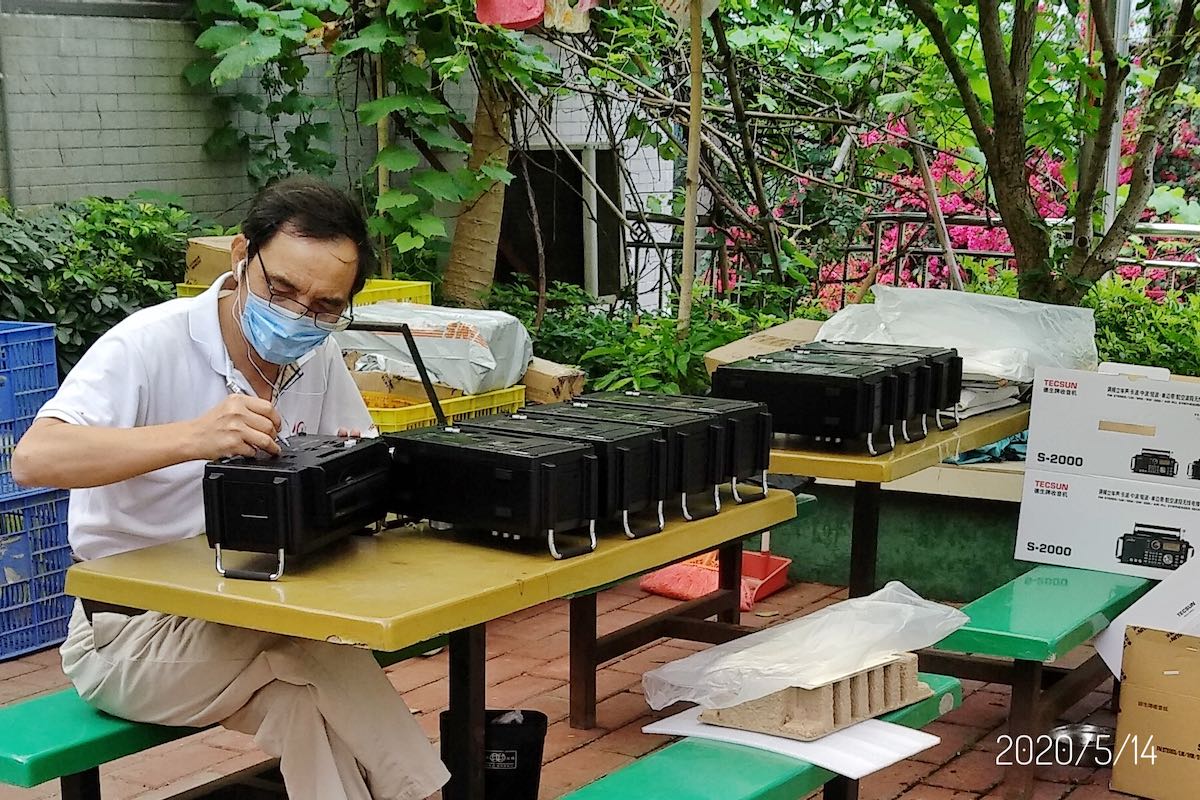

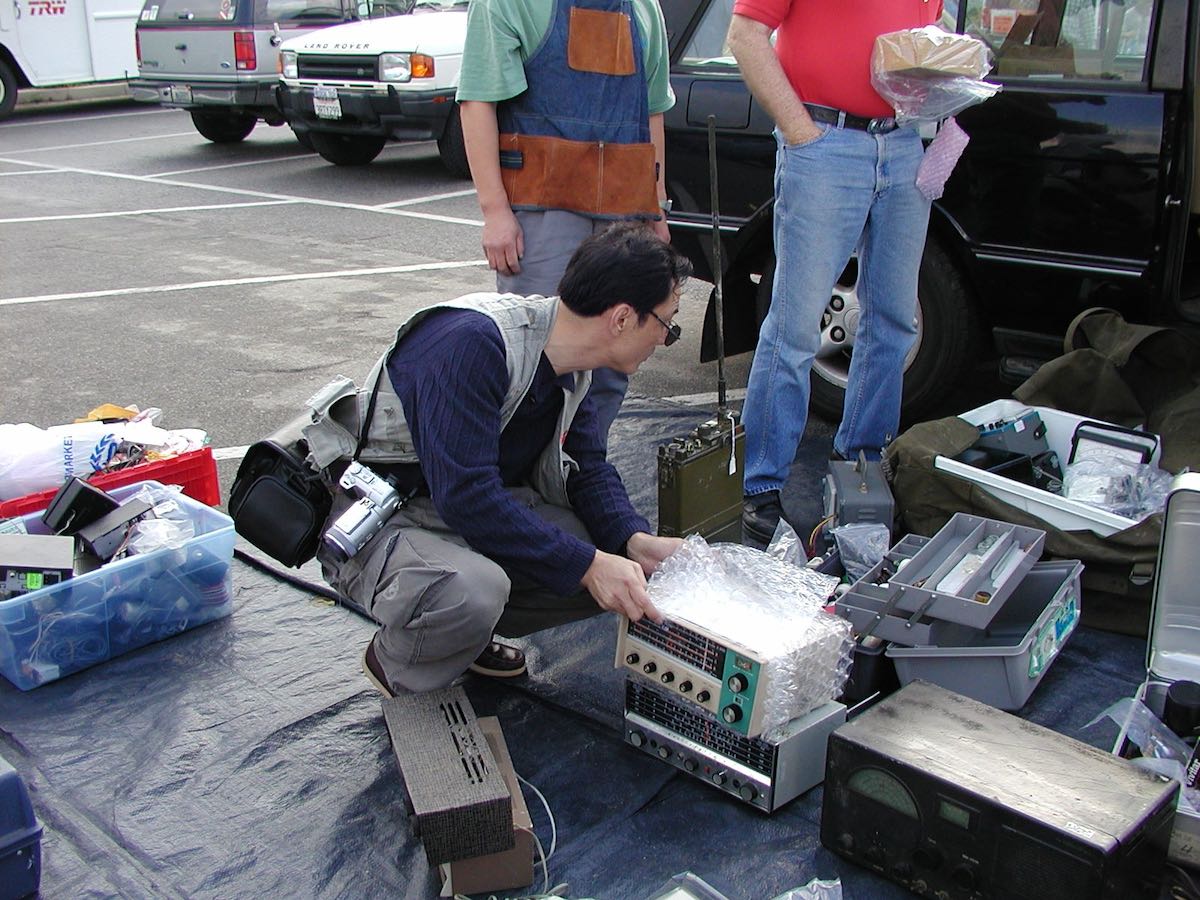 Thanks for sharing these photos, Mei Tao. It’s evident that Mr. Liang is a proper radio enthusiast–he’s certainly a major innovator in the world of shortwave radio portables!
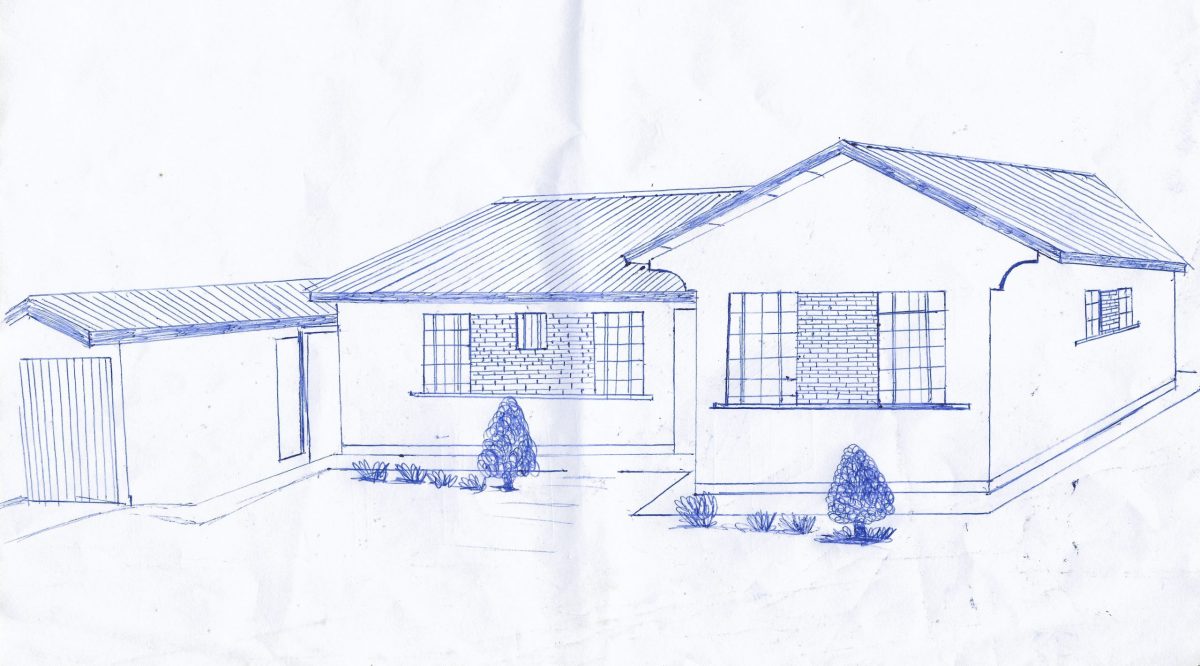
Drawing of the new studio building for Radio Kahuzi
Many thanks to SWLing Post contributor, Dan Robinson, who writes:
SWLing Post readers have no doubt been wondering, along with the rest of us, about the status of Radio Kahuzi, the religious missionary station in Democratic Republic of Congo.
The station has been off the air for months, following a lightning strike in 2020 and various ongoing problems with power supply there in DRC.
Now, a note from Richard McDonald, founder of Radio Kahuzi, who says that they hope to be back on the air soon, though no timeline is provided.
For those who are not familiar with the station, it used a slightly off frequency of 6210.2 kHz in the 48 meter band. This was within the area of European pirate stations, and various broadcasters transmitting to North Korea and Iran, but propagation was usually such that Radio Kahuzi could be heard at European SDR sites in the hour or so before station sign off in the 1800 to 1820 UTC range.
Unclear from the note sent by McDonald is what power the station will be using when it does
finally return to the air. Previously power was in the 500 to 750 watt range. McDonald provided a drawing of what appears to be the new studio building for Radio Kahuzi [see image at top of page].Hi Daniel and our faithful Dxers !
Thank you for your interest and encouragement for Radio Kahuzi and BESI ! The Lord is GOOD and we are recovering from the malaria and the yearly flu; finding another Normal !
We received the repair parts Monday 1 Feb 2021 DHL from Mike Axmon and Son Set Solutions that we were not able to find locally, to repair our SW Transmitter, after a Lightning Strike that took out four Radio Stations the same day.
We hope the partial repair will now be complete to bring back the functions that thus far were uncontrolled after initially replacing the six transistors, etc. !
At the same time, SNEL is being converted to a Cash Power system at the Studio, and our Antenna will be re positioned Next Door.
A New Prime Minister will be installed soon, as the government is being transitioned, while we are all still in Lock Down with little changes being made backward and forward, locally and world-wide !
We trust you are all well and making progress where ever you are !
Keep Looking UP !
In His Love and Care,
Richard and Kathy McDonald, Directors
BESI / Radio Kahuzi / Bukavu, D R Congo
Many thanks, Dan, for the update!
 Many thanks to SWLing Post contributor, Rob Zingarelli, who shares the following guest post that originally appeared on his blog in October, 2020:
by Rob Zingarelli
This is a question that has circled around on the fringes of my consciousness for years now, but one that I’ve never quite found time to test. And it is a simple question: When using a random wire antenna with a portable shortwave receiver, is it better to string the wire vertically or horizontally, or does it even matter? Mostly this is a question when out camping, because arranging a 19′ wire vertically is usually a good bit more involved than just stringing it out along some nearby bushes.
Before going any farther, I want to point out that this is an exercise in ordinary backyard shortwave listening with relatively inexpensive equipment. There are many, many better-engineered and more costly solutions to the technical challenge of shortwave scanning, and this does not address any of those sophisticated approaches. This is for the person who opens up the box and wonders about the best way to hang the included long-wire auxiliary antenna.
Equipment: Tecsun PL-660 SW/AM/FM/Air Band receiver, with its included 19′ random-wire antenna. Internal battery power used.
Conditions & Time: Clear local weather. hamqsl.com’s nowcast of band conditions were fair from 3.5-14.35 MHz, and poor for higher frequencies, with SFI = 72, SN = 26, A = 5, K = 1. Time was 21:00-21:30 UTC, or 4-4:30 pm local CDT.
Procedure: Out in the backyard (typical residential neighborhood, well-spaced ~150′ between houses, above-ground power lines 125′ away), suspend random wire from ground to its full length. This was achieved using a length of paracord over a tree limb, with the tree trunk ~30′ from the radio’s location. With the PL-660’s antenna gain control set to “Normal” (i.e., the mid-setting of Local-Normal-DX) and the bandwidth set to narrow, use the receiver’s automatic scan function to see how many stations were received. Make notes of the number of transmissions detected, reception characteristics and quality, and any perceived noise levels. Re-orient the antenna to a low horizontal position, over two sawhorses approximately 3′ high (see picture), and repeat.
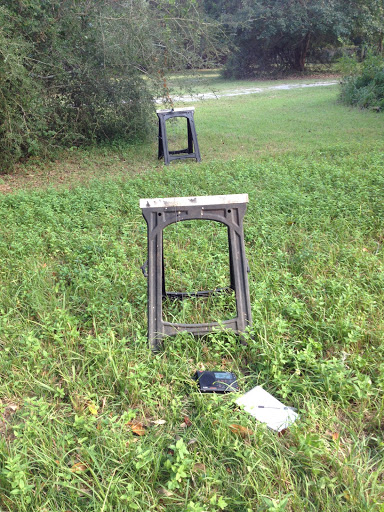
Sawhorses spaced ~17′ apart. Radio and notepad can be seen on ground in front of the near sawhorse.
Results: For the vertical antenna orientation, 32 stations were detected between 5959 – 15730 kHz. Nearly all were intelligible, with those at the lower end more steady and those a the higher end much more variable in strength. For the horizontal antenna orientation, 21 stations were detected between 9265 – 1570 kHz. Similar overall signal quality was heard for the received stations in either antenna orientation. More noise was noticeable at the lower frequencies between the stations for the vertical antenna orientation. However, this was significantly below the received signal levels, and not an issue in the overall listening quality.
Conclusions & Discussion: Suspending the wire antenna vertically worked better, especially at the lower frequencies. Getting a wire up 21’+ vertically is usually not as convenient as stringing it horizontally, but it may be worth the extra effort, depending on the location, campsite, nearby trees, etc. The overall conditions were typical for fall camping weather, with fair-to poor radio propagation conditions, so this result should be broadly applicable for how SW portables are often used. This result may change with propagation and radio noise conditions, both for atmospheric and local noise sources. Testing will continue as propagation conditions improve with solar cycle 25 getting underway.
——-
Addendum, 10/12/20: While writing this up yesterday evening, it occurred to me that I hadn’t tested the PL-660’s built-in whip antenna. This comparison is important, because sometimes the wire antenna is too cumbersome to deploy. So, how does the whip antenna compare?
Conditions & Time: Overall, very similar to yesterday. hamqsl.com reports fair conditions from 3.5–14.35 MHz, and poor for higher frequencies. SFI = 72, SN = 26, A = 3, K = 1. Same time of day as yesterday’s testing.
Procedure: Repeat of yesterday, with the whip antenna added to the test. The whip was oriented vertically.
Results: For the vertical 19′ wire, 31 stations were found by the auto-scan function between 2380 – 15770 kHZ. Electrical noise was low but audible in the 3 MHz region, fading to none at higher frequencies, and not a significant source of interference with any stations. For the horizontal wire, 15 stations were found between 9265 – 13630 kHz. Electrical noise was barely audible. With the whip in use only 1 station was found. Switching the antenna gain to its DX (most sensitive) setting, 6 stations were found.
Revised Conclusions: Adding to yesterday’s conclusions, the whip antenna functioned but was vastly inferior to the wire antenna in either configuration, even with the gain set to DX. Today’s results with the wire antenna were, unsurprisingly, very similar to yesterday’s, given that the ionospheric and weather conditions were nearly identical. Noise was not a factor in receiving for any of these antennas or configurations, but did noticeably increase for the vertical wire antenna.
Thank you for sharing this, Rob! It’s experiments like this that help us determine, especially, what antenna setups work at our own particular locations since RFI characteristics can vary so much. I’m guessing had your horizontal wire been elevated to even 20′ off the ground it might have produced better results, but sometimes this can be difficult to achieve. I like how you used the auto search function to determine the number of stations you could receive with each setup and it was a great addition to include the built-in telescoping whip.
Thank you again for sharing your results with us!
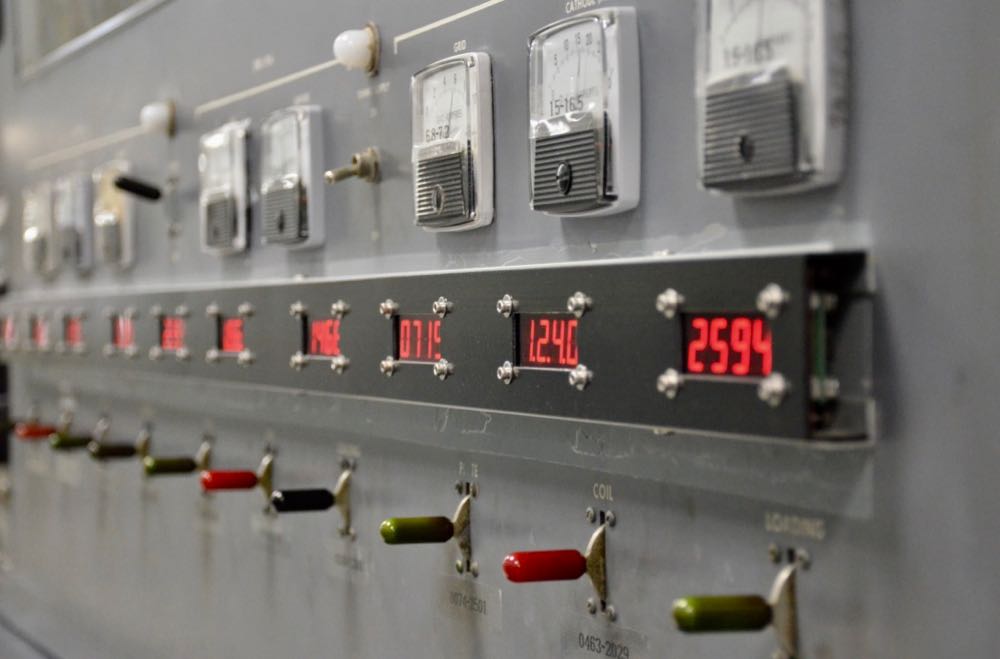
(Source: VOA News)
Voice of America is 79 years old today [February 1, 2021].
Its 1942 debut was unpretentious — a live, 15-minute shortwave radio broadcast transmitted into Germany from a small studio in New York City.
Now, the U.S.-funded but independent VOA reaches more than 280 million people across the globe each week in more than 40 languages.
Its stories, covering the range of the human existence in the Unites States and countries throughout the world, appear on digital, television and radio platforms and can be accessed on mobile phones and social media. VOA stories are carried on a network of more than 2,500 affiliate stations.
In the first broadcast in 1942, a little more than seven weeks after the United States officially entered World War II, listeners first heard an American patriotic song, “The Battle Hymn of the Republic.”
Then, announcer William Harlan Hale said, “We bring you Voices from America. Today, and daily from now on, we shall speak to you about America and the war. The news may be good for us. The news may be bad. But we shall tell you the truth.”
It is a credo that since 1976 is embedded in the VOA Charter, which by law requires the organization to “serve as a consistently reliable and authoritative source of news.” It says VOA news must “be accurate, objective and comprehensive.”
VOA is part of the U.S. Agency for Global Media, the government agency that oversees all non-military, U.S. international broadcasting.
VOA’s professional journalists produce dozens of stories every day without interference from the U.S. government.
Many thanks to SWLing Post contributor, Roseanna, with Radio Northern Europe International who shares the following announcement:
Hei alle,
RNEI show #14 is now on air complete with TIAEMS for February 2021!
February marks a year since the first RNEI broadcast on 6070 kHz, the 15th of February 2020 ?
To celebrate this we are starting the show with an acoustic version of the first song we played on RNEI followed by music like:
• A cute song from Beni Holm
• More great songs from Vionavega, BEHM and ISÁK
• Our second ever song from Estonia ??
• One of my favourite dance songs for the data section from LOKE
The extras for this show are:
• An MFSK 64 Song playlist embedded into the final song for all Editions of the show.
• HamDRM with our Animated HTML Playlist for WRMI, Onda and Channel 292 versions.
• Comb Stereo encoding for all Shortwave broadcasts compatible with any radio, for more information please see https://rnei.org/stereo/
• 30 minutes of calming music on the WRMI edition to fill the extra time, hopefully you don’t fall asleep haha!
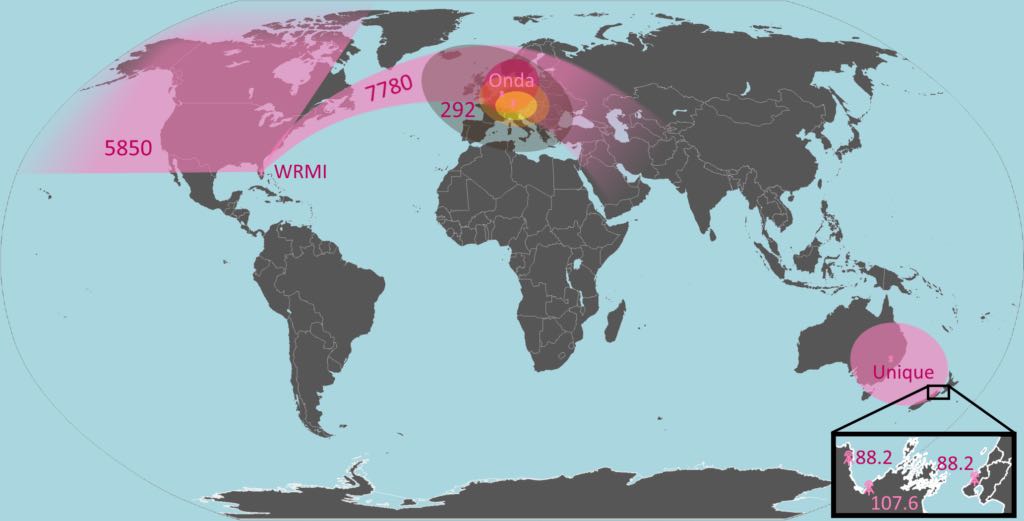
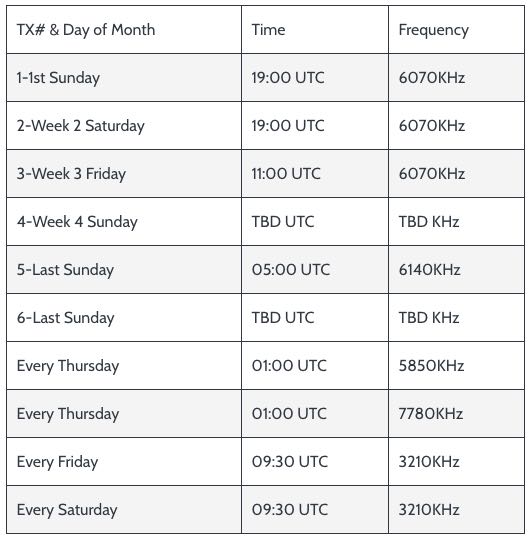
You can find our full up to date frequency schedule here: (https://rnei.org/listen)
Can’t tune into a radio or just want the music without the extras? We also have Spotify Playlists of all of our broadcasts available here: RNEI Spotify Profle
We thought we’d give a little shout-out, in the form of a map, for all of our listeners around the world, we love you all ?

Wishing you lovely listeners all the best for February,
– Roseanna