Category Archives: Shortwave Radio

The SDR.hu web SDR portal is no more, but we have several excellent alternatives

In January, András Retzler–owner of the SDR.hu KiwiSDR portal–started requiring registration and a ham radio license in order to access their extensive online database of SDRs.

Today, we learned of the site’s closure.  Here’s the message posted at SDR.hu:

The SDR.hu project has been finished

I’d like to say a big thanks to everyone who joined my journey with this project!

I hope you had a good time listening on the site, and learnt some things about SDR. The purpose of this site was to provide a technological demonstration for amateur radio operators about Software Defined Radio, and I hope this goal has been reached. As this website was a one-person hobby project, with my tasks and responsibilities growing, and my focus moving to other projects at which I hope to make a greater positive impact, I’m unable to further develop SDR.hu and protect it from abuse.

Furthermore, I think this site has some good alternatives now. Nevertheless, in my opinion amateur radio receivers should be shared with strict access control in the future.

If you have more questions, feel free to consult the FAQ.

73!

Andras, HA7ILM

SWLing Post contributor, Mark Fahey, shared the following message sent by Andras to all KiwiSDR owners in the database this morning:

Hello,

You are receiving this e-mail because you were listing a receiver on SDR.hu in the last 3 months.

I wanted to let you know that the SDR.hu project is discontinued.
This is because I have to focus on my PhD and unfortunately I don’t have enough time anymore to maintain the website and protect it from abuse.
If you have questions, there’s a FAQ on the front page: https://sdr.hu/
For KiwiSDR users there is another listing service available on the KiwiSDR website: http://kiwisdr.com/public (I’m not involved with this one.)
Thank you very much for having participated in the project!

VY 73!

Andras, HA7ILM

Alternative KiwiSDR Portals
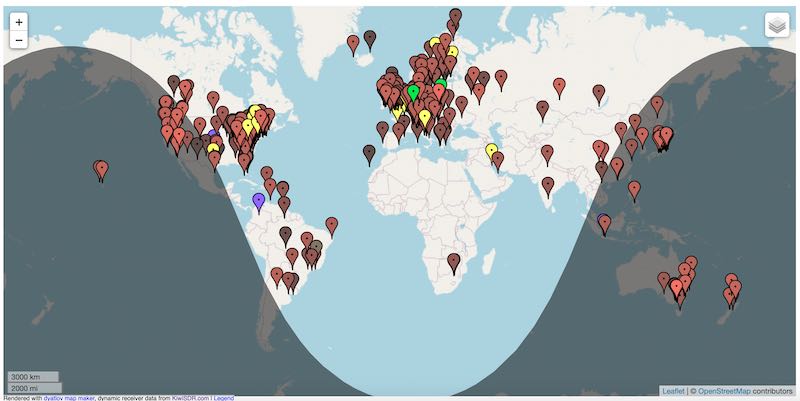
Fortunately, there are a number of other KiwiSDR portals that do not require registration or a call sign. Here’s a list:

If you prefer another KiwiSDR portal, please comment with a link.  I’ll try to update this post with any new additions!
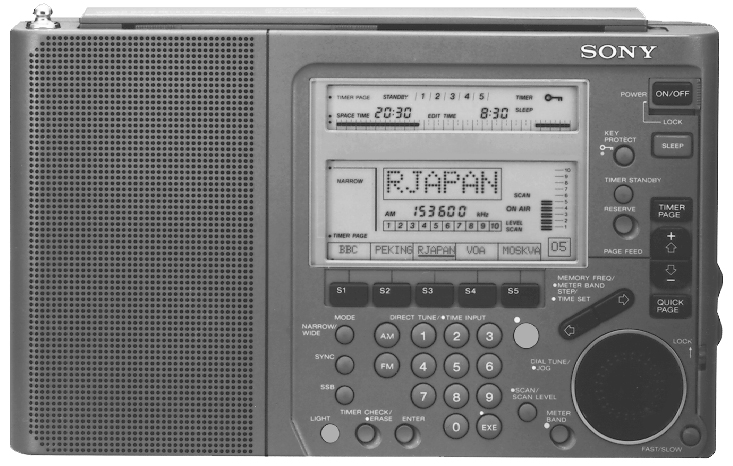
Reunited with an old friend…

Many thanks to SWLing Post contributor, Marwan Baayoun, who writes in response to our recent post about radio regrets:

For me, my biggest regret was when in November 2018 I sold my well-protected Sony ICF-SW77.

I bought it brand new over the phone from Universal Radio. My ICF-SW77 was my side kick and went with me everywhere. I remember working the second shift at a publishing company, I would always eat my lunch outside while listening to any international broadcasters I could catch like the BBC, Radio Havana Cuba, Deutsche Welle, or the VOA.

I remember how my co-workers reworded the saying “Life Without A Wife, Is Like A Kitchen Without A Knife” to “Life Without A Wife, Is Like Marwan Without His Shortwave Radio.”

When I got married, my best friend invited us to visit with his wife and children at their house in Upstate New York. He even bought one of the tickets as his way in helping me paying for the fares. I remember the night we arrived at his house me pulling my ICF-SW77 and tuning it to the BBC World Service because we all wanted to get the latest on a sad piece of news that was just breaking that made us, and almost everyone in North America and around the world, stare at TV sets hoping for the best. Then Tom Brokaw came on to announced something that we, and others who were listening to the BBC World Service, had already knew 15 minutes earlier: the sad news the Lady Dianna did not survive the car crash.

My friend was impressed with what shortwave radios could bring to the table.

In the last month I went on a binge and bought a used Realistic DX-440 (love this radio BTW, very nice), and all new XHDATA D-808, Tecsun PL-880, and Tecsun PL-680. I also bought but then returned a Sangean ATS-909X.

To close on a happy note, today I received an almost brand new Sony ICF-SW77 that I bought from a very kind gentleman on eBay–he was willing to accept my fifty dollars less than his asking price offer.

My happiness is beyond expression. I would have never thought I would be able to re-unite again with one of these radios in a condition that is identical to the one I sold. He kept it very well. I tried to find a scratch or a piece of dust on this radio but couldn’t. Not only that, it also came with it the original box, very well kept manual and “Catch the Waves” booklet, (I gave mine to the gentleman who bought my radio, so it was sweet that they were replaced with this purchase). My new ICF-SW77 seller just did not have the power adapter that came with this radio, which is fine with me. I can always find a third party power adapter to buy.

I feel so lucky I am once again an owner of one of these awesome radios.

What an amazing story, Marwan, and I’m so glad you’ve been reunited with an IC-SW77!

Radio love is a funny thing and hard to compare with any fondness one might have of other consumer electronics. For example, I’ve never lamented over the loss of a laptop, iPhone, or iPod–but, like you, I have indeed regretted parting with radios. I know many of you feel the same way.

To me, radios feel much more like companions who share the world with you–through travels and over the air.

I’m happy to hear you’ve got your companion back, Marwan!

Super cheap Walmart soap bar holder transforms into an ideal portable radio stand

Many thanks to SWLing Post contributor, Shawn Bliss (KB7WYO), who writes:

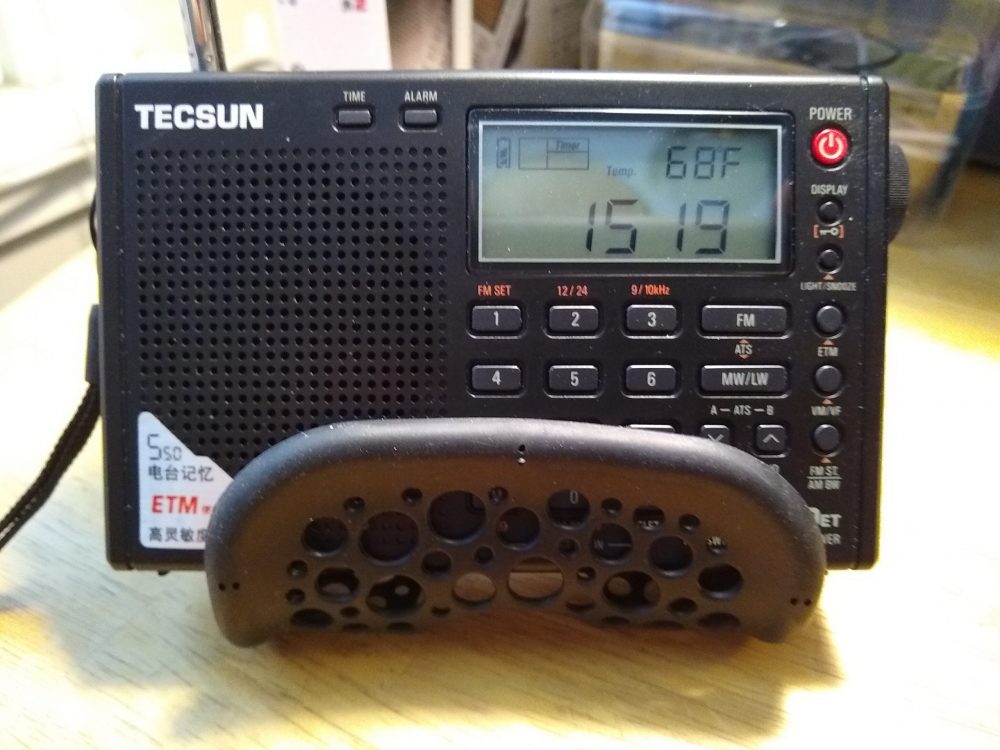
Hi, Thomas! I love the blog and check in every day or two to get my SWL fix. I recently purchased a PL-310ET on your recommendation (and those of many other radio people) and absolutely love it. My previous porch radio was a well-worn and filthy Grundig G8 Traveler II which of course suffered a broken kickstand soon after its purchase many years ago. Wanting to avoid the same problem with the 310, I figured I might be able to improvise a stand out of some household item, and a trip to a local big box store today proved extremely fruitful in that respect!

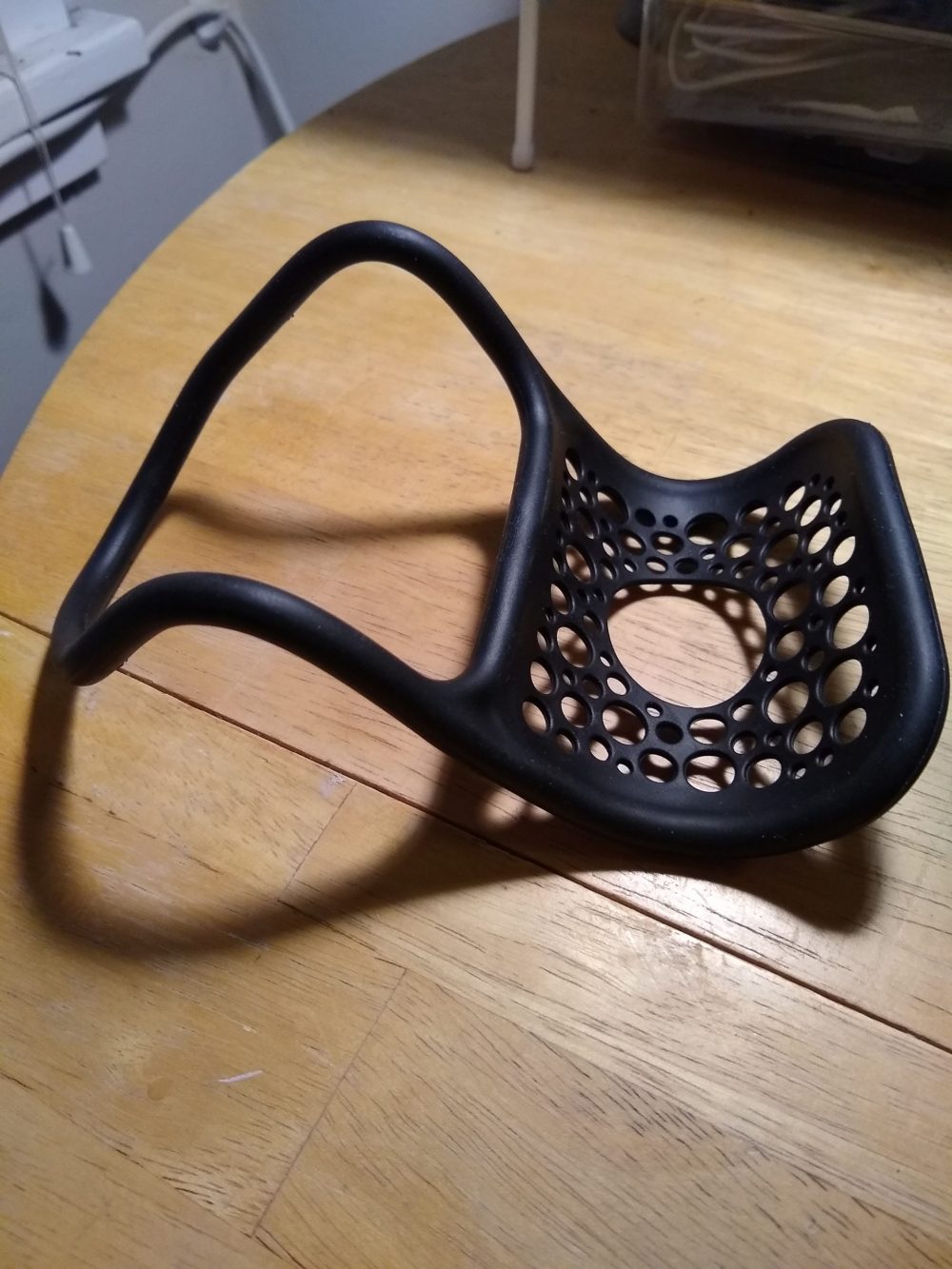
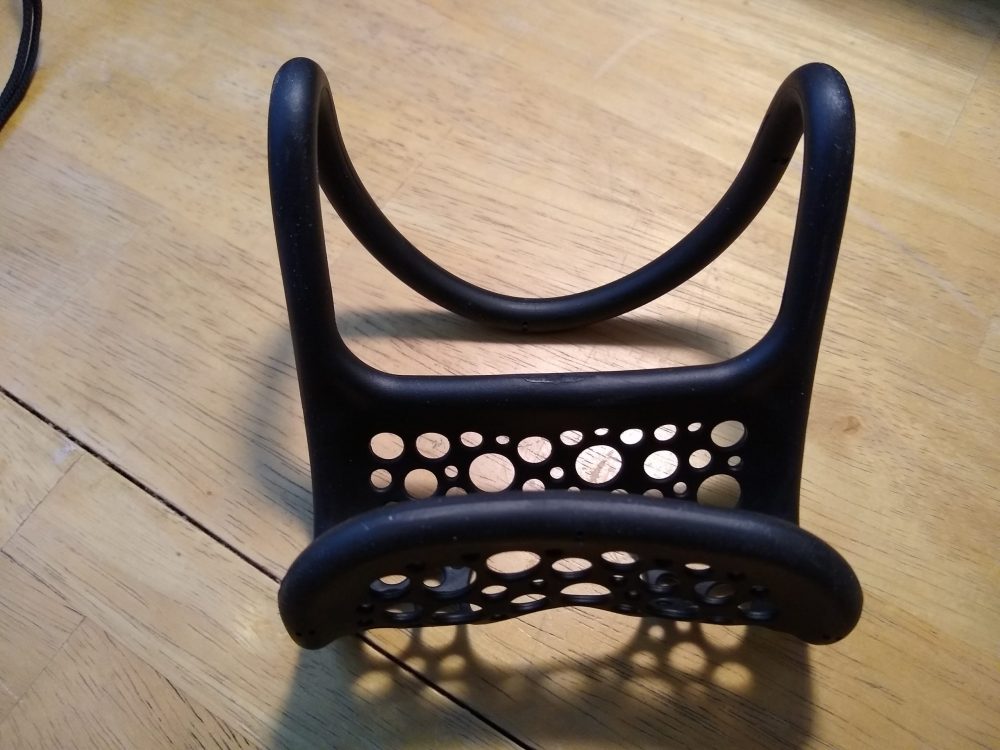
As I wandered through the kitchen accessories at Walmart, I spotted a little black sink caddy, typically used to hold a dish sponge and hang on a sink or faucet. I grabbed it, paid a little under four bucks for it, and took it home. It’s a cheap, lightweight, and adjustable stand for small to midsize radios.

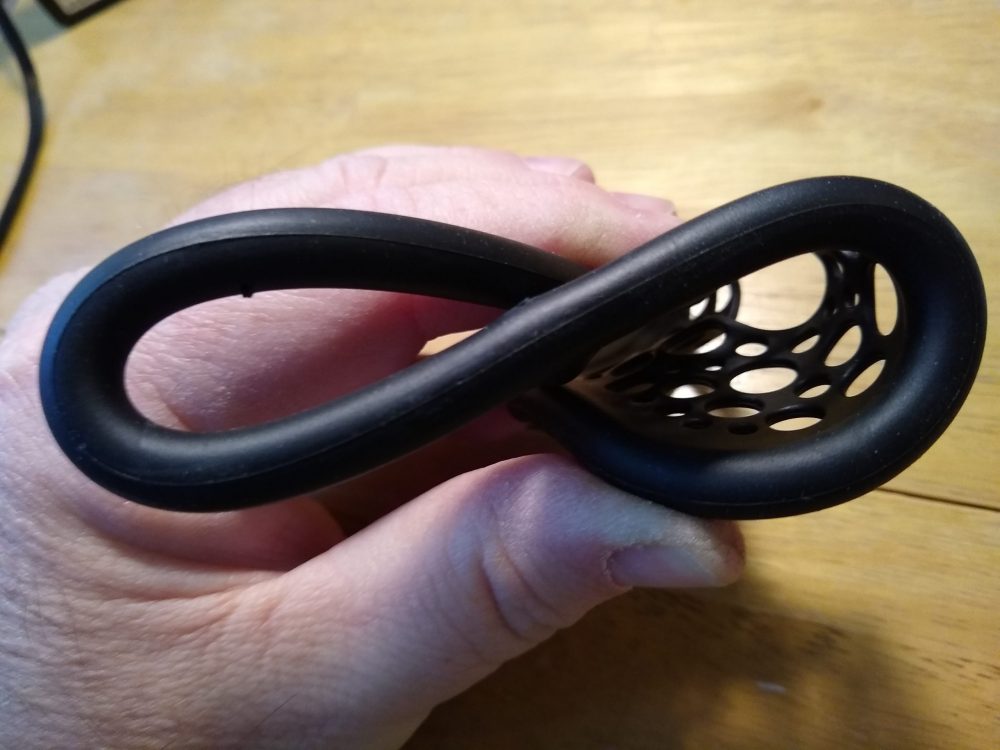
The caddy is essentially a loop of flexible, bendable rubber-coated wire with a perforated rubber cradle for the sponge. Because it can be bent and shaped, it’s ideal for adjusting to different sized portables. In its default shape from the store, it held the 310ET, the G8, my Tivdio V-115, and other smaller items like my phone and e-reader.

I’m sure it could be bent to fit a PL-660, PL-880, Eton Satellit, XHDATA D-808, and other larger portables, all at adjustable back angles.

Best of all, the caddy can be bent down to fit into a go-bag or piece of travel luggage. I figure a fellow pack-nut like yourself would find this to be useful indeed!

These things are cheap and readily available at pretty much every Walmart, but I’ll post a link to the webpage for the Mainstays Flexible Sink Caddy. I hope this info is useful to other SWLs and hams. I instantly thought of the Post and your gear/accessory posts in the past when I saw it.

https://www.walmart.com/ip/Mainstays-Flexible-Sink-Caddy/480104340

What a great idea, Shawn! Since this soap bar holder is so flexible, it could be bent to hold radios at pretty much any angle. Next time I’m at Walmart, I’ll pick one up. Perhaps this is even available at Walmart stores in other countries since it’s sold under the Mainstays brand name.

I believe this holder could also serve as a stand for numerous portable QRP transceivers.

Thanks again for the amazing tip, Shawn!

Radio Emma Toc World Service Schedule for June 2020

(Source: Jim Salmon)

Radio Emma Toc World Service – Schedule Summary – June 2020

Ways to listen…   Radio Emma Toc World Service – programme no. 2 – June 2020

You can listen online – www.emmatoc.com  – visit the ‘World Service’ page.

You can listen to our shortwave or FM broadcasts via our relay partners as follows:

Happy listening! If you are outside the transmitter coverage areas, why not listen via the broadcasters’ online services. Website details for the above stations are listed on our own website here –  www.emmatoc.org/worldserviceschedule

If you don’t have access to receivers & aerials you can try using an online SDR receiver – ve3sun.com/KiwiSDR – experience the enjoyment of tuning around shortwave from worldwide locations online.

We are happy to issue eQSLs for reception reports sent to – [email protected] – & will gladly include for online reports. If using an online SDR, please give us the SDR location.

Finally if any stations wish to relay our programme a download link is available on our website. Please advise us of times & dates so we can publicise in our schedule.

Thank you!

Jim Salmon  –  Radio Emma Toc

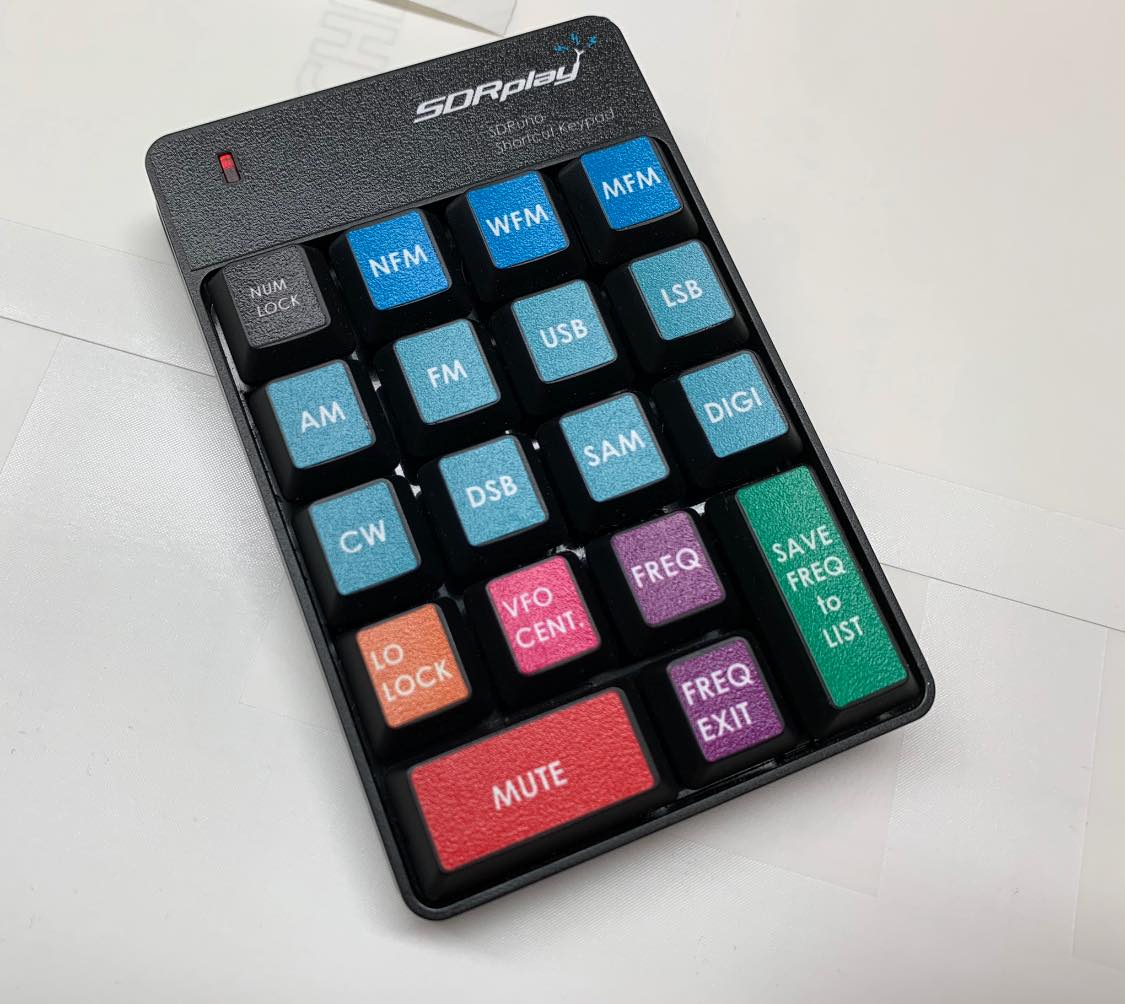
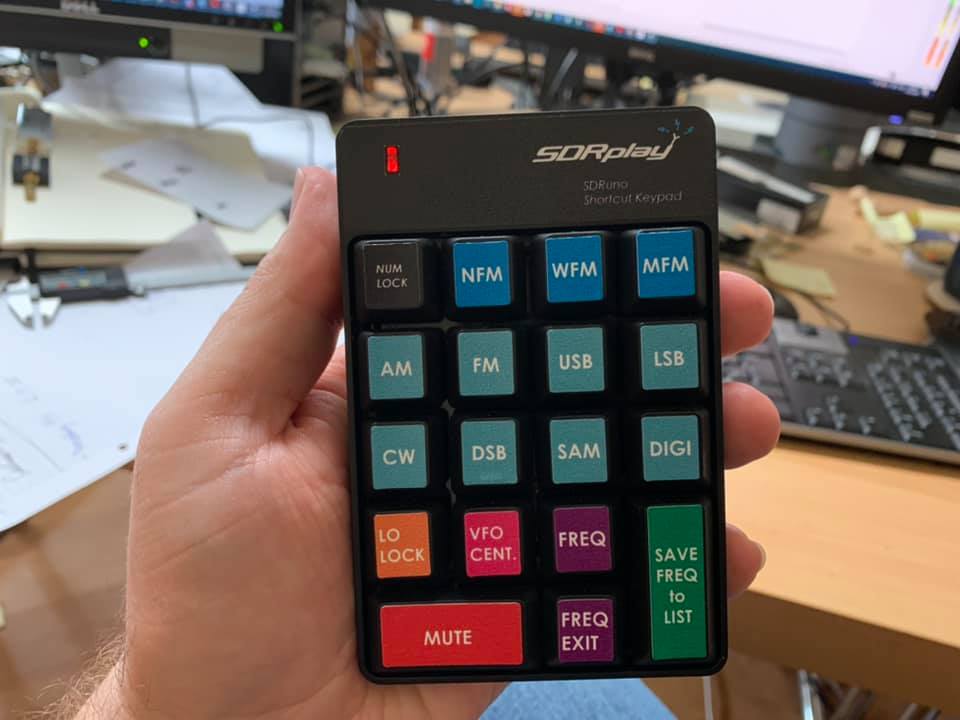
Christoph’s homebrew custom hotkey pad for SDR applications

Last week, I saw a fascinating post by Christoph Jahn on the SDRplay Facebook page.

Christoph created a custom hotkey pad for use with SDRuno.  The project is actually quite simple and his finished product looks amazing:

The steps involve downloading “LuaMacros” a freeware macros utility that allows you to map macros to an external USB device like a cheap numeric keypad. Christoph then designed the key templates and printed them on a strong adhesive vinyl foil.

I asked Christoph if I could post his project on the SWLing Post and he kindly sent me the followed PDF with step-by-step instructions.

Click here to download the instructions as a PDF (6.71MB).

Christoph also shared the macros file he used for his project (download .XML file 8.77 KB).

Thank you so much for sharing this, Christoph!  Your finished product is so professional, I would have thought it was produced by SDRplay!

This could be a useful tool for a radio friend who is visually-impaired and, of course, could be compatible with a wide range of SDR apps and rig control software that allow keyboard shortcuts.

Readers: Have you done a similar project? Please comment with your experience and any details–especially noting applications and programs you find are compatible with keyboard shortcut mapping. This could be very beneficial for radio enthusiasts with disabilities!

Radio technology magazines both online and in print

Many thanks to SWLing Post contributor, Mangosman, who writes:

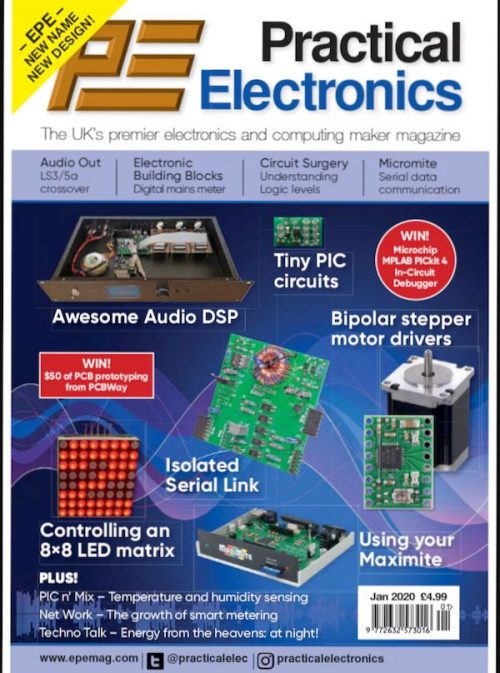
There used to be magazines like Radio Electronics (USA), Practical Wireless (UK), Radio Television and Hobbies (Australia) and other magazines on electronics were sold in shops and on subscription for money which paid their writers. The internet has killed most of these magazines. There are still a few still in publication that I know of:

There are other Amateur radio magazines as part of membership.

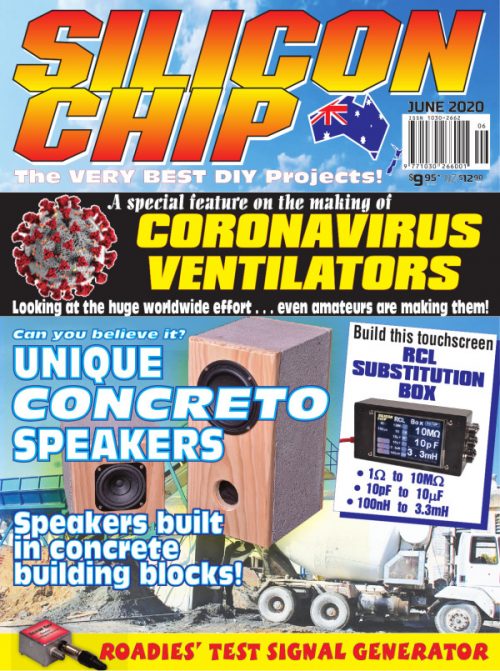
Silicon Chip

Silicon Chip magazine publishes an extensive range of electronics projects every month including many which use Arduino, Raspberry Pi and Australia’s own very popular Micromite/Maximite microcontrollers. These projects are conceived, developed, constructed, written, photographed published and any unusual parts are sold on the magazine’s website by professional people who are paid by sales of the magazine.

Whether you’re into the latest digital electronics or prefer restoring vintage radios, or anywhere in between, we have something to interest you.

Of particular interest to radio enthusiasts are;

New W-I-d-e-b-a-n-d RTL-SDR Modules Part 1  and Part 2 where the performance of the available modules are measured and compared by Jim Rowe. Some modules will not work at all below 30 MHz but will above. Sensitivity dropped off at different frequencies depending on the module. Jim has the testing knowledge because he constructed his own version in 2013. Also check out Using the SiDRADIO to receive DRM30 and More Reception Modes for the SiDRADIO.

More recently they published a touch screen DAB+/FM/AM radio construction project.

The online subscription rate is  $Au 85 (= $US 56.29 = € 51.12 = £ 45.88) at the moment for a year of 12 magazines. Individual articles are also available. GST is an Australian Goods and Services Tax.

The above magazines produce their own content rather than just promote a manufacturers’ product.

Many thanks for the suggestions, Mangosman! I imagine there are a number of electronics magazines still in publication in other languages, too. Readers, please comment if you subscribe to a quality publication not mentioned above.

I would also note that if you would like to read archived/vintage copies of electronics and radio magazines–some dating back to the early 20th century–explore the American Radio History website.

The Yaesu FT-70G: Where the FT line met Milcom

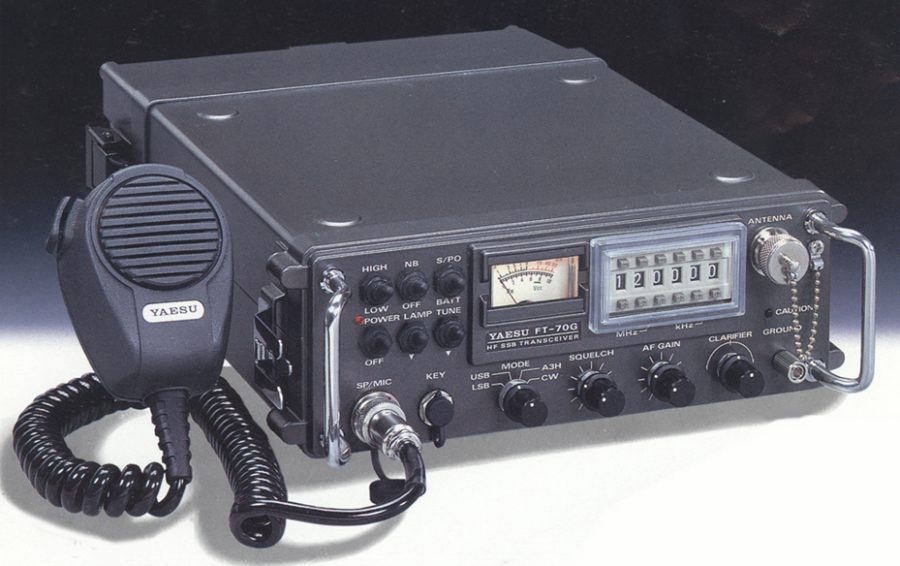
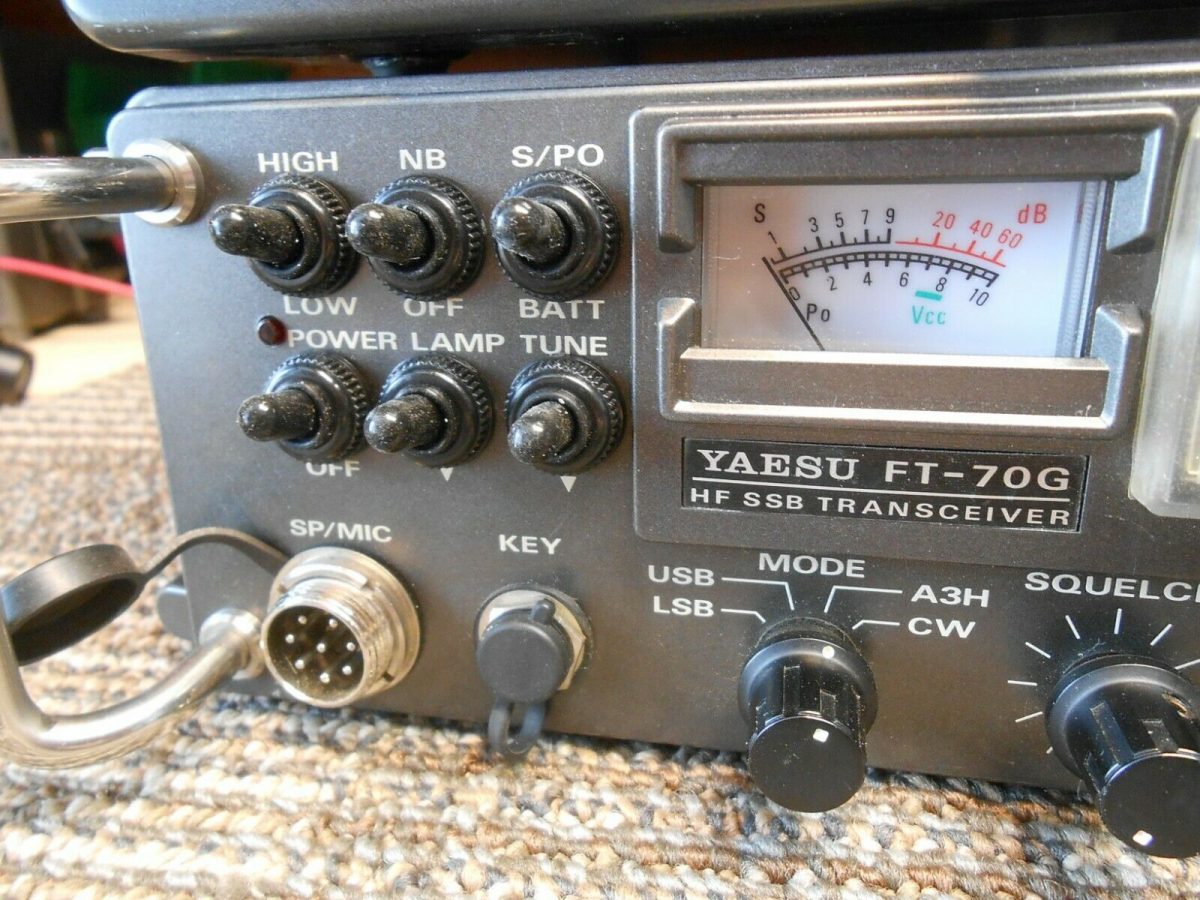
Earlier today, I stumbled upon a very unique transceiver in Universal Radio archives: the Yaesu FT-70G.

Here’s the description from Universal:

The Yaesu FT-70G is a portable HF transceiver covering 2 to 30 MHz transmit. Receive is from 500 kHz to 30 MHz. Frequency selection is via BCD switches to 100 Hz. There is a clarifier for fine tuning. Optional FNB-70 NiCad Battery. Please note that the optional 10F-2.4DL filter is required for LSB opeation.

The Yaesu FT-70F is similar, but is a channelized fixed version offering up to 11 frequencies.

Two hours ago, I was not aware that the FT-70G existed.  Now? I want one!

I’m a real sucker for vintage rugged field radio gear, so I never discovered the FT-70G until today. Turns out, they’re relatively rare. A little light research reveals that it’s a highly-desired transceiver in the world of HF Packers–those radio enthusiast who like “manpack” commercial and military gear.

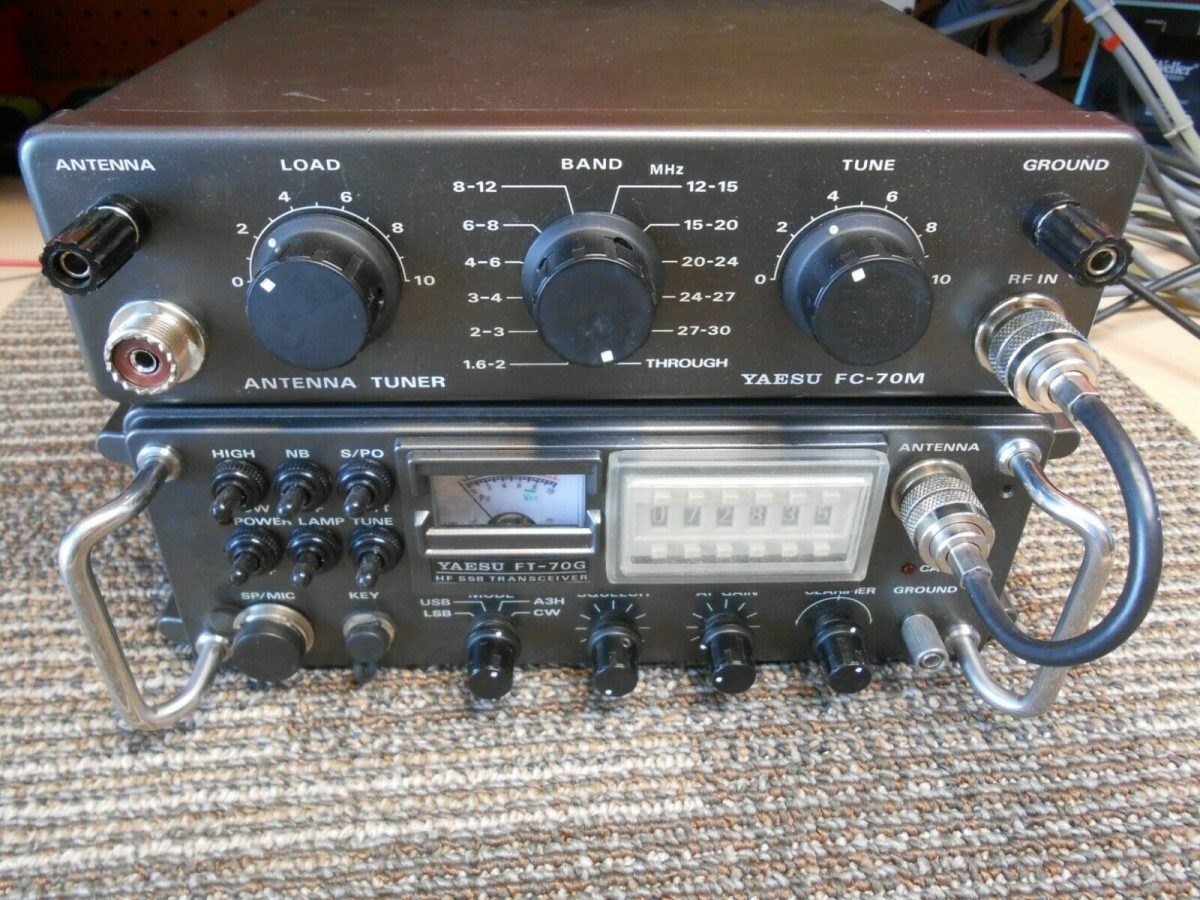
The FT-70G has a distinct military look and feel with the BCD switches to change frequency, rugged toggle switches, chassis extensions to protect the front panel, and attached screw-on connector caps.

What’s really surprising is that the FT-70G has a general coverage receiver (500 kHz to 30 MHz). Admittedly, it would not be fun band-scanning with those BCD switches…but still!

This website has a number of photos. They also have a product description likely from the original Yaesu/Vertex Standard FT-70G description:

“The FT-70 series HF field portable manpack transceivers are designed to provide reliable communications under rugged conditions in the military and commercial environment. The frequency synthesized, all solid-state circuitry and die-cast anodized aluminum enclosure and battery pack make a highly portable, weatherproof station. Flexible operation for optimum communications under a wide range of propagation conditions are assured by SSB (USB, LSB), semi break-in CW, AM, or audio interfaced Data modes. All controls, antenna, and interface ports are available and selectable via the front panel for maximum effectiveness and ergonomics in field, base, and manpack applications. The companion antenna tuner FC-70 is compatible with walking manpack, field portable, or base configurations. The highly effective vertical tripod mount antenna system YA-70 is deployed and stowed easily and quickly, pulling double duty by converting to manpack whip while on manuevers. High quality handset YH-70 provides communications privacy and clarity.”

Again, check out the excellent photos of the full manpack kit.

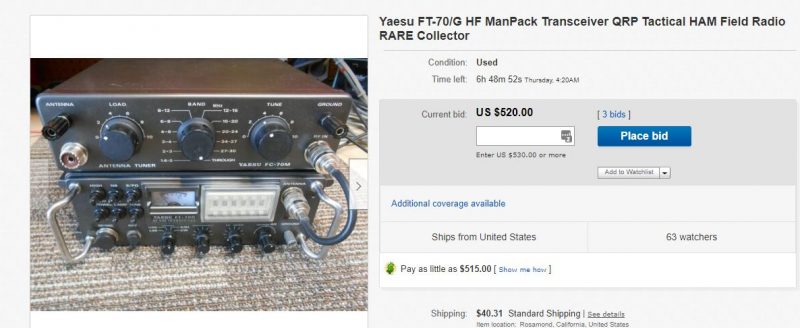
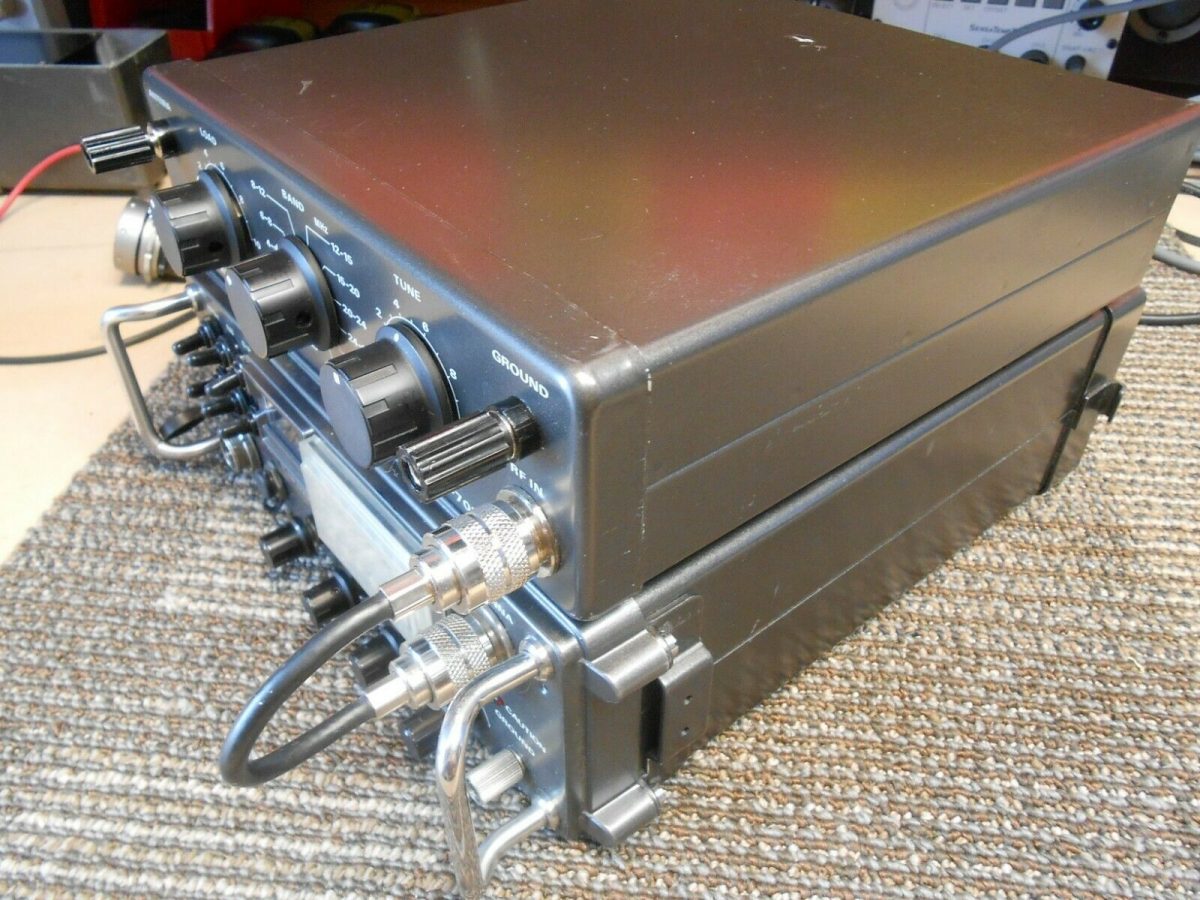
As I researched pricing, I discovered this FT-70R with accompanying FC-70M antenna tuner on eBay right now with only 6 hours left of bidding:

At time of posting, the bids are at $520. I fear this will soar well above my comfort level before bidding ends. (Like I need another field radio anyway, right?)

Post readers: Please comment if you’re familiar with the FT-70G and especially if you’ve ever owned one.  I’d love to hear about your experience with this unique rig.