Category Archives: Shortwave Radio

Radio propagation may improve soon with region of solar flux

Many thanks to SWLing Post contributor, Mike Hansgen, who shares this latest Space Weather report from Tamitha Skov:

Space Weather jumps into action this week with two weak solar storms en route to Earth. NASA models predict they will hit starting July 9 and they could easily bring aurora to high latitudes, if not mid-latitudes. Amateur radio operators are also in for some fun as a new region rotates into view and brings with it a boost in solar flux, which will help radio propagation just in time for hurricane season. GPS users shouldn’t be affected by the low-level flaring of this region on Earth’s day side, but should stay vigilant near aurora and near the dawn-dusk terminators for glitches in their reception. Low-latitude GPS/GNSS reception might even improve under the influence of these weak solar storms. See details of the coming storms, when this new active region will be in view, catch up on aurora photos, and see what else is in store!

Click here to view on YouTube.

Share your photos on Boat Anchor Tuesday!

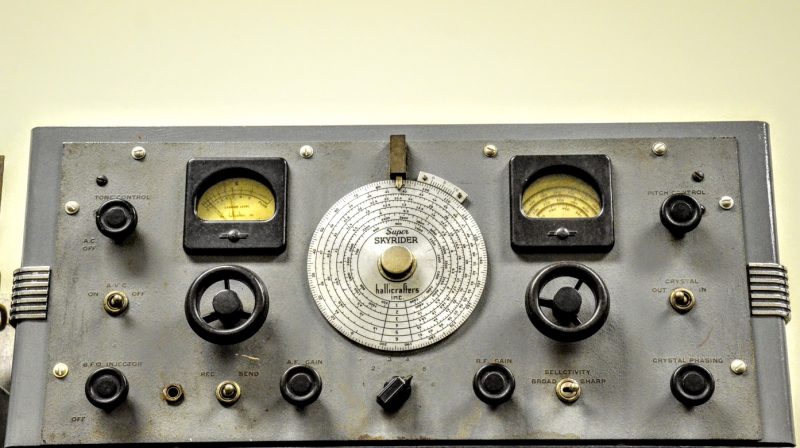
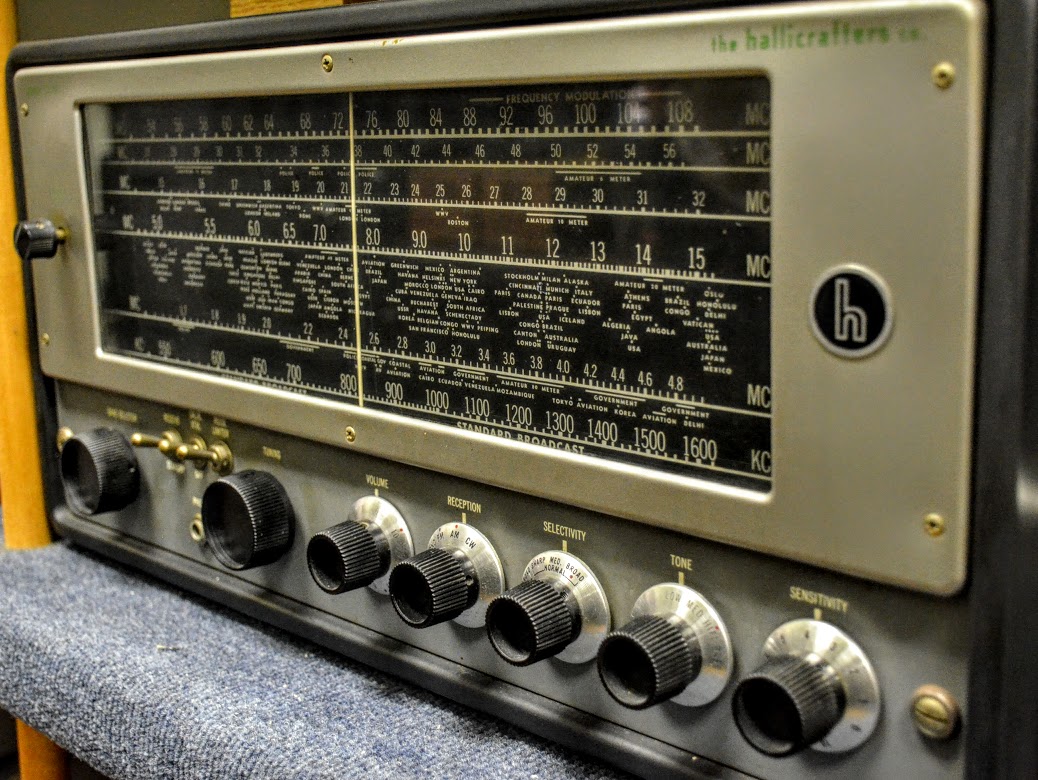
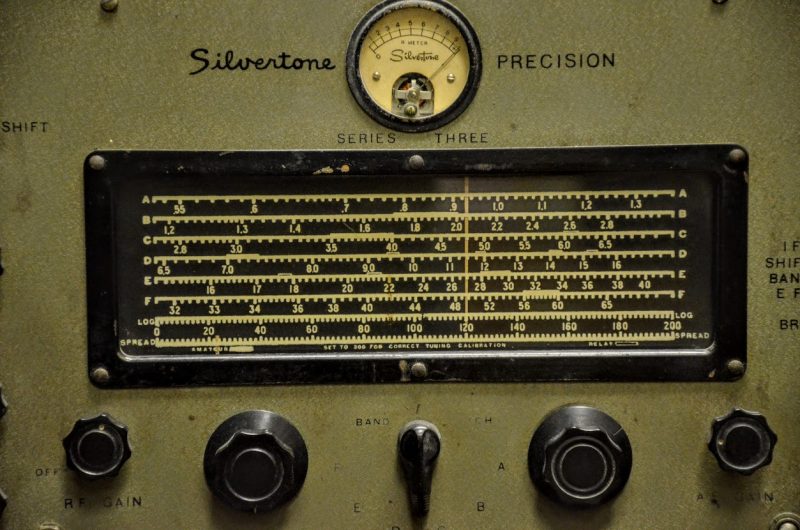
Yesterday, as I took a little time to curate a massive collection of photos I took at the Museum of Radio and Technology, I posted a few “boat anchor” (heavy metal vintage radio) photos and labelled them “Boat Anchor Tuesday” on Twitter and Facebook.

Much to my surprise, I received a number of comments and emails with readers asking for more Boat Anchor Tuesday pics!

So I’ve decided to make it a feature here on the SWLing Post. After all, anyone who knows me knows that I’m a massive fan of boat anchors!

Your photos on Boat Anchor Tuesday!

Please send me a photo (or a few) of your favorite boat anchor. Every Tuesday, I’ll feature a reader’s boat anchor here on the SWLing Post.

If you can, include a few sentences about the radio: how you obtained it, what you like about it or any memories. We radio nostalgic people love this stuff!

Please send photo(s) and radio blurb to my email address found on our Contact page. I only plan to post one radio per week, so these will be scheduled far ahead to post automatically.

BBC World Service: Global audience up, shortwave listeners in “steep decline”

(Source: The BBC Media Centre)

BBC’S Global audience rises to 376m

The BBC is reaching a record weekly audience of 376m people, new figures published today reveal.

The figures – the Global Audience Measure (GAM) – show how many adults the BBC reached weekly with its news and entertainment content in the year 2017/18.

The BBC World Service, which has just undertaken its biggest expansion since the 1940s, has seen its audience increase by 10m, to 279m.
The total global news audience has risen by a million, to 347m.

The GAM shows the way people access their news is continuing to change around the world. With the increased availability of cheap smartphones around the world, audiences are continuing to switch to digital platforms for news. Overall, online news website audiences have grown by four million, with social media audiences up by nine million.

The English language international website, BBC.com, continues to perform well even in competitive markets like the USA, adding two million weekly users this year.

More people listen directly to World Service English via the internet than by any other method – a total of 27m. And World Service English podcasts now reach one million people every week.

However, shortwave radio listening continues its steep decline, with shortwave audiences virtually disappearing in Pakistan, and down substantially in Nigeria.

Jamie Angus, Director of the BBC World Service Group, says: “This has been an exciting year for the BBC World Service, with the launch of 12 new services, new programming, and the opening of new and expanded bureaux across the world, so it is great to see international audiences continuing to turn to the BBC for independent and impartial news.

The figures highlight not only the successes of our global news operation, but the challenges that lie ahead for us. We still need to grow the share of women engaging with our news services globally, and we need to ensure we have the right services to continue to attract young audiences.

At a time when Britain is forging a new relationship with nations around the world, the BBC’s global news services are more important than ever.”

The figures also show:

  • More than a quarter of the BBC World Service’s audience is aged between 15-24 years old.
  • In Afghanistan, more than 60% of the adult population consumes BBC News; in Nigeria the figure is just under 40%
  • The top ten markets for the BBC’s international news services are Nigeria (41m), USA (33m), India (30m), Bangladesh (16m), Egypt (16m), Iran (13m), Afghanistan (12m), Tanzania (10m), Pakistan (9m) and Indonesia (8m).
  • More people are consuming more than one BBC service, or using more than one platform to access BBC News; 24m people consume the World Service in English as well as other languages.

Notes to Editors
The Global Audience Measure is an annual update of how many people are consuming the BBC weekly for all services in all countries across all platforms (television, radio, website and social media). Key to this is de-duplication i.e. ensuring that a person who consumes multiple BBC services or platforms or on multiple devices is not counted many times in the top level totals.

The total figure includes audiences for all BBC News services outside the UK and branded entertainment content on TV, BBC websites and social media pages for BBC Studios.

PR

RNZ and the “Chinese shortwave foray into the Pacific”

(Source: Radio New Zealand via Mike Hansgen)

China is taking up a lot of the Australian Broadcasting Corporation’s former shortwave radio frequencies into the Pacific region.

In response to budget cuts, the ABC last year ceased shortwave broadcasting in the Asia-Pacific region ahead of a transition to FM transmission.

Since that withdrawal, frequencies on which Pacific Islanders listened to ABC radio for many years are being filled up by China Radio International.

Radio New Zealand Pacific is of course still broadcasting to the Pacific region on shortwave.

Its Technical Manager, Adrian Sainsbury, spoke to Johnny Blades about the Chinese shortwave foray into the Pacific.

Click here to listen to this story via RNZ.

Guest Post: SM0VPO’s 3D Printed 10KV Tuning Capacitor

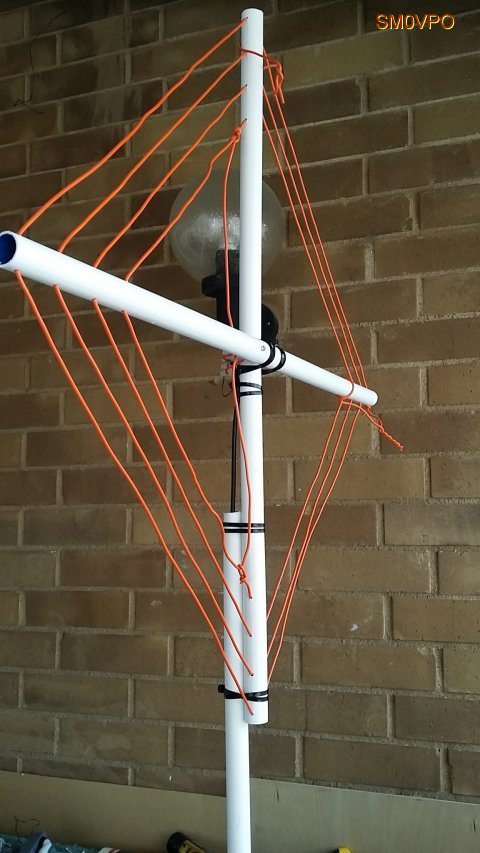
The completed antenna.

Many thanks to SWLing Post contributor,Harry Lythall (SM0VPO), who shares the following update to his excellent homebrew 20 meter magnetic loop antenna post:


3D Printed 10KV Tuning Capacitor

by Harry Lythall (SM0VPO)

Introduction

You may have seen my 20m (14MHz) loop, or frame, antenna, and the ease of construction with just a bit of wire and a bit of plastic tube. The tuning arrangement is a little primitive, using just a “gimmick capacitor”, comprising two bits of wire twisted together.

The original “Gimmick” capacitor that burns.

This arrangement works very well for QRP, where the average RF power is about 5 Watts or less. If you exceed this power level, then the twisted-wire capacitor tends to warm up and the tuning drifts a little. But if you use more than about 10 Watts of continuous RF power, then things start to burn. Cheap insulated wire also smokes. This is because the impedance at the ends of the coil is so high that you can get many 100s of volts and the insulation, normally intended for house wiring, breaks down.

In this page I will show you how to build a super-cheap tuning capacitor that will tolerate up to 10,000 Volts of RF and allow you to use up to about 100 Watts of RF into my 14MHz (20m) antenna. The capacitor is also tunable so that you can adjust it by hand (when the RF is removed, of course :-). The tuning range is about 8pf to well over 30pf when really compressed. The normal range for the antenna is about 12pf to 15pf.

Construction

My prototype does not look very pretty, and it is not supported on anything other than the connection wires from the antenna. Very few components are used:

  • two plastic foam pan scrubbers or one thick plastic bath sponge
  • two pieces of metal 4cm x 6cm. Copper-clad board works fine
  • one plastic nut and bolt – see text
  • one heavy-duty 3-pole block connector with centre-pole removed
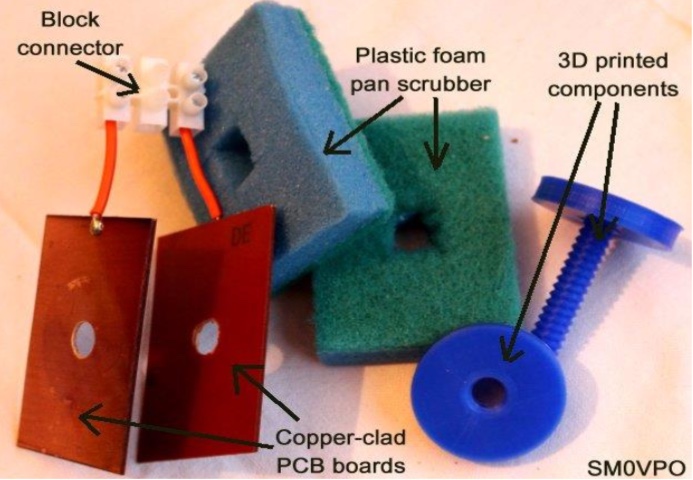
Components for the 10KV tuning capacitor

The plastic nut and bolt need to be about 6cm long and totally non-conductive. If you want to make my bolt, then do NOT use black plastic because some black plastics use carbon as a colouring agent. You can use a nylon bolt, as used to secure IKEA toilet seats, but you will also need a washer to spread the stress, otherwise the copper-clad board tends to bend under the stress with time. I chose copper-clad board because it is easy to solder – no need for drilling or connection bolts. I made my plastic compression tuning bolt using my 3D printer. I have included the project files for you to download.
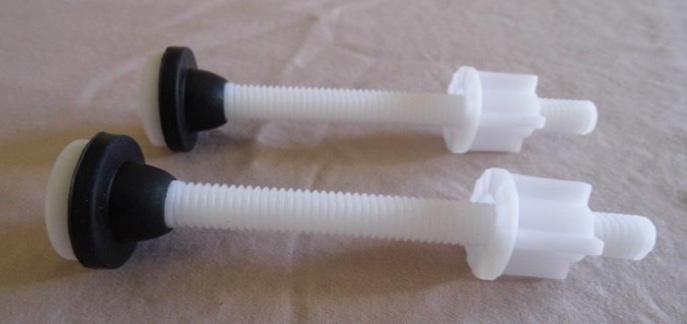
Ikea toilet-seat bolt

Note that the connector for the wires needs to be well spaced between the metal inserts, in order to tolerate up to 10KV, so I used a 3-pole connector and took out the centre pole. At 100-Watts continuous there is a very slight warming after a few minutes, but no sign of smoke, sparks or corona. 🙂

The connector with the centre-pole removed.

I tried a few different types of plastic dielectric and all worked well, providing they are 100% dry. The best ones those I stole from the kitchen cupboard (when Maj-Lis was not watching). I think it costs about $1.50 for a packet of 10 pieces. Perhaps I should have used a nicer colour? A pretty pink? Heart-shaped? No! maybe that would be going a bit too to far ;-). Here is my finished capacitor using my 3D printed tuning screw.
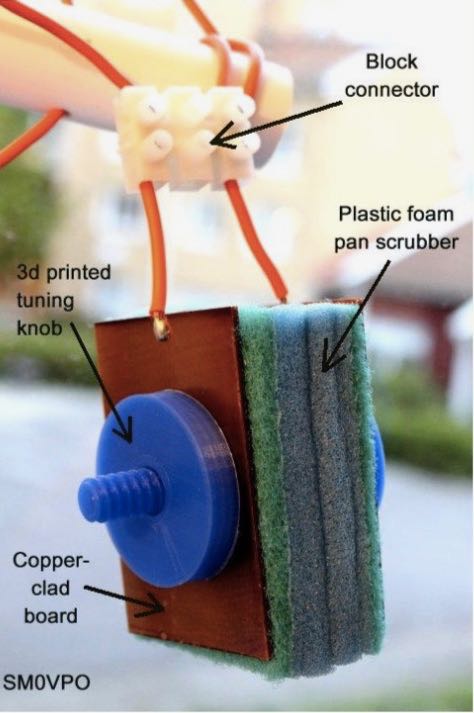
The assembled 10KV capacitor.

3D Files

Once more, this project is ridiculously easy to make with a 3D printer. The hardest part was to get the pitch of the threads right, then clone/connect the pieces to get a longer thread. They were printed with the bolt vertical, so the slope under each thread is a steeper angle than the upper slope. This makes the printout a lot easier to print. If the angle is too steep, then it may extrude PLA into mid-air. My nut and bolt heads are about 3cm Diameter, and the 10mm thread for the nut was cut using boolean subtraction. I then enlarged the nut by about 3% so it still fits but there is a little slack so that it does not bind. I may have overdone it a little, but not much.
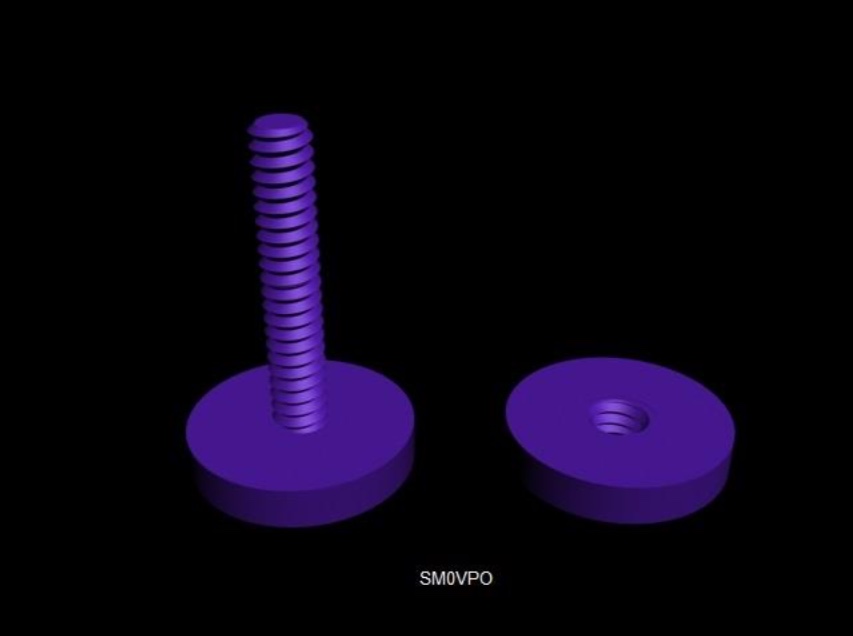
Project rendered in 3D Studio Max

Here are the files:
3D studio MAX file – 3d-cap-01.max
ASCII STL file – 3d-cap-01.stl
ASCII OBJ file – 3d-cap-01.obj
the GCODE file for my Wanhao (Prusa) Duplicator i3 – 3d-cap-01.gcode

Just right-click on the file and select “save as”. Some web browsers try to open ASCII files instead of saving them. I usually export STL files, but on this occasion, I tried comparing OBJ files since CURA slicer will accept both. Although I use a WANHAO replica of the PRUSA Duplicator i3 printer, the GCODE files are rather generic and will probably work on most printers.

My printer settings in this GCODE are:

  • Nozzle temperature = 200°C
  • Bed temperature = 60°C
  • Support structure = brim
  • Layer height = 0.1mm
  • Print speed = 60mm/s
  • Fill density = 40%
  • Shell thickness = 1.2mm

The printer temperature is 200°C, which is 5°C hotter than recommended for PLA filament. I find that I get a better print at 200°C as it sticks to the bed a lot easier. When printing this screw thread, it may be advisable to start at 200°C and then turn down the nozzle temperature to 195°C after a few layers have been printed.


I hope that you find this project interesting. It is a bit small, but it gets me active on 14MHz from my car with this portable antenna. I have a new car and I don’t want to start throwing long aluminium tubes in it that scratch the interior to bits.

Don’t forget to visit my messageboard if you have any questions about this or any other project. I always look forward to receiving feedback, positive or negative ?

Very best regards from Harry Lythall
SM0VPO (QRA = JO89WO), Märsta, Sweden.
EA/SM0VPO (QRA = IM86BS), Nerja, Spain.


Thank you so much for sharing this, Harry! I love both the frugality and ingenuity in this unique capacitor design!

Post Readers: be sure to check out Harry’s website which is loaded with radio projects of all stripes. You’ll easily spend a few hours digging through his tutorials and downloads. Harry also maintains an alternate mirror server located here.

Shortwave Radio Recordings: SWL Digest from January 4, 1982

Do you miss Ian McFarland on Radio Canada International?

Yeah, me too.

That’s why I’m always pleased to receive off air recordings from Shortwave Radio Audio Archive contributor, Tom Laskowski.

I’ve just posted his latest off-air recording on the archive and thought I’d post it here as well. Tom note:

Here is another one of my many recordings of Shortwave Listener’s Digest from Radio Canada International, this time from January 4, 1982. This program highlights are: Glenn Hauser with his Year in Review for the previous year of 1981; part 1. Larry Magne with a test report for the Panasonic RF-9000 which listed at $US 3800!!!. The program ends with Glenn Hauser’s second part of his review of the previous year’s highlights. Unfortunately the broadcast suffers from some adjacent-channel interference.

Starting time: 2130 UTC on January 4, 1982

Frequency: 15.325 MHz

Receiver location: South Bend, Indiana

Receiver: Realistic DX-302

Click here to download this MP3 audio.

If you enjoy off-air recordings, check out some of the recent ones on the archive which include:

Thanks again, Tom, and thanks to the dozens of contributors that make the shortwave archive such a treasure trove of shortwave history!