Category Archives: Shortwave Radio

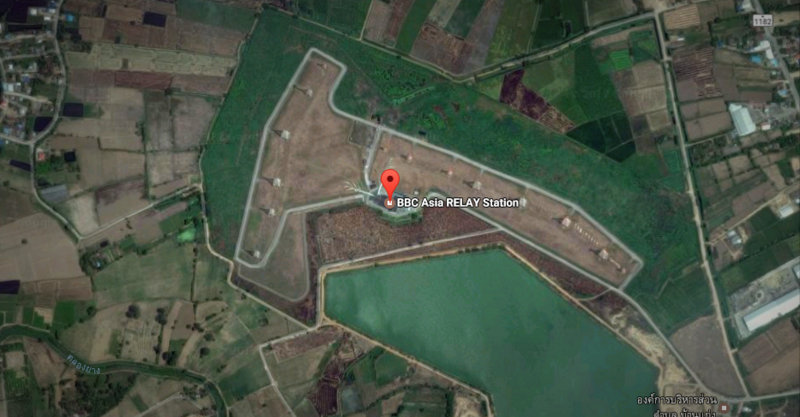
BBC cuts broadcasts from Thailand transmission station

(Source: Malay Mail Online via R. Lewis )

BANGKOK, March 8 — The BBC World Service has stopped broadcasting from one of its major global transmission stations situated in Thailand, AFP has learned, after talks broke down with a junta riled by its uncensored coverage.

Sources with knowledge of the negotiations said the BBC’s Thai-language output impeded discussions about renewing the 20-year lease on the complex, the network’s main shortwave broadcast station for Asia.

The centre’s large red and white transmission towers in Nakhon Sawan 240km north of Bangkok beamed local language news into tightly-controlled countries such as China and North Korea, and into places where many still rely on radio like Pakistan and Afghanistan.

– See more at: http://www.themalaymailonline.com/world/article/bbcs-thai-transmission-towers-fall-silent-as-junta-talks-falter#sthash.NsUkQnEQ.dpuf

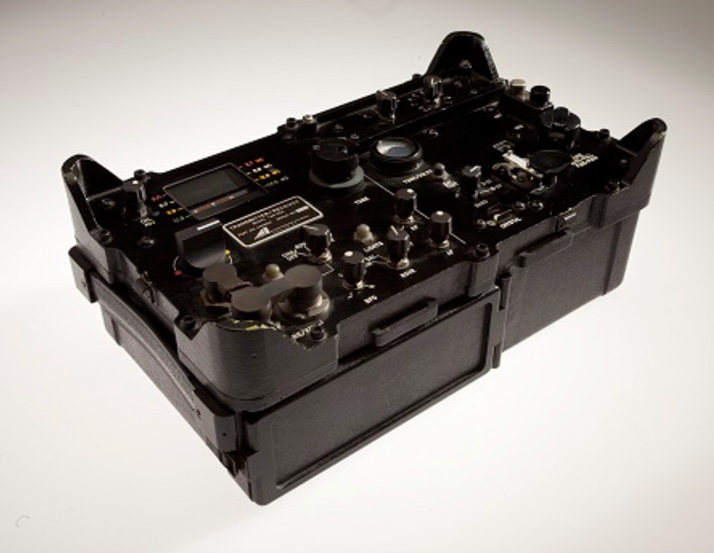
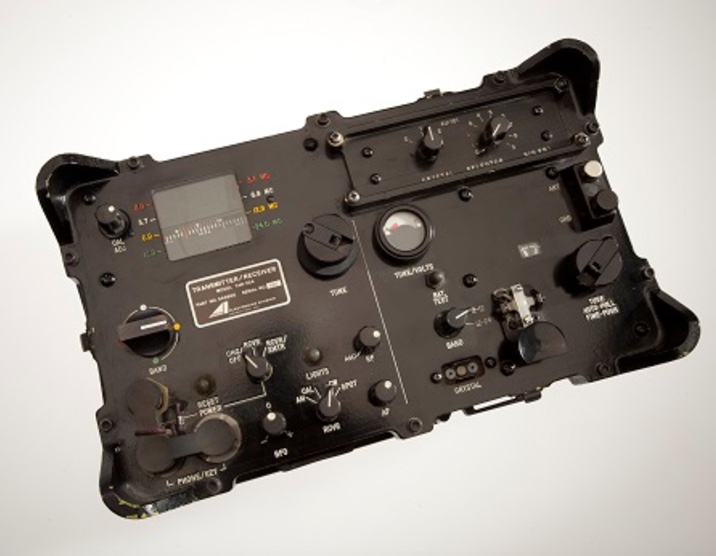
The TAR-224 CIA Radio

Many thanks to SWLing Post contributor, @K7al_L3afta, who suggested I post photos of the TAR-224 Radio. Obviously, he knows I’m a fan of this sort of rig!

He discovered the TAR-224 on the excellent CIA online museum where they give a brief description of the unit:

A compact, high-frequency, paramilitary transceiver, the TAR-224 enabled communications with field agents operating behind enemy lines. It saw service in Vietnam as well as during Operation EAGLE CLAW.

31 cm x 18.3 cm x 12 cm
(L x W x H)

A much better description of the TAR-224 can be found at the CryptoMuseum:

TAR-224 was a very compact, self-contained spy radio station, developed by AVCO Corporation in Cincinnati (Ohio, USA) around 1970 for the CIA. It was intended for communication with field agents operating behind enemy lines, and can be seen as a successor to the ageing GRC-109 (RS-1) of the 1950s. It was used for many years until it was phased out in the late 1980s.

The entire unit is completely waterproof, with all switches and controls at the front panel properly sealed, allowing the radio to be stored under harsh conditions for an extended period of time. A plastic lid can be placed over the controls to protect them against dust and dirt. It is held in place by three metal latches at the edges.

[…]The radio coverages all frequencies between 2 and 24MHz. The receiver has a Variable Frequency Oscillator (VFO), allowing continuous tuning of all 4 frequency bands, whereas the transmitter is crystal operated. The unit can be powered by an external 12V source that is connected to a 3-pin socket at the front left, or by a special 12V battery pack that is installed behind a watertight panel at the front left. A plastic grip, at the left of the radio, allows the unit to be carried around easily.

[…]Most TAR-224 units were used by the CIA on special (overseas) missions, but the radios were also used by intelligence services in Europe. It is known to be used on a mission in Angola in 1975. According to CIA communication specialist Teddy Roberts, the TAR-224 was still being used in operational context in 1983, when he trained a unit of US Army Green Barets on its use.

Continue reading…

Evidently, the TAR-224 is quite rare and I was not aware of it. Thanks for sharing, @K7al_L3afta!

VORW Radio International expands with shortwave broadcasts to Asia

Many thanks to SWLing Post contributor, John from VORW Radio International, who writes:

I am pleased to announce the further expansion of VORW Radio International, now transmitting to Asia!

Each broadcast features a mixture of my commentary and listener requested music. You’ll hear a great variety of music in this program, from Classical to Classic Country, from Rock to Smooth Jazz, you’ll hear it all!

If you’re interested in listening, the updated broadcast schedule is as follows (with bold text marking additional transmissions):

  • Thursday 1000 UTC – 1100 UTC – 5850 kHz to Northeast Asia / Pacific Northwest
  • Thursday 1300 UTC – 1400 UTC – 6070 kHz to Europe
  • Thursday 2000 UTC – 2100 UTC – 6070 kHz to Europe
  • Friday 0100 UTC – 0200 UTC – 7490 kHz to North America (8 PM – 9 PM Eastern, Thursday)
  • Friday 1130 UTC – 1230 UTC – 3210 kHz to Northwest NSW, Australia

March 9th – 1200 UTC – 1300 UTC – 12085 kHz to Northeast Asia

Questions, comments, reception reports and music requests may be sent to [email protected]

Reception reports will receive a QSL!

Many thanks, John! Happy to see yet another expansion of your broadcasts!

Update: WRMI adds additional frequency to Shortwave Shindig Broadcast tonight

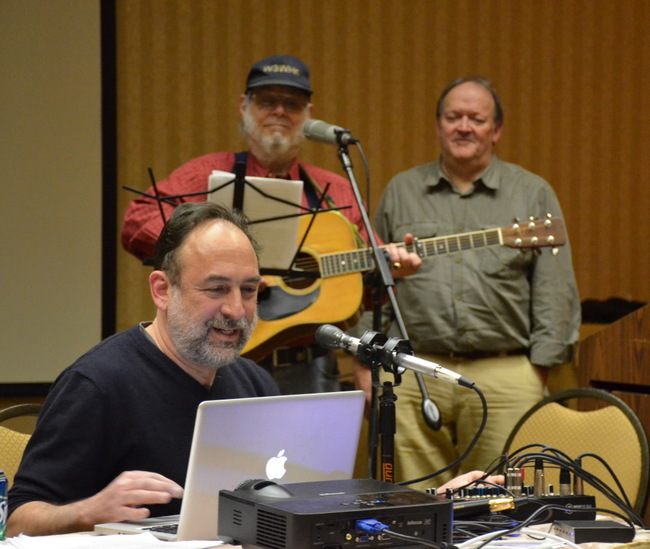
Broadcasting a live performance of the Shortwave Shindig at the 2015 Winter SWL Fest.

Good news! Many thanks to SWLing Post contributor, Richard Cuff, who notes that WRMI is adding 9,395 kHz (aimed north) to the Shortwave Shindig broadcast tonight. Please see updated press release below:

The Shortwave Shindig
30th Annual Winter SWL FEST
Plymouth Meeting, PA
Friday 3/3/17 10pm-1am EST (0300-0600 UTC 3/4)
Live via WRMI 6855 kHz and 9,395 kHz

Join David Goren and friends for the annual Shortwave Shindig, a late night listening hang featuring live music, interviews and audio pieces exploring the history and aesthetics of the shortwave listening experience. Festivities begin at 9:15pm EST. Then at 10 pm EST we’ll go live on 6855 khz via WRMI, Radio Miami International, for a three hour broadcast including the best of Short Waves/Long Distance, an open call for shortwave based audio work co-sponsored by NASWA The North American Shortwave Association and Wave Farm, a media arts organization. Short Waves/Long Distance celebrates the 30th anniversary of the Fest, and the 20th Anniversary of Wave Farm.

Reminder: The Shortwave Shindig live via WRMI

As a reminder, this broadcast will begin today, March 3, 2017, at 22:00 EST (that’s 03:00 UTC March 4):

(Source: David Goren)

The Shortwave Shindig
30th Annual Winter SWL FEST
Plymouth Meeting, PA
Friday 3/3/17 10pm-1am EST (0300-0600 UTC 3/4)
Live via WRMI 6855 khz

Join David Goren and friends for the annual Shortwave Shindig, a late night listening hang featuring live music, interviews and audio pieces exploring the history and aesthetics of the shortwave listening experience. Festivities begin at 9:15pm EST. Then at 10 pm EST we’ll go live on 6855 khz via WRMI, Radio Miami International, for a three hour broadcast including the best of Short Waves/Long Distance, an open call for shortwave based audio work co-sponsored by NASWA The North American Shortwave Association and Wave Farm, a media arts organization. Short Waves/Long Distance celebrates the 30th anniversary of the Fest, and the 20th Anniversary of Wave Farm.

An EDC Bag for the Classic Sony ICF-SW100 Receiver

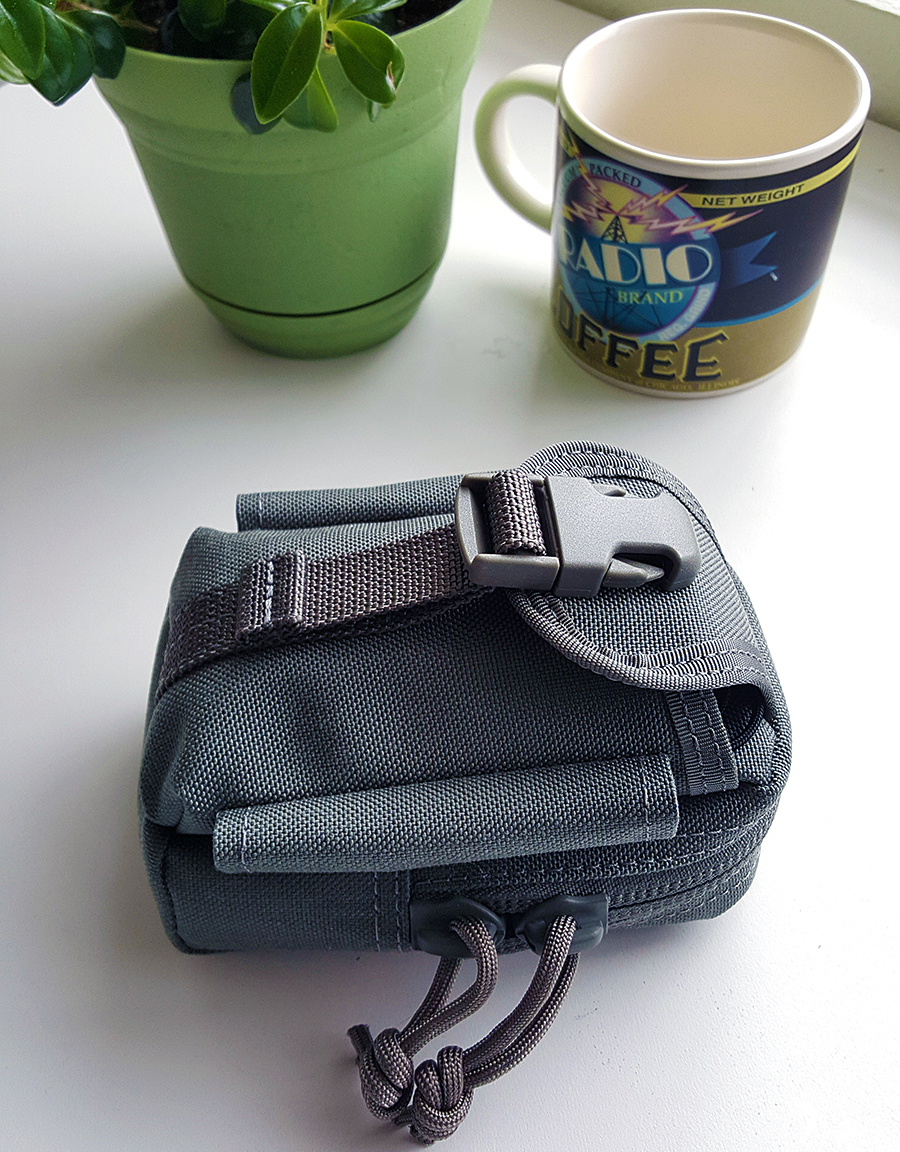
In a 2014 article, this site’s administrator Thomas Witherspoon introduced readers to the CIA’s Survival Kit which is housed in a superbly sturdy waistpack, the Maxpedition M-2. Thomas observed that the M-2 pouch is perfectly suited to holding the diminutive Sony ICF-SW100 receiver.

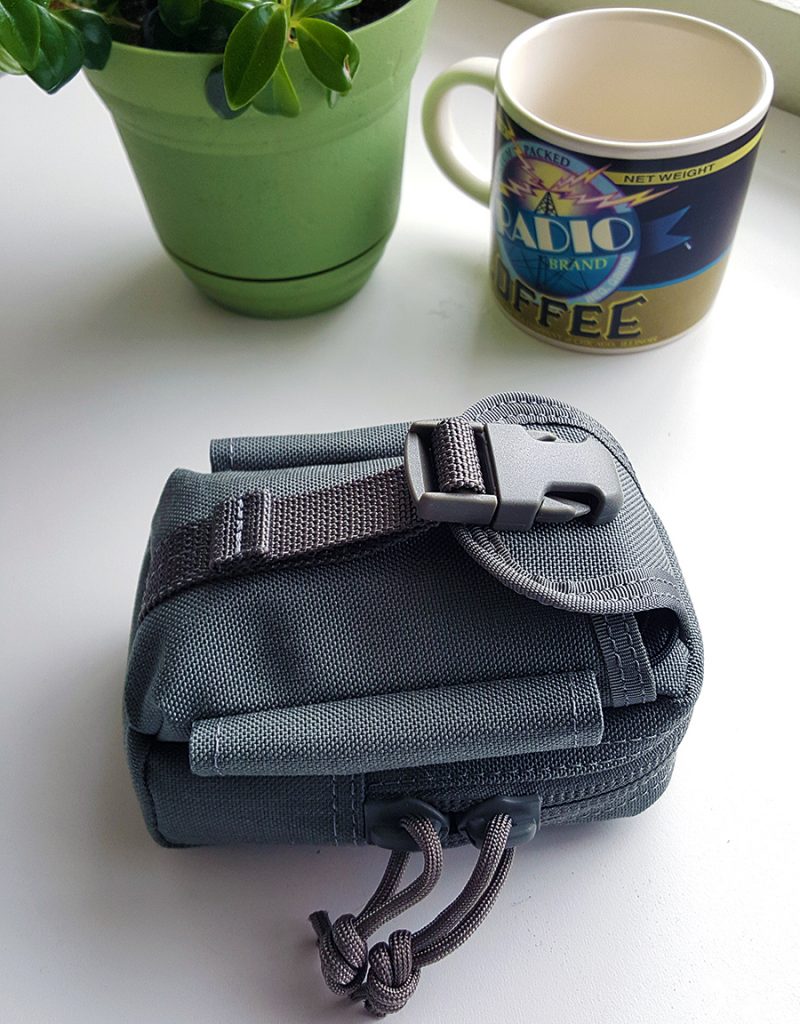
I was intrigued by that possibility, but only recently tried to combine the two after I resurrected another ICF-SW100 that fell silent to the chronic broken ribbon cable problem. Indeed, the radio is a perfect fit and the M-2 is impressively solid and well designed. I was not aware of the Maxpedition firm prior to learning of the M-2 bag, but I see in various forums they are a major player in well-made gear for the survivalist and outdoor enthusiast crowds. The M-2 is a very popular item, and one or more of the four available colors are sometimes out of stock at the manufacturer. Fortunately there are many sellers on Amazon and Ebay who have these waistpacks available.

What is EDC you may ask? It refers to “Every Day Carry”, the essentials that an individual deems necessary for their lifestyle or a particular activity. For me, an EDC bag is taken along on hikes or other outings to the countryside and typically contains a compact shortwave radio and related accessories. It’s always fun to stop for lunch or a break in a remote location and be able to search for interesting stations whenever the mood strikes.

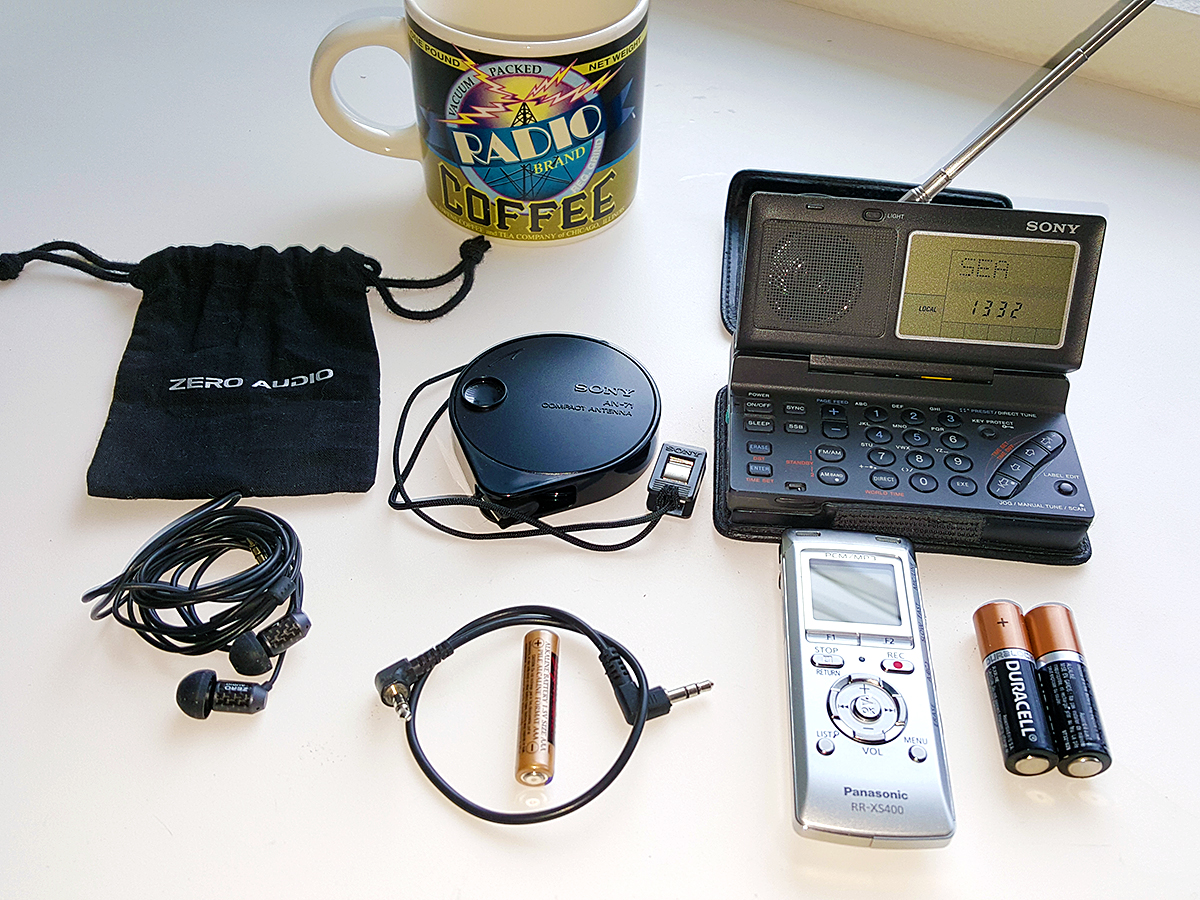
This photo shows what I’m able to carry in the Maxpedition M-2 bag; a coffee mug is shown for size comparison. Contents of the “kit” include:
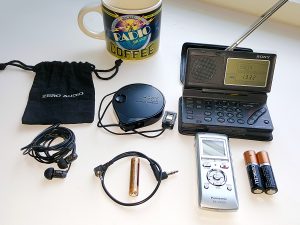
  • The Sony ICF-SW100 receiver
  • Zero Audio Carbo Tenore In-Ear Monitors & soft pouch
  • Sony AN-71 reel-up antenna
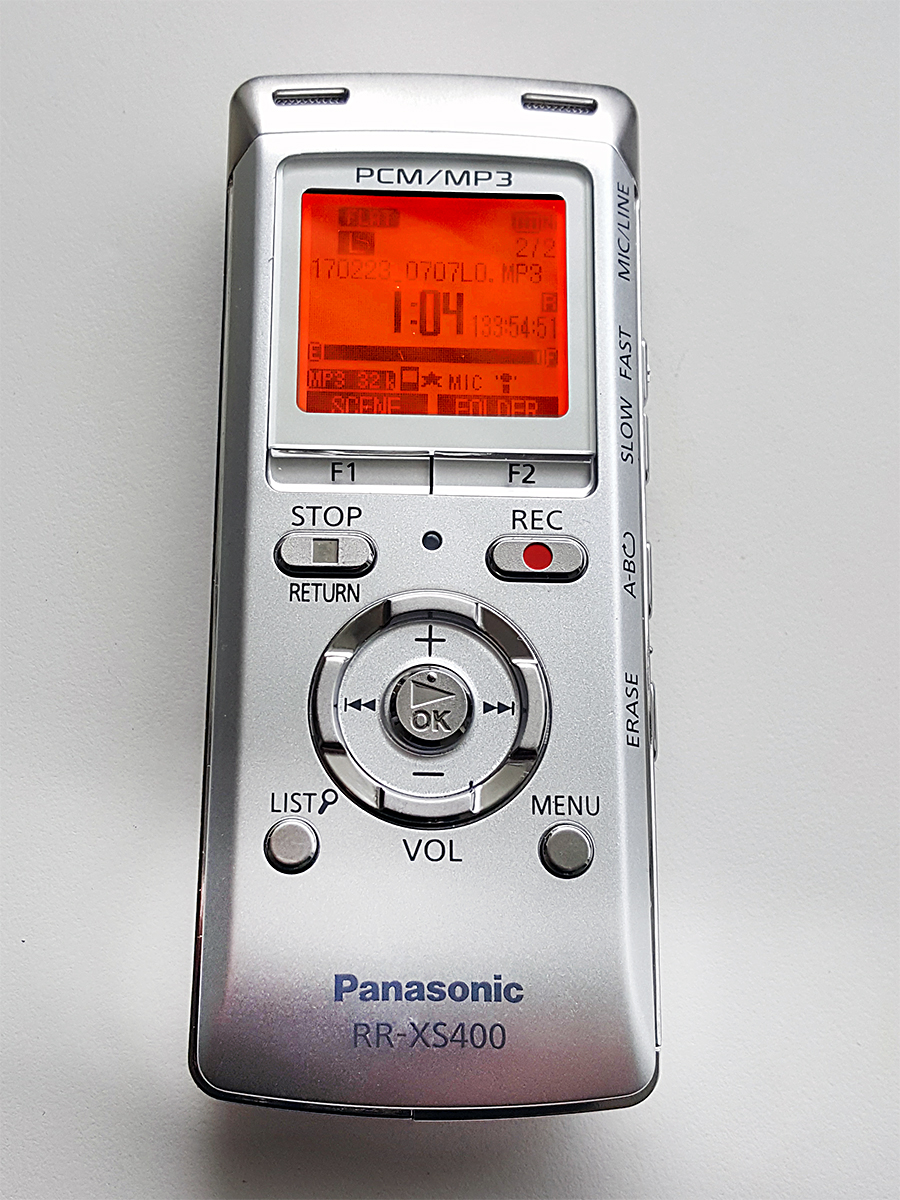
  • Panasonic RR-XS400 Digital Voice Recorder
  • Short 3.5mm male-to-male stereo audio patch cable
  • Two extra AA batteries for the Sony receiver
  • An extra AAA battery for the Panasonic Digital Voice Recorder

A few comments on the contents. The Zero Audio Carbo Tenore In-Ear Monitors (IEMs) provide excellent audio quality for their price. They are among a handful of IEMs regularly recommended by budget-minded audiophiles on the popular Head-fi.org site. I like these IEMs not only for the audio quality, but also their small size (in the cloth bag) which barely fits into the M-2’s main compartment along with the ICF-SW100. Larger earbuds or IEMs might not fit the M-2 without being mangled by the hefty YKK zippers. One caution: the similar Carbo Basso model by Zero Audio is deemed by many to be overly heavy on the bass frequencies. I find the Carbo Tenore to be more than sufficient for bass heavy genres like Electronica.

The Panasonic RR-XS400 digital voice recorder has been out of production a few years, but is a highly capable and compact recorder. It contains a hidden USB plug for charging and data transfer, has a fully featured and backlit LCD display, built-in stereo microphones, switchable LINE/MIC inputs, and other useful features. In excellent used condition the RR-XS400 is worth about $50 USD in 2017, despite some Amazon sellers trying to move them at the original $280 price.
The extra AAA battery for the recorder slips into the front pouch of the M-2 bag along with the Sony AN-71 antenna. The additional AA batteries for the radio, however, are held in the two “pen loops” on the left and right of the M-2. Despite these loops being open-bottomed tubes, the fit is tight enough to hold the batteries securely.

Like every portion of the Maxpedition M-2 bag, the belt loop is proportioned perfectly and sewn with precision. With the Sony ICF-SW100 EDC “kit” secured to my belt on a hike, I’m assured of quick access to a DXing opportunity, such as when hiking the Naches Loop Trail near beautiful Mt. Rainier:

Guy Atkins is a Sr. Graphic Designer for T-Mobile and lives near Seattle, Washington.  He’s a regular contributor to the SWLing Post.

Michelle Guthrie: ABC cut shortwave to operate within “funding envelop”

(Source: The Guardian via Phil Brennan)

The ABC’s managing director, Michelle Guthrie, has told Senate estimates she believes it is not her job to lobby government for more funding for the broadcaster but to work within the budget she is given.

Under questioning at a fiery Senate estimates committee, Guthrie revealed she saw her role as a manager rather than an advocate for more funding, a marked difference from her predecessor Mark Scott who was a consistent lobbyist for additional funding and critic of government cuts.

“On my second day in the job I was handed down the triennial funding in the May budget and as far as I’m concerned we operate within that three-year funding envelope,” Guthrie said.

Asked repeatedly if she believed it was her role to seek more funding to fulfil the ABC’s charter she said no because her focus was on providing content and operating efficiently.

[…]“I think what you’re asking is reasonably hypothetical. We are operating within the government’s funding envelope and making decisions on audience behaviour and technological advancement.”

She also refused to concede that anyone other than the 15 people who called the ABC to complain, or the 51 who gave submissions to a Senate committee, had been affected by the decision to scrap the shortwave radio service.

She appeared before a Senate estimates committee on Tuesday, answering questions about the decision to end the broadcasting of local radio through shortwave channels in the Northern Territory and Pacific region. The decision was been widely criticised, including by all major parties.

Guthrie was unable to provide evidence of prior consultation on the decision and claimed the ABC was not the official emergency broadcaster.

Asked by Greens senator Scott Ludlam about the “extraordinary cuts” to Radio National features, religion and music, Guthrie dismissed his premise, saying: “I wouldn’t characterise taking three music programs away from RN as an extraordinary decision.”[…]

Read the full article at The Guardian online…