Category Archives: Shortwave Radio

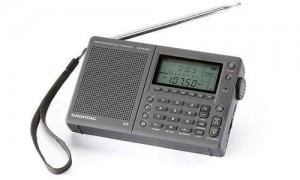
Grundig G2 sale, today only: $29.99 US shipped

GrundigG2Front

Many thanks to SWLing Post reader, Ulis, who shares this excellent deal on the Grundig G2: $29.99 US shipped!

You must hurry, though, as the deal is only valid today, Friday, March 7, 2014. Click here to purchase.

Ulis mentioned that the G2 was his first purchase from the retailer (1sale.com), but since he could pay with PayPal and the deal was first mentioned by CNET, he purchased with added confidence.

Note that the G2 is not a perfect radio–check out my review of its cousin the DE1129–but at $29.99, it’s a steal.

If you missed this deal, try searching Amazon.com for the Grundig G2.

Sackville Tribune-Post reports on dismantling of RCI site

Radio Canada International's Sackville, New Brunswick shortwave transmitter site. (photo: Wikimedia Commons)

Many thanks to Ken Reitz for sharing this:

(Source: Sackville Tribune-Post)

A piece of local history is slowly disappearing as crews dismantle the former Radio Canada International transmission towers on the marsh near Sackville, N.B.

The towers, erected prior to the Second World War, were declared obsolete in October 2012 after the CBC ended its shortwave service because of changing technology and the use of the Internet and satellite radio.

When no use was found for the facility the decision was made to have the towers dismantled.

“It’s really sad to see it coming down, there are so many great memories working there,” said former manager David Horyl, who spent more than 35 years working at the facility on the marsh. “It’s really going to change the look of thing over there. It’s quite a landmark.”

[Continue reading…]

Jonathan reminds us that history keeps repeating itself

1-RadioListening2Current events in the Ukraine and Crimea remind Jonathan Marks that history–especially as broadcast over the airwaves–repeats itself:

“History keeps repeating itself, both on the ground and on the radio. The theatre going on in Crimea and Ukraine at the moment remind me of other situations. But there is a difference. The programmes below [click here] were all made when the Russian’s had an external broadcasting service called Radio Moscow, later renamed as Voice of Russia. Just as Voice of America shouted at the Russia, so Voice of Russia shouted back.”

Continue reading Jonathan’s full article, complete with audio and video clips, on his blog Critical Distance.

Interview with Joseph Mark Costello III of WRNO

wrnologoYesterday, I posted off air recordings of WRNO Worldwide from 1983. Jonathan Marks then sent me a link to an interview he recorded in 1991 when WRNO founder, Joseph Costello, visited Radio Netherlands Worldwide in Hilversum.

Click here to visit the Media Network Vintage Vault and listen online.

Many thanks, Jonathan for sharing!


WRNO Worldwide recordings from 1983

(Photo source: WRNO)

(Photo source: WRNO)

Many thanks to Dave (N9EWO) who writes:

“I see a great You Tube file (it’s in 2 parts) of a WRNO Worldwide broadcast “off air” recording made on Dec 14, 1983.

Ah yes the memories[…] You can hear the very start of a Radio Earth program along with some on channel interference before (until they made the frequency change to 6185 khz) which was common.”

part1 (14:34) : http://www.youtube.com/watch?v=F4cQHkqntOU

part2 (5:44) : http://www.youtube.com/watch?v=5OaQunhtIAY

Why shortwave? Russia blocks web pages linked to Ukraine protests

(Photo: VOA News)

(Photo: VOA News)

In response to the BBG’s request for comments on the relevancy of shortwave radio, SWLing Post reader, Rick, writes:

Here is the reason why VOA needs to keep broadcasting on shortwave.

Russia (or China or Angola or Zimbabwe or Iraq or Afghanistan or Syria) can easily block Internet access — to include, and particularly from, VOA. While shortwave can be jammed it takes a little more effort (and a considerable amount of budget to pay the electric bill for the high-powered jamming signals).

Unlike AM and FM radio transmission, shortwave transmitters can be located continents away from the strife for protection of the transmission infrastructure.

Shortwave transmission — coupled with the surreptitious distribution and proliferation of cheap shortwave radio receivers for target audiences — can help insure that the voice of freedom and democracy can continue to be heard in geopolitical hotspots throughout the world.”

Read the story Rick refers to here: http://www.politico.com/story/2014/03/russia-ukraine-protests-websites-internet-104171.html

BBG seeks comments on relevancy of shortwave radio

The United States’ Broadcasting Board of Governors (BBG)–the governing body responsible for all US international broadcasting–is asking for your comments on the relevancy of shortwave radio broadcasting today.

Teacher in rural South Sudan with an ETOW radio. (Project Education Sudan Journey of Hope 2010)

Teacher in rural South Sudan who relies on shortwave radio to learn about international and domestic news. (Photo: Ears To Our World and Project Education Sudan Journey of Hope 2010)

In short, simply send the BBG an email (limited to 1,200 words or less) with your comments by March 14th, 2014.

The BBG has set up the following email address: [email protected]

As a favor, I ask that every SWLing Post reader consider sending their comments in support of shortwave radio broadcasting, even if you argue in favor of reduced capacity.

There are still so many parts of the world–impoverished areas, and states with repressive regimes–that rely on shortwave radio for information access. Additionally, shortwave radio can serve as an information source, domestically, in times of large-scale disasters.

I’ve tagged dozens of posts here on the SWLing Post which reference the necessity of shortwave radio broadcasting. Click here to read these posts.

Read below for the full press BBG release:

(Source BBG)

Shortwave radio has been a mainstay of U.S. international media since the 1940s.  Over time, however, the number of countries in which shortwave is the medium of choice for audiences overseas has been shrinking.  In many places, people are increasingly turning to other means to get news and information – including but not limited to FM radio, satellite television, web sites, social media, and their mobile phones.

The Broadcasting Board of Governors (BBG), the independent federal government agency that oversees U.S. civilian international media, has been adjusting to these changes over the years and now delivers news and information programs on a wider variety of platforms in more languages than any other media organization.  To support its commitment of reaching audiences on their preferred media, the Board recently established a Special Committee on the Future of Shortwave Radio Broadcasting, which has been conducting a thorough review of the agency’s use of shortwave radio as a distribution platform, the associated costs, and the likely reliance on it by next-generation audiences.

This Committee is now seeking feedback from external experts and stakeholders on their perspectives on the role of shortwave radio broadcasting as a BBG distribution platform. We are particularly interested to hear views that consider the evolving media consumption of target audiences, changing access to shortwave and other platforms, and the need to prioritize in an austere federal budget environment.

The BBG is committed to sustaining shortwave broadcasting to regions where a critical need for the platform remains.

The Shortwave Committee has held two meetings focused on the shortwave audience’s listening experience, the BBG networks’ success in reaching target audiences, the role of shortwave in the networks’ engagement strategies in various markets, the cost of operating shortwave transmitting facilities, and the BBG’s research into how shortwave is being used and its impact on audiences.

Your input will better inform the Committee’s recommendations and could help shape its comprehensive report to the plenary Board.

Please contribute questions, comments or suggestions via e-mail to[email protected] by March 14, 2014.  To facilitate the review process, please limit your submission to 1200 words or fewer.  All comments may be reprinted as part of the Committee’s proceedings and may be made public.

The news and information provided by our networks helps bring the light of truth to some of the darkest corners of the world.  By supporting the free flow of news and information, including combatting Internet censorship and providing news and information tailored for specific audiences, developing local media, and creating access to global media, we purposefully support the freedom to speak, the freedom to listen, and the freedom of expression.

If you are aware of anyone with special interest in this topic, I encourage you to share this request with them.

Thank you for your interest in taking part in this process to help the BBG become more efficient and effective in supporting U.S. national security and foreign policy.

Sincerely,

Matthew C. Armstrong

Chairman
BBG Special Committee on the Future of Shortwave Broadcasting