[Updated: October, 23 2017]
SWLing Post reader, Bob, recently emailed the following question:
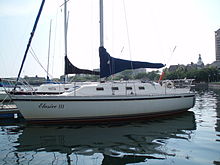 “My wife and I live on a boat and plan to go to the Bahamas this season. We cannot afford to install a SSB radio – costs $7K to $8K. But we need to be able to hear the weather reports and forecasts
So we are thinking of just getting a SW radio receiver.
A friend has purchased a Grundig satellite 750 but it does not seem to have the range, and he has not been successful connecting an antenna.
I think I need a SW radio I can connect to an antenna. I am thinking of a CommRadio CR-1 ?
What do you think?”
Thanks for your question, Bob. I’m going to give you a few suggestions, then open this one up to your fellow SWLing Post readers, as I suspect there may be some with experience setting up and using an HF receiver on the water.
Important: As Bryan commented, just after I posted this review, readers should note that none of the receivers/transceivers I offer here are designed for maritime use, thus they lack features like GMDSS, DSC and DGPS and have no extra protection from the corrosion of salt water on their circuit boards.
Receivers
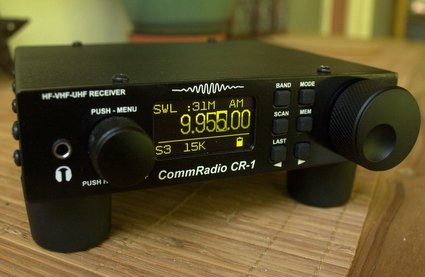
The CommRadio CR-1
For my part, as an inlander, I think you’re on the right track with the CommRadio CR-1 or CR-1a. Not only will it cover the entire HF spectrum (for HF weather fax, RTTY and many ship-to-shore communications), but it also covers VHF (64 – 260 MHz) and UHF (437 – 512 MHz) frequencies. The CR-1 is also a very stable receiver and covers all of the modes you’ll need (upper side-band, lower side-band, AM and FM).
If you’re space conscious, fortunately the CR-1 has a very small footprint; you could mount it nearly anywhere. The CR-1 also has a built-in battery pack and can run/charge on an array of DC voltages (6-18 VDC).
You may also wish to consider the Alinco DX-R8T (see our review) or the Icom R-75. The Alinco has a detachable face plate, thus may also be easily accommodated. The Icom R-75 is a great receiver for your application, as well, but is larger than the CR-1 and does not have a detachable face plate option.
Again, I think you’re on the right track with the CommRadio CR-1.
Another option to consider…general coverage ham transceiver
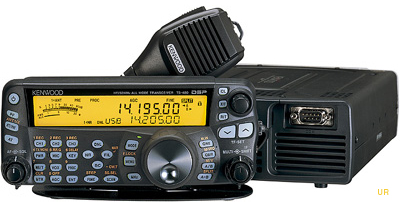
The Kenwood TS-480SAT is full-featured, small, and has a detachable face plate.
Here my advice is going to sound a bit like that which I gave reader Phil recently: I would strongly urge you to get your amateur radio license.
It’s a simple process–even elementary kids do it–and the license no longer requires a knowledge of Morse code (CW), (although I am a devotee of code and would suggest pursuing a knowledge of this at a future date).
Moreover, the testing material will make for an excellent primer on radio communications, so if something goes wrong in the middle of the ocean, you’ll be better prepared to diagnose and fix it.
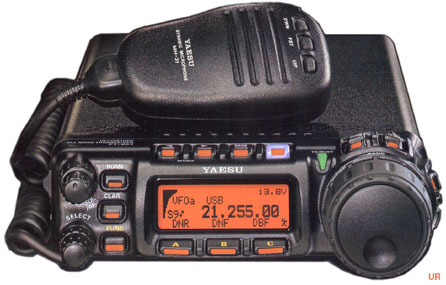
The Yaesu FT-857D
Additionally, in case of an emergency, a ham radio transceiver would provide yet another means of calling SOS to a community that is well-versed in handling emergency communications.
Check out this previous post for suggestions on getting your amateur radio license.
Ham radio transceivers also offer excellent stability and the modes you’ll need to decode any voice or digital mode.
Keeping in mind that you’ll need a transceiver 1) in the same price range as the CR-1, 2) that is compact or has a detachable face plate, 3) has a general coverage receiver, and 4) is rated for 100 watts of output power, I would suggest the following:
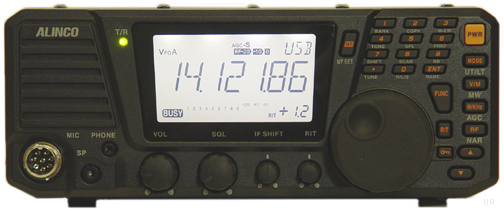
The Alinco DX-SR8T
- The Alinco DX-SR8T. While not a small radio, this rig has a detachable face plate (with optional extension cord), a sensitive receiver and is a great value at $520 new. I favorably reviewed the receiver-only version of this radio two years ago. I’ve heard that the receiver in the DX-R8T is identical to the one in the DX-SR8T. I would purchase this from Universal Radio or Ham Radio Outlet.
-
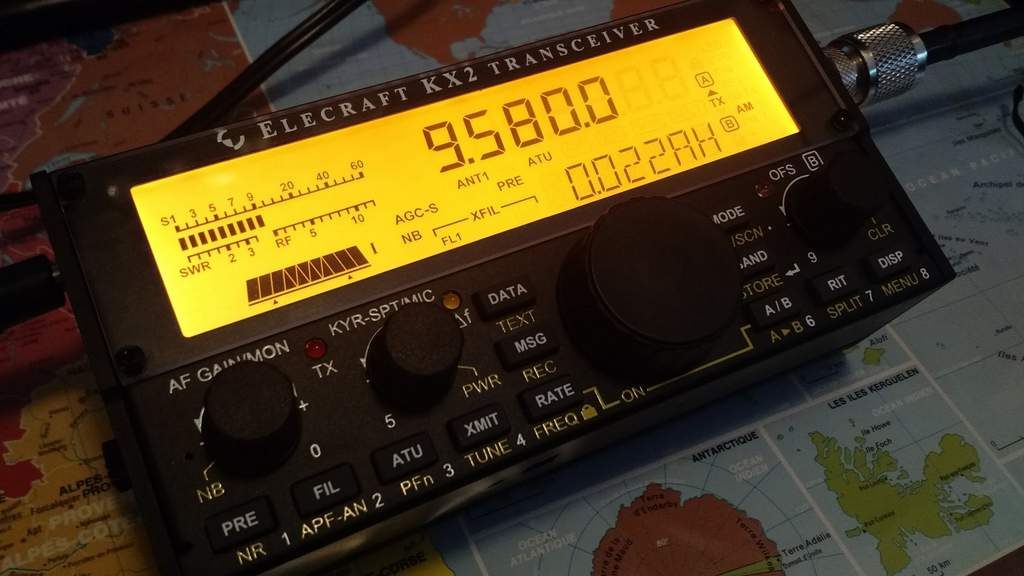
The Elecraft KX2
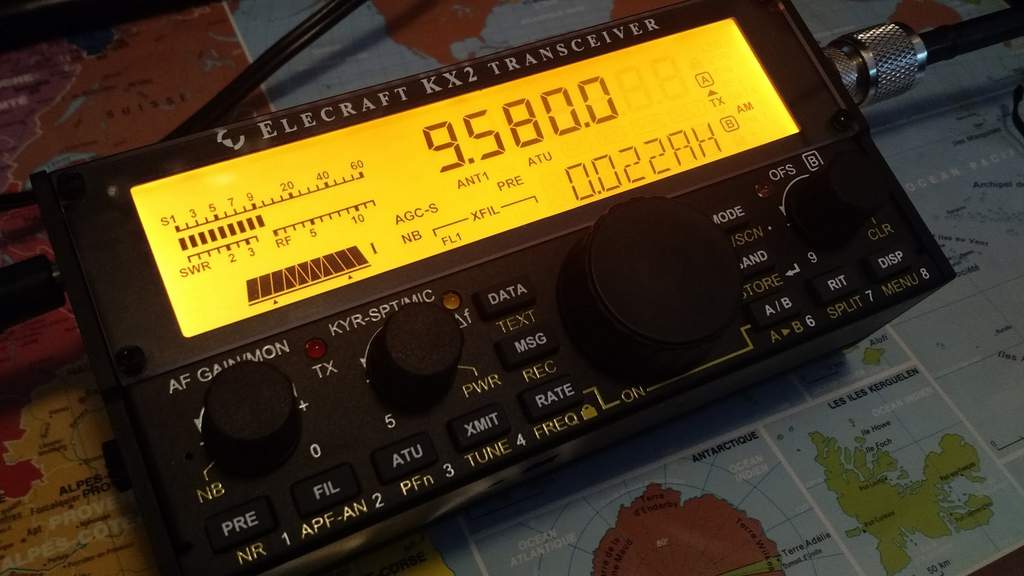
The Elecraft KX3 or Elecraft KX2 are two of my favorite general coverage transceivers–I own both. They can both be powered from a modest 12 VDC source and/or internal batteries. Both are limited to QRP (12 or 15W) transmit power, but an external portable 100W amp can be added. Both are exceptional radios in terms of performance.
- The Kenwood TS-480SAT. Also worth considering, this transceiver has an excellent receiver with better filters and a smaller footprint than the Alinco DX-SR8T. Though it costs nearly twice as much as the Alinco, it’s on sale until 11/30/13 for $974 from Universal Radio.
- The Yaesu FT-857D. This is probably the most compact among the transceiver options listed above. The FT-857D has been on the market for many years and has proven itself a capable mobile transceiver. The detachable face plate could easily be mounted anywhere you wish. The Yaesu FT-857D can be purchased at Universal radio or Ham Radio Outlet.
-
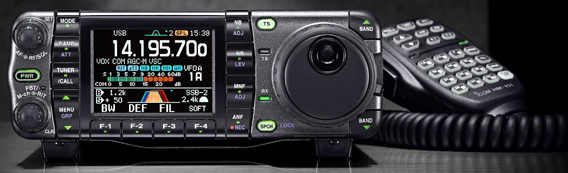
The Icom IC-7000 is an excellent choice for maritime operation. It’s possible to find a used one at a good value.
Also consider buying a good-quality used general coverage transceiver from a reputable retailer like Universal Radio, Ham Radio Outlet, The Ham Station or Amateur Electronic Supply. Search for the three models listed above, but I would also consider the Icom IC-706MKII and the Icom IC-7000.
Of course, you will need a good HF antenna for any of these options to work, even the CommRadio CR-1; a radio, after all, is only as good as its antenna. The type of antenna you can use will be limited by your ability to mount it on on your boat: some are limited-space wire antennas, others are whip antennas. Make sure the antenna will resonate on the frequencies important for your maritime travels.
Fortunately, most of the retailers listed above have experience in this capacity.
Portables
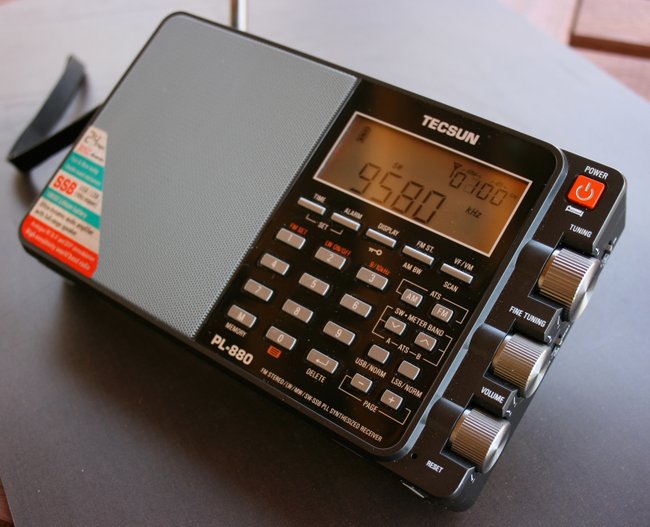
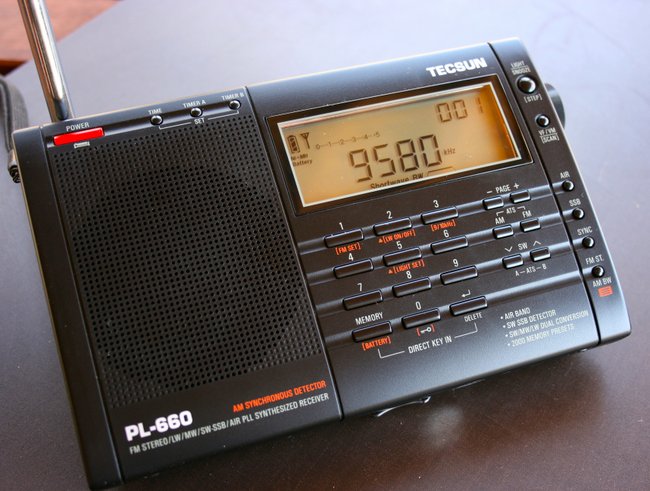
If I were on a boat, I would also carry a portable shortwave radio as a backup. Some to consider are the Tecsun PL-660, Tecsun PL-880, Sony ICF-SW7600GR or the Sangean 909X. All of these have SSB mode and good sensitivity, selectivity and stability, although the Sangean ATS-909X requires an external antenna for optimal sensitivity.
There are also a few compact travel radios worth considering as well, although sensitivity generally isn’t as good as the larger, full-featured portables mentioned above. I would consider the CountyComm GP-SSB, Digitech AR-1780, or the C. Crane CC Skywave SSB as a nice spare radio to tuck away on board.
Hope this helps, Bob! Happy sailing!
SWLing Post readers: if you have experience in maritime HF operation, we welcome your comments and suggestions…
Update: Check out Frank’s maritime radio suggestions.




 According to Arnie Coro at Radio Havana Cuba, the Cuban medium wave broadcaster Radio Progreso will begin an “experimental” shortwave broadcast on 4,765 kHz from 00:30 till 04:00 UTC on October 1st, 2013. For those of us living in North America, this broadcast will begin at 08:30 PM EDT tonight.