Category Archives: Shortwave Radio

Shortwave Radio Recordings: Radio Australia’s Jazz Notes

Sydney_opera_houseIf Radio Australia ever stops broadcasting on the shortwaves, one program I will certainly miss is Jazz Notes.

Jazz Notes showcases the best in Australian jazz, often featuring new and original recordings made in ABC’s studios. The show is hosted by Ivan Lloyd and has been offered on Radio Australia for several years.  I listen to the show Wednesday mornings at 9:30 am EDT.

Click here to download the full recording of Jazz Notes as an MP3, recorded yesterday (May 29, 2013) or simply listen via the embedded player below:

Check out the AFRTS Archive

AFRTSMany shortwave listeners are familiar with the Armed Forces Radio and Television Service (AFRTS); we’ve mentioned them before and the wide variety of programming they offer via several transmission sites.

I recently discovered the AFRTS Archive, an excellent blog that posts archived audio and memories from the AFRTS. The AFRTS Archive is actively updated and chock-full of nostalgia.

It’s Memorial Day here in the States and found this a fitting time to dig through the AFRTS Archive.

Of course, you can still listen to the AFRTS on shortwave–here are the frequencies:

AFN/AFRTS Shortwave Frequencies (note: all broadcasts are in USB)

  • Diego Garcia:
    • 12,579 kHz daytime
    • 4,319 kHz nighttime
  • Guam:
    • 13,362 kHz daytime
    • 5,765 kHz nighttime

Introducing EARL: a rugged, solar-powered GPS and Android tablet with built-in shortwave radio

Earl

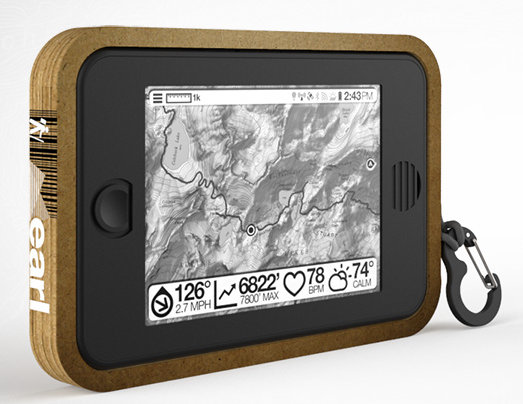
The Earl Backcountry Survival Tablet

A good friend recently introduced me to the Earl Backcountry Survival Tablet; a crowd-funded project that may very well come to fruition.

What makes this tablet really stand out are its impressive list of features which are all based on outdoor survival/adventure. Features include:

  • A rugged, waterproof/weatherproof body; IP67 rated!
  • Built-in solar panel
  • 20 hour battery life
  • An E-Ink, touch sensitive display screen
  • An excellent GPS chipset
  • ANT+ and Bluetooth 4.0 connectivity for devices to measure heart rate, pace and cadence
  • Android Beam technology
  • Built-in thermometer for measuring temperature, hygrometer for measuring the water density of air (humidity) with dew point, barometer for measuring air pressure and altitude and an anemometer (micro hot-wire) for measuring wind speed
  • A two-way radio featuring a FRS, GMRS and MURS transceiver. Earl can send secure text or voice messages via Walkie-Talkie; transmit weather, location, and route information
  • An eReader
  • A radio receiver that covers AM (medium wave), FM, LW, NOAA weather radio (North America) and Shortwave
  • Much more: check out the Earl project page

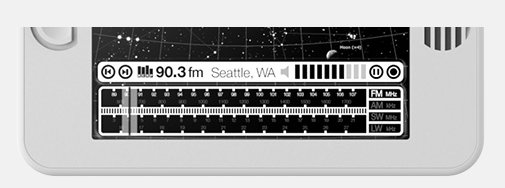
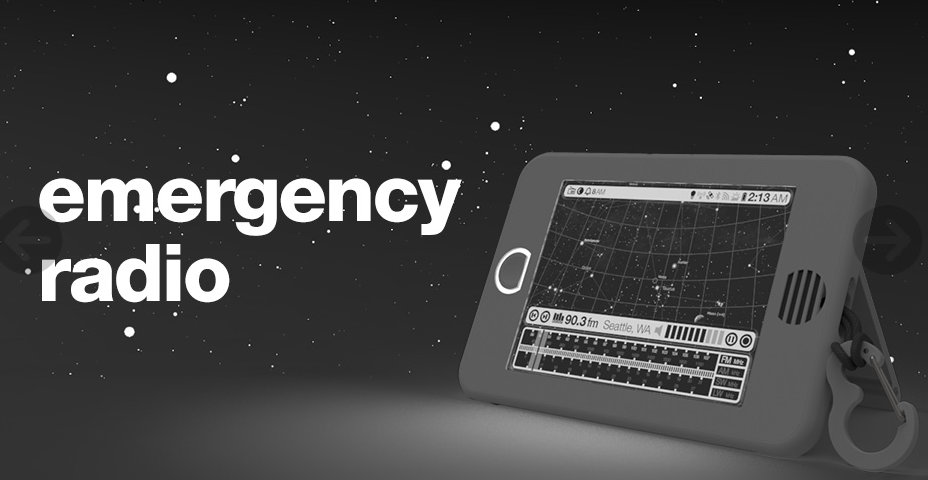
EarlRadioOf course, I’m very interested in Earl’s receiver. Not only does it cover shortwave, but it covers a very wide frequency range (2.3 – 21.85 MHz)! Most impressive.

I don’t expect Earl to be a fantastic performer on the shortwave and medium wave bands–I doubt it’ll compare to the PL-390, for example– but perhaps it will be good enough to hear the major broadcasters. An inductively coupled loop antenna may help on AM (medium-wave). A port for an external SW antenna, would be a major plus.

Better yet, with the right Android app, I bet Earl could decode VOA Radiograms on the fly. Imagine being miles away from civilization, far out of reach of 3G/4G mobile systems, yet you’d be able to receive your news on your eReader over the shortwaves.

A dream? Perhaps, but one that’s well within grasp.

Pre-ordering/Backing

EarlRadio2At time of posting, Earl is 90% funded. You can pre-order Earl for $249 US–a 30% discount from projected retail. (A price that is only $100 more than a Sony ICF-SW7600GR.)

I just pre-ordered an Earl. I will plan to give a full review here on the SWLing Post. They expect to ship production units in August 2013. If they don’t receive funding, all pre-sales purchases will be refunded in full.

If you would like to back this project, check out Earl’s full list of features and pre-order on their website: http://www.meetearl.com/

The 2013 Dayton Hamvention

WinRadio's booth in the East Hall.

WinRadio’s booth in the East Hall.

Whew! Back from the 2013 Dayton Hamvention.  You may have noticed the lack of posts over the past week–this is just a hint of how incredibly busy I’ve been following this annual event. Every year that I go to the Dayton Hamvention, I come back exhausted…yet somehow energized about the lasting power and utility of radio.

As I’ve mentioned, one of the main reasons I go to the Hamvention is to build awareness about my non-profit, Ears To Our World (ETOW). The Hamvention donates an inside exhibitor table (worth $550+!) to ETOW each year, and our volunteers (myself among them) man it all day Friday, Saturday, and Sunday at the Hamvention. My voice was nearly gone by Sunday; I’d estimate we spoke with several hundred people.  But the great news is, we received a record number of donations this year–and on behalf of ETOW, I just want to say, Thank you! to all who support our mission of providing self-powered world band radios to classrooms and communities throughout the developing world.

I spotted this Hallicrafters Super Skyrider in the flea market.  She would look quite good in my radio room!

I spotted this Hallicrafters Super Skyrider in the flea market. She would look quite good in my radio room!

At the Hamvention, I also get a chance to network with friends, meet fellow radio amateurs/shortwave radio listeners, and check out both vintage radios in the outdoor flea market, and new radio innovations inside. One of the great things about representing ETOW is hearing the stories of others who share our belief that shortwave radio has a place on this planet.  It’s very encouraging and cathartic.

Moreover, I’m fortunate that once more this year several SWLing Post readers sought out our booth:  it was terrific meeting each and every one of you! This blog provides me with a sense of radio community that lasts throughout the year; I hope it does the same for you.

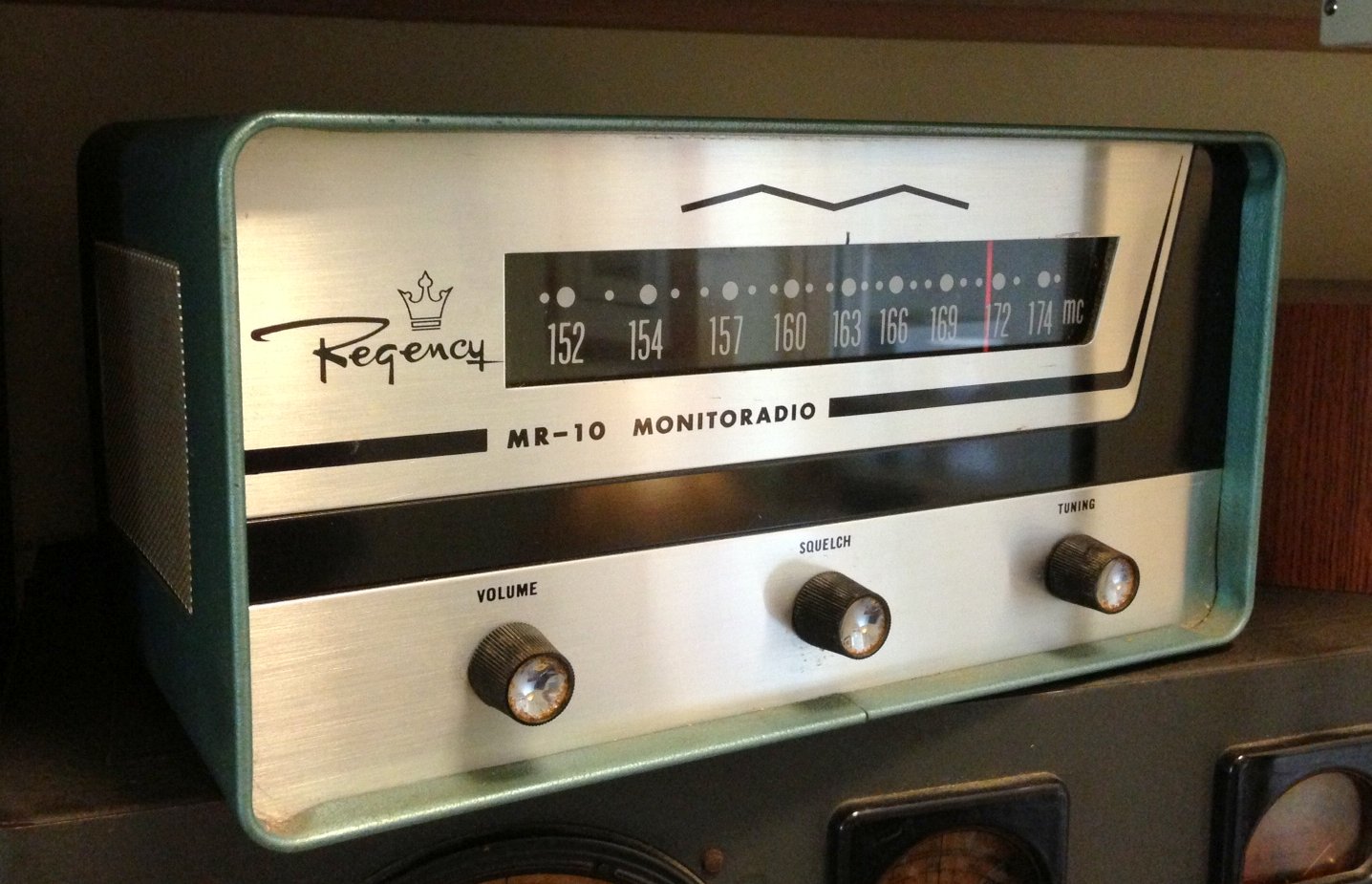
My Regency MR-10 Monitoradio.

My Regency MR-10 Monitoradio. (click to enlarge)

Typically, when I go to Dayton, I bring back a few purchases.  This year, I did not find a bargain like my BC-348-Q from 2012, but I did come back with much-needed supplies in the form of  connectors, adapters, cables, and one $6 Regency MR-10 Monitoradio (see photo).

I was thoroughly impressed by the number of innovations I saw at Dayton this year, especially the Software Defined Radios (SDRs) that are new to the market.

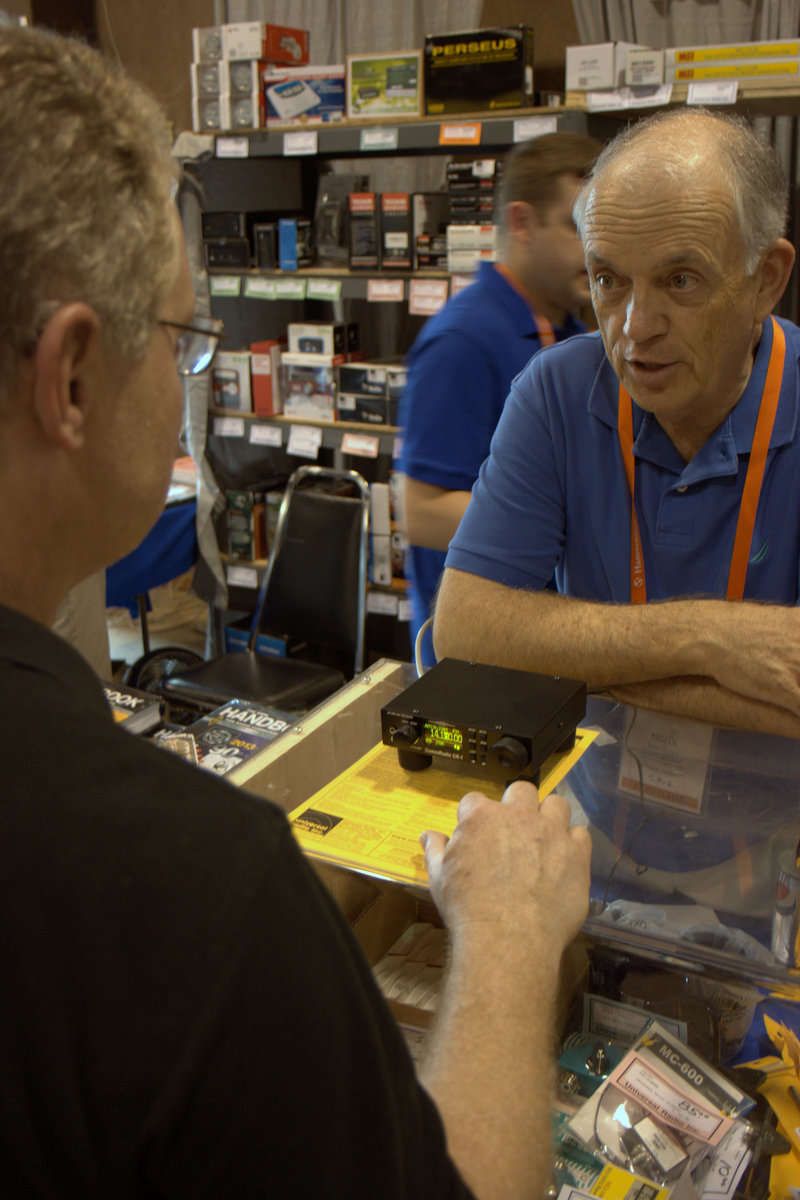
CommRadio's president, Don Moore, working with a customer at the Universal Radio booth.

CommRadio’s president, Don Moore, working with a customer at the Universal Radio booth.

One SDR that received a lot of attention, according to Fred Osterman at Universal Radio, was the CommRadio CR-1; it is an SDR in stand-alone tabletop-receiver form (see current sale). Universal sold all of the units they brought to the Hamvention in very short order. We mentioned the CR-1 in an earlier post, and received mixed reactions:  many readers noted that it was very robust, but didn’t have the feature set to make it particularly marketable at the price point.  This doesn’t seem to have mattered.

Fortunately, at the Hamvention, I met with Don Moore, president and founder of CommRadio, who most kindly gave me a loaner radio for review. He’s well aware that my review will be frank, and I’m grateful to have this little receiver in my possession. I have only had it on the air for perhaps an hour so far.  Just long enough to tell that it plays well, has a tidy footprint, is built like a tank and…well, that it’s frankly cute.  I will pit it against my WinRadio Excalibur, Alinco DX-R8T, and Elecraft KX3, and include audio samples in a forthcoming review.  Stay tuned!

WinRadio also had a booth in the East Hall that seemed to have a constant stream of visitors. I found Dennis Walter with Bonito in Hara Arena showing off the RadioJet receiver we reviewed last year. I also saw many other shortwave receiver manufacturers and retailers including C.Crane, Palstar, TAPR, Ten-Tec and Alinco.  Indeed, Alinco hinted that an updated version of the tabletop DX-R8T is on the way, the DX-R9(T).  It will have the same form factor of the DX-R8T, but the receiver will be built around Collins mechanical filters, which will be much easier to replace than the current ones in the DX-R8T. I’ll post an announcement when the DX-R9 is in production.

CommRadio offering sale on CR-1 for a limited time

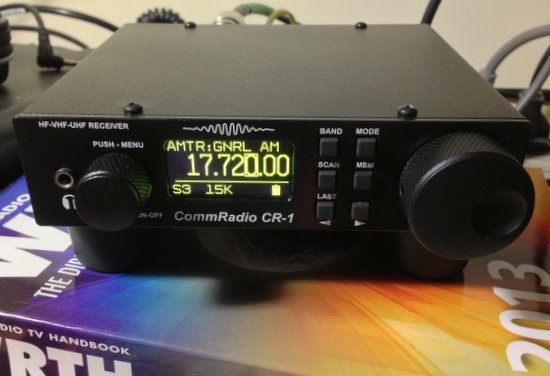
The CommRadio CR-1 is on my test bench, ready for review. (Click to enlarge)

The CommRadio CR-1 sitting on my test bench, ready for review. (Click to enlarge)

Gary writes:

There is a limited time sale on the CommRadio CR-1 communications receiver. I received this offer via email today.

CommRadio is offering a SPECIAL SALE through Sunday, May 26th, 2013

Purchase a CR-1 Communications Receiver, with the battery included for free, PLUS take an additional $20 dollars off.

This is a one time DEAL – $480 Dollar Special

The CR-1 will then go back up to $500 until June 4th. Starting June 5th it will go up to $599.

This is your chance now to save with the promotional price.

Terms and Conditions:
One coupon per customer
You may only use it once.
This offer is only for US and Canada shipments.

Expiration day: May 26th 2013

COUPON CODE: CR1SPECIAL
(Enter at check out)

http://www.commradio.com/

Thanks, Gary, for the tip! I’m in the process of reviewing the CR-1 right now. Check back soon!

WRTH 2013 Summer (A) season available for download

WRTH2013I just received the following message from Sean Gilbert with WRTH:

The WRTH editorial team are pleased to announce that the Summer (A) Season broadcast schedules file is now available to download for free from http://www.wrth.com/ just follow the link on the front page (updates).

Included in this file are: Broadcast schedules for international and clandestine/target broadcasters, international broadcasts in DRM, International frequency listing, and selected language broadcasts. Also included is a decode table for site and target area codes.

The 80 page file is just over 2MB in size and in PDF format (with bookmarks to assist in navigating between sections) and unique section page numbering to assist with printing. You will need the free Adobe Acrobat reader in order to open this file. The Acrobat Reader can be downloaded from http://www.adobe.com/

We hope you find this file a useful accompaniment to the printed WRTH.

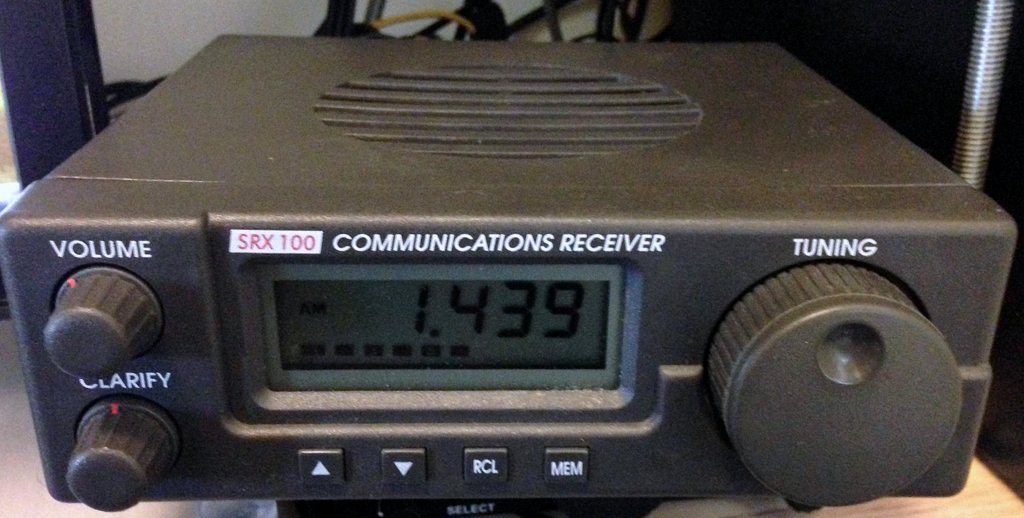
A review of the Lowe SRX 100

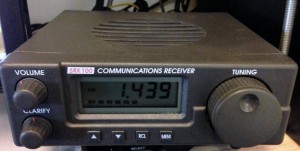
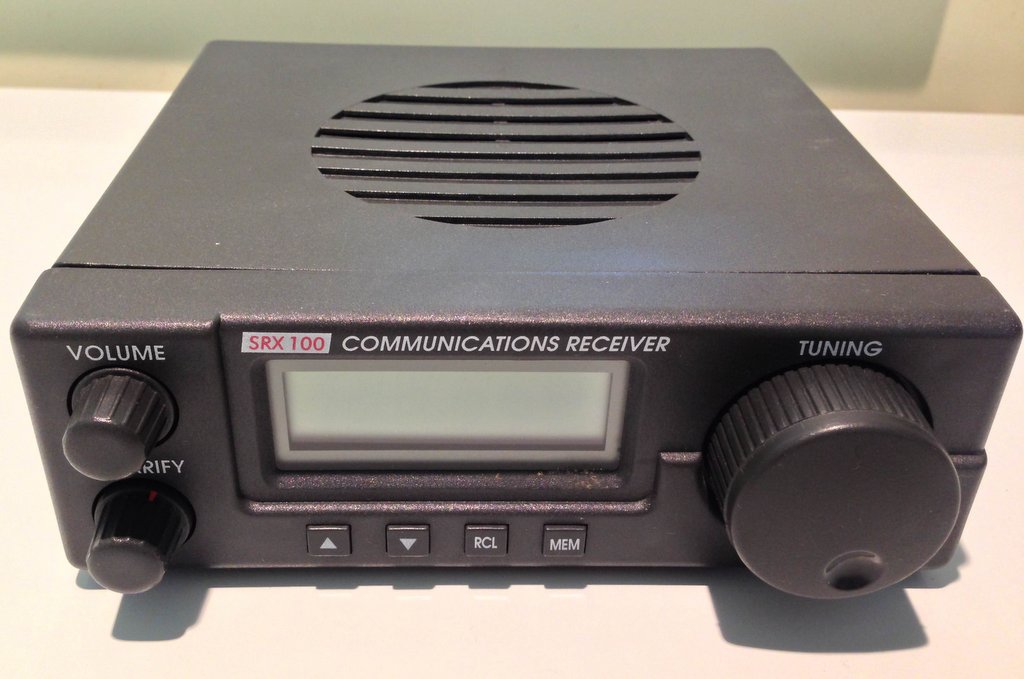
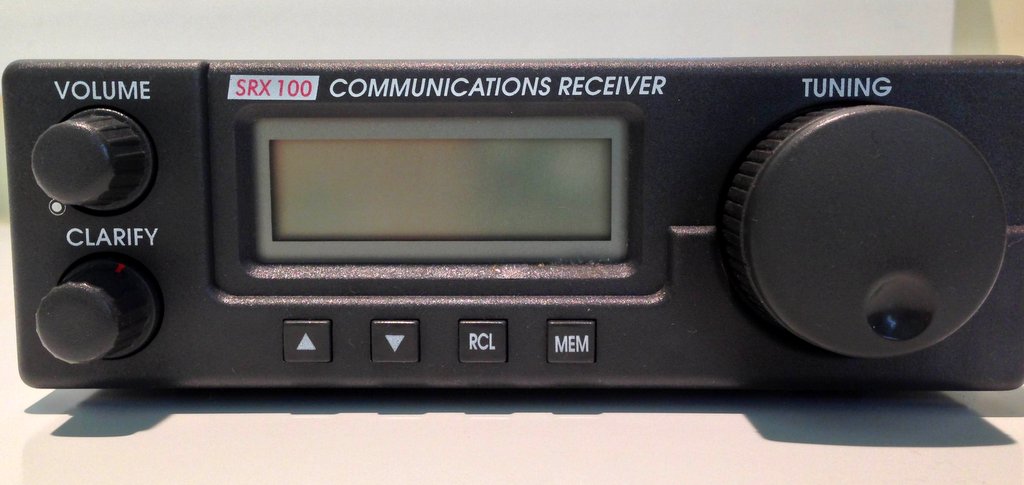
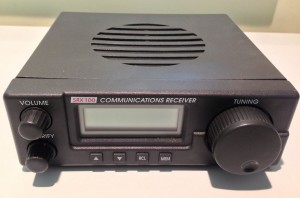
The Lowe SRX 100 shortwave receiver (Click to enlarge)

The Lowe SRX 100 shortwave receiver (Click to enlarge)

I recently had the opportunity to spend some quality time with the Lowe SRX 100 (a.k.a., Target HF3, AKG HF-3, and Garex HF-3), a receiver produced in the UK around 1995-96. It’s not know for being a DXing machine, but virtually any Lowe product has a certain nostalgia factor, not to mention, collectability factor. As you can see in the photo on the right, the SR 100 is a very simple receiver, and as such, it’s just the type for which I have a personal affinity.
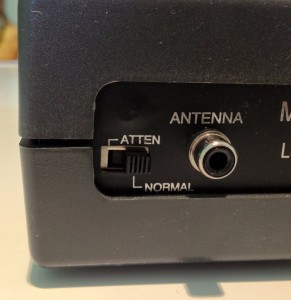
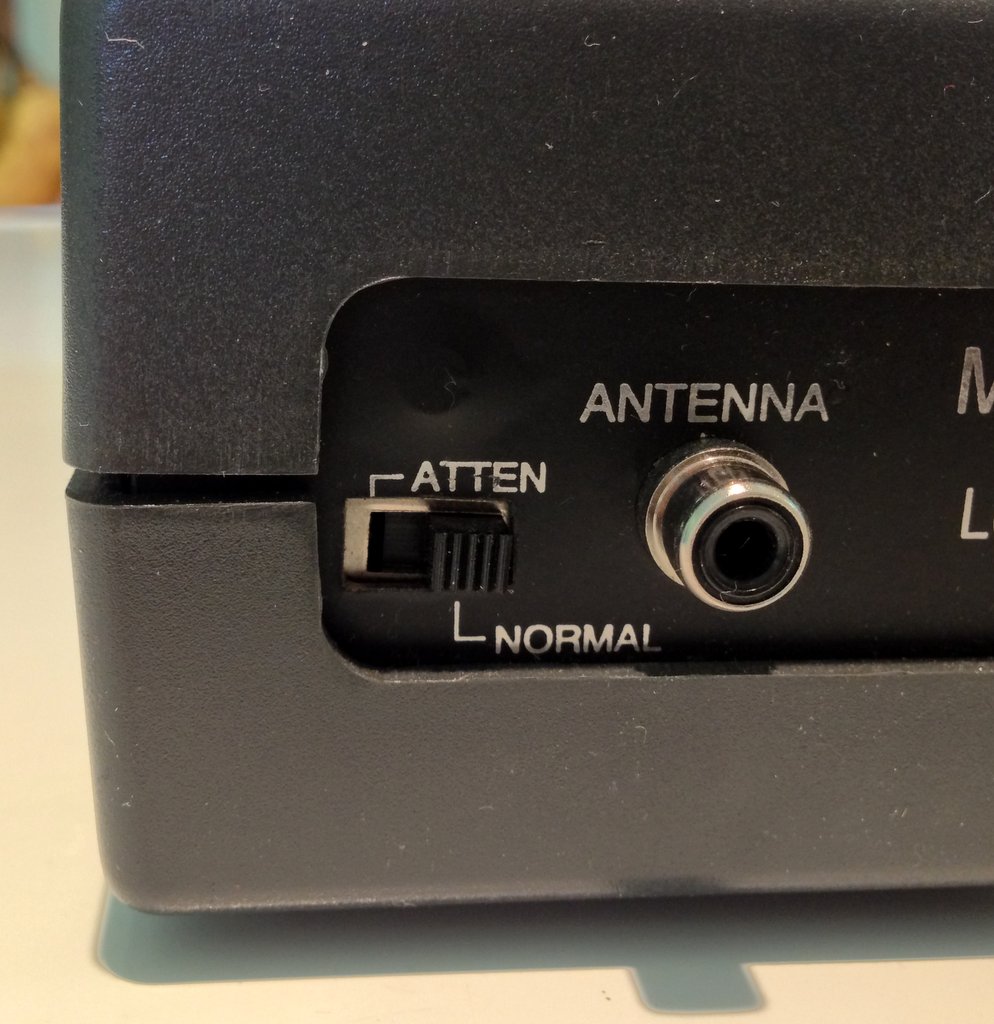
The antenna connection and attenuation switch on back panel of radio. (Click to enlarge)

The antenna connection and attenuation switch on back panel of radio. (Click to enlarge)

When I first brought the SRX 100 home and hooked it up, I used the supplied 10 meter antenna wire that Lowe shipped with all of these units when new. The antenna wire has the correct fitting for the antenna connector on the receiver:  an RCA type connector, instead of the more common SO-239 or BNC.  A bit strange. But nonetheless, I hooked it up, plugged in the supplied AC adaptor, and turned on the radio…to find I received nothing but loud static. I live in a fairly RFI-free house and area, but the supplied antenna was so good at receiving noise that I thought the receiver was “deaf” and broken. I decided to give it another chance:  I took the SRX 100 into my radio room and hooked it to my large, external horizontal loop antenna; lo and behold, it came to life!  Needless to say, it was a relief.  (I later learned that many others have experienced this symptom with the supplied antenna.)
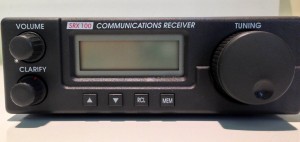
(Click to enlarge)

(Click to enlarge)

Basics

The SRX 100 receiver coverage is from 30 kHz to 30 MHz, in one-kHz steps. The receiver is a dual-conversion design with the first intermediate frequency at 45 MHz, and the second at 455 kHz. During the past two months of use, I have noticed no serious overloading.

The bandwidth, however, is fixed in AM and SSB–there are none of the wide and narrow settings we’re used to seeing on modern portables, let alone tabletops. I found, though, that for broadcast listening, the AM filter is near ideal so long as no adjacent signals are present. In crowded conditions, you can tune off-frequency to decrease interference unless your desired signal is sandwiched between two others.

The sound quality is a major plus. My unit reminds me very much of the mellow sound I got out of my Palstar R30C; it has almost a tube-like quality.  And in my book, that’s a huge compliment.

Tuning around
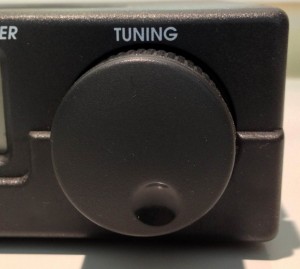
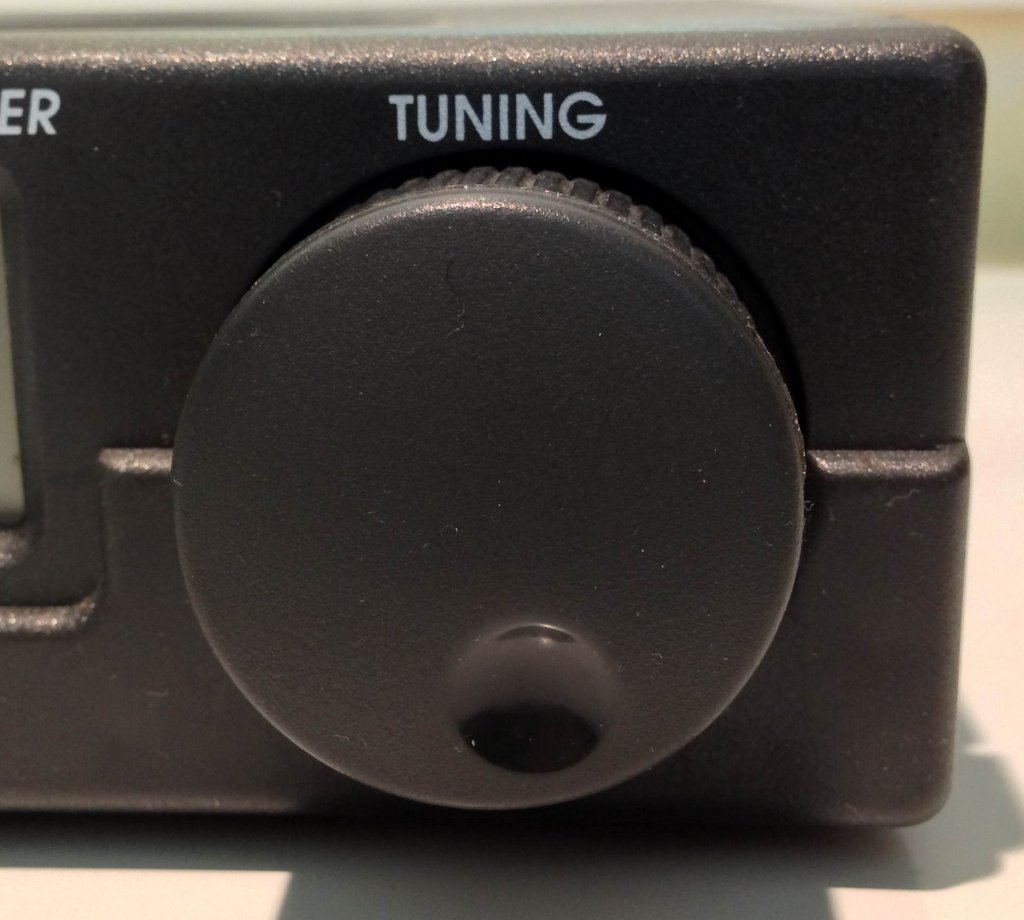
photo_4As simple as the Lowe SRX 100 is, tuning it can take practice. First off, the tuning knob is substantial, with a weighted feel–it spins freely and hints of quality workings within.  The actual tuning encoder, moreover, is quite clever.  I thought it odd that this radio had no band switching–to permit moving from meter band to meter band, or even in 1 MHz increments–instead, it is adaptive, something I hardly recall in a receiver from this era. If you tune the SRX 100 slowly, you will move in 1 kHz increments; speed up, and you can skip in steps of 10, 100 or 1,000 kHz steps. So, if I wanted to move from the tropic lower bands up to 11 meters, one really quick spin will get me there in a second. While this seems intuitive, in practice, any jerky movement of the tuning knob will shoot you right past the desired frequency into the hinterlands.

Also, 1 kHz increments in single side band can seem like a large tuning step on a modern tabletop radio.  The SRX 100 gets around this with its “Clarify” knob, which allows for fine tuning. The LDC display, though, does not reflect any incremental changes with the clarify knob.
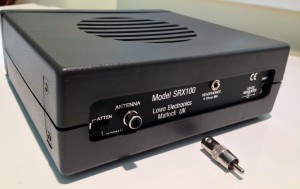
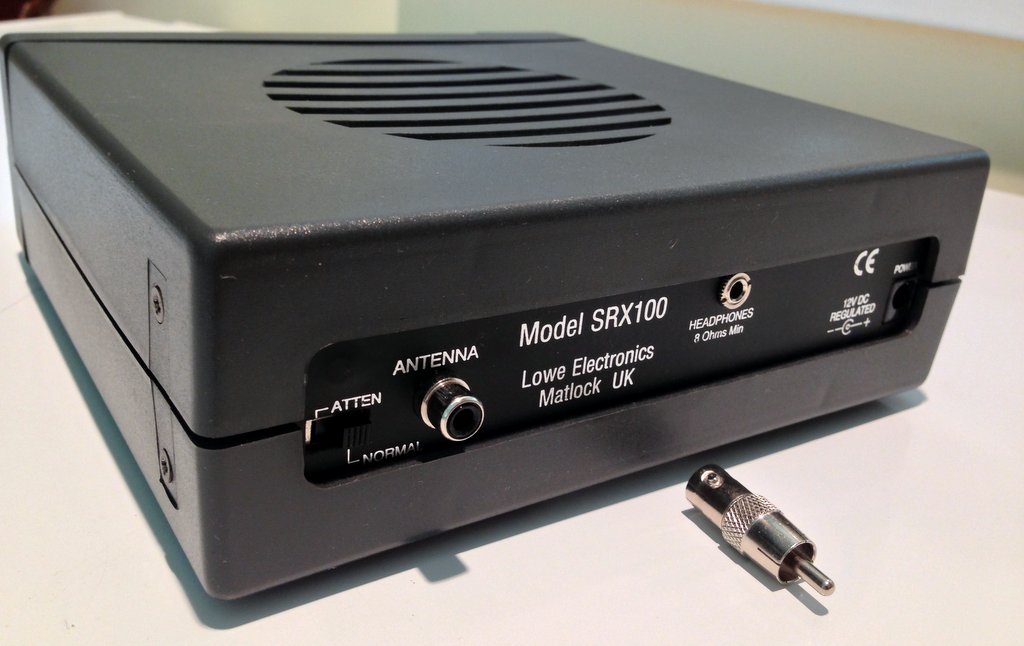
Back panel of the Lowe SRX 100 and RCA to BNC adapter (Click to enlarge)

Back panel of the Lowe SRX 100 and RCA to BNC adapter (Click to enlarge)

Sensitivity-wise, the Lowe SRX 100 is quite respectable in the lower bands, but above 15 MHz or so, started to drop off a bit. Selectivity-wise, you will have no contest grade receiver here. For most broadcast listening, it does quite well, even on medium wave.  But on SSB, it’s simply disappointing in crowded conditions. Forget CW listening unless your “internal filter ” (your brain/ears combo) can cope with multiple signals at once.

Every receiver has pros and cons; I started noting them from when I first tuned on the radio:

Pros:

  • Simple design–even grandpa can figure out these controls without cracking open the manual
  • Nice weighted tuning knob
  • Easy to read LCD display (see con)
  • Tuning rate is adaptive to spin rate of tuning knob
  • Pleasant, mellow audio from its built-in speaker, reminiscent of the Palstar R30 series
  • Compact size for a tabletop receiver
  • 12 VDC power supply and current are only at 300 mah
  • Sturdy metal chassis and build quality excellent
  • Attenuator switch (Con: on back of unit)
  • Even at time of production, this was a relatively inexpensive tabletop with reasonable performance for price

Cons:

  • No adjustable bandwidth
    • SSB bandwidth too wide for listening to CW if any adjacent signals are present
    • AM too wide if competing station within 5 kHz of either side of desired carrier
  • No back lighting on display (see pro)
  • Clarifier only marginally effective on SSB signals
  • Only 10 memory positions
  • Adaptive tuning rate takes practice to become fast and accurate (see pro)
  • Non-standard RCA type antenna connector (will require an adapter for most people)
  • Supplied 10 meter length of antenna wire with RCA plug is useless in most environments
  • No bail

photoSRX100FrontPanelSummary

This is a fun little radio!  Even thought it’s a tad quirky, it may just be the best shortwave radio for an armchair shortwave radio listener, someone who wants an uber-simple design and small footprint. If you find used one on eBay, or with a company like Universal Radio, it may make a nice working addition to any shortwave radio collection.