Shortwave listening and everything radio including reviews, broadcasting, ham radio, field operation, DXing, maker kits, travel, emergency gear, events, and more
SWLing Post reader, Jeffrey Fritz, sent me the following message and has kindly allowed me to share it with other readers. I’mthoroughly inspired!
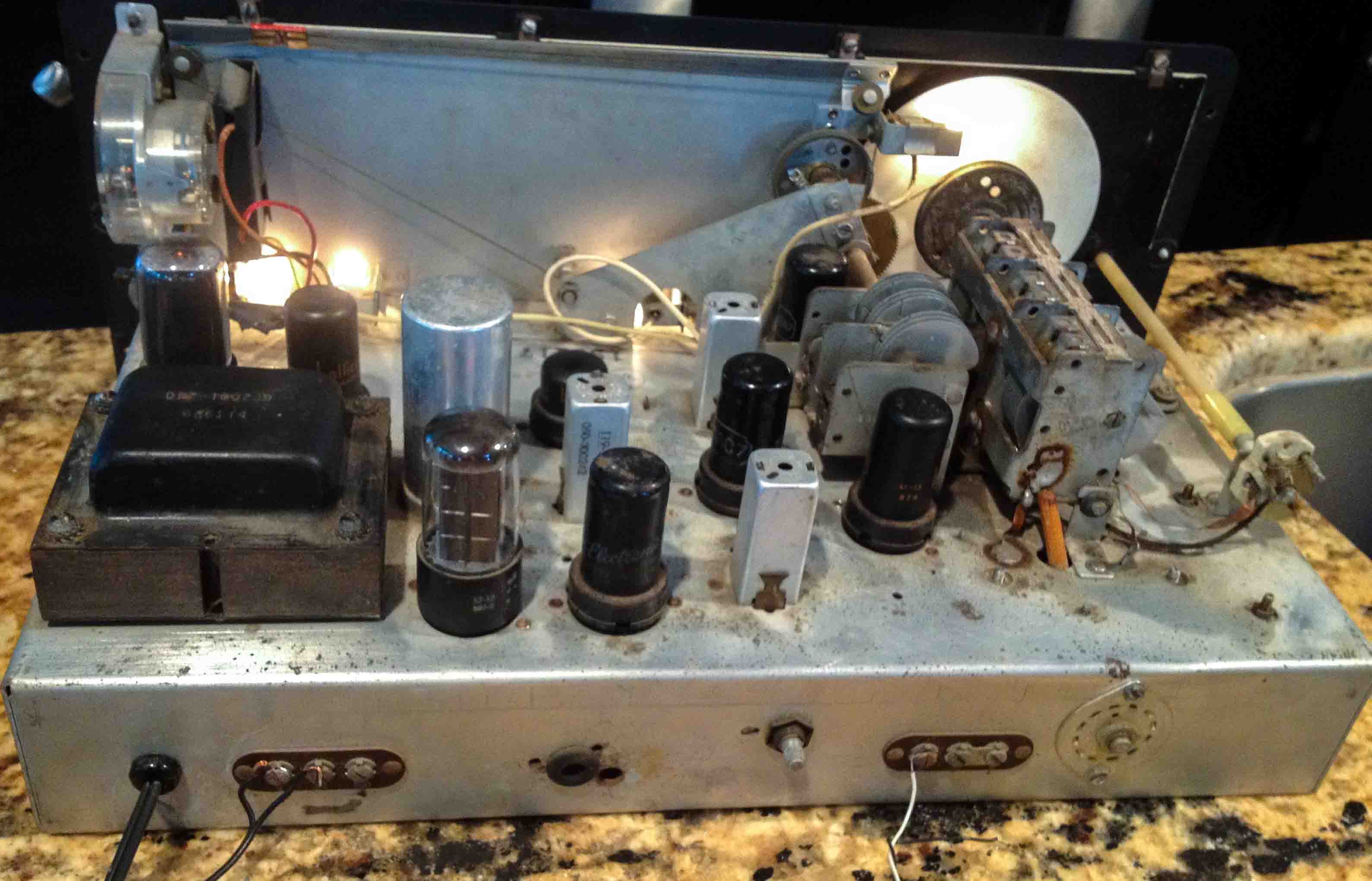
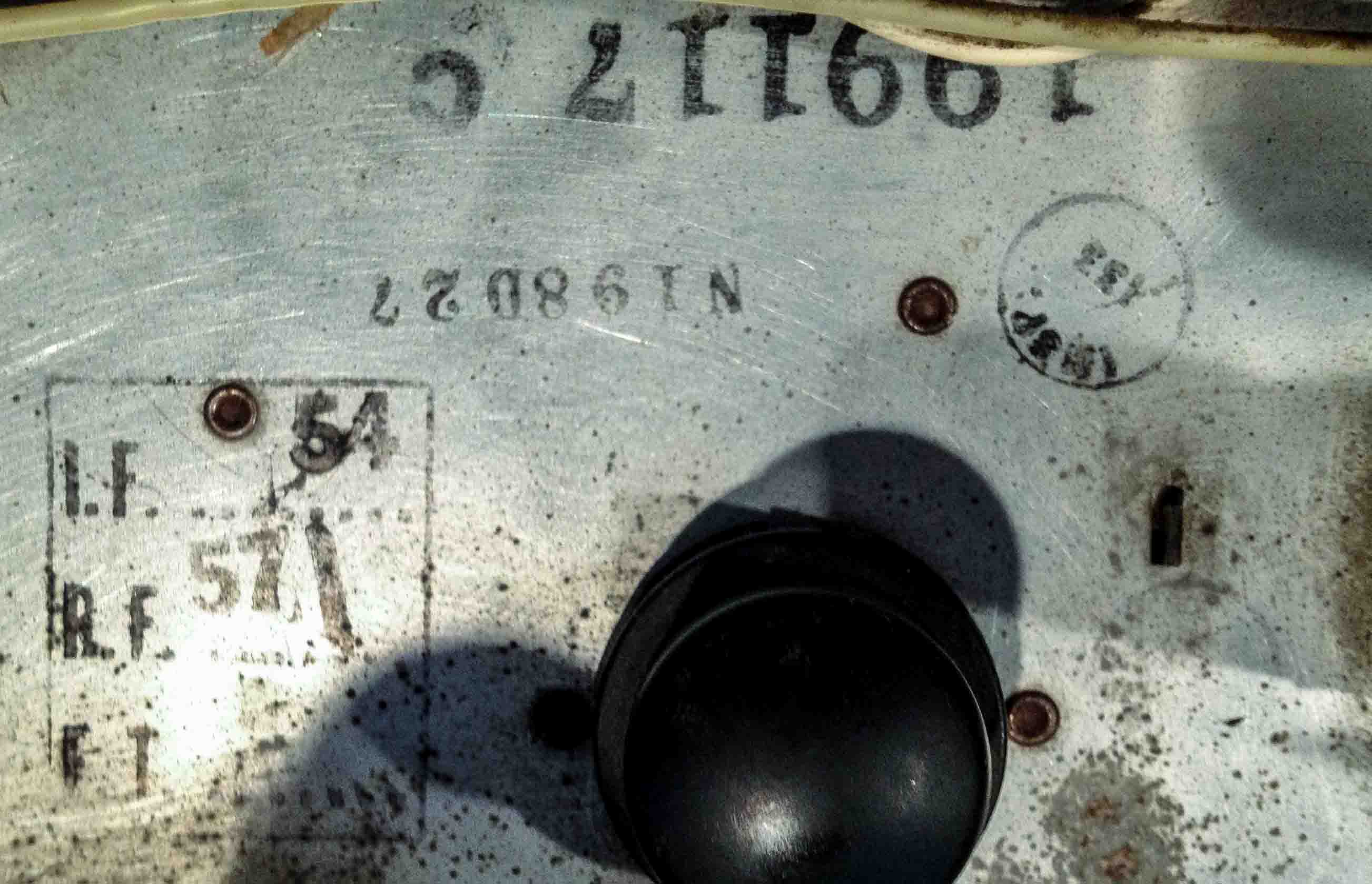
Bottoms up! Considering how old this receiver is, the chassis bottom (still with the original power cord) really is clean. This is how the bottom of the chassis looked when I removed the receiver from its metal cabinet.
As a teenager in the 1960s I spent a considerable amount of time SWLing on a Hallicrafters SX-110 communications receiver. I collected QSL cards from all over the world and loved being an SWL.
The SX-110 was purchased on 9 September 1961 from Gem Electronics in Farmingdale, Long Island, New York. My parents bought it for me, probably after a great deal of whining and cajoling on my part. Although much of my gear has long since been sent to some landfill by my parents, like my precious Lionel trains, I would not allow them to trash the SX-110.
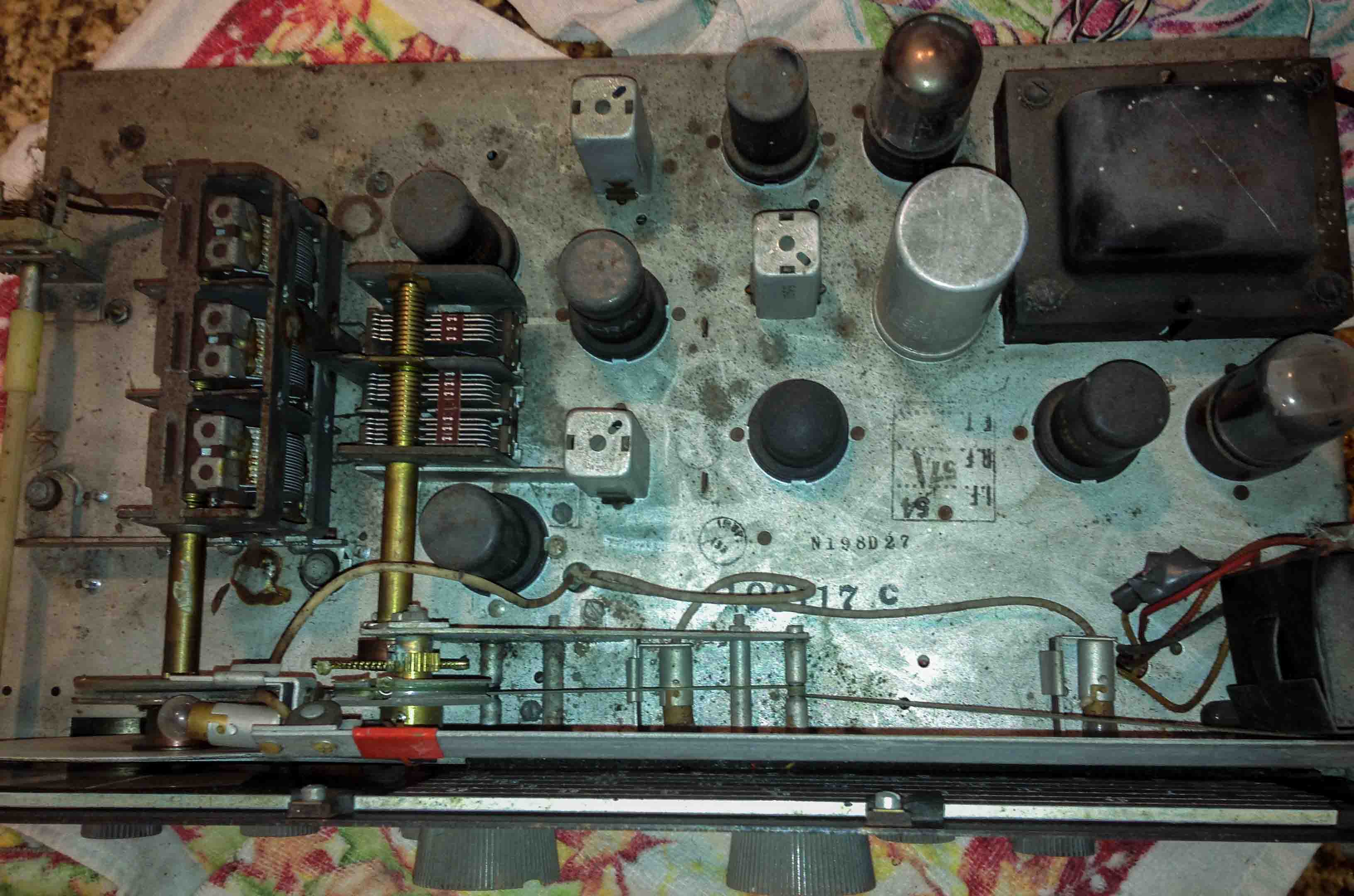
The top of the chassis, however, is not as clean. Some elbow grease will clearly be required.
The radio has been sitting in one basement or another, unused for the better part of 30 years.
Yesterday I decided to try bringing the radio back to life. Restoring this kind old receiver was a labor of love. The receiver was carefully looked over and tested with a VOM for bad components and the top of the chassis cleaned as best I could. The bottom was pristine. I just needed to clean out a few cobwebs and replace the power cord.
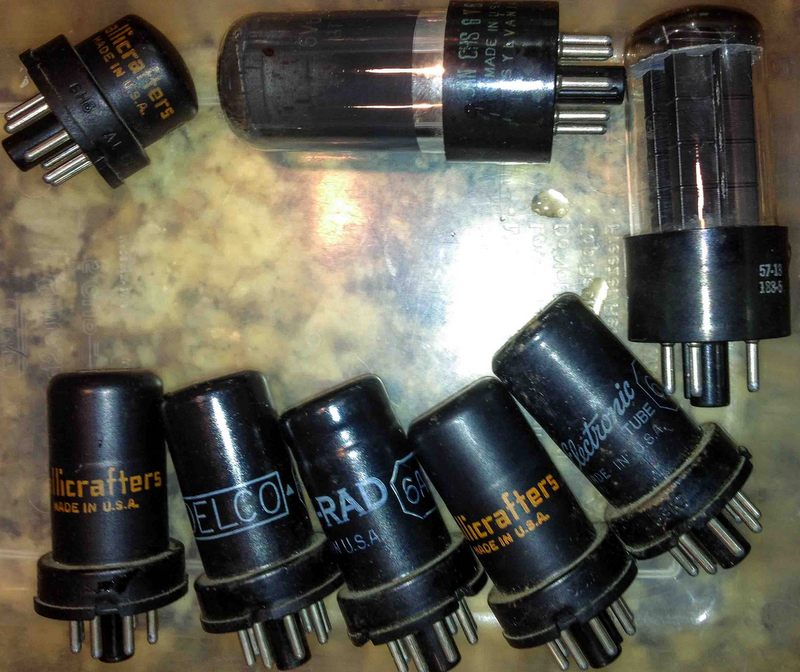
All eight tubes. Note the three original Hallicrafters tubes with the orange labeling.
After being cleaned up and several components tested, the SX-110 was slowly brought back to life on a Variac. I started at 10 volts AC and slowly increased the voltage every ten minutes by another ten volts. When I got to about 90 VAC, I could hear static and distorted audio coming out of the speaker. It was a good sign that the radio would come back to full operation once I reached the normal 110 VAC input–and that is exactly what occurred.
I am happy to report that, with a little patience and love (and a good cleaning) –and with three of the original Hallicrafters tubes still in place, my trusty old Hallicrafters SX-110 shortwave receiver is happily working today. I have it connected to its original Hallicrafters R-47 3.3 ohm speaker.
The top chassis is cleaned as much as possible. Not perfect, but a little cleaner than before. We now have about 110 volts applied through the Variac. No smoke but we do have lights!
Yesterday evening I listened to Radio Taiwan, Radio China International, Radio Havana Cuba, The Voice of Turkey and The Voice of Russia. The audio quality was rather decent without a hint of AC hum. The radio is probably due for a good alignment. I am running the radio on the Variac set at 110 volts AC and will probably keep it on the Variac because the AC voltages today in the U.S. are significantly higher than they were in 1961.
Even the XYL thinks that the radio sounds terrific! What better recommendation can there be for this old, vintage receiver?
73, Jeffrey Fritz, WB1AAL
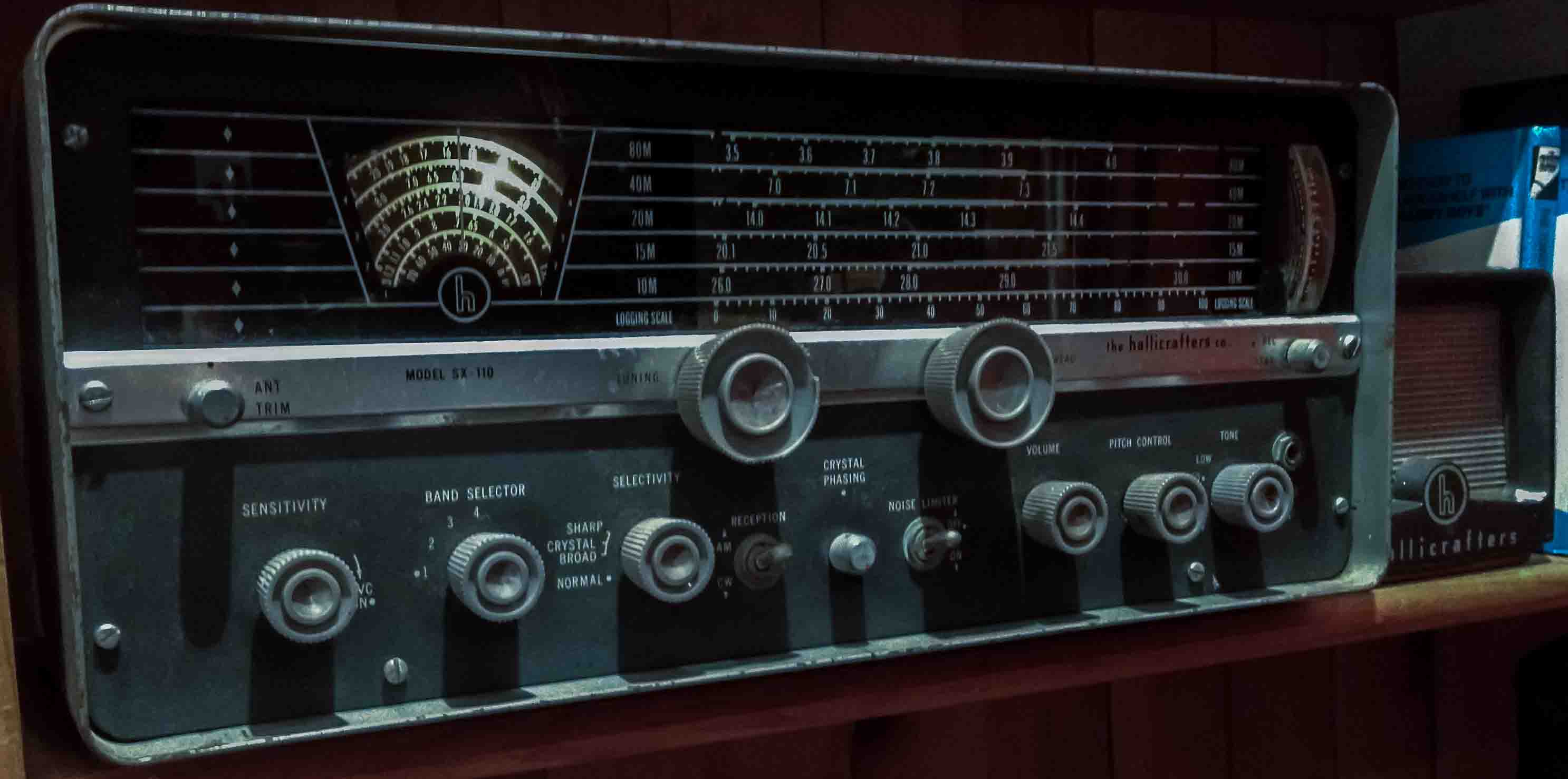
The restored SX-110 sitting on the bookshelf in the shack. No one would mistake this for a new receiver, but it works just fine.
PS–Jeffrey also mentioned to me: “If you look closely at the chassis stamp photo of the SX-110, you can see a stamp that reads ‘199117 C.’ This is the manufacture date of the receiver. The fourth digit is the year, and the fifth and sixth digits are the week of the year. So, 199117 is the 17th week of 1961 or the week of 23 April 1961.”
Very interesting. Now I need to examine a few of my own Hallicrafters receivers…
Close up of the inspection stamps. Do modern rig manufacturers take time to do this now?
The Quantum FX J-114U portable analog shortwave radio features an analog radio dial, but USB/SD media playback. Who knew?
Several of you have written to me in the past few months asking about the new Quantum analog shortwave radios found on eBay. The prices for the various models are anywhere between $20-40 US.
I’ve resisted checking into these radios as they have very little technical information available and I assumed would not be worth the bother. In fact, sellers don’t even list the frequency coverage of the shortwave bands, only how many “bands” each unit has (i.e. “SW 1-7”). However, one unit (the Quantum FX J-114U) is available on Amazon, and there have been a few favorable reviews. Now I’m a bit curious.
Do you have experience listening to shortwave on one of these radios? If so, please share your comments.
I just added three of them to the Shortwave Radio Index:
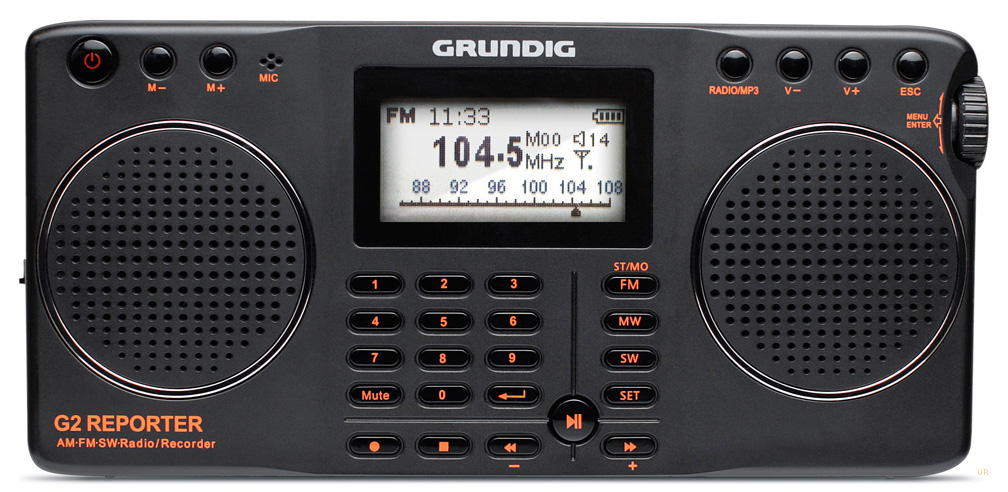
Joshua Goldman, with CNET, has written a review of the Grundig G2. What’s more, he offers a fairly thorough review of the Grundig G2’s features and design.
First of all, I’m very impressed that CNET would bother reviewing a shortwave radio at all. Typically, I look to CNET for reviews of portable hi-tech like cell phones, iPods, cameras, computers, and the like; to see them review a shortwave seems like a broad-minded effort.
However, the focus on the G2’s actual shortwave performance was glossed over, at best. The reviewer merely writes:
If you’re most concerned with pulling in FM stations, you’ll be happy with the G2 Reporter. Even some stations that I’ve found difficult to tune with other portables came in strong. Tuning of AM and SW was good, too, but less reliable than FM.
And…that’s it. So much for the G2’s shortwave.
So, though this is not a review of the merits of the Grundig G2 as a shortwave radio, it does cover the radio’s recording features, battery, .mp3 and .wav file playback, battery, design, and similar features. Which, at least, is a step in the right direction.
Bob Padula at Warrandyte State Park, near Melbourne, Australia
I recently discovered that Bob Padula, long-time shortwave radio enthusiast and publisher of The Australian DX Report, has an online project entitled The History of Shortwave Radio In Australia. It’s a thorough and informative read and is available free of charge.
Bonito’s Dennis Walter at the Bonito booth in Hara Arena at the 2012 Dayton Hamvention
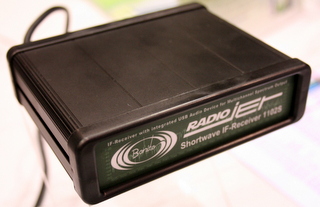
At the Dayton Hamvention this year, I met Dennis Walter, who is with Bonito, German manufacturer of the 1102S RadioJet. Dennis was kind enough to loan us a radio for review on SWLing.com. I have been evaluating the Bonito 1102S RadioJet over the course of eight weeks and have formed some impressions about its performance. And while I haven’t made any A/B comparisons yet with either the Microtelecom Perseus or the WinRadio Excalibur–both on my review table at the moment–I have taken the time to get to know this lean, high-performance IF receiver.
First impressions
The RadioJet box (left) is about the size of the highly portable Tecsun PL-380 (right)
When I first held the RadioJet, I was amazed at how small and sturdy the unit is. It’s built quite well; I expect you would have difficulty putting a dent in its aluminium body. It has a very small footprint on the desktop and fits very easily in my suitcase. Specifically, the RadioJet box is about the size of the highly portable Tecsun PL-380—in fact, the PL-380 is slightly wider than the RadioJet.
And though I knew about this feature in advance, what really stands out is its lack of dependence upon a power cable or a DC-in jack on the back of the unit. Indeed, the only two connections are a USB port and a female BNC connector for the antenna. The RadioJet derives its power directly from the USB cable. This is a major plus, providing additional freedom, as there’s no need for an external power supply or “wall-wart” type DC adapter. With the radio and USB cord, you’re ready for radio on-the-go—as I was on my recent DXpedition family vacation, when I reviewed the RadioJet.
Plug and play
Installing the RadioJet is very simple. You simply plug the receiver into your computer via the supplied USB cable, then install the RadioJet software via the supplied installation disc. As far as I know, the RadioJet software only works with Windows PCs. I tested the RadioJet with my Toshiba Satellite 64 bit Intel core i3 laptop computer.
I had no difficulty getting the RadioJet running. Indeed, it worked after the first software install. In my experience, it was true plug-and-play.
Is the RadioJet an SDR?
To be clear, the RadioJet is technically not an SDR, it is an IF receiver, more like the Ten-Tec RX-320D. I’ve certainly been guilty of calling it an SDR in the past as it’s easily to lump it in the same category. Within this review, I do compare RadioJet features with SDRs currently on the market since it is software (PC) controlled, has many of the same features as an SDR and directly competes with them.
Software and Usability
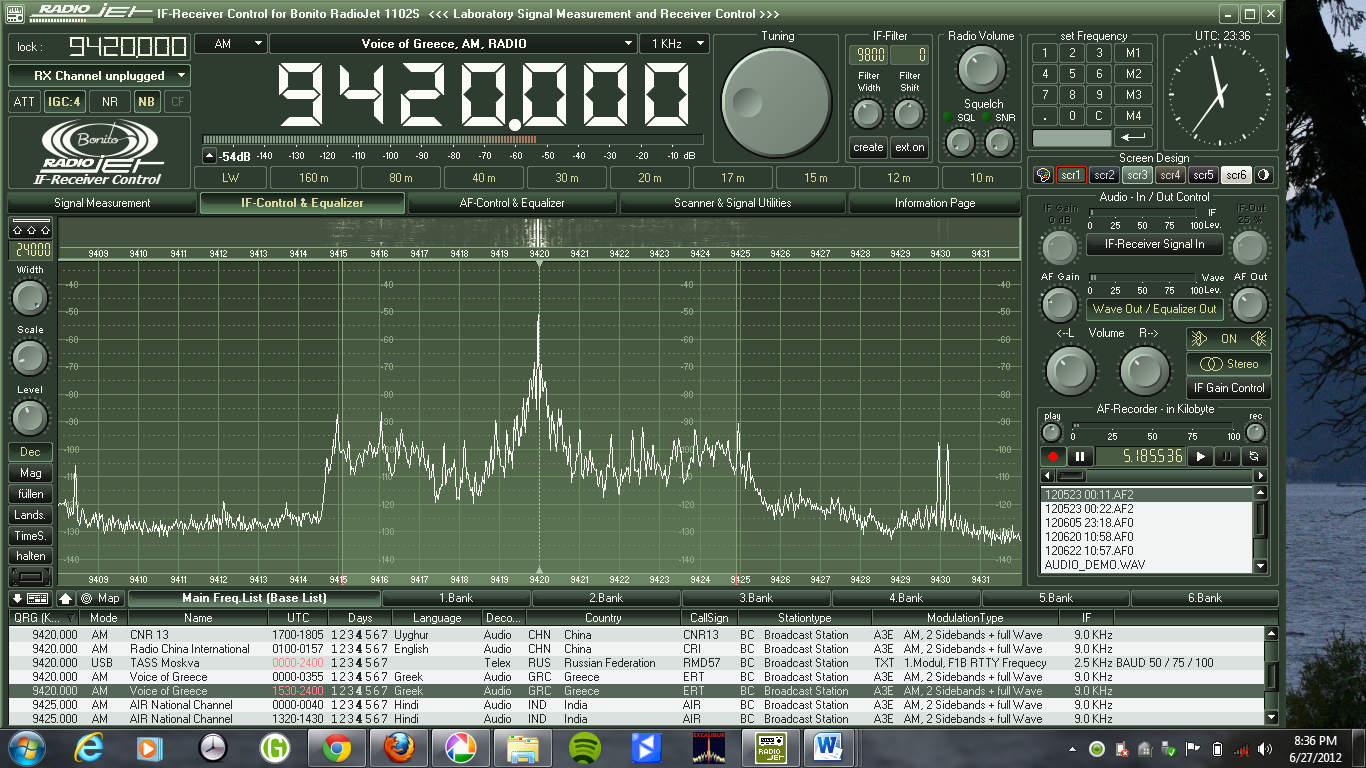
Unquestionably, the Bonito 1102S RadioJet’s software offers the most flexibility of any Software Defined Radio (SDR) or IF receiver I’ve ever reviewed.
A screen capture from my Toshiba Satellite Windows 7 laptop (click on image to enlarge)
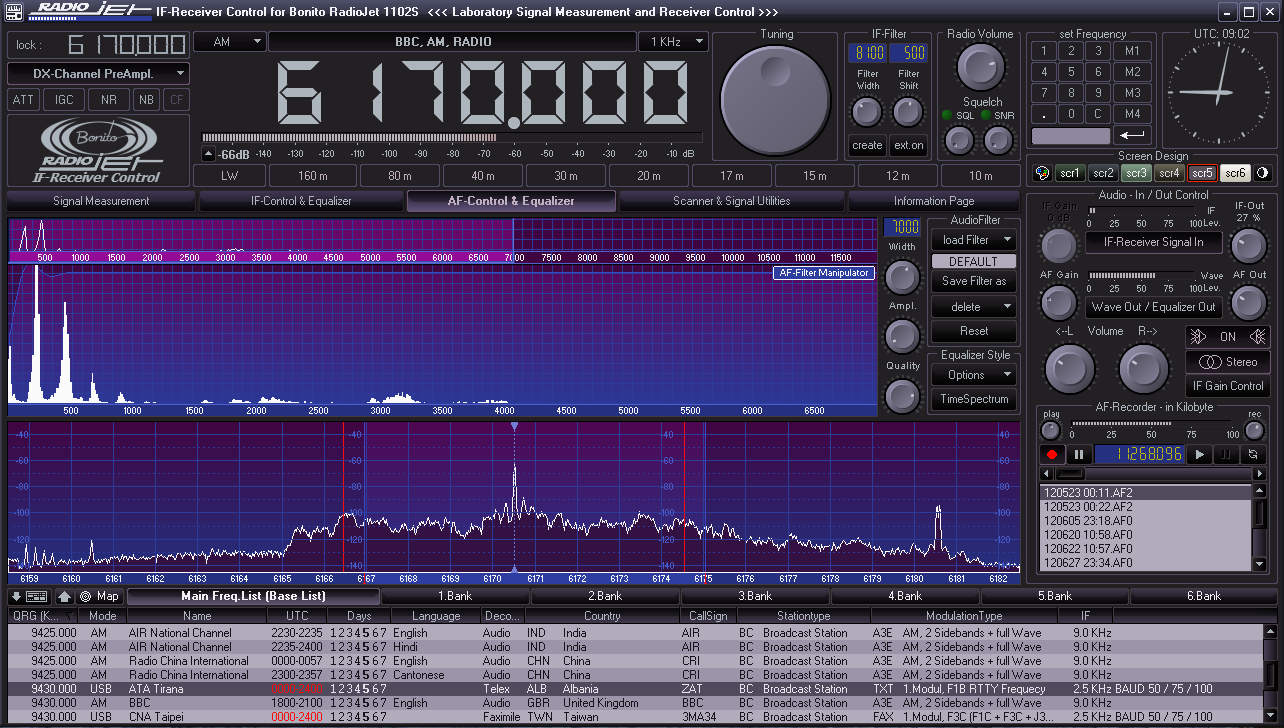
Having used several SDRs and IF receivers–including the Microtelecom Perseus, Ten-Tec RX-320D, RFspace IQ and WinRadio Excalibur—I can state that the basic functions of the RadioJet are comparatively easy to locate. The graphic user interface (GUI), however, could appear somewhat complicated, particularly if you are new to software based receivers. While I like options and the ability to customize a user interface to best match my preferences, having a GUI that is both highly-adaptive and full-featured can be a double-edged sword until you become accustomed to it.
On one hand, you can customize the RadioJet GUI more completely than any other SDR I’ve ever used: you can change the window size, layout, spectrum display, and color palette; you can also load pre-designed screens to help with signal measurement, IF control, and AF control. Indeed, the RadioJet’s designers have also included a unique “Scanner and Signal Utilities” screen for working with utility reception.
On the other hand, there is a learning curve in both customizing the GUI and familiarizing yourself with the radio’s controls. This is why I wish the RadioJet had a proper owner’s manual. Early in my experience with the unit, while making setting modifications during a broadcast, I found I could lose my place within the control settings or accidently alter a setting that would result in degraded reception (such as the WAV volume, AGC, DSP or attenuator). I thought that the RadioJet was malfunctioning, only to discover that I had a setting adjusted incorrectly. Note that Bonito’s online support, however, has been very responsive in helping me when this happens.
The RadioJet GUI is the most flexible and adaptable of any software radio I’ve used
Fortunately, Bonito is fully aware that many listeners could be overwhelmed by the various options the RadioJet offers, and have designed the GUI so that if you minimize the window (as you would any Microsoft Windows “window”), only the basic receiver options will display.
The only major drawback I’ve observed with the RadioJet, as fellow reviewer Fenu mentions in his comprehensive review, is that its software still has a few trouble spots to be ironed out. This is not surprising, considering that is very new to the market. To be clear, software is a very important part of an SDR or IF receiver’s usability: after all, its interface is software defined. An SDR or IF receiver without the software is merely a small paperweight–but with it, becomes highly functional radio with a performance that can be enhanced with upgrades over time.
The success of the RadioJet over time will be directly tied to the responsiveness of Bonito to customer feedback. Like Fenu, my experience with Bonito is quite encouraging in this regard—Bonito has even provided remote desktop help sessions for individuals, and I can personally vouch that I’ve benefitted from this support. Bonito also closely attends to discussions on the RadioJet Yahoo Group, indicating that the company is listening to their customers. Bonito has been updating the software regularly—in fact, they’ve just added a noise blanker to the software which, I hear, effectively deals with electrical pulse noises like those produced by electric fences.
Tuning around
Though not required, if you don’t already have a mouse with a scrolling wheel, you will want one to tune and adjust the RadioJet. Band-scanning is pretty straightforward and there are a variety of methods to adjust the frequency:
Hover your mouse over the tuning knob and click to rotate clockwise or counter-clockwise
Hover over the digital frequency display and use the mouse scroll wheel to adjust each digit of the frequency up or down
If the display is expanded, there is also a number pad where you can click on each number to adjust
In the current revision of the software–much like with the Perseus–you cannot directly key in the frequency with the number pad of your computer
With the scroll wheel of the mouse, you can easily adjust most settings and filter controls of the RadioJet. It acts, in a sense and in most cases, as a proxy for a tangible knob you would have on a traditional radio. I imagine there are other (perhaps even better) peripherals that would work, too.
I do find the controls a bit frustrating to manipulate if you do not have at least a mouse with a scrolling wheel. I did not bring a mouse on my recent DXpedition and later regretted the decision. The track pad on my Toshiba laptop does not offer the accuracy and scrolling features needed to fluidly operate the RadioJet GUI.
Recording
The RadioJet audio recording and playback panel
Unlike a lot of SDRs on the market, the RadioJet does not have the ability to record large chunks of HF spectrum. For example, the WinRadio Excalibur and Microtelecom Perseus can record 2,000 kHz of spectrum; the RadioJet, however, is limited to 24 kHz. I asked Dennis at Bonito about this and he said that when designing the RadioJet the designers focused on the performance of the received signal and the radio’s overall efficiency rather than upon having a wide IQ output.
Bonito is catering to the discriminating DXer who is seeking the highest quality signal upon receiving, even among weak signals, but who is less interested in spectrum recording. Personally, I like to record and archive spectrum, but I do appreciate this focus upon delivering the best possible received signal, even with a very modest computer. Indeed, unlike most other SDRs on the market, the Bonito 1102S RadioJet reportedly works well on Netbooks with Atom processors. I can say that my Intel Core i3 laptop runs the RadioJet beautifully. I do plan to try the RadioJet on my netbook soon, as well.
RX and DX modes
One unique and highly-promoted feature of the Bonito 1102S RadioJet are the RX and DX “Channels” or operating modes. On the Bonito site, they show an example of a very weak signal showing up on the spectrum display, almost totally hidden in the band noise. When the user switches to the “DX Channel,” however, the noise floor drops and the received signal pops out, and becomes armchair listening.
I have found that the DX Channel is indeed very effective at pulling a weak signal out of the noise. The RX Channel, on the other hand, does an even better job of receiving stronger broadcasts signals. The channels appropriately balance AF and RF gains along with the raw IQ to deliver the receiver’s very best under prevailing conditions.
The RadioJet RX/DX channel selection panel
I find that I switch between the two channels rather frequently, and tend to do so manually. There is a setting in which the RadioJet will automatically determine what settings should be used to best hear the target broadcast—it switches very quickly between the RX and DX Channels and even makes small adjustments to the AGC and other settings. Though quite effective, I still prefer to manually adjust these features to enjoy greater control of them.
Digital Radio Mondiale (DRM)
This is perhaps one of the most fluid and flawless features of this radio. Though I have not had an opportunity to record DRM yet, I have decoded several broadcasts with great success (REE, Vatican Radio and RNZI).
In fact, if you are looking for a an excellent DRM receiver, the RadioJet may be your best bet. Unlike many SDRs on the market, the RadioJet decodes DRM natively: in other words, you simply tune to a DRM signal and change the mode from AM to DRM. That’s all. Your software already has a built-in, paid-in-full decoder (no need for a costly plugin or DREAM license). It’s the best implementation I’ve ever tried.
Summary
When I begin a radio review, I keep a checklist of pros and cons as I discover them. In this way, I can remember my initial discoveries.
Here’s my list from the Bonito 1102S RadioJet:
The RadioJet derives its power from the supplied USB cable, the only two connections are the USB port and the antenna (BNC)
Pros:
Excellent sensitivity and selectivity
Low noise floor
Excellent DRM implementation
Customizable filters—some can actually be hand-drawn with the computer mouse to accomodate received signal conditions
Though I haven’t done an A/B comparison with the Perseus yet (coming soon!), but like Fenu, I expect the sensitivity and selectivity to be very similar
Operates without a separate, external DC power supply
Software and GUI are extremely customizable—the most flexible and resizable I have used (see con)
Audio fidelity, once adjusted, is excellent
Two modes of listening (RX and DX channels) allow for either manual or automatic settings for strong or weak signals (see con)
Technicians and support representatives from Bonito have been responsive to customer requests and feedback
Software updates are frequent and occasionally include new features
Since the RadioJet doesn’t use or have to process wide IQ, (see con) its 24 kHz bandwidth targets one broadcast and places emphasis on clean RX performance
Doesn’t require robust PC processing power, will even run smoothly on a netbook (per manufacturer—though I will test soon)
Scroll wheel on a standard PC mouse acts as a nice proxy for the many control knobs on the RadioJet GUI (see con)
The RadioJet software even has a unique map display of broadcasting schedules
Cons:
Software has some bugs and is not yet fully mature
Software and GUI are so customizable that they reqire a learning curve—could be a negative for SWLs seeking simpler functionality (also see pro)
No IQ output like the Perseus, WinRadio and RFspace SDRs, which allows for wide spectrum recordings (also see pro)
Software occasionally crashes
Sometimes when switching between RX and DX Channels, WAV volume settings are altered and not returned to original settings, resulting in a “splattered” or “hot” audio sound
Software controls are frustrating to use without a mouse—or by using a laptop track pad only (see pro)
Lack of a proper owner’s manual
Final thoughts
Overall, I like the Bonito RadioJet; I would certainly recommend it for the shortwave radio listener and DXer, especially one who wants:
raw performance
flexibility
portability
robust receiver control software package
good value for performance
I would also recommend the RadioJet to those who don’t want a receiver to task their computer’s processor excessively.
If you are looking for a mature, simple software defined radio—or if you need wide spectrum recording–you may want to check out a true software defined radio (SDR) from WinRadio, RF Space or Microtelecom.
In my opinion, the only drawback to the RadioJet, as of time of this review publication, is that the control software is not yet refined and still has a few bugs. None of these limitations have affected my ability to use the RadioJet, but they have proved annoying at times.
My impression of Bonito and their staff is that they are trying in earnest to respond to customer feedback and focus on delivering an effective receiver for the DXer and for those wishing for excellent performance on a budget.
If this attentiveness continues, the RadioJet should only improve with time.
The US price tag for the Bonito 1102S RadioJet is $689 through Universal Radio. This is fully $300 less than the Microtelecom Perseus. If you want serious performance, from a lightweight, rugged, flexible software controlled receiver, you should be pleased with the RadioJet.
UPDATE: Want to hear a broadcast recorded on the RadioJet? Check out my previous post on the final broadcasts of RNW. The RadioJet did an amazing job pulling this station out of the static.
Follow our tag “RadioJet” for updates to this review and future A/B comparisons with other receivers.
Keep in mind…
SWLing Post regulars know that I don’t post highly technical or “laboratory” reviews. Take this review as my experience as an experienced shortwave radio listener, where I focus on usability, receiver quality, and audio fidelity, and provide general operating notes. I also focus on helping consumers make purchase decisions, as I outline the pros and cons of each receiver. For a more technical review, I would refer you to previously-mentioned Fenu’s review and–potentially upcoming–Rob Sherwood’s receiver performance data.
May, June and July have been very busy months for me (hence the lack of daily updates).
In May, I attended and presented at the North American Shortwave Broadcasters annual meeting in Washington DC, then spent nearly a week in Ohio at the Dayton Hamvention–June and July have been filled with sporadic travel.
During my travels in May, controversy swirled around the Smith-Mundt Modernization Act and its impact upon radio broadcasting since it passed mark-up as an amendment to the House version of the National Defense Authorization Act on May 18. The bill is now before the US Senate.
What is the Smith-Mundt act? Per Wikipedia:
The US Information and Educational Exchange Act of 1948 (Public Law 80-402), popularly referred to as the Smith–Mundt Act, specifies the terms in which the United States government can engage global audiences, also known as public diplomacy.
The act was first introduced as the Bloom Bill in December 1945 in the 79th Congress and subsequently passed by the 80th Congress and signed into law by President Harry S. Truman on January 27, 1948.[…]
There are three key restrictions on the U.S. State Department in the Smith–Mundt Act.
The first and most well-known restriction was originally a prohibition on domestic dissemination of materials intended for foreign audiences by the State Department. The original intent was the Congress, the media and academia would be the filter to bring inside what the State Department said overseas […]
The second and third provisions were of greater interest to the Congress as they answered critical concerns about a deep-pocket government engaging domestic audiences. Added to the Bloom Bill, the predecessor to the Smith-Mundt Bill in June 1946 by Representative John M. Vorys (R-OH) “to remove the stigma of propaganda” and address the principle objections to the information activities the Congress intended to authorize.
The Smith-Mundt Act is the very reason why so few US Citizens have ever heard of the international radio broadcaster Voice of America (VOA): the law forbids them from “targeting” an American audience. In their current state, the VOA and many other BBG international broadcasting entities are not likely to be a source of the type of propaganda many fear could be unleashed with the lifting of the Smith-Mundt Act. Speaking as one familiar with the VOA’s broadcasts–I know many who work at the VOA, I’ve listened to their broadcasts for decades and I actively read their online content–I can comfortably state that VOA produces quality journalism and certainly provides another credible voice in the cloud of international broadcasters on the air or online. Their journalists have a mandate to report the truth, even when they find it necessary to be critical of the US government.
Don’t be mislead, however; VOA is a diplomatic arm of the United States, and as such would fit the broadest definition of what might be considered propaganda. In other words, VOA represents an American viewpoint on the news. Indeed, I consider (and it’s only fair to acknowledge) that every radio or television broadcaster’s voice exhibits some bias, even if the broadcaster makes claims of “fair and balanced reporting” or says they are “reporting the truth.” There is always a leaning, however modest. Even at the tender age of eight, listening to my Zenith Transoceanic in my bedroom, I recognized this.
So why all of the fuss about the Smith-Mundt Act? Even as a child, I remember finding it quite easy to tune in the Voice of America. The magic of shortwave radio almost by default means that there are no borders that can control how shortwave distributes content. It’s even more absurd to think of enforcing these restrictions now in the internet age–indeed, by clicking this link, you can freely go to the VOA website to read, watch or listen to thousands upon thousands of hours of content.
So, in reality, VOA has never been prevented from delivering its content to the US. It’s just not well-known in our country.
But this is the state of things today: If the Smith-Mundt Act were lifted, the US State Department could, if they choose, funnel resources into effectively targeting US audiences. In the US, you could see VOA ads on Facebook, hear ads on the radio, a VOA TV channel could be launched–FM relay stations could be established in, say, Nebraska.
Does that sound strange? Keep in mind that in the UK (and in many other countries) there has never been this division between government-funded international and domestic broadcasting. The BBC broadcasts to both a domestic audience and an international audience via the BBC World Service. They routinely recycle content between the two.
The Smith-Mundt Act has both critics and supporters on both the left and right of the aisle. The think tank, The Heritage Foundation, recently held a panel discussion with a slant towards lifting the Smith-Mundt Act. They stated:
Critics […] have charged that modernizing the Smith-Mundt Act will lift the floodgates for U.S. government propaganda aimed at U.S. citizens. Not so. Rather, the amended act will force greater government transparency and accountability and it will allow Americans insights into what Washington is communicating to audiences around the world.
Yet, many of my friends who work within the VOA see the lifting of Smith-Mundt as a means to target various diasporas within the US. Perhaps, for example, via local FM relay, VOA could broadcast in Swahili to communities the US with large populations of recent immigrants who could benefit from this news source.
The watchdog organization BBG Watch, on the other hand, describes their concerns about lifting Smith-Mundt:
While BBG Watch supports placing all Broadcasting Board of Governors (BBG) international broadcasts and other programs in the public domain for anyone to use free of charge, some of us are concerned that the proposed Smith-Mundt Modernization Act of 2012 is so broadly written that it gives BBG and other US government officials unrestricted power to target American citizens with government information marketing. We would support the modification of the Smith-Mundt Act if it included clear and strict rules and a prohibition on active direct marketing of BBG programs to US citizens and US broadcasters. There is a real fear that BBG officials would take advantage of the new law, if it passes, to move resources from international to domestic information activities.
Herein lies my fear regarding this restructuring–that the State Department could tap into the already limited resources allotted for international broadcasting via shortwave radio, in order to shift attention to a domestic audience (who already, in truth, has full access to all of the US international broadcasting entities via the world wide web). Yet the international broadcasting need is much greater than our own–many who receive these broadcasts–in rural Africa, for example–have little else to rely upon for their understanding of the United States and their perspective on the world. It could harm starve the United States’ relationship with people in these regions, in essence lopping off one of our valuable diplomatic arms.
A balanced approach
The best way to be informed about the progress of the act is to follow Kim Andrew Elliott’s blog on international broadcasting and diplomacy. He does an amazing job of picking out news items relevant to the act and posting them along with his comments. Indeed, when I last asked him about the Smith-Mundt act several weeks ago, he suggested checking out this post: http://kimelli.nfshost.com/index.php?id=13356
Within that post, there is a link to a previous post, in which he state why the domestic dissemination ban is now enforceable rather than outmoded by the internet. Dr. Elliott also commented:
Sen. Gillibrand removed the Thornberry-Smith language from the Senate version of the DAA. Thornberry-Smith could possible return in the conference process, or perhaps even from the floor, but I wouldn’t bet on it.
In future attempts to relax the domestic dissemination ban, the BBG should not be involved. It should remain neutral. The stakeholders in the US should initiate any such legislation. Such stakeholders would include….
1) US ethnic media, who could use news about the countries of interest, in the languages of their audiences. At no extra cost to the taxpayers, USIB could provide a valuable public service.
2) Americans who are interested in what in contained in US international broadcasting and public diplomacy
3) US domestic media who could barter their content on US domestic affairs for USIB content on world affairs. This win-win would bring USIB content to US audiences, hence a need to relax the ban.
Note that the UK never had any qualms about domestic distribution of BBCWS. It was available only in the overnight hours, on BBC R4, because it was assumed the content was not of sufficient interest to sustain a domestic service. Now it’s available 24/7 via digital BBC radio bouquets in the UK and, of course, via internet. BBC even proudly proclaims the domestic RAJAR ratings for BBCWS.
A tough act to follow…
So, is lifting or modifying the Smith-Mundt Act wise? Only time can tell. One thing is certain: careful consideration of all eventualities must be taken into account before action is taken, and envisioning all potential outcomes could truly prove tough.
For more on the Smith-Mundt act and hundreds of other news items that have an impact on international broadcasting and diplomacy, subscribe to Kim Andrew Elliott’s news feed.
John Figliozzi, noted author of the Worldwide Listening Guide, wrote the following letter to Radio Netherlands Worldwide regarding their farewell broadcast. I thought it was worth sharing with SWLing Post readers:
(Source: John Figliozzi)
RNW Farewell
It was a classy, inspired, quintessentially RNW move to open a shortwave frequency for North America for one last evening. I shut off the internet radio, set up the Eton E1 in the veranda (it’s summer here) and luxuriated in a strong, clear RNW signal from Bonaire on 6165 kHz., just like the “old days”. I enjoyed the experience so much, that I listened to the very same program three times as your target shifted hours from east to central to western North America. I recall when, after the “Save BBC World Service” effort failed to alter the BBC’s decision to shut down shortwave to North America, RNW stepped in immediately using the abandoned BBC frequencues to provide us solace and sustenance. That, too, was quintessentially RNW. There have been many such “losses” for we listeners to absorb over the last decade, but for me this one hurts the most. Thank you to all, past and present, at RNW for all you have done to make radio that truly mattered for so many years. Rest assured,!
I will be a frequent and consistent visitor to your archive so I might relive often the “golden age of radio” that RNW created and maintained for decades. Thank you and godspeed to all of you.









 In May, I attended and presented at the