Category Archives: Vintage Radio

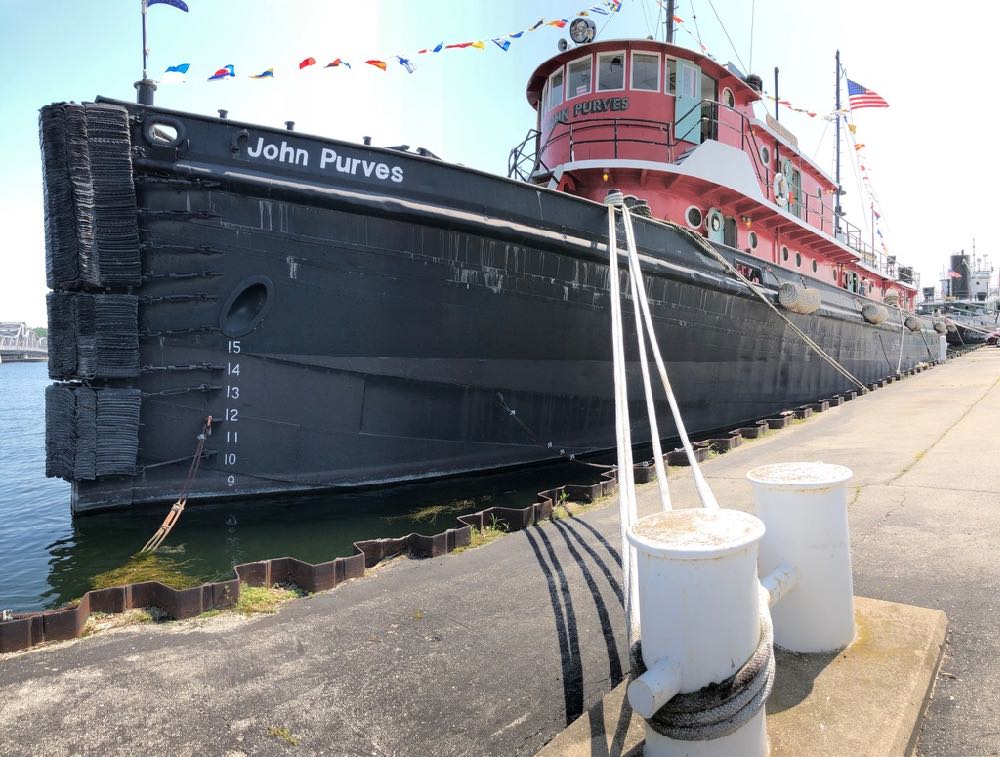
Classic portables onboard a 1919 Great Lakes tugboat

Many thanks to SWLing Post contributor, Phil Ewing, who writes:

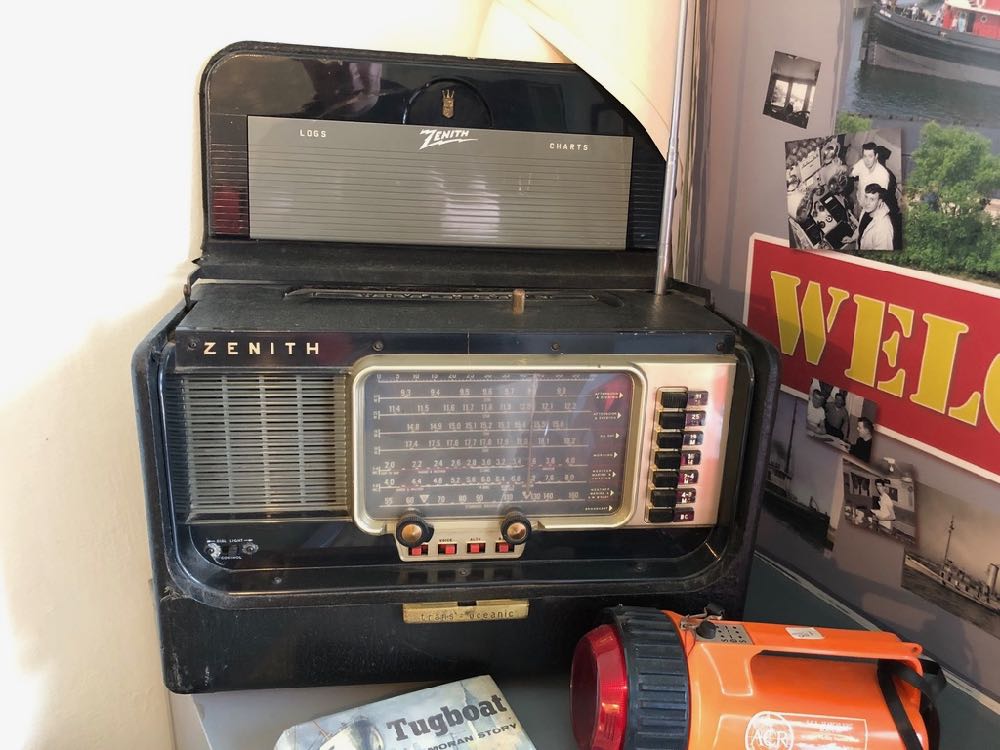
I know you’re always on the lookout for trips and visits so I thought of you when we were up in Wisconsin last week. There’s a maritime museum up in Sturgeon Bay, on the peninsula, that includes a 100 year-old tug. You can go aboard and climb all up and down…and they’ve got some great radios in the crew cabins as part of the displays of what life was like back when the ship was working.

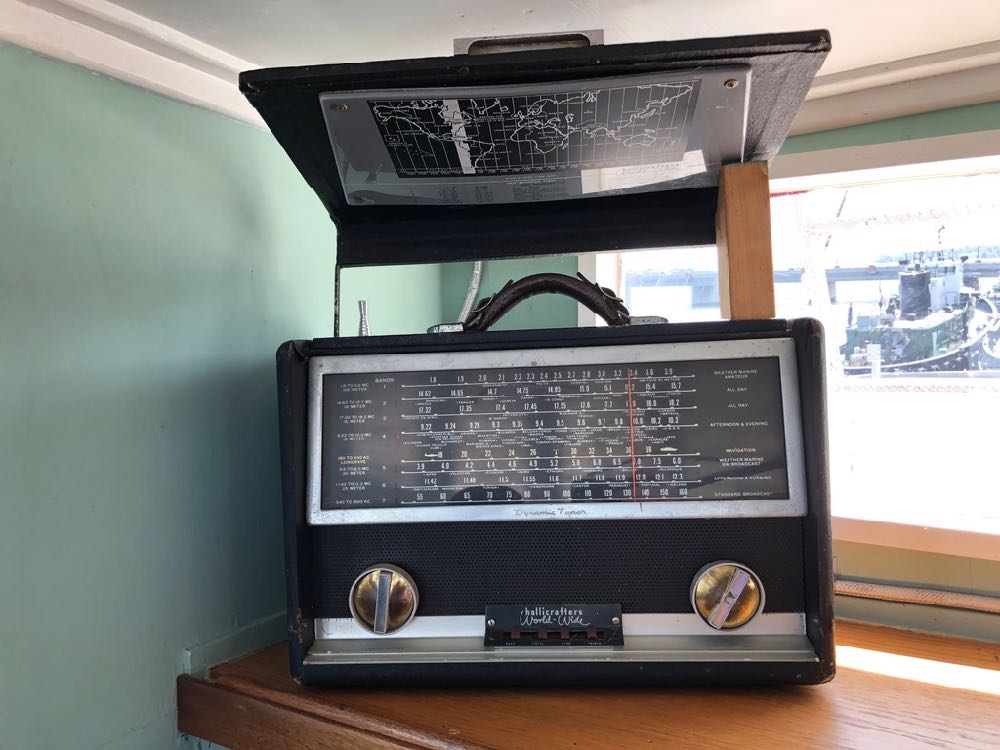
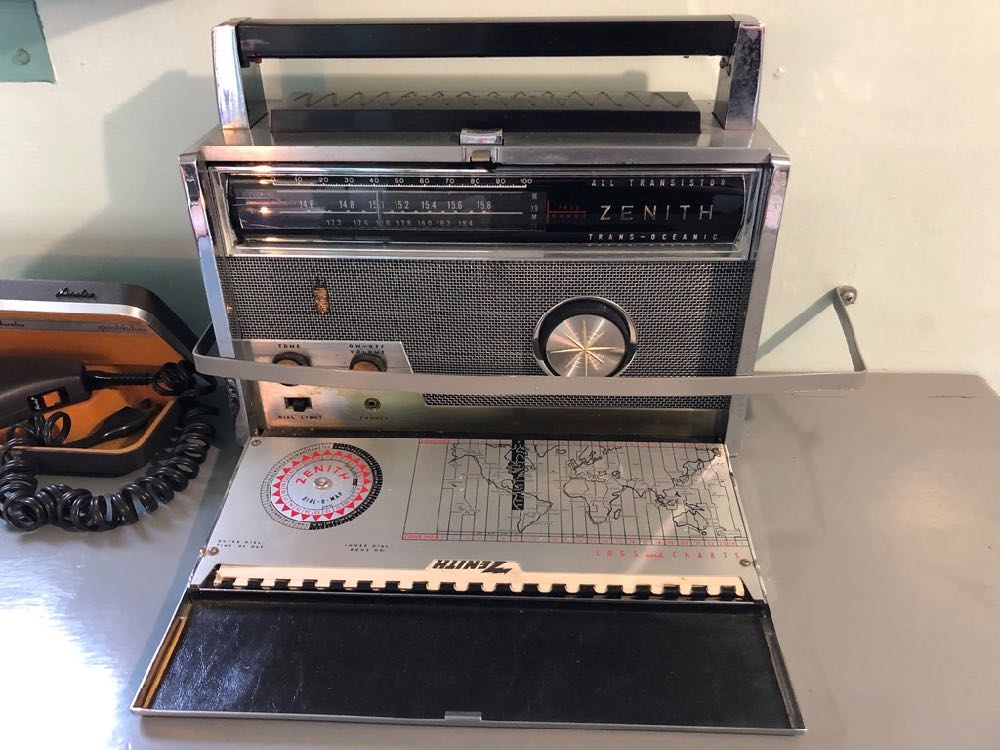
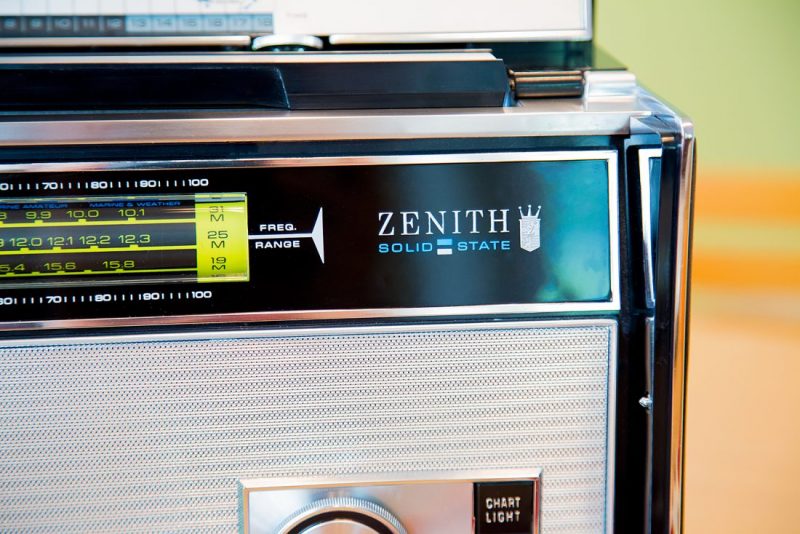
There were a number of standard but interesting normal transistors but what really caught my eye were the Hallicrafters World Wave in the pilothouse and a fantastic pair of Trans-Oceanics in the cabins of the chief engineer and the captain.

The purpose of the visit really isn’t the radios — it’s about the working life of the Great Lakes and an old ship — so discovering them was a fantastic lagniappe.

[T]he appeal of shortwave in these circumstances is clear: Imagine you’re in the middle of Lake Superior towing a barge full of logs to be pulped, or some other unglamorous but essential Great Lakes cargo — maybe a barge full of big rocks to build a breakwater in, say, Sheboygan — and you come off watch in the middle of the night. Life on a ship can be deadly monotonous and deeply lonely but then picture yourself tuning in to the international band on your luxurious Zenith set … not bad since the iPad won’t be invented for another 40 or so years.

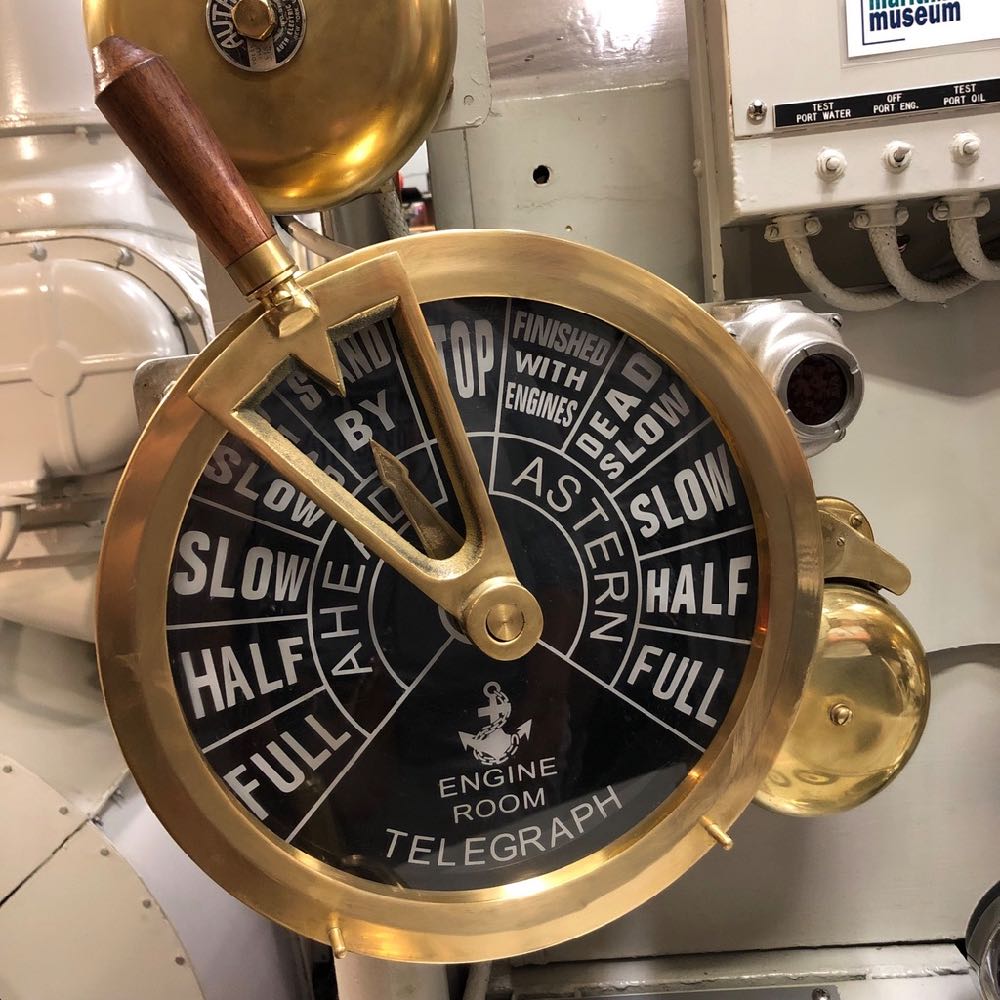
These pix also depict the engine order telegraph, which the captain in the pilothouse used to signal commands to the engine room. There was one for each of the two main engines, and duplicates in the pilothouse.

The captain moves the handle so that it indicates the speed he wants (e.g., Ahead Full) and the bottom needle on the telegraph in the engine room moves, ringing a bell. This is why an engineer might report he was ready to sail by saying he was standing by to “answer bells.” The engineers would select the speed on the engines and then move their own handle on their own telegraph to correspond with the captain’s order, signaling to the pilothouse they’d completed the instruction.

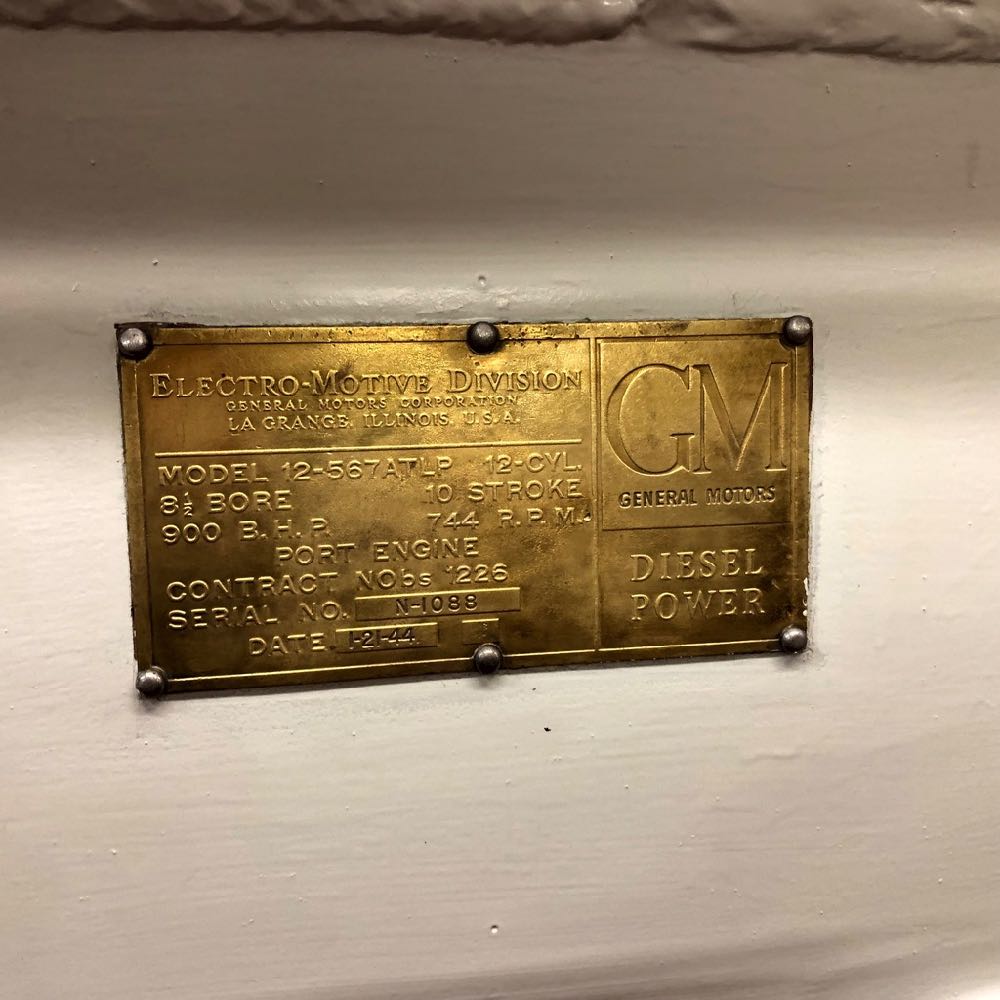
The engines are the white things pictured behind the telegraph and on which was stamped the brass plate also photographed here. The diesel engines were made by the Electro Motive Division of GM and replaced this ship’s original steam propulsion system. EMD is most famous for its pioneering and legendary freight locomotives, which led the way in “dieselization” after WWII in converting many railroads from their romantic but much less efficient and much dirtier steam power. But the company also made marine diesel engines as evidenced here and these served this ship for another three decades or so — just think about that. There also are still EMD GP30 locomotives from the 1960s still in service in some places in the U.S., according to what I read in this month’s Trains magazine.


Fascinating, Phil––what terrific vintage kit! Thanks for sharing those wonderful photos and descriptions with us. 

Yes, I can imagine SWLing would have been a vital entertainment outlet for those on working ships in the Great Lakes. No doubt they had access to a number of strong mediumwave stations on the coast, as well. What a way to while away the off-hours.

Click here to follow @PhilEwing on Twitter.

Bill’s NJARC swap meet deal and some tailgate photos

Many thanks to SWLing Post contributor, Bill Hemphill (WD9EQD), who writes:

This morning (Saturday July 20), I went to the New Jersey Antique Radio Club (NJARC) Summer Swap Meet.

They typically hold three Swap Meets each year at various locations This time it was at the InfoAge Science

History Learning Center in Wall, NJ. The InfoAge Center has many exhibits including:

  • InfoAge Space Exploration Center
  • World War II Radar
  • Marconi Wireless Room
  • Radio and Television Museum
  • Vintage Computers
  • plus much more

Check out this link.

If you are ever in the area, I highly recommend a visit to it.

The Swap Meet was held outdoors and it was a hot humid morning – 80 degrees at 6 am with 90 percent humidity. By 9 am it was 90 degrees. But it was worth the hour trip.

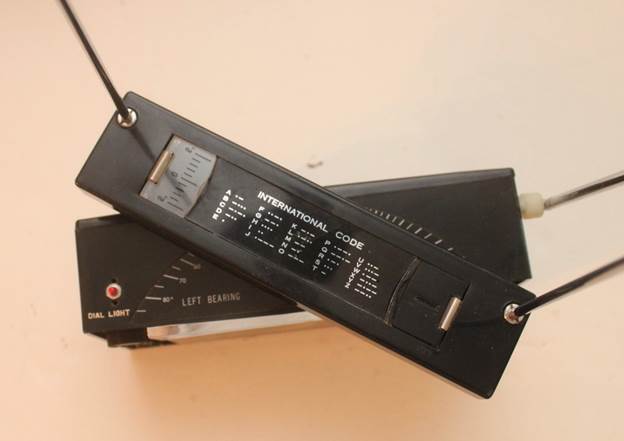
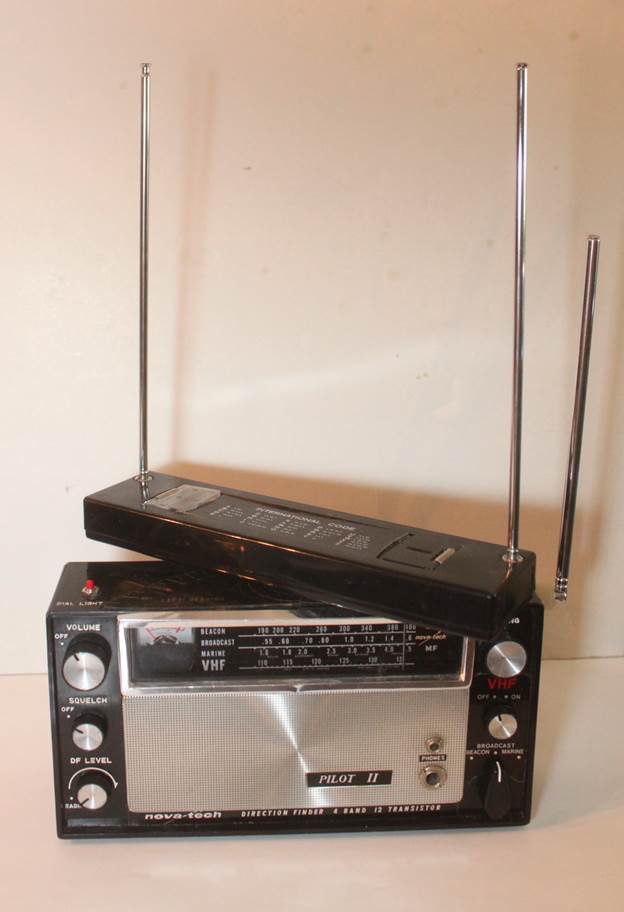
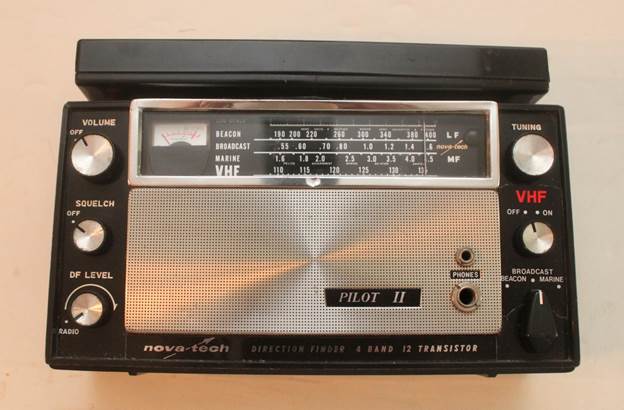
I acquired one new radio – the Nova-Tech Pilot II Direction Finding 4 Band transistor radio. It’s in great condition and is working. It’s an interesting radio.

The four bands are Beacon (190-400 kHz), Broadcast (550-1600 kHz), Marine (1.6-4.5 MHz) and VHF (108-136 MHz).

There is a rotatable antenna on the top that is used to get your bearing. The top of the radio has the Bearing in degrees. It includes Squelch and DF Level controls; both can be switched off. The DF Level is the RF Gain and I read somewhere that when it is activated the AGC is switched off.

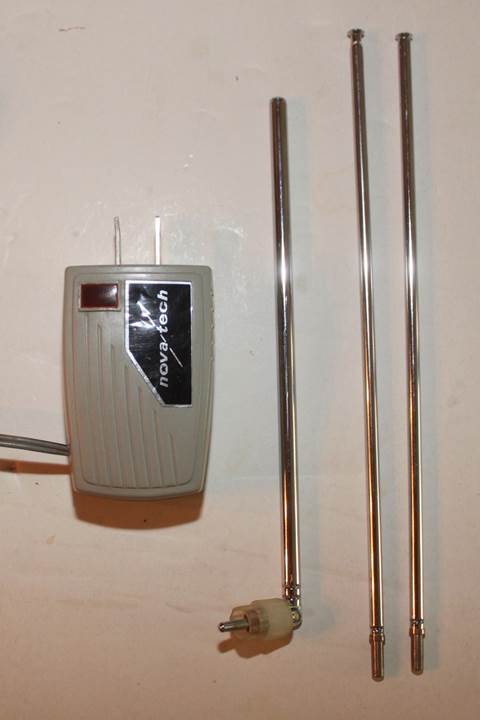
I was very fortunate in that the radio came with the three telescoping antennas – all in perfect condition. It also included the original AC Power Adapter.

All for only $25. A great bargain.

The radio seems very sensitive on the Broadcast Band.

I tuned it to my standard test weak station – WALK, 1370, in Patchogue, NY. This station is a 500 watt repeater station to WHLI, 1100 in Hamstead, NY. With most of my radios, I can barely hear a station in the noise. The exception is the Panasonic RF-2200 which can pick it up the best. The Pilot II could pick up a readable signal of WALK.

Very impressive.

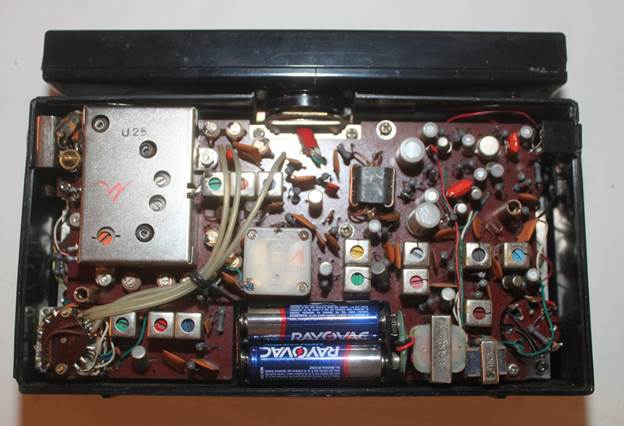
Below are some photos of the radio.

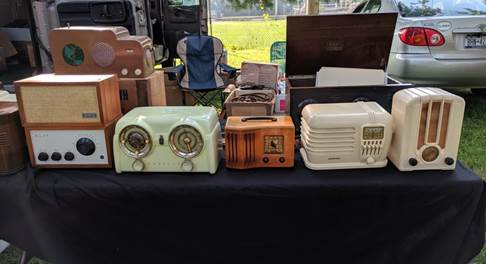
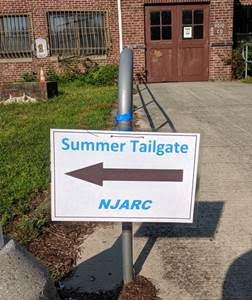
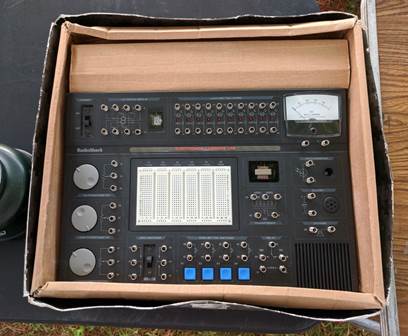
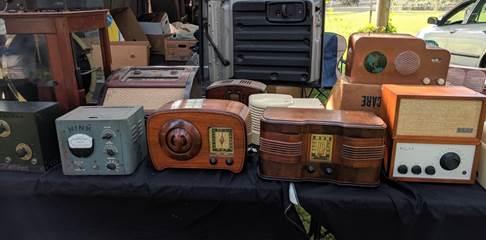
Bill also included the following photos from the New Jersey Antique Radio Club (NJARC) swap meet:

Thanks for sharing this, Bill! No doubt, you snagged a fantastic deal on the Nova Tech Pilot II. My dear friend Michael Pool (who passed away earlier this year) acquired one and loved it. Here’s a link to his guest post about this cool DF receiver.

Thanks for sharing the photos and links to the NJARC swap meet. Looks like an event I’d certainly love to attend!

Post readers: Have you attended any swap meets recently?  Any good finds?  Please comment!


Do you enjoy the SWLing Post?

Please consider supporting us via Patreon or our Coffee Fund!

Your support makes articles like this one possible. Thank you!

More than mere nostalgia: why vintage technology still has appeal

Many thanks to SWLing Post contributor, Kim Elliott, who shares a link to this CNN Business article that briefly explores why consumers still invest in vintage electronics:

New York (CNN Business) – That beaten up Walkman buried in your basement might be someone’s hot new accessory. The retro tech market is alive and kicking.

In May, Apple refreshed the iPod touch for the first time in four years. Vinyl record sales clocked in at 400 million on average over the past four years, according to data from data tracker Statista.

[…]Other gadgets that have stayed the course: camcorders, radios, clock radios, desk phones, and DVRs. Millions of these are still in use in US households in 2017, according to Statista.
What drives people to continue purchasing vinyl records, instant film cameras, and iPods, long after new products have made those objects irrelevant?

Older gadgets have a lot of staying power because they allow people to unplug from the constant ping of smartphones and tablets.[…]

This short article and accompanying video are worth reviewing. I for one, can certainly relate.

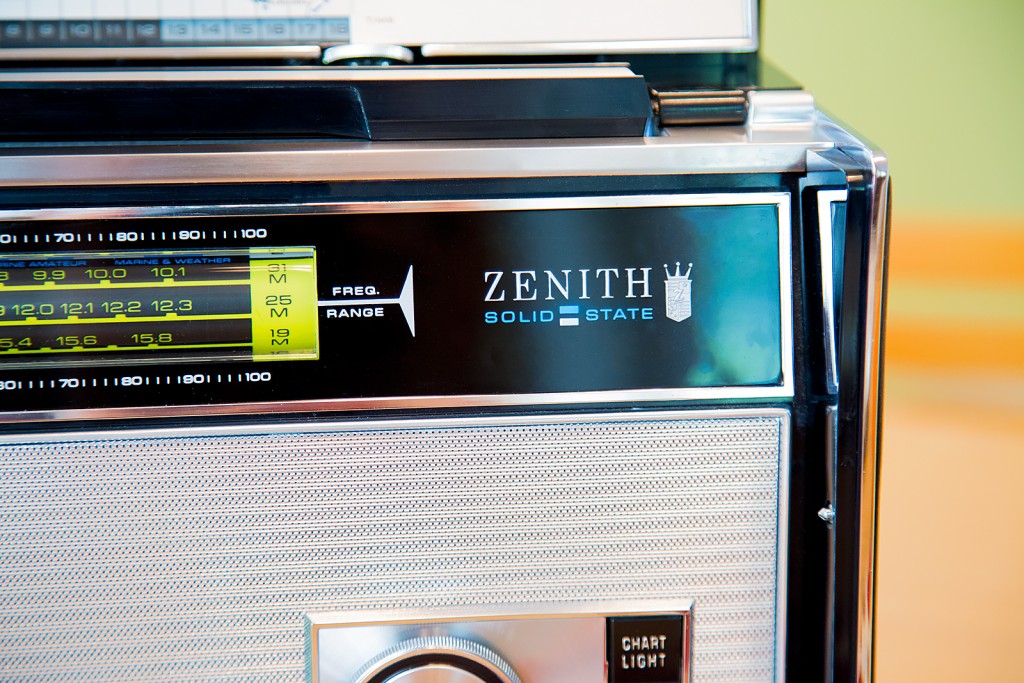
When I was a kid in the 70s and 80s, shortwave radio was simply wireless magic. Even though the medium had been around for many decades, when my friends learned about what I could receive at home with my Zenith Transoceanic (which by then was a good 15 years old) they couldn’t wrap their minds around it.
Today, of course, international communications are effortless and nearly free via computers, tablets and smart phones.

And, I don’t know about you, but the shock value of what new technologies can do has worn off. A phone app that can control the lighting an appliances in your house? Sounds useful. A voice-activated wireless home camera system that allows you to talk to and feed your dog while you’re at work? My neighbor has one of those. A car that can drive itself? Sure. Why not?

Major technological leaps are happening at such a rapid pace that innovation is hardly appreciated…it’s expected. Ask any Apple stockholder.

And digital technologies are often incredibly affordable–but I would argue there’s a directly relationship between affordability and a loss of privacy.

As the article points out, vintage electronics have appeal because they effectively do their job without monopolizing your attention or personal space.  “Vintage” tech can be with you for the long run and doesn’t necessarily rely upon an app developer or company that may or may not exist tomorrow.

Maybe this article struck a nerve…

Like TV, digital devices tend to monopolize your attention. Almost all new apps, for example, default to “push” notifications that beep, buzz and effectively turn one into Pavlov’s dog. Human beings are wired to respond to this stuff!

It’s sad to have lunch with a friend that is constantly checking their phone because it’s pinging them with notifications. It’s like having an attention-deprived two year old in the room while you’re trying to carry on a meaningful conversation.  I have a rule: the only time I’ll answer a text or call when I’m with someone is if I’m expecting something urgent. Even then, I usually mention the possibility in advance and apologize when it happens. It’s an intrusion and I treat it as such.

Besides the nostalgic factor, I turn to “vintage” technologies because they lack the insidious nature of internet-connected digital devices.

When I turn on a radio, it’s on. When I turn it off, it’s off. It’s not listening to me, not reporting my shopping habits and not sending me notifications. It’s a companion.

Photo by Steve Harvey on UnsplashListening to a vinyl record is a proper experience too–one that’s high-fidelity, has unique character and won’t stop what it’s doing to tell you that you lost an eBay auction or that a friend took a photo of their Tiramisu.

Am I shunning internet-connected digital devices? No. [In fact, I’m sure I’ll get called a big fat hypocrite when I review the Google Nest Hub soon!] But I do advocate taming these devices and educating yourself about what they can do while they’re in your home.

Consider turning off their notifications, their microphones, their cameras, and even creating a single-use throw-away user account to tie to devices. Do what I do and unplug them when not in use.

I’m sorry for the Friday soap box and what seems to be an issue of Thomas’ Pet Peeves, but I’m willing to bet other radio enthusiasts feel as I do. Do you still use vintage tech in your daily routine? Do you attempt to tame digital devices? Or do you embrace notifications, automaton, and all things connected?

How do you strike a balance?  Please comment!


Do you enjoy the SWLing Post?

Please consider supporting us via Patreon or our Coffee Fund!

Your support makes articles like this one possible. Thank you!

Adid spots a Racal receiver in an episode of “White Gold”

Many thanks to SWLing Post contributor, Adid, who writes:

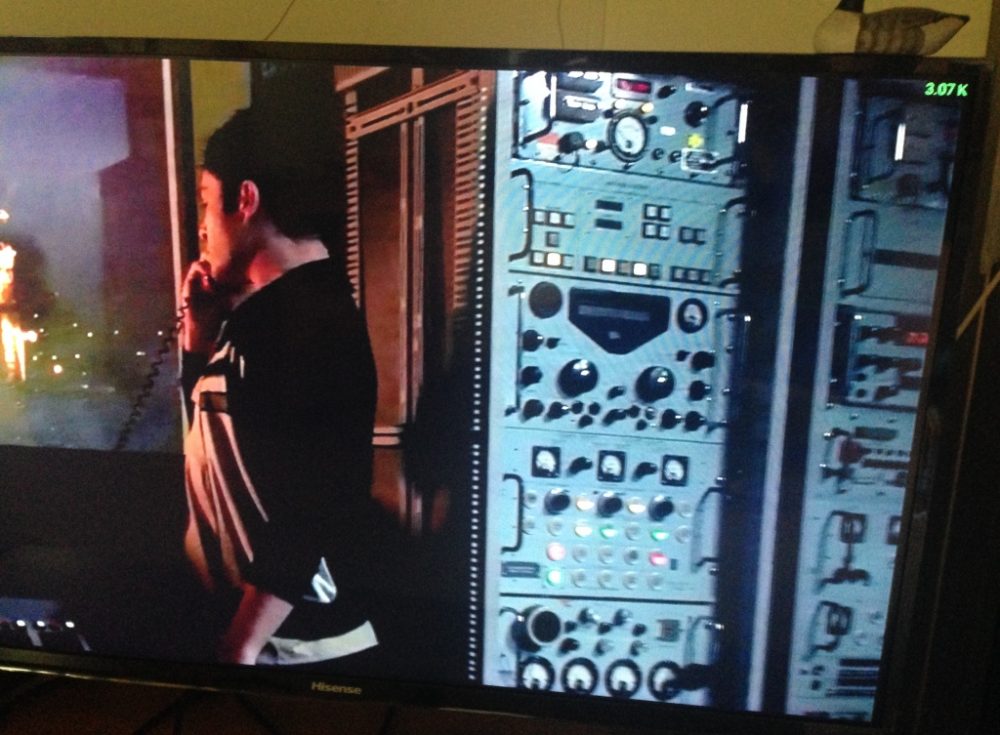
I just watched first episode of Netflix’s “White Gold” when out of the blue I saw that rack.

The rack has no significance in that scene (that dates to the 1980’s) may be because it was cut much shorter than in the original script.

The Radio set in the rack looks off, I think it’s a Racal RA17.

Yes, indeed, I believe that’s a Racal RA17 in the rack! Thanks for sharing, Adi!

Can you identify this Hallicrafters model onboard the Columbine III?

The Lockheed VC-121E “Columbine III” (Image Source: USAF Museum)

Many thanks to SWLing Post contributor, Robert Yowell, who writes:

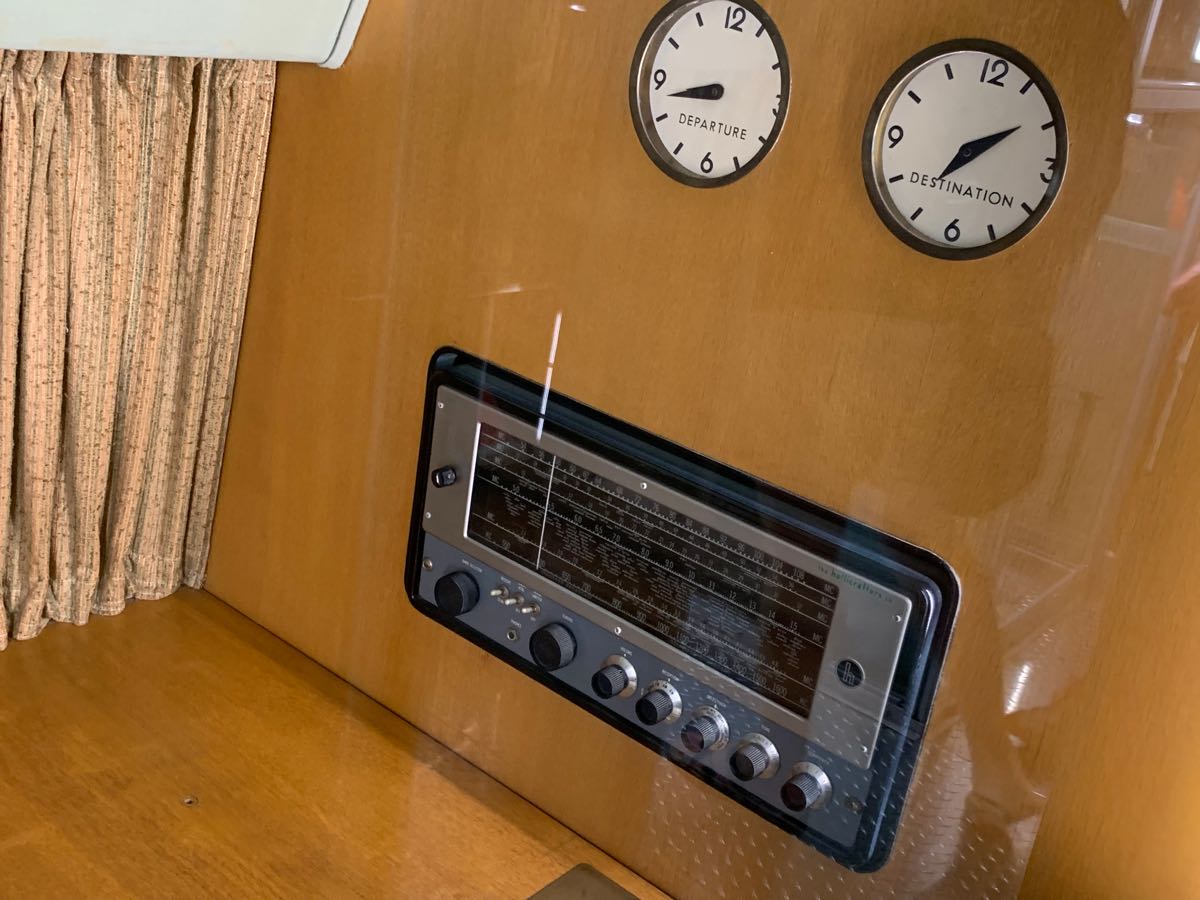
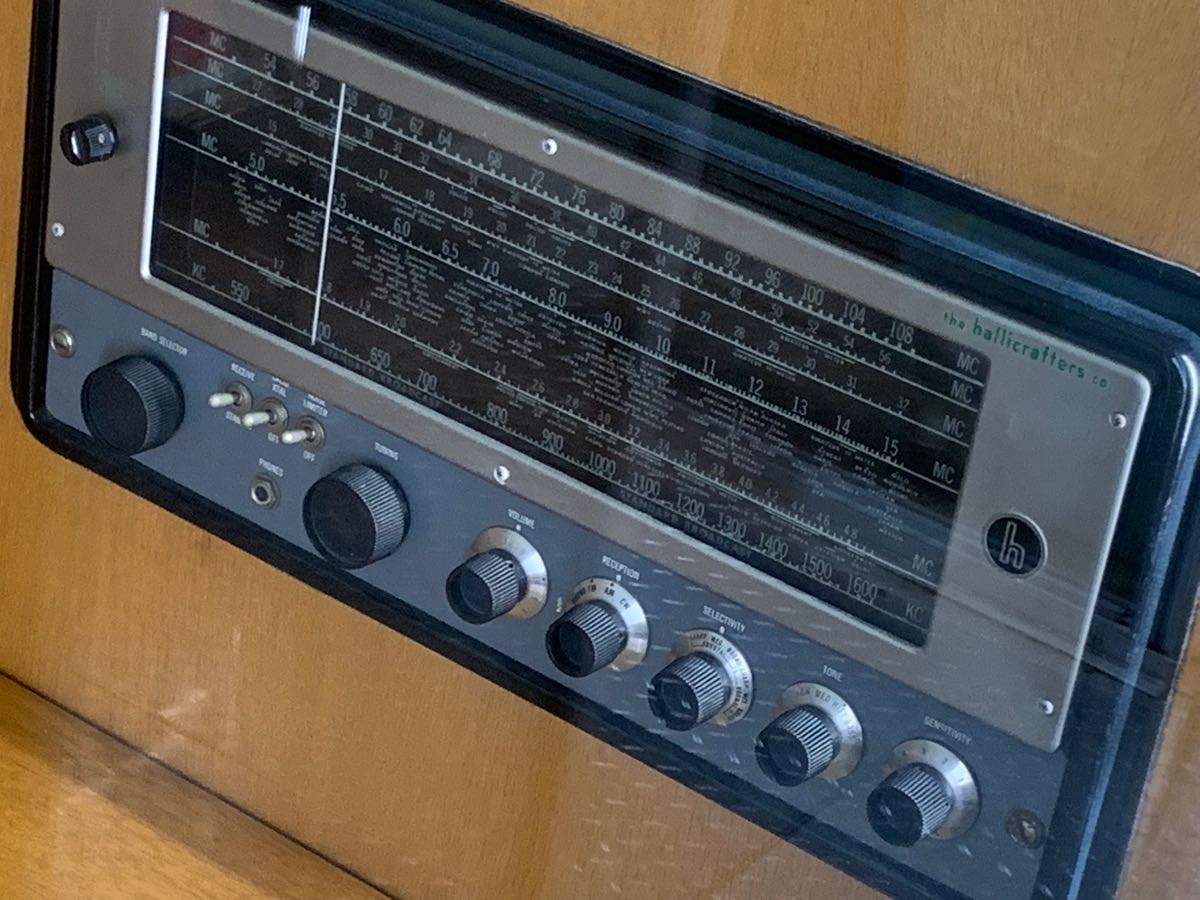
I was visiting the US Air Force Museum [Friday] and walked through “Columbine III” which was the Lockheed Constellation used as Air Force One by President Eisenhower from 1954 until he left office. In the back of the cabin was a nice cozy area where this Hallicrafters receiver was installed – ostensibly for the passengers to listen to news or other events while in flight.

I am sure one of your readers will be able to identify which model it is.

Can you imagine flying in this gorgeous Lockheed VC-121E four prop aircraft and listening to HF radio from a built-in Hallicrafters set? Wow…

Thank you, Robert, for sharing these photos. The National Museum of the US Air Force is one of my favorite museums in the world. I bet I’ve visited it more than a dozen times over the past decade–always a treat and always something new to discover!

Post readers: Can you identify this Hallicrafters model?  Please comment!

2019 BBC Midwinter Broadcast: Comparing the Panasonic RF-B65 and GE 7-2990A

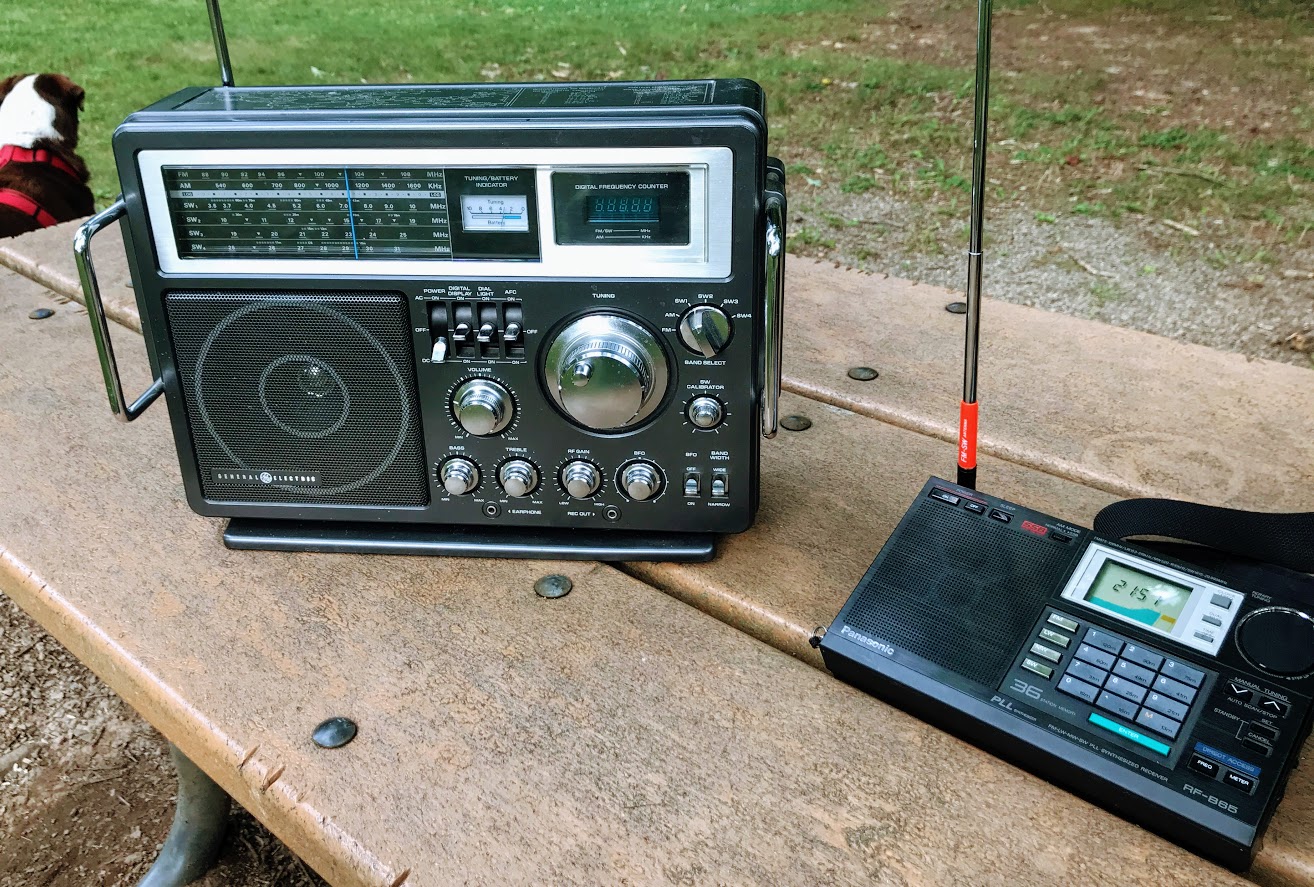
The GE 7-2990A (left) and Panasonic RF-B65 (right)

This has been a very crazy and radio-active weekend!

It started with a busy Friday that was capped off with the BBC Midwinter Broadcast and then continued into Saturday with a Parks On The Air activation and  Field Day at Mount Mitchell State Park.

In short: it’s been a lot of fun!

I’ll plan to give a short report of Field Day later–it was one to remember–but first let’s talk about the 2019 BBC Midwinter Broadcast to Antarctica

To the field!

The Midwinter Broadcast has never been an easy catch here in North America–after all, the BBC aim their signals to Antarctica–but I always manage to receive the program with only a portable and I’m almost always travelling on the day of the broadcast.

This year, I was actually at home and could have used one of my SDRs at home to snag the broadcast, but it’s become a bit of a tradition to listen in the field, so that’s what I did.

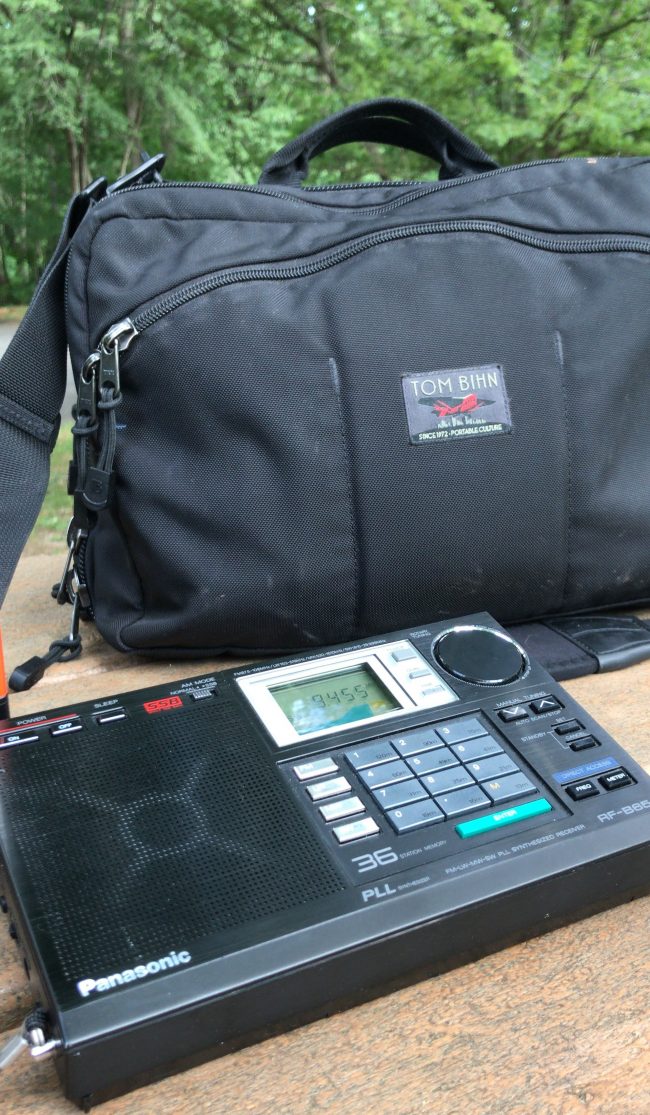
Knowing how difficult it would be to receive the broadcast–especially given the poor propagation–I reached for one of my “Holy Grail” portables: the Panasonic RF-B65.

The Panny RF-B65 is a portable DX hound!

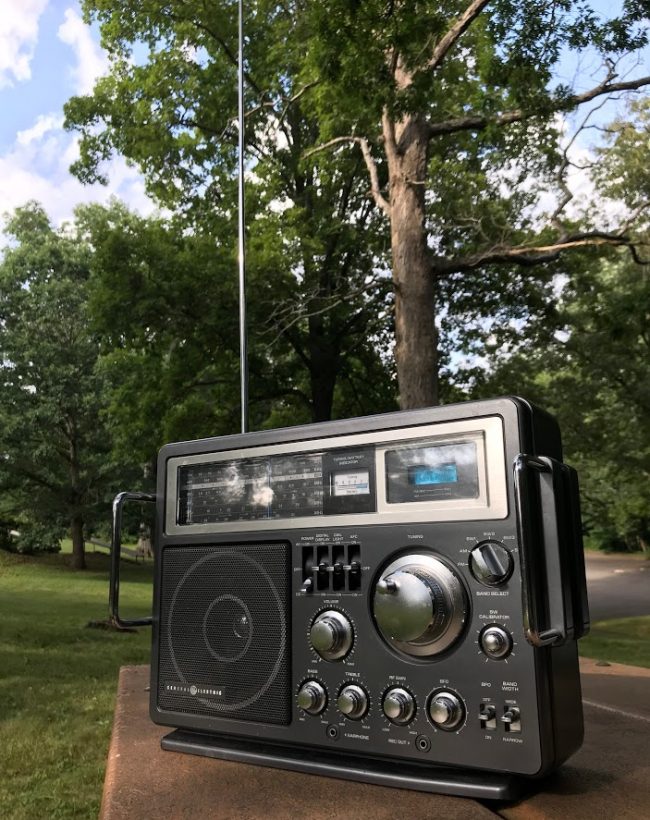
I never take only one radio to the field, though, so I decided it was time to give the hefty GE 7-2990A a little outdoor time on the Blue Ridge Parkway.

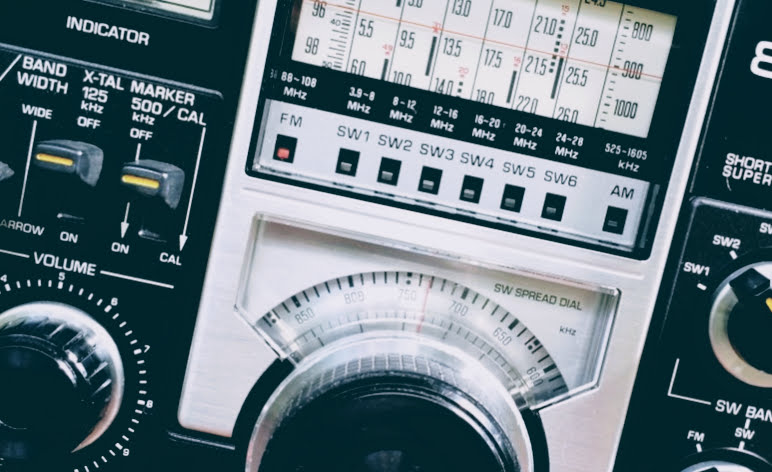
The GE 7-2990A

I’ve only had the GE 7-2990A for a few months. It came from the estate of my dear friend Michael Pool (The Professor) who passed away earlier this year.

This particular radio has quite an amazing history–remind me to share the story someday–but I’ll always cherish the 7-2990A because it was one of Michael’s favorites.

I knew the GE was one of Michael’s favorite mediumwave receivers, but I wasn’t sure how well it would perform on the shortwaves. Turns out, it’s quite an amazing HF receiver!

Out of the the three Midwinter Broadcast frequencies (5875, 7360, and 9455 kHz), I could receive the 7,360 kHz signal from Ascension Island best.

Here’s a short (informal) comparison video:

Click here to view on YouTube.

I was quite surprised with the 7-2990A’s ability to pluck this weak signal from the ether. Although the video doesn’t do it justice, the GE’s excellent audio fidelity made listening more enjoyable compared with the much smaller RF-B65.

Click here to view on YouTube.

And, yes, that’s my faithful brown and white listening companion, Hazel, in the background. In truth, she was less interested in the broadcast and more interested in finding squirrels!

Your Midwinter recordings–stay tuned!

Halley VI Research Station on the Brunt Ice Shelf in Antarctica (Source: British Antarctic Survey)

I’ve already received about twenty emails from SWLing Post readers with audio and video recordings of the Midwinter Broadcast. Thank you!

If you would like to submit your recording, and you haven’t yet, please do so by email (thomas *at* swling.com) so I don’t overlook it. Remember to link to your video so that I can easily embed it on the upcoming post. Please don’t send me duplicate emails as it makes the sorting process more difficult.

I’ll try to find recordings linked via Twitter and Facebook, but it’s much more difficult to sort those in comments and know for sure that I’ve discovered them all.

Please note that, due to my schedule, it will likely be two weeks before the final post is published. I appreciate your patience and understanding!


Do you enjoy the SWLing Post?

Please consider supporting us via Patreon or our Coffee Fund!

Your support makes articles like this one possible. Thank you!

Steve spots a Capehart International Radio and mag loop antenna in “Young Sheldon”

Many thanks to SWLing Post contributor, Steve Yothment, who writes:

Check out the attached picture. It is from a preview of tonight’s episode of “Young Sheldon.” In it, Sheldon and Dr. Stergis are listening to an antique shortwave radio. I think it is a Capehart International Radio Model 88P66NL.

Also in the preview is an active loop receiving antenna. The show is supposed to be about Sheldon when he was young, back in about 1985. I don’t think active loop antennas were very popular at that time! Maybe they got the timeframe wrong on the use of the antenna. What do you think?

What a catch! I love the flip-up cover on the Capehart although I’m sure in daily use it might have been a bit unhandy. 🙂

Regarding active magnetic loop antennas, like you, I don’t remember them being around much in the mid 80s, although I know the technology was available. I imagine they were used in speciality commercial and military applications. Like you, I’m guessing we didn’t have as many noisy switching power supplies which make them such a necessity these days. I remember happily DXing with my Zenith Transoceanic in the middle of my house in the mid 80s.  Those were certainly the days!

Post Readers: Do you know of any active magnetic loop antennas that were used in homes in the mid 1980s and before?  If so, please comment!

I’ll add this post to our ever growing archive of radios in film!