Category Archives: Vintage Radio

2019 BBC Midwinter Broadcast: Comparing the Panasonic RF-B65 and GE 7-2990A

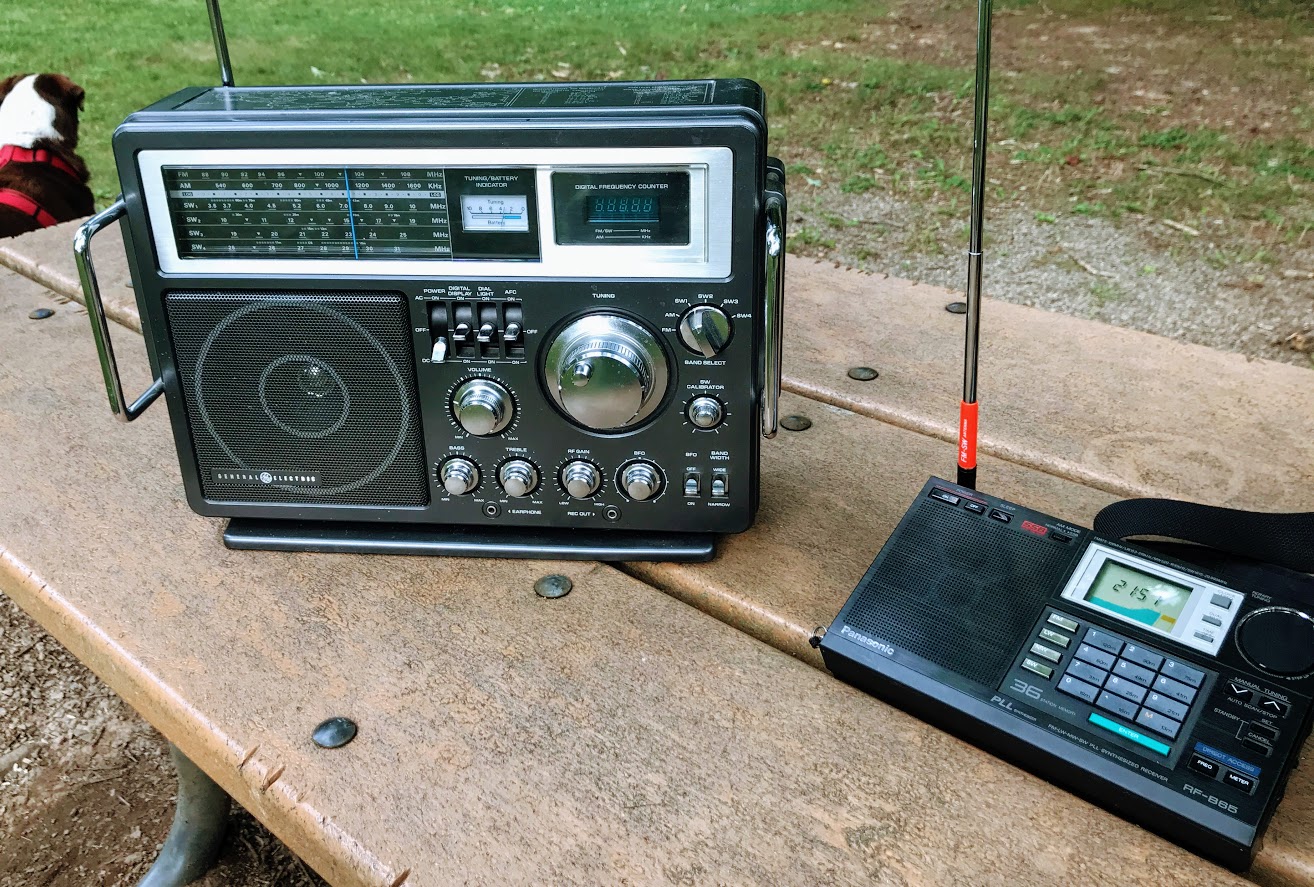
The GE 7-2990A (left) and Panasonic RF-B65 (right)

This has been a very crazy and radio-active weekend!

It started with a busy Friday that was capped off with the BBC Midwinter Broadcast and then continued into Saturday with a Parks On The Air activation and  Field Day at Mount Mitchell State Park.

In short: it’s been a lot of fun!

I’ll plan to give a short report of Field Day later–it was one to remember–but first let’s talk about the 2019 BBC Midwinter Broadcast to Antarctica

To the field!

The Midwinter Broadcast has never been an easy catch here in North America–after all, the BBC aim their signals to Antarctica–but I always manage to receive the program with only a portable and I’m almost always travelling on the day of the broadcast.

This year, I was actually at home and could have used one of my SDRs at home to snag the broadcast, but it’s become a bit of a tradition to listen in the field, so that’s what I did.

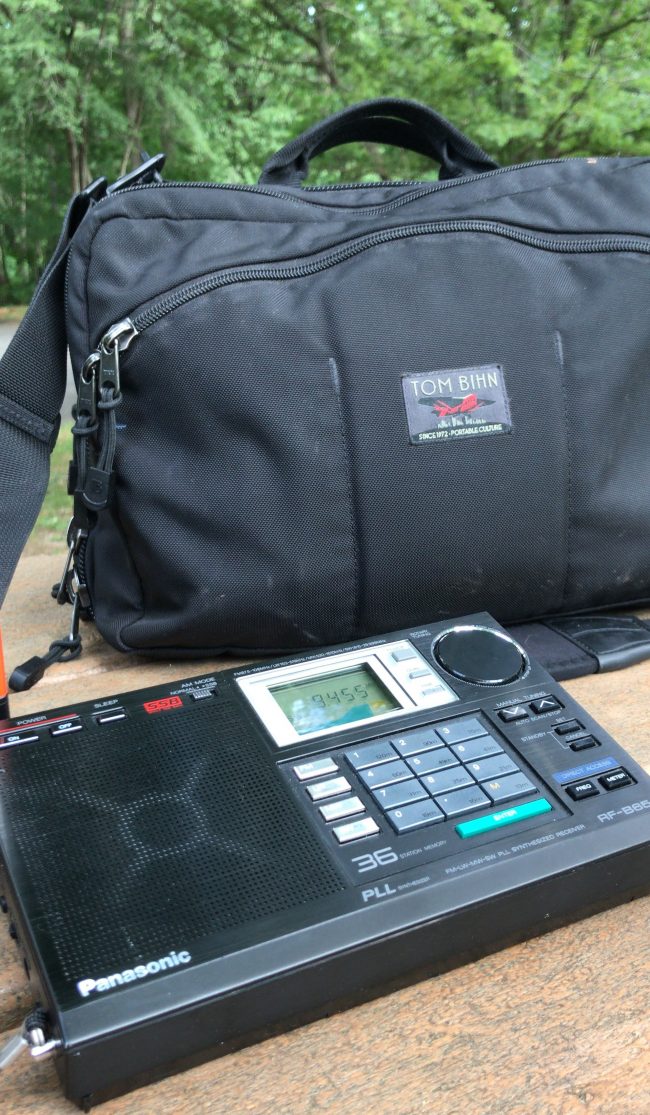
Knowing how difficult it would be to receive the broadcast–especially given the poor propagation–I reached for one of my “Holy Grail” portables: the Panasonic RF-B65.

The Panny RF-B65 is a portable DX hound!

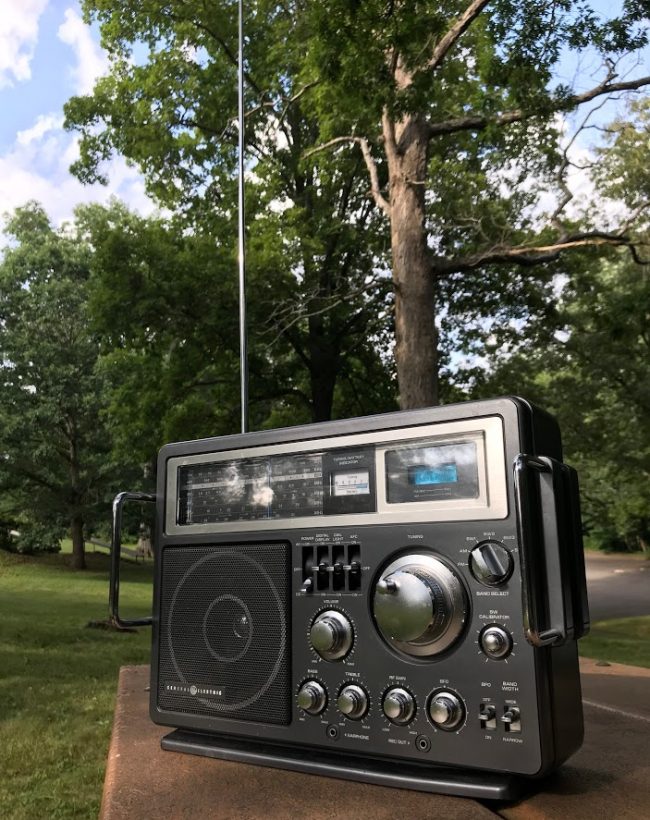
I never take only one radio to the field, though, so I decided it was time to give the hefty GE 7-2990A a little outdoor time on the Blue Ridge Parkway.

The GE 7-2990A

I’ve only had the GE 7-2990A for a few months. It came from the estate of my dear friend Michael Pool (The Professor) who passed away earlier this year.

This particular radio has quite an amazing history–remind me to share the story someday–but I’ll always cherish the 7-2990A because it was one of Michael’s favorites.

I knew the GE was one of Michael’s favorite mediumwave receivers, but I wasn’t sure how well it would perform on the shortwaves. Turns out, it’s quite an amazing HF receiver!

Out of the the three Midwinter Broadcast frequencies (5875, 7360, and 9455 kHz), I could receive the 7,360 kHz signal from Ascension Island best.

Here’s a short (informal) comparison video:

Click here to view on YouTube.

I was quite surprised with the 7-2990A’s ability to pluck this weak signal from the ether. Although the video doesn’t do it justice, the GE’s excellent audio fidelity made listening more enjoyable compared with the much smaller RF-B65.

Click here to view on YouTube.

And, yes, that’s my faithful brown and white listening companion, Hazel, in the background. In truth, she was less interested in the broadcast and more interested in finding squirrels!

Your Midwinter recordings–stay tuned!

Halley VI Research Station on the Brunt Ice Shelf in Antarctica (Source: British Antarctic Survey)

I’ve already received about twenty emails from SWLing Post readers with audio and video recordings of the Midwinter Broadcast. Thank you!

If you would like to submit your recording, and you haven’t yet, please do so by email (thomas *at* swling.com) so I don’t overlook it. Remember to link to your video so that I can easily embed it on the upcoming post. Please don’t send me duplicate emails as it makes the sorting process more difficult.

I’ll try to find recordings linked via Twitter and Facebook, but it’s much more difficult to sort those in comments and know for sure that I’ve discovered them all.

Please note that, due to my schedule, it will likely be two weeks before the final post is published. I appreciate your patience and understanding!


Do you enjoy the SWLing Post?

Please consider supporting us via Patreon or our Coffee Fund!

Your support makes articles like this one possible. Thank you!

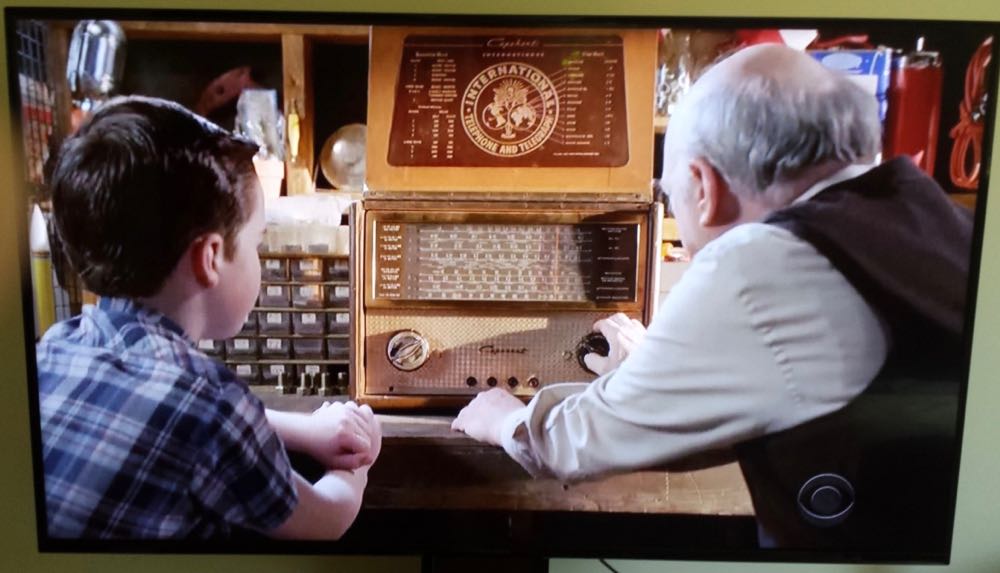
Steve spots a Capehart International Radio and mag loop antenna in “Young Sheldon”

Many thanks to SWLing Post contributor, Steve Yothment, who writes:

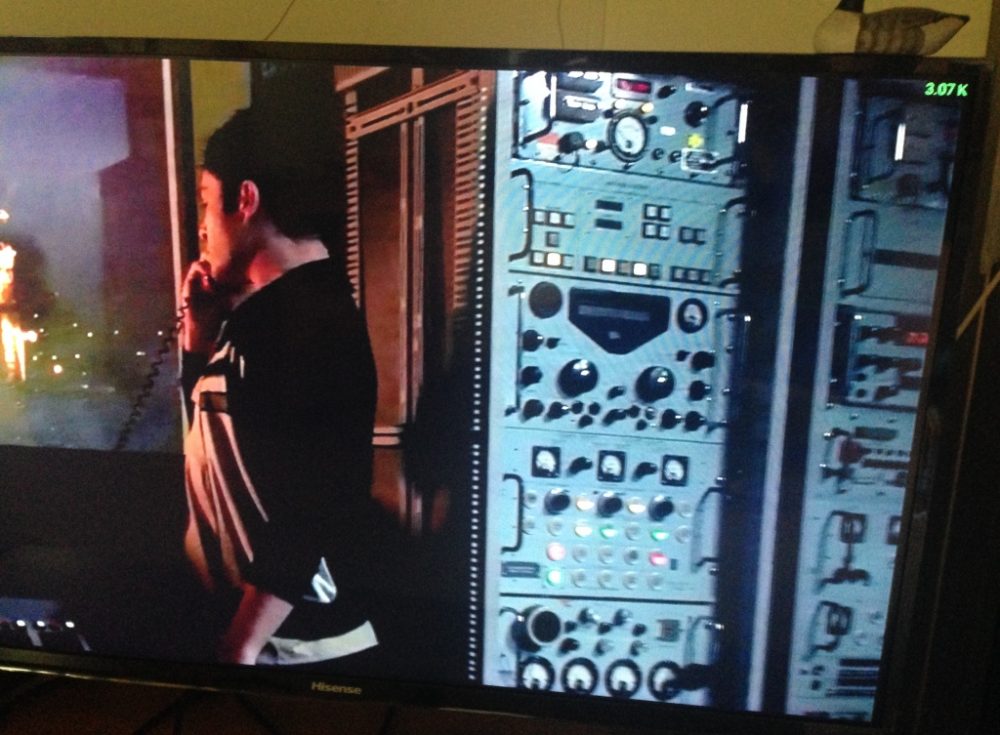
Check out the attached picture. It is from a preview of tonight’s episode of “Young Sheldon.” In it, Sheldon and Dr. Stergis are listening to an antique shortwave radio. I think it is a Capehart International Radio Model 88P66NL.

Also in the preview is an active loop receiving antenna. The show is supposed to be about Sheldon when he was young, back in about 1985. I don’t think active loop antennas were very popular at that time! Maybe they got the timeframe wrong on the use of the antenna. What do you think?

What a catch! I love the flip-up cover on the Capehart although I’m sure in daily use it might have been a bit unhandy. 🙂

Regarding active magnetic loop antennas, like you, I don’t remember them being around much in the mid 80s, although I know the technology was available. I imagine they were used in speciality commercial and military applications. Like you, I’m guessing we didn’t have as many noisy switching power supplies which make them such a necessity these days. I remember happily DXing with my Zenith Transoceanic in the middle of my house in the mid 80s.  Those were certainly the days!

Post Readers: Do you know of any active magnetic loop antennas that were used in homes in the mid 1980s and before?  If so, please comment!

I’ll add this post to our ever growing archive of radios in film!

The New Jersey Antique Radio Club YouTube channel needs your help

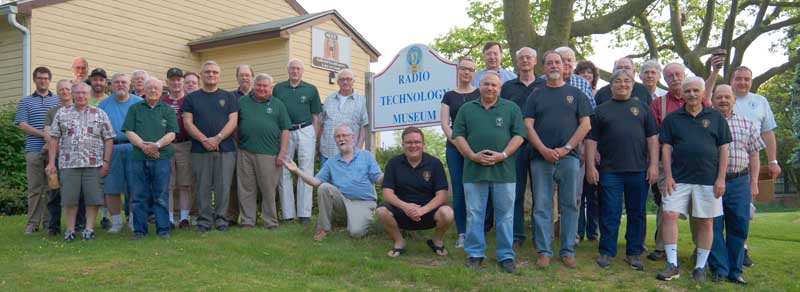
NJARC Members (Source: NJARC)

Many thanks to SWLing Post contributor, Dennis Dura, who recently shared this video where “Radio Wild” asks his viewers to subscribe to the New Jersey Antique Radio Club (NJARC) YouTube channel.

Evidently, the NJARC has been posting live video feeds of their meetings and events for quite some time, but recently YouTube changed their policy and now requires a minimum of 1,000 subscribers for live feeds. At time of posting, my subscription brought their number to 700–they need at least 300 more.

If you’d like to support the NJARC (and learn a thing or two about radio restoration–!), consider subscribing to their channel.

Click here to visit the NJARC YouTube channel and subscribe.

eBay Find: The Dieter Rams Braun T1000CD

Many thanks to SWLing Post contributor, Cap Tux, who shares this eBay find: a Dieter Rams Braun T1000CD.

I must say, £675.00 is a lot of money, but I’m not so sure it’s an inflated price for the Braun T1000CD. I believe I’ve seen them fetch even higher prices and the condition of this unit is excellent.

Here’s the seller’s description:

I bought this radio from an Italian colleague in 1983 when I worked in Nigeria. I am the second owner from new. It has been dry stored in a box at my home for for most of the last 35 years. It is in very excellent condition with only the most minor blemishes to the case. Comes with original paper work and circuit diagram numbered the same at the radio. Please see all the photos. I had this serviced and realigned by Graham at East Coast Wireless. I have just checked all the controls and apart from the dial light they all work.

I’m sure a Dieter Rams collector will grab this unit in short order. Frankly, if I had the radio funds for such a purchase, I’d be tempted. I don’t own a single Rams’ designed radio.

Thanks again, Cap! One of the great things about eBay is finding the occasional gem like this and simply admiring the design.

Click here to view this listing on eBay.

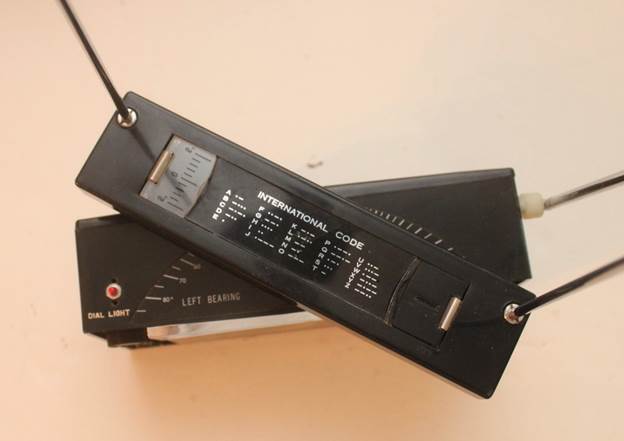
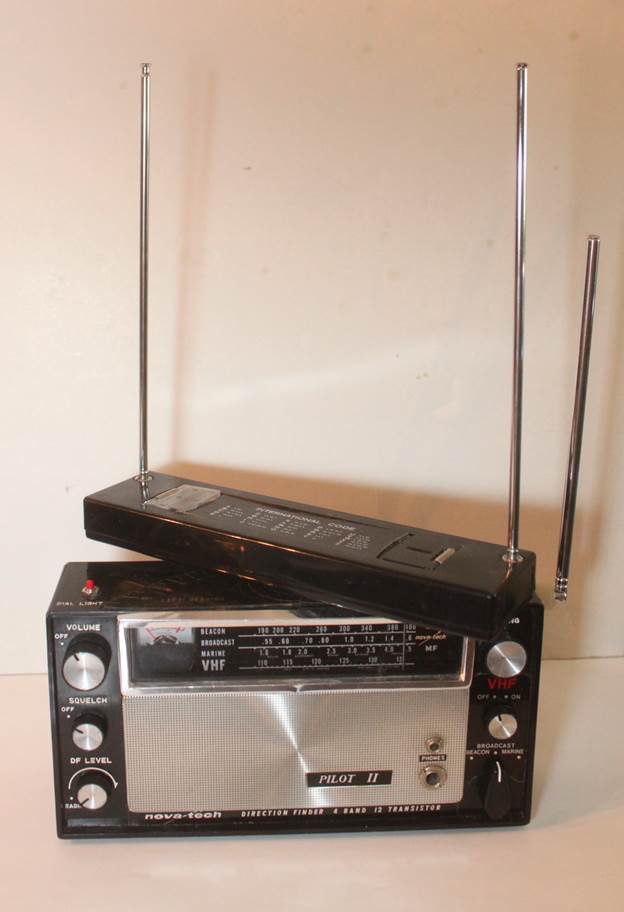
RSGB Archive: Silent Film of D/F Field Day in 1947

Many thanks to the Southgate ARC who notes this recently published 1947 silent film from the Radio Society of Great Britain:

The RSGB has released a vintage silent black and white video of an Amateur Radio Direction Finding (ARDF) field day held in 1947 at Chipping Barnet which was then in Hertfordshire

The Incorporated Radio Society of Great Britain titled the video – D/F Field Day (North of the Thames) May 18th 1947. It has been added to the many amateur radio videos that can be viewed on the Society’s YouTube channel.

One thing that’s apparent from the video is the difference in the age range of those who participated in amateur radio in the late 1940’s compared to today.

Watch RSGB Archive film – D/F Field Day 1947

Click here to view on YouTube.

Pages 69-70 of the RSGB Bulletin (forerunner of RadCom) for October 1947 contained a fully illustrated report on the North of the Thames ARDF event as well as the South of the Thames event held on July 6, 1947.

The two leading affiliated societies on May 18 were from Essex:
1st Romford and District Radio Society
2nd Southend and District Radio Society
The two clubs swapped positions for the July 6 event.

Fascinating! I love how everyone wore proper attire and much of the equipment was home brew. I imagine operators were happy to go back to field and enjoy all sorts of radio activity so close on the heels of WWII.

Thrift Store Find: A $2.50 GE Super Radio II

A few weeks ago, I stopped by our local Habitat For Humanity ReStore searching for reclaimed building supplies.

This particular ReStore is one of the largest in the area–it has an amazing selection of building supplies, furniture, housewares, books and even music, but has a very small section dedicated to electronics which is primarily stocked with DVD players, VCRs and occasionally the odd component system. The person who sets the prices for electronics always over-inflates them so it seems items sit on the shelf for ages.

In all of the years I’ve visited this store, I’ve never found a portable radio of interest…until a few weeks ago.

As I passed by the shelf, a GE Super Radio II caught my eye. Cosmetically, it was in rough shape (in other words, “well-loved”).

I expected a $50 price tag but instead was surprised when I saw $2.50! I put on my reading glasses just to make sure I was reading it correctly.

I plugged the radio in and tested it on FM. It easily snagged a number of FM stations and the audio sounded amazing although the loudness, treble and bass pots were very scratchy.

The AM broadcast band worked as well, but the RFI/noise inside the retail warehouse was overwhelming.

I opened the back of the radio and found an immaculate battery compartment. Obviously, the previous owner was either diligent with removing cells when not in use, or never used batteries.

The antenna was in great shape and had no bends or breaks.

The speakers were in tact as well.

I took the radio to the counter and the guy who rang up the order said, “Well…she ain’t pretty, but for $2.50 how can you go wrong?

My thoughts exactly!

I brought the Super Radio II home with the idea of immediately cleaning her up (like David Korchin did with his “barn find” II), but I’ve had a couple intense travel and work weeks, so it had to wait.

Fast-forward to yesterday when my father-in-law was in town and stopped by for a visit.

He mentioned in passing that after his favorite public radio station decreased power from one of its translators, he could no longer receive it easily with his small AM/FM portable at home. Of course, I have at least four dozen radios here that could easily receive this station, but few of those include a power cord, are incredibly simple to operate and have room-filling audio.

I took a look at the GE Super Radio II, then a look at my father-in-law, and decided he needed it. I knew the ‘Super II would make him a happy man.

I quickly dusted off the chassis and cleaned the pots with DeOxit–it played like a new one.

I tuned to an FM station playing classical music, turned up the volume and my father-in-law beamed when he heard the rich, clear audio.

No doubt, this time-honored portable will get a lot of use and love in its second life.

If I’m being honest with myself, this might not have been a truly altruistic move. You see, when we do an overnight at my father-in-law’s house, I can now do a little AM DXing without having to lug one of my own receivers!

A win-win in my book.

Post Readers: Have you snagged a good radio deal lately? Please comment/brag with models and prices!


Do you enjoy the SWLing Post?

Please consider supporting us via Patreon or our Coffee Fund!

Your support makes articles like this one possible. Thank you!
Photos from the 2019 Charlotte Hamfest

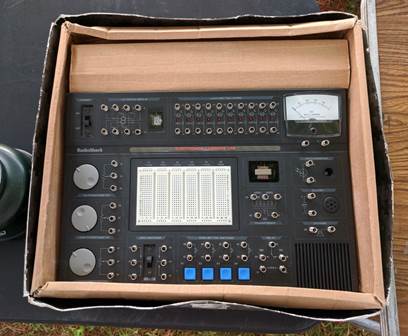
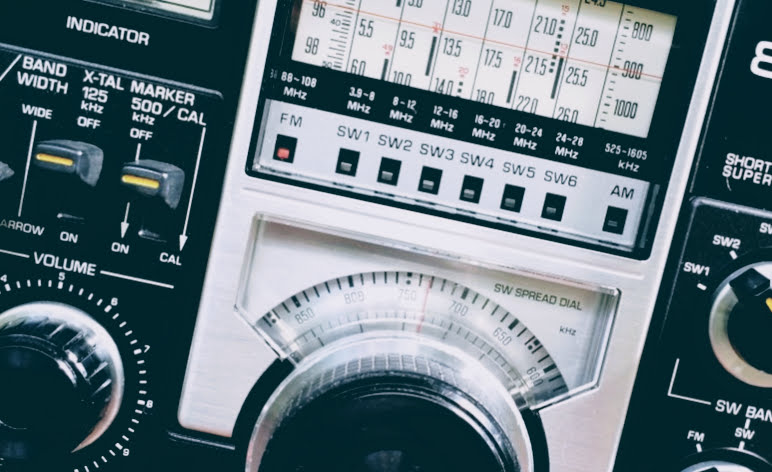
This RS HF receiver was pristine. If I had the budget and the shack space, it would have gone back with me. See more photos in our gallery below.

Yesterday morning around 5:30 AM I started my nearly three hour pilgrimage to the 2019 Charlotte (North Carolina) Hamfest. The Charlotte Hamfest is one of the larger regional hamfests in the area–due to its central location, it attracts people from all of the surrounding states.

The Charlotte Hamfest typically falls on the heels of (or the same weekend as) the Winter SWL Fest in Pennsylvania so I usually don’t even put the dates in my calendar. Indeed, the last time I attended the Charlotte Hamfest was about twenty years ago! It was at a different location and, back then, was also very much a computer show. Today it’s almost purely radio.

Following Vlado to the hamfest site on a very foggy, rainy Saturday morning.

The Charlotte Hamfest is a Friday/Saturday event held at the Cabarrus Arena & Events Center in Concord, NC. The center is a superb hamfest venue: it’s well lit, clean, spacious and can easily house all of the vendors indoors–a huge bonus as weather was less than desirable.

My buddy, Vlado (N3CZ) reserved two vendor tables and packed it with gear to sell–I also brought along a handful of items.

I was very impressed with the turnout–indeed, it was one of the busiest regional hamfests I’ve attended in ages. I sold a couple of items and Vlado sold a lot (he also purchased a lot, but that’s another story!).

I believe I’ll start putting the Charlotte hamfest in my calendar–even though timing isn’t always convenient for me, I think it’s well worth the trip!

Kudos to the Mecklenburg Amateur Radio Society for putting on such a great show!

Photos

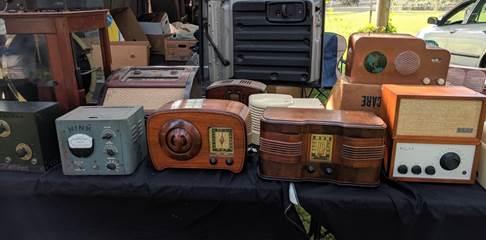
I’ve embedded over 140 photos of the Charlotte Hamfest below–click each one to enlarge. Being a lover of vintage radios, my photos feature a lot of boat anchors. Note that when possible, I try to include the price tags for each item.

Note: If you can’t view the embedded photos below in our email digest, click here to view them on the web.

Do you enjoy the SWLing Post?

Please consider supporting us via Patreon or our Coffee Fund!

Your support makes articles like this one possible. Thank you!