Category Archives: Vintage Radio

Guest Post: Repairing the National Panasonic DR22, the Panasonic RF-2200’s Euro-Sibling

Many thanks to SWLing Post contributor, Mario Filippi (N2HUN), who shares the following guest post:


National Panasonic DR22, the Panasonic RF-2200’s Euro-Sibling

By Mario Filippi, N2HUN

(All photos courtesy of author)

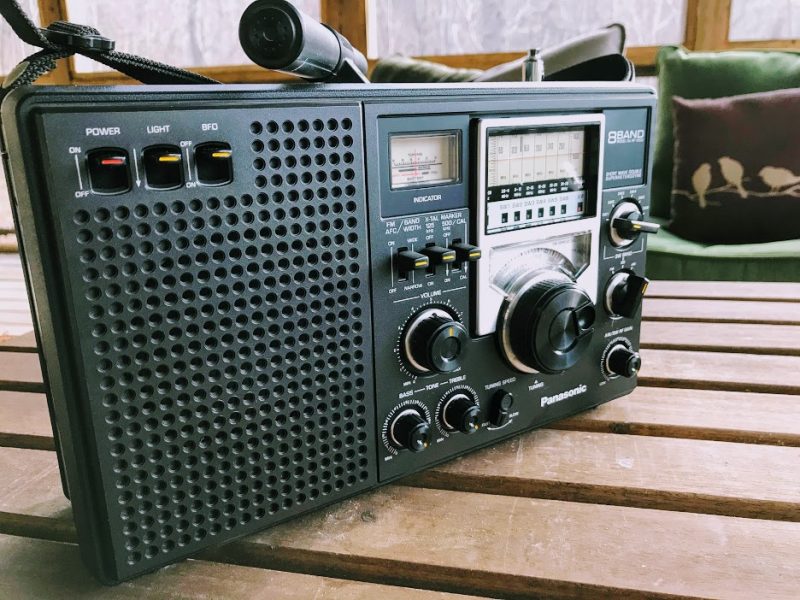
Thomas, your recent and thoroughly excellent post on the Panasonic RF-2200 was the inspiration for this short review of the RF-2200’s European sibling, the National Panasonic DR22.

A few years back when I was hunting for a used RF-2200, a second-hand National Panasonic DR22 was for auction on eBay. These radios were sold in Europe and are almost an exact match for the RF-2200, with a few minor cosmetic differences.  It was so close in appearance that I decided to bid and won the auction. The cost was around $150.00 plus shipping.
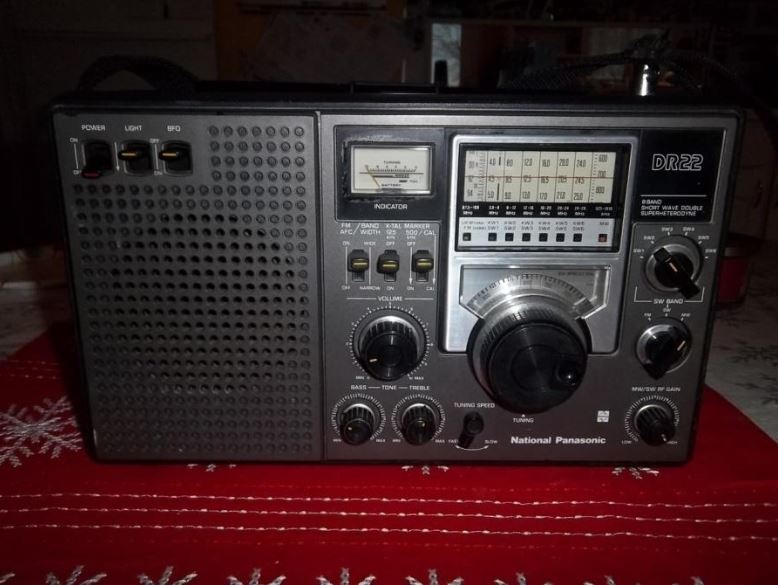
Author’s National Panasonic DR22, a.k.a. RF-2200BS

The seller described the unit as working, not a tech special, and was complete except for the original earphone.  The strap, which can be missing on some used models was in place, the antenna and all the knobs were there. When the radio was received, all appeared to be working well and most importantly the rotatable ferrite antenna was fully functional.  With the exception of tiny paint specks and years of accumulated dust the unit was cosmetically acceptable for a 40 plus year old radio. After a close olfactory inspection (smelling the unit hi hi) it was determined the radio was from a smoke-free home, which is important as smoke not only causes yellowing of plastic components, but it inundates the internal electronic components and coats them with a yellowish-brown stain.
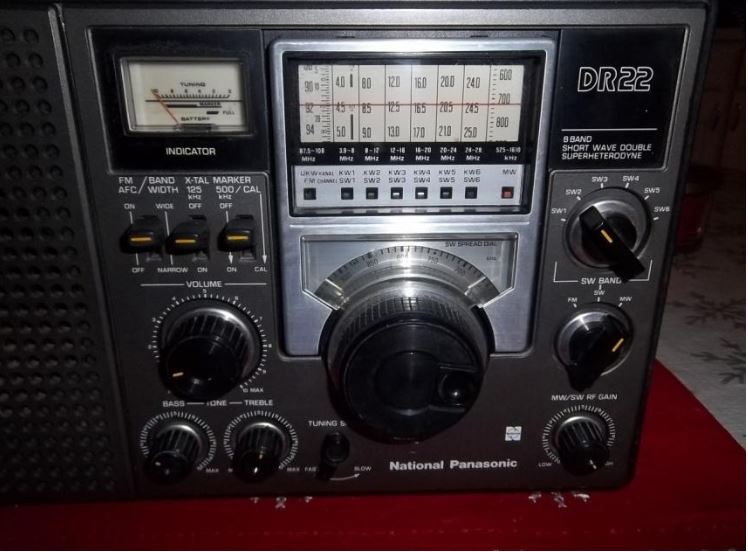
National Panasonic DR22 Dashboard Shows Slight Labeling Differences

On close inspection, the unit differs slightly from the RF-2200, in that it is branded as a “National  Panasonic” along with the “DR22” designation on the upper right of the unit. And, the National Panasonic logo can be seen to the left of the AM/SW gain control.  Another difference is the additional labeling found above each shortwave band, the designations are KW1, KW2, etc.
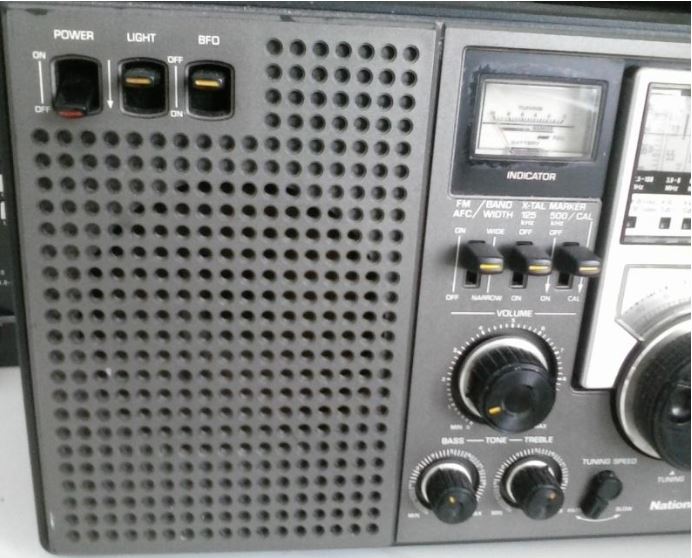
Power, Dial Light, and BFO Switches Are Identical to RF2200

As for the rear panel of the DR22, a major difference is the presence of a voltage selector which allows one to switch from European voltage (220) to the US standard (110).   Inside the unit there’s a transformer that handles this option. Alternatively you can simply use four “D” batteries to power the unit.
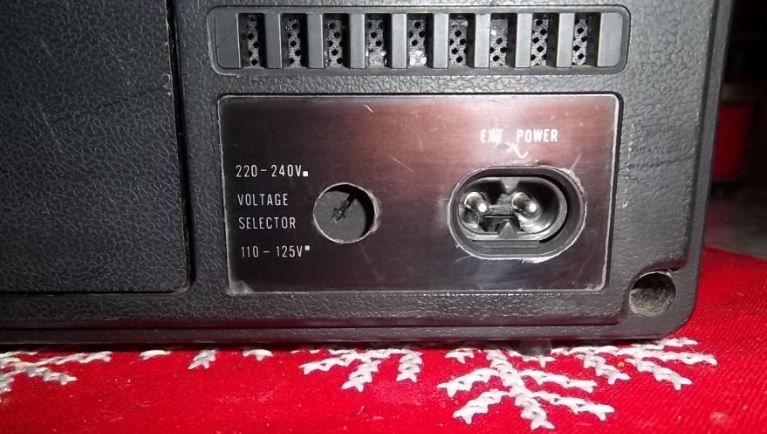
DR22 Line Voltage Selector Switch

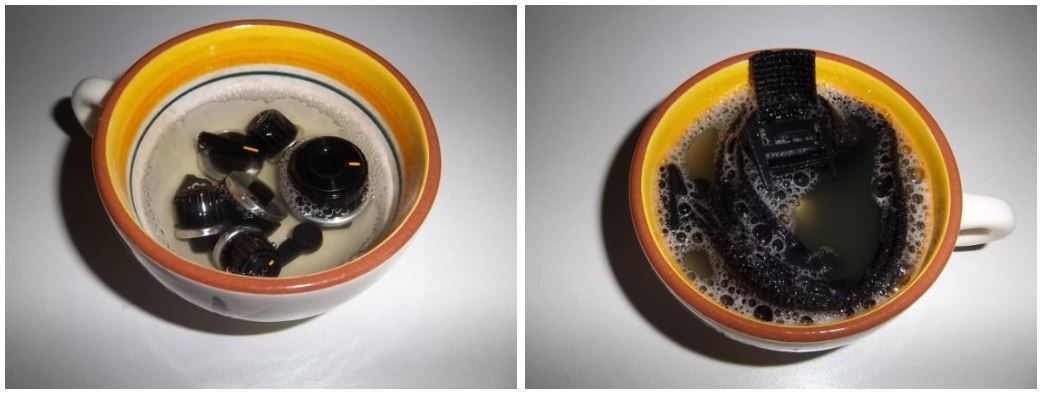
After receiving the unit, first order of business was a good cleaning of the outer case with mild soap and water.  All the knobs and carrying strap were removed and soaked in a warm soapy solution. A toothbrush was put to work to remove years of human tactile residue from the sides of the knobs.
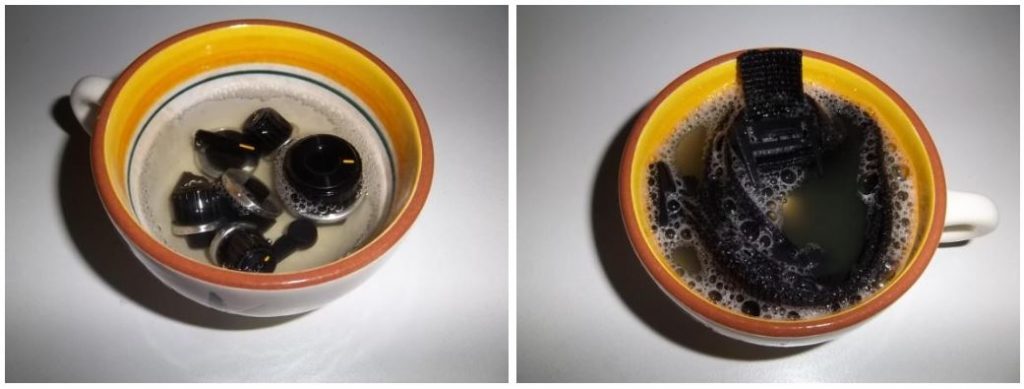
Knobs (left) removed for cleaning. Carrying strap (right) was inundated with decades of dirt.

Next on the “to do” list was to obtain a copy of the service manual, available on line.  You’ll find it under the title of National Panasonic RF-2200BA. It’s an excellent manual with detailed photos of the circuit boards, exploded diagrams of the mechanical parts, parts list, schematics, and of course the alignment procedure.   Cracking open the case required removal of all the case screws and very gently coaxing of the two panels apart. Years of use, rust on the screws, and dirt/dust buildup all contribute to the challenge of this endeavor.
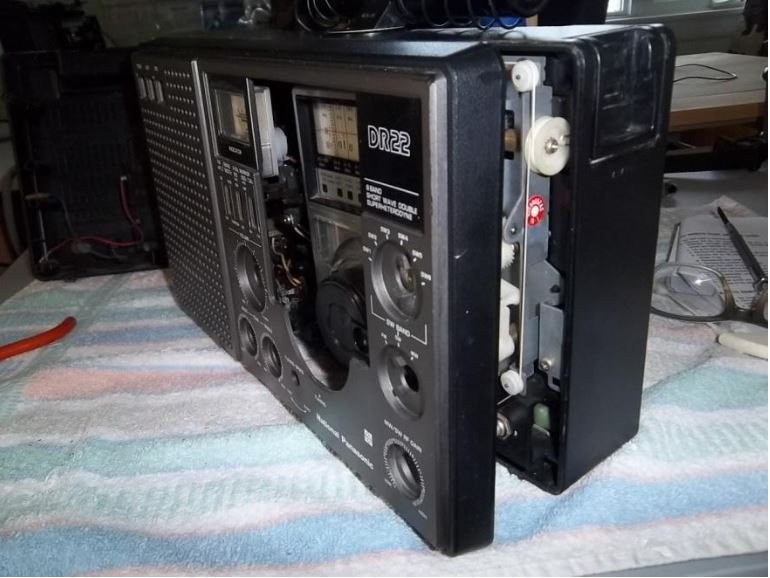
DR22 Case Disassembly

The alignment took several weeks as the radio was worked on in my spare time.  Note that I did not replace any electrolytic capacitors, and yes it was the lazy man’s way but a basic inspection of the caps for any evident leaks, explosions, or burns was conducted.  In short I did not want to replace capacitors at this time since the radio, as received from the former owner, was working well on all bands. Surely, as other operators have reported, cap replacement will restore full operational excellence but I felt if the radio passes the alignment specifications  that was good enough for me at this point.
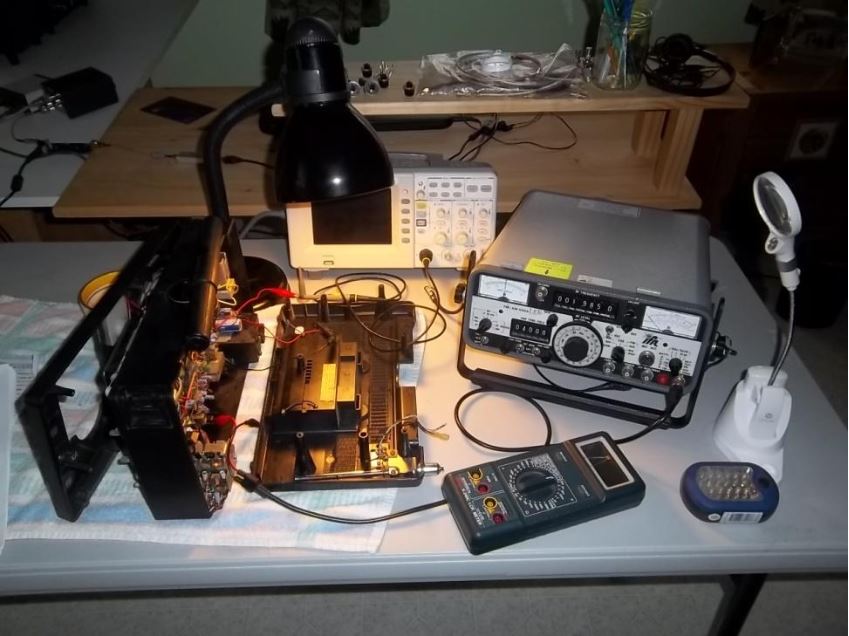
DR22 Undergoing Testing

After several weeks the radio was restored to specifications, all switches were cleaned and dusted and the radio reassembled.  This was done a few years ago and the radio continues performing well. Even the 125/500 KHz crystal markers are pretty much on the money when checked against WWV.  No scratchy pots either hi hi. So now the radio sits in my kitchen and is on at least a few hours a day and keeps company with its sister, my RF2200. Note that recently DR22s have sold on eBay for $150 – $300US. Tech specials/parts radio run considerably less.  Thanks and 73’s de N2HUN.


Thank you, Mario! It looks like you scored an excellent deal on the DR22 and it’s serving you quite well! I’m glad you spent time checking for leaky capacitors after opening the chassis. Using the DR22 so frequently will keep those caps “juicy!”

Post Readers: Please comment if you love the National Panasonic DR22!


Do you enjoy the SWLing Post?

Please consider supporting us via Patreon or our Coffee Fund!

Your support makes articles like this one possible. Thank you!

Mornings with the Panasonic RF-2200

It’s been a busy winter season here at SWLing Post HQ. Many of you might have noticed a slow response time if you’ve tried to contact me. I’m in the midst of a rather involved investment property renovation that’s consumed nearly all of my spare time.

Still, I’m keeping up with the Post and even managing a little one-on-one radio time in the early mornings/late evenings. Indeed, I’ve actually tried to turn my renovation project into an opportunity to play a little radio. The property is unoccupied and very rural, so there’s quite literally no RFI there. Woot!

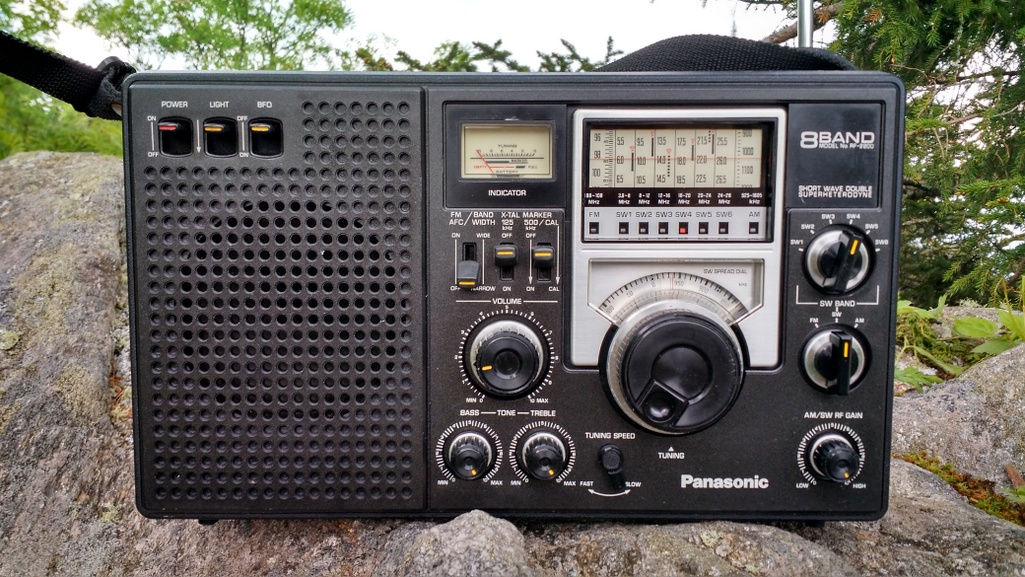
Since I’ve been spending time evaluating the new CCRadio3 (click here to read my preview), I’ve also had the CCRadio EP Pro, Sony ICF-5500W and the legendary Panasonic RF-2200 nearby for comparison purposes.

All of these radios have their strong points, but the Panny RF-2200 is still the rig I reach for the most. That’s why I listed it as one of my daily drivers.

It also helps that my RF-2200 feels like a brand new unit after Vlado re-capped and cleaned it.

Band-scanning

Band-scanning with the RF-2200 is such a tactile experience. The ‘2200 tuning knob is quality and almost feels like a weighted encoder you’d find on a proper tabletop receiver. The RF-2200 even has fast/slow tuning gears and you can calibrate the dial so easily. Though tuning on the shortwaves feels a little vague, I find mediumwave is incredibly accurate.

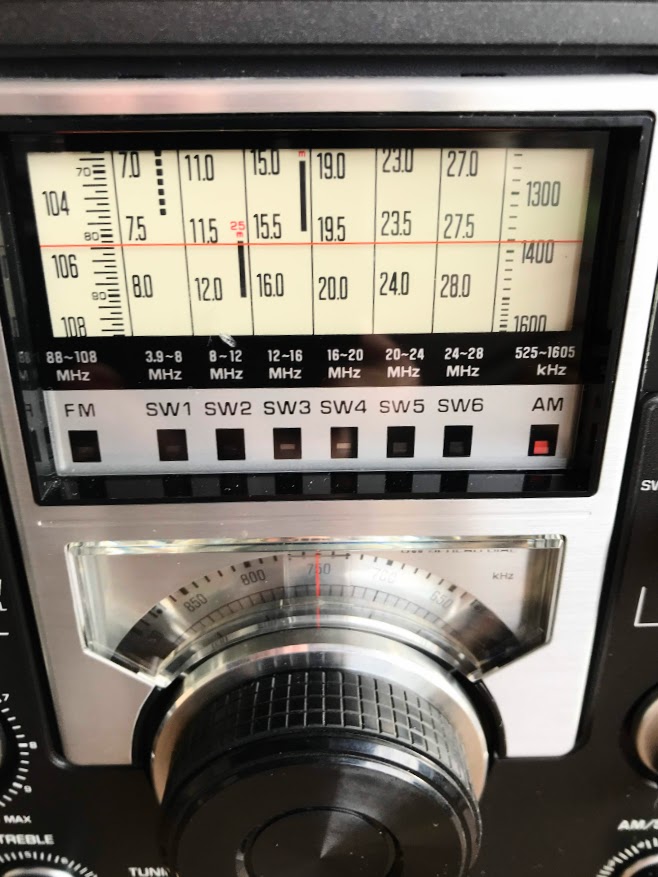
Speaking of the dial and logging scale, I think it’s one of the most attractive from the 1970s:

Since I’ve been doing most of my listening around sunrise and sunset, it’s been a lot of fun to fit in a little mediumwave DXing as well. I see why the RF-2200 was one of The Professor‘s favorites.

If you ever find a good deal on a Panasonic RF-2200, don’t hesitate, just grab it!  Occasionally you’ll find one on eBay, but also check your local hamfests and swap meets! That’s where I’ve had the most luck.

If you ever find a ‘2200 for less that $100-125 that’s in decent cosmetic shape, with the original antenna, clean battery contacts, and is in good mechanical shape (meaning the tuning mechanism and dial work as they should), buy it! If there’s an electrical problem, Vlado can fix that. In fact, if your RF-2200 still has the original capacitors, you’d probably want to re-cap it anyway to keep leaky caps from eventually harming the board or internals. Plus, a properly re-capped ‘2200 will play like a new one!

My takeaway?  The RF-2200 is a keeper! I suppose that’s why I even have a spare!

Do you have or would you like an RF-2200? Please comment!


Do you enjoy the SWLing Post?

Please consider supporting us via Patreon or our Coffee Fund!

Your support makes articles like this one possible. Thank you!

Video: The Secret Life of Radios

Many thanks to SWLing Post contributor, Skip Arey (N2EI), who shared the following video on Facebook:

Any electrical spark creates radio waves and acts as a transmitter. You hear sparks on a radio as interference. That’s why lighting makes radios crackle, and even the tiny spark in a switch is enough to make a noise on the radio when turning on a light./blockquote>

Click here to watch on YouTube.

Ed restores a Hallicrafters S-72L cabinet


Many thanks to SWLing Post contributor, Edward Ganshirt, who shares the following:

This is a Hallicrafters S-72L “barn find” I restored.

This turned out to be a furniture refinishing project and not a radio (electronics) restoration job.

It is a 1949/50 era portable with batteries and 1 volt tubes.

When I brought it home the cosmetic condition was such, I kept it away from the litter box out of an abundance of caution to prevent it from being buried by the cats.

This is a very early portable radio made out of plywood and coated with brown wall paper fabric imitating cheap portable record players and luggage of the era.

I decided to laminate it with cedar drawer liner to give it some class instead of vinyl wallpaper.

While learning to laminate wood is another skill outside the scope of this article, The trick when applying laminate is to prevent bubbles forming under the laminate.

Also all divits and dents should be filled in with Bondo or wood filler. The surface is lightly sanded with very fine sandpaper and at least 8 layers of gloss water based floor varnish applied and allowed to thoroughly dry before the next coat.

This radio has nice audio quality, It has a BFO and tunes the longwave band through 11MHz.

The only regrets is cleaning it aggressively which took away a lot of the “old radio smell”, but the cedar aroma will keep the moths out.


Fantastic, Ed!  Thanks for sharing. I think you made a considerate upgrade to the S-72L. Great to hear this radio plays well and has excellent audio. I found one at a hamfest once in slightly better cosmetic condition, but much worse electrical condition than your pre-restoration unit. I’m sure I took a photo of it, but I can’t seem to find it in the archives.

Post readers: any other Hallicrafters S-72L owners out there?  Have you ever installed wood laminate on a radio cabinet? Please comment!


Do you enjoy the SWLing Post?

Please consider supporting us via Patreon or our Coffee Fund!

Your support makes articles like this one possible. Thank you!
This NYC vintage vault is a source of electronics for movies and TV shows

From “Fear of the Walking Dead”

Many thanks to SWLing Post contributors Kevin and Stan who share the following article from Gizmodo. Stan notes:

You (and your readers) often comment on radios in movies and tv shows,
so I thought ya’ll might be interested in the following article:

“Where Movies Get Their Vintage Electronics”
https://gizmodo.com/where-movies-get-their-vintage-electronics-1832218560

Turns out, some come from an electronic waste recycling company in NYC,
which repairs and resells some of the waste they collect, puts the best
specimens in a museum/prop library for movies and TV show, and the rest
is recycled in an environmentally conscious way without ending up in a
landfill.

Fascinating!  That vault looks amazing!  I think it’s brilliant that set designers reach for vintage radios and I’m glad the vault has a ready supply!

2019 Orlando Hamcation Flea Market Photos

Many thanks to SWLing Post contributor, Rich Nowak, who kindly shares photos from the Orlando Hamcation Flea Market.

Click on each image to enlarge:

What an impressive amount of vintage radios! I’m planning to attend Hamcation next year (2020)–now I know I’ll need to bring my truck to haul back all of the boat anchors! 🙂

Thank you for sharing these, Rich!

Using bus service to ship heavy vintage radios

Many thanks to SWLing Post contributor, James Branch, who shares the following comment regarding the shipment of heavy vintage radios:

On the issue of shipping Boat Anchors, I’ve had good experiences using Greyhound Package Express, Tough-bin structural foam footlockers and proper padding.

The parcel is loaded at the bus station of origin and usually remains on that bus to its destination without having to survive a sorting center or multiple unhappy loading personnel.

It may be inconvenient to drop off and pick up at the bus terminal, but considering the irreplaceable nature of these rigs, it’s worth the effort.

http://www.shipgreyhound.com/e/pages/Home.aspx

I had no idea!  Thank you for the tip, James!