Category Archives: What’s On Shortwave

Shortwave Radio Recordings: Voice of Turkey

Gezi protest in Ankara  (Source: Wikimedia Commons)

Gezi protest in Ankara (Source: Wikimedia Commons)

A few days ago, I posted a recording of the Voice of Turkey that noticeably lacked coverage of the Gezi Park protests.

Friday, I recorded VOT’s English language broadcast and was surprised to find that they actually mentioned the protests (admittedly, without it’s due weight) in several news items. I’m very curious how future VOT broadcasts will cover news of yesterday’s riots in Istanbul as police cleared crowds of protesters with water cannons and tear gas.

Click here to download the full recording, or simply listen via the embedded player below:

ERT now broadcasting on several medium wave frequencies

(Photo source: AP / Petros Giannakouris)

(Photo source: AP / Petros Giannakouris)

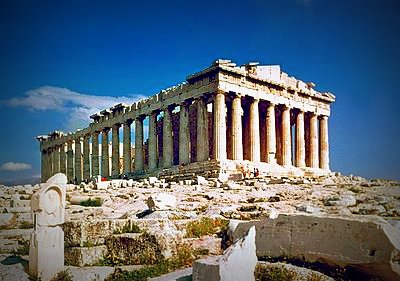
It’s been several days now since the Greek government tried to shut down Greek National TV and Radio broadcaster, ERT. In fact, ERT was only off the air for a few hours; they immediately set up a live Internet stream and restored shortwave service to the Voice of Greece. They’re still going strong and, evidently, expanding.

SWLing Post reader, Christos, lives in Greece and has been keeping us up-to-date with field reports. He writes:

This day [Friday] the employees of ERT took over the frequencies of medium waves 666 KHz, 729 KHz, 981 KHz, 1008 KHz (Corfu) and 1404 KHz (Komotini), that the previous days remained silent.

Short waves (9429 KHZ) and 1260 kHz from Rodos Island continue active.

[There] are now two radio channels in operation.

Thanks again, Christos! Follow this story with the tag: ERT Cuts

VOA Radiogram this weekend mixes bad noise with good noise

VOARadioGram(Source: VOA Radiogram)

During the past weekend, we experimented with mixing music with MFSK text modes. Reducing the MFSK modes by 9 dB was not a problem if the signal level was good, but the MFSK text did break up for some listeners if reception conditions were marginal.

This weekend, 15 and 16 June, we will mix some actual noise taken from shortwave with MFSK text. After the noise begins, a VOA News story in MFSK16 will first be transmitted at full level, then reduced to -6 dB, then reduced to -12 dB. I will probably lose many of you when the level is reduced to -12 dB, but please stay tuned: the audio level will soon be restored.

Here is the lineup for VOA Radiogram, 15 and 16 June 2013:

  • 2:10 MFSK16: Program preview
  • 1:58 MFSK16: Introduction to noise experiment
  • 10:09 MFSK16: At -0 -6 -12 dB versus noise
  • :59 MFSK16: Image of VOA logo
  • :47 MFSK16: Introduction to MFSK32
  • :51 MFSK32: Image of VOA logo
  • 3:19 MFSK32: VOA News re Curiosity Rover on Mars MFSK32: VOA Radiogram logo
  • 2:40 EasyPal Image of the week
  • 1:10 MFSK16: Closing announcements
  • :20 Surprise mode of the week

VOA Radiogram transmission schedule

(all days and times UTC)
Sat 1600-1630 17860 kHz
Sun 0230-0300 5745 kHz
Sun 1300-1330 6095 kHz
Sun 1930-2000 15670 kHz

All via the Edward R. Murrow transmitting station in North Carolina.

Please send reception reports to [email protected]

The Gezi Park Protests: don’t look to the Voice of Turkey for information

On shortwave, sometimes it’s what’s not heard that speaks volumes.

Gezi protest in K?z?lay Square, Ankara (Source: Wikimedia Commons)

Gezi protest in K?z?lay Square, Ankara (Source: Wikimedia Commons)

Turkey has been in the world headlines now for well over a week. In case you’re not up-to-date, here’s a summary of what has happened:

On May 28, 2013,  about fifty environmentalists led a small protest in Istanbul to oppose the replacement of Taksim Gezi Park with a reconstruction of the Taksim Military Barracks.  The protests escalated when the group occupying the park was attacked with water cannons and tear gas by the Turkish police. This event led to riots, which were soon widespread; the protests, meanwhile, broadened their scope into full-fledged anti-government demonstrations across the country and even into the Turkish diaspora across the globe.

Yesterday, I turned to the Voice of Turkey on shortwave radio to hear about the active protests currently ongoing throughout the country…

But what did I hear? The only mention I heard of the Gezi Park protests in the Voice of Turkey’s English language service were in a passing Turkish press report on the reaction to the protests by the US Secretary of State, John Kerry. The item, moreover, was completely buried in their broadcast and certainly not something upon which they elaborated in the least (listen, beginning at 12:50 below).

I’ve always loved listening to the Voice of Turkey, but events like this remind me of the simple fact that many international broadcasters are still very much the mouthpieces of their governments.

Click to enlarge (Source: Reporters Without Borders)

Click to enlarge (Source: Reporters Without Borders)

Of course, Turkey certainly would not win an award for press freedom; not even close. Reporters Without Borders list Turkey as a country with a “Difficult Situation” with regards to press freedoms, ranking them 154th out of 179 countries in their 2013 Press Freedom Index. To put this in perspective, Finland and the Netherlands occupy the top two spots as models of press freedom, the USA is number 32, and North Korea and Eritrea occupy the bottom spots (numbers 178 and 179, respectively) obviously countries without press freedoms.

I’d like to think that the news readers at the Voice of Turkey would rather give this news the attention it deserves, or at least offer the Turkish government’s perspective on the demonstrations. Instead, what we heard was…nothing.  And we heard that loud and clear.

Indeed, the world is paying attention to the lack of news coming out of Turkey right now. Time Magazine posted this article article yesterday, which begins:

As epic clashes between anti-government protesters and riot police turned downtown Istanbul into a battle zone last weekend, the country’s two main news channels had, well, not much to report. One ran a documentary on penguins. The other, a cooking show. To many Turks, their silence was symptomatic of the self-censorship Turkey’s media have practiced under Prime Minister Recep Tayyip Erdogan’s tightfisted 10-year rule. Penguin T-shirts, penguin jokes and penguin costumes now abound — the bird has become a symbol of protesters’ frustration with the mainstream media.

VoiceOfTurkeyOne of the most amazing things about shortwave radio is that by really listening, you can hear the unfiltered voices of regional broadcasters, the clandestine organizations, and the media representatives of their respective countries.

If this story had broken twenty years ago, moreover, I would have heard it as a headline from every respected international broadcaster. Then, upon turning to the in-country “news source,” as I attempted to do yesterday when I tuned in the Voice of Turkey and was subjected to a total lack of news, I would therefore be instantly made aware of what the Turkish government didn’t want me to hear.

Unfortunately I feel we’ve lost a bit of this comparative news consumption, not just because of the exodus of many trusted radio broadcasters from the field, but because we’ve been trained to consume news in (palatable) bites. Our attention spans and interest seem to have diminished to the point that we now often rely on our news sources to interpret for us.  A sad fact…especially considering politically-evolving countries like Turkey still need our attention, interest, and thoughtful support.

Listen to the same Voice of Turkey broadcast I heard yesterday, by downloading the off-air recording or by listening via the embedded player below:

VOA Radiogram features EasyPal digital images this weekend

VOARadiogram(Source: VOA Radiogram)

During the past weekend, EasyPal digital images were received successfully throughout Europe and North America. You can see a gallery of some of the received images here:

voaradiogram.net/post/51385444401/voa-radiogram-easypal-images-received-100-or-0

Reviewing the advantages of EasyPal versus MFSK32:

EasyPal:

1) When received successfully, the picture is perfect.

2) Takes less time to transmit than MFSK32 and most SSTV images of the same size.

3) No problems with slant if soundcards are not calibrated.

MFSK32:

1) If the signal drops below a certain level, or if interference exceeds a certain level, no EasyPal image will be received at all. Under similar reception conditions, MFSK32, which uses an analog frequency shift keying system for images, will allow the an image to be seen, even if the quality is not perfect.

2) MFSK32 images allows images of different heights and widths, including small images which can be transmitted quickly. The gray tone MFSK32 image option allows even faster transmission.

3) MFSK32 images can be decoded by more than one software program under more than one operating system. There is only one EasyPal program, and it works only under the Windows operating system.

I welcome your comments and suggestions about the transmission of images via shortwave broadcast. Weighing all of the above factors, I am inclined to adopt MFSK32 as the primary image mode for VOA Radiogram. However, the EasyPal images are so impressive that I will continue to include some in future programs.

On VOA Radiogram for the weekend of 1 and 2 June 2013, we will continue to compare MFSK32 and EasyPal images. Here is the lineup for the program:

3:44    MFSK16: Program preview
3:17    MFSK32: VOA News story about Olympics wrestling
3:16    MFSK32: VOA News story about 2013 hurricane season
1:10    MFSK32: File image of Atlantic hurricane
2:53    MFSK32: VOA News story about colliding galaxies
1:04    MFSK32: Image of the colliding galaxies
1:21    MFSK32: Introduction to MFSK64 and EasyPal
1:30    MFSK64: Same VOA News story about colliding galaxies
:39     EasyPal text: Same VOA News story about galaxies
2:38    EasyPal image: Colliding galaxies
2:38    EasyPal image: Soyuz capsule being moved to launch site
1:09    MFSK16 closing announcements
:29     Surprise mode of the week

To decode EasyPal text and images, download the 4-May-2013 version of the program from vk4aes.com.

To decode the MFSK modes, use Fldigi from w1hkj.com or another digital decoding program.

VOA Radiogram transmission schedule
(all days and times UTC)

Sat 1600-1630 17860 kHz
Sun 0230-0300 5745 kHz
Sun 1300-1330 6095 kHz
Sun 1930-2000 15670 kHz

All via the Edward R. Murrow transmitting station in North Carolina.

Please send reception reports to [email protected]

And visit voaradiogram.net (where any schedule or frequency changes will be posted)

Twitter: @VOARadiogram

Kim

Kim Andrew Elliott
Producer and Presenter
VOA Radiogram

Shortwave Radio Recordings: Radio Australia’s Jazz Notes

Sydney_opera_houseIf Radio Australia ever stops broadcasting on the shortwaves, one program I will certainly miss is Jazz Notes.

Jazz Notes showcases the best in Australian jazz, often featuring new and original recordings made in ABC’s studios. The show is hosted by Ivan Lloyd and has been offered on Radio Australia for several years.  I listen to the show Wednesday mornings at 9:30 am EDT.

Click here to download the full recording of Jazz Notes as an MP3, recorded yesterday (May 29, 2013) or simply listen via the embedded player below:

PCJ Radio International moves to 11,835 kHz

pcj(Source: PCJ Media)

Due to co-channel interference on 11750khz we will change frequency for this Sunday. The new frequency is 11835khz. Your comments and reports about this new frequency are important. So tune in this Sunday and let us know.

June 2nd – 1300 to 1400UTC

June 9th – 1300 to 1400UTC

June 16th – 1300 to 1400UTC

June 23rd – 1300 to 1400UTC

June 30th – 1300 to 1400UTC

July 7th – 1300 to 1400UTC

Frequency: 11835khz (25 meter band)
Target Area: East and Southeast Asia
Power: 125kw