Improving SW Reception with a Simple Ground Wire

Many thanks to SWLing Post contributor, Vladimir, who writes with a tip:

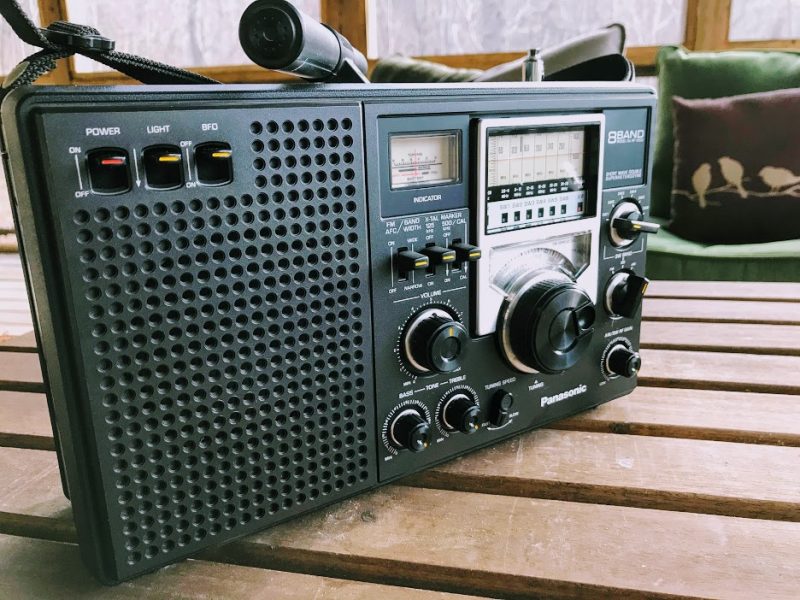
I’d like to share a very simple lifehack for improving reception on a regular radio broadcast receiver. I’ve been reading SWLing Post for a long time and I remember that you already had something similar, but I’m not sure how much it’s the same.

The method involves using a “virtual ground” – a quarter-wave resonant wire connected to the receiver’s “ground”, while the antenna itself remains a standard telescopic one. In amateur radio practice, this is widely known, but, as I see, it is very rarely used for SWLing, and meanwhile, it gives a good increase in performance without overloading the input circuits of the receiver. Of course, we are talking about reception at a known frequency and does not imply broadband.

My video about it:

I apologize that the experiment here is not entirely clean, since the “virtual ground” was made at a frequency of 13650 kHz, and the video shows reception at 14154, but I recorded this video spontaneously and did not prepare. But the result still pleased me.

As you can probably see, a male banana plug with a wire is used, and it is recessed into the antenna socket just enough to touch only the “ground” of the receiver, without touching the antenna contact. If you need to avoid electrical interference along the “ground”, for example, near power lines, then you can connect a second similar wire to the same point, stretched in the opposite direction.

There is an important nuance regarding the length of the wire. If it is located close to the ground, then its resonant length will be shorter then ?/4, but approximately ?/5, because the proximity of the ground greatly reduces the resonance. How do I know this? I experimented with resonant dipoles lying on the ground, measuring the resonance with an antenna analyzer directly at the feed point. It is important that the analyzer can measure and display separately active and reactive resistances, I used “Sector-200+”, the closest analogue of FAA-450, design EU1KY. Selecting the lengths by zero reactive resistance (i.e. by resonance), on my soils I got a shoulder length of 4.0 m for a frequency of 14150 kHz and 8.25 m for 7175 kHz, i.e. approximately ?/5. For comparison: a 5 m long wire lying on the ground resonates at about 9.7 MHz, and this is far from where we need it on the 20 m range, for example. Since then, I only use resonant radials on field trips with the GP antenna, but that’s another story. Those who have a similar antenna analyzer can get more accurate values ??for their area and height above the ground.

Thank you so much for sharing this hack with us, Vladimir!

TWR Swaziland / Eswatini – Then and Now

Many thanks to SWLing Post contributor Dan Greenall, who shares the following post:

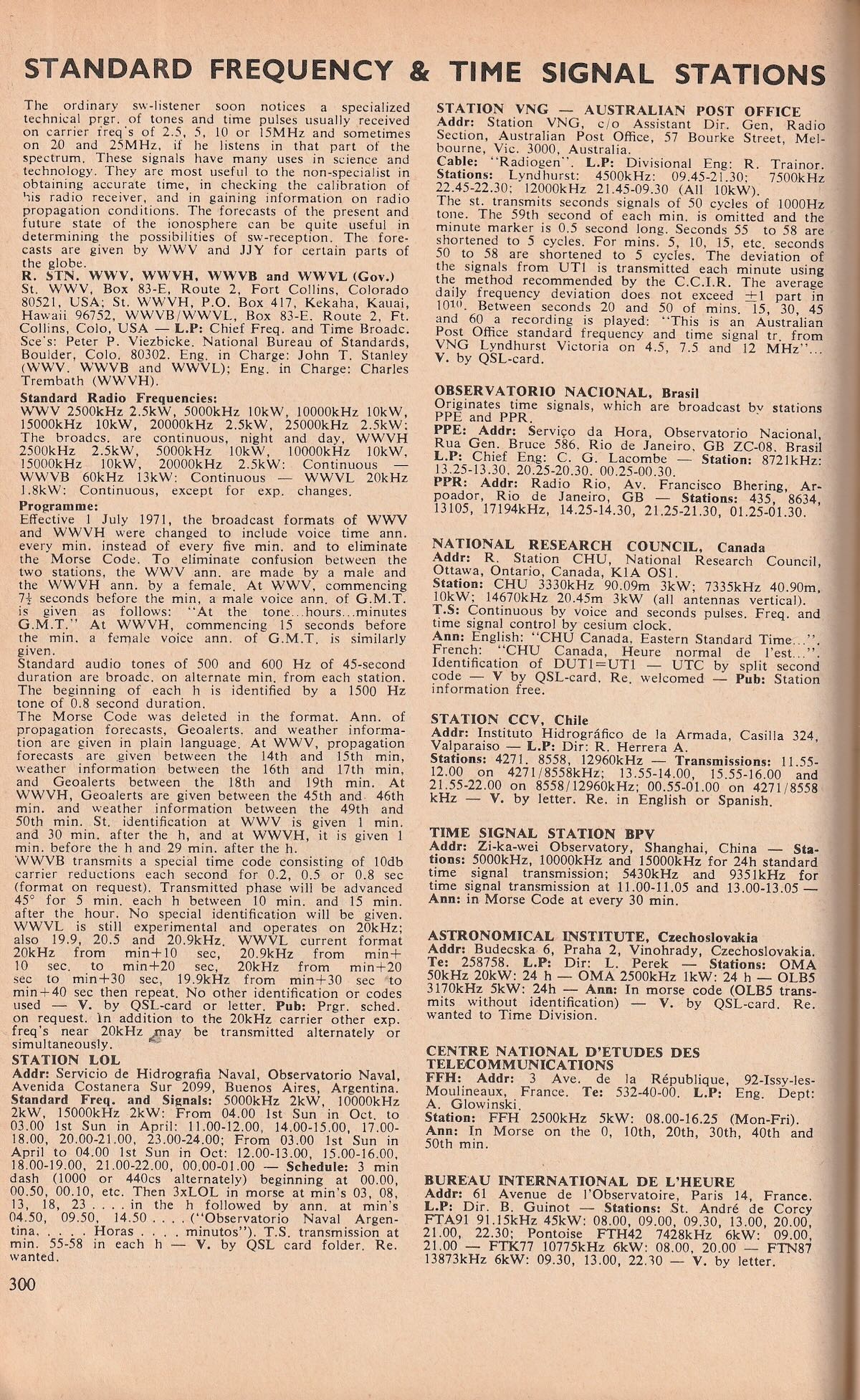
Much to the delight of DXers, Trans World Radio began broadcasting from the African country of Swaziland over 50 years ago. According to the 1975 World Radio TV Handbook, they had four 30 kW transmitters to conduct initial testing in the 90, 60, 49, and 41 metre bands. Their interval signal, played on hand bells, reportedly comes from the song “We’ve a Story to Tell the Nations” and has a music box feel to it. It would pause frequently for an ID in English. This recording was made on November 2, 1996, on 4750 kHz just prior to 0400 UTC sign-on: https://archive.org/details/trans-world-radio-swaziland-1996

Today, the station is still on the air and follows the same format as in years past, except for the name of their country, which changed to Eswatini in 2018.

I chose a Kiwi SDR in neighboring South Africa to make this recent recording, on August 21, 2025 around 1359 UTC on 9585 kHz, leading up to the start of a program in the Portuguese language.

Nuts and Volts: FM Radio Arrives in U.S. Cars in 1958

Many thanks to SWLing Post contributor Dennis Dura for sharing this fascinating Nuts & Volts article exploring the history of FM radio in American automobiles. While AM dominated dashboards for decades, FM began to make its way into U.S. cars in 1958, slowly changing how drivers listened to music and news on the road. The piece traces the industry’s hesitations, the technical challenges, and the cultural shift that followed. You can read the full story here:

FM Radio Reception Comes to U.S. Cars in 1958

Late 2025 Broadcast Schedule for VORW Radio International!


Hello all! As some time has passed, I felt it appropriate to publish the latest schedule for my transmissions to North America and beyond!

My radio program is 1 Hour in length and features discussion (often about current events, other times about random subjects on my mind) at the start of the program and is then balanced out with listener requested music. I hope for it to be an enjoyable light entertainment program with good music and discussion!

There are two new shows each week, along with various repeat airings for listeners who might not be able to catch the new shows as they first air.

Main Broadcasts:

Saturday 0600 UTC (2 AM Eastern / 1 AM Central) – 4840 kHz – WWCR 100 kW – North America

Monday 0400 UTC (12 AM Eastern / 11 PM Central Sunday Evening) – 4840 kHz – WWCR 100 kW – North America

Repeat Airings:

Tuesday 0800 UTC (4 AM Eastern / 3 AM Central) – 5850 kHz – WRMI 100 kW – Western North America

Tuesday 2000 UTC (4 PM Eastern / 3 PM Central) – 15770 kHz – WRMI 100 kW – Eastern North America

Wednesday 2300 UTC (7 PM Eastern / 6 PM Central) – 9455 kHz – WRMI 100 kW – North America

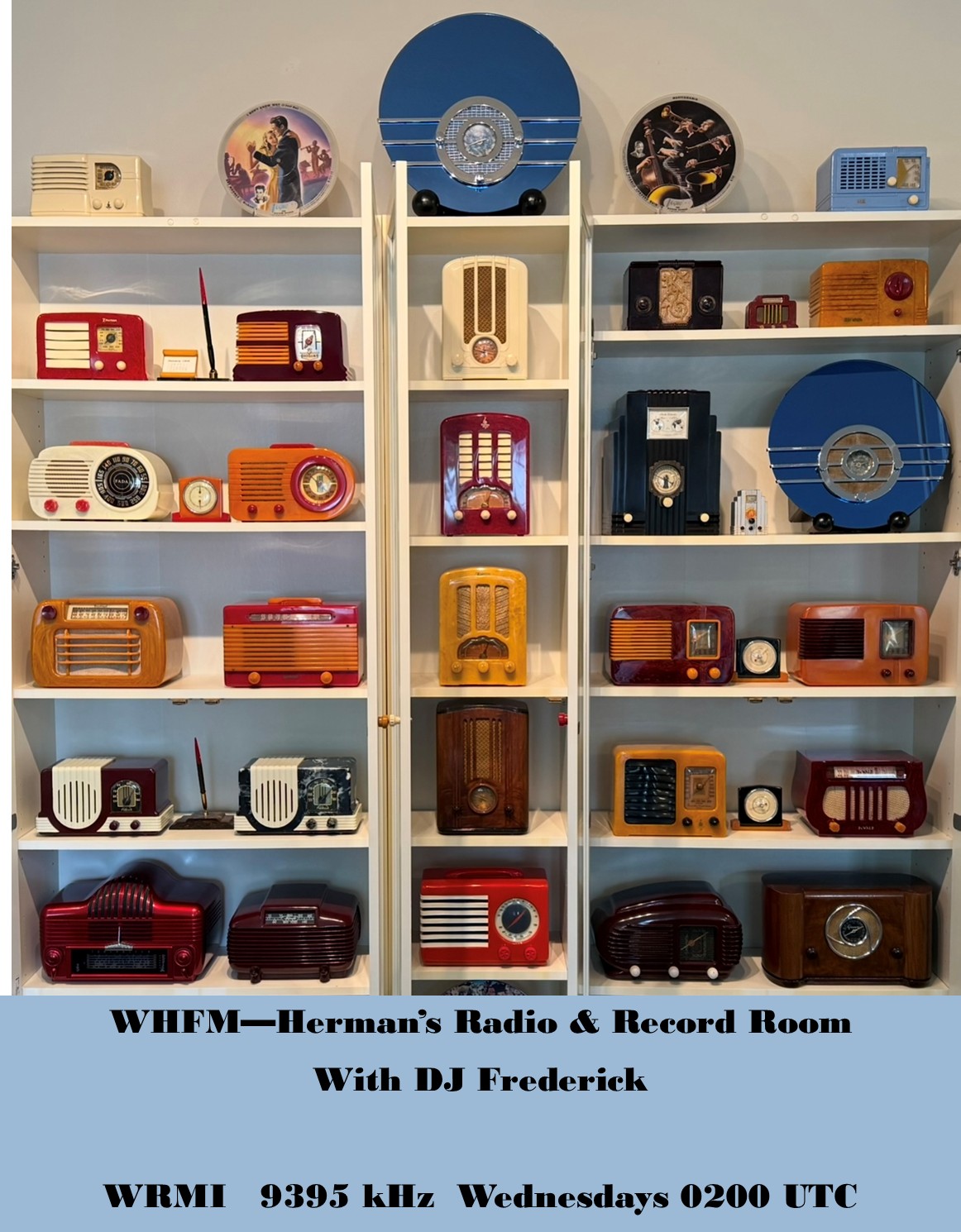
Thursday 0200 UTC (10 PM Eastern / 9 PM Central) – 9395 kHz – WRMI 100 kW – North America

Thursday 1600 UTC (12 PM Eastern / 11 AM Central) – 15770 kHz – WRMI 100 kW – Eastern North America

Thursday 2200 UTC (6 PM Eastern / 5 PM Central) – 9955 kHz – WRMI 100 kW – South America

Saturday 0400 UTC (12 AM Eastern / 11 PM Central) – 15770 kHz – WRMI 100 kW – Europe/Middle East

Saturday 0700 UTC (3 AM Eastern / 2 AM Central) – 1300 kHz – WNQM 5 kW – Nashville, Tennessee

Saturday 2300 UTC (7 PM Eastern / 6 PM Central) – 5950 kHz – WRMI 100 kW – North America

Sunday 0100 UTC (9 PM Eastern / 8 PM Central) – 1490 kHz – WITA 1 kW – Knoxville, Tennessee

Monday 0000 UTC (8 PM Eastern / 7 PM Central) – 5950 kHz – WRMI 100 kW – North America

Listener reception feedback & reception reports are much appreciated at [email protected] 

e-QSL’s are sent upon request!

Happy Listening!

House Committee Backs AM Radio Bill with Strong Bipartisan Support

Photo by Brock Wegner on Unsplash

Many thanks to SWLing Post contributor Dennis Dura, who shares news via Radio World that the AM Radio for Every Vehicle Act (H.R. 979) has cleared the House Energy and Commerce Committee with overwhelming bipartisan support (50-1). If passed, the bill would require automakers to include free, easily accessible AM radio receivers in all new vehicles, including EVs, for at least the next eight years. Lawmakers emphasized the ongoing importance of AM radio for emergency alerts, public safety, and reliable communication. You can read the full article here: House Committee Advances AM Radio Bill – Radio World.

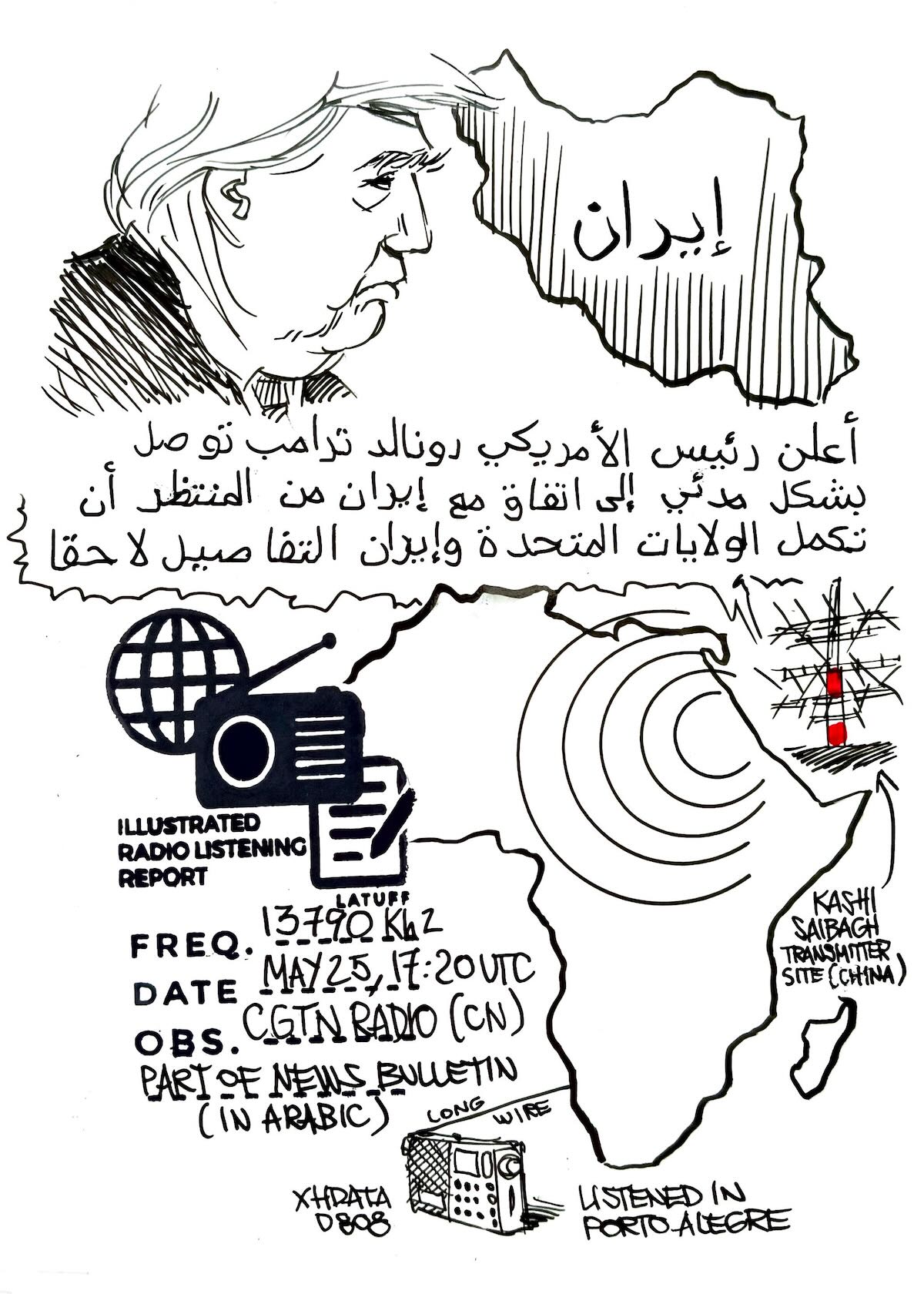
Carlos’ Illustrated Radio Listening Report and Recording of CGTN (September 17, 2025)

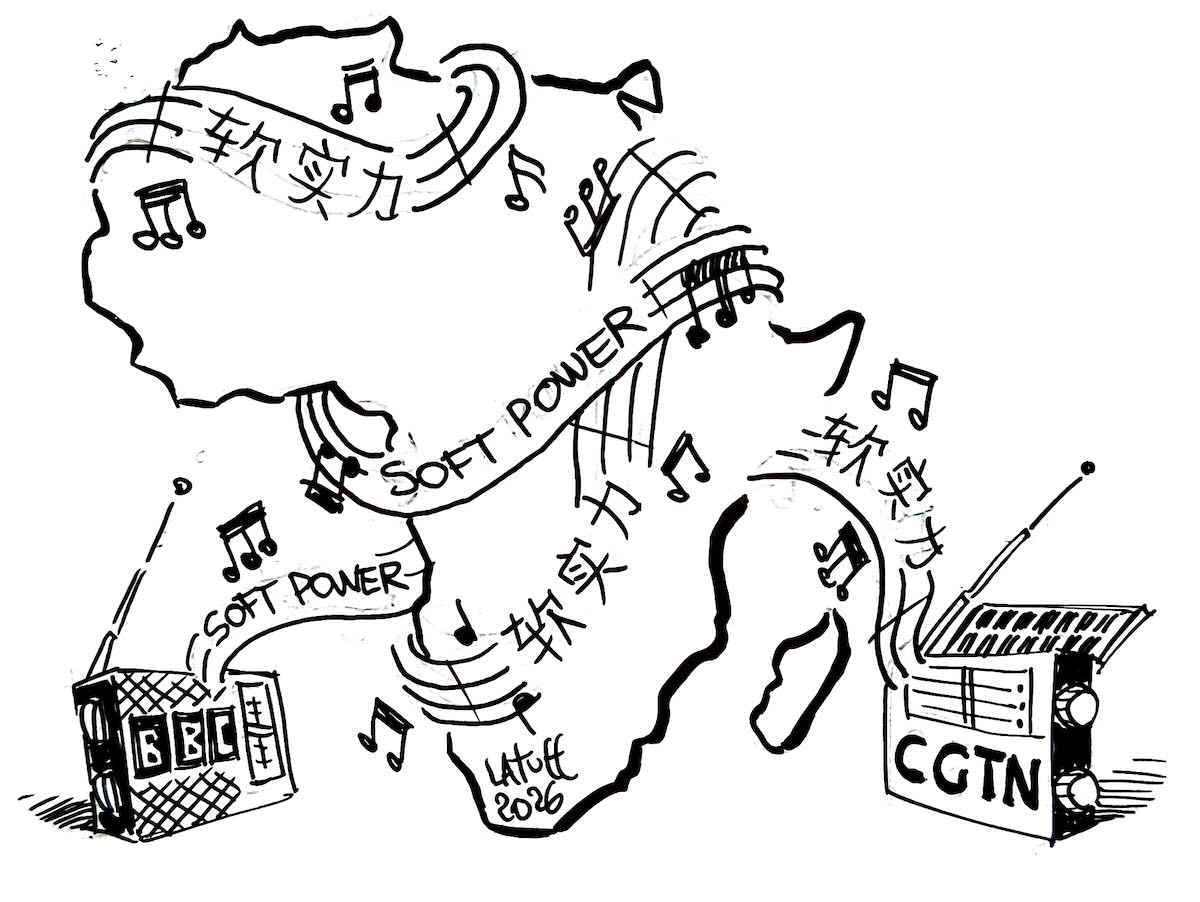
Many thanks to SWLing Post contributor and noted political cartoonist, Carlos Latuff, who shares the following illustrated radio listening report of a recent CGTN broadcast.


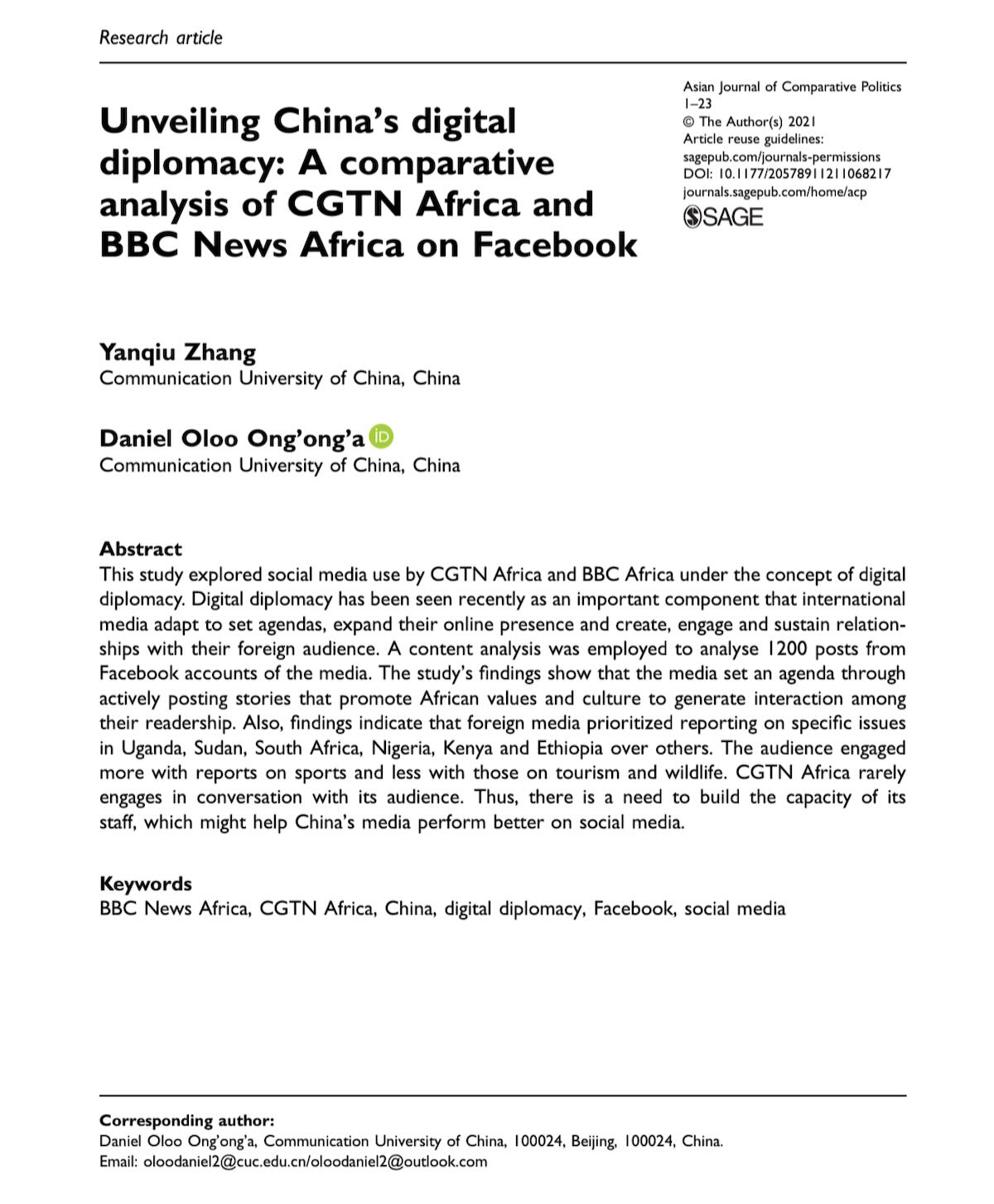
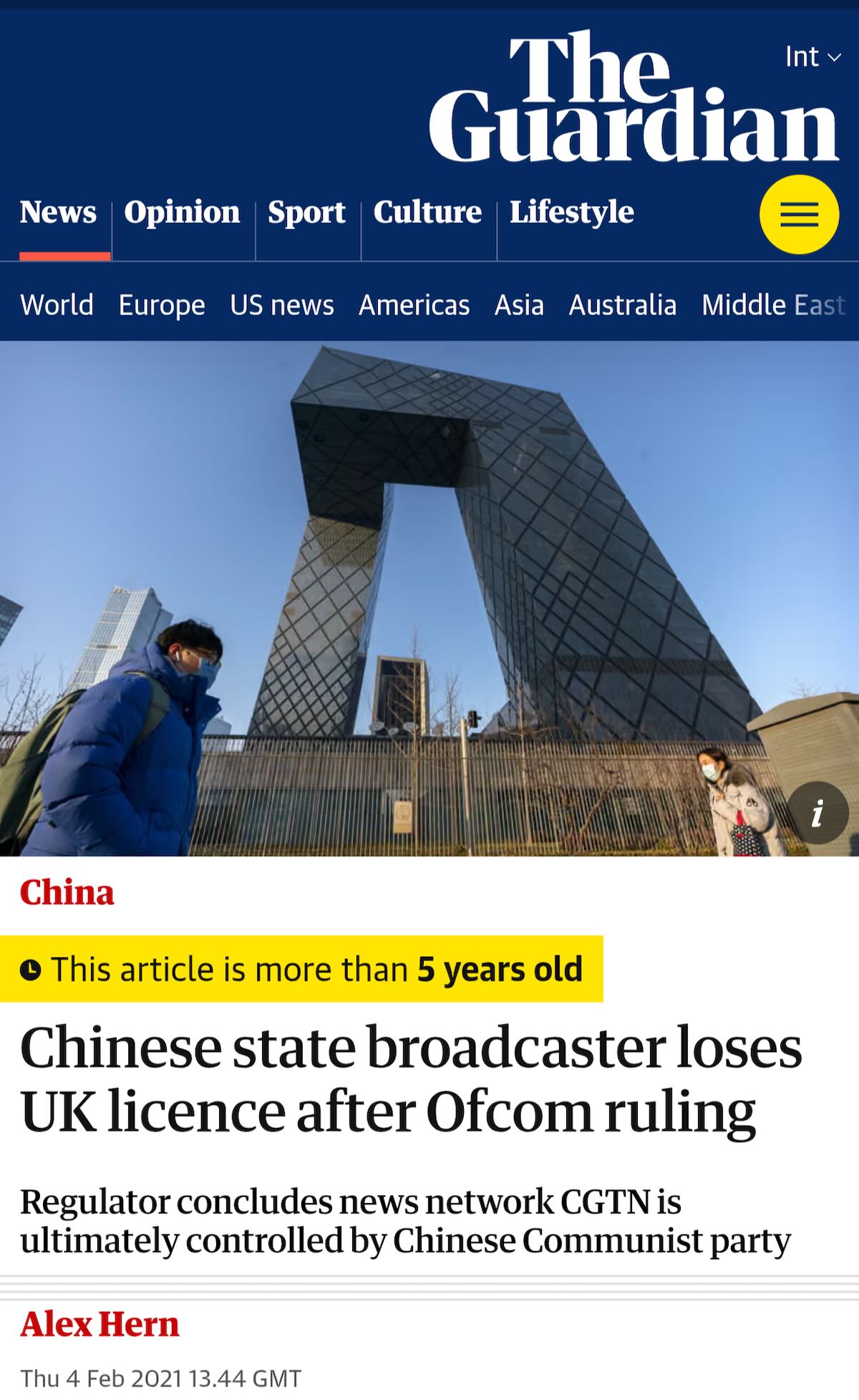
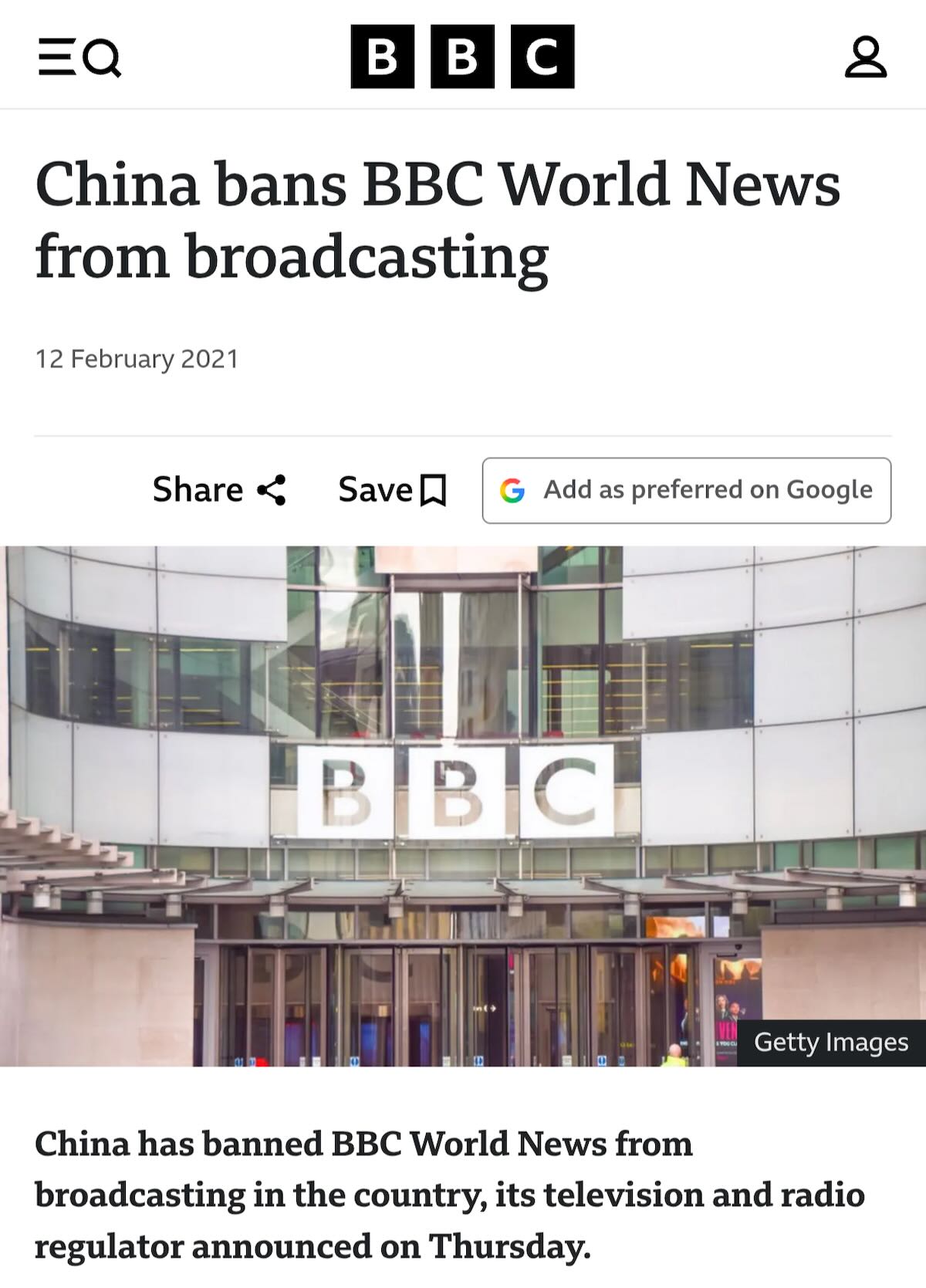
Carlos notes:

U.N. Special Rapporteur Francesca Albanese on the Gaza genocide, CGTN

Click here to view on YouTube.

Preserving Radio History in Your Community

Many thanks to SWLing Post contributor Dan Greenall, who writes:

I have lived in southern Ontario, Canada my entire life, have been DXing since the late 1960’s and have held the amateur radio call sign VE3HLC for over 50 years.  Most of this area’s AM broadcast stations had been considered “pests” over the years as I searched for more distant targets, until recently, when many of these began quietly slipping from the airwaves.  While this opened up some new frequencies to DX, I soon began to feel that I had lost some old friends, many that I had known since childhood.

When I retired in 2018, I decided to spend a little time trying to preserve some radio history of stations in southern Ontario communities that have played a part in my life. This might include audio clips, QSLs, station booklets, and other types of ephemera, and I would try to place this information where it could be easily accessed by future historians or anyone else who is interested.  In the end, I chose to use the Internet Archive (archive.org), where most uploaded information can be viewed (or heard) and downloaded for free.

CFPL, London, Ontario   980 kHz (still on the air)

“Communications in the Community” is a hardcover limited edition (2000 copies) souvenir book printed in 1966 by the Special Printing Unit of The London Free Press in London, Ontario, Canada.  It includes historical information about the London Free Press (newspaper) and CFPL radio and television.  I was lucky to find this item at a church rummage sale nearly 20 years ago.

CFPL began its life as CJGC in 1922. I acquired one of their QSL cards from 1925 through an eBay purchase a few years ago.

The above and more can be found by clicking on this link.

https://archive.org/details/page-16

CKOC, Hamilton, Ontario 1150 kHz (still on the air)

CKOC radio in Hamilton also started up in 1922.  My parents met while working at the station in the late 1940’s.  My brother and I (both radio amateurs), along with a few friends were given permission to operate on “Field Day” weekend in 1985 from their old abandoned transmitter site at Elfrida, Ontario.

This area has long since been developed to build homes and shopping areas.

“This is Hamilton, Ontario and the story of broadcasting station CKOC” is an undated booklet (I am guessing circa 1950) that I was able to purchase on eBay.  Also found on eBay were two verifications, one from 1931 and the other from 1983.

You can find these scans and more by following this link.

https://archive.org/details/page-13_202209

CKNX, Wingham, Ontario 920 kHz (still on the air)

This station began in 1926 using the unusual call sign 10BP.  It would remain that way until 1935.  I managed to secure this QSL from 1932 through eBay, signed by its founder W.T. “Doc” Cruickshank.

Interesting stories of how the station began can be found at this link.

https://www.communitystories.ca/v1/pm_v2.php?id=story_line&lg=English&fl=0&ex=386&sl=2541&pos=1&pf=1

CKCR, Kitchener-Waterloo, Ontario 1510 kHz  (no longer on the air)

In 1924, this station began briefly in nearby Brantford, Ontario. It quickly moved to Kitchener-Waterloo and existed until 1965 when it became CKGL.  The CKCR call sign was picked up later in 1965 by a station in Revelstoke, BC.

Another eBay purchase, I found this QSL with a not-to-scale map of southern Ontario from 1934.

More Ontario QSL’s can be found in my broadcast band gallery at this link: https://archive.org/details/ckoc-hamilton-on-1983

I would encourage others to save parts of the local radio history in their city, state, province or country and give back to the hobby that we have enjoyed for so many years.   I would also be happy to hear about any efforts you have made!