Radio Waves: ABC Wage Freeze, A Titanic Radio, FCC “Tweaks” LPFM Rules, and Digitizing a DX-160 Display

Radio Waves:  Stories Making Waves in the World of Radio

Because I keep my ear to the waves, as well as receive many tips from others who do the same, I find myself privy to radio-related stories that might interest SWLing Post readers.  To that end: Welcome to the SWLing Post’s Radio Waves, a collection of links to interesting stories making waves in the world of radio. Enjoy!

Many thanks to SWLing Post contributors Michael Bird, Dave Zantow, David Korchin, and Alokesh Gupta for the following tips:


ABC must freeze wages, government warns (The Guardian)

The Morrison government has put the national broadcaster on notice that it expects the ABC to embark on a six-month wage freeze to bring it in line with other taxpayer-funded agencies during the Covid-19 crisis.

The warning follows the government’s decision in early April to defer general wage increases for commonwealth public servants for six months. The public service commissioner followed up that directive by writing to all non-public service agencies – including the ABC – informing them the government expected them to adopt the same practice.

With no clear response from the ABC to the 9 April missive, Guardian Australia understands the communications minister Paul Fletcher wrote to the national broadcaster this week flagging his expectation that the organisation would defer a 2% increase for all employees scheduled to take effect in October under the ABC’s enterprise agreement.[…]

Radio used by the Titanic to call for help can be salvaged, judge rules (CNN)

A federal judge has ruled that RMS Titanic Inc. can salvage the radio used to call for help by the fated ocean liner after it struck an iceberg in 1912.

To get to the radio, divers would need to remove a part of the ship’s deckhand to reach the room known as the Marconi Suite, which houses the device.

The ruling modified an order issued on July 28, 2000, that said that RMS Titanic Inc. could not cut into the wreckage or detach any part of it.

Virginia’s eastern district court amended that order “for a unique opportunity to recover an artifact that will contribute to the legacy left by the indelible loss of the Titanic, those who survived and those who gave their lives in the sinking,” Judge Rebecca Beach Smith wrote.

Experts in the case testified to the “significant deterioration” in areas above and around the Marconi room, according to the document, and photos showed the “increasing breakdown” in the deck above the suite.

The suite, made of steel, consisted of three areas: sleeping accommodations, an operator’s room and the silent room that housed the radio. Each area was separated by wood walls that officials believe have dissolved, according to court documents.

The Marconi device and the artifacts associated with it face “significant threat of permanent loss,” the judge said in her approval of the expedition.[]

FCC Tweaks LPFM Technical Rules (Radio World)

The FCC in April modified the technical rules covering low-power FM stations. It expanded the permissible use of directional antennas; permitted waivers of protections of television Channel 6 by a specific group of reserved channel stations; expanded the definition of minor change applications for LPFM stations; and allowed LPFM stations to own boosters. Read more about the changes here.

Michelle Bradley, founder of REC Networks, is an engineer and longtime LPFM advocate.

Radio World: What’s your overall assessment of the outcome and the scope of its impact in the LPFM community?

Michelle Bradley: While the FCC did not address three major issues that are impacting LPFM stations right now —the ability to address building penetration issues, the ability to reach “local” listeners in rural areas and the disparity in how LPFM stations protect FM translators vs. how translators protect LPFMs — the changes will benefit current LPFM stations by giving them more flexibility in moving locations, reduce the need for waivers and improve LPFM service in the southern border region. It will also open some additional opportunities for new LPFM stations in the next filing window.[]

RadioShack Shortwave Goes Digital (Hackaday)

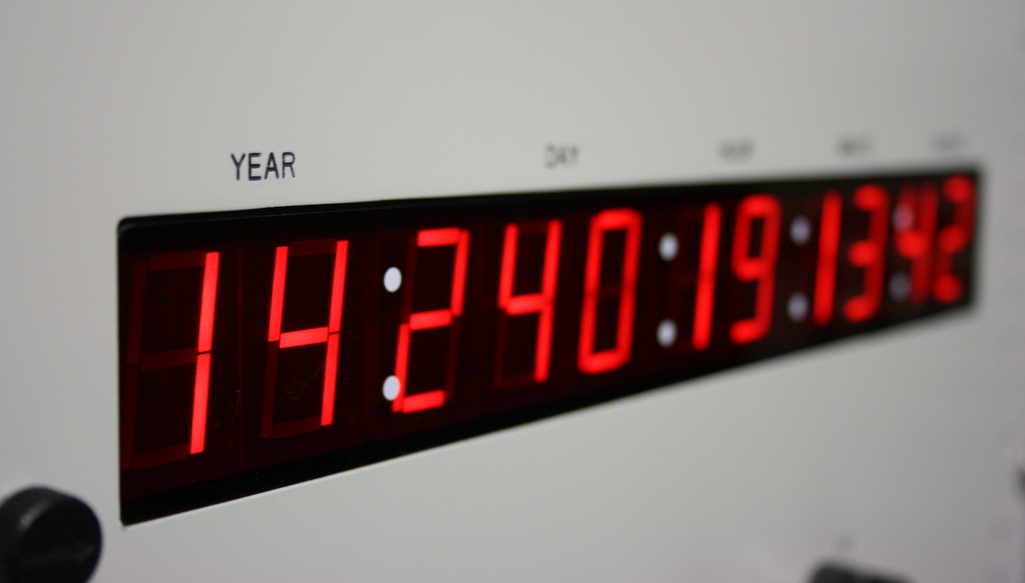
If you spent the 1970s obsessively browsing through the Radio Shack catalog, you probably remember the DX-160 shortwave receiver. You might have even had one. The radio looked suspiciously like the less expensive Eico of the same era, but it had that amazing-looking bandspread dial, instead of the Eico’s uncalibrated single turn knob number 1 to 10. Finding an exact frequency was an artful process of using both knobs, but [Frank] decided to refit his with a digital frequency display.

Even if you don’t have a DX-160, the techniques [Frank]  uses are pretty applicable to old receivers like this. In this case, the radio is a single conversion superhet with a variable frequency oscillator (VFO), so you need only read that frequency and then add or subtract the IF before display. If you can find a place to tap the VFO without perturbing it too much, you should be able to pull the same stunt.

In this receiver’s heyday, this would have been a formidable project. Today, a cheap digital display will do fine.[]


Do you enjoy the SWLing Post?

Please consider supporting us via Patreon or our Coffee Fund!

Your support makes articles like this one possible. Thank you!

Radio Survivor Podcast features “Radio in the Movies”

This week’s episode of the Radio Survivor Podcast is devoted to “Radio in the Movies.” I you like classic films, and our post thread where readers ID actual radios in movies, you’re sure to appreciate this Radio Survivor episode.  Here’s the description:

Portrayals of radio in popular culture provide an interesting glimpse at radio’s role in society. At Radio Survivor, we’ve long been fascinated by radio depictions on both the small and large screen; so it is a treat to dive into this topic with Hemrani Vyas, Programming Coordinator at Turner Classic Movies (TCM). Vyas curated an entire day of radio-themed films for the cable network, focusing on the era of 1930 to 1950. This week we talk about some of the featured films and also dig into a broader discussion about the changing images of radio in the movies.

Click here to view full show notes and listen via Radio Survoivor.

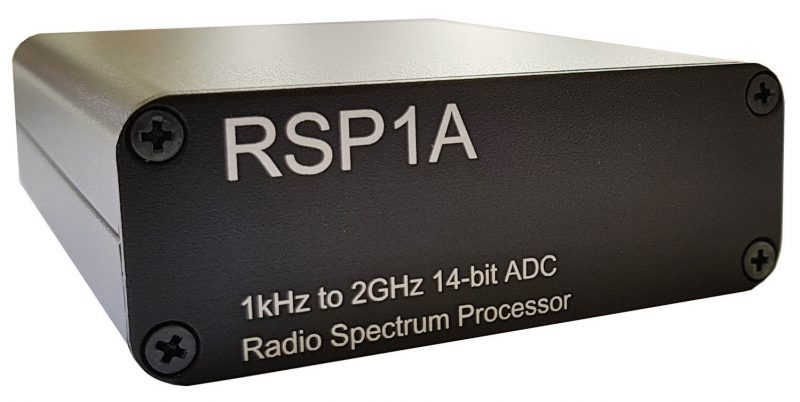
Windows Spectrum Analyser software now supports the RSPdx

(Source: SDRplay)

Steve Andrew has released version 1.1 of his Windows Spectrum Analyser software which has been upgraded to support the RSPdx.

This popular software turns the RSP into a wonderful low cost lab tool with fast scan, sample and hold, and most of the key features you’d expect in a piece of lab gear costing 10 times the price.

For more information, go to: https://www.sdrplay.com/spectrum-analyser/

Have you ever regretted saying goodbye to a radio?

A lot of radios come through SWLing Post HQ each year.

Over the years, I’d like to think that I’ve become immune to the effects of giving away, trading, or selling radios that have been in the shack for a while. But let’s face it: I’m just fooling myself!

I sold both my Hammarlund SP-600 and Hallicrafters SX-99 at the Shelby Hamfest.

As I’ve said before, I find it much easier to part with modern portables, transceivers, and SDRs than I do with vintage gear.  With modern gear, I feel like there’s always something new around the corner, thus it’s easy to justify. Plus, I take in so many units on loan for evaluation and review, I see them come in the door and go back out. Occasionally, I like one so much I buy it, but there’s not a lot of attachment. I’m not a “fan boy” of any modern company either, so I don’t intentionally collect rigs.

Ah, but the vints…

I’m a nostalgic guy, so vintage gear comes with more emotional attachment.

Over the years, I’ve had to part with a number of boat anchors because, frankly, I always need a clear space in the shack for evaluating gear and my shack is rather compact. (For example, at one point last year, I had three transceivers here for evaluation all at the same time.)

My Hammarlund SP-600was a very tough one to let go of. I justified it by selling the big girl to my good friend Charlie (W4MEC) who had actually helped me replace some of her capacitors at one point. The SP-600 was simply too deep and too large to fit even on my over-sized radio shelves–especially if mounted in a chassis. Charlie has a much better setup for rack-mounted “heavy metal.” She’s got a good home now.

The Scott Marine Radio Model SLRM

There are two vintage sets I’ll never sell: my Signal Corps BC-348-Q and my Scott Marine SLRM (photo above). How much do I love these radios? My wife has strict instructions to “put’em in the casket with me!”

There are only two portable radios I regret selling: my original RadioShack DX-440 and my Grundig YB400.

I did snag this DX-440 last year at the Huntsville Hamfest

No doubt, I miss these radios because they both served me for so many years. We traveled many countries together both on the ground and through the airwaves.

Parting is such sweet sorrow…

A number of readers have confessed that they regretted selling their RF-2200.

Have you ever regretted parting with a radio? Please comment with the model and why it was special to you. I’d also love to hear about the models you currently own and would never consider selling or giving away.

New Frequency Test for FTIOM and UBMP; Schedules May 24-30

From the Isle of Music, May 24-30:
This week, we add a new test transmission on 7440 kHz.   The primary objective is to provide better service to North Africa,  the Middle East, South Asia and SE Asia, but it should be listenable beyond these zones. 
This week, we spend a delightful hour with Zule Guerra and her music, during which she shares some of her new jazz album El Viaje with us.
The broadcasts take place:
1. For Eastern Europe but audible well beyond the target area in most of the Eastern Hemisphere (including parts of East Asia and Oceania) with 100Kw, Sunday 1500-1600 UTC on SpaceLine, 9400 KHz, from Sofia, Bulgaria (1800-1900 MSK)
If you don’t have a shortwave radio or are out of range, you can listen live to an uplink from a listening radio in the Netherlands during the broadcast at
http://websdr.ewi.utwente.nl:8901/?tune=9400am
2. For the Americas and parts of Europe, Tuesday 0000-0100 on WBCQ, 7490 KHz from Monticello, ME, USA (Monday 8-9PM EST in the US).
If you don’t have a shortwave or are out of range, you can listen to a live stream from the WBCQ website here (choose 7490): http://www.wbcq.com/?page_id=7
3 & 4. For Europe and sometimes beyond, Tuesday 1900-2000 UTC and Saturday 1200-1300 UTC on Channel 292, 6070 KHz from Rohrbach, Germany.
If you don’t have a shortwave radio or are out of range, you can listen live to uplinks from various websdrs in Europe.
5. TEST: For NE Africa, the Middle East and South Asia but probably audible beyond these zones, 1600-1700 UTC Friday, May 29 on Channel 292, 7440 kHz from Rohrbach, Germany.
Visit our Facebook page at https://www.facebook.com/fromtheisleofmusic
Our Patreon page if you would like to support the program is https://www.patreon.com/tilford

Uncle Bill’s Melting Pot, May 24,26 and 29:
This week, we add a new test transmission on 7440 kHz.   The primary objective is to provide better service to North Africa,  the Middle East, South Asia and SE Asia, but it should be listenable beyond these zones.
Episode 166 features music from Puerto Rico.
The transmissions take place:
1.Sundays 2200-2300 (6:00PM -7:00PM Eastern US) on WBCQ The Planet 7490 KHz from the US to the Americas and parts of Europe
If you don’t have a shortwave or are out of range, you can listen to a live stream from the WBCQ website here (choose 7490): http://www.wbcq.com/?page_id=7
2. Tuesdays 2000-2100 UTC on Channel 292, 6070 KHz from Rohrbach, Germany for Europe.
If you don’t have a shortwave radio or are out of range, you can listen live to an uplink from different web SDRs in Europe
including a live uplink from a listening radio in the Netherlands at http://websdr.ewi.utwente.nl:8901/?tune=6070am
3. TEST: For NE Africa, the Middle East and South Asia but probably audible beyond these zones, 1700-1800 UTC Friday, May 29 on Channel 292, 7440 kHz from Rohrbach, Germany.
Visit our Facebook Page at https://www.facebook.com/UncleBillsMeltingPot
Our Patreon page if you would like to support the program is https://www.patreon.com/tilford

Radio Waves: More Solar Minimum, Cold War Moscow, C-19 Ham Radio Event, and a WWII Code-Breaker is SK

Radio Waves:  Stories Making Waves in the World of Radio

Because I keep my ear to the waves, as well as receive many tips from others who do the same, I find myself privy to radio-related stories that might interest SWLing Post readers.  To that end: Welcome to the SWLing Post’s Radio Waves, a collection of links to interesting stories making waves in the world of radio. Enjoy!

Many thanks to SWLing Post contributors Bill Patalon, Dirk Rijmenants, Rodrigo Tarikian, and David (G4EDR) for the following tips:


Deep ‘Solar Minimum’ is feared (Southgate ARC via Forbes)

Forbes magazine reports a deep ‘Solar Minimum’ is feared as 2020 sees record-setting 100-day slump

Jamie Carter writes:

While we on Earth suffer from coronavirus, our star—the Sun—is having a lockdown all of its own. Spaceweather.com reports that already there have been 100 days in 2020 when our Sun has displayed zero sunspots.

That makes 2020 the second consecutive year of a record-setting low number of sunspots

So are we in an eternal sunshine of the spotless kind?

Read the full article at
https://www.forbes.com/sites/jamiecartereurope/2020/05/12/the-sun-is-asleep-deep-solar-minimum-feared-as-2020-sees-record-setting-100-day-slump/

Radio Moscow and the Cold War (SIGINT CHATTER)

Geopolitics and international conflicts during the Cold War made it important for the United states and the Soviet Union to inform people or influence their political views, and this in many countries around the world. But how did they reach their audience?

Today, we can hardly imagine a world without Internet, cable and satellites that brings all the news and information from across the globe in your lap. Yet, during most of the Cold War, people only had newspapers, local TV, FM and AM radio. The only solution to spread ideas was shortwave radio, as these waves travel around the globe and can listened to by everyone with a shortwave radio.

Both East and West had, and still have, shortwave radio stations with a world service. The best known were Voice of America, Radio Free Europe and Radio Liberty on one side, and Radio Moscow, Radio Beijing and Radio Havana Cuba on the other side. Everyone had their own truth and accused the other side of expansion drift, disinformation and inciting across the world.

One truly iconic station was Radio Moscow World Service. Their foreign service broadcasting started in 1929 with transmitters in Moscow and Leningrad, and later also relay stations in Vladivostok and Magadan. Radio Moscow reached whole Eurasia, Africa and North and South America. During the Cold War, their broadcasts reached across the world with transmitters in the Soviet Union, Eastern Europe and Cuba, and they broadcast in more than 70 languages.[]

COVID-19 Radio Communication Event (SRAL)

COVID-19 RADIO COMMUNICATION EVENT
DATE: June 06-07, 2020.
STARTS 10.00 UTC SATURDAY – ENDS 09.59 UTC SUNDAY

For amateur radio operators worldwide, social distancing is not an issue. Our ham radio network of radio-wave signals flies high and wide, across all borders near and far. Amateur radio operators are well-known for their communication on skills during the happy days, but also during times of crisis.Even if ham radio operators are now confined to their homes, they are encouraged to communicate, to enhance their friendships, and to keep their minds and skills sharp for global messaging whenever needed.

Click here to download the full announcement with event details (PDF).

Tributes as World War Two code breaker Ann Mitchell dies aged 97 (BBC News)

Tributes have been paid to Ann Mitchell – one of the last of a World War Two code-breaking team at Bletchley Park – who has died aged 97.

Mrs Mitchell, who deciphered German codes at the British code-breaking centre from 1943, died at an Edinburgh care home on Monday.

Her family and friends said she had been declining in health for some years and had “a life well lived”.

The Scotsman reported she had tested positive for Covid-19 recently.

Her son Andy Mitchell, 61, told BBC Scotland: “She was a loving mother and it’s very sad but she was declining in old age with memory loss and physical frailties.

“I’m pleased she has been given the recognition for a life well lived.”[]


Do you enjoy the SWLing Post?

Please consider supporting us via Patreon or our Coffee Fund!

Your support makes articles like this one possible. Thank you!

Save the Date: Rebroadcast of WBCQ’s Big Broadcast of 2020

Rebroadcast of WBCQ’s Big Broadcast of 2020 At Later Hour + Extra Frequency

Due to popular demand, WBCQ’s Big Broadcast of 2020 will be rebroadcast on Thursday, June 4 from 10pm to 11pm EDT (0200-0300 UTC Friday, June 5) on three frequencies: 5130, 6160 and 7490 kHz. This later hour should make the program more accessible to those listeners down south and out west who were unable to bring in 5130 and 7490 during daylight hours the first time, and as a special bonus, we are adding 6160 kHz as a sort of test drive for music programs, so even if you caught the broadcast the first time around, please try us out on 6160 this time and let us know how it did in your area.
Whether you had bad propagation last time, were away from the radio searching for toilet paper or just want a second helping, come shake off those COVID-19 blues with an hour of great music from Area 51, Marion’s Attic, Uncle Bill’s Melting Pot, From the Isle of Music, beHAVior Night and the Lost Discs Radio Show.
The hosts thank Allan and Angela Weiner for donating the airtime and The Overcomer Ministry for granting us TOM’s regularly-scheduled time slot for this event.