Shortwave listening and everything radio including reviews, broadcasting, ham radio, field operation, DXing, maker kits, travel, emergency gear, events, and more
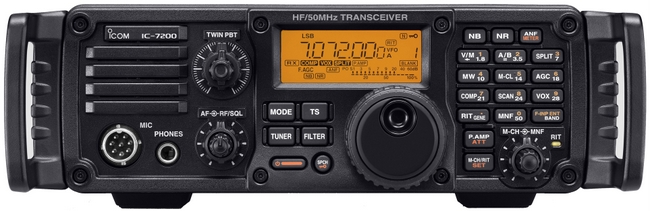
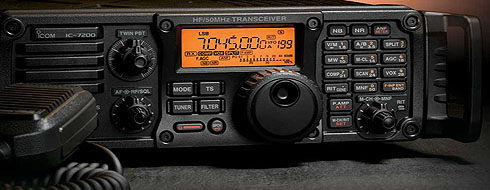
Icom IC-7200 “Last Call” : It appears that the Icom IC-7200 DSP HF Transceiver is discontinued (or near of being discontinued) and dealers are now selling the last production samples. Information as via the Gigaparts (US Icom dealer) web site. If you always wanted a brand new Icom IC-7200 model , better grab it while you still can. Yes…here we go again, but the model is on the way out for sure this time. […]
Though I don’t own an IC-7200, I’m a little sad to see that it’ll no longer be produced. I’ve used one on the air before and thought it packed a lot of performance for the price. I think it’s an ideal ham radio club transceiver as it’s easy to use and has virtually no learning curve (for those who are familiar with transceivers)–a very good choice as a field day rig.
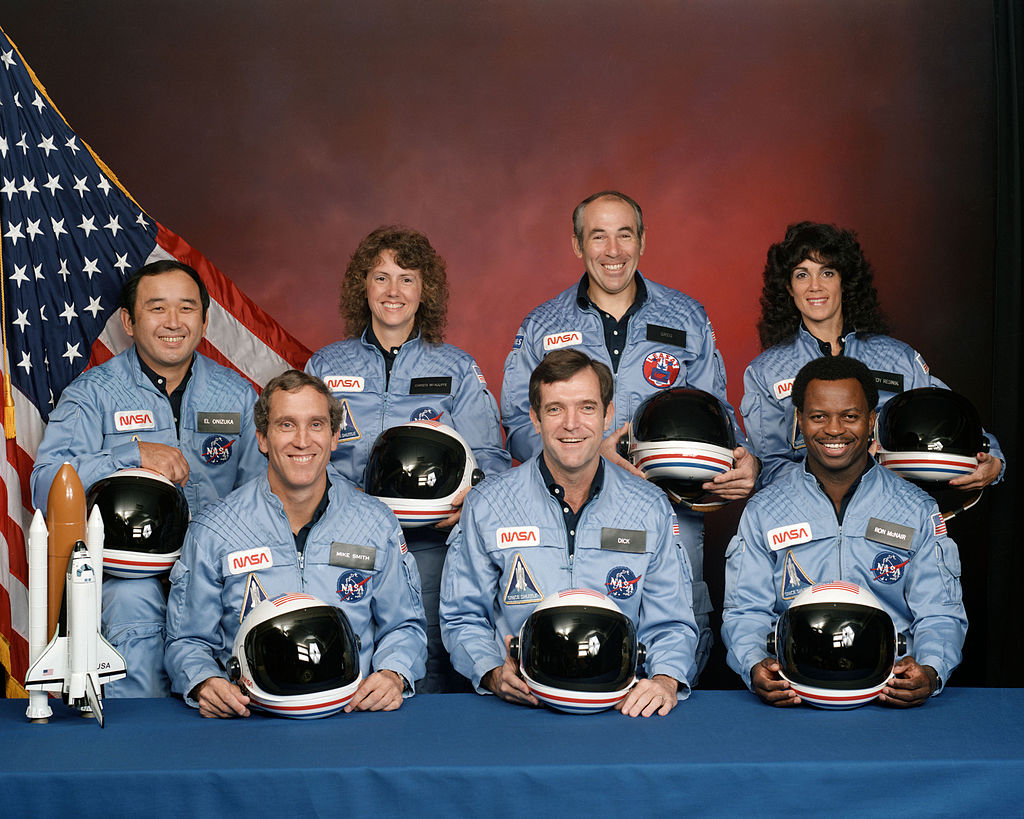
STS-51-L crew: (front row) Michael J. Smith, Dick Scobee, Ronald McNair; (back row) Ellison Onizuka, Christa McAuliffe, Gregory Jarvis, Judith Resnik.
Many thanks to SRAA contributor, Tom Laskowski, who submits the following notes with his timely off-air recording of the BBC World Service from January 28, 1986:
Thirty years ago today the US Space program came crashing down with the explosion of the Space Shuttle Challenger.
I was a student at Purdue University at the time, living in a dormitory.
I decided to make some recordings knowing this would be a historic event.
This is a recording I made of the BBC on the evening of Jan 28 (0200 UTC on January 29). The frequency was most likely 5975 kHz or 9590 kHz. The dorm environment didn’t make a great place for SWL reception and the recording is noisy but still of decent quality.
Recorded using a Sony ICF-2001 with a wire attached to a window screen for an antenna.
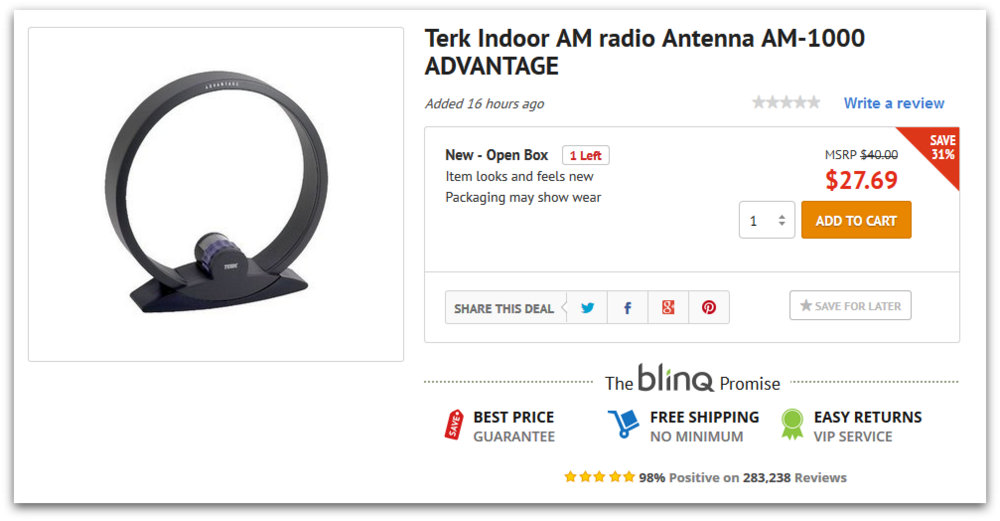
I just noticed that Blinq.com has a “New – Open Box” Terk AM-1000 Advantage indoor mediumwave loop antenna, on sale for $27.69. This is a great price for this quality AM loop which typically sells for about $50.
The antenna (much like the Tecsun/Grundig AN-200) inductively couples to your AM radio. In other words, simply place your radio next to the antenna, tune to your desired frequency, then tune and turn the loop antenna until you maximize your received signal. Very simple to use.
Many thanks to SWLing Post reader, Paul Walker, who writes:
Remember the “transmission tests” from Babcock and Wooferton last summer? I finally got an email QSL…
My original email is first along with an audio sample of what I heard….
Original message sent on Tuesday, August 11, 2015:
I wanted to send you a reception report after hearing your broadcast.
“This Is A Test Transmission” on 15745khz heard at 1655UTC/11:55am Central today (08/10/2015) in Beaumont, Texas (far southeast corner of the state). This is 4 1/2 minutes, recorded until abrupt sign off in mid song.
I used a Sangean ATS909X with a PK’s Loop 6-18mhz tuneable Shortwave loop. The loop can be tuned to a certain frequency with a dial and can be rotated.
Tuning the loop to your exact frequency and orienting it in your general direction resulted in a pretty decent signal with good audio. The signal was about a 5 out of 10 with some fading, but generally pretty steady.
Do you offer QSL’s? I would very much appreciate a QSL card or letter via regular mail if that is possible.
Warmest Regards, Paul Walker
Fast forward to yesterday (Wednesday, January 27, 2016):
Thank you for your report and I confirm the details are correct. These transmissions were to fault-find on a 300 kW sender at the UK HF transmitter station at Woofferton.
The engineers needed a long test time as the fault was of an intermittent nature.
Babcock, Woofferton is the only remaining UK HF sender broadcast station and also is the only one with this transmission test audio and email address.
The audio is contained in a file playout system and incorporates non-copyright music and voice announcements from one of the employees at the transmitter site.
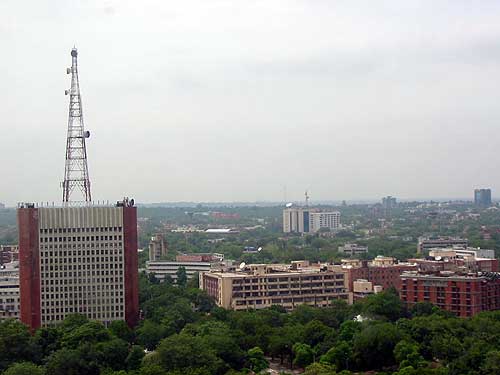
All India Radio (AIR) Headquarters in Dehli, India. Photo courtesy of Wikipedia.
Many thanks to SWLing Post contributor, Dan Srebnick, who writes:
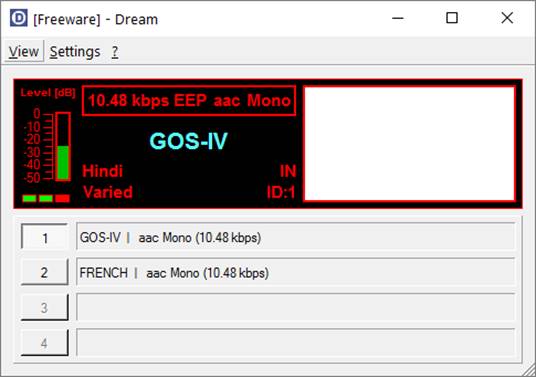
While DRM (Digital Radio Mondiale) has long been pronounced DOA (dead on arrival), All India Radio seems to be taking it pretty seriously. Here’s a screenshot of not one, but two simultaneous feeds going out over the same 10 kHz wide 40 meter frequency (7,550 kHz) at 2027 UTC today. The signal on my Perseus was just a tad under S9+5db using my ham band Alpha Delta DX-CC antenna.
So what’s the twist, aside from the 2 feeds on 1 frequency? Even at +5 over S9, the feed was only strong enough to occasionally flutter in with some decoded audio. Mostly, it was silence.
[I had] about a 98% successful decode by 2051 UTC when the signal rose to S9+10 db. I could switch between streams by clicking channel button within Dream!
Dan wrote the message above yesterday, I asked him if he could record AIR today and he kindly sent the following:
AIR DRM recorded today with announcements @ 1930 UTC. Some dropouts as a
great example of the dropout/echo effect heard on DRM when signals are quite
strong enough. This decode was done at S9 signal strength.
Dan actually calls the DRM dropouts, the “Max Headroom Effect.” That is the best description I’ve ever heard, Dan. Thanks for sharing your notes and recording!
I recently wrote a post re: Why Shortwave Radio is Still a Superior Educational Technology. I am both an educator and radio enthusiast. One my roles as an educator involves overseeing the Brock International Prize in Education, an award that goes to innovative educational ideas and practices that make a difference. For some time, I have been looking for a juror for the Prize who understands radio and education and can recommend a nominee who has done a lot with radio regarding some aspect of education. I am in the process of looking for jurors for the 2016 deliberations. Below are a couple of FAQs:
What is the Brock International Prize in Education? The Brock Prize is about big ideas that make a difference. It is presented annually to a person (or team) who has an educational idea, concept or practice that fundamentally impacts society. The Prize is comprised of a velum certificate, $40,000, and a sculpted bust of Sequoyah, which are presented to the laureate in the spring of each year. For more information about the Prize, past jurors and laureates, please see our Brock International Prize in Education website. You may also contact me ([email protected]).
What are the jurors’ responsibilities? Jurors play an vital role in the process, and your participation and perspective on the jury would be extremely valuable. Below are some of their general responsibilities:
By September 1, 2016 develop a 20 to 50 page (maximum) portfolio of your nominee and forward it to Cindy. Usually, the portfolio includes the nominees resume’, any award information, articles, speeches, etc. We can send you examples of what this has looked like in the past. (Note: you do not have to write this, per se, but rather, collect materials that are already in existence.)
On an afternoon of Thursday October 13, 2016, all jurors will come to Tulsa for an Acquaintance Dinner with John Brock and me.
On the following day (Friday October 14), we will hold the deliberations. Each juror will have 30 minutes to present his/her nominee. Some jurors have presented short video clips, others have used PowerPoint, while others have just talked about their nominee’s accomplishments. After deliberations, the Jury votes.
On Friday evening following the deliberations, we hold the Announcement Dinner to declare the laureate. We will fly you back home on Saturday.
Jurors will receive a $500 stipend, and of course, all expenses will be paid. If you or someone you know might be interested in being a juror for the prize, please don’t hesitate to contact me.