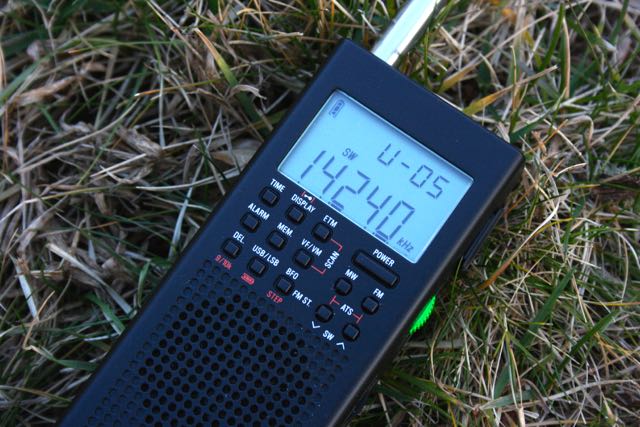
Many thanks to SWLing Post contributor, Steven Crawford, who sent the following message to me (several weeks ago) and has kindly allowed me to share it here. Steven writes:
I hope this finds you and yours well. I just wanted to take a few moments and express my sincere thanks to you for your posts of 12/20/2014 and 1/6/2016, and for sharing Larry Thompson’s post of 2/28/2016, and Ron’s post of 1/16/2016. If you are in regular contact with the other individuals please feel free to pass along my thanks as each of you and the respective post convinced me to purchase a CountyComm GP5/SSB and Ebay seller playloudfm’s high-gain ferrite bar antenna. I am so glad I did, so a hearty Thank You to each of you.
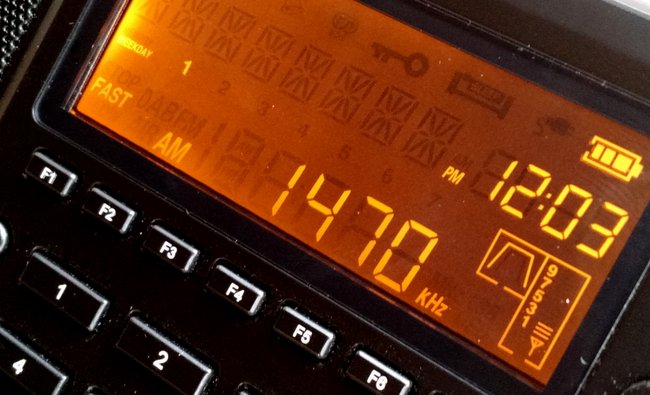
The afternoon of March 19th local was the first chance I had to use my GP-5/SSB. After popping in three fresh AA’s on AM using the internal ferrite bar antenna Beaumont, Texas’ own powerhouse 5,000 watt KLVI 560 was there as was 1,000 watt Orange’s KOGT 1600, 23 miles away and my AM daytime benchmark 50 kW KTRH 740 Houston 70 or so miles away on the back side of their pattern. KTRH surprisingly can be a little difficult during the day due to noise. The surprise was 50 kW WWL New Orleans 240 miles away was intelligible above the background noise. Extending the whip a quickie SW test showed WWV Fort Collins time signal was present at 15 MHz.
On the AM side the real money lay after dark once the sun had set in Beaumont and San Antonio. Using only the internal ferrite bar antenna all of the aforementioned AM stations were present. Continuing the internal antenna’s test 50 kW WBAP 820 Dallas 244 miles away and 50kW WOAI 1200 San Antonio 266 miles away were present. I started grinning when 50 kW WLAC 1510 Nashville 598 miles away and 50kW KMOX 1120 St. Louis 632 miles away were just intelligible above the background noise. Keep in mind these stations were received using only the internal antenna.
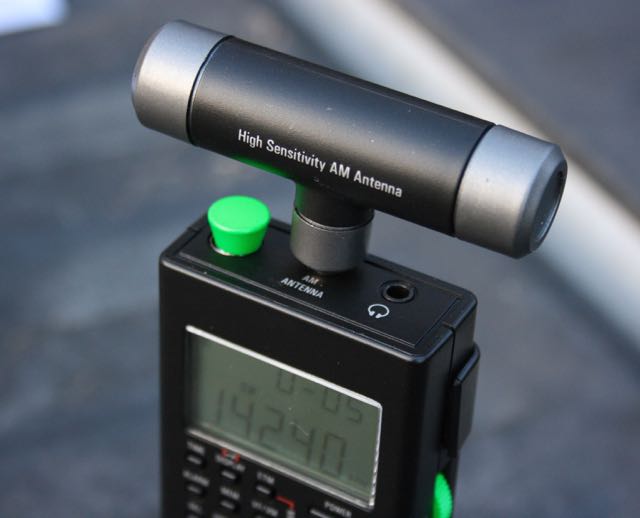
I popped the CountyComm included factory external ferrite bar on and used it 9 -10 PM Saturday local, 0200 – 0300 March 20 UTC. Using the external antenna rotated for best reception WLAC and KMOX improved to the point they were easily listenable. 50 kW WSB 750 Atlanta 625 miles away was listenable above the noise and most surprising 50kW WBBM 780 Chicago 892 miles away(!!!) was just intelligible above the background noise. Another quickie SW test was performed at 10 PM local, 0300 March 20 Sunday UTC by extending the built in whip and the WWV Fort Collins time signals were present at 5 and 10 MHz with 10MHz being particularly well received.
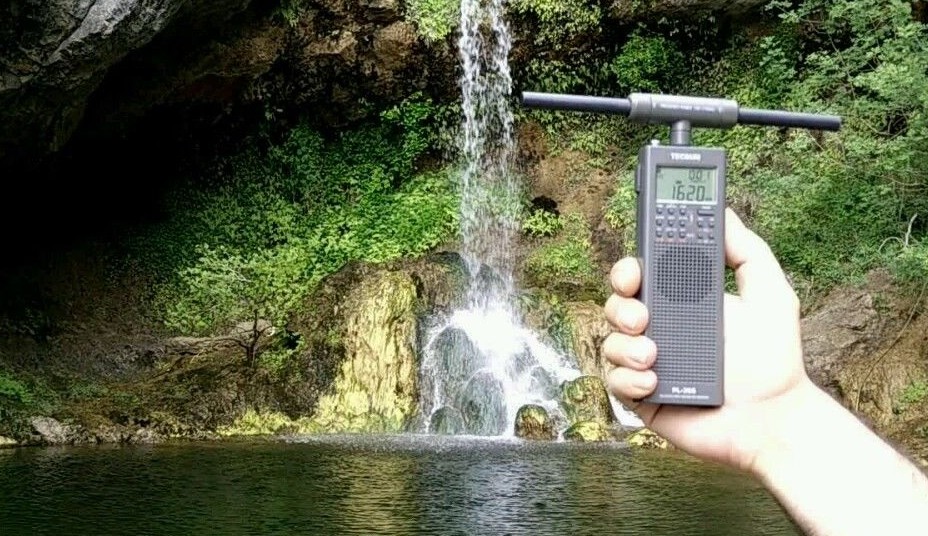
Photo source: eBay
A real treat lay in store after receiving Ebay seller playloudfm’s aftermarket high-gain ferrite bar antenna, the subject of your 1/6/2016 and Ron’s 1/16/2016 post, yesterday. I am not experienced enough to judge what the space weather or propagation conditions were like from 0300 to 0400 March 27th UTC but I was extremely surprised and pleased with the reception results the new antenna afforded.
As I sat relaxing in my easy chair before bed I decided to try the combo out using the included earphones so as to not wake my wife. With the lights off and my iPad open to www.oldradio.com/archives/stations/ccs.htm to help identify clear channel stations I took the handheld combo for a spin. All of the stations found with the factory supplied external ferrite bar antenna were present. There was just so much more signal present using the aftermarket antenna each became easily listenable. For WOAI, WWL, WLAC and KMOX the effect was as if I was located within their local night coverage area. 50 kW WHAS Louisville Kentucky 740 miles away was newly found present. Chicago’s WBBM was there as before and I was surprised to find 50 kW WGN 720 Chicago as well. The reception quality was such that one could enjoy listening to a Cub’s game or breaking local news story should one be so inclined on WBBM or WGN. The listening experience was similar for newly found 50 kW XEROK 800 Ciudad Juarez 738 miles away.
The most surprising and gratifying, to me anyway, find of the night using playloudfm’s antenna was receiving 5,000 watt (nights!) KCMO 710 Kansas City Missouri 624 miles away. The ability to rotate the antenna to take advantage of it’s directional and nulling ability really aided in this reception. It really is a great benefit to be able to rotate the GP-5/SSB’s external AM antennas for peak signal strength while nulling interfering signals and noise. Indeed KCMO was missing in one antenna orientation but rotating the antenna 90 degrees and the station popped in. I really should have jotted signal strength to noise ratios down but I was just enjoying tuning through the spectrum too much. I have not fully tested SSB Exalted Carrier tuning on the GP5/SSB of difficult stations but have tried it 3 or 4 times and it does appear to work as does tuning 1 kHZ either side of the nominal frequency. The later technique did help clean up some signals by further reducing background noise without greatly affecting listenability.
As best I can tell I ordered and received either the last or next to last of playloudfm’s current batch of high-gain ferrite bar antennas as the Ebay add showed two available when I ordered and the ad was almost immediately replaced with an “accepting pre-orders” ad. Currently there are no ads by seller playloudfm.[Note: it appears more inventory has been added to eBay.] My transaction and shipping was quick and smooth. The bulk of the two week wait occurred after the package was received at the Athens airport where tracking stopped. It should be noted by buyers should more antennas become available the tracking number supplied does not work on the USPS tracking service but it will track the package to Athens through Greece’s Hellenic Post tracking service at http://www.elta.gr/en-us/personal/tracktrace.aspx
Note: all distances listed above are “as the crow flies”, straight line city center to city center and are not necessarily correct for the transmission tower location.
This little radio is fast becoming a hand holdable favorite with easy to learn button placement for use in the dark. I am all ready beginning to prefer it to my Sony SW7600GR / AN200 loop combo for MW broadcast AM reception but I really must do more work with SW before calling the CountyComm my favorite of the two.
Steven followed up a week or so later with this addendum to his review:
I finally got the opportunity to test the FM performance of the radio using only the extended whip on the afternoon of April 1st, April 1st 19:30 – 21:00 UTC. Using www.radio-locator.com and my zip code I found 51 FM stations listed as local, distant and possible fringe reception. I was very surprised and pleased when I was able to log all of the most distant fringe stations, KUHF, KKBQ, KTBZ, KKHH, KHMX, KBXX, KODA, KILT, KLOL, KMJQ, KRBE, KOVE, and KGLK, with ERP’s listed as 90 to 100 kW and distances in the given in the 80 to 90 mile range. In short I was able to log all 51 listed stations. The FM broadcast band is crowded indeed with this little rocket radio. It should be noted my little corner of Southeast Texas is dead flat with nothing between me and these stations broadcast towers but Houston skyscrapers, the typical urban / suburban sprawl, timber and marsh. Ground elevations range from 16 ft to 80 ft above sea level between me and many of the broadcast towers.
[…]My Sony SW7600GR / AN200 loop / Sony AN-LP1 loop combination sits in it’s go bag rapidly falling into disfavor, replaced by the easily used in the dark one handed CountyComm GP-5/SSB. Again thank you for your kind response and thanks again to all who motivated me to purchase this rig.
Steven, thank you so much for taking the time to share your experience with the GP5-SSB and the high-gain ferrite bar antenna.
I also have the high-gain ferrite bar antenna and have been meaning to post videos showing how it performs compared with the supplied GP5 antenna. I must say, it does do a pretty amazing job. I’ll get some videos posted in the coming weeks!