
Tag Archives: Radio Waves

Radio Waves: ABC Wage Freeze, A Titanic Radio, FCC “Tweaks” LPFM Rules, and Digitizing a DX-160 Display

Radio Waves:  Stories Making Waves in the World of Radio

Because I keep my ear to the waves, as well as receive many tips from others who do the same, I find myself privy to radio-related stories that might interest SWLing Post readers.  To that end: Welcome to the SWLing Post’s Radio Waves, a collection of links to interesting stories making waves in the world of radio. Enjoy!

Many thanks to SWLing Post contributors Michael Bird, Dave Zantow, David Korchin, and Alokesh Gupta for the following tips:


ABC must freeze wages, government warns (The Guardian)

The Morrison government has put the national broadcaster on notice that it expects the ABC to embark on a six-month wage freeze to bring it in line with other taxpayer-funded agencies during the Covid-19 crisis.

The warning follows the government’s decision in early April to defer general wage increases for commonwealth public servants for six months. The public service commissioner followed up that directive by writing to all non-public service agencies – including the ABC – informing them the government expected them to adopt the same practice.

With no clear response from the ABC to the 9 April missive, Guardian Australia understands the communications minister Paul Fletcher wrote to the national broadcaster this week flagging his expectation that the organisation would defer a 2% increase for all employees scheduled to take effect in October under the ABC’s enterprise agreement.[…]

Radio used by the Titanic to call for help can be salvaged, judge rules (CNN)

A federal judge has ruled that RMS Titanic Inc. can salvage the radio used to call for help by the fated ocean liner after it struck an iceberg in 1912.

To get to the radio, divers would need to remove a part of the ship’s deckhand to reach the room known as the Marconi Suite, which houses the device.

The ruling modified an order issued on July 28, 2000, that said that RMS Titanic Inc. could not cut into the wreckage or detach any part of it.

Virginia’s eastern district court amended that order “for a unique opportunity to recover an artifact that will contribute to the legacy left by the indelible loss of the Titanic, those who survived and those who gave their lives in the sinking,” Judge Rebecca Beach Smith wrote.

Experts in the case testified to the “significant deterioration” in areas above and around the Marconi room, according to the document, and photos showed the “increasing breakdown” in the deck above the suite.

The suite, made of steel, consisted of three areas: sleeping accommodations, an operator’s room and the silent room that housed the radio. Each area was separated by wood walls that officials believe have dissolved, according to court documents.

The Marconi device and the artifacts associated with it face “significant threat of permanent loss,” the judge said in her approval of the expedition.[]

FCC Tweaks LPFM Technical Rules (Radio World)

The FCC in April modified the technical rules covering low-power FM stations. It expanded the permissible use of directional antennas; permitted waivers of protections of television Channel 6 by a specific group of reserved channel stations; expanded the definition of minor change applications for LPFM stations; and allowed LPFM stations to own boosters. Read more about the changes here.

Michelle Bradley, founder of REC Networks, is an engineer and longtime LPFM advocate.

Radio World: What’s your overall assessment of the outcome and the scope of its impact in the LPFM community?

Michelle Bradley: While the FCC did not address three major issues that are impacting LPFM stations right now —the ability to address building penetration issues, the ability to reach “local” listeners in rural areas and the disparity in how LPFM stations protect FM translators vs. how translators protect LPFMs — the changes will benefit current LPFM stations by giving them more flexibility in moving locations, reduce the need for waivers and improve LPFM service in the southern border region. It will also open some additional opportunities for new LPFM stations in the next filing window.[]

RadioShack Shortwave Goes Digital (Hackaday)

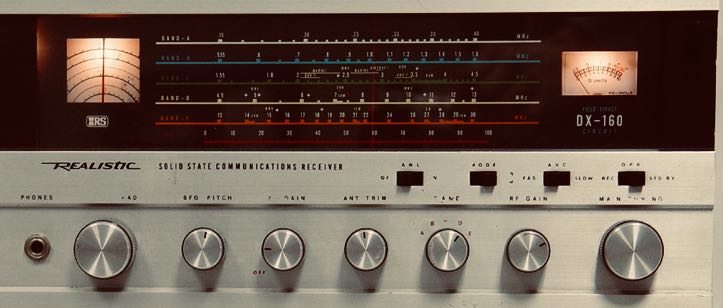
If you spent the 1970s obsessively browsing through the Radio Shack catalog, you probably remember the DX-160 shortwave receiver. You might have even had one. The radio looked suspiciously like the less expensive Eico of the same era, but it had that amazing-looking bandspread dial, instead of the Eico’s uncalibrated single turn knob number 1 to 10. Finding an exact frequency was an artful process of using both knobs, but [Frank] decided to refit his with a digital frequency display.

Even if you don’t have a DX-160, the techniques [Frank]  uses are pretty applicable to old receivers like this. In this case, the radio is a single conversion superhet with a variable frequency oscillator (VFO), so you need only read that frequency and then add or subtract the IF before display. If you can find a place to tap the VFO without perturbing it too much, you should be able to pull the same stunt.

In this receiver’s heyday, this would have been a formidable project. Today, a cheap digital display will do fine.[]


Do you enjoy the SWLing Post?

Please consider supporting us via Patreon or our Coffee Fund!

Your support makes articles like this one possible. Thank you!

Radio Waves: More Solar Minimum, Cold War Moscow, C-19 Ham Radio Event, and a WWII Code-Breaker is SK

Radio Waves:  Stories Making Waves in the World of Radio

Because I keep my ear to the waves, as well as receive many tips from others who do the same, I find myself privy to radio-related stories that might interest SWLing Post readers.  To that end: Welcome to the SWLing Post’s Radio Waves, a collection of links to interesting stories making waves in the world of radio. Enjoy!

Many thanks to SWLing Post contributors Bill Patalon, Dirk Rijmenants, Rodrigo Tarikian, and David (G4EDR) for the following tips:


Deep ‘Solar Minimum’ is feared (Southgate ARC via Forbes)

Forbes magazine reports a deep ‘Solar Minimum’ is feared as 2020 sees record-setting 100-day slump

Jamie Carter writes:

While we on Earth suffer from coronavirus, our star—the Sun—is having a lockdown all of its own. Spaceweather.com reports that already there have been 100 days in 2020 when our Sun has displayed zero sunspots.

That makes 2020 the second consecutive year of a record-setting low number of sunspots

So are we in an eternal sunshine of the spotless kind?

Read the full article at
https://www.forbes.com/sites/jamiecartereurope/2020/05/12/the-sun-is-asleep-deep-solar-minimum-feared-as-2020-sees-record-setting-100-day-slump/

Radio Moscow and the Cold War (SIGINT CHATTER)

Geopolitics and international conflicts during the Cold War made it important for the United states and the Soviet Union to inform people or influence their political views, and this in many countries around the world. But how did they reach their audience?

Today, we can hardly imagine a world without Internet, cable and satellites that brings all the news and information from across the globe in your lap. Yet, during most of the Cold War, people only had newspapers, local TV, FM and AM radio. The only solution to spread ideas was shortwave radio, as these waves travel around the globe and can listened to by everyone with a shortwave radio.

Both East and West had, and still have, shortwave radio stations with a world service. The best known were Voice of America, Radio Free Europe and Radio Liberty on one side, and Radio Moscow, Radio Beijing and Radio Havana Cuba on the other side. Everyone had their own truth and accused the other side of expansion drift, disinformation and inciting across the world.

One truly iconic station was Radio Moscow World Service. Their foreign service broadcasting started in 1929 with transmitters in Moscow and Leningrad, and later also relay stations in Vladivostok and Magadan. Radio Moscow reached whole Eurasia, Africa and North and South America. During the Cold War, their broadcasts reached across the world with transmitters in the Soviet Union, Eastern Europe and Cuba, and they broadcast in more than 70 languages.[]

COVID-19 Radio Communication Event (SRAL)

COVID-19 RADIO COMMUNICATION EVENT
DATE: June 06-07, 2020.
STARTS 10.00 UTC SATURDAY – ENDS 09.59 UTC SUNDAY

For amateur radio operators worldwide, social distancing is not an issue. Our ham radio network of radio-wave signals flies high and wide, across all borders near and far. Amateur radio operators are well-known for their communication on skills during the happy days, but also during times of crisis.Even if ham radio operators are now confined to their homes, they are encouraged to communicate, to enhance their friendships, and to keep their minds and skills sharp for global messaging whenever needed.

Click here to download the full announcement with event details (PDF).

Tributes as World War Two code breaker Ann Mitchell dies aged 97 (BBC News)

Tributes have been paid to Ann Mitchell – one of the last of a World War Two code-breaking team at Bletchley Park – who has died aged 97.

Mrs Mitchell, who deciphered German codes at the British code-breaking centre from 1943, died at an Edinburgh care home on Monday.

Her family and friends said she had been declining in health for some years and had “a life well lived”.

The Scotsman reported she had tested positive for Covid-19 recently.

Her son Andy Mitchell, 61, told BBC Scotland: “She was a loving mother and it’s very sad but she was declining in old age with memory loss and physical frailties.

“I’m pleased she has been given the recognition for a life well lived.”[]


Do you enjoy the SWLing Post?

Please consider supporting us via Patreon or our Coffee Fund!

Your support makes articles like this one possible. Thank you!

Radio Waves: AM/FM in Teslas, Odd Crosleys, CW Club Membership on the Rise, and 2020 Contest University is Free

Radio Waves:  Stories Making Waves in the World of Radio

Because I keep my ear to the waves, as well as receive many tips from others who do the same, I find myself privy to radio-related stories that might interest SWLing Post readers.  To that end: Welcome to the SWLing Post’s Radio Waves, a collection of links to interesting stories making waves in the world of radio. Enjoy!

Many thanks to SWLing Post contributors Kim Elliott, Dave Anderson, and Paul Evans for the following tips:


“Infotainment Systems” In Cars Portend Safety, Privacy, And Competition Issues (Forbes)

Almost all new cars include so-called “infotainment systems,” which provide navigation and various sources for music and news. Most companies have begun to outsource these systems to the Silicon Valley mainstays such as Apple, Amazon, and Google. The electric car manufacturer Tesla, however, has developed its own infotainment system that is far more integrated with the car itself.

Tesla recently announced an “upgrade,” which would allow users to watch Netflix, Hulu, and YouTube (when the car is parked). This innovation has a flip side: it removes AM / FM radio capabilities. Tesla and other electric car manufacturers claim they have removed AM radio in many of their models due to concerns over interference. But Tesla’s announcement is peculiar because electric engines do not interfere with FM radio reception.

Former FEMA director Brock Long worries that Tesla’s decision could prevent the government from transmitting crucial information in emergencies. Long’s concerns are valid, particularly in a crisis like the ongoing pandemic, when broad communication with the public is necessary to protect national security. AM/FM radio reach places that television and broadband do not, and that is why the government has invested tens of millions of dollars to ensure radio stations can remain on the air during periods of widespread threat to the public – including the current one. As the coronavirus reminds us, our nation still has public safety needs that no amount of technical wizardry can obviate.

The public safety concerns are real, but Tesla decision to remove AM/FM radio also raise the perennial tech issues of privacy and competition.

Tesla has contracts with tech companies such as Spotify and Pandora, many of which are pay services. These tech companies are no doubt pleased that Tesla is contemplating taking out AM/FM radio, which is still the most listened to audio platform—and constitutes meaningful competition. However, these conflicting interests creates mismatched incentives for Tesla.

Because Tesla’s market share is small, and the upgrade is optional, this conduct likely does not rise to anything close to an antitrust violation. However, the vertically integrated model which Tesla is following raises the same type of concerns as when Big Tech firms pick and choose what apps and services customers can favor. If Google, Apple, and Amazon, which have their own podcast and streaming audio services, begin to demand that auto manufacturers carry their services exclusively, then more serious competition problems will arise.[]

Odd Crosley Radios from the 1920s (Hackaday)

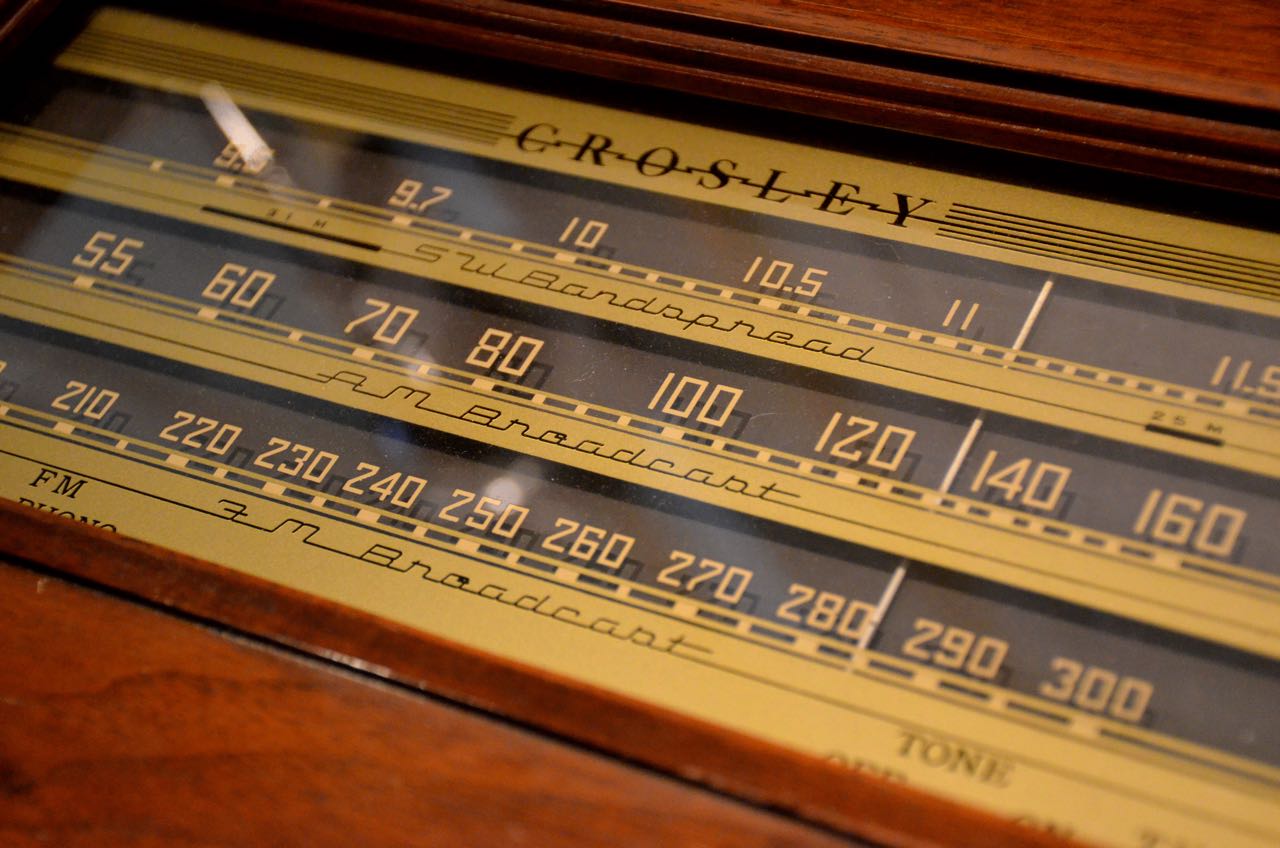
You may sometimes see the Crosley name today on cheap record players, but from what we can tell that company isn’t connected with the Crosley Radio company that was a powerhouse in the field from 1921 to 1956. [Uniservo] looks at two of the very early entries from Crosley: the model VIII and the XJ. You can see the video of both radios, below.

The company started by making car parts but grew rapidly and entered the radio business very successfully in 1921. We can only imagine what a non-technical person thought of these radios with all the knobs and switches, for some it must have been very intimidating.

The model VIII had two large knobs, three small knobs, and a switch. Oddly enough there were very few markings on the knobs, as you were expected to know how to use a tuned RF radio. The large knobs were for tuning capacitors and the switch was for coil taps, while the three small knobs controlled the tube filament supplies.[]

Increase in CW Club membership (G4BKI.com)

The rate at which amateurs are joining CW clubs has gone through the roof with ‘lockdown’.

The fastest growing club (SKCC) has tripled its daily new members rate and is now increasing by 14-15 per day. Information and files can be found at: http://www.g4bki.com/club_call_history.htm

Contest University 2020 will be held online free via Zoom (Contest University)

Contest University 2020 will be held online free via Zoom (Link will be available on May 7th)

Thursday, May 14th 9:00 am EDT

CTU 2020 outline is available on the 2020 Course Outline Page

Click here to read more information.


Do you enjoy the SWLing Post?

Please consider supporting us via Patreon or our Coffee Fund!

Your support makes articles like this one possible. Thank you!
Radio Waves: Crossband Test Postponed, VI3RA Event Videos, WWII Radio, and Look Inside a Panasonic RF-4900

Radio Waves:  Stories Making Waves in the World of Radio

Because I keep my ear to the waves, as well as receive many tips from others who do the same, I find myself privy to radio-related stories that might interest SWLing Post readers.  To that end: Welcome to the SWLing Post’s Radio Waves, a collection of links to interesting stories making waves in the world of radio. Enjoy!

Many thanks to SWLing Post contributors Harald Kuhl, Michael Bird, and Carel Kuijer for the following tips:


Annual Armed Forces Day Crossband Test Postponed (ARRL News)

Due to the ongoing COVID-19 response and mitigation actions, the 2020 Armed Forces Day (AFD) Crossband Test scheduled for Saturday, May 9, has been postponed. Because it’s uncertain just when stay-at-home orders will be lifted across the US, AFD planners chose to postpone this year’s event, because the government stations that typically support this event may not be available. Armed Forces Day Crossband Test planners are considering scheduling a November event in honor of Veteran’s Day, depending on COVID-19 mitigation actions. During the AFD Crossband Test, military stations in various locations transmit on selected military frequencies and announce the specific ham frequencies they are monitoring to work radio amateurs. — Thanks to US Army MARS Program Chief Paul English, WD8DBY

Radio Australia Event – Antenna Overview (Mount Evelyn DX Report)

Thanks to Lee VK3GK for this short video of the antennas used for the recent Radio Australia event using the call sign VI3RA. Take what will possibly be a final look at the feeders, switching boxes and antennas before they are pulled down and junked!

Also here is the final transmission of the event weekend with, of course, the famous Radio Australia music box interval signal.

Click here to view both videos at the Mt Evelyn DX Report.

World War II and Radio (All Things Radio)

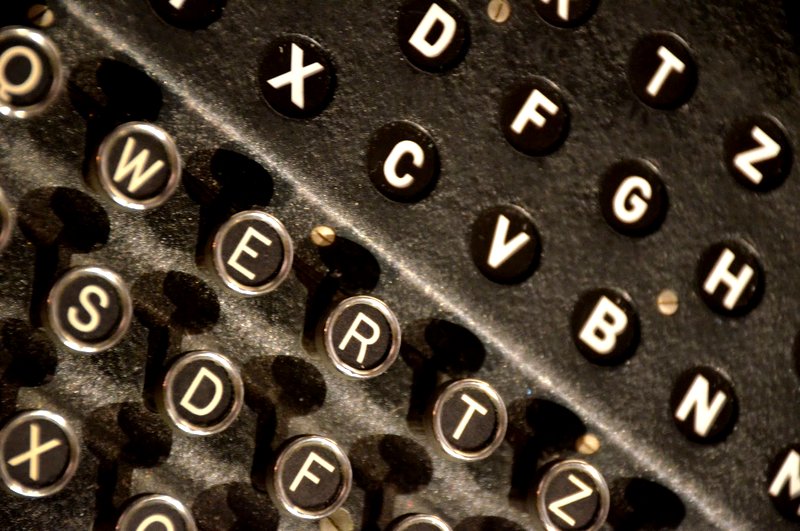
I have added an article I wrote some years back on the code breaking efforts of the Allies during WWII. While certainly not exhaustive, I found many of the connections between countries and equipment rather fascinating, and new things continue to pop up regarding Bletchley Park’s role in training officers and decoding texts. While most famously known for breaking the Enigma code, also significant was the breaking of the Lorenz Cipher.

Click Here to download the article in PDF format.

73, Robert K4PKM

Look Inside This Radio Receiver! The Collectible Panasonic RF 4900 (Mr. Carlson’s Lab – YouTube)

Let’s look inside this Panasonic RF-4900 radio receiver, and see what we have to restore.


Do you enjoy the SWLing Post?

Please consider supporting us via Patreon or our Coffee Fund!

Your support makes articles like this one possible. Thank you!
Radio Waves: New FCC RF Exposure Limits, Rediscovering Spark Gap, Zoom Vulnerabilities, and Extremely Rare Film of MI6 Section VIII

Radio Waves:  Stories Making Waves in the World of Radio

Because I keep my ear to the waves, as well as receive many tips from others who do the same, I find myself privy to radio-related stories that might interest SWLing Post readers.  To that end: Welcome to the SWLing Post’s Radio Waves, a collection of links to interesting stories making waves in the world of radio. Enjoy!

Many thanks to SWLing Post contributors Paul Evans, and Robert Gulley for the following tips:


FCC Publishes new RF exposure rules (Federal Register)

The FCC has published the new rules in the Federal Register.

Paul notes:

Different above 6GHz
Expanding rules from 3 kHz – 300 GHz to 3 kHz – 3 THz (inc. light
frequency RF sources, essentially future proofing rules)
Introducing SAR measurements from 100 kHz to 6 GHz (impact to ARS)
Introducing MPE measurements above 6 GHz
Introducing ideas for WPT at and below 100 kHz, with control over the
wires or remotely over the air. This is (obviously) for EV charging.
They say nothing about harmonics, filtering, etc.[]

We Rediscover Spark Gap Radio by Accident (CuriousMarc via YouTube)

It’s 1890 all over again in the lab. By complete accident, I find myself the new owner of a high voltage box that turns out to be a vintage Xenon lamp sparker. Not only do we make it work, but we use it to retrace the critical experiments that led to the discovery of radio, using the lamp starter as the spark gap transmitter, and a coherer as the receiver.[..]

Click here to view on YouTube.

Zoom taking your club online – DON’T (Southgate ARC)

On Friday 3rd April, we carried an item regarding the use of Zoom for club meetings.

However, we have since been contacted by Paul, VP9KF, who offers this note of caution.

He says:
“This story http://www.southgatearc.org/news/2020/april/zoom-taking-your-radio-club-online.htm on your page recently is over-shadowed by the news as follows:

https://www.theguardian.com/technology/2020/apr/02/zoom-technology-security-coronavirus-video-conferencing

Don’t use Zoom and get hacked ”

Our thanks to Paul for this informative, if not rather worrying, news item.

[Paul notes that Skype Conference Call is the best method because it is “secure, end to end. In browser (sandbox) with HTML5 embedded features.”]

WW2 Codebreakers: Bletchley Park activities revealed in unique footage – The Hidden Film (YouTube)

Discover the story behind the recently discovered only known wartime film footage of a secret site connected to Bletchley Park.

A silent film, recently donated to Bletchley Park Trust, is believed to be a compilation of footage recorded between 1939 – 1945, showing members of MI6 Section VIII at Whaddon Hall, Buckinghamshire. During World War Two, this was a most secret site where Ultra intelligence produced by the Government Code and Cypher School (GC&CS) at Bletchley Park would be sent, and then passed on to Allied commanders in the field.

In this mini-documentary, hear Bletchley Park Veteran, Geoffery Pidgeon who worked in MI6 Section VIII during WW2, recall how it felt to watch the film for the first time and recognise his father. Peronel Craddock, Bletchley Park’s Head of Collections and Exhibitions and Dr. David Kenyon, Research Historian at Bletchley Park also talk about why the discovery of this film is so important.

Watch the original footage: https://youtu.be/bvVaFE5O3eY


Do you enjoy the SWLing Post?

Please consider supporting us via Patreon or our Coffee Fund!

Your support makes articles like this one possible. Thank you!
Radio Waves: LPFMs Go Non-Directional, ABC Cuts Remain, WBCQ Videos, and Demolition of Hara Arena

Hara Arena during the 2016 Dayton HamventionRadio Waves:  Stories Making Waves in the World of Radio

Because I keep my ear to the waves, as well as receive many tips from others who do the same, I find myself privy to radio-related stories that might interest SWLing Post readers.  To that end: Welcome to the SWLing Post’s Radio Waves, a collection of links to interesting stories making waves in the world of radio. Enjoy!

Many thanks to SWLing Post contributors Ulis (K3LU), Michael Bird, and Trevor Dailey for the following tips:


New FCC Rules Would Allow LPFMs To Use Non-Directional Antennas. (Inside Radio)

The FCC is scheduled to vote on controversial new rules that would potentially end a prohibition on low-power FM stations using directional antennas, among other things. At its April Open Commission Meeting, the agency will vote on a Report and Order to update its technical rules for LPFM stations.

Since the Local Community Radio Act of 2010 was passed nearly a decade ago, the number of LPFMs has grown to more than 2,100 stations. The LPFM service has “matured since engineering requirements were first established in 2000,” FCC Chair Ajit Pai said in a blog post announcing the April meeting agenda. “This maturation means that LPFM stations should be able to take advantage of additional engineering options to improve reception.”

In addition to improving reception, the proposed new rules would “increase flexibility while maintaining interference protection and the core LPFM goals of diversity and localism,” Pai said.

Along with expanded LPFM use of directional antennas, the proposal would allow LPFM stations to use FM booster stations.[]

The ABC is an essential service but funding cuts remain, says boss (The Age)

The ABC could have to look at closing a channel if the government remains committed to the funding cuts announced in the 2018 federal budget, according to managing director David Anderson.

“We don’t think we can bridge the gap purely from efficiency alone,” said Mr Anderson on Thursday, as the broadcaster revealed a suite of programming that it hopes will help Australians through the next three months of social isolation.

“That’s where you start to look at what it is you’re providing on what service. At the moment we have no plans to turn off a channel or a network, but I have to say that in the foreseeable future turning off a channel will happen one day. It’s just not right now.”

The ABC is in the second year of its current triennial funding round, in which the government declined to index its base funding, effectively meaning its budget has been cut by $84 million over the three years to 30 June, 2022.[]

Two WBCQ Videos

Trevor Dailey shares two videos produced by Peter Kroon and OfficialSWLchannel that focus on WBCQ and their free speech mission. Click here for the first video (18:30) and here for the second video (4:37).

Note that while all of the commentary in the first video is in Dutch, much of the content is in English.

Demolition of most of Hara Arena will start soon (Dayton Daily News)

Michael Heitz, the developer of the Hara Arena property, said Monday that sometime in the next two to three months, demolition of about two-thirds of the tornado-damaged property should begin.

Heitz said he is putting together a legal description of the recently rezoned former entertainment property, with an environmental report and surveys, for JobsOhio. He expects JobsOhio, the state’s private jobs creation arm, to put its marketing muscle behind the 130-acre site, to help him find a future user.

“This is one of their biggest tracts in the state of Ohio, under one piece of land,” Heitz said in an interview. []


Do you enjoy the SWLing Post?

Please consider supporting us via Patreon or our Coffee Fund!

Your support makes articles like this one possible. Thank you!
Radio Waves: The Future of On-Air DJs, SDR Comparison, Radios That Never Were, and an Internet Radio Player for Linux

Radio Waves:  Stories Making Waves in the World of Radio

Because I keep my ear to the waves, as well as receive many tips from others who do the same, I find myself privy to radio-related stories that might interest SWLing Post readers.  To that end: Welcome to the SWLing Post’s Radio Waves, a collection of links to interesting stories making waves in the world of radio. Enjoy!

Many thanks to SWLing Post contributors Jack Kratoville, Dave Zantow, and Dennis Dura for the following tips:


Live From Everywhere? The American Radio DJ In An On-Demand World (1A)

iHeartMedia owns and operates 858 broadcast radio stations, serving more than 150 markets throughout the U.S. The company reaches over a quarter billion monthly listeners ?in America.

In January, news hit that iHeartMedia was reassessing its ability to adapt to the modern music industry. The company said that it plans to make “significant investments … in technology and artificial intelligence.”

However, its on-air DJs were caught off guard when they found out that the company’s restructuring plan didn’t include them.

Streaming platforms has ushered in the digital age of music where each person make their own playlists. What does that mean for the future of the on-air DJ in the United States?

Click here to listen to the audio.

A comprehensive lab comparison between multiple software defined radios (RTL-SDR.com)

Librespace, who are the people behind the open hardware/source SatNOGS satellite ground station project have recently released a comprehensive paper (pdf) that compares multiple software defined radios available on the market in a realistic laboratory based signal environment. The testing was performed by Alexandru Csete (@csete) who is the programmer behind GQRX and Gpredict and Sheila Christiansen (@astro_sheila) who is a Space Systems Engineer at Alexandru’s company AC Satcom. Their goal was to evaluate multiple SDRs for use in SatNOGS ground stations and other satellite receiving applications.

The SDRs tested include the RTL-SDR Blog V3, Airspy Mini, SDRplay RSPduo, LimeSDR Mini, BladeRF 2.0 Micro, Ettus USRP B210 and the PlutoSDR. In their tests they measure the noise figure, dynamic range, RX/TX spectral purity, TX power output and transmitter modulation error ratio of each SDR in various satellite bands from VHF to C-band.

The paper is an excellent read, however the results are summarized below. In terms of noise figure, the SDRplay RSPduo with it’s built in LNA performed the best, with all other SDRs apart from the LimeSDR being similar. The LimeSDR had the worst noise figure by a large margin.[]

Radios that Never Were (N9EWO)

Dave Zantow (N9EWO) shares a new page on his website devoted to receivers and amateur transceivers that never quite made it to the marketplace. []

Shortwave: A Modern Internet Radio Player for Linux (It’s Floss)

Brief: Shortwave is a modern looking open source Internet Radio player for Linux desktop. We take a quick look at it after its recent stable release.

Shortwave is an interesting open-source radio player that offers a good-looking user interface along with a great experience listening to the Internet stations. It utilizes a community-powered database for the Internet stations it lists.

Shortwave is actually a successor of the popular radio app for Linux, Gradio. Its developer Felix joined GNOME and discontinued Gradio to create Shortwave from scratch in Rust programming language. If you were using Gradio as your preferred Internet radio station player, you can import the library as well.

Recently, Shortwave released its first stable version and seems to push new updates after that as well.[]


Do you enjoy the SWLing Post?

Please consider supporting us via Patreon or our Coffee Fund!

Your support makes articles like this one possible. Thank you!