Tag Archives: Radio World

Radio Waves: ABC Wage Freeze, A Titanic Radio, FCC “Tweaks” LPFM Rules, and Digitizing a DX-160 Display

Radio Waves:  Stories Making Waves in the World of Radio

Because I keep my ear to the waves, as well as receive many tips from others who do the same, I find myself privy to radio-related stories that might interest SWLing Post readers.  To that end: Welcome to the SWLing Post’s Radio Waves, a collection of links to interesting stories making waves in the world of radio. Enjoy!

Many thanks to SWLing Post contributors Michael Bird, Dave Zantow, David Korchin, and Alokesh Gupta for the following tips:


ABC must freeze wages, government warns (The Guardian)

The Morrison government has put the national broadcaster on notice that it expects the ABC to embark on a six-month wage freeze to bring it in line with other taxpayer-funded agencies during the Covid-19 crisis.

The warning follows the government’s decision in early April to defer general wage increases for commonwealth public servants for six months. The public service commissioner followed up that directive by writing to all non-public service agencies – including the ABC – informing them the government expected them to adopt the same practice.

With no clear response from the ABC to the 9 April missive, Guardian Australia understands the communications minister Paul Fletcher wrote to the national broadcaster this week flagging his expectation that the organisation would defer a 2% increase for all employees scheduled to take effect in October under the ABC’s enterprise agreement.[…]

Radio used by the Titanic to call for help can be salvaged, judge rules (CNN)

A federal judge has ruled that RMS Titanic Inc. can salvage the radio used to call for help by the fated ocean liner after it struck an iceberg in 1912.

To get to the radio, divers would need to remove a part of the ship’s deckhand to reach the room known as the Marconi Suite, which houses the device.

The ruling modified an order issued on July 28, 2000, that said that RMS Titanic Inc. could not cut into the wreckage or detach any part of it.

Virginia’s eastern district court amended that order “for a unique opportunity to recover an artifact that will contribute to the legacy left by the indelible loss of the Titanic, those who survived and those who gave their lives in the sinking,” Judge Rebecca Beach Smith wrote.

Experts in the case testified to the “significant deterioration” in areas above and around the Marconi room, according to the document, and photos showed the “increasing breakdown” in the deck above the suite.

The suite, made of steel, consisted of three areas: sleeping accommodations, an operator’s room and the silent room that housed the radio. Each area was separated by wood walls that officials believe have dissolved, according to court documents.

The Marconi device and the artifacts associated with it face “significant threat of permanent loss,” the judge said in her approval of the expedition.[]

FCC Tweaks LPFM Technical Rules (Radio World)

The FCC in April modified the technical rules covering low-power FM stations. It expanded the permissible use of directional antennas; permitted waivers of protections of television Channel 6 by a specific group of reserved channel stations; expanded the definition of minor change applications for LPFM stations; and allowed LPFM stations to own boosters. Read more about the changes here.

Michelle Bradley, founder of REC Networks, is an engineer and longtime LPFM advocate.

Radio World: What’s your overall assessment of the outcome and the scope of its impact in the LPFM community?

Michelle Bradley: While the FCC did not address three major issues that are impacting LPFM stations right now —the ability to address building penetration issues, the ability to reach “local” listeners in rural areas and the disparity in how LPFM stations protect FM translators vs. how translators protect LPFMs — the changes will benefit current LPFM stations by giving them more flexibility in moving locations, reduce the need for waivers and improve LPFM service in the southern border region. It will also open some additional opportunities for new LPFM stations in the next filing window.[]

RadioShack Shortwave Goes Digital (Hackaday)

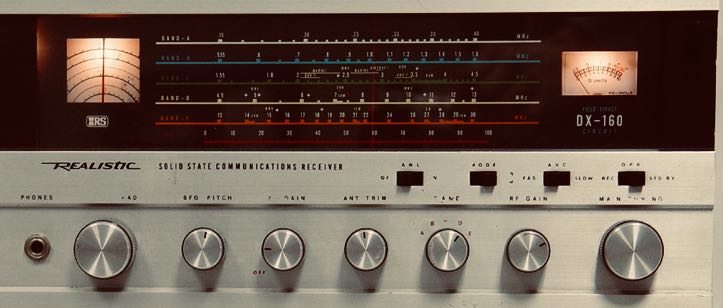
If you spent the 1970s obsessively browsing through the Radio Shack catalog, you probably remember the DX-160 shortwave receiver. You might have even had one. The radio looked suspiciously like the less expensive Eico of the same era, but it had that amazing-looking bandspread dial, instead of the Eico’s uncalibrated single turn knob number 1 to 10. Finding an exact frequency was an artful process of using both knobs, but [Frank] decided to refit his with a digital frequency display.

Even if you don’t have a DX-160, the techniques [Frank]  uses are pretty applicable to old receivers like this. In this case, the radio is a single conversion superhet with a variable frequency oscillator (VFO), so you need only read that frequency and then add or subtract the IF before display. If you can find a place to tap the VFO without perturbing it too much, you should be able to pull the same stunt.

In this receiver’s heyday, this would have been a formidable project. Today, a cheap digital display will do fine.[]


Do you enjoy the SWLing Post?

Please consider supporting us via Patreon or our Coffee Fund!

Your support makes articles like this one possible. Thank you!

Radio Waves: FCC Wipes Out Engineering Division, Last Nazi Message Decoded, Remembering Ronan O’Rahilly, and French Radio Society Free Publications

Radio Waves:  Stories Making Waves in the World of Radio

Because I keep my ear to the waves, as well as receive many tips from others who do the same, I find myself privy to radio-related stories that might interest SWLing Post readers.  To that end: Welcome to the SWLing Post’s Radio Waves, a collection of links to interesting stories making waves in the world of radio. Enjoy!

Many thanks to SWLing Post contributors Mike, Eric McFadden, and Paul Evans, and for the following tips:


FCC Eliminates Its Own Engineering Division (Radio World)

The Federal Communications Commission has elected to eliminate the Engineering Division at the organization in an effort to, as it says, “streamline the organization of the Media Bureau” as part of the public interest.

The commission plans to fold the work of the Engineering Division into the Media Bureau’s Industry Analysis Division (IAD) due to changes in the duties of the Engineering Division.

“By incorporating the work and staff of the Engineering Division into IAD, we can better ensure that the bureau’s technical expertise is integrated more fully into the bureau’s adjudicatory matters and policy proceedings,” the commission announced on April 29.

Back in 2002, the Engineering Division was established to conduct technical reviews of media-related matters, including overseeing technical compliance of TV and radio broadcast licenses, as well as things like cable regulatory filings and license transfers. But as the industry transitioned from analog to digital and from paper to electronic filing, the Engineering Division’s tasks have diminished.[]

Last Nazi message intercepted by Bletchley Park revealed (BBC News)

The last German military communications decoded at Bletchley Park in World War Two have been revealed to mark the 75th anniversary of VE Day.

They were broadcast on 7 May 1945 by a military radio network making its final stand in Cuxhaven on Germany’s North Sea coast.

The message reports the arrival of British troops and ends: “Closing down for ever – all the best – goodbye.”

After Germany surrendered, VE Day was declared the next day.

In 1944, this German military radio network, codenamed BROWN, had extended across Europe sending reports about the development of experimental weapons.

But a year later, as the Allies entered the town and closed in on his position, a radio operator at his post signed off to any colleagues who might still be listening.[]

Remembering ‘Radio Caroline’ Founder Ronan O’Rahilly, A Pioneer Of Pirate Radio (NPR)

NPR’s Scott Simon talks to U.K. broadcaster Johnnie Walker about Ronan O’Rahilly, the founder of the pirate Radio Caroline, who died on April 20 at the age of 79.[]

French Society makes Radio REF free for April and May

Paul Evans notes that two REF-Radio publications are now free to download via the REF website. If you know French, you’ll enjoy these quality radio publications:

Click here to download REF-Radio (PDFs) for:


Do you enjoy the SWLing Post?

Please consider supporting us via Patreon or our Coffee Fund!

Your support makes articles like this one possible. Thank you!
Radio Waves: Radio Marti DRM, Push for Shepparton Museum, APRS on the History Channel, and Radio’s “Major Cultural Opportunity”

Radio Waves:  Stories Making Waves in the World of Radio

Because I keep my ear to the waves, as well as receive many tips from others who do the same, I find myself privy to radio-related stories that might interest SWLing Post readers.  To that end: Welcome to the SWLing Post’s Radio Waves, a collection of links to interesting stories making waves in the world of radio. Enjoy!

Many thanks to SWLing Post contributors Alan Hughes, Michael Bird, Zack Schindler, and Dennis Dura for the following tips:


Radio Marti Begins Shortwave DRM Transmissions (Radio World)

Radio Marti began Digital Radio Mondiale (DRM) shortwave transmissions on Feb. 4. Part of the U.S. Agency for Global Media (USAGM), Radio Marti broadcasts news and other programs to Cuba. The DRM shortwave transmissions are from USAGM’s Greenville, North Carolina, site.

USAGM has transmitted in DRM before. There were some transmissions from Briech, Morocco, in the early 2000s. Greenville tested DRM in 2009 in partnership with what was then known as HCJB Global Technology. So why are they back now after an absence of over a decade?

“We want to experiment a bit with different modes and services available on DRM. We also want to help push the development of low-cost receivers and the best way to do that is to put some transmissions on the air, explains Gerhard Straub, director of USAGM’s Broadcast Technologies Division.[]

Push for museum at Shepparton’s Radio Australia site (Shepparton News)

Amateur radio enthusiasts are pushing for the former site of Radio Australia in Shepparton North to be upgraded and retained as a national museum of radio broadcast history.

Members of the Shepparton and District Amateur Radio Club and The Vintage Radio Club of North East Victoria are due to present a 25-page proposal to an anonymous consortium of buyers said to be interested in acquiring a 258ha block of land along Verney Rd.

The block includes two buildings and several large broadcast towers on the former site of Radio Australia. The site is currently owned by BAI Communications.

The Shepparton club’s assistant secretary, Geoff Angus, said the proposal would be presented to Greater Shepparton City Council for forwarding to the consortium.[]

APRS usage seen on the History Channel “Secret of Skinwalker Ranch”

Zack Schindler writes:

I have been watching a show about paranormal activity on the History Channel called The Secret of Skinwalker Ranch. In the episode this week they hired a professor to do a balloon launch with some RF sensors. In this episode they also showed the APRS.FI webpage and I was able to read his callsign from an APRS tracker, KM4MRH.

The professor used an APRS tracking device. On the right side of the page link below you can click on Other SSID’s to see other balloon launches he has done. Normally when there is a balloon launch you can see the data from it going up and down. This page shows the Skinwalker balloon launch data transposed over a map. https://aprs.fi/#!call=a%2FKM4MRH-3&timerange=3600&tail=3600

Sadly they are using these for measuring RF fields rather than these.

In a Crisis, Radio Should Be Bigger Than Ever — So Why Isn’t It? (Rolling Stone)

Terrestrial music stations have a major cultural opportunity right now, but employees say a muddied strategy is standing in the way

Radio personality Kevin Ryder was “baffled” by KROQ’s “cold, heartless attitude” when he and his morning-show team were fired at the end of March. The station has long been an alternative/rock staple in Los Angeles, the second-largest market in the country, and Ryder had been on the air for more than 30 years.

“The new people in charge now weren’t here for the building of the world-famous KROQ,” Ryder, one-half of the popular Kevin & Bean Show, said on air when the station let him go, live one final time. “I don’t think it means anything to them. It’s a numbers business, and there’s no family aspect to it anymore. It’s only numbers, but this place was built without numbers. It was musicians, artists, and the special relationship between music, the station, and our fans.”

AM/FM radio provides localized, round-the-clock information and entertainment via friendly neighborhood voices — so in theory, it’s the perfect platform in a global crisis that forces hundreds of millions of people to stay home. But Ryder is one of many in the radio community — including on-air hosts, music directors, program directors — who have been shocked by sudden job losses in recent weeks as COVID-19 has spread across the U.S., and news out of the industry has been one bad thing after another. Why is terrestrial radio missing the opportunity here — and how should it be fighting to get back on top?[]


Do you enjoy the SWLing Post?

Please consider supporting us via Patreon or our Coffee Fund!

Your support makes articles like this one possible. Thank you!

Radio Purga: Russia turning to DRM shortwave to reach Chukotka region

(Source: Radio World via Mike Terry)

Russia has resumed Digital Radio Mondiale broadcasts on shortwave. The country originally aired the Voice of Russia via DRM a few years ago. The new service is tentatively called Radio Purga (“Radio Blizzard”). The target area is the Chukotka region of the Russian Far East. Analog shortwave transmissions once served the area, but those ended in the early 2000s when the broadcaster left analog shortwave.

Chukotka is vast and the target audience only numbers a few thousand. Thus, shortwave is the only practical way to reach the population. The transmitter site, Komsomolsk Amur, used to broadcast Voice of Russia’s analog programming and is now being used for the DRM program.

The new service is a joint project between the government in Chukotka and the Far Eastern regional center of the Russian Television and Radio Broadcasting Network.

Using DRM for Radio Purga has several advantages over analog shortwave. Radio Purga over DRM, for example, offers a static-free and higher fidelity signal. Studies have shown that DRM is just as reliable as analog shortwave over this distance via single-hop transmission.

The broadcaster is considering transmitting two audio programs from a single DRM transmitter. This is something analog shortwave can’t do. It’s also planning on using DRM’s ability to transmit short text message or a type of RSS feed (Journaline). DRM transmissions also use only a quarter of the power that analog transmissions do.

“We have in these remote places 2,000 residents who need to be provided with communications services … the Northern Sea Route also requires attention,” said Roman Kopin, the governor of Chukotka, last spring when the project was initiated, according to a Russian press report. In addition to mariners on the Northern Sea Route, the audience includes geologists, miners, reindeer herders and hunters.[…]

Click here to read the full article at Radio World.

Radio Waves: First Microprocessors, Ocean FM, SWL Interviews, and NPR’s take on All-Digital AM

Radio Waves:  Stories Making Waves in the World of Radio

Because I keep my ear to the waves, as well as receive many tips from others who do the same, I find myself privy to radio-related stories that might interest SWLing Post readers.  To that end: Welcome to the SWLing Post’sRadio Waves, a collection of links to interesting stories making waves in the world of radio. Enjoy!

Many thanks to SWLing Post contributors Marty, Martin Butera, and the Radio Survivor for the following tips:

The Surprising Story of the First Microprocessors (IEEE Spectrum)

Transistors, the electronic amplifiers and switches found at the heart of everything from pocket radios to warehouse-size supercomputers, were invented in 1947. Early devices were of a type called bipolar transistors, which are still in use. By the 1960s, engineers had figured out how to combine multiple bipolar transistors into single integrated circuits. But because of the complex structure of these transistors, an integrated circuit could contain only a small number of them. So although a minicomputer built from bipolar integrated circuits was much smaller than earlier computers, it still required multiple boards with hundreds of chips.[]

Ocean FM Was Fire: How Local Radio Done Right Can Heat A Cabin | Radio Schmaltz (Part-Time Audiofile)

[…]The cabin on a rocky peninsula in Northwest Ireland might not have had all the letters for its Scrabble set or a microwave, but it did have another marvel of 20th century technology. It was a little CB/AM/FM radio crouching behind a box of matches on top of a kitchen cabinet.

I decided to put the switch on FM and started swirling the dial. As soon as I heard a lilting woman’s voice underneath a sheet of static, I began carrying it around the tiny room while adjusting the rabbit ears.

Now the signal was as clear as the peat-rich water was brown, a farmer was being interviewed about the economic downturn. It was a quick piece — just some brogue-ish assurances that one doesn’t choose agriculture for an easy life. Then came a trio playing an Irish ballad, and then came North West Hospice Bingo: a bingo game that allows listeners from across the broadcast range of Ocean FM’s two regional frequencies to play bingo, including the residents of the hospice.

I’d bundle up for walks outside where the wind was loud, blustery, and sacred. The ocean crashed against the rocks in a way I never conceived as being real outside of movies. But when I was inside, the radio might as well have been a Soviet relic with only a volume control and no tuner because I simply couldn’t touch that dial. I learned the schedule quickly, timing walks and firewood runs so that I’d be back in time for Country Jamboree, a boy-girl-boy-girl style line-up of Irish and American country tunes.

As I’d stand by the wood-stove, taking off my cold wet socks to put on the toasted, at time singed socks that I’d been roasting, I felt the fulfillment of the promise of radio. I could hear Fessenden making history with the first radio broadcast of music, Oh Holy Night transmitted on a rocky coast on Christmas Eve of 1906 and heard by ships at sea.[]

Coffee and Radio Listen

Coffee and Radio Listen is an investigation of Brazilian radio listener, by Martin Butera.

How they began listening to radio, the local or international stations that influenced them, the interests they have when tuning to a station, the languages they like to listen to, if they send listeners reports and collect QSLs, their antennas and receivers, and all aspects related to the radio listen both in shortwave and in other bands and modes.

Each month they will have in this blog, an exclusive interview with a Brazilian radio listen. At the end of this project, a free downloadable e-book will be available, which contains all the interviews and statistical references.

Every month there will be a new interview, this month of March launch month we start with 2 interviews

Martin is Argentinian, born in the city of Buenos Aires capital. He currently lives in Brasília DF, capital of Brazil. He is also a journalist, documentary maker and founding member of Radio Atomika 106.1 MHz (Buenos Aires, Argentina).

To know more about CREW 15.61 Radio Listeners’, please visit the following link.

Guest Post: Brazil’s newly-formed “15.61 Crew”

Collaborate on this project by Martín, our friend Rob Wagner (VK3BVW), Mount Evelyn DX Report (adapting the recordings).

Click here her to check out the Coffee And Radio Listen website.

NPR Supports All-Digital on AM, With Caveats (Radio World)

National Public Radio “generally supports” allowing stations to transition, if they wish, to all-digital AM transmission using HD Radio in the United States. But it believes the commission needs to go further on how it would handle interference complaints from neighboring analog stations in the band.

About 80 AM public radio stations are affiliated with NPR or receive operational funding from the Corporation for Public Broadcasting, including WNYC(AM) in New York City.

NPR says it has significant interest in any measures to help AM broadcasters better serve the public by improving the listening experience.

“Facilitating the expansion of HD Radio and its additional functionality for program and public safety information and services would serve the public interest, provided the transition to all-digital HD Radio operation does not cause harmful interference,” NPR wrote in comments filed with the FCC this week.

“As it has in the past, NPR supports the expansion of HD Radio, but not at the expense of current analog AM service.”[…]


Do you enjoy the SWLing Post?

Please consider supporting us via Patreon or our Coffee Fund!

Your support makes articles like this one possible. Thank you!
Radio Waves: Plant-powered Satellite Comms, BBC Pips, Filter Basics, and Replacing Shortwave

Radio Waves:  Stories Making Waves in the World of Radio

Because I keep my ear to the waves, as well as receive many tips from others who do the same, I find myself privy to radio-related stories that might interest SWLing Post readers.  To that end: Welcome to the SWLing Post’sRadio Waves, a collection of links to interesting stories making waves in the world of radio. Enjoy!

Many thanks to SWLing Post contributors Marty, Dennis Howard, Dennis Dura, Kris Partridge and Richard Langley and for the following tips:


Plant-powered sensor sends signal to space (Phys.org)

A device that uses electricity generated by plants as its power source has communicated via satellite—a world first.

[…]The device can inform farmers about the conditions of their crops to help increase yield, and enable retailers to gain detailed information about potential harvests.

It transmits data on air humidity, soil moisture and temperature, enabling field-by-field reporting from agricultural land, rice fields or other aquatic environments.

The extremely low power device sends signals at radio frequencies that are picked up by satellites in low Earth orbit. It was developed by Dutch company Plant-e and Lacuna Space, which is based in the Netherlands and the UK, under ESA’s programme of Advanced Research in Telecommunications Systems (ARTES).[]

The eccentric engineer: a tale of six pips and how the BBC became the national arbiter of time (Engineering and Technology)

This edition of Eccentric Engineer tells the story of the BBC Time Signal and how, over the years, it has just got more complicated.

Every engineer needs to know the time, if only so as to not miss lunch. Since 1924, many Britons have been checking their watches against the BBC time signal, known affectionately as ‘the pips’.

The history of the ‘pips’ is almost as long as the history of the BBC itself. The first transmissions from what was then the British Broadcasting Company began in late 1922 and soon afterwards there were suggestions of broadcasting a time signal under the control of the Royal Observatory at Greenwich – then the arbiter of time in the UK.

No one seems to have seen a need for this degree of precision, but early broadcasts did use their own ad hoc ‘pips’, marking the 8pm and 9pm news programmes with a time signal consisting of the announcer playing the Westminster chimes on a piano and later a set of tubular bells. This proved rather popular with listeners, who could now adjust their clocks and watches daily, so the BBC decided to invest in some more high-tech clocks from the Synchronome Company. These provided audible ‘ticks’, which the announcer then simply counted down.[]

What Is Replacing Shortwave? (Radio World)

A joint effort is necessary to bring the digitization of radio to a successful end

Analog shortwave will celebrate about 100 years of existence in 2028 when many hope 5G will have been properly defined, tested and applied, though broadcasting is low on its long list of perceived advantages.

It’s true that shortwave was typically a medium of the Cold War that peaked in 1989 and that afterward its listenership dwindled. Many international broadcasters gave up on it as the post-war transmitters got rustier and the energy bills kept mounting.

After all, when budget cuts are needed, no transmitter will go on strike or write to the press, as happened when the BBC World Service tried to unsuccessfully close its Hindi shortwave transmissions in 2011. In 2020 these broadcasts stopped, when committed BBC Indian listeners, writers and thinkers who opposed it in 2011 did not protest too much.

The slow death of shortwave has been blamed on the internet and satellite. As technology and content are inextricably linked, shortwave created its type of content that is no longer favored by the savvy FM listener, internet user and cellphone obsessed.[]

Filter Basics: Stop, Block and Roll(off) (Nuts and Volts)

A casual observer might think that wireless systems consist primarily of filters connected by the occasional bit of circuit! Block diagrams of transceivers often include as many filters as any other function. This is true at the system level, just as it is at the circuit level — and many circuits behave in a filter-like way, whether intended to be a filter or not! That makes understanding filter basics important for wireless success.[]


Do you enjoy the SWLing Post?

Please consider supporting us via Patreon or our Coffee Fund!

Your support makes articles like this one possible. Thank you!
Radio stations may miss out on C-Band repack reimbursement

Photo by Joshua Anderson Slate

Many thanks to SWLing Post contributor, Paul Evans, who shares his insight regarding the 5G band grab. Paul writes:

The ramifications of the FCC selling big chunks of spectrum with existing users in the name of 5G goes on:

(Source: Radio World)

Radio World has learned it’s possible that thousands of radio stations in the United States failed to register their C-Band earth station terminals with the FCC prior to its 2018 deadline and presumably will be ineligible for reimbursement funds set aside by the FCC to cover the cost of a C-Band repack.

The alarm is being sounded by a person on the infrastructure side of the industry familiar with Chairman Ajit Pai’s draft Report and Order to make the lower 280 megahertz of the C-Band (3.7–3.98 GHz) available for flexible use, including 5G, through a public auction.

Radio and TV broadcasters utilize 3.7 to 4.2 GHz for satellite C-Band downlinks. However, the draft order released last week indicates incumbent satellite services are expected to be repacked from the 500 MHz to the upper 200 megahertz of the band (4.0–4.2 GHz).[]

Thanks for the tip, Paul. It looks like a lot of spectrum shuffling is happening in the name of 5G. It also appears US radio stations who failed to register their earth station terminals could be financing a C-band repack on their own.

Admittedly, early on, I was hoping 5G would be the broadband answer for those of us living in rural/remote areas. At least, this was how the service was touted back then. The more I read and look at the physics behind the technology, I suspect coverage won’t even match that of existing 4G services.