Shortwave listening and everything radio including reviews, broadcasting, ham radio, field operation, DXing, maker kits, travel, emergency gear, events, and more
Many thanks to SWLing Post contributor, 13dka, who shares the following guest post:
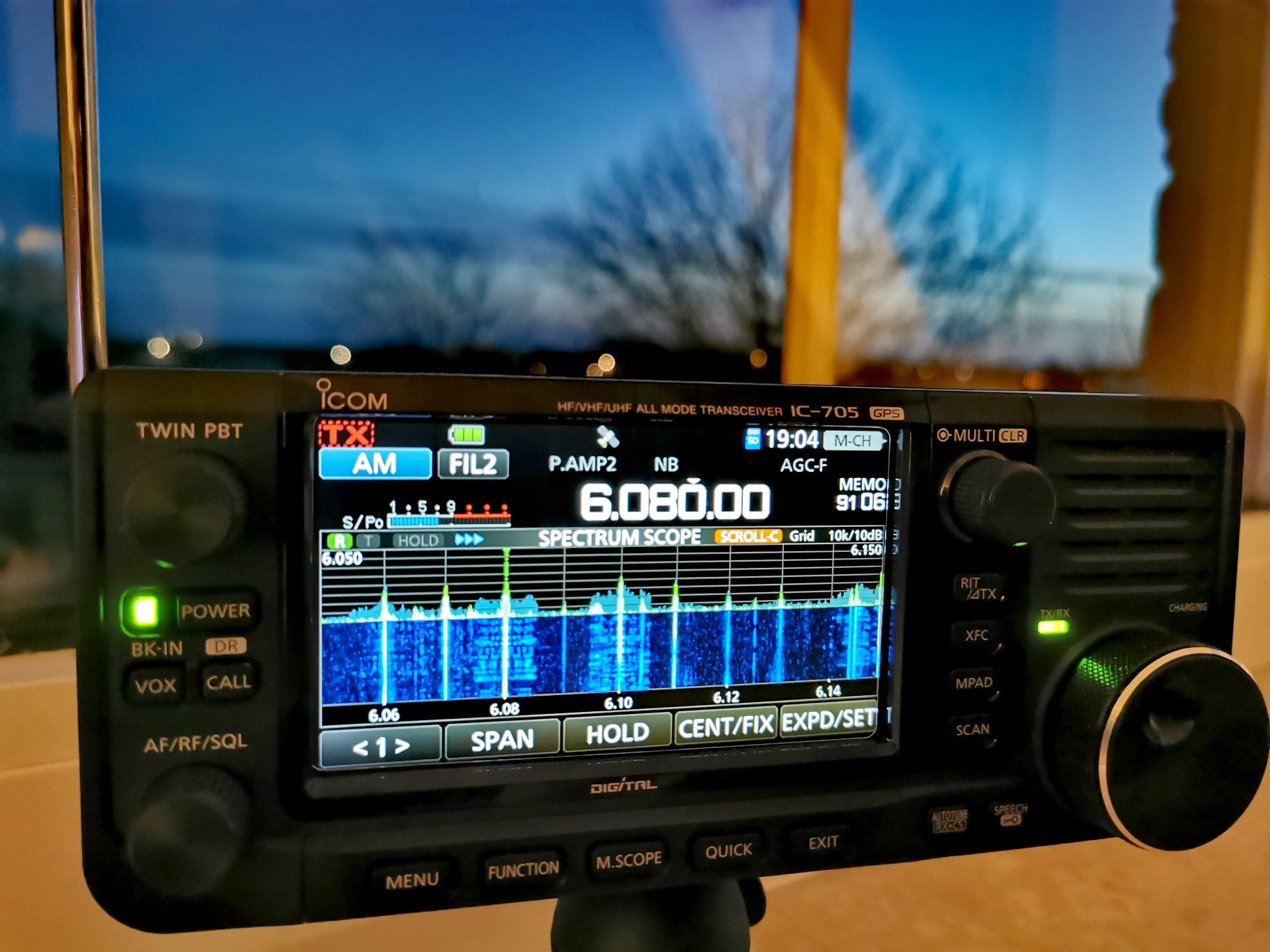
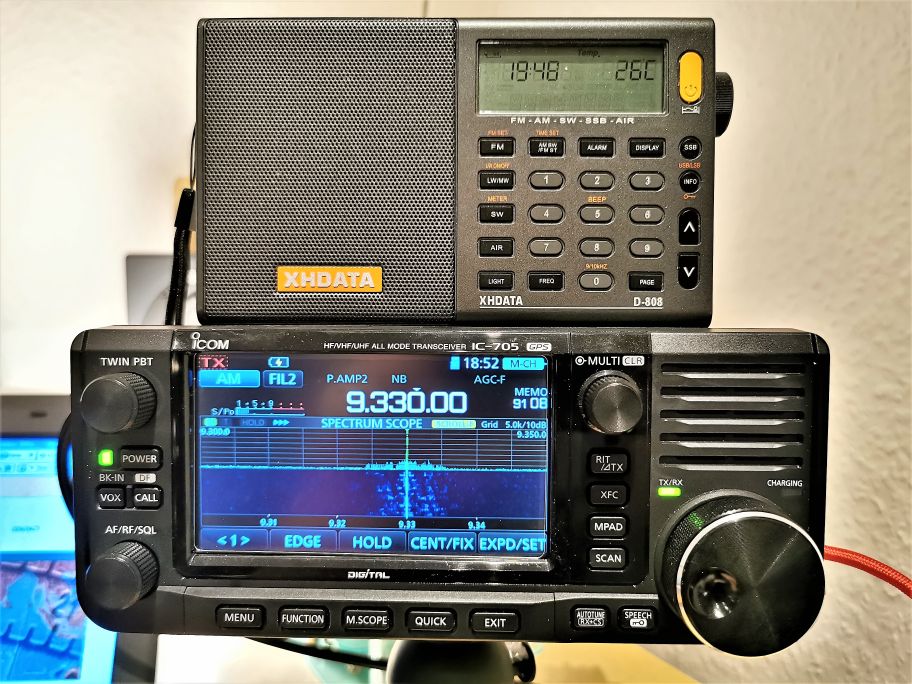
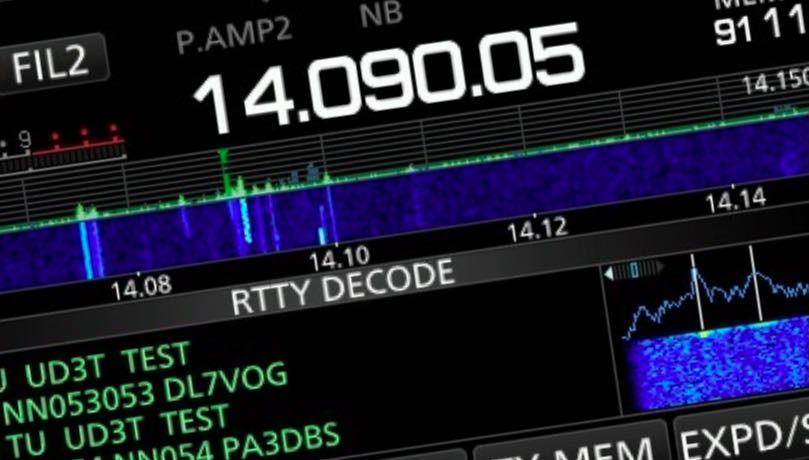
The Icom IC-705: Is this really a new holy grail SWL/BCL receiver?
by 13dka
When Thomas got wind of its development in 2019 he immediately asked “could the Icom IC-705 be a shortwave listeners holy grail receiver?”. I usually wince a little when I hear “holy grail” because it means very different things to different people, it’s also a moving target with many people aiming at the spot where it was decades ago. But Thomas certainly had a very level-headed assembly of technical performance, quality and practicality requirements in mind when he used that term, and I thought he might be onto something!
There are some excellent, trustworthy reviews of the IC-705 out there. The following is not one of them, I just want to share an opinionated breakdown on why I think this is an interesting radio for SWLs/BCLs indeed, also deliberately ignoring that it’s actually a transceiver.
Jumping shop
While the era of superhet/DSP-supported tabletop holy grails ended with the discontinuation and sell-off of the last survivors more than a decade ago, powerful PC-based SDR black boxes were taking over the mid-range segment and it became very slim pickings for standalone SWL receivers: Thomas just recently summed up the remaining options here.
Between the steady supply of inexpensive yet serviceable Chinese portables, upgraded with a least-cost version of DSP technology, and the remnants of the high end sector there’s very little left to put on the wish list for Santa – that doesn’t need to be paired with a computer that is.
No surprise that SWLs/BCLs in search of new quality toys with tangible controls are taking a squint over the fence to the ham transceiver market: Hams are still being served the best and the latest in radio technology in all shapes and sizes, and even entry-level rigs usually come with feature-rich general coverage receivers. But transceivers never had SWLs much in their focus in the past decades, and particularly not BCLs: Frontend adaptation, additional AM filters, switches and functions would’ve meant increasing costs and so transceivers were never perfected for that purpose. DSP and SDR technology allowed for improvements on that without actually adding (much) hardware and so some interesting alternatives surfaced in the past years, but most of them still come with little downers, at least for BCLs.
Many thanks to SWLing Post contributor, Stephan, who shares a follow-up report after receiving a replacement Sangean AT-909X2 from Sangean Europe. Click here to read Stephan’s initial report along with Sangean America’s comments.
Stephan shares the following update:
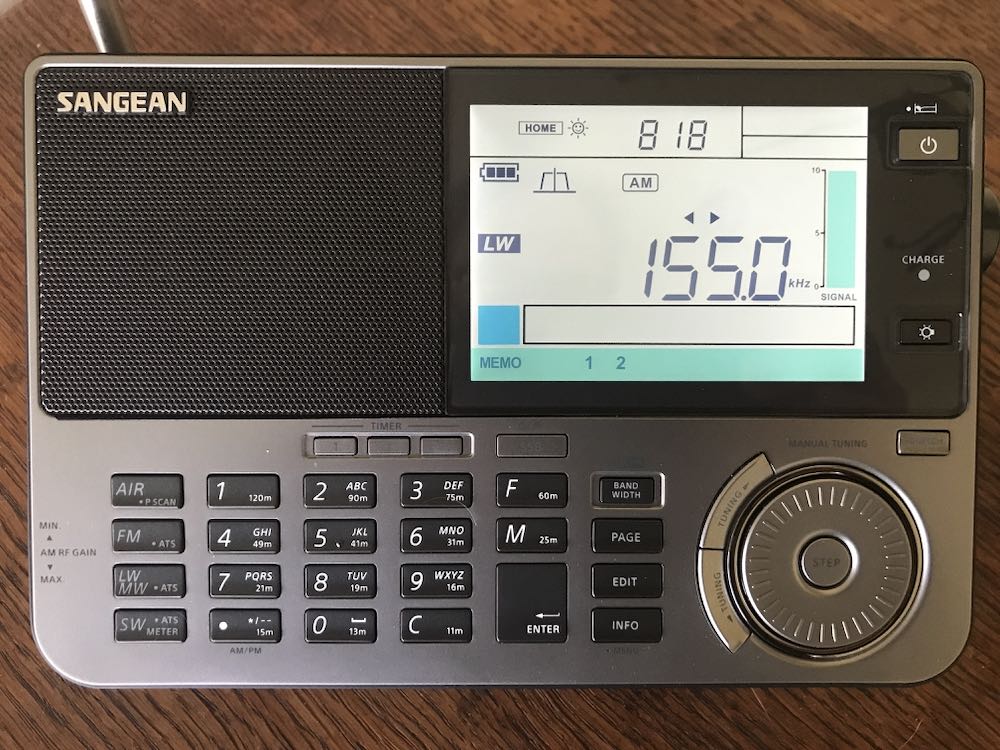
Below are some of my observations on my recently arrived ATS-909×2. I spent two week-ends to carefully test this radio. Unfortunately, the radio that I received is not much improved, and it’s even worse in some aspects. This device has the latest firmware, VER. 073.
The bug related to sensitivity loss after switching bands is fixed, but the receiving performance is too bad to keep this radio in my collection.
This unit has better sensitivity on medium wave and long wave, but also it has lots of birdies on these bands. On long wave there are 14 strong birdies and dead carriers, on medium wave there are over 20 tones. The meowing sound while tuning is also still present. If somebody is interested, I can record audio demonstrations.
For these unpardonable issues, I consider this device a very expensive toy, but not a radio, at least not for listening to medium wave stations. It’s unbelievable that my 5 times cheaper Tecsun PL-398 is so much better on medium wave than this expensive receiver.
Another interesting issue which I discovered is a loud popping sound that occurs if I turn the tuning wheel a bit faster than usual. That pop gives you the impression that you just passed over a strong signal.
Sometimes, pushing the bandwith button puts the radio in SSB mode. It happened at least 5 times. I know that I am blind, but the keys are easily discernable.
Very low volume on SSB mode, but this is a known issue.
That’s all for now. This device goes back to Sangean Europe and I’ll not try again soon.
I really hope that only my particular unit is affected by these issues, but this is the second problematic device here. Might be I should buy from Sangean America… I simply can’t understand why a radio is not verified before shipping. I prefer to get a tested device with the original box opened, instead of exchanging multiple products. Such an expensive radio should be tested before shipping, because sometimes there are significant unit to unit variations. Or, even better, devices should be checked at the factory location with professional tools. Testing is needed, because there are many situations when a birdie is audible only if it’s mixed with another signal.
Thanks for reading!
Thank you for sharing this, Stephan. It sounds like the unit you received does have some quality control issues. Other than the low SSB volume level, my ATS-909X2 unit (from Sangean America) hasn’t had these issues.
A ceremony has been held to mark 80 years since the start of radio service at Japan’s only station broadcasting programs overseas on shortwave bands.
The KDDI Yamata Transmitting Station in Koga City in Ibaraki Prefecture, north of Tokyo, is used by NHK World Radio Japan.
About 50 officials from NHK, KDDI and other entities took part in the ceremony on Wednesday.
The chief of the communications ministry’s Kanto Bureau of Telecommunications, Tsubaki Yasufumi, said remotely at the event that he honors the station’s 80 years of stable operations. He also said he hopes for continued efforts so that programs from Japan can be broadcast overseas.
Terada Kenji of the NHK Engineering Administration Department said shortwave broadcasting served as a lifeline on many occasions such as the 2014 coup in Thailand. He said he wants to express gratitude to all the people involved in shortwave broadcasting.
After the ceremony, the head of the station, Saito Toshimitsu, said it plays an important role in providing information from Japan. He added that he will keep working hard so that the station will be passed down to younger generations.
Many thanks to SWLing Post contributor, Jerome van der Linden, for the following guest post:
Experiences as an SWL in Saudi Arabia 1990 /91
by Jerome van der Linden
From about 1986 I worked for the Broadcasting Division of Telecom Australia (now “Telstra”), in Adelaide, South Australia. This Division of Telecom Australia had responsibility for installation, maintenance and operation of Australian Government funded broadcasting services (radio & TV) such as ABC (including Radio Australia) and SBS. In later years responsibility for this was taken away from Telecom Australia and handed to BAI.
I already had a life long interest in Broadcasting and short wave radio in particular, and I was recruited into a new non technical managerial position in the then new Broadcasting Division of Telecom Australia: it was the perfect job to my mind. In this period of the late 1980s, the organisation was heavily involved in the capital works to get Radio Australia Cox Peninsula (Darwin) back into operation, after it was largely destroyed by cyclone Tracy in 1975, as well as building the three Northern Territory vertical incidence (“shower”) services at Katherine, Tennant Creek, and Alice Springs (VL8K, VL8T, and VL8A respectively). (The NT is probably about the size of a major US state like Texas). Apart from doing my non technical work, I took every opportunity to learn more and get involved in the technical side of things. On one occasion, when I knew that the technical staff would be testing the new transmission facilities on a range of frequencies, I was able to confirm with the onsite technician a booming signal into Adelaide from the Alice Springs transmitter he was briefly testing on 11715kHz in the daytime.
Alice Springs (VL8A) transmitter site in the last year is was operating (Photo by Jerome van der Linden).
As the opportunity arose, and as I was also part of the Southern Cross DX Club, I regularly participated in the Radio Australia DX program (I cannot even remember its name, 30 years later) that was produced by Mike Bird. I also contacted many rural cattle stations (equivalent to “ranches” in the US) that were spread throughout the Northern Territory to get them to report on how they were receiving the new NT HF service broadcasting stations when they came on the air. I saw it as a way of promoting the shortwave radio services throughout the Northern Territory.
My work gave me the opportunity to visit not just each of the new NT HF transmitter stations, but also included several visits to the Radio Australia (RA) facility at Cox Peninsula. While I also saw the old RA Receiving station on Cox Peninsula (dating from the period when signals were received from RA Shepparton and then re-transmitted from Darwin, in the period pre cyclone Tracy), this was at a time when that facility had already been largely dismantled.
In early 1990, I sought and was awarded a contract position with Telecom Australia’s Saudi project, and I was seconded to that from my job in the Broadcasting Division. From my own research, I knew that radio and TV in Saudi Arabia was quite unlike what I was used to, and I made it a point to take with me, on loan, a Sony ICF 2001D receiver. So it was in March 1990 that I arrived in Riyadh on a single person’s contract. I was allocated a 2 storey 3 bedroom villa for my own use among a large number of other identical villas occupied by other Telecom Australia staff, that were all located within a walled compound close to the Saudi Telecom offices.
Almost immediately, it was obvious that I would have to rely on the BBC World Service for my English news, as the KSABS radio services were nearly all in Arabic, and its TV service was even less appealing to me. I managed to string up some long wire antennas on the roof, and it was not long before I was also able to pick up services from Radio Australia. I got in touch with Nigel Holmes, then RA’s Frequency Manager in Melbourne, and was able to let him know how signals were being received in the Middle East, even though South Asia was about the limit of RA’s intended reach at that time. As my office was in the city of Riyadh some distance away, I was allocated a car for my own use, and – having found these were quite common – soon fitted it with a Short Wave capable car radio. In fact it was the one I reviewed in the 1991 WRTH.
The compound housing the many Australians and their families had its own CCTV system, and the Aussies were entertained by a regular supply of Australian VHS TV tapes. The same CCTV network was also used by Australians from the project making out as wannabee disk jockeys with their own programs before 7am and into the evenings.
As many people will recall, in mid 1990, Sadam Hussein, the then leader of Iraq, invaded Kuwait, and there was some concern he might continue and invade Saudi Arabia. As a direct consequence, radio with World news became even more important for the Australians, and the many other expats working in the Kingdom of Saudi Arabia (KSA).
An unexpected benefit to the expats living in Riyadh was the arrival of thousands of US ground forces, who brought with them their very own AFN broadcasting services which operated on FM with their own high pitched professional female DJs who played the latest pop music. This was at a time when this type of music was not heard at all on local Saudi radio, and the only source we had of modern music was the many bootlegged copies of cassette music which were for sale everywhere (in addition to pirated copies of software).
When Sadam Hussein decided to stop international residents from leaving Iraq to travel home, their roles as ‘hostages’ caused international broadcasters to improve their services into the Middle East.
That included Radio Australia, and at least one of its Cox Peninsula transmitters was used to improve the signal to the Middle East in the hours up to its daily shutdown at midnight Darwin time (1430UTC). The strongest signal in those days was a 21MHz frequency, and it mostly boomed in. I recall one evening when the transmitter’s audio sounded very suspect to me. I made a quick international phone call direct to Cox Peninsula; spoke to the duty shift supervisor who I knew personally; described the signal to him; he picked the problem; switched the transmitter off and placed another transmitter online on the same frequency which gave clean audio, that I was able to confirm to him.
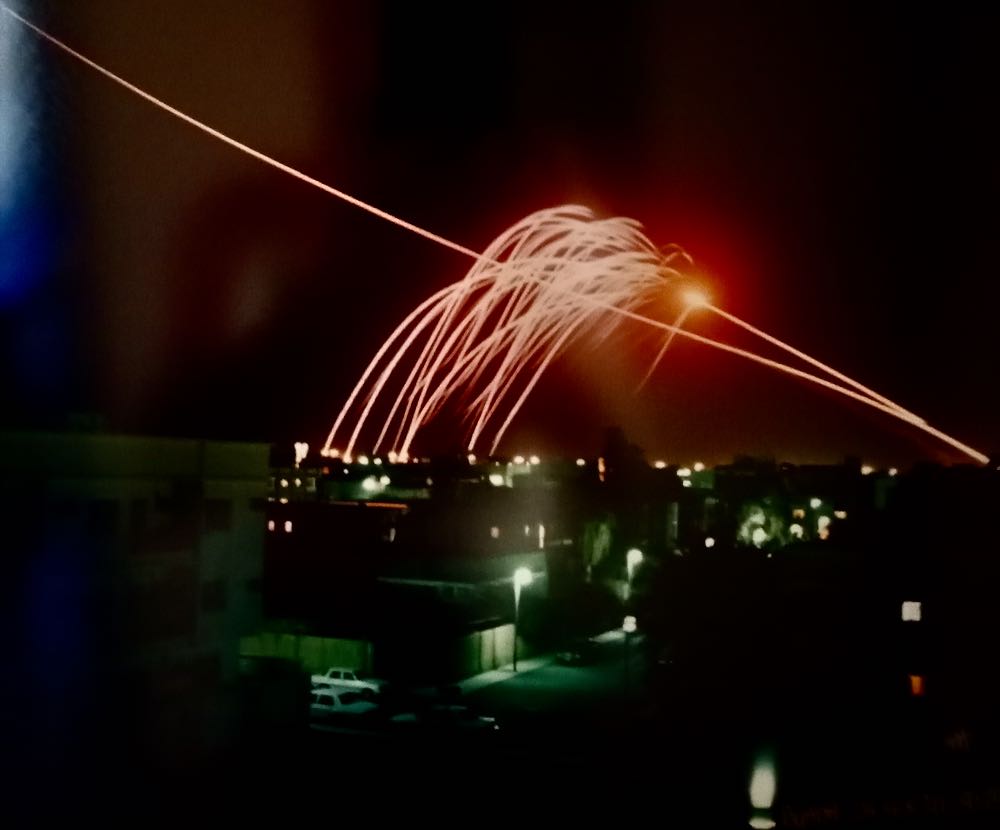
A Patriot missiles being fired to intercept a scud missile on 24 Feb, 1991 (Photo by Jerome van der Linden)
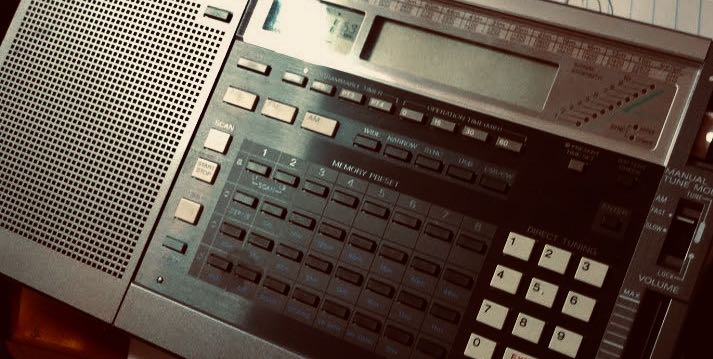
It was about this time that I realised my Sony ICF2001D had a feature I could use to the benefit of all my fellow Australians in the compound. In the first instance, I was able to arrange for an audio feed from the 2001D in my villa into the compound’s CCTV system, so that – provided someone plugged the audio in correctly – the signal from my Sony radio’s line out was relayed to every other villa that cared to listen. As I was absent during most of the working day, I used the Sony’s programming feature that allowed for up to 4 separate listening sessions to be set up. Each program required a SW frequency and start/stop times to be programmed. I think each session had a time limit of perhaps 4 hours. This enabled me to set the radio up to relay BBC World Service for most of the day switching automatically to certain frequencies as appropriate, and also provided the people with some brief Radio Australia segments with news from home.
In the period prior to January 1991’s, when George Bush had promised to retake Kuwait if Sadam Hussein did not withdraw, it was also interesting to pick up Iraqi broadcasts intended for (and to try to demoralise) American servicemen. Very strong signals from Baghdad were regularly audible, I seem to recall 11825kHz being one such frequency.
In the event, about January 16, 1991 the allies invaded Kuwait from Saudi Arabia, and made devastating air based attacks on Iraqi facilities. Radio Baghdad’s shortwave service did not seem to last very long after that.
We Australians were told in no uncertain fashion that Iraqi “Scud” missiles were ballistic (hence not accurately targeted), and would definitely not have the range to reach Riyadh in Saudi Arabia. The experts were wrong however, and a couple of scuds did reach Riyadh. As our compound was in the “flight path” from Iraq to the Riyadh airbase the Americans were using, it turned out we were not in the best location! The American forces had “Patriot Missiles” set up to intercept any Scuds that got through, but nobody told us that the Patriots break the sound barrier seconds after being fired, and that they’re only capable of intercepting Scud missiles just before they hit the ground. You can imagine the sonic booms that went off the first night Scud missiles arrived: I have photo in my home that some daredevil took outside, that proves all this.
We had been told to tape up the glass on our villas in case it should shatter, and that we should leave our TV sets tuned to our CCTV channel turned on at all times, with the volume up so that if there was an air raid the staff and their families could be alerted by means of a piercing alarm sound that someone had fiendishly created. And so it was that one Thursday, when Jonathan Marks had scheduled a telephone interview with me for Radio Netherland’s Media Network, we were discussing media events in Saudi Arabia when the air raid alarm went off, and we had to postpone the rest of the interview. I seem to recall that he did call me again later the same night and we finished things off. I never did get to hear the program, or I would have recorded it! As far as I know, it’s not one of the programs that Jonathan has been able to find to include in his on line media vault. If anyone else has a copy of this early 1991 edition, I’d love to hear it again.
As the experts had been wrong in their assessment, it was decided that most of the Australians would be removed from Riyadh, and I was sent to do my work from Jeddah, for about 6 weeks. Again it was a slightly different media environment, and while interesting, I missed the ICF2001D, and bought a cheap multi band analogue portable to be able to keep up to date with BBC World Service News broadcasts.
By early March 1991, most of the fighting was over, and it was safe for me to return to Riyadh, where I worked for another two or three months, before returning to my normal job and family in Australia.
Off-Air Audio Recordings
Radio Baghdad to US Troops (1990):
BBC World Service News of the start of Desert Storm (January 16, 1991):
Radio Australia announcement by the acting Foreign Affairs Minister (January 16, 1991):
AFN Riyadh (Brief clip of Army Sergeant Patty Cunningham signing off her shift):
Please support this website by adding us to your whitelist in your ad blocker. Ads are what helps us bring you premium content! Thank you!

 Many thanks to SWLing Post contributor, 13dka, who shares the following guest post: