Author Archives: Thomas

Southgate ARC notes Ofcom’s approach to FM pirate enforcement

City_of_London(Source: Southgate ARC news)

“The UK communications regulator Ofcom have published information about tackling pirate radio

Although Ofcom have occasionally raided pirate stations operating in the 88-108 MHz band, such enforcement actions have been few and far between.

After the 2008/9 financial year, Ofcom stopped publishing their Prosecution/Formal Warning Statistics and subsequently removed all prosecution statistics from their website, perhaps to hide the fact that they no longer published them. It may be speculated the reason the statistics no longer appeared was because Ofcom had stopped undertaking enforcement action.

Currently in London there are over 25 pirate stations operating in the 88-108 MHz band. Many operate 24/7 so are not exactly difficult for Ofcom to locate if they wished.

In the Pirate Radio page Ofcom point out that they have issued Community Radio licences to former pirate radio stations such as Rinse FM and Kane FM. The inference that may be taken is Ofcom would like pirate radio stations to apply for community radio licences.

Read Ofcom’s pirate radio page at
http://consumers.ofcom.org.uk/2013/09/tackling-pirate-radio/

Large amounts of spectrum in 88-108 MHz will be vacated when national broadcasters shutdown their FM transmitters and move to DAB only from 2015 http://www.southgatearc.org/news/june2013/
dcms_dab_radio_reports.htm

2008/9 Ofcom radio prosecution statistics
http://www.southgatearc.org/news/may2010/ofcom_prosecutions.htm

Thanks to Mike Terry and BDXC for spotting this item”

And many thanks to the excellent Southgate ARC for posting this news.

For a brilliant mini-documentary on London pirates, check out this video.

Living off-grid? The ideal shortwave radio system for you

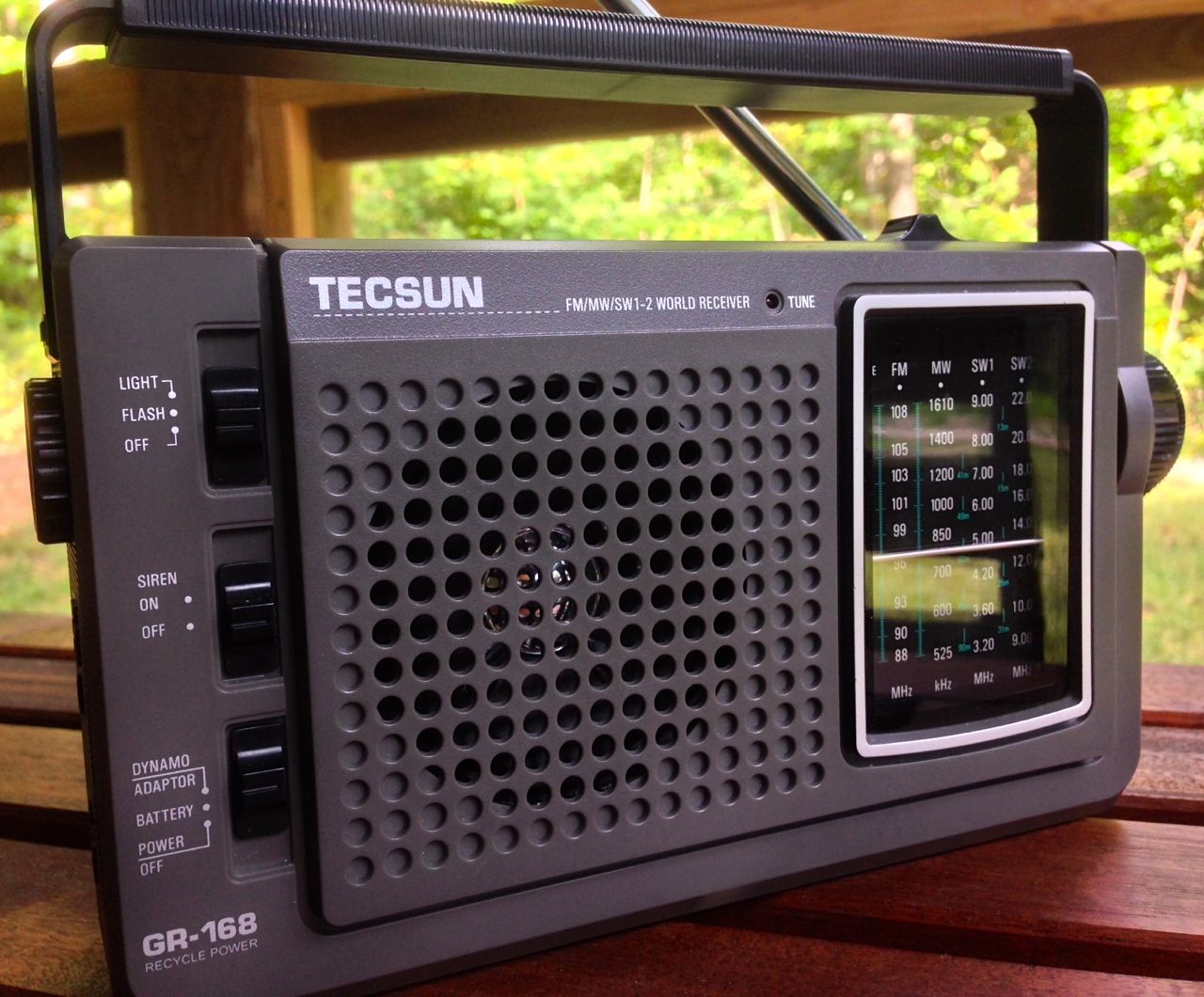
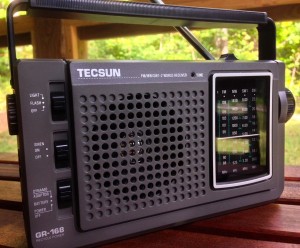
While the Tecsun GR-168 is my current pick amongst self-powered shortwave radios, their performance is only mediocre compared to a proper, hobby-grade receiver with SSB.

While the Tecsun GR-168 is my current pick amongst self-powered shortwave radios, performance is only mediocre compared with a proper, hobby-grade receiver with SSB.

What’s the best system for off-grid living? From time to time, I’m asked this question in the “comments” section of the website or via email.  Recently it came up again, and I thought it might make sense to answer it here, and also open it for discussion.

Specifically, SWLing Post reader, Phil, writes:

“[H]i, I am looking for a SW radio that can be used in an off-grid location (rechargeable/ wind-up/ 12 volt DC/ or solar powered), that can pick up a wide range of English speaking stations from here in SW Spain, fantastic audio quality, in the £100-200 price range, and can pick up ham etc transmissions in an emergency (with SSB?).  I know NOTHING about SW, so the CCRadio-SW looked about right, except it doesn’t have SSB.  Any other suggestions?
SolarQTH2

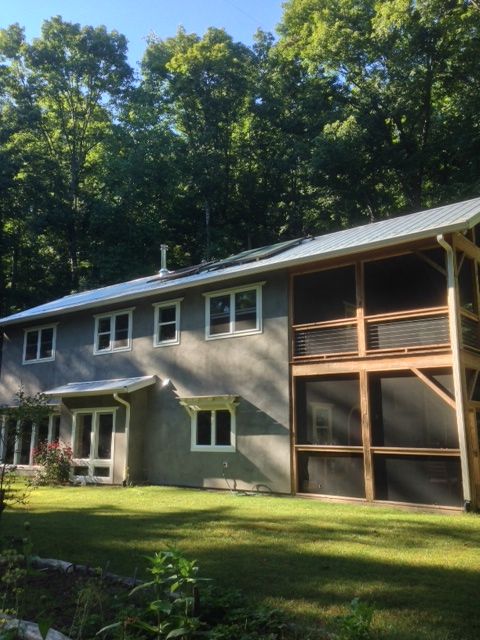
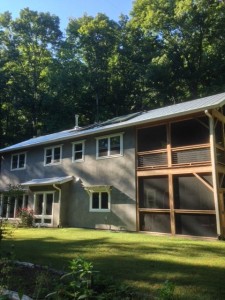
Our little solar cottage, where The SWLing Post is often produced from the sun’s energy

Phil, I’m glad you asked. I may be uniquely qualified to answer this question, as I live in and work from a solar house that is off-grid at least some of the time, and I run a charitable non-profit, Ears To Our World (ETOW), that uses shortwave radio for educational purposes.  ETOW works in schools, homes, and entire communities that are very often extremely remote, and, by default, off-grid.

So, you have a number of great options to choose from–and whatever options I overlook, our fellow SWLing Post readers will surely supply.

As the ability to receive SSB signals is important to you (and I agree), all of these options will take this requirement into account. You’ll notice that I’m not elaborating on crank/wind-up radios; while there are many of these on the market, none include SSB as an option. Fewer and fewer even include shortwave radio as an option. With that said, my current pick is the Tecsun GR-168 (photo above). Another to consider is the EU/Asian version of the Eton Rover (US versions lack SW, but feature NOAA frequencies).

Following are the options I would suggest for you–or for anyone looking to add a solar-powered radio system to their off-grid set-up.
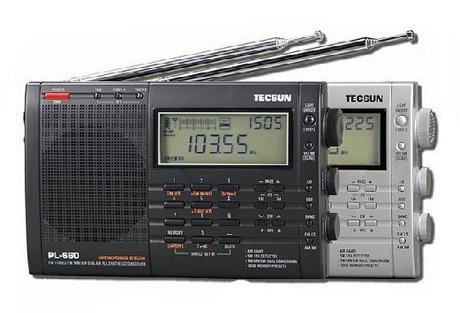
The Tecsun PL-660

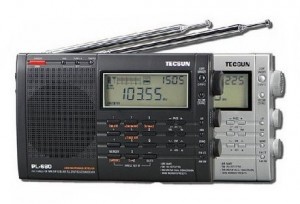
The Tecsun PL-660

Option 1: Portable radio

Most of the good portable radios on the market use AA batteries and can run quite a long time on a set.  I would recommend purchasing the Tecsun PL-660, Sangean ATS-909X, or the Sony ICF-SW7600GR. The PL-660 is possibly the best choice for ease of use and overall value; it’s an impressive little radio, and has good audio fidelity for the size.

Since these radios operate from AA batteries, I would simply purchase a 12V AA battery charger, if you have 12 volts DC available.
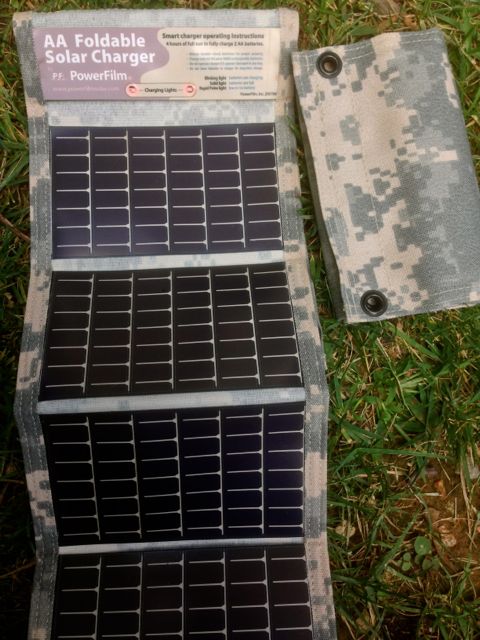
A PowerFilm Solar AA charger unfolded and charging on left, folded panel on right.

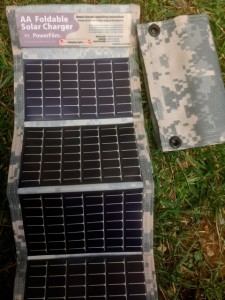
A PowerFilm Solar AA charger unfolded and charging on left, folded panel on right.

The other option would be to purchase a solar AA battery charger. I’ve tested a lot of these, and the best I’ve found are made by PowerFilm Solar here in the USA. What I like about these solar chargers is that they can charge either two or four batteries at a time––the panel folds out and has enough wattage to charge depleted cells within a few hours of sunlight exposure.  Folded up, they’re small enough (a little larger than a wallet) to be used for travel.

I have used PowerFilm’s solar chargers extensively and they continue to impress.  Note, however, that they are not waterproof––you cannot leave them outside in rainy conditions.

This radio/panel combo can be purchased for under $250 US (£155/185 EUR).

Option 2: Tabletop receiver
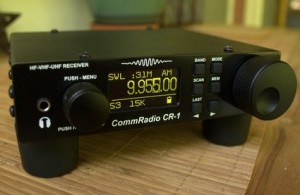
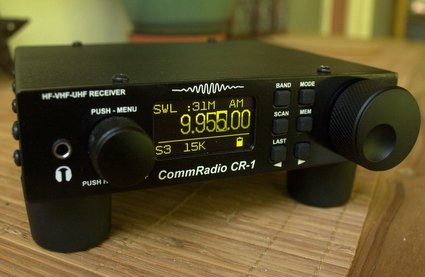
The CommRadio CR-1

The CommRadio CR-1

If you have access to 12 volts DC in your home or cabin, and you’re less concerned about portability, then a tabletop receiver might fit your price range and will offer you better performance, when coupled with a reasonable outdoor wire antenna.

You would want to find a tabletop receiver that could run on 12-13.8 volts DC. Many amateur radio-class communications receivers will do this. I would recommend one of the following:

  • The Alinco DX-R8: an excellent receiver for the price. You can find them used for around $350 US. I ran one off solar power here at my home for almost 2 years.
  • The CommRadio CR-1: A new product this year. A bit out of your £100-200 price range, Phil, but worth considering as not only is it beautifully engineered, but it’s portable, and operates anywhere from 6 to 18 VDC! As a bonus, it has a built-in battery that will power it for hours.  I’m due to publish the full review of the CR-1 very soon–here’s a quickie.
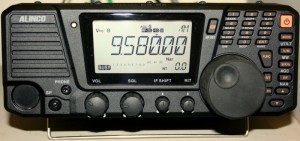
AlincoDX-R8T

The Alinco DX-R8T tabletop shortwave receiver

One side note: It’s possible–depending on the type you use–that your home’s solar charge controller(s) could inject a lot of noise into your daytime shortwave radio listening.  My charge controller does this, but I can turn it off and, if it becomes too much of a problem, actually modify it to do charging with less switching.
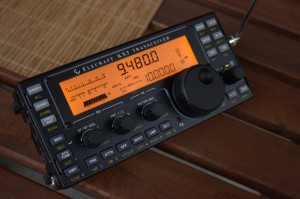
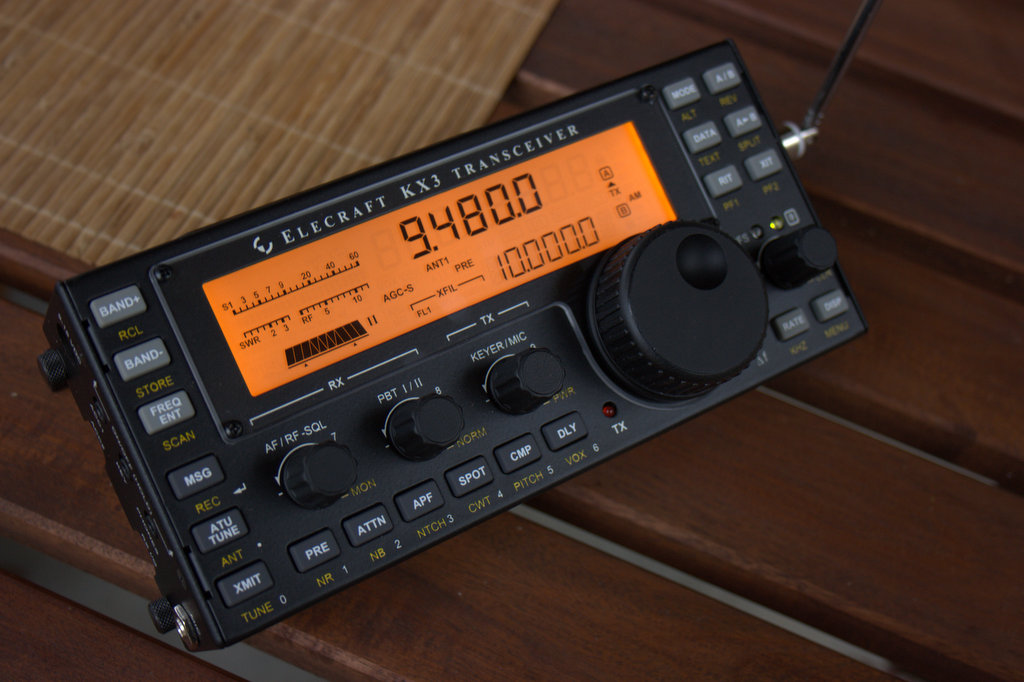
The Elecraft KX3 general coverage Transceiver (Click to enlarge)

The Elecraft KX3 general coverage Transceiver (Click to enlarge)

Option 3: Get your amateur radio ticket and a transceiver

This option is identical to option 2, other than instead of buying a receiver, you buy a transceiver. I’m talking about becoming a licensed amateur radio operator or “ham.” Living where you do, and being a bit of a preparation guru, I can assure you that a ham radio license is a true asset and can keep you connected with the world when everything else fails or when you want to chat with a friend 3,000 miles away.

It’s well beyond the scope of my advice here to cover amateur radio–it’s a vast and multi-faceted hobby–but as a ham (callsign K4SWL–and, formerly, M0CYI in the UK) I can tell you that becoming one is a decision you’re not likely to regret.
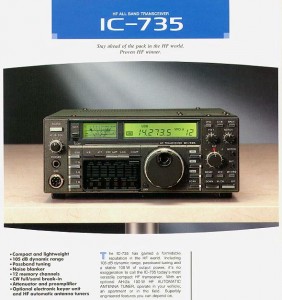
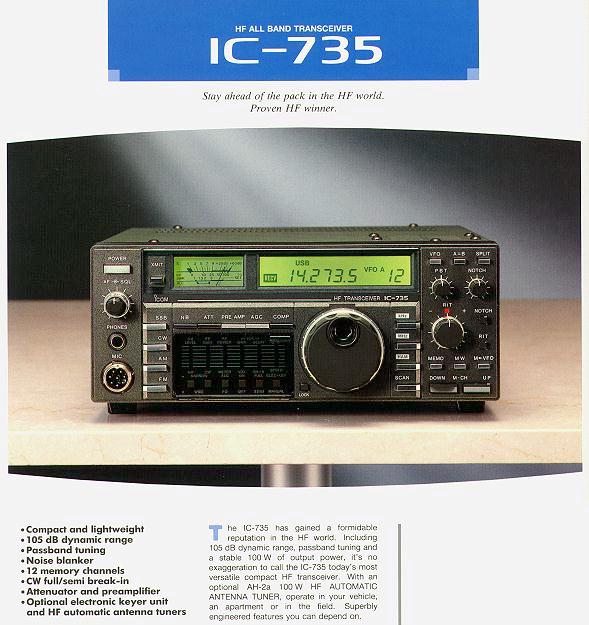
A brochure of the original IC-735. These can be easily found for $300-350 US used.

A brochure of the original IC-735. These can be easily found used for $300-350 US (220-260 EUR).

If you’re licensed, you can purchase a general coverage ham radio transceiver and not only be able to use the rig for ham radio purposes, but also for all aspects of shortwave radio listening. I spent many years using the (now very affordable) Icom IC-735 as my shortwave receiver. Though I have dedicated receivers at home, I now use the Elecraft KX3 for ham radio and receiving on the go.  I recently posted a review of the KX3 that can better explain in detail.

Phil, since you’re from the UK, consider contacting the RSGB and asking about becoming a ham in Spain (or getting licensed in the UK and getting a Spanish call sign). If you lived in the US, I’d advise you contact the ARRL, or in Canada the RAC.  Most countries, however, have a support organization for amateur radio–the IARU can help guide you.

More options?

I’m sure SWLing Post readers may also have suggestions for off-grid SWLing–please check this post’s comments.

Readers: be sure to check out Phil’s website about simple, off-grid living in southern Spain.  Phil, thanks for the question!

Pirate Radio Recordings: Radio Borderhunter

"Woah! Timmy, is that Europe calling???"

“Whoa! Timmy, is that Europe calling?”

You’ll typically find North American radio pirates here on the SWLing Post, but on occasion, I do manage to pull in a station or two from Europe.  Last night was one of those rare occasions, and I have Ragnar at Pirates Week to thank for the tip.

I tuned in Europirate Radio Borderhunter on 15,500 kHz AM, starting around 21:50 UTC. For an AM signal out of Europe, I was most impressed with Radio Borderhunter‘s strong signal.

I recorded about forty minutes of the pirate’s broadcast before propagation shifted.  He then moved down to 6,210 kHz in the 48 meter band, a prime Europirate hangout, to continue his show.

Click here to download the recording as an MP3, or simply listen via the embedded player below:

By the way, check out Ragnar’s latest podcast on Pirates Week!

Pirate Radio Recordings: Radio Gallifrey Intergalactic

The Citadel of the Time Lords on Gallifrey (Source: Wikimedia Commons)

The Citadel of the Time Lords on Gallifrey (Source: Wikimedia Commons)

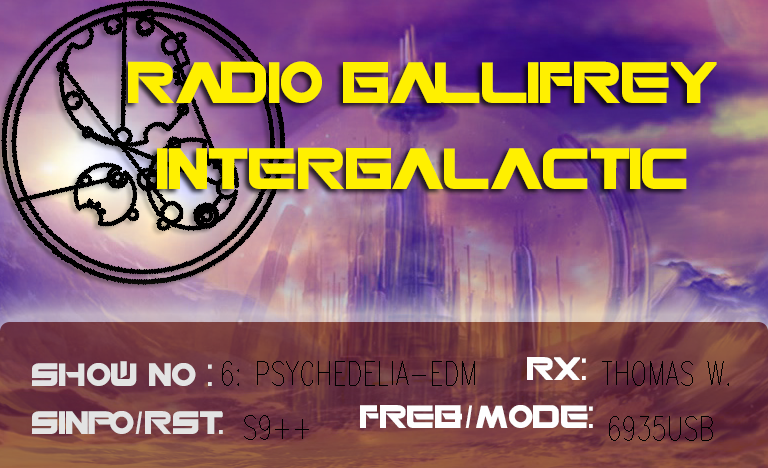
Last night, I recorded pirate station, Radio Gallifrey Intergalactic.

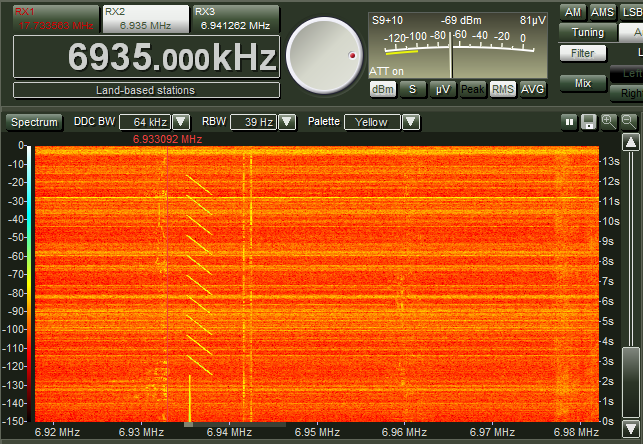
RGI appeared on 6,935 kHz USB and started their broadcast with a set of audio sweeps (which looked rather distinctive on my SDR’s waterfall), followed by tones and then straight into the Dr. Who theme.

What followed was a free-form set of spacy electronic music; from ambient to trance. You’ll hear their station ID in Morse code.

Click here to download an MP3 of the full broadcast, or simply listen via the embedded player below:

twGallifrey-QSL

VOA Radiogram this weekend includes Greek and images in MFSK64 and 128

VOARadioGram(Source: VOA Radiogram)

VOA Radiogram for the weekend of 21-22 September 2013 is produced using Fldigi3.21.76AB. For best results, use this version, available from www.w1hkj.com/alpha/fldigi/v3.21/

One improvement in 3.21.76AB is that it can send images in MFSK64 and MFSK128. Previously, MFSK32 was the fastest MFSK mode for sending images without the pictures appearing skewed (off center). Images do not transmit more quickly in MFSK64 and MFSK128, but they do have higher resolution.

If your decoded MFSK64 and MFSK128 images are still slanted or skewed, calibration of the receive codec might be helpful. One such method for doing this is described here: www.w1hkj.com/FldigiHelp-3.21/DigiWWV.html.

Our non-Latin alphabet of the week is Greek. You will need the UTF-8 character set for the Greek and for some of the punctuation in the English items. I forgot to change some of the typographic apostrophes ’ to typewriter apostrophes ’ , so they will not display correctly if you do not have the UTF-8 character set. In Fldigi, that adjustment is made in Configure > Colors & Fonts.

This weekend’s program includes an English VOA News item in Flmsg format. When all the text is received, the story will render, or pop up, as a new web page on your browser, suitable for saving or forwarding. To make Flmsg work with Fldigi (both can be downloaded from w1hkj.com), in Fldigi: Configure > Misc > NBEMS — Under Reception of flmsg files, check both boxes, and under that indicate where your Flmsg.exe file is located.

Much of the show this weekend is in the MFSK64 mode, which might be a bit optimistic if reception conditions are less than ideal.

Here is the lineup of modes for VOA Radiogram, 21-22 September 2013:

2:53 MFSK16: Program preview
2:40 MFSK32: Sample of Greek text
:49 MFSK32 image: VOA Greek Service logo
3:01 MFSK32: “Need to Protect the Internet”
1:45 MFSK64: Radio Free Sarawak/Discovery Channel
2:23 MFSK64 image: “Duck Commander”
:27 MFSK128: CNBC Saracens deal
:48 MFSK128 image: CNBC logo
:45 MFSK32: E-mail address
4:40 MFSK64: BBC Worldwide, Giglio TV, Voice of Greece, All India Radio
2:55 MFSK64/Flmsg: VOA News re Voyager Golden Record
2:17 MFSK32 image: Voyager Golden Record
:33 MFSK32: Closing announcements

VOA Radiogram transmission schedule
(all days and times UTC)
Sat 1600-1630 17860 kHz
Sun 0230-0300 5745 kHz
Sun 1300-1330 6095 kHz
Sun 1930-2000 15670 kHz
All via the Edward R. Murrow transmitting station in North Carolina.

Please send reception reports to [email protected]

Shortwave radio: the secret item found in many North Korean homes

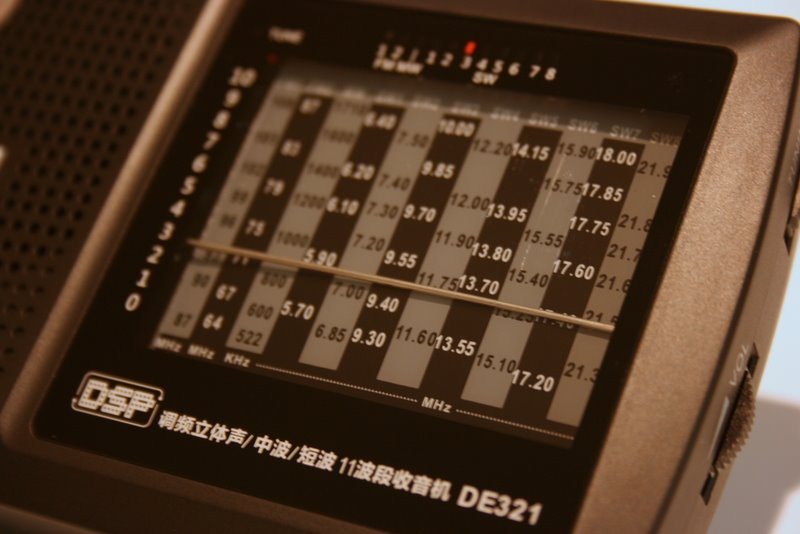
de321dialI’m not surprised to find that North Korean families hide shortwave radios. After all, if it’s well hidden, and listened to privately, there is no way the government can monitor what is heard on shortwave, nor trace it back to the family listening. This is what separates radio from the Internet and mobile devices:

(Source: New Focus International)

Many North Korean families keep a secret item at home, whose discovery may lead to harsh punishment. Away from prying eyes and in the privacy of their homes, North Koreans enjoy using items forbidden by the state, according to North Koreans who have recently escaped from the country.

“In every North Korean home, there is at least one secret item” says Jung Young-chul* (age 34), who left Korea in 2012. He had a short-wave radio in the house and the family would secretly listen to South Korean broadcasts. To avoid being caught, they kept the radio hidden under a container for keeping rice.

They were not the only ones with a hidden radio. Jung explains, “Once, a friend described a story that I had heard the night before while listening to a South Korean broadcast. I brought it up with him one night in drink, and he confided that his family too had a radio. We laughed about it together.”

[Continue reading]

If you want to hear North Korean propaganda on shortwave radio (via the Voice of Korea), check here for the latest schedule or even listen to this recent recording.

This post tagged in the category: Why shortwave radio?