Author Archives: Thomas

Senator Segal’s motion receives unanimous vote: special committee enquiry into RCI cuts

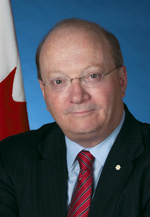
An excellent development in Canada: Senator Hugh Segal’s motion for a special committee enquiry into the CBC decision to slash the Radio Canada International budget by 80 per cent has received a unanimous vote in the Senate. Committee hearings will begin as early as February.

Below is the full press release I received from Senator Segal:

(Source: Office of Senator Segal)

Senator Hugh Segal has issued this statement on the unanimous vote in the Senate to have a special committee enquiry into the CBC decision to slash the RCI budget by 80 per cent.

“I am delighted that, in a non partisan way, the Senate voted to have the RCI matter go to a full review of the Standing Senate Committee on Transport and Communications.   My motion was amended by Senator Champagne to go to a full committee hearing rather than a one day appearance before bar of the Senate.

That a ten percent cut to the CBC budget produced an 80 percent slash and burn of  Radio Canada International reflects an internal CBC management decision which needs to be better understood.  CBC management may well believe that if they let people go and dismantle transmitters, the problem will go away.

The importance of Canada’s voice to the rest of the world is not a detail of no consequence. The chance to call witnesses, pursue how other enlightened countries have expanded their short wave capacity, among other facts, will be a constructive step ahead in strengthening Canada’s international voice.”

Committee hearings on this matter may start as early as February2013.


BBG (Voice of America) ranks in bottom five places to work

This just out: the Broadcasting Board of Governers has been ranked in the bottom five places to work in the 2012 edition of The Best Places to Work in the Federal Government by The Partnership for Public Service and Deloitte. Specifically, the BBG consists of the Voice of America, Radio Free Europe, Radio Free Asia, Radio and TV Marti, the Middle East Broadcasting Network and the International Broadcasting Bureau (see org chart here). [Kim Elliott points out, however, that the survey only covers the VOA and the IBB.]

BBG’s leadership lacking

Upon closer examination of the rankings and score composite, you can see BBG employees scored their agency worst in categories of Effective Leadership. Indeed, the BBG ranked in the bottom five of the 290 mid-sized federal agencies in the survey in all of the effective leadership sub-categories of the survery. Here a breakdown:

No plan for the future

Another area where the agency received a low score was in the category of Strategic Management: BBG employees rankings came in at 289 of 290, with only the Office of Chief Information Officer (HUD) ranking lower.

This, no doubt, shows that BBG employees feel there is no direction nor goals for the organization’s future.

I know quite a few employees in the Voice of America and the IBB. When I talk with these friends, I hear true passion for their jobs. They love what they do, whether it’s reporting or electronics engineering. When you read the results of this survey, it’s clear that these competent employees simply lack faith in their governing board and their management. The results suggest that they feel there is no plan for their future, and have concerns about their job security–especially with rumors of agency functions being merged and with jobs (like those at Radio Liberty) being cut without warning.  They also feel there is no chance for performance-based rewards and/or advancement.

A sad state of affairs, indeed, for the worthy and still highly relevant role of radio in international diplomacy.

Read the full report of the BBG (Voice of America) in The Best Places to Work in the Federal Government.

Pirate Radio Recordings: True Classic Rock Radio

Last weekend, I caught a shortwave pirate I’d never heard before: True Classic Rock Radio.

Well, at least I’m pretty confident that’s their name. When I first heard their ID I couldn’t confirm it, but when I passed the clip to my buddy Andrew, he nailed it.

Funny thing is, when I go back and listen to the station ID now (check it out around 17:30, and then again at the end of transmission) it sounds so obvious.

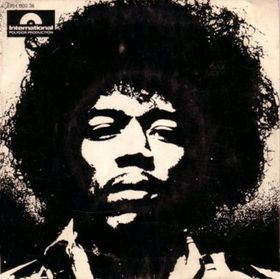
This short broadcast includes some great classic rock and ends with Hendrix. I didn’t note the exact time they began to broadcast, but I heard them on between 3:00-4:00 UTC, on 6,925 kHz AM, December 8, 2012. Click here to download the mp3 directly, or listen through our Archive.org player:

2013 WRTH: A look inside

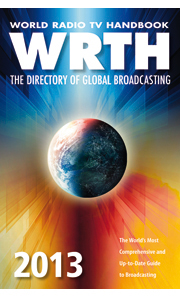
I just received my copy of the 2013 WRTH directly from the publisher. As many SWLing readers know, I look forward to receiving this staple radio reference guide, and this year it even arrived early. While other reference guides have pulled out of the scene, WRTH has remained strong, resistant to the economy’s negative influence upon radio, and their quality, too, has been consistent. Not only does WRTH have a loyal readership among hobbyists, but also among commercial broadcasters.

WRTH’s team of noted DXers from around the world curate frequencies and broadcaster information by region; while I’m not sure how they orchestrate all of this, the end result is truly a symphony of radio information. In addition to broadcaster listings, WRTH’s radio reviews, feature articles, and annual HF report make for excellent reading.

With that said, I dived into the reference’s reviews first, as the writers often test radios that I never have the privilege to test in my shack, such as units out of Europe. This issue is no exception:  WRTH reviewed the Cross Country Wireless SDR-4+, the Afedri SDR-Net, and one I have tested, the Bonito 1102S Radiojet––all receivers from smaller manufacturers throughout Europe.
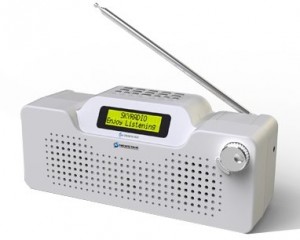
The DR111 DRM Radio (Photo: Chengdu NewStar Electronics)

Although WRTH notes that there have been very few new additions to the tabletop or portable market for 2013 (I absolutely agree), it does cover the Newstar DR111 portable DRM receiver.

Low-band DXers who like experimenting with antennas will be happy to see that they also test the Wellbrook FLG100LN. Since 2009, WRTH has given attention to Internet radios, as many readers use these to supplement their SWLing; I certainly do. In this edition, WRTH reviews the Pure ‘One Flow’ and the Roberts Stream 83i, which they give their WRTH 2013 Best Internet Radio Award. Congratulations!
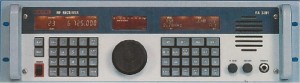
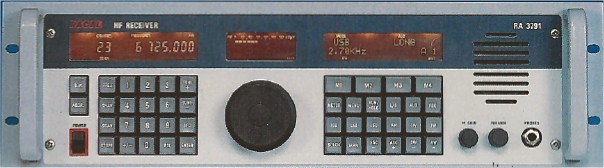
The Racal RA-3791 (Photo: Firmenprospekt)

The Racal RA-3791 (Photo: Firmenprospekt)

WRTH also turns their reviewers toward some classic 1990s DSP receivers, like the Racal RA3791, the Marconi H2550, the STC STR8212, and the Rohde & Schwarz EK 085. I find these reviews, in particular, invaluable as a reference. Although many of these radios float around in the used radio market, I’m usually reluctant to invest in a product that was originally produced in smaller numbers, often for commercial/government use. If you’re knowledgeable enough to choose the right one, however, you could get benchmark performance at an excellent cost. Plus–well, let’s face it–they look cool.

I always enjoy WRTH’s human-interest articles as well. In this edition, WRTH features the Children’s Radio Foundation, who strive to give African youth a voice on the radio. As the director of a radio charity myself, I know the good folks at the Children’s Radio Foundation, and can assure you that you’ll love reading about their mission this holiday season; it’s very heart-warming.

WRTH also features an article on the island of Curacao and another on the new clandestine station, Khmer Post Radio.

Of course, WRTH also includes their digital update and HF propagation report.

All in all, this is another great edition of the World Radio TV Handbook. As I’ve said before, though I use online frequency databases fairly regularly, there is no replacement for a good printed frequency guide. Not only does WRTH contain more in-depth information on broadcasters and schedules, but it makes for quick reference, and doesn’t require a computer or Internet connection…much like your shortwave radio.

Purchase your copy of WRTH 2013 directly from WRTH’s publishers, or from a distributor like Universal Radio (US) or Radio HF (Canada). Happy reading!

Radio Australia: Saturday Night Country mixes in holiday music

Yesterday, like most Saturday mornings, I sipped my coffee while listening to ABC’s Saturday Night Country from Radio Australia’s Shepparton shortwave transmission site on 9.58 MHz.
In this program, SNC’s host, Felicity Urquhart, shuffled in some holiday tunes with her normal mix of country music, news and interviews. Fortunately, I captured the whole show in two recordings (starting on 9.58 MHz for the first hour, then moving to 11.945 MHz for the rest of the show).

Enjoy:

More shortwave digital text (and the reason behind it)

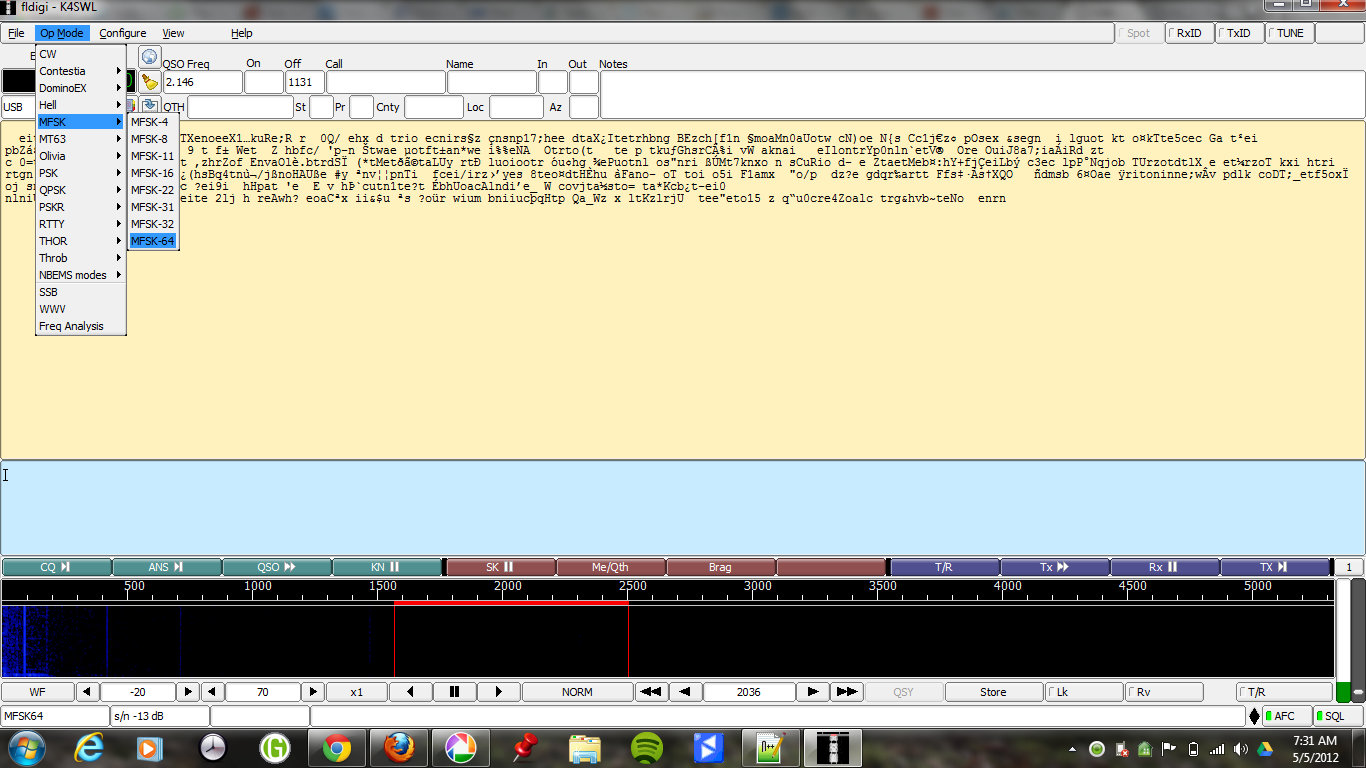
Screenshot of digital mode being selected in FLDIGI. Click image to enlarge.

SWLing Post readers have seen previous posts regarding text being broadcast via shortwave digital modes on WBCQ, WRMI and The Mighty KBC (which broadcasts again this weekend).

Recently, Kim Elliott explained his mission behind these digital tests. Not only do I agree, but I support him completely. Why? It’s proof that the shortwave spectrum is an excellent medium to transmit digital information across the globe. Decoding requires a very basic shortwave radio, some free software and a computer. I believe, in the near future, there will be a smart phone app that can handle this with ease–it simply needs a developer (hint, hint).

Here is Kim Elliott’s post on the topic–I have emphasized points in bold:

Radio amateurs use several modes to transmit text via shortwave. It occurred to me that text via shortwave might be a workaround whe[r]e the internet is not available because of disasters, dictators, or other causes.

I have not yet convinced any major international broadcasters to let me test this hypothesis on their (remaining) shortwave transmitters. However, the Netherlands-based Mighty KBC has kindly been allowing me two one-minute segments during their broadcast to North America at 0000 to 0200 UTC on 9450 kHz. This is via leased time on a transmitter in Bulgaria.

Reception of text via shortwave is possible on an inexpensive shortwave radio, even one without single sideband (SSB) capability. The audio is patched into a PC that does not have to be especially powerful. This involves a patch cord from the earphone jack of the radio to the microphone input of the PC. If there is no patch cord, placing the radio’s speaker near the built-in microphone of a laptop might work.

Software for decoding the text should be installed in the PC. There are several available to radio amateurs, including DM780, MixW, and MultiPSK. Especially popular these days is Fldigi. This is available from www.w1hkj.com. While you are there, please also download Flmsg, because it will be needed for this weekend’s test on KBC. [Note: This software is free and open source.]

This weekend’s test on KBC will feature the MT63 modes with long interleave. After Fldigi is installed, go to Configure > Modems > MT-63 > check 64-bit (long) interleave, 8-bit extended characters, and Allow manual tuning. Also, go to Configure > Misc > NBEMS > check Open with flmsg and Open in browser and, below that, indicate where your flmsg.exe file is located.

The first KBC text transmission will be around 0130 UTC Sunday (Saturday evening 8:30 pm EST). The MT63-1000 mode with long interleave will be centered at 1000 Hz on the waterfall visible on the software display. PSKR125 will be cenetered at 2200 Hz. Decode one while listening, and decode the other from your recording of the transmission.

The second text transmission will be just before 0200 UTC Sunday (9 pm Saturday EST). This will be MT63-2000 centered at 1500 Hz. This message will be formatted for Flmsg. If all goes well, the shortwave transmitter in Bulgaria will open a new window of Flmsg and then open a new window of your web browser with formatted content, in color no less.

One week after my first text transmissions (11 November) on KBC, Arnie Coro at Radio Havana Cuba began transmitting digital text modes on his Dxers Unlimited program (in English). He might do so again this weekend. The schedule for DXers Unlimited can be found at the World of Radio website (where all times and days are UTC, so those UT Monday transmissions are actually Sunday evening in North America).

More discussion of the concept of digital text via analog shortwave broadcast is in Kim’s December 2012 column (pdf) for the North American Shortwave Asociation.

NASB: Special DRM broadcasts for Wavescan

(Source: NASB via Alokesh Gupta)

The “Wavescan” DX program which is a joint production of NASB members Adventist World Radio and Radio Miami International, will be included in a new series of four DRM (digital) shortwave transmissions called “DRM Mix” sponsored by Spaceline in Bulgaria which will take place on 22, 23, 25 and 26 December, 2012. Wavescan will air from 17.00 – 17.30 UTC on those days. The frequency will be 9755 kHz from Bulgaria, covering Europe with 100 kW. Wavescan QSL cards are available for reception reports on these broadcasts. The program content will include information on the history of broadcasting in Bulgaria.