Shortwave listening and everything radio including reviews, broadcasting, ham radio, field operation, DXing, maker kits, travel, emergency gear, events, and more
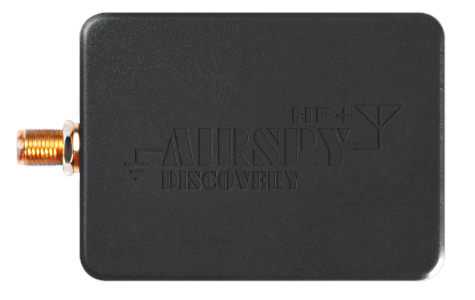
Fernando Duarte of Fenu-Radio has just posted his review of the AirSpy HF+ Discovery SDR prototype. I trust Fenu’s reviews because they’re always thorough and based on actual listening sessions.
In short, he’s quite impressed with the prototype. In many instances the Discovery outperformed his benchmark Winradio G33DDC Excalibur Pro. Quite an accomplishment for a $169 SDR!
I will evaluate a first production run AirSpy HF+ Discovery. Since it’s incredibly lightweight and compact, I believe I’ll try to even build a small portable SDR station around it. Stay tuned.
Over the past months, NASA’s Parker Solar Probe flew closer to the sun than any other spacecraft before it — not once, but twice on two flybys. The probe obviously collected as much data as it could so that we can understand the sun better. Now its mission team at Johns Hopkins Applied Physics Laboratory in Maryland has just received the final transmission for the 22 gigabytes of science data collected during those two encounters. That’s 50 percent more than it expected to receive by now, all thanks to the spacecraft’s telecommunications system performing better than expected.
Parker’s ground team found out soon after launch that the probe is capable of a higher downlink rate. In fact, they’re taking advantage of that ability by instructing the probe to send back even more data from the second encounter in April. During that event, the spacecraft’s four suites of science instruments kept busy collecting information. That’s why the mission team is expecting to receive an additional 25GB of science data between July 24th and August 15th.
The mission team will release the data from the first two encounters to the public later this year. Before that happens, the spacecraft will conduct its third flyby, which will start on August 27th and reach closest approach on September 1st. Researchers are hoping that over the net few years the mission can gather the information we need to unravel some of the sun’s biggest mysteries, including why the sun’s corona (its aura of plasma) is far hotter than its visible surface.
Many thanks to SWLing Post contributor, Marty, who shares the following article by John Schneider in Radio World:
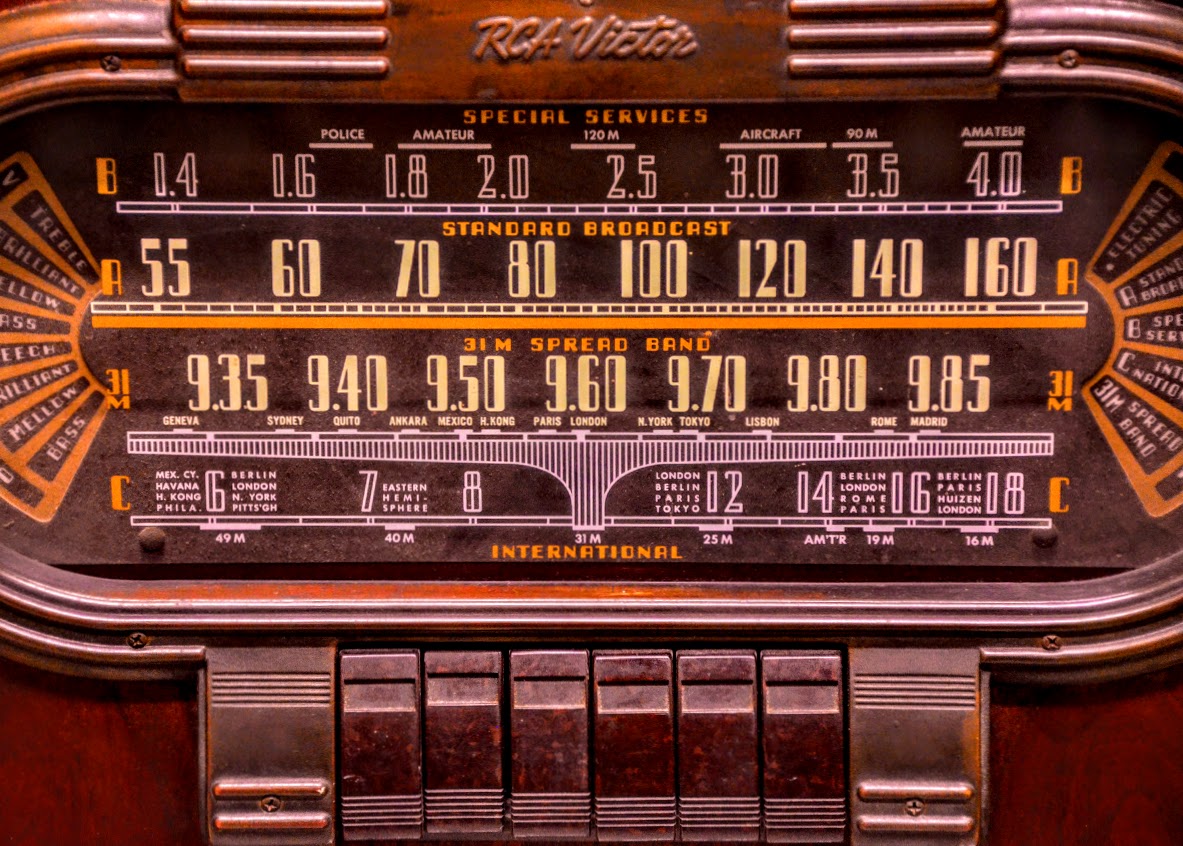
In the early years of AM radio broadcasting, all stations utilized non-directional antennas. Most all of these were wire antennas suspended between towers or buildings. Interference, especially at night, was severe. An interfering signal of 5% or less in signal strength was enough to disrupt reception of the desired station, and if the frequencies of the two stations were slightly separated, there would be a heterodyne beat note. As a result, only a few widely-spaced stations could operate on each of the AM broadcast channels in the entire country at night. This limited the number of stations that could coexist to about 500 nationwide, with many of them sharing time on a single frequency.
As antenna technologies were developed and improved in the early 1930s, a few progressive stations began experimenting with multi-element directional arrays. This approach offered two attractive benefits: 1) It could reduce radiation towards other stations on the same or adjacent frequencies, permitting more stations to share a frequency; and 2) a broadcaster could direct more signal towards the desired coverage area, and away from wasted areas such as open water in the case of coastal stations.
WFLA-WSUN
The first known use of a directional antenna was by a pair of stations in Tampa/St. Petersburg, Fla. In 1927, the Clearwater Chamber of Commerce acquired station WGHB and changed the call sign to WFLA. A companion station, WSUN, was operated by the St. Petersburg Chamber of Commerce. The two stations shared the frequency of 900 kHz, broadcasting on alternate evenings to promote tourism and business opportunities in their respective communities. In reality, they operated with two station licenses, but there was only one transmitter and one antenna.[…]
Many thanks to SWLing Post contributor, Gary DeBock, who shares the following guest post and update from the August 2019 Rockwork DXpedition:
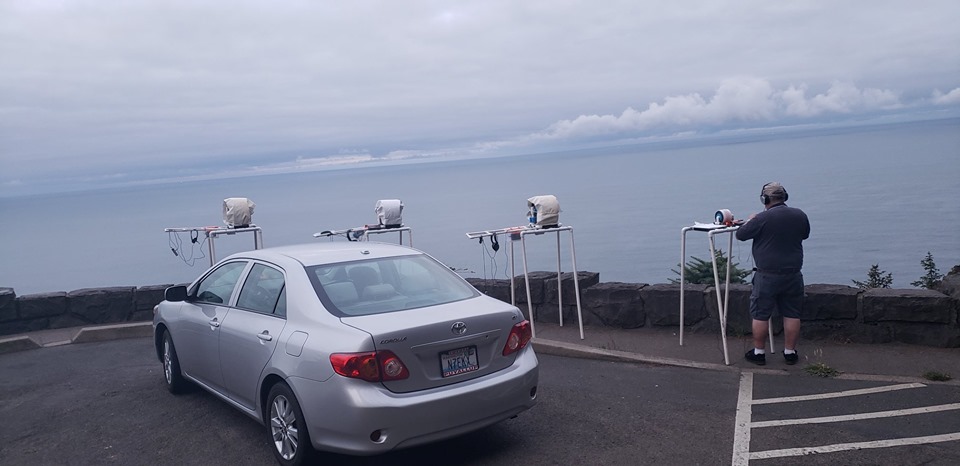
Gary DeBock DXing with Craig Barnes at the Rockwork 4 ocean cliff near Manzanita, Oregon, USA
Once again the largest FSL antenna collection on the planet made its way across the Columbia River bridge during an overnight trip to NW Oregon, finally being deployed at the original Highway 101 plunging cliff turnoff– Rockwork 4. There has been a drastic decrease in the squatter population, so that Craig Barnes and I were able to easily set up all four PVC bases for all-out DU-DXing at the dream site this morning (see photo). Unfortunately Chris Black came down with a health issue at the last minute, and needed to cancel out.
Craig and I had some excellent signals from the regulars (including 531-More FM, 558-Fiji and 1017-Tonga), although it wasn’t quite a stellar morning for rare DX. We were kind of spoiled last year with 1017-Tonga staying a S9 practically throughout the session, but this morning it was “only” at S9 for a few minutes at a time. This meant that as soon as I notified Craig of 1017’s potent status, the signal tended to nosedive. Maybe the cumulative effects of humidity and salt water exposure are beginning to take their toll on the Tongan big gun? 558-Fiji showed up with decent signals for a couple minutes at a time, which meant that Craig got the short end of the stick after I notified him of the potent signal. 531-More FM hit an awesome S9 peak around 1312 (including the usual split-second female ID), making it once again seem totally bizarre that no trace of the 2 kW modern rock station has ever been received at Grayland for the duration. The Rockwork Cliff is typically focused in like a laser on New Zealand, and this was a typical morning!
531 More FM Alexandra, NZ 2 kW Potent S9 modern rock signal from this Rockwork regular, with female “More FM” ID at 19 seconds:
Many thanks to SWLing Post contributor, RBC, who shares the following article from the website Defense One:
For more than four months, Hong Kong has been in the grips of a civil crisis. Protestors have taken to the streets to challenge the Hong Kong government’s growing acquiescence to Beijing while Chinese government forces and their allies have used militias to attack protestors and electronic tools to disrupt their communications. But media censorship means that few mainland Chinese know what’s going on.
A Silicon Valley-based organization has found a way to get information into China and out to Chinese speakers around the world: shortwave radio.
“Shortwave broadcast is kinda like a grey area,” said Sean Lin, one of the co-founders of the Sound of Hope radio network. “There’s no law that says you cannot do it. It depends on if governments want to keep [a particular radio station] going or shut it down based on Beiging’s pressure,”
Shortwave radio has been used for decades to broadcast news, information, political messages, and disinformation. During World War II, the Germans and the British both used radio waves between 3–30 MHz (10 to 100 metres) to try to persuade listeners around the world.
Sound of Hope, co-founded by Lin and Allen Zeng in 2004, looked to take the same technology and broadcast messages into China. Zeng originally set up the station to broadcast to the Chinese language population in Silicon Valley. It was his response to a dearth of Chinese-language news coverage that wasn’t heavily influenced by the Chinese government. “You would expect them [Chinese language news and media in the United States] to have some basic media decency and do their job. They don’t. They all have family in China. They need to go back to China. They need to do business in China,” said Zeng.[…]
Many thanks to SWLing Post contributor, Dan Robinson, who shares this excellent photo gallery from the Berryville Hamfest. Dan notes:
You will notice one photo in particular — of a rare Skanti R-8001 and a Telfunken E1500.
The Skanti, which went for only $600, is now comfortably sitting in my radio shack!
Wow! What an impressive collection of radios at this flea market. Looks like Berryville is worth the trip for anyone with an interest in vintage radio.
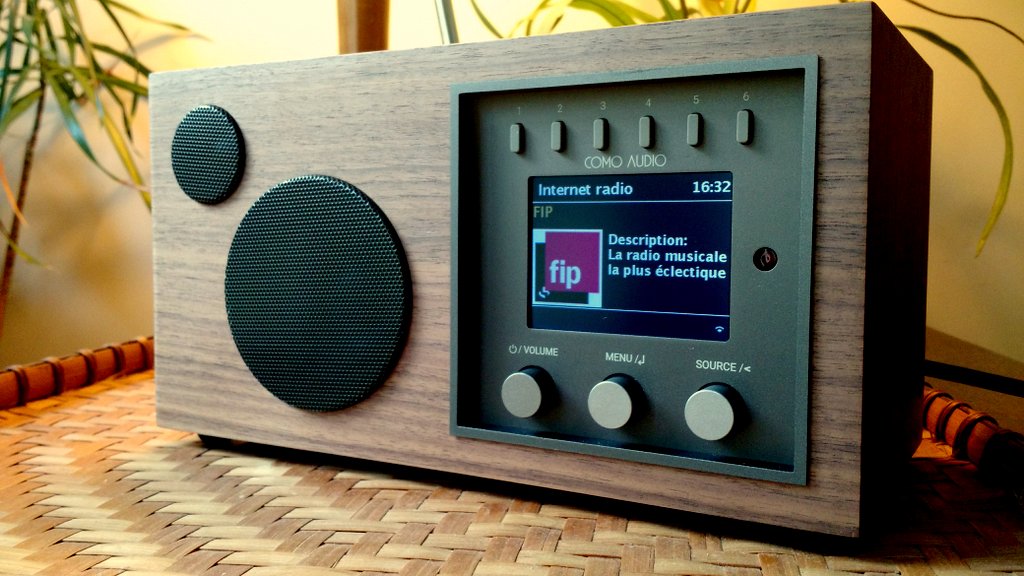
Many thanks to SWLing Post contributor, John Figliozzi, who discovered that the favorites feature is back on his Frontier Silicon-based WiFi radio and notes:
Check out the screen on your Como Solo and follow the instructions. Full features appear to be back! Wrote to Peter Skiera at Como and he said it wasn’t planned to go live until [today], but it showed up on my screen [Saturday]. Seems to work smoothly and flawlessly.
Brilliant news! Thank you for sharing, John. I’m happy to see that Frontier Silicon is getting back on its feet after dropping the vTuner backbone that powered its aggregator for so many years. Several others have commenting with this good news. This is certainly a positive sign.
Please support this website by adding us to your whitelist in your ad blocker. Ads are what helps us bring you premium content! Thank you!