Author Archives: Thomas

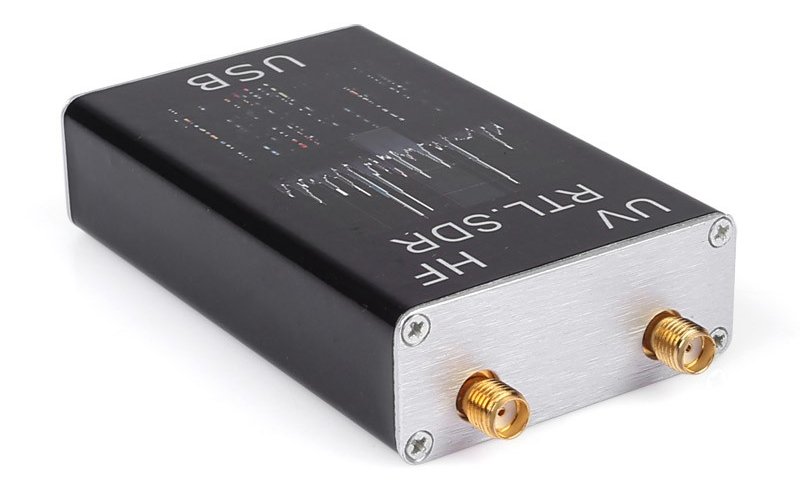
A $38.99 RTL-SDR with 100 Khz – 1.7 GHz coverage

RTL-SDR

Many thanks to SWLing Post contributor, Bill, who recently shared a link to this very affordable RTL-SDR with wideband coverage.

I am not at all familiar with this model, but I do like the enclosure and the fact it has both an HF and UV antenna jack. This must be one of the least expensive SDRs on the market with HF coverage.

Here are a few details per Radioddity.com:

Features:

  • 100% Brand New And High Quality
  • Using the RTL2832 idle channel, broadband connection impedance isolation transformer provides the signal to the signal receiver HF HF bands.
  • Increased input low-pass filter to improve noise performance of the machine. At the same time, it retains the original V / UHF band reception, creative use of studded way to achieve RTL2832 + R820t circuit board assembly and connecting circuits increases
  • Further improve the overall performance of the circuit.
  • In the homemade circuit board also surrounded, surrounded reserved some help to further develop the pads. The entire circuit is loaded inside a small aluminum to further improve the performance of the overall circuit interference by aluminum shielding.

Package Contents:

  • 1 x 100KHz-1.7GHz full band UV HF RTL-SDR USB Tuner Receiver/ R820T+8232 Ham Radio
  • 1 x USB cable
  • 1 x antenna

Post Readers: If you have experience with this little SDR, please comment!
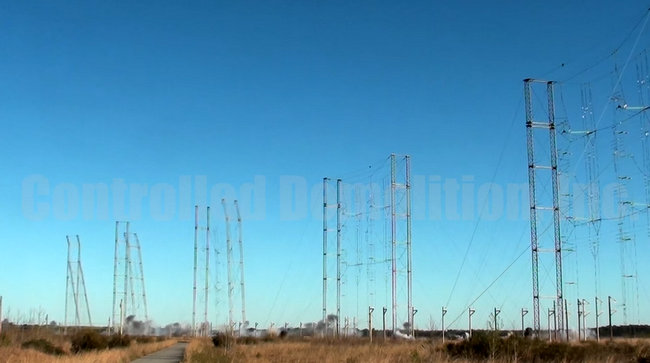
Video: Demolition company’s view of VOA Site A towers falling

Fullscreen capture 472016 113932 AM

While it’s fascinating to watch the video footage of the VOA Site A towers falling, it’s also a little heartbreaking.

As I mentioned in a previous post, I spent time last week at the VOA Site A’s twin site: VOA Site B (now the Edward R. Murrow Transmitting Station).

While it’s a little tough for me to watch, imagine how difficult it is for the engineers who lovingly cared for these giant antennas for so many decades. Still, VOA Site A’s antennas needed to be demolished–they hadn’t been in operation since 2006 and would have soon become a hazard to anyone on the site.

It’s just tough to see these powerhouse curtain antennas collapse:

Click here to view on YouTube.

Post Readers: I’m hoping to have time this weekend to put together the photos I took last week and responses to your questions.

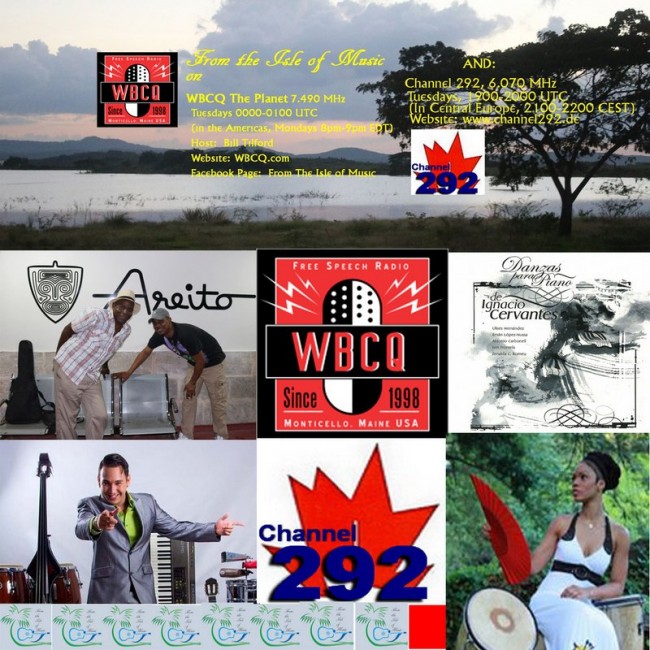
Update: From the Isle of Music

April11112promo copy copy

Many thanks to SWLing Post reader, Bill Tilford, who shares this From The Isle of Music update:

Since the addition of Channel 292 we are now getting excellent reception reports from as far east as Moscow.

Our April 11 (in the Americas) / April 12 (for the rest of the world) program will have more dance music than usual, with special guests Jesus Chappottin and Miguelito Cuni Jr. of Conjunto Chappotin, some classic dance tracks from Conjunto Los Bocucos and some Timba from El Niño y la Verdad. On the Jazz front, a new release by Brenda Navarrete, and more beautiful Cuban concert music from the album Danzas Para Piano de Ignacio Cervantes.

Two listening options on shortwave:

  • WBCQ, 7490 KHz, Tuesdays 0000 UTC (8pm EDT Mondays)
  • Channel 292, 6070 KHz, Tuesdays 1900 UTC (2100 CEST)

See the NOTES section of our Facebook page for program updates and other information.

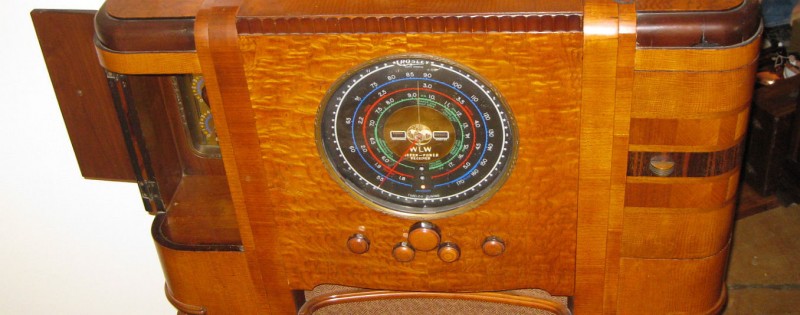
Video: 1936 Crosley WLW Model Super-Power Radio Receiver

WLW Model  Super-Power Radio Receiver-2

In response to our recent thread of posts about the Crosley WLW Model Super-Power Radio Receiver, I’d like to thank both Jonathan Marks and Mike Barraclough for sharing the following video by TNT Amusements on YouTube:

Click here to view on YouTube.

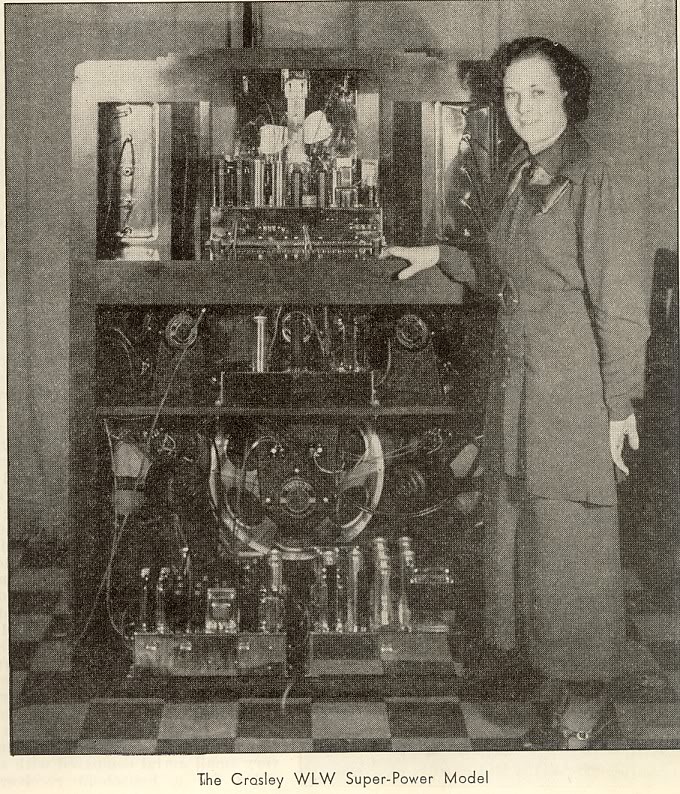
A.P. Richards’ 1939 thesis on the Crosley WLW Model Super-Power Radio Receiver

Crosley

In response to our recent post about the Crosley WLW Super-Power receiver, SWLing Post contributor, Larry Hagood, writes:

A photo of Dr Richards from the class of 1927.

A photo of Dr Richards from the class of 1927.

I am an EE student at Oklahoma State (Formerly Oklahoma A&M)–the school where the designer of the WLW [Super Power receiver], Amyle Richards, got his BSEE in 1927.

[Richards] wrote and submitted a masters thesis on the design of this radio, which earned him a PhD!).

I found a picture of him in the Engineering South building and found him in the 1927 yearbook in the library.

Anyway, the archive department located his paper on the WLW and is scanning it for me.

Many thanks to Larry for doing the research and sharing a scanned copy of Dr. Richards’ thesis about this Crosley benchmark receiver!

Click here to download A.P. Richards’ thesis as a PDF.

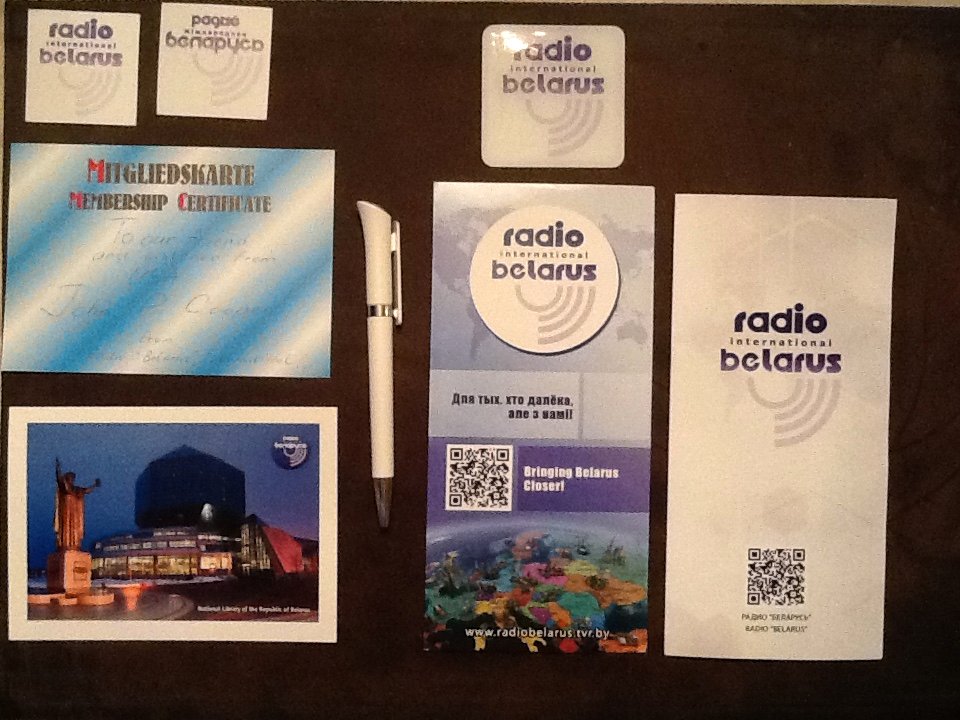
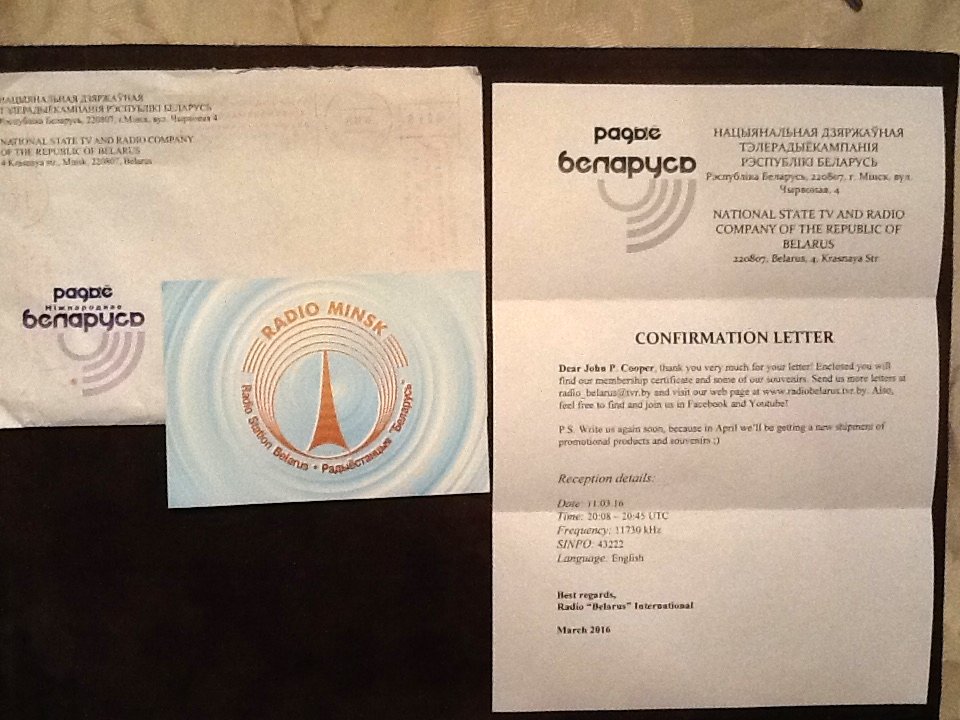
John’s QSL package from Radio Belarus

IMG_0568

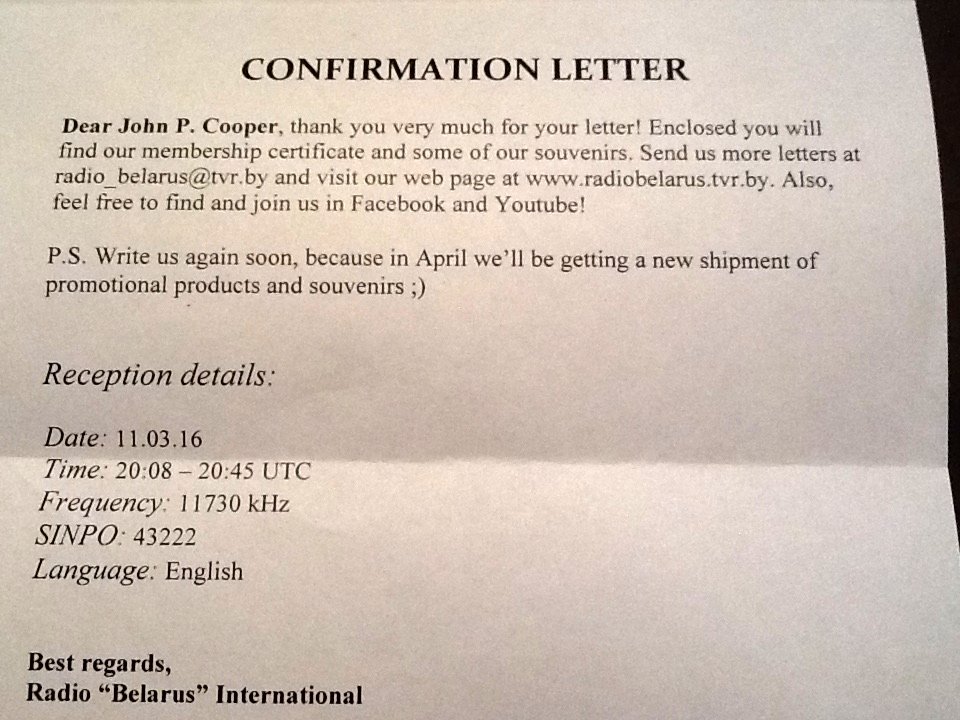
Many thanks to SWLing Post contributor, John Cooper, who writes:

I received this nice QSL package in the mail today from Radio Belarus. Since they went off the air 1 April, this might be one of the last batch of QSLs they sent out.

IMG_0570

The confirmation letter I found interesting. The postmark on the letter was 25 03 16. It’s a shame they’re not on anymore as they were audible here on the east coast as evidenced by the confirmation.

IMG_0572

I wonder what they’ll do with the souvenirs they were getting in April. Hopefully any new reports they get for the last broadcast will have a nice selection if they’re still answering.

Thanks for taking the time to share this, John! You have, indeed, probably received the last batch of QSLs Radio Belarus will issue.

Ken’s E. H. Scott Philharmonic Beam of Light console radio

E. H. Scott Philharmonic Beam of Light Open 2

In response to an inquiry in our post about the Crosley WLW Model Super-Power Radio Receiver, SWLing Post contributor, Ken Carr, writes:

I’m not sure if my radio is a ‘benchmark’ but it sure is close to it.
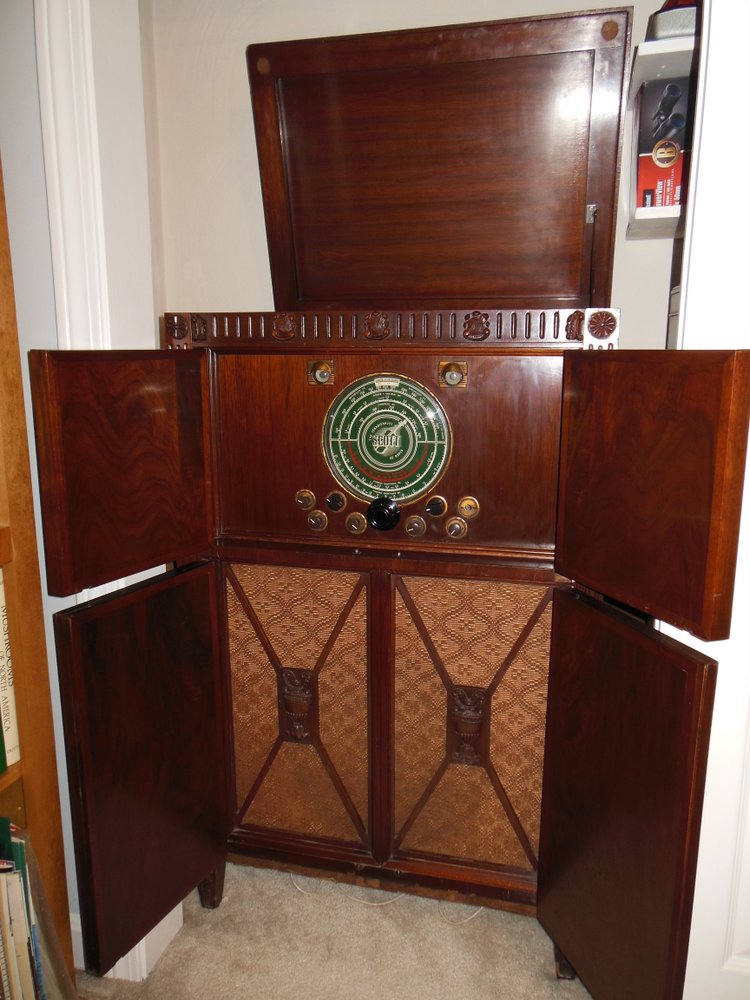
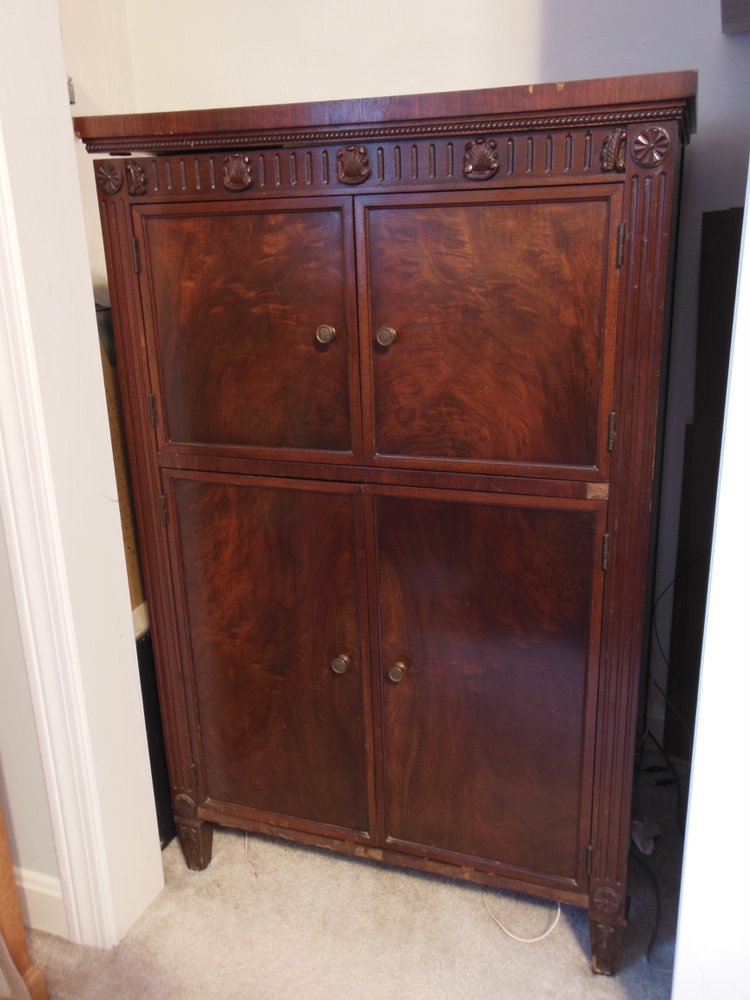
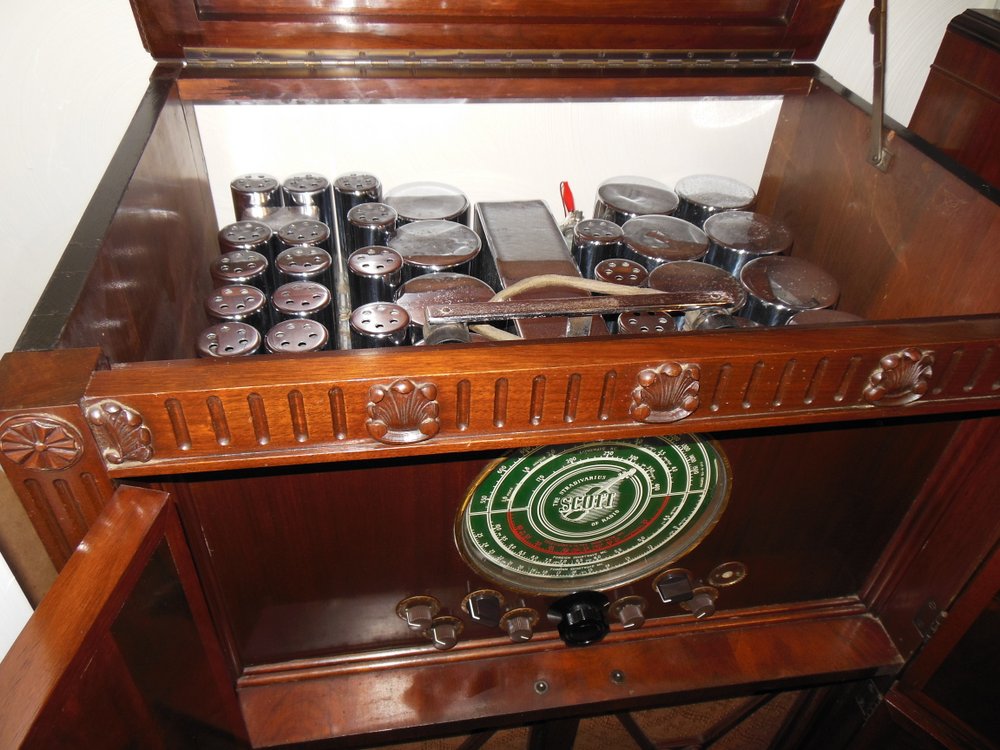
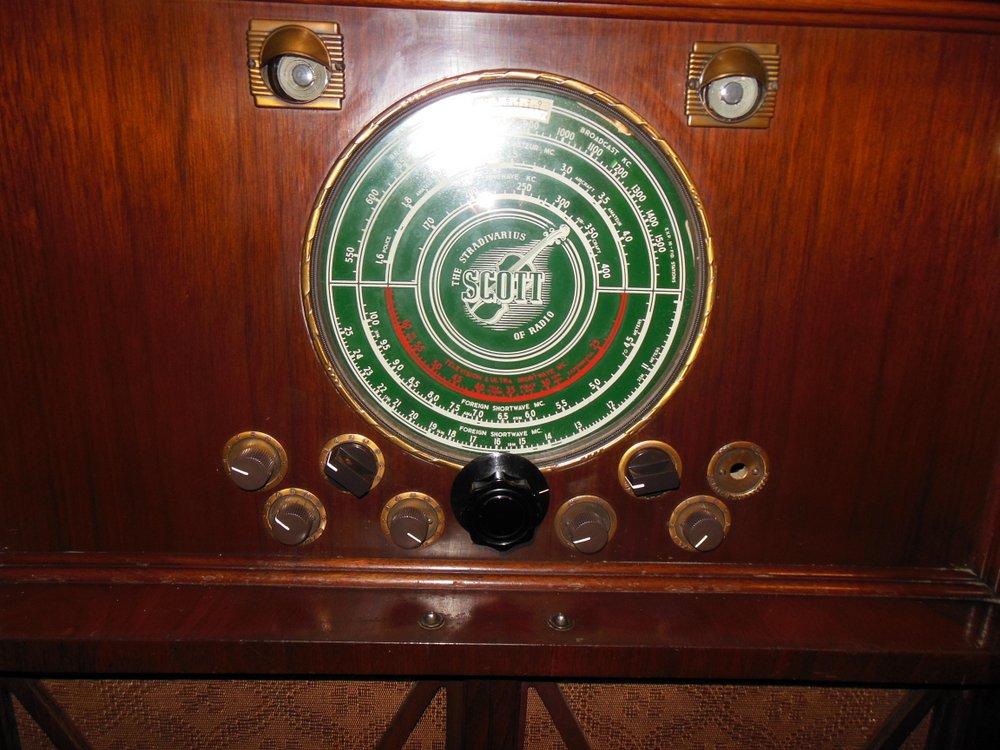
It is the E. H. Scott Philharmonic Beam of Light console radio.

E. H. Scott Philharmonic Beam of Light Outside Closed

Mine appears to have been built in 1939 or early 1940. It has 30 tubes, most of which are covered by chrome-plated shields. The power supply/amplifier (4 6L6’s in the output stage), receiver, 15″ speaker and cabinet easily weigh over 150 pounds.

E. H. Scott Philharmonic Beam of Light inside

It took me two years of occasional work (I am retired so I don’t rush) to get it going and working reasonably well. I had to replace over 100 capacitors and correct some B+ voltage problems left by a previous repair person. 

None of the knobs are correct (mine came without them … 9 required) and replacements are difficult to come by (and quite expensive when they do appear).

When receiving a strong station the volume is such that it would easily drown out anything within 100 yards (and with no distortion).

E. H. Scott Philharmonic Beam of LightDial

Some day I will post some details and photos on my WordPress site (idlenot.com). I’ll be sure to let you know, Thomas. [Note: Yes, Ken, please do!]

Oh, the first time I powered it up and received a station they were playing Light My Fire (The Doors, I think). Appropriate. I put a video of it on YouTube. The radio is all apart as I was still working on it at the time.

Click here to view on YouTube.

Now that is serendipity, Ken–I mean, the first music you hear after restoring this beauty is Light My Fire? Brilliant!

The E. H. Scott Philharmonic Beam of Light is a benchmark console by any standard. I first learned about this radio through a local classified ad–the owner was selling the internal components (and original knobs) but had no cabinet. I believe he was asking $1200. The chrome plating is such eye candy, I can see why some owner in the past removed it from the cabinet to save space. Still, it was a shame the cabinet had been discarded–as one can see from your photos, the craftsmanship is simply stunning.

Ken, thank you for taking the time to share the Beam of Light console with us!

Post readers: you should check out Ken’s blog, Idlenot.com, where you’ll find more vintage radio and classic cars!