Author Archives: Thomas

Tuning the Scott Marine SLR-M at sea

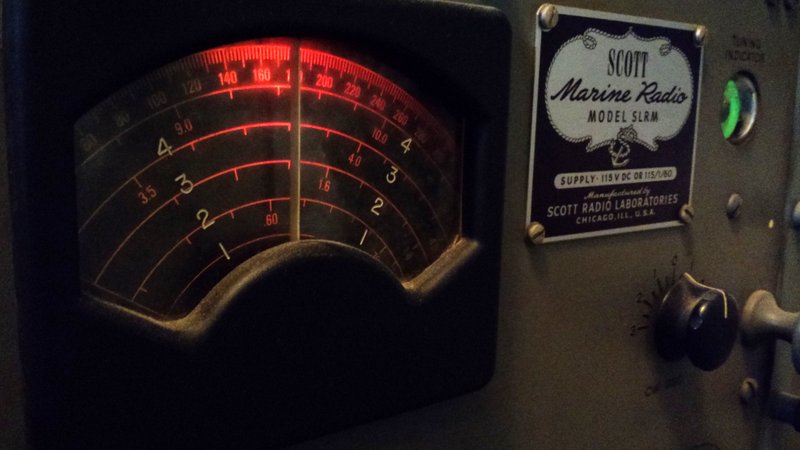
Scott-Marine-SLR-M-Dial

Many thanks to SWLing Post reader, Vendel Boeree (K2DSI), who writes:

Hi Tom, I just wanted to compliment you on your fine website. As a kid I would listen to Radio Netherlands which made me quite the hit with mom because she was homesick for our native Holland for quite some time. I was heart broken to find out that Radio Netherlands went dark not that long ago.
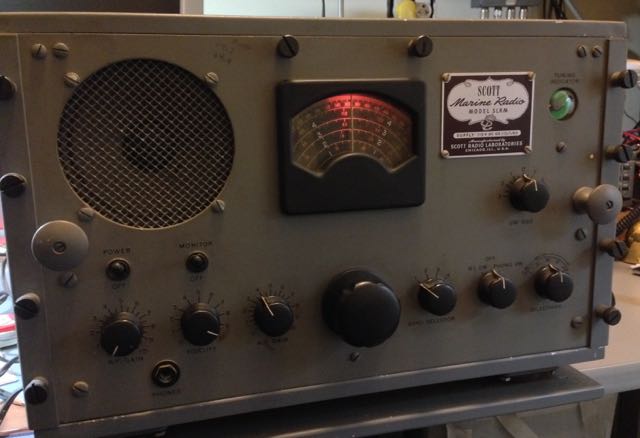
Scott-Marine-SLR-MBack in 1967 my family moved to Australia and went there by freighter. Things didn’t work out as planned and we returned on an old American freighter, the “African Moon”.

I became friendly with the radio operator on that ship and he let me shortwave listen when he was off watch. The receiver was a “Scott” and appeared to be the same as yours. They also had a “Scott” receiver in the lounge that had a slide rule dial that was used for entertainment purposes. I was hooked. I wanted to be a radio operator.

Needless to say I didn’t follow through on that dream and I suppose that’s just as well seeing as how ROs are a thing of the past.

Take care and keep up the good work.

Vendel Boeree/ K2DSI

Thanks so much for sharing those memories, Vendel! I bet reception was nothing short of amazing while you were at sea. I’m guessing the slide rule model Scott you listened to in the lounge was the model SLR-F (click here for a photo).

Just the other day, my wife looked around my radio shack and asked what radio I would grab if the house were on fire. My answer was the Scott Marine SLR-M. It represents everything I love in WWII era receivers: built like a tank, great sensitivity, beautiful back-lit dial, built-in speaker, phono in, a magic eye and–since it was intended as a troop morale radio–beautiful room-filling audio.

Yep. Scottie’s a keeper!
Google’s 96.4 kilowatt experimental transmitter

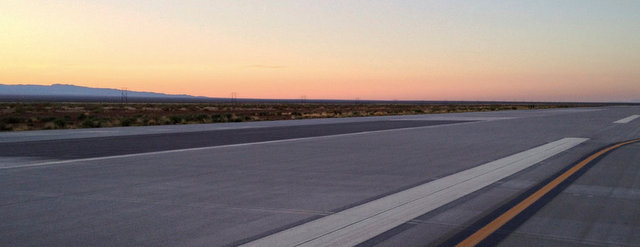
spaceport-virgin

Many thanks to SWLing Post contributor, Dan Robinson, for sharing the following story:

(Source: Hackaday)

[…]In a publication released last week, Google asked the FCC to treat some information relating to radio experiments as confidential. These experiments involve highly directional and therefore high power [96.4 kilowatt] transmissions at 2.5 GHz, 5.8GHz, 24GHz, 71-76GHz, and 81-86GHz. These experiments will take place at Spaceport America, a 12,000 foot runway in the middle of New Mexico occasionally used by SpaceX, Virgin Galactic, and now Google.

For the most part, this document only tells the FCC that Google won’t be causing harmful interference in their radio experiments. There few other details, save for what bands and transmitters Google will be using and an experimental radio license call sign (WI9XZE) that doesn’t show up in the FCC database.[…]

Read the full article at Hackaday…

Click here to read FCC File No. 0142-EX-PL-2016 (Google Public Redacted Version).

FCC Commissioner outlines 2016 anti-pirate agenda

fcc-logoMany thanks to an anonymous SWLing Post contributor who writes:

The FCC released this material [yesterday]. It consists mainly of letters to various organizations to ask their members to avoid cooperating with unlicensed radio stations.

The concern is that real estate owners may be harboring unauthorized stations, and that businesses may support such stations with advertising funds.

I would point you to an interesting opinion on the subject by Prof. John Anderson:

O'Rielly Outlines Anti-Pirate Agenda for 2016

John references this recent YouTube video clip of a Congressional hearing where FCC Chairman Tom Wheeler is questioned on the FCC’s enforcement efforts:

Again, I am not the source of the following material–the FCC is:

STATEMENT OF COMMISSIONER MICHAEL O’RIELLY ON PIRATE RADIO ENFORCEMENT ADVISORY.

STMT. News Media Contact: Robin Colwell at (202) 418-2300, email: [email protected]  OCMO https://apps.fcc.gov/edocs_public/attachmatch/DOC-338021A1.docx
https://apps.fcc.gov/edocs_public/attachmatch/DOC-338021A1.pdf

Released:  03/01/2016.  FCC ENFORCEMENT ADVISORY: PERSONS OR BUSINESSES OPERATING “PIRATE” BROADCAST STATIONS ARE SUBJECT TO ENFORCEMENT ACTION. (DA No.  16-159)  This Enforcement Advisory discusses the rules that prohibit “pirate” radio, explains to the public at large what broadcast actions are illegal, why such activities may harm the public, and what do to in case someone suspects “pirate” broadcasts.  EB . News Media Contact: Will Wiquist at (202) 418-0509, email: [email protected]

https://apps.fcc.gov/edocs_public/attachmatch/DA-16-159A1.docx
https://apps.fcc.gov/edocs_public/attachmatch/DA-16-159A10.pdf
https://apps.fcc.gov/edocs_public/attachmatch/DA-16-159A11.pdf
https://apps.fcc.gov/edocs_public/attachmatch/DA-16-159A12.pdf
https://apps.fcc.gov/edocs_public/attachmatch/DA-16-159A13.pdf
https://apps.fcc.gov/edocs_public/attachmatch/DA-16-159A2.pdf
https://apps.fcc.gov/edocs_public/attachmatch/DA-16-159A3.pdf
https://apps.fcc.gov/edocs_public/attachmatch/DA-16-159A4.pdf
https://apps.fcc.gov/edocs_public/attachmatch/DA-16-159A5.pdf
https://apps.fcc.gov/edocs_public/attachmatch/DA-16-159A6.pdf
https://apps.fcc.gov/edocs_public/attachmatch/DA-16-159A7.pdf
https://apps.fcc.gov/edocs_public/attachmatch/DA-16-159A8.pdf
https://apps.fcc.gov/edocs_public/attachmatch/DA-16-159A9.pdf
https://apps.fcc.gov/edocs_public/attachmatch/DA-16-159A1.pdf

Note that the bulk of this report focuses on FM/AM radio pirates in local markets rather than shortwave pirates (though I’m sure, on occasion, shortwave pirates are on the FCC radar).

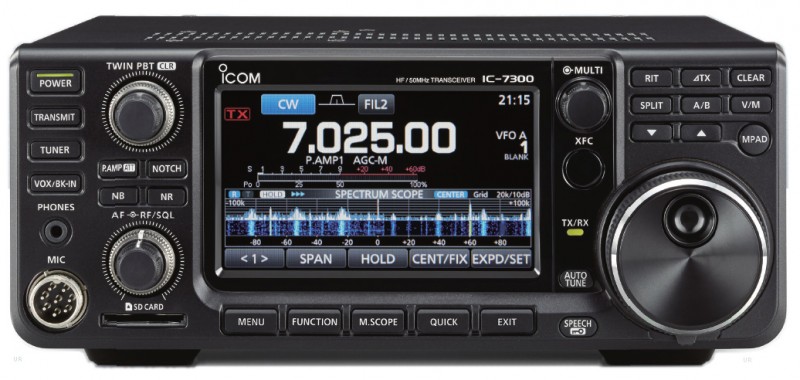
Icom IC-7300: retail price and shipping dates set

Icom-IC-7300-FrontMany thanks to Dave Zantow (N9EWO) who notes that Universal Radio is accepting orders for the Icom IC-7300 at a price of $1499.95 US and expects to ship units by the latter part of this month (March 2016).

Several of you have asked if I anticipate reviewing the IC-7300–Icom doesn’t issue many loaners for review, but I will check with them nonetheless.

Slight change to Paul’s Channel 292 broadcast

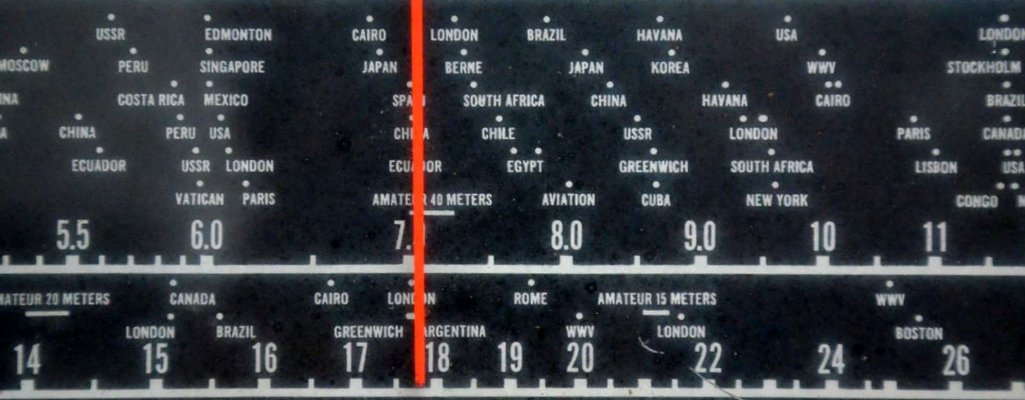
HalliDialSWLing Post contributor, Paul Walker, who hosts a radio show on WBCQ and Channel 292, writes:

My WBCQ broadcast has changed, slightly. It will be on 9330, still, but 5110 has moved to 5130 khz.

[Also] to avoid a collision with Vaitcan Radio on 6070 khz, which is on 2140-2200, my Channel 292 broadcast moves from its originally scheduled airtime of 2100-2300 UTC to 2205-0005 UTC.

Thanks for the update, Paul!

Radio Six International: special five hour broadcast on shortwave

RadioSixInternationalMany thanks to Mike Terry for the following news from Radio Six International:

Coming this month…..Ewan Spence takes us to Austin, Texas for a series of daily shows from the gigantic annual music festival South by South West beginning on Monday, March 14th at 20:00 GMT

We’ll be back on shortwave later this month, with a special five hour broadcast in the 49 metre band on Saturday 19th March from 12:00 to 17:00 GMT. As well as the usual programmes there will be a special two-hour live edition of Saturday Sounds hosted by Tony Currie and including live emails and messages. Listen online as usual or tune in to 6070kHz (49.39m) from a transmitter near Munich in Germany.

Great new music from a huge variety of worldwide artists every night in Random Play at 20:00 GMT.

Radio Preservation Task Force conference in the press

Shepperd-RPTF-LOC-2

Last week, the Radio Preservation Task Force held a conference which focused on saving America’s radio heritage. I had hoped to attend in DC, but sadly had a conflict in my schedule that weekend.

I’m happy to see that the conference got several mentions in the press.

Many thanks to SWLing Post contributor, Bill Patalon, for sharing a link to this article in RadioWorld:

Preservation Conference Highlighted Unique Radio Perspectives

The launch of the first “Save America’s Radio Heritage” conference saw a greater turnout than expected, with a total of roughly 300 attendees over two days in the nation’s capital last week.

The event, held at the Library of Congress and the University of Maryland, focused on the state of radio preservation, but the conference was more than just about the process of preserving historical recordings and other radio documents, but sharing some of America’s unique uses of the medium.

The Radio Preservation Task Force calls itself the first national radio history project of the Library of Congress. It grew out of the Library’s ambitious National Recording Preservation Plan, published in 2012. The task force says radio is “perpetually declared to be a dying medium” but nevertheless attracts dedicated listeners and commercial and public support. The organizers have said radio’s history is a chronicle of culture and a potential trove for historical researchers. The national plan in 2012 specifically called for a symposium to discuss the challenges of preserving American radio broadcasts; last week it was put into action.[…]

Continue reading on RadioWorld’s website…

The conference also caught the attention of APM’s Marketplace:

Task force aims to preserve radio history

A group of librarians, academics, and audio enthusiasts is gathering in Washington Friday for a first-of-its kind conference. The topic: “Saving America’s Radio Heritage.” The meeting is part of a massive effort to preserve recordings going back to the early 20th century.

The effort is not focused on the classic network quiz shows and radio plays of the 1930s through 50s, said Chris Sterling, who chairs the Radio Preservation Task Force at the Library of Congress.

“We’ve pretty much got that stuff,” he said. “What we’re talking about instead is trying to get the local radio voice in America: commercial, educational, college radio, all of that.”

One example is a 1956 interview with Rosa Parks from the Pacifica Radio Archives, recorded after Parks’ arrest for refusing to give up her seat to a white man on an Alabama bus.

Also at PopUp Archive:

http://blog.popuparchive.com/?p=836

And on the CBS Radio Network:

Those of us who work in radio are proud it has such a long and interesting history…

[…]But there’s a problem: Radio, by its very nature, is ephemeral. That makes its history a little hard to document.

A conference going on in Washington, DC is helping to make the airwaves a bit more solid.[…]

Continue reading and listen to the full audio report on the CBS Radio Network.

I hope the RPTF hosts another conference next year as I would like input on archiving AM/MW spectrum recordings–something I suspect few in the field even know exists!

Any SWLing Post readers attend the conference?