Radio Waves: Stories Making Waves in the World of Radio
Welcome to the SWLing Post’s Radio Waves, a collection of links to interesting stories making waves in the world of radio. Enjoy!
Many thanks to SWLing Post contributors Dennis Dura and Ulis (K3LU) for the following tips:
Discovery Dish Pre-launch: A Lightweight Dish And Feed For L-band Weather Satellites And Hydrogen Line Reception (RTL-SDR Blog)
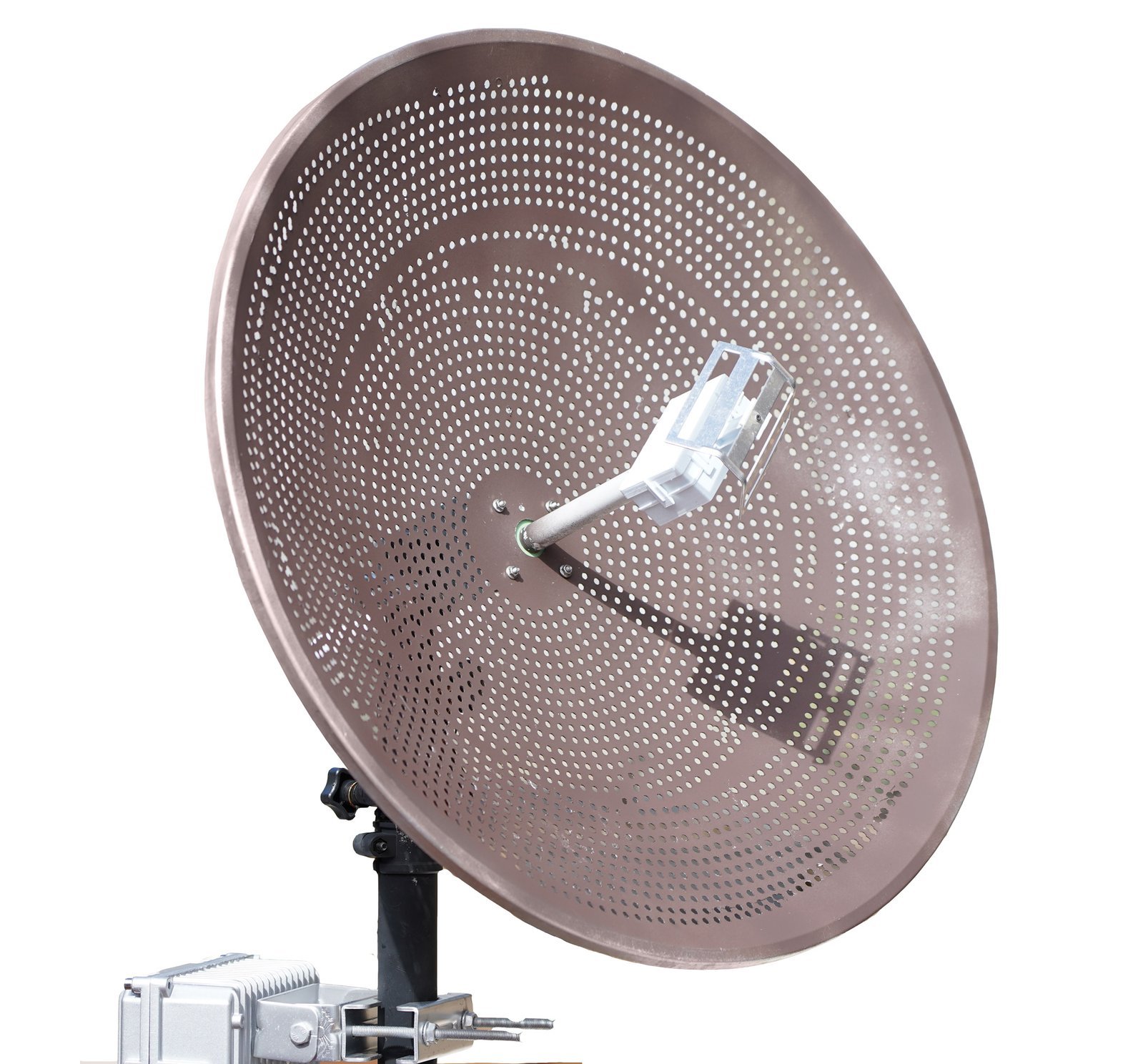
For the past few years we have been working on finding the best way to help beginners get started with L-band weather satellite reception and basic radio astronomy. We have now come up with a solution that we’re calling the ‘Discovery Dish’ – a lightweight 65 cm diameter dish and active filtered feed set.
The Discovery Dish will be crowd funded, and we currently have a pre-launch page set up on Crowd Supply. So if you are interested, please visit the pre-launch page and click on the Subscribe button for updates.
Discovery Dish is a 65-cm diameter aluminum satellite dish and active filtered feed designed for receiving GOES HRIT, GK-2A LRIT, FengYun LRIT, NOAA HRPT, Metop HRPT, Meteor M2 HRPT and other weather satellites that operate around 1.69 GHz. The dish is designed to weigh under one kilogram, and it splits into three petals, making it easier to ship worldwide. The 1.69 GHz feed contains a built-in LNA right at the feed point, as well as filtering, which means that there is almost no noise figure loss from cables or connectors.
Note that the prototype images show an early non-petalized prototype with rough laser cut wind holes. The production version will obviously be a lot neater looking! […]
Click here for more details about the Discovery Dish campaign.
How China’s Propaganda Infiltrated Radio Stations in Europe (The Diplomat)
State-owned China Radio International is airing its content without attribution on commercial radio stations in Europe.
China has consistently and systematically pursued the dissemination of its narratives on the global stage, with the primary aim of shaping the international landscape to align with its strategic interests and ideological perspectives. These endeavors encompass a diverse array of tactics, including the acquisition of media enterprises, active engagement by Chinese ambassadors in both mainstream and fringe media outlets, the utilization of paid supplements, collaboration with pro-Kremlin media, and the steadily expanding presence of China across various social media platforms.
Recently, China Radio International (CRI), an official Chinese state media outlet broadcasting in multiple languages, has garnered attention for its establishment of partnerships with and provision of content to radio stations worldwide. Remarkably, CRI has effectively outsourced the production of China-related programming to local partners, often without transparently disclosing the sponsorship of content creation to the listeners. This strategy, known in Chinese as “borrowing a boat to go out on the ocean,” plays a pivotal role in laundering Beijing’s propaganda and fostering the acceptance of its messaging among local audiences.
One illustrative case of this approach within Europe involves two Czech radio stations, namely Radio HEY, a nationwide commercial radio station airing rock music, and Radio Color, which positions itself as “one of the last independent radios.” From 2019 to May 2023, these radio stations broadcasted a program titled “Barevný sv?t” (Colorful World), a nearly 30-minute segment aired six times a week, with the objective of acquainting Czech listeners with Chinese culture, language, and history. [Continue reading…]
Hackaday Prize 2023: A Software-Defined Radio With Real Knobs And Switches (Hackaday)
When cheap digital TV dongles enabled radio enthusiasts to set up software defined radio (SDR) systems at almost zero cost, it caused a revolution in the amateur radio world: now anyone could tune in to any frequency, with any modulation type, by just pointing and clicking in a computer program. While this undoubtably made exploring the radio waves much more accessible, we can imagine that some people miss the feeling of manipulating physical buttons on a radio while hunting for that one faint signal in a sea of noise. If you’re one of those people, you’re in luck: [Kaushlesh C.] has built a portable, self-contained SDR system with real knobs and switches, called SDR Dock 1.0.
The heart of the system is a Raspberry Pi running GQRX, an open-source SDR program that supports many different RF modules. [Kaushlesh] used an Airspy HF+ Discovery, a compact receiver that can work the HF and VHF bands, but it’s easy to modify the SDR Dock to accept other types like those ubiquitous RTL dongles. A seven-inch LCD screen with integrated speakers forms the main output device, with everything powered by a 10,000 mAh lithium-polymer battery. [Continue reading…]
With the future of AM unclear, a look back at the powerful role radio plays in baseball history (Citizen Tribune)
Many baseball fans, especially older ones, originally fell in love with America’s pastime by listening to ballgames on AM radio
Click here to browse this gallery.
Do you enjoy the SWLing Post?
Please consider supporting us via Patreon or our Coffee Fund!
Your support makes articles like this one possible. Thank you!