Category Archives: Ham Radio

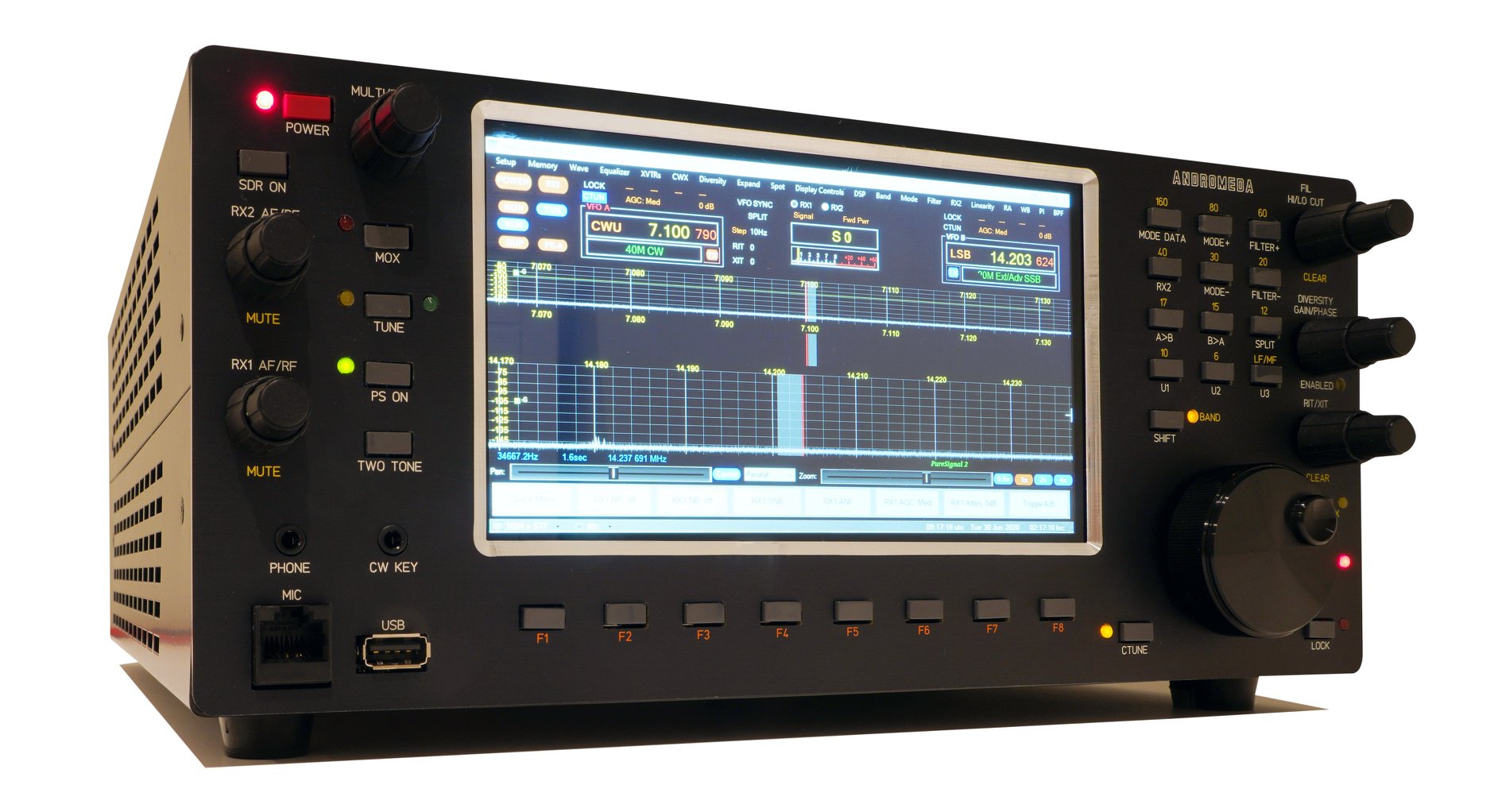
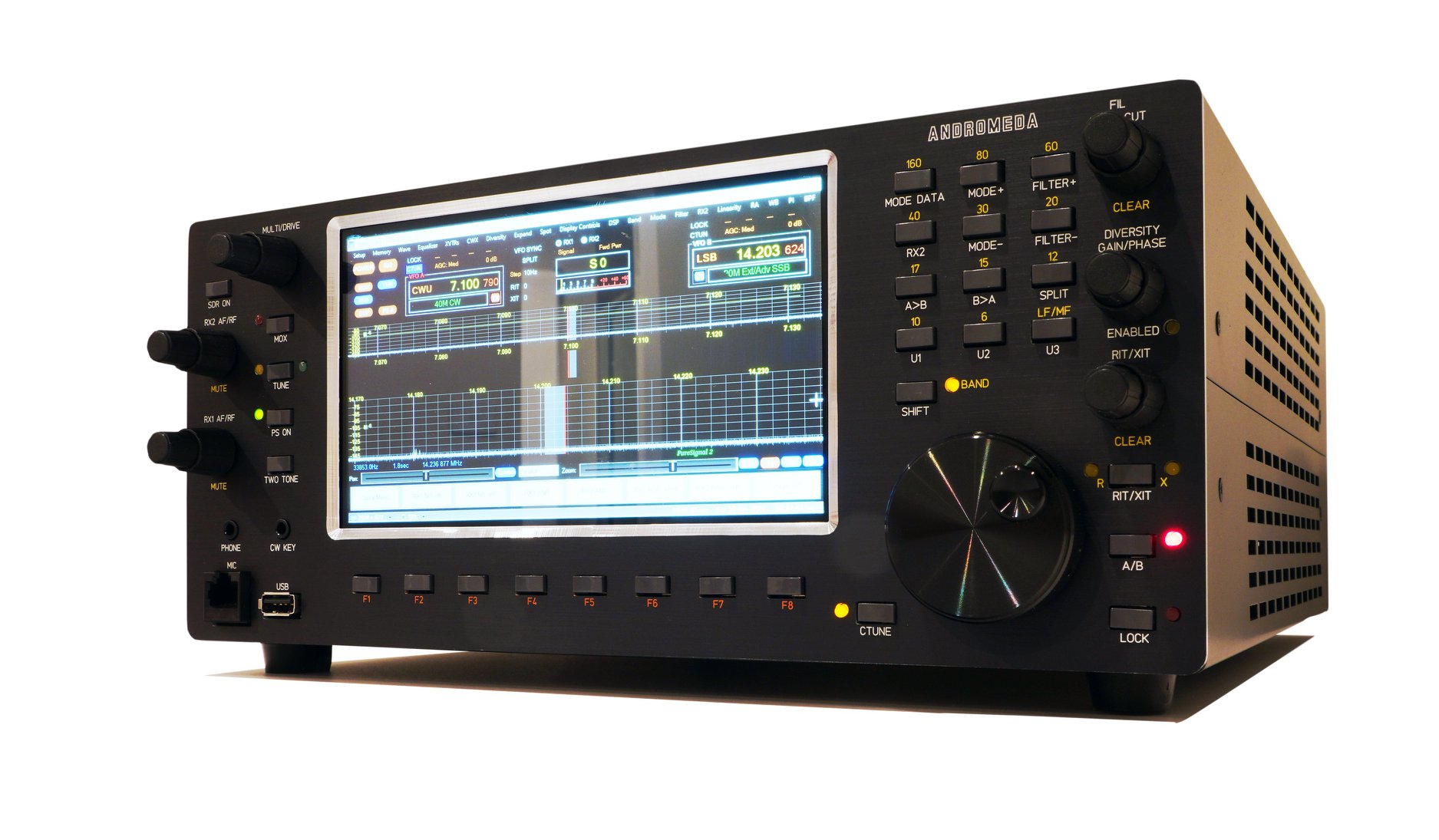
Sneak peek of the Apache Labs Andromeda 100 watt SDR transceiver

Many thanks to Apache Labs who share the following announcement:

Sneak peek at the Andromeda 100W Transceiver……

10th GEN Intel 6 Core i7, 7 inch built in touch screen and an option to add up to two External HD Monitors.

Windows 10 Powerful PC and an Ultra High performance 100W SDR with PureSignal Goodness in a single compact Box!

Run FT8 and other Digital Modes out of the box!

Coming Soon!

We will post more information about the Andromeda transceiver when we have solid details.

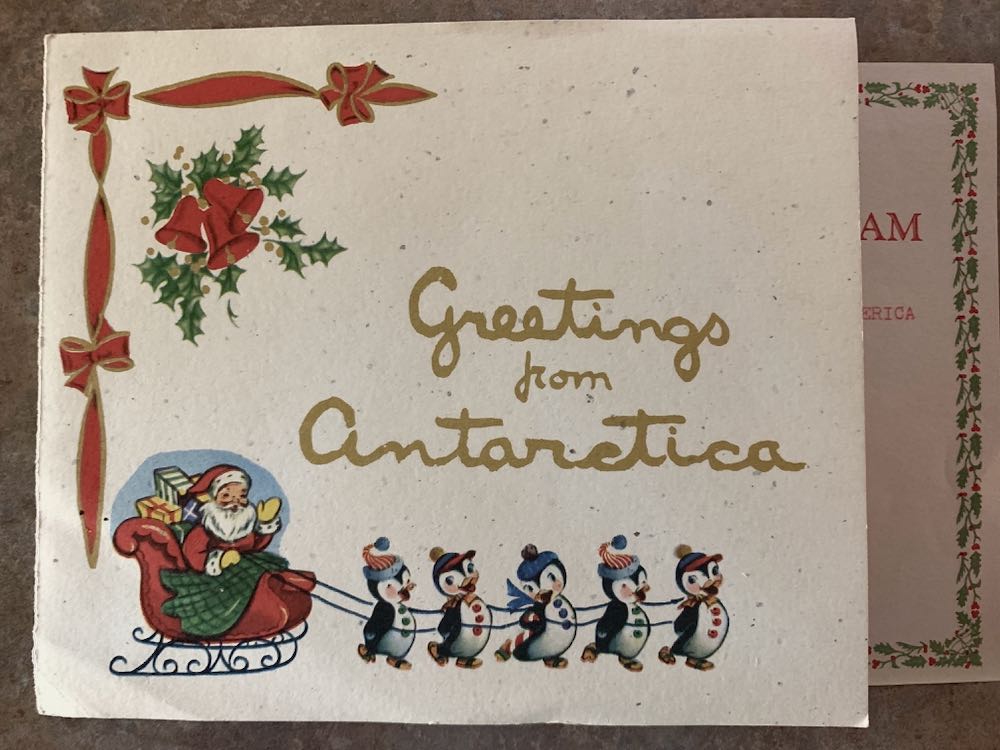
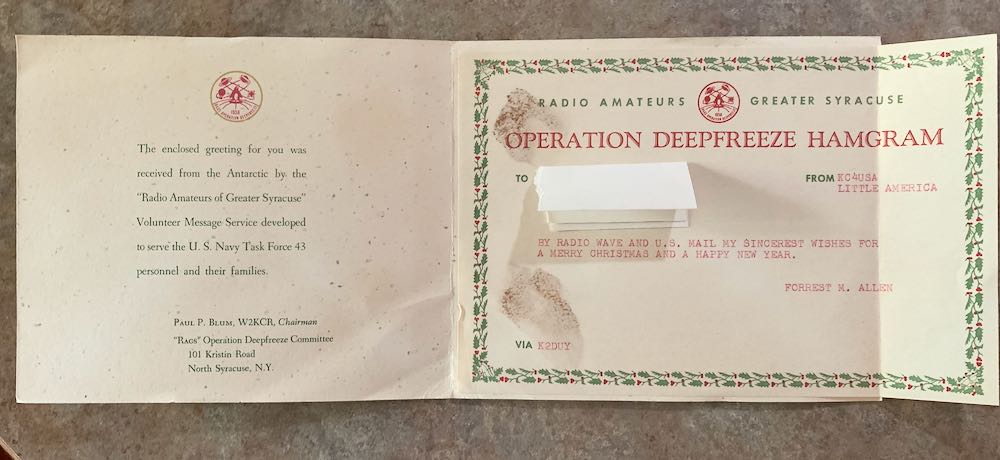
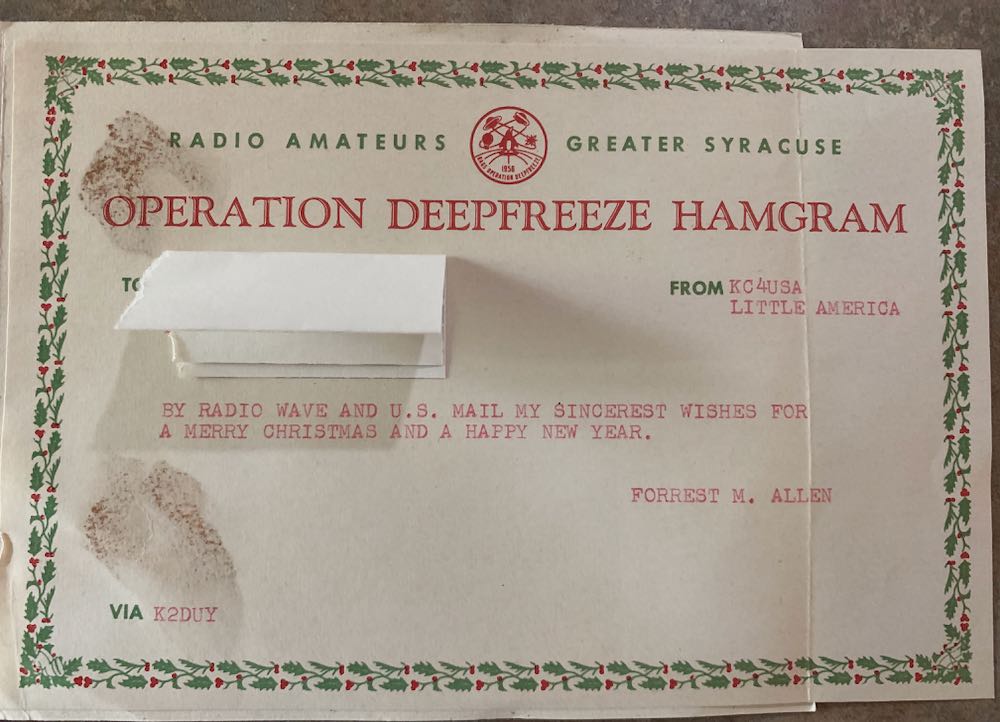
Some Serious Radio Nostalgia: A 1956 “Operation Deepfreeze Hamgram”

Many thanks to SWLing Post contributor, Jack, who writes:

Greetings,

I was going through some old paperwork that belonged to my father-in-law, and I found a Christmas Greeting Card postmarked December 1956.

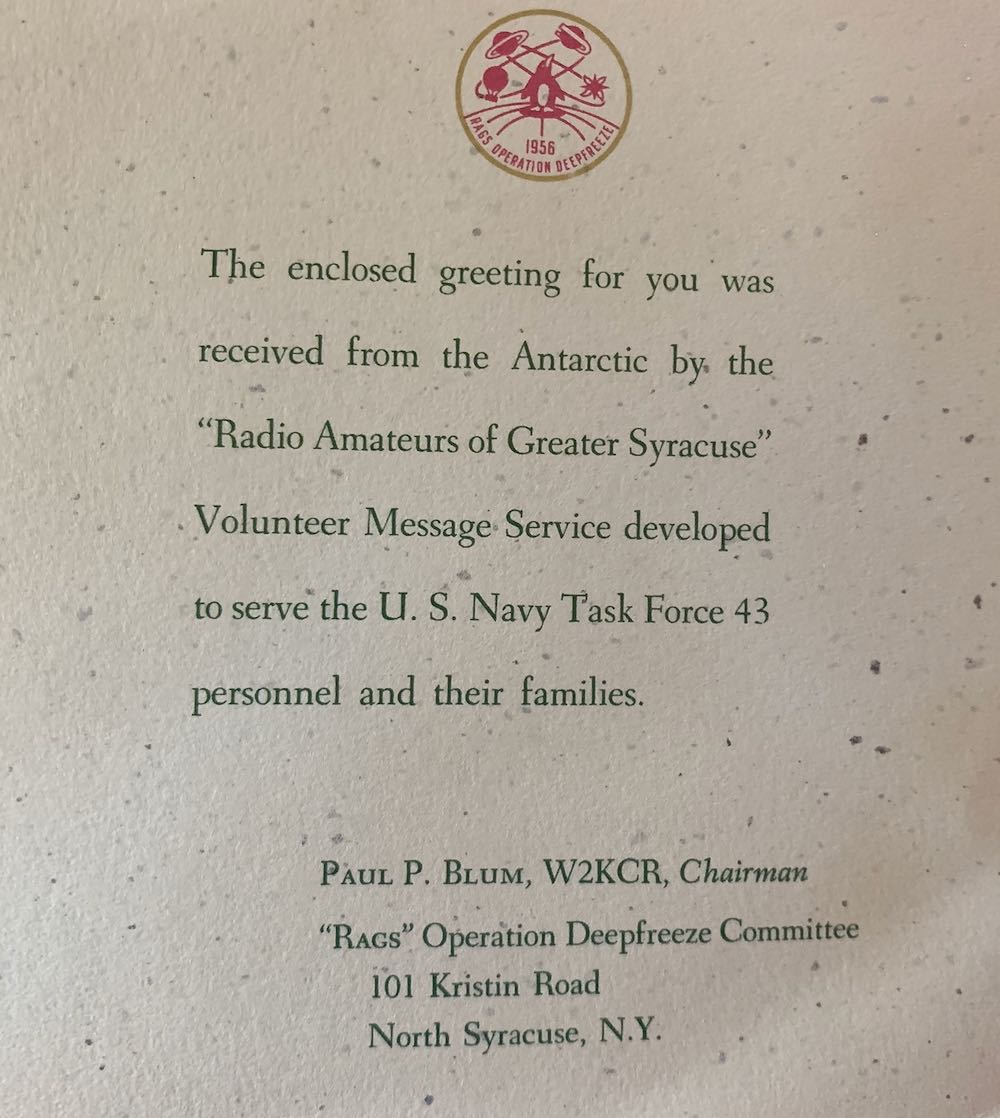
The card contains greetings from the Antarctic, received by the Radio Amateurs of Greater Syracuse, then forwarded to my father-in-law at his posting at NAAS Barin Field in Foley, Alabama.

I thought you might find this old piece of amateur radio history to be interesting. I attached images of the card.

I am new to the SW listening world, and I have found your blog to be very helpful. My Tecsun PL-660 is keeping me quite busy.

Regards,

Jack

Photos

(Click to enlarge)

Wow!  Thank you so much for sharing this, Jack! I think we all need a little “Christmas in July” cheer right about now!

I’m so happy to hear you enjoy the SWLing Post and happy that Tecsun PL-660 is serving you well. It’s a great little radio!

Radio Waves: Sealand’s Caretakers, BitCoin & Ham Radio, CW Training, and 50 Years Ago Casey Kasem Started AT 40

Radio Waves:  Stories Making Waves in the World of Radio

Because I keep my ear to the waves, as well as receive many tips from others who do the same, I find myself privy to radio-related stories that might interest SWLing Post readers.  To that end: Welcome to the SWLing Post’s Radio Waves, a collection of links to interesting stories making waves in the world of radio. Enjoy!

Many thanks to SWLing Post contributors Tony, Mike Terry,  and the Southgate ARC for the following tips:


Sealand’s caretakers (Boing Boing)

Sealand is an unrecognized micronation off the coast of England, established in the 1960s and issuer of stamps, passports and occasional offshore business shenanigans (“BECOME A LORD“). But Sealand is also a rotting sea fortress in need of constant maintenance. Atlas Obscura met the two caretakers who spend two weeks at a time doing what they can to keep the statelet running smoothly. Dylan Taylor-Lehman’s feature article is a great introduction to the place, if you’re not familiar with it or its wild history.[]

How Bitcoin Is Like Ham Radio (Coindesk.com)

Understanding bitcoin is difficult. And so we cast around for the perfect metaphor. Bitcoin is email. Digital gold. eCash.

Here’s a new one. Bitcoin is ham radio.

Bitcoin is old-fangled. It takes days to download the Bitcoin blockchain, just like it took forever to download software back in 1994. In an age of instant email and real-time Zelle payments, a bitcoin transfer takes 60 minutes to safely settle. It’s more volatile than gold, a relic of our previous monetary system. Thousands of computers are constantly replicating each others’ work, making it vastly inefficient. And lastly, there’s no privacy. Like a medieval marketplace, everyone can see everybody’s holdings.

All of these features are anachronistic. But they do sum up to something unique. What exactly is that thing?

A ham radio allows its operator, otherwise known as an amateur radio operator, to use certain bands in the radio spectrum to communicate by voice or code. This is an old technology. Italian inventor Guglielmo Marconi became the first ham radio operator in 1897 when he transmitted Morse code across Salisbury Plain in England.

It seems odd that something as archaic as ham radio continues to exist in a world with email, Snapchat, iPhone and Facebook. A ham transmission can only be used over a couple of kilometers. No emojis. No video. No gifs. Forget about privacy! Anyone can listen into your radio conversation.

Yet, ham radio is a very active niche. Associations all over the world keep the hobby going. According to the American Radio Relay League, there are some 764,000 ham radio operators in the U.S. Japan has more than a million. The International Amateur Radio Union pegs the global number of amateur radio licensees at 3 million.

Like ham radio, Bitcoin is for hobbyists. I’m not talking here about all of the frenetic speculators who keep their coins at Coinbase. I’m talking about users who can run a full node, use Lightning, securely store their own coins and make frequent transactions with the stuff. This pool of bitcoiners is tiny. It’s probably smaller than the number of active licensed ham radio operators.[]

CW Training Program (Southgate ARC)

In this video Howard WB2UZE and John K2NY of the Long Island CW Club talk to David W0DHG about their CW training program

The club started in 2017 offers over 45 hours of CW classes EACH week, and has grown to over 600 members from all 50 states and 15 countries all over the world.

HRN423 Long Island CW Club

50 Years Ago, Casey Kasem Began Counting Down The Hits On American Top 40 (NPR)

On July 4, 1970, the countdown started. Originally hosted by Casey Kasem, American Top 40 played “the best selling and most-played songs from the Atlantic to the Pacific, from Canada to Mexico,” as he stated on the first program broadcast 50 years ago as of tomorrow.

On any given week, American Top 40 could feature a ballad, next to a country song, next to a funk song, next to a rock song. The show became a national obsession but 50 years ago, it was considered a risky idea.

“You remember, at the end of the ’60s, Top 40 was not the most popular format,” Casey Kasem told NPR in 1982. “And here we were coming along with a show called American Top 40, and people said, ‘You must be nuts!’ “[]


Do you enjoy the SWLing Post?

Please consider supporting us via Patreon or our Coffee Fund!

Your support makes articles like this one possible. Thank you!

QSO Today Virtual Ham Expo 2020

Many thanks to SWLing Post contributor, Franco Venturi (K4VZ), who writes:

I just found out that the podcast ‘QSO today’ has organized a ‘Virtual Ham Expo’ (https://www.qsotodayhamexpo.com/).

The current list of speakers and their topics looks interesting (click here to read), and I thought you and other readers of the SWLing Post might be interested as well.

Thank you so much for the tip, Franco. I’ve been meaning to post an announcement about this online event.  It seems to have attracted a lot of vendors and at least early bird registration for the show is free. Vendors do pay fees to host virtual booths at the events.

There are a number of great presentations in the line-up, so I would highly encourage readers to check out the presentation schedule and register for the expo.

Click here to register for the 2020 QSO Today Virtual Ham Expo!


Upgrade the encoder on your Xiegu G90 for about $8.00 US

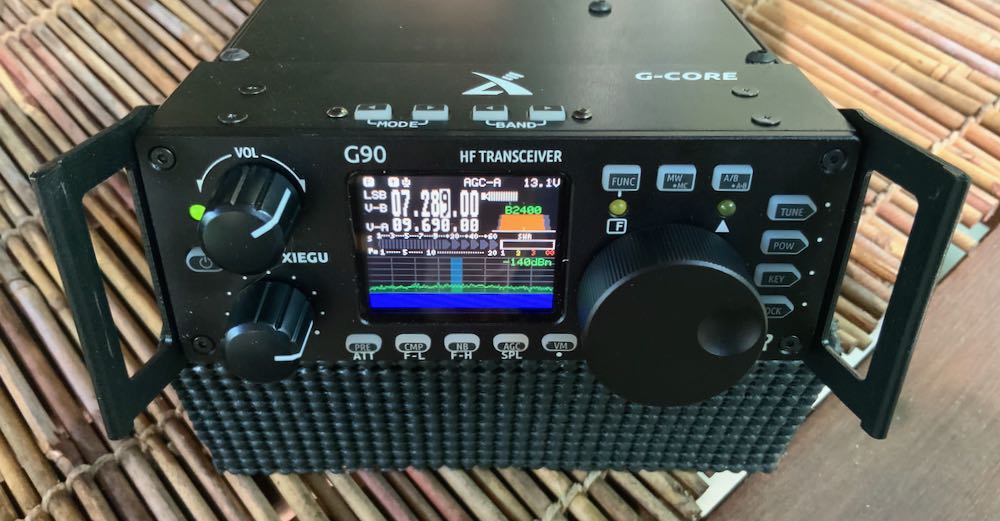
Shortly after posting some of my initial impressions of the Xiegu G90, SWLing Post contributor, Guy Atkins, encouraged me to upgrade the stock G90 tuning knob/encoder with one that is highly recommended by the G90 community.

While I didn’t really have an issue with the stock plastic knob, I couldn’t resist a larger, slightly heavier aluminium encoder with a dimple.

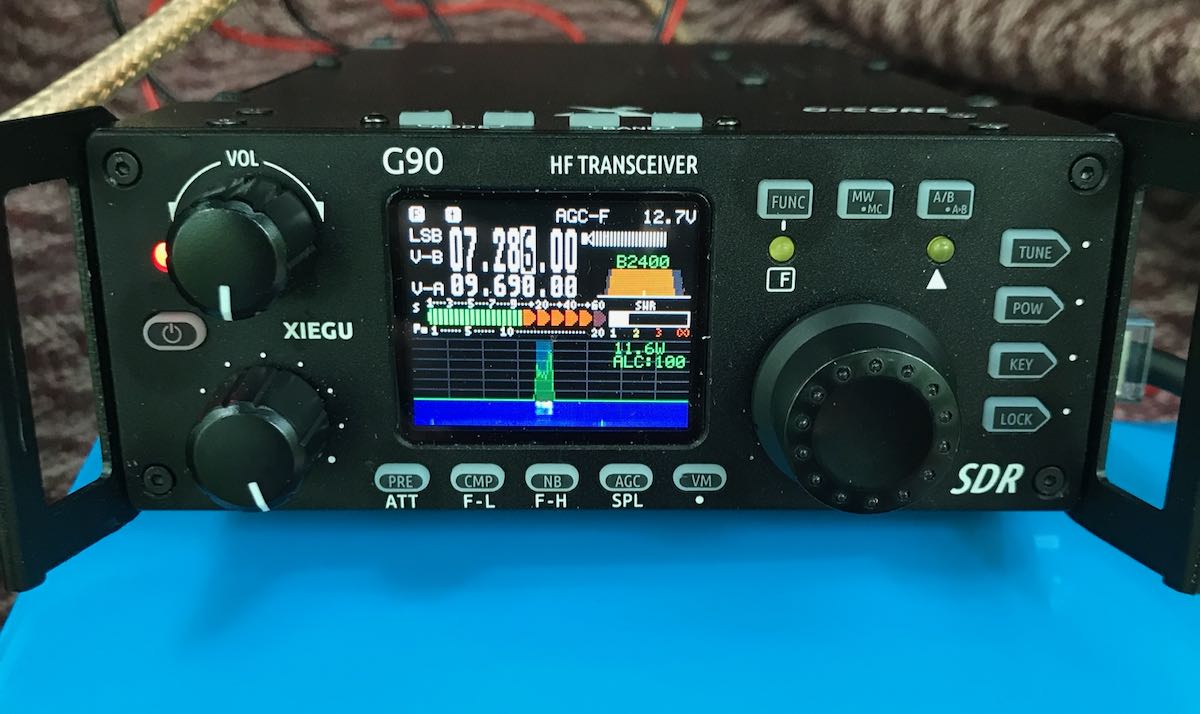
The stock G90 encoder knob (before pic)

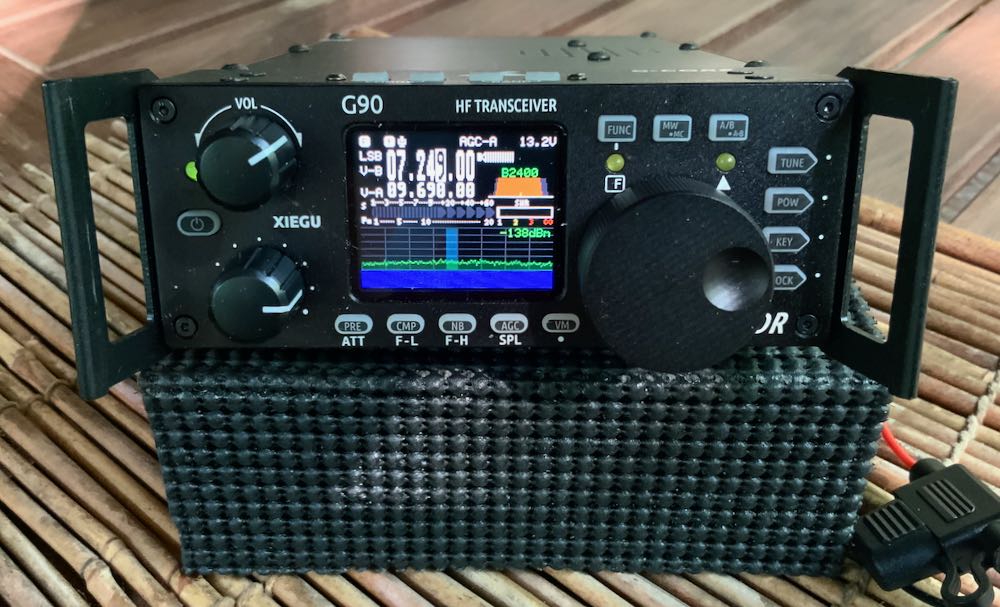
I’m so happy I splurged for this $8 upgrade. Not only is the encoder much easier to use now, but it also gives the G90 a proper face-lift:

The upgraded aluminium G90 encoder knob (after pic)

Thanks so much for the tip, Guy! I, too, highly recommend this affordable upgrade!

Get your upgraded encoder knob from:

13 Colonies Special Event this week for hams and SWLs

Although I’ve been rather busy the past few days, I have managed to fit in a little radio time.

On Wednesday, I spent part of the day doing the RAC (Radio Amateurs of Canada) Contest to celebrate Canada Day. My simple goal in mind was to work as many provinces as I could. Although I only made a total of 25 contacts, I managed to work the ten provinces along the Canada/US border (including Newfoundland and PEI).

During the RAC event I heard pileups for the 13 Colonies Event which is held each year in conjunction with the 4th of July weekend. I like this event because it’s accessible yet challenging.

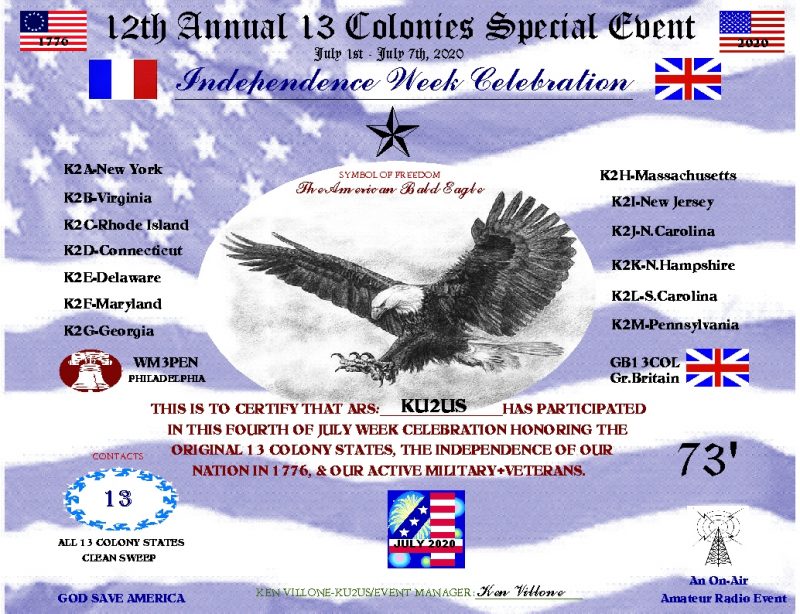
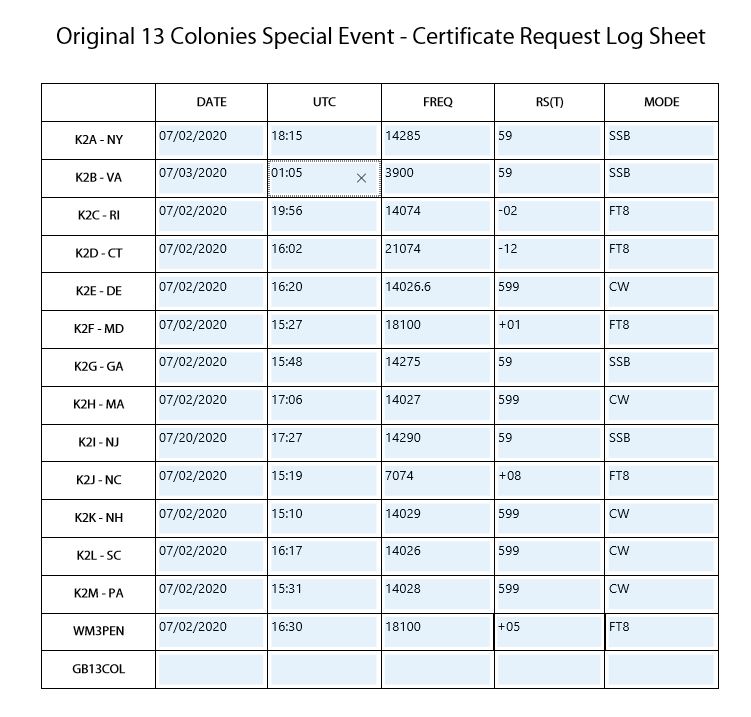
Yesterday morning, I decided to start collecting colonies. By the end of the day, I made a “Clean Sweep” of all of the colonies and even worked one of the “bonus” stations (WM3PEN). Over the next couple of days, I’l try to snag the other bonus station, GB13COL.

As you can see by my log sheet, I had to employ three different modes to snag all of these in short order:

I’m not a contester by any stretch of the imagination, but I was able to snag these stations within 12 hours without sitting in front of the radio the whole day.  I simply checked the DX Cluster from time-to-time and pounced when the path was favorable. (All of my CW contacts were QRP, too.)

An SWL-friendly event!

What’s so great about the 13 Colonies Event is that they strongly encourage SWLs to participate! From the 13 Colonies website:

ATTENTION SWLs: All Short Wave listeners (SWL). You will also qualify for the certificate. Follow the instructions on the Certificates page when you submit your log. A special SWL logo will be affixed to the certificate for you. One or all 13 stations logged qualifies you. Just log ALL of the 13 Colony states and you can get a complete set of custom special event QSL cards also! All 13 are different. QSL requests to be made to each individual Colony State Station with an SASE. Consider becoming a HAM too! 🙂

Look at all the fun we are having! (NASWA members-watch for us in your monthly journal publication).

All you need to participate is a radio with a BFO or SSB mode. Even a portable radio can easily handle this as most event stations are easy to hear throughout North America.

If you live outside North America or you don’t have a radio with SSB capabilities, consider participating via a KiwiSDR site. There’s certainly nothing wrong with this as I heard a number of remote ham radio operators working stations yesterday.  If you choose to use the WebSDR/KiwiSDR route, I would personally stick with one geographic location for the entire event and declare the receiver location/url on your log sheet.

The event takes place July 1, 2020-1300 UTC to July 8, 2020-0400 UTC, so you still have plenty of time!.

Click here to read more at the 13 Colonies Event website and request a certificate.

Please comment if you plan to take part in the event or have in the past!

Radio Waves: Pack Thanks Interim Leaders, KE4ZXW Moves to Virginia Tech, WWV and WWVH Still Matter, and A New WebSDR in Iceland

Radio Waves:  Stories Making Waves in the World of Radio

Because I keep my ear to the waves, as well as receive many tips from others who do the same, I find myself privy to radio-related stories that might interest SWLing Post readers.  To that end: Welcome to the SWLing Post’s Radio Waves, a collection of links to interesting stories making waves in the world of radio. Enjoy!

Many thanks to SWLing Post contributors Tony, Dan Robinson, Michael Bird for the following tips:


USAGM CEO Michael Pack thanks interim heads of agency’s five broadcasting networks (USAGM)

Today, U.S. Agency for Global Media (USAGM) Chief Executive Officer Michael Pack thanked officials who will serve in an interim capacity as the heads of the agency’s two federal organizations and its three public service grantee broadcasting networks.

  • Elez Biberaj, who has led Voice of America (VOA)’s Eurasia Division since 2006, will serve as VOA’s Acting Director.
  • Jeffrey Scott Shapiro, previously Senior Advisor at Office of Cuba Broadcasting (OCB), will serve as OCB’s Acting Director and Principal Deputy Director.
  • Parameswaran Ponnudurai, who has been Vice President of Programming at Radio Free Asia (RFA) since 2014, will serve as RFA’s Acting President.
  • Kelley Sullivan, who has been a Vice President at Middle East Broadcasting Networks (MBN) since 2006, will serve as MBN’s Acting President.
  • Daisy Sindelar, who has been with RadioFreeEurope/RadioLiberty (RFE/RL) for nearly two decades, will serve as RFE/RL’s Acting President.

CEO Pack sent, in part, the following message to staff:

“The experience of these talented men and women, their knowledge of the networks, and their commitment to the standards of journalism will allow us to launch into the next exciting chapter of our agency. Dr. Biberaj, Mr. Shapiro, Mr. Ponnudurai, Ms. Sullivan, and Ms. Sindelar will serve critical roles in allowing our networks to become higher performing and to more effectively serve our audiences. For their willingness to step up and help lead this effort, I am deeply appreciative. I am excited to serve alongside them as well as with all of you.”

Virginia Air & Space Center Ends Relationship with Ham Radio (ARRL News)

Virginia Air & Space Center (VASC) Executive Director and CEO Robert Griesmer has advised that the Center’s amateur radio station exhibit will be discontinued, effective July 1, when the Center, in Hampton, Virginia, reopens. VASC is the official visitor center for NASA’s Langley, Virginia, facility. The KE4ZXW display station was shut down on March 13. It was to be out of the VASC by June 30. A main feature of the exhibit was the ability to communicate with amateur radio satellites and with the International Space Station.

Randy Grigg, WB4KZI, of the VASC Amateur Radio Group said the station’s equipment would be relocated. “Thanks to all who have supported KE4ZXW during the last 25 years, especially the volunteer operators who manned the station during that time,” Grigg said. “To the many visitors we have met and school groups that have stopped by and talked with us about ham radio, communications, satellites, and STEM Program related subjects, thank you!”

On June 30, it was announced that the Virginia Tech Amateur Radio Association (K4KDJ) in Blacksburg will be the new host for the KE4ZXW Amateur Radio Demonstration. — Thanks to Randy Grigg, WB4KZI, and Ed Gibbs, KW4GF[]

Why WWV and WWVH Still Matter (Radio World)

Last year was one of both celebration and uncertainty for WWV, the station adjacent to Fort Collins, Colo., that transmits automated time broadcasts on the shortwave bands.

On the plus side, it marked the 100th year of WWV’s call letters, making the site, operated by the National Institute of Standards and Technology, one of the world’s oldest continually operating radio stations.

On the negative side, WWV and its sister time station WWVH in Hawaii nearly missed this centennial. That’s because NIST’s original 2019 budget called for shutting down the pair, along with WWVB, the longwave code station co-located next to WWV, as a cost-saving move.

Fortunately, these cuts never happened, and WWV, WWVH and WWVB seem likely to keep broadcasting the most accurate time from NIST’s atomic clocks, at least for the immediate future. (No further cuts have been threatened.)[]

Another Shortwave WebSDR operational in Iceland (Southgate ARC)

On June 27, a new KiwiSDR web software defined radio became operational in Iceland

A translation of the IRA post reads:

The new receiver is located in Bláfjöll at an altitude of 690 meters. It has for the first time used, a horizontal dipole for 80 and 40 meters.

The KiwiSDR receiver operates from 10 kHz up to 30 MHz. You can listen to AM, FM, SSB and CW transmissions and select a bandwidth suitable for each formulation. Up to eight users can be logged into the recipient at the same time.

Ari Þórólfur Jóhannesson TF1A was responsible for the installation of the device today, which is owned by Georg Kulp, TF3GZ.
Bláfjöll: http://blafjoll.utvarp.com/

The other two receivers that are active are located at Bjargtångar in Vesturbyggð, Iceland’s westernmost plains and the outermost point of Látrabjarg and at Raufarhöfn. Listen at:
Bjargtångar: http://bjarg.utvarp.com/
Raufarhöfn: http://raufarhofn.utvarp.com/

The IRA Board thanks Ara and Georg for their valuable contributions. This is an important addition for radio amateurs who are experimenting in these frequency bands, as well as listeners and anyone interested in the spread of radio waves.

Source IRA https://tinyurl.com/IcelandIRA

KiwiSDR Network
http://kiwisdr.com/public/


Do you enjoy the SWLing Post?

Please consider supporting us via Patreon or our Coffee Fund!

Your support makes articles like this one possible. Thank you!