Category Archives: Ham Radio

The SDR.hu web SDR portal is no more, but we have several excellent alternatives

In January, András Retzler–owner of the SDR.hu KiwiSDR portal–started requiring registration and a ham radio license in order to access their extensive online database of SDRs.

Today, we learned of the site’s closure.  Here’s the message posted at SDR.hu:

The SDR.hu project has been finished

I’d like to say a big thanks to everyone who joined my journey with this project!

I hope you had a good time listening on the site, and learnt some things about SDR. The purpose of this site was to provide a technological demonstration for amateur radio operators about Software Defined Radio, and I hope this goal has been reached. As this website was a one-person hobby project, with my tasks and responsibilities growing, and my focus moving to other projects at which I hope to make a greater positive impact, I’m unable to further develop SDR.hu and protect it from abuse.

Furthermore, I think this site has some good alternatives now. Nevertheless, in my opinion amateur radio receivers should be shared with strict access control in the future.

If you have more questions, feel free to consult the FAQ.

73!

Andras, HA7ILM

SWLing Post contributor, Mark Fahey, shared the following message sent by Andras to all KiwiSDR owners in the database this morning:

Hello,

You are receiving this e-mail because you were listing a receiver on SDR.hu in the last 3 months.

I wanted to let you know that the SDR.hu project is discontinued.
This is because I have to focus on my PhD and unfortunately I don’t have enough time anymore to maintain the website and protect it from abuse.
If you have questions, there’s a FAQ on the front page: https://sdr.hu/
For KiwiSDR users there is another listing service available on the KiwiSDR website: http://kiwisdr.com/public (I’m not involved with this one.)
Thank you very much for having participated in the project!

VY 73!

Andras, HA7ILM

Alternative KiwiSDR Portals

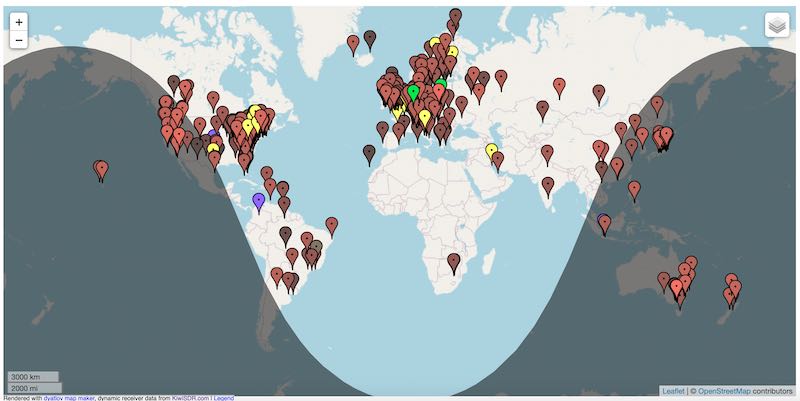
Fortunately, there are a number of other KiwiSDR portals that do not require registration or a call sign. Here’s a list:

If you prefer another KiwiSDR portal, please comment with a link.  I’ll try to update this post with any new additions!

Radio Waves: Free Foundation License Course, More Titanic Radio, CQD, and ARRL Field Day Waivers

Radio Waves:  Stories Making Waves in the World of Radio

Because I keep my ear to the waves, as well as receive many tips from others who do the same, I find myself privy to radio-related stories that might interest SWLing Post readers.  To that end: Welcome to the SWLing Post’s Radio Waves, a collection of links to interesting stories making waves in the world of radio. Enjoy!

Many thanks to SWLing Post contributors Trevor, Mark Hirst and Ulis Fleming for the following tips:


Register now for free Amateur Radio Foundation Online training course (Southgate ARC)

The next free amateur radio Foundation Online training course run by volunteers from Essex Ham starts on Sunday, June 7

The Coronavirus outbreak and the RSGB’s introduction of online exams that can be taken at home has led to a surge in demand for free online amateur radio training courses such as that run by Essex Ham.

These courses have been very popular and early registration is advised. 313 people took the course that started on May 3 and a further 235 are on the course that started on May 17.

You can find out more about online training and register to join a course at
https://www.essexham.co.uk/train/foundation-online/

Essex Ham
https://www.essexham.co.uk/
https://twitter.com/EssexHam

US court grants permission to recover Marconi telegraph from Titanic wreckage (ARS Technica)

But NOAA is fiercely opposed to the controversial salvage mission.

When RMS Titanic struck an iceberg on April 14, 1912, crew members sent out numerous distress signals to any other ships in the vicinity using what was then a relatively new technology: a Marconi wireless telegraph system. More than 1,500 passengers and crew perished when the ship sank a few hours later. Now, in what is likely to be a controversial decision, a federal judge has approved a salvage operation to retrieve the telegraph from the deteriorating wreckage, The Boston Globe has reported.

Lawyers for the company RMS Titanic Inc.—which owns more than 5,000 artifacts salvaged from the wreck—filed a request in US District Court in Alexandria, Virginia, arguing that the wireless telegraph should be salvaged because the ship’s remains are likely to collapse sometime in the next several years, rendering “the world’s most famous radio” inaccessible. US District Judge Rebecca Beach Smith concurred in her ruling, noting that salvaging the telegraph “will contribute to the legacy left by the indelible loss of the Titanic, those who survived, and those who gave their lives in the sinking.”

However, the National Oceanic and Atmospheric Administration (NOAA) is fiercely opposed to the salvage mission. The agency argues in court documents that the telegraph should be left undisturbed, since it is likely to be surrounded “by the mortal remains of more than 1500 people.” Judge Smith countered in her decision that the proposed expedition meets international requirements: for instance, it is justified on scientific and cultural grounds and has taken into account any potential damage to the wreck.[]

Why Titanic’s first call for help wasn’t an SOS signal (National Geographic)

When RMS Titanic set sail in 1912, it was blessed and cursed with the latest in communication technology—the wireless telegraph. In the last hours after Titanic hit an iceberg, radio messages sent from the storied sinking ship summoned a rescue vessel that saved hundreds of people, but also sowed confusion with competing distress calls and signal interference. More than 1,500 people died that fateful night.

Now, a recent court ruling may pave the way to the recovery of Titanic’s telegraph, designed by Guglielmo Marconi, a telecommunications pioneer and 1909 Nobel Prize winner in physics who invented the first device to facilitate wireless communications using radio waves.

[…]Despite the limitations of the Marconi telegraph—and the fact that it wasn’t intended to be used as an emergency device—Titanic was outfitted with a radio room and a Marconi-leased telegraph machine. Two young Marconi-employed operators, chief telegraphist Jack Phillips and his assistant Harold Bride, sent Morse code “Marconigrams” on behalf of Titanic’s well-heeled customers 24 hours a day during its maiden voyage in April 1912.

Both Marconi’s technology monopoly and the torrent of personal messages conveyed through Titanic’s telegraph proved fatal on that April night. Phillips was so overwhelmed by a queue of incoming and outgoing guest telegrams —one Titanic passenger wanted to “notify all interested” about an upcoming poker game in Los Angeles—that he didn’t pass on messages about the ice threatening Titanic’s ocean environs. When a nearby vessel, SS Californian, telegraphed that it was already surrounded by ice, Phillips testily responded “Shut up! I am busy.”

Once Titanic hit the iceberg, Phillips tone shifted and he used the Marconi distress signal: “CQD.”[]

Temporary Rule Waivers Announced for 2020 ARRL Field Day (ARRL News)

With one month to go before 2020 ARRL Field Day, June 27 – 28, the ARRL Programs and Services Committee (PSC) has adopted two temporary rule waivers for the event:

1)      For Field Day 2020 only, Class D stations may work all other Field Day stations, including other Class D stations, for points.

Field Day rule 4.6 defines Class D stations as “Home stations,” including stations operating from permanent or licensed station locations using commercial power. Class D stations ordinarily may only count contacts made with Class A, B, C, E, and F Field Day stations, but the temporary rule waiver for 2020 allows Class D stations to count contacts with other Class D stations for QSO credit.

2)      In addition, for 2020 only, an aggregate club score will be published, which will be the sum of all individual entries indicating a specific club (similar to the aggregate score totals used in ARRL affiliated club competitions).

Ordinarily, club names are only published in the results for Class A and Class F entries, but the temporary rule waiver for 2020 allows participants from any Class to optionally include a single club name with their submitted results following Field Day.

For example, if Podunk Hollow Radio Club members Becky, W1BXY, and Hiram, W1AW, both participate in 2020 Field Day — Hiram from his Class D home station, and Becky from her Class C mobile station — both can include the radio club’s name when reporting their individual results. The published results listing will include individual scores for Hiram and Becky, plus a combined score for all entries identified as Podunk Hollow Radio Club.

The temporary rule waivers were adopted by the PSC on May 27, 2020.

ARRL Field Day is one of the biggest events on the amateur radio calendar, with over 36,000 participants in 2019, including entries from 3,113 radio clubs and emergency operations centers. In most years, Field Day is also the largest annual demonstration of ham radio, because many radio clubs organize their participation in public places such as parks and schools.

Due to the COVID-19 pandemic, many radio clubs have made decisions to cancel their group participation in ARRL Field Day this year due to public health recommendations and/or requirements, or to significantly modify their participation for safe social distancing practices. The temporary rule waivers allow greater flexibility in recognizing the value of individual and club participation regardless of entry class.

ARRL is contacting logging program developers about the temporary rule waivers so developers can release updated versions of their software prior to Field Day weekend. Participants are reminded that the preferred method of submitting entries after Field Day is via the web applet. The ARRL Field Day rules include instructions for submitting entries after the event. Entries must be submitted or postmarked by Tuesday, July 28, 2020.

The ARRL Field Day web page includes a series of articles with ideas and advice for adapting participation this year.[]


Do you enjoy the SWLing Post?

Please consider supporting us via Patreon or our Coffee Fund!

Your support makes articles like this one possible. Thank you!

Christoph’s homebrew custom hotkey pad for SDR applications

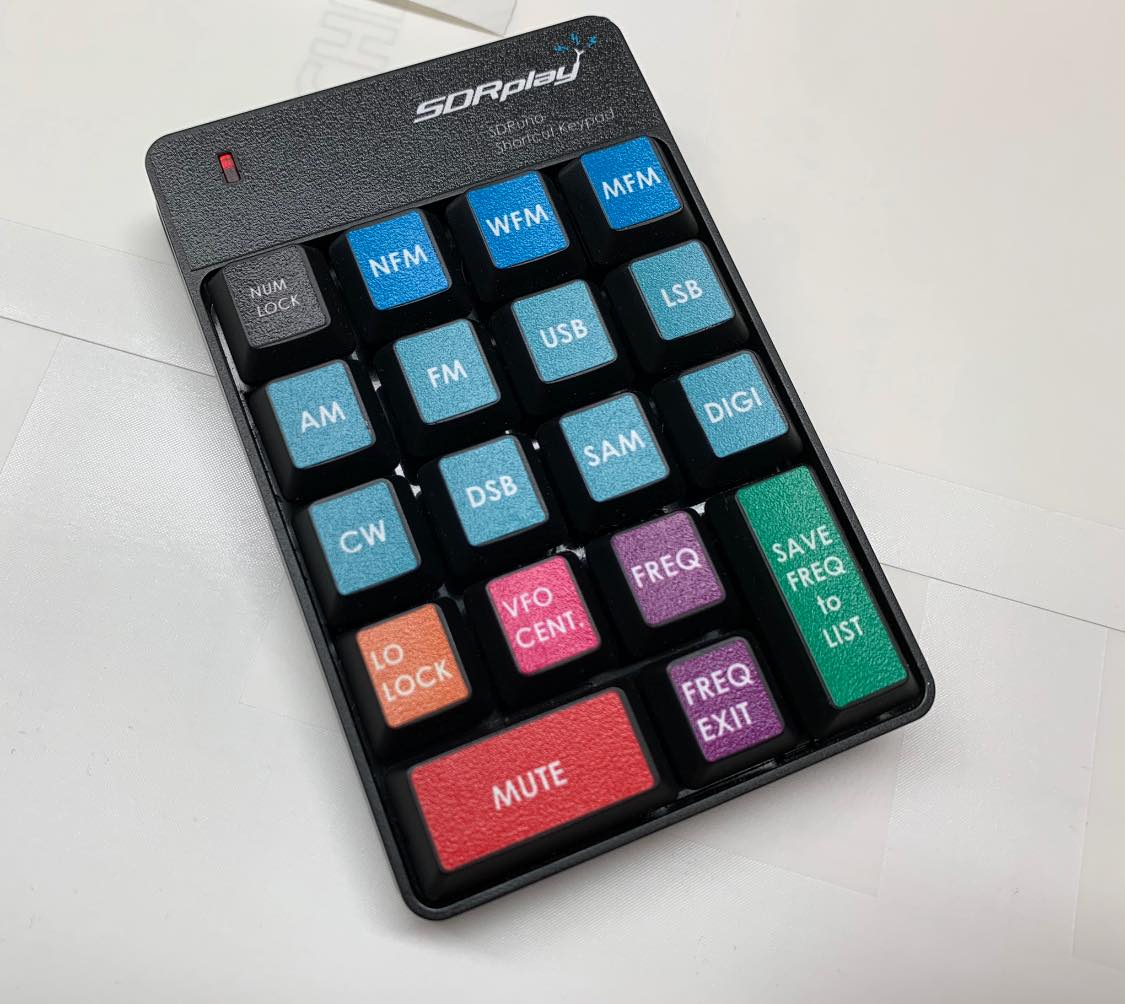
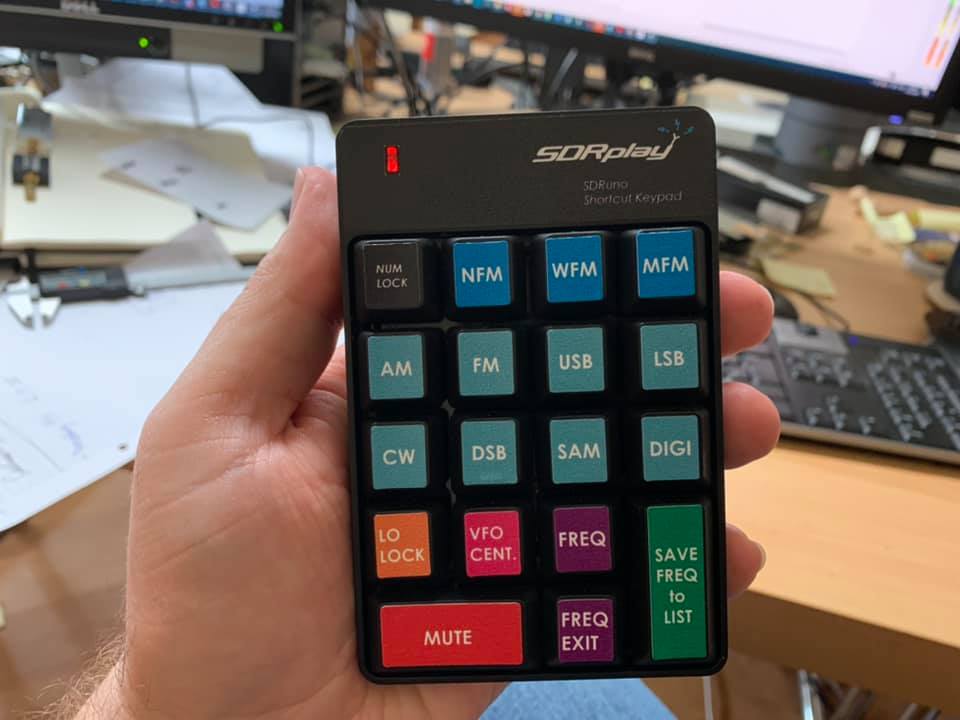
Last week, I saw a fascinating post by Christoph Jahn on the SDRplay Facebook page.

Christoph created a custom hotkey pad for use with SDRuno.  The project is actually quite simple and his finished product looks amazing:

The steps involve downloading “LuaMacros” a freeware macros utility that allows you to map macros to an external USB device like a cheap numeric keypad. Christoph then designed the key templates and printed them on a strong adhesive vinyl foil.

I asked Christoph if I could post his project on the SWLing Post and he kindly sent me the followed PDF with step-by-step instructions.

Click here to download the instructions as a PDF (6.71MB).

Christoph also shared the macros file he used for his project (download .XML file 8.77 KB).

Thank you so much for sharing this, Christoph!  Your finished product is so professional, I would have thought it was produced by SDRplay!

This could be a useful tool for a radio friend who is visually-impaired and, of course, could be compatible with a wide range of SDR apps and rig control software that allow keyboard shortcuts.

Readers: Have you done a similar project? Please comment with your experience and any details–especially noting applications and programs you find are compatible with keyboard shortcut mapping. This could be very beneficial for radio enthusiasts with disabilities!

Radio technology magazines both online and in print

Many thanks to SWLing Post contributor, Mangosman, who writes:

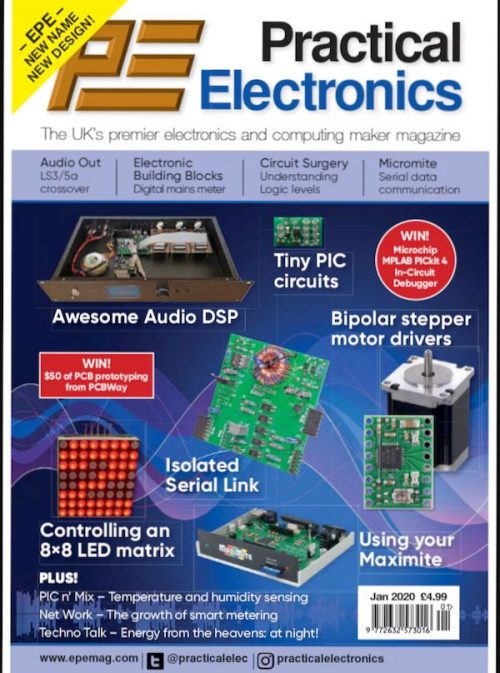
There used to be magazines like Radio Electronics (USA), Practical Wireless (UK), Radio Television and Hobbies (Australia) and other magazines on electronics were sold in shops and on subscription for money which paid their writers. The internet has killed most of these magazines. There are still a few still in publication that I know of:

There are other Amateur radio magazines as part of membership.

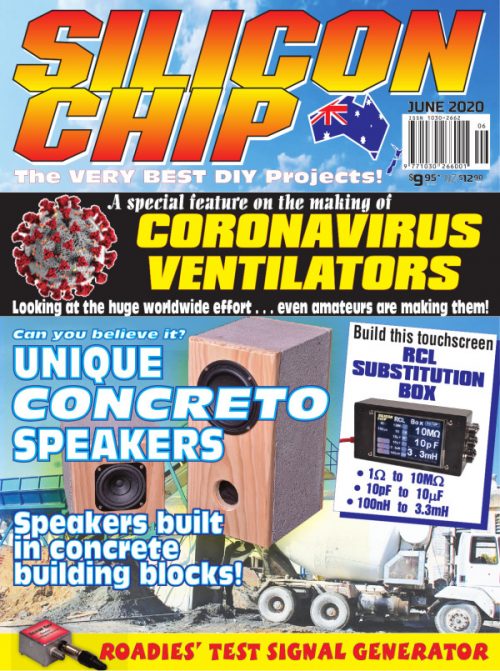
Silicon Chip

Silicon Chip magazine publishes an extensive range of electronics projects every month including many which use Arduino, Raspberry Pi and Australia’s own very popular Micromite/Maximite microcontrollers. These projects are conceived, developed, constructed, written, photographed published and any unusual parts are sold on the magazine’s website by professional people who are paid by sales of the magazine.

Whether you’re into the latest digital electronics or prefer restoring vintage radios, or anywhere in between, we have something to interest you.

Of particular interest to radio enthusiasts are;

New W-I-d-e-b-a-n-d RTL-SDR Modules Part 1  and Part 2 where the performance of the available modules are measured and compared by Jim Rowe. Some modules will not work at all below 30 MHz but will above. Sensitivity dropped off at different frequencies depending on the module. Jim has the testing knowledge because he constructed his own version in 2013. Also check out Using the SiDRADIO to receive DRM30 and More Reception Modes for the SiDRADIO.

More recently they published a touch screen DAB+/FM/AM radio construction project.

The online subscription rate is  $Au 85 (= $US 56.29 = € 51.12 = £ 45.88) at the moment for a year of 12 magazines. Individual articles are also available. GST is an Australian Goods and Services Tax.

The above magazines produce their own content rather than just promote a manufacturers’ product.

Many thanks for the suggestions, Mangosman! I imagine there are a number of electronics magazines still in publication in other languages, too. Readers, please comment if you subscribe to a quality publication not mentioned above.

I would also note that if you would like to read archived/vintage copies of electronics and radio magazines–some dating back to the early 20th century–explore the American Radio History website.

Radio Waves: Hacking Satellites, “Close-Knit” Ham Radio Culture, TV Drama Diplomacy, and Ofcom Relaxes Restricted Service Licence

(Image: NASA)

Radio Waves:  Stories Making Waves in the World of Radio

Because I keep my ear to the waves, as well as receive many tips from others who do the same, I find myself privy to radio-related stories that might interest SWLing Post readers.  To that end: Welcome to the SWLing Post’s Radio Waves, a collection of links to interesting stories making waves in the world of radio. Enjoy!

Many thanks to SWLing Post contributors BJ Leiderman, London Shortwave, and Michael Bird for the following tips:


Hacker Used £270 of TV Equipment to Eavesdrop on Sensitive Satellite Communications (CBRonline.com)

“Vulnerable systems administration pages and FTP servers were publicly routable from the open internet.

An Oxford University-based security researcher says he used £270 ($300) of home television equipment to capture terabytes of real-world satellite traffic — including sensitive data from “some of the world’s largest organisations.”

James Pavur, a Rhodes Scholar and DPhil student at Oxford, will detail the attack in a session at the Black Hat security conference in early August.

Pavur will also demonstrate that, “under the right conditions” attackers can hijack active sessions via satellite link, a session overview reveals.

The news comes as the number of satellites in orbit is expected to increase from approximately 2,000 today to more than 15,000 by 2030. (Elon Musk’s SpaceX alone has permission to launch 12,000 satellites.)[]

A close-knit culture, with separation at its core (Christian Science Monitor)

Ham radio operators are a global collective with a common aim: to forge human connections in an expanding network. As COVID-19 makes us all ‘distance,’ we wanted to tune in to their world.

https://youtu.be/BMeVY_JyLFk

You’re logged in, the Zoom meeting underway, and suddenly faces freeze. The best you can do: Reboot the router and cross your fingers. You’re on the phone with a friend, deep in conversation, and the audio gets garbled as the bars on your phone drop from one to none. Technology can fail us at inconvenient times. But imagine a communications technology that could hold up even in the most rugged and remote situations.

It exists, and it’s much older than the smartphone.

Amateur radio, or ham radio, has been around for more than a century, functioning as both workhorse and recreational hobby. After the Boston Marathon bombing in 2013, amateur operators coordinated communications as cellphone systems became overloaded. They played a key role in Puerto Rico in 2017 after Hurricane Maria took down much of the communications infrastructure. Though there hasn’t been as much of a need during the pandemic – with traditional systems up and running – amateur radio is keeping its own user communities in touch, informed, and emotionally grounded.[]

Australia criticised for TV drama diplomacy (Radio New Zealand)

[Listen to full interview above or at RNZ.]

Australia has been told it should not send low-brow TV dramas and reality shows to the Pacific, but find out what the region really wants.

Canberra has announced plans to stream television content to the Pacific as part of efforts to promote Australia’s relationship with the region, and to counter Chinese influence.

But a spokesperson for advocacy group, Australia Asia Pacific Media Initiative, Sue Ahearn, says sending programmes like Neighbours, Border Force is not the answer.

She believes Australia could provide a much greater service for the Pacific.[]

Update: Licensing drive-in movies and church services (Southgate ARC)

Drive-in movie and church service event organisers could be granted temporary radio licences by Ofcom, which may allow film lovers and congregations to come together while still observing social distancing.

Ofcom has today updated its licensing information to offer guidance to individuals or organisations who may wish to hold these types of events. They require a ‘restricted service licence’ from Ofcom, so that people in their cars can hear the film soundtrack, or what is being said, on their FM car radios.

Given the current coronavirus pandemic, we are waiving the usual 60-day notice period for licence applications. We will also process applications quickly, with the aim of providing an answer to applicants within two weeks of it being received.

We recognise that these events may be a way for communities and congregations to enjoy a film or to worship, while still observing social distancing. In granting any licence, however, we are not authorising the event itself. It is for licensees to ensure that any events are permissible under Covid-19-related laws and guidance.

More information, including on how to apply for a restricted service licence, is available.
Licensing information []


Do you enjoy the SWLing Post?

Please consider supporting us via Patreon or our Coffee Fund!

Your support makes articles like this one possible. Thank you!

The Yaesu FT-70G: Where the FT line met Milcom

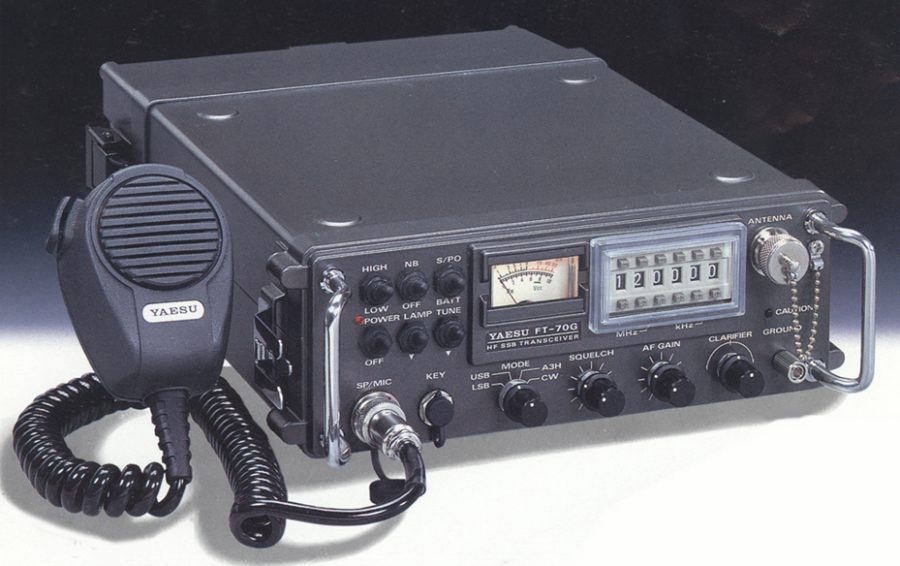
Earlier today, I stumbled upon a very unique transceiver in Universal Radio archives: the Yaesu FT-70G.

Here’s the description from Universal:

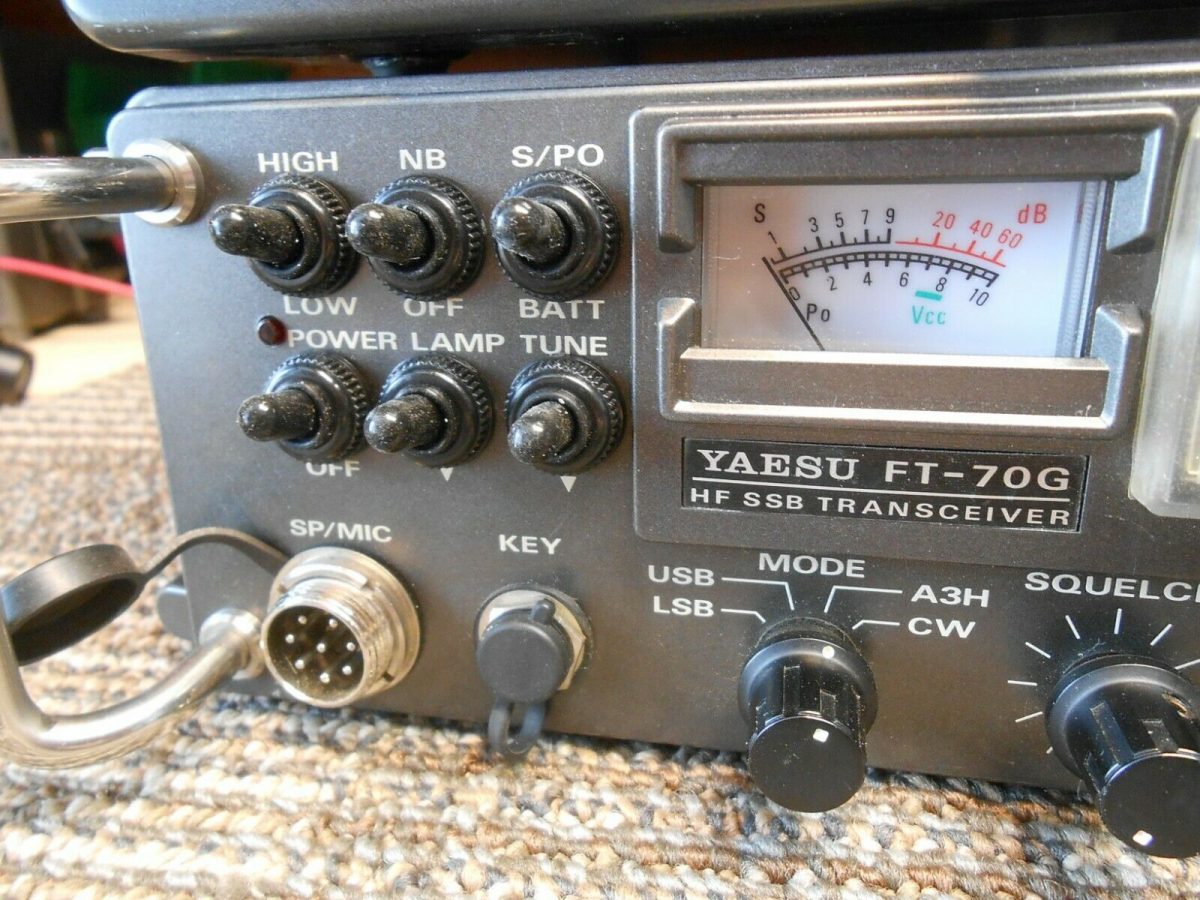
The Yaesu FT-70G is a portable HF transceiver covering 2 to 30 MHz transmit. Receive is from 500 kHz to 30 MHz. Frequency selection is via BCD switches to 100 Hz. There is a clarifier for fine tuning. Optional FNB-70 NiCad Battery. Please note that the optional 10F-2.4DL filter is required for LSB opeation.

The Yaesu FT-70F is similar, but is a channelized fixed version offering up to 11 frequencies.

Two hours ago, I was not aware that the FT-70G existed.  Now? I want one!

I’m a real sucker for vintage rugged field radio gear, so I never discovered the FT-70G until today. Turns out, they’re relatively rare. A little light research reveals that it’s a highly-desired transceiver in the world of HF Packers–those radio enthusiast who like “manpack” commercial and military gear.

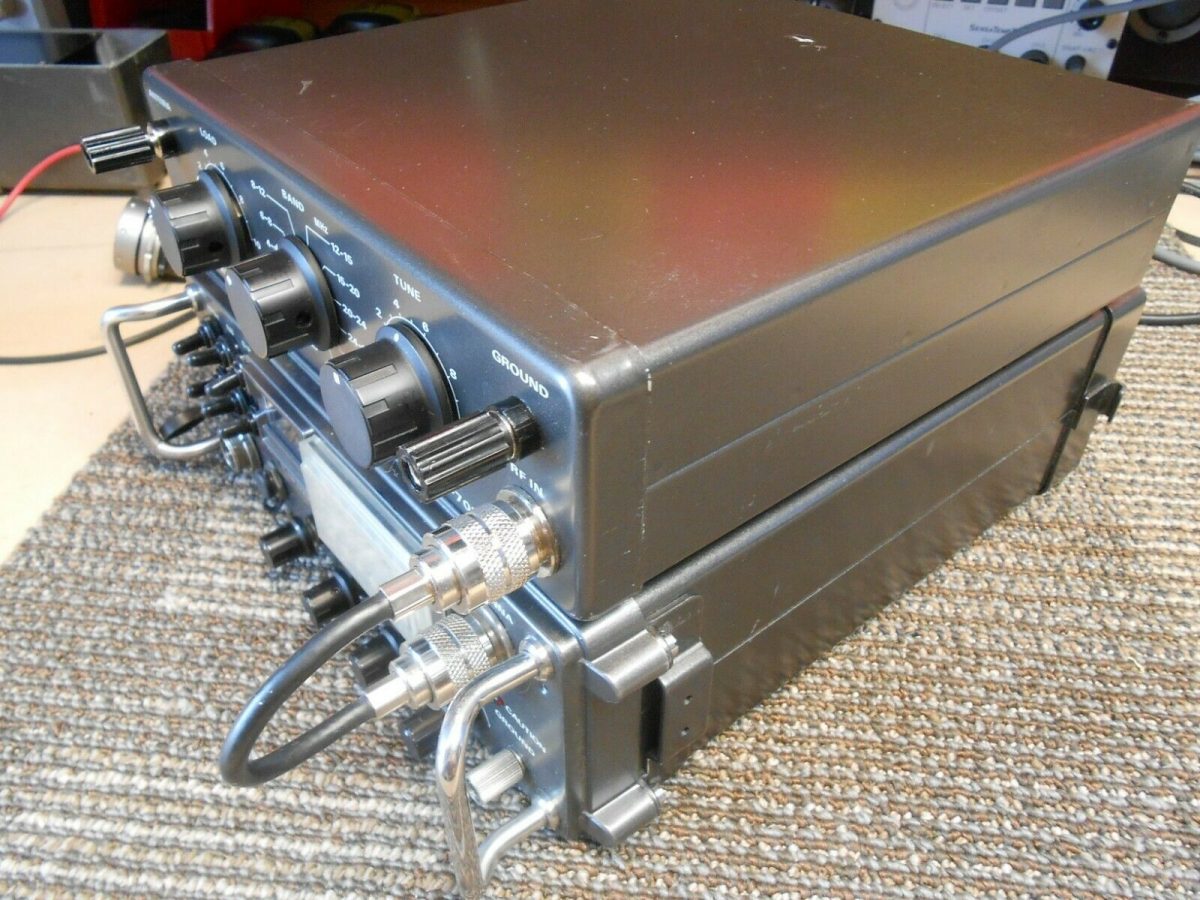
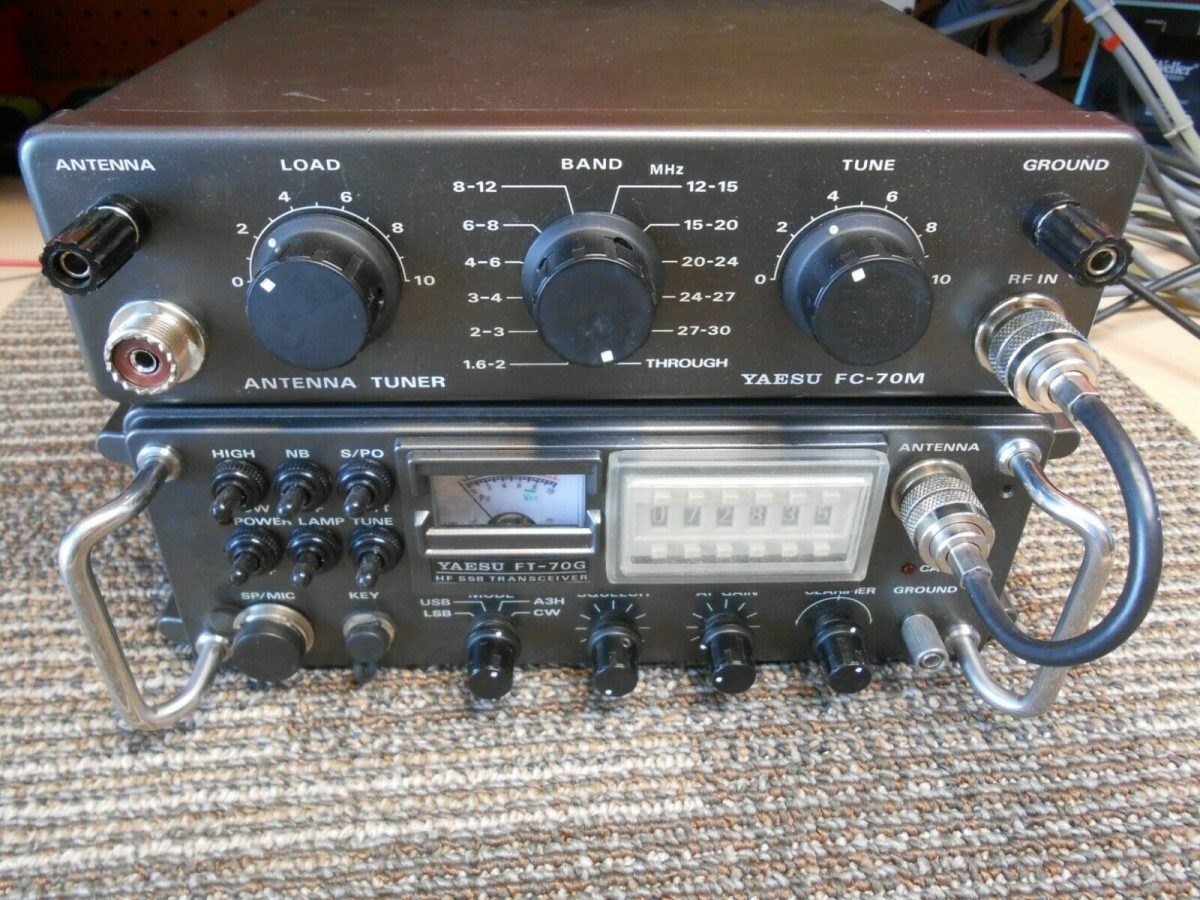
The FT-70G has a distinct military look and feel with the BCD switches to change frequency, rugged toggle switches, chassis extensions to protect the front panel, and attached screw-on connector caps.

What’s really surprising is that the FT-70G has a general coverage receiver (500 kHz to 30 MHz). Admittedly, it would not be fun band-scanning with those BCD switches…but still!

This website has a number of photos. They also have a product description likely from the original Yaesu/Vertex Standard FT-70G description:

“The FT-70 series HF field portable manpack transceivers are designed to provide reliable communications under rugged conditions in the military and commercial environment. The frequency synthesized, all solid-state circuitry and die-cast anodized aluminum enclosure and battery pack make a highly portable, weatherproof station. Flexible operation for optimum communications under a wide range of propagation conditions are assured by SSB (USB, LSB), semi break-in CW, AM, or audio interfaced Data modes. All controls, antenna, and interface ports are available and selectable via the front panel for maximum effectiveness and ergonomics in field, base, and manpack applications. The companion antenna tuner FC-70 is compatible with walking manpack, field portable, or base configurations. The highly effective vertical tripod mount antenna system YA-70 is deployed and stowed easily and quickly, pulling double duty by converting to manpack whip while on manuevers. High quality handset YH-70 provides communications privacy and clarity.”

Again, check out the excellent photos of the full manpack kit.

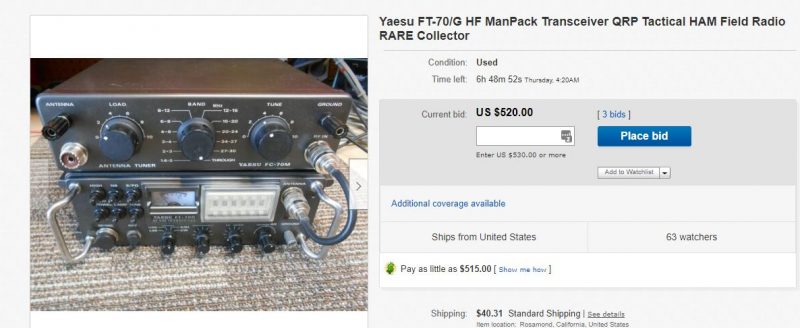
As I researched pricing, I discovered this FT-70R with accompanying FC-70M antenna tuner on eBay right now with only 6 hours left of bidding:

At time of posting, the bids are at $520. I fear this will soar well above my comfort level before bidding ends. (Like I need another field radio anyway, right?)

Post readers: Please comment if you’re familiar with the FT-70G and especially if you’ve ever owned one.  I’d love to hear about your experience with this unique rig.

Guest Post: KK5JY’s Porch Loop Receiving Antenna

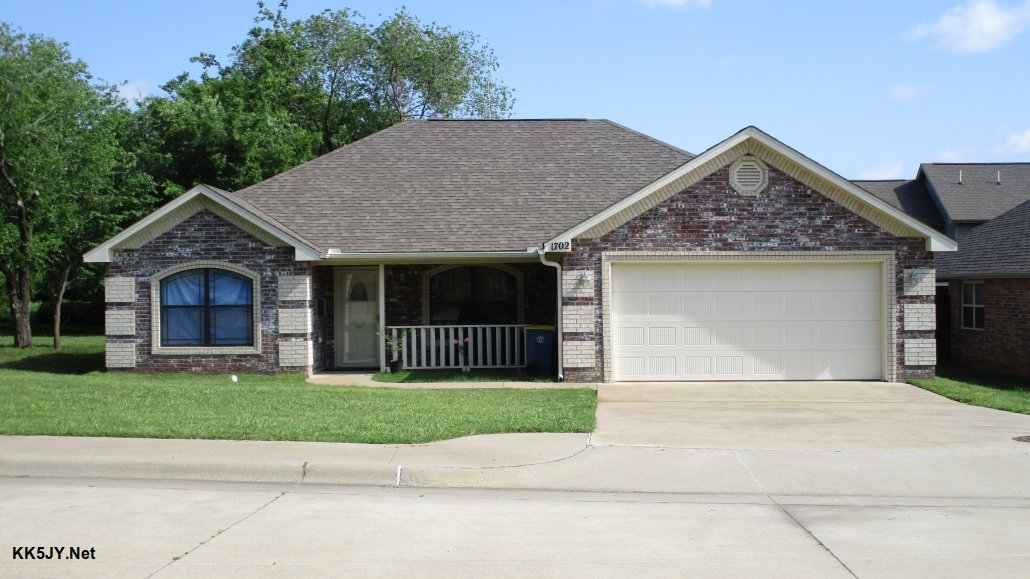
Can you spot the antenna in this photo?

Many thanks to Matt Roberts (KK5JY) who has kindly given me permission to re-post the following article he recently published on his website KK5JY.net. Many thanks to SWLing Post contributor, Grayhat, for the tip!

 Note: The Porch Loop project below is a re-configured Small Receiving Loop (SRL) antenna. For SRL construction details, check out Matt’s primer.


The Porch Loop

by Matt Roberts (KK5JY)

The small receiving loop, or SRL, is a versatile, effective, and very space-efficient receive-optimized antenna for the HF bands.  They are easy to build, and can be made very inexpensively.  Most typical designs use symmetric shapes, like circles, diamonds, octagons, etc., and are mounted on some kind of mast.  This makes it easy(-ier) to install the antenna clear of nearby metal and electronics.  It also makes the antenna rotatable, so that the nulls can be pointed at RFI sources.

These aren’t the only options for the SRL, however.  These little loops can be made to fit in just about any available space.  In fact:

  • They are effective at any reasonable installation height, including very close to the ground.  The installation height doesn’t change the pattern shape, only the pattern strength.
  • They can be made nearly any shape.  The shape does not have to be symmetric about any axis or combination of axes.
  • They can be fed at just about any point on the loop.  A typical feed location is bottom-center, but off-center feeding has negligible effect on the pattern shape.
  • The wire can be bent out-of-plane; in other words, the loop doesn’t have to be “flat.”

There are a couple of requirements for obtaining predictable performance, however.  First, the antenna does need to be an electrical loop.  That is, it is a single wire connected between the conductors of the feedline, forming a complete circuit.  Also, the circumference of the loop wire should be electrically small (i.e., significantly less than ? / 4) on the bands where it is to be used.

Figure 1. The antenna location (click to enlarge)

As a personal challenge, I recently installed such a loop on my front porch.  Everything about this installation defies conventional wisdom — it was installed very close to the ground, it was an irregular shape, it was fed off-center, and the wire was wound in and around an irregular support structure, rather having all the wire in a single plane.

And the resulting antenna still performed very well.
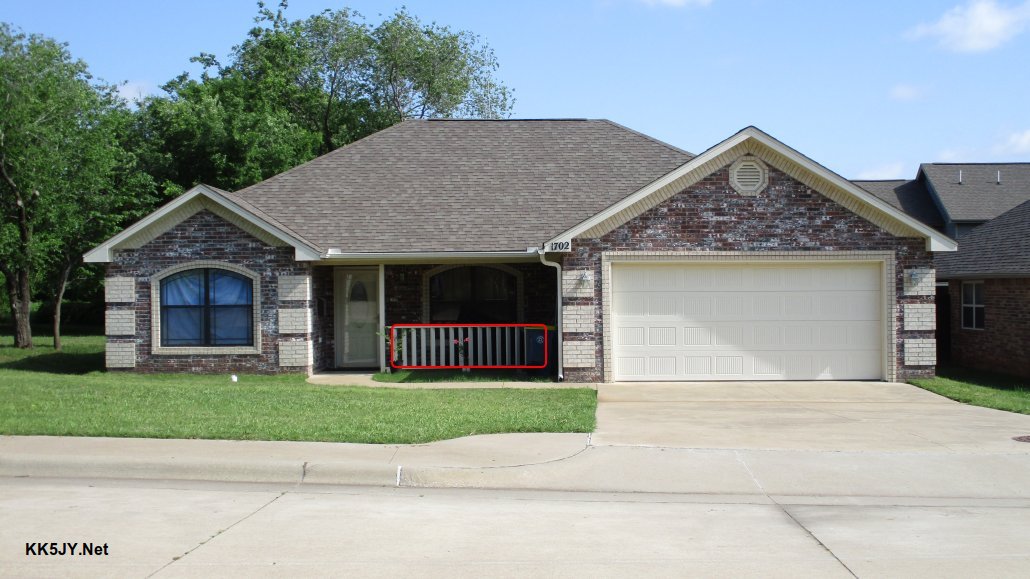
Figure 2: Antenna Location Outlined in Red (click to enlarge)

The loop is essentially the same device as the one in the original SRL article.  See that article for more construction details.  This version is simply stretched and twisted to make it fit the space and supports available.  The wire was woven around the boards in the porch’s deck rail, and fed off to one side, so that the transformer housing could be “hidden” behind the trash cans.
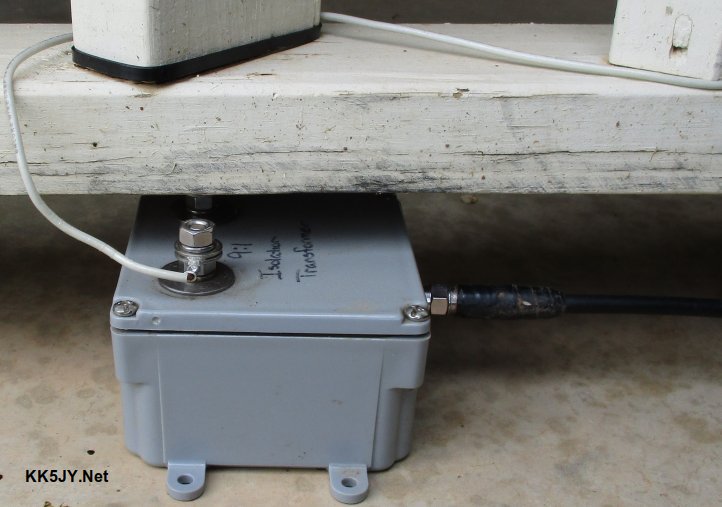
Figure 3: Feedpoint Transformer (click to enlarge)

The wire was insulated with an off-white THHN, which made it blend in with the color of the trim of the house.
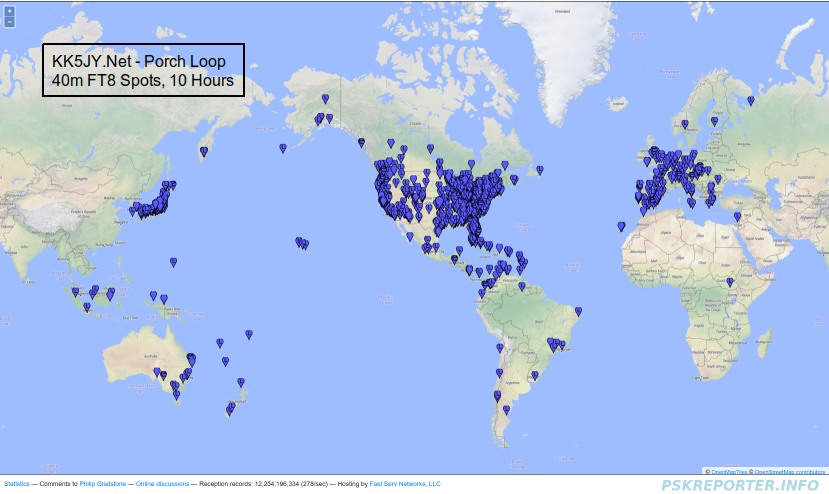
Figure 4: 40m Reception 10h Overnight (click to enlarge)

Even with its suboptimal installation details, the overnight 40m DX spots were numerous and well-distributed, as seen in Figure 4.  There were DX spots at nearly 10,000 miles, there were NVIS spots, and there were countless at all distances in between.  So the antenna was just as effective as its more ideally shaped brethren, despite it’s unconventional installation details.

Other ideas for possible locations of such a device could include:

  • In an attic.  The antenna could be nailed to a vertical panel, or strung like a spider’s web inside the frame of a truss or other open area.
  • Under a tree.  Taking another idea from the spiders, the antenna could be hung and pulled into shape using light guys or tree branches.
  • On a wooden fence.  If you have a wooden fence, the antenna could be installed against the fence panels.  This option could allow a wide range of circumference lengths.
  • Attached to an interior wall of an apartment.  The shape could be chosen to keep the loop clear of in-wall wiring, to help preserve its performance.

The original mast-mounted SRL antennas still have some advantages.  Perhaps the biggest advantage is that they can be easily rotated to null out a nearby strong noise source.  That said, if you are looking for an antenna with better receive performance than a large resonant vertical, the SRL can be stretched and squeezed into service just about anywhere.


Many thanks for sharing this project, Matt!  So many of our readers live in situations where they are forced to use stealthy and compromised antennas. What I love about your porch loop is that even though it breaks several loop antennas “rules,” it’s still amazingly effective. 

I encourage SWLing Post readers to check out Matt’s website as he has written articles covering a number of interesting radio and antenna projects.