Shortwave listening and everything radio including reviews, broadcasting, ham radio, field operation, DXing, maker kits, travel, emergency gear, events, and more
The Ozark Patrol regenerative receiver kit is only one of NM0S’ many 4SQRP kit designs.
Many thanks to SWLing Post contributor, Neil Goldstein, who writes:
I know a lot of your readers (especially the QRP ones) may be interested in the update I FINALLY made to the radio kit guide. Added, removed, etc. Lots of cool stuff.
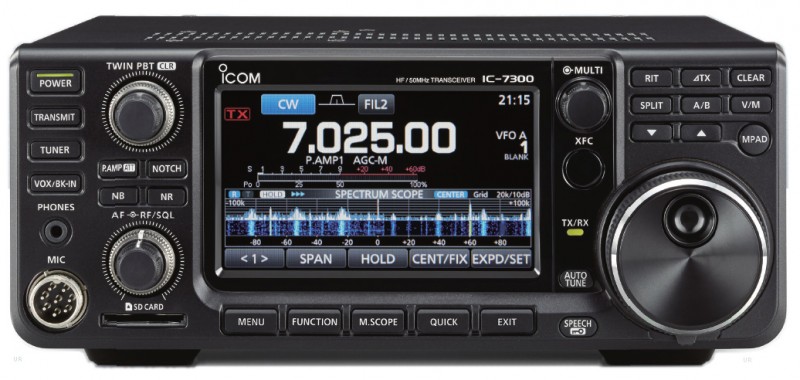
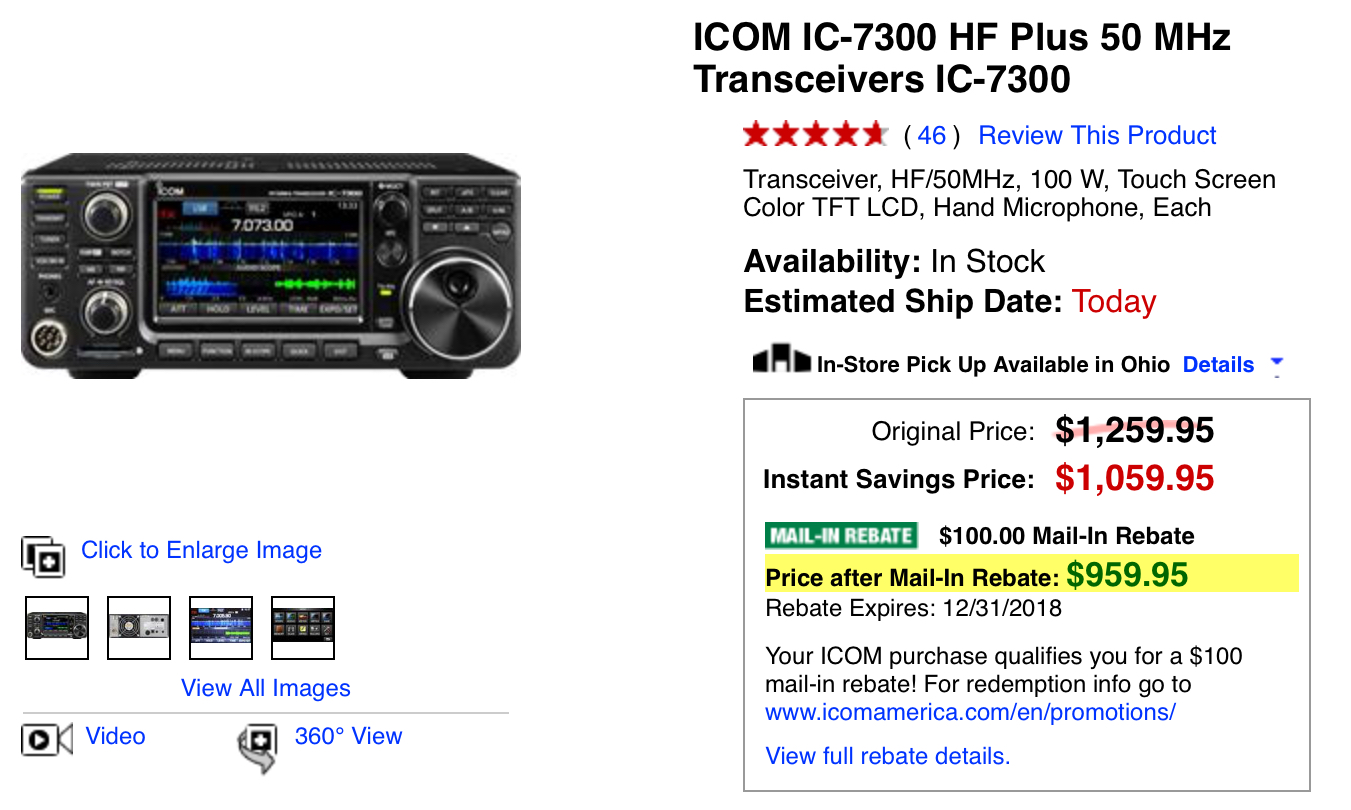
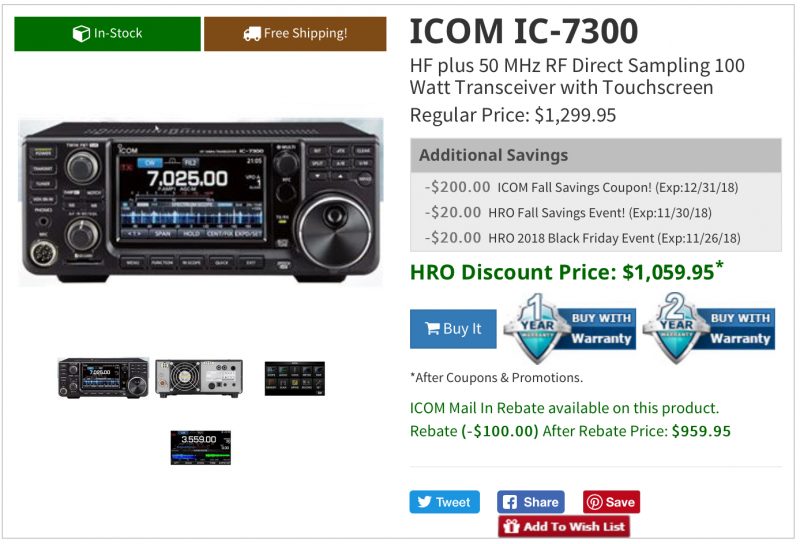
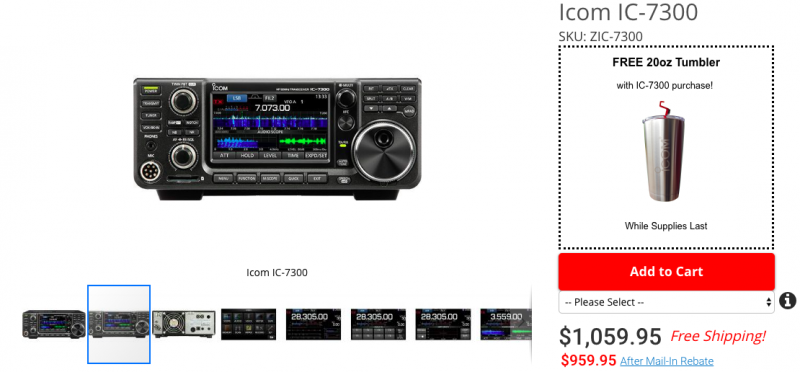
Many thanks to SWLing Post contributor, James (W4AMP), who notes that the excellent Icom IC-7300 general coverage transceiver (click here to read our review) is currently $959.95 after coupons and rebates at GigaParts, DX Engineering and Ham Radio Outlet.
SSGT Roland Downs adjusts the radio mast on Heaven’s Above (42-97328, 388BG) [Photo source: Hangar Thirteen]
Many thanks to SWLing Post contributor, Charlie Liberto (W4MEC), who shares the following:
Perhaps you could post somewhere a general call for anything WW II related that went into a B17F.
This website: http://hangarthirteen.org/ under the ‘Parts Drive‘ menu, lists the many things that will be sought after for the next few years. There might be those who monitor your site that have some of this just stored away, not knowing what to do with it or what will happen to it.
Ray is basically taking what was remaining, inspected, and approved as air worthy from this ditched plane, and building the aircraft to hook all the pieces together.
WOW! What an amazing project, Charlie!
I must say, Lucky Thirteen is in good hands.
Hangar Thirteen has chosen the best vintage radio restoration expert for the job! I’ve known Charlie for many years and not only is he an expert at restoring vintage gear, but he’s passionate about WWII era Signal Corps equipment. He brought my BC-348Q to life and patiently showed me how to align it. He also restored my Minerva Tropic Master and helped me fix the 3rd band selection on my beloved Scott Marine SLRM.
Charlie, I’ll certainly keep an eye out for the these components when I visit hamfests and will contribute anything I find or might have tucked away.
Post readers: If you happen to have any items needed in their list, please consider contributing it to the project and help this B-17F eventually have a fully-functional radio position. Of course, Hangar Thirteen is also in need of other aircraft parts–click here to check out that list.
BC-347 Amplifier
BC-366 Jack Box x8-10
PE-86 Dynamotor
FT-161 Beacon Mount
BG-81 Bag
BC-433 Radio Compass
BC-434 Compass Control Box x2
BK-22 Relay
I-81 Pilot’s Compass Indicator
BC-442 Relay
BC-451 Transmitter Control Box
BC-456 Modulator (with DM-33 Dynamotor)
FT-220 Receiver Rack Mount
FT-221 Receiver Shock Mount
FT-222 Receiver Control Box Mount
FT-225 Modulator Mount
FT-226 Transmitter Rack Mount
FT-227 Transmitter Shock Mount
FT-228 Transmitter Control Box Mount
FT-229 Relay Mount
BC-306 Antenna Tuning Unit
BC-461 Trailing Antenna Control
F-10 Trailing Antenna
FT-107 Dynamotor Mount
FT-115 Liaison Transmitter Mount
FT-151 Liaison Transmitter Mount
FT-142 Antenna Tuning Unit Mount
FT-154 Liaison Receiver Mount
J-37 Tuning Key
PE-73 Liaison Dynamotor
RL-42 Antenna Reel
TU-5 Tuning Unit (1500-3000)
TU-6 Tuning Unit (3000-4500)
TU-9 Tuning Unit (7700-10000)
TU-22 Tuning Unit (350-650)
TU-26 Tuning Unit (200-500)
BC-778 Transmitter
BG-155 Bag
M-278 Balloon x2
M-308 Signal Lamp
M-315 Generator Canisters x2
M-357 Kite
M-390 Parachute
W-147 Wire
The first article deals with buying used and new equipment, while the other article is a review of the uBITX QRP transceiver. Thanks go to Ken Reitz for graciously allowing these to be posted after their initial publication!
Many thanks for sharing, Robert!
Readers, I highly recommend both of these articles. In his used equipment guide, Robert makes practical suggestions for navigating the world of pre-owned radio gear and shares some important tips. His uBITX QRP Transceiver article is essential reading for anyone who has considered building this incredibly affordable kit.
Many thanks to SWLing Post contributor, Dan Robinson, for the following guest post and review:
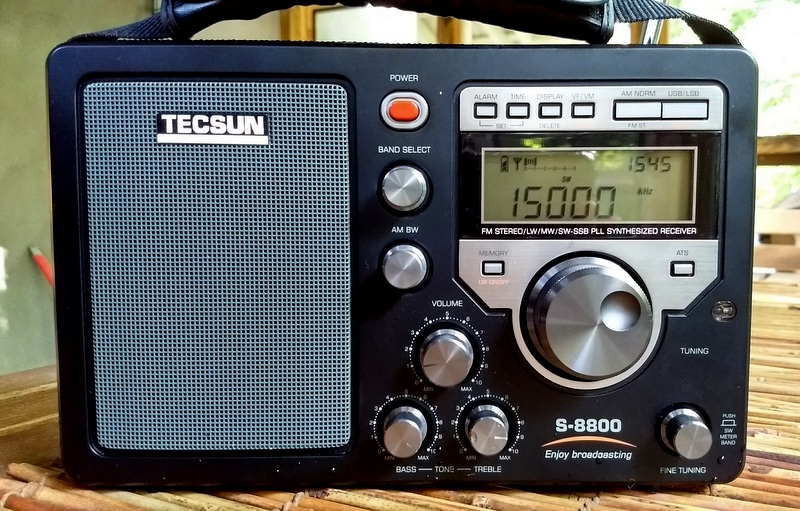
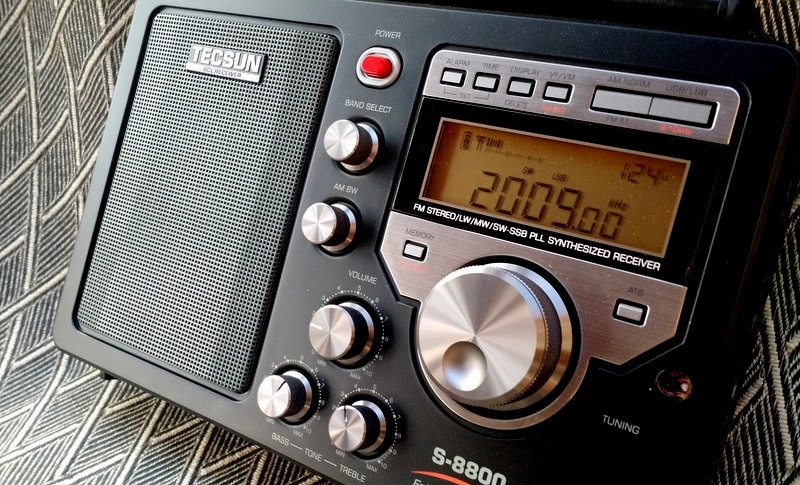
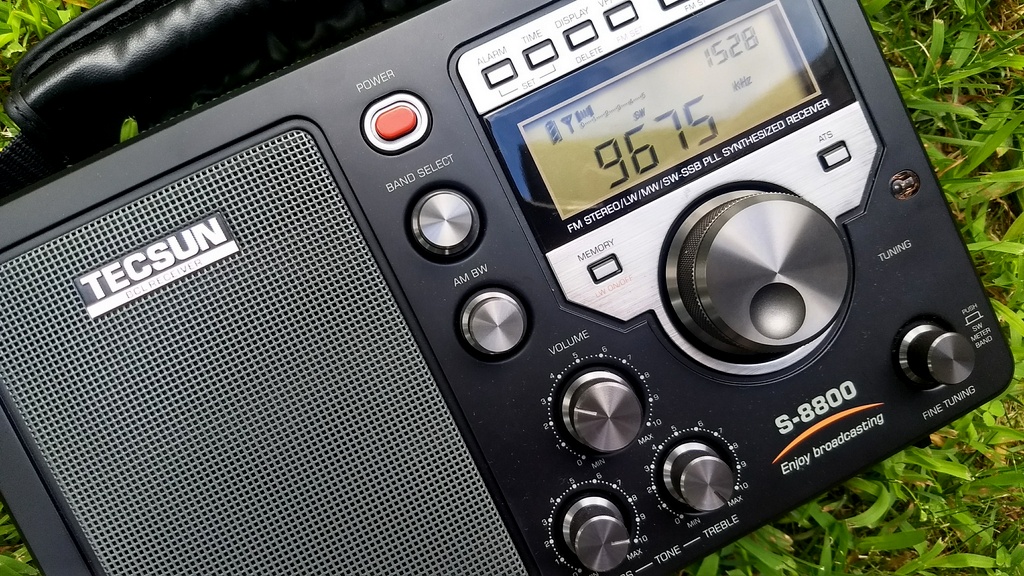
Tecsun’s S-8800: Is This All The Radio You Will Ever Need?
These days, we who still derive enjoyment from listening to shortwave broadcasts, be they larger international broadcasters or smaller stations that remain on the air against all odds in the Internet age, also enjoy using the many types of radio receivers that enable this activity.
One of the cruel ironies is that today’s technological advances have made possible the kind of worldband radios (the term that first came into wide use way back in the 1980’s) that years ago we could only dream of, be they full communications receivers or portable receivers.
Having begun my own DXing/SWL career in the late 1960’s, and pretty much maintained my hobby activities over the decades, I have used pretty much every receiver that ever existed, from tube radios to today’s latest DSP wonders.
I have a soft spot for classics from SONY — my list of portables today includes the fantastic SONY ICF-SW77, SW-07, SW-55s and SW-100. Panasonic is represented in my portable collection by the wonderful RF-B65.
Only in recent years did I decide to test the main higher end portable offerings from Tecsun: the PL-660/680, and PL-880. What I discovered, as have most people who own the Tecsuns, and similar receivers such as the XHDATA D-808, are the wonders of DSP chips and the great flexibility they provide, such as multiple selectivity options, along with excellent sensitivity.
Though it’s been on the market for going on three years now, one of the receivers I had not been able to test was the Tecsun S-8800. There are quite a few reviews already online. Some go into extensive detail in describing the plus and minus points of the radio.
With so many people having already assessed the radio — and most of them in fairly glowing terms — I won’t repeat a long list of technical specs, as you can find those in other reviews, and on the site of Hong Kong-based Anon-co, which is probably the main seller of the S-8800.
Headline
The S-8800 is arguably the best multi band radio portable among portable category offerings on the market today. It combines superior audio delivered from its superb front-firing speaker, with equally superb sensitivity (triple conversion), and multiple selectivity options, with an amazingly professionally-executed remote control.
I used the S-8800 in a number of physical locations, from public parks where I hoped to avoid high noise levels, to my back yard where noise levels are, unfortunately, quite high. I have compared the S-8800 to a number of portables in my collection, including: SONY ICF-2010, SW-77, SW-55, along with Tecsun’s 660 and 880, Grundig SAT-500.
Audio
Hands down, the S-8800 wins the audio competition when compared to pretty much every other radio. Where the competition gets tight is with receivers such as the classic Grundig Satellit 500, and Tecsun’s PL-880.
Sensitivity
This is a TRIPLE conversion radio. As everyone knows by now, Tecsun did not merely adopt the cabinet of the old Eton S350 but basically stuffed a hot rod racer into the cabinet of what was previously a mediocre radio at best.
Selectivity
Widely used in a number of radios these days, the S-8800 uses a DSP chip that is seen in a number of other receivers. The best description I have seen so far is in the review by Jay Allen who notes that Tecsun “decided to utilize a combination of DSP (Digital Signal Processing) circuits along with traditional analog circuits . . .most of the AM/SW circuitry is PLL/analog along with the 1st and 2nd IF’s, while the 3rd IF is DSP.” It appears that after a bit of a rocky period in the beginning when initial units suffered from images and birdies, Tecsun got it right.
Ergonomics
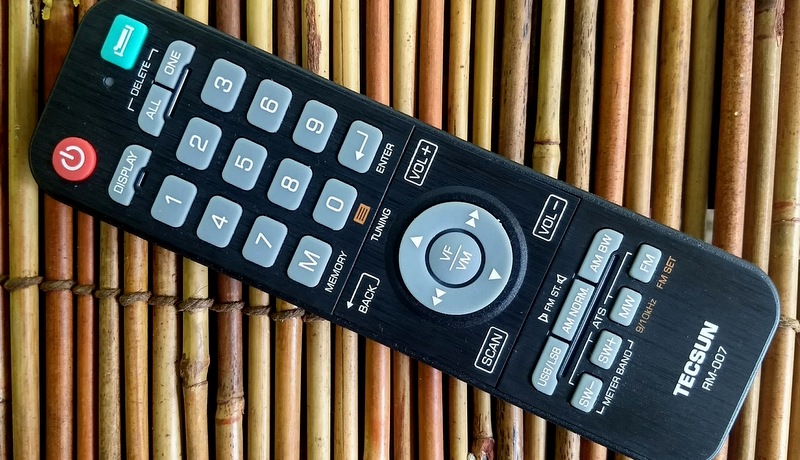
Much has been said about the fact that Tecsun decided not to include a keypad on the radio itself. I too was skeptical. We have all become accustomed to keypads as standard equipment on portables.
Personally, I do a lot of my listening on the beach during vacations, and am used to being able to hold and operate the radio in such situations, so the thought of having to carry a remote control seemed uncomfortable at best.
However, the reality is that it’s still possible to navigate the shortwave, AM, and FM bands easily even without the remote — call me old fashioned, but I am from a group of older listeners who have most frequencies memorized anyway, so I know where I want to go to hear certain stations.
Tecsun hit it out the ballpark with the remote supplied with the S-8800. It looks like something you would find with high end stereo equipment and clearly much thought went into making sure it can control every aspect of the receiver, from SW band slewing to selectivity, volume, readout — everything except BASS and TREBLE control, Timer/Alarm, and master volume (i.e. as other reviewers note, you have to set the on-radio master volume to a high enough level first, then use the remote to vary).
Power
The radio requires two 18650 lithium (Li-ion) rechargeable batteries, with individual indicator LEDS inside the battery compartment. This choice is perhaps one of the most controversial aspects of the 8800. Among other things, 18650s usually receive more attention from airport security personnel if one is taking the radio on a trip — this is something everyone should keep in mind. Any radio being transported on a flight these days is going to be subjected to added scrutiny, simply because almost no one uses radios anymore.
As for the power needs of the receiver, the 18650s seem to do a good job and last quite a long time, even days. Included in the box is one of those white USB charger blocks — quite small and convenient. I usually travel with separate 18650 chargers, the kind used with high end flashlights, so having spare sets of charged batteries is not a problem. But if both 18650’s in the Tecsun are drained, the radio definitely needs to re-charge to a minimum level required for operation.
As I write this, I plugged the S-8800 into a wall outlet (a blue LED indicator on front indicates charging mode) and I was unable to use the radio as the battery level had completely zeroed out. Also keep in mind that the USB charging brick throws off EMI to other radios in the vicinity, and makes it impossible to use the S-8800 itself — there is just too much interference from the charging process to the radio’s receiving circuitry.
Comparisons
As mentioned, I compared the S-8800 with a number of other portables in my collection. Each of these other radios, including the classics from SONY such as the SW-55 or SW77 have their strengths. For example, the SW77 has the best implemented synchronous reception of any portable since the ICF-2010 along with superb sensitivity. However, even the large speaker on the SW-77 was unable to compete with the S-8800. Only radios such as the older Grundig SAT 500/700 had the advantage when compared to the S-8800’s speaker, with the Tecsun PL-8800 close behind.
Receiving Comparisons
I decided to take the S-8800 out to my back yard for a receiving comparison with the receiver I consider to be among the top five best in what I call the small portable category (which is above the mini-portable category in which we find the SONY SW-100 and SW-07 and similar size radios).
Rather than produce several separate videos, I have combined one listening session comparing the S-8800 with the RF-B65. It’s a bit long, so my apologies, but gives you an idea of how these two fine portables did going head to head.
Leaving aside the obvious superiority of the Tecsun where audio is concerned, the S-8800 competes well with the Pan RF-B65, often superior to the smaller radio, but sometimes inferior in one respect.
While there was nothing the S-8800 could hear that the Panasonic could not, signals seem to jump out of the S-8800 in a way that they did not with the smaller radio. However, there appeared to be an interesting difference when it came to the ability of each radio to deal with interfering stations 5 kHz above or below.
As shown in the video, the Panasonic was able to distinguish more clearly between a station on 9,650 kHz (Guinea) and a station 5 kHz above (in this case, Algeria via France, using 9,655 kHz) than the Tecsun, which seemed to struggle. Indeed, at one point I was forced to attempt ECSS (Exalted Carrier SSB) mode to separate the two stations, whereas on the Panasonic, being the older and simpler radio design was an advantage in that the RF-B65 was actually able to more clearly separate the two stations by “de-tuning” from the center frequency.
One huge advantage of the S-8800 by the way is that there is a hidden software change that enables one to adjust SSB zero beat to zero or near zero. This means that in theory using LSB/USB to improve reception is possible, though keep in mind that there may be some variation from unit to unit. So far, after performing the so-called ‘secret’ fix (among a list of tweaks discovered so far) my particular S-8800 appears to be able to zero beat LSB/USB with little or no variation between the side bands, pretty much up and down the SW bands.
Conclusions
For me, the S-8800 has turned out to be the biggest surprise of the last several years. Coming seemingly out of nowhere, packaged in the cabinet of a receiver that was seen as mediocre at best, we have a triple conversion beauty (it seems to weigh almost nothing by the way) that provides pretty much every tool required these days to tackle what is left of shortwave broadcast reception. It has superior audio, unless one compares to older Grundig and similar sets.
Drawbacks are quite few to be honest. A case can definitely be made that using 18650 batteries was a poor choice by Tecsun. This means, for example, that if you’re out on the beach or elsewhere for many hours, the only way to charge up the radio would be to use a separate phone battery charger rather than simply be able to slip in regular alkalines. But then, I carry separate battery charge units already for my phone.
The big criticism that synchronous reception could have been included is also valid. The same was said about the SONY ICF-SW55 — with synchronous reception, and a bit more careful design of the tuning circuit, that radio could have been a heavier hitter, a mini-ICF 2010, something the much more expensive SW-77 was designed to improve upon.
However, so far radios utilizing DSP chips have struggled when it comes to synchronous reception capability. Indeed, the feature has ended up being discovered only as one of a number of ‘secret’ features. Only the PL-660 has a decent synchronous feature, but that radio is hobbled by limited selectivity options, while sync on the PL-880 is pretty much useless.
Finally, I have to say thank you to Tecsun for doing everything possible to avoid the dreaded ‘MUTING’ problem that has been seen on so many small portables.
As I found to my disappointment when using even the much-praised Eton Grundig Satellit, and even the C Crane Skywave SSB, this problem can be a killer for those of us who consider it absolutely critical to be able to hear EVERYTHING on and between frequencies.
So, the big question — would I recommend the S-8800? As with almost everything, the answer to that is, it depends on what kind of a listener you are, and expectations.
From a performance perspective, if you are like me, a die-hard DX’er at heart who gets a kick out of searching for the last Peruvians on the air, the S-8800 should be more than sufficient. If you’re both a die-hard DX’er and enjoy FM and AM, the 8800 should also be a perfect selection, since it’s been reviewed quite well in terms of medium wave and FM capability.
A personal note — for me, part of the fun of shortwave portables has been their ‘cool factor’. I’m just one of those who likes to carry around complicated looking radios with lots of buttons. The SONY 2010, SW-55, SW-77s, older Grundigs all fit the bill.
I never thought the S-8800 or radios similar to it in appearance would. So, for me it’s going to require a bit of a change, since the S-8800 looks like, well . . . it looks like a ‘toy radio’!
But it’s one hell of a toy-looking radio. It’s a triple conversion monster packed in the frame of something that, at one point in the past, you might have considered getting for your kids (if they even knew or know what a radio is!).
As many of us are at this point in our lives, I am also thinking ahead — to the day when my numerous premium Watkins Johnson and JRC radios, and a few boatanchors hanging around, will have to go because of downsizing.
When I’m 65, as the Beatles song goes — or more likely 85 or 90 — what will I be able to fit on a bedside dresser and use easily to tune in whatever is left on shortwave (if anything)?
The answer to that question is a radio that’s small enough and enough of a performer, preferably with a well-designed remote, to bring in anything that’s still on HF, MW, and FM. With those needs in mind, the answer is already here, in the Tecsun S-8800.
[I want to express sincere thanks to Anna at Anon-co who responded quickly when I proposed a review of the S-8800 and supplied the receiver on which this article is based. Anna was patient as my original plan to have a review in by September was delayed by unavoidable personal matters. Thanks also to Tom Witherspoon for getting the review up so quickly].
Many thanks to SWLing Post sponsor, Bob Raymond with DXtreme Software, for sharing the following press release:
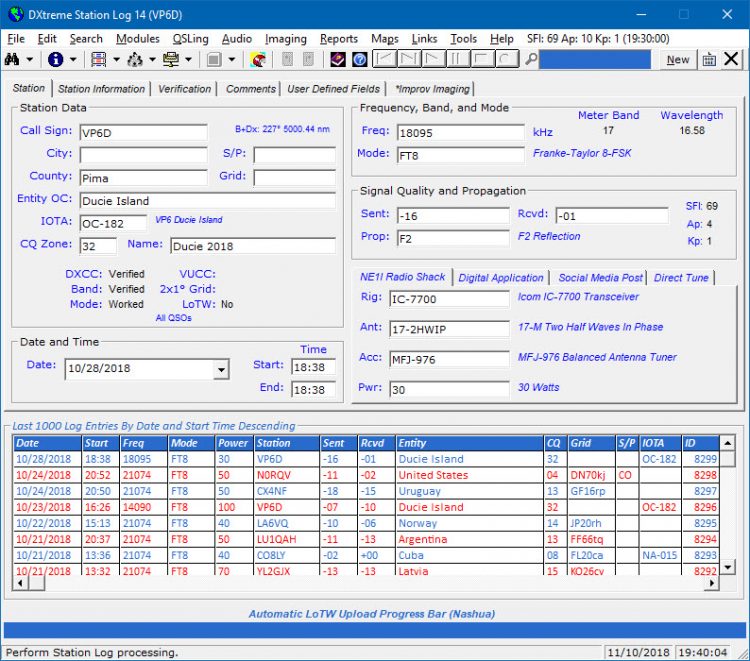
Product Announcement DXtreme Station Log 14
DXtreme SoftwareTM has released a new version of its popular logging program for Amateur Radio operators: DXtreme Station Log 14TM.
New Features in DXtreme Station Log 14
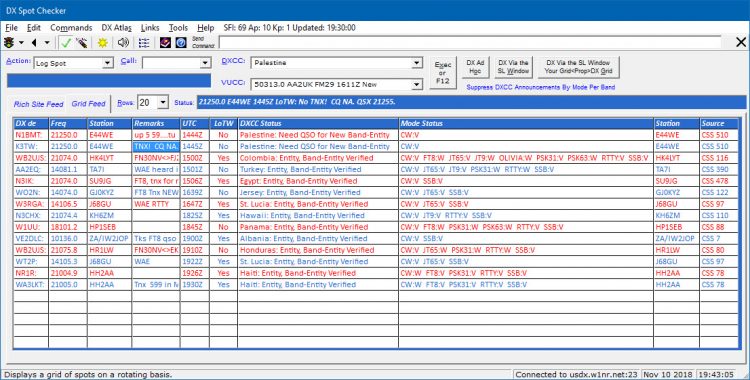
DX Spot Checker Now Has Two Presentation Modes — Users can switch between Rich Site Feed and Grid Feed by clicking a tab on the window. The Rich Site Feed displays the actual, continuous feed from the Telnet server, and lets users interact with the server to set options like server-side filters and to perform queries. The new Grid Feed displays 10 to 50 rows (user’s choice) of DX spots in a structured, resizable, alternating-color grid. Grid-Feed spots can be displayed on a rotating basis (erase then continue) or by overwriting spots already displayed, as selected on the DX Spot Checker toolbar. Users can set fonts and colors for both feeds.
Suppress Verified Spots by Mode Per Band — When activated in DX Spot Checker Options, this client-side filter lets users suppress the display of spots for modes already verified within band plans defined on the Modes-Per-Band Plans tab.
JT Log Entry Processing — Users can have DXtreme Station Log 14 manage the pre- and post-log-entry population of the WSJT-X and JTDX log files, letting users perform all logging operations on the Station Log 14 window while keeping their eyes glued to the WSJT-X or JTDX interfaces for worked-before status indications. This feature is important when using quick modes like FT8.
Digital Application Assignment — When users add a JT log entry via JT Log Entry Processing, the Digital Application Used field is populated automatically with either WSJT-X or JTDX as appropriate. When using other applications, users can edit this field manually. And they can assign digital applications to pre-existing log entries by mode globally, filtered or unfiltered by date and band.
Club Log Record Creation — Users can create Club Log records in a special workfile automatically when adding or modifying log entries. The workfile can be viewed and edited, if needed, and uploaded via the Club Log web site. A Batch Upload to
Club Log function is available when Club Log does not contain all log entries.
Standard Features in DXtreme Station Log 14
DXtreme Station Log 14 lets hams log their contacts and import ADIF files from other programs. It supports major call sign subscription services, and offers the following multimedia and advanced functions:
DX Spot CheckerTM — Receives DX spots from Telnet-based servers and determines whether QSOs are needed for new or verified DXCC® entities, band-entities, mode- entities, or VUCC grids. Information displays on Rich Site Feed and Grid Feed tabs.
Automatic LoTW Upload — Users can set Station Log 14 so it uploads each log entry to LoTW automatically when added, capturing and saving QSO Record Status from the LoTW server as part of the process. Modified log entries can be uploaded as well. If desired, users can disable automatic uploading and can upload log entries to LoTW semiautomatically and manually in batches whenever they want to.
LoTW Reporting — Users can perform searches and run reports filtered by LoTW QSO Record Status, which indicates whether log entries are On, or Not On, the LoTW server following upload or QSL-updating. Users can also perform searches and run reports filtered by LoTW QSL Record Status, which indicates the date of each LoTW QSL record processed by DXtreme’s LoTW QSL Update Utility.
DX Atlas Integration — Performs Afreet DX Atlas azimuth plots from the user’s location to that of a spotted or logged station. Also creates maps for reports.
Rig Control — Tunes/retrieves frequencies and modes from supported rigs through integration with Afreet Omni-Rig.
QSL Processing — Creates QSL and address labels for physical QSLs, and supports the ARRL’s LoTW facility, including capturing LoTW QSL records as digital images.
QSL ImagingTM — Lets users scan and capture QSL cards and electronic QSLs into their log entries for browsing and viewing any time they want to.
Improv ImagingTM — Lets users associate adhoc images with their log entries separate from our popular QSL ImagingTM facility. Users can capture, scan, or paste any image and save it as a single-page .jpg, or single- or multi-page .tif. Improv images popular with users include signals on a spectrum analyzer or waterfall, QSOs conducted on ATV and data applications, and equipment used during contacts.
Audio Facility — Records and plays QSOs.
Reports — Provides a wide range of performance and station reports to let users see how well they’re doing. Reports can be filtered and sorted. Includes DXCC® and WAS AnalyticsTM tools for analyzing and enhancing DXCC and WAS standing.Operating System and Requirements, Pricing and Support
DXtreme Station Log 14 runs in 32- and 64-bit versions of Microsoft® Windows® 10, Windows 8.1, Windows 8, Windows 7, Windows Vista®, and Windows XP. It retails for $89.99 USD worldwide for Internet distribution. Reduced pricing is available for upgrading users. All prices include product support by Internet e-mail.
About DXtreme Software
Based in Nashua, NH, DXtreme Software produces powerful and easy-to-use logging applications for all kinds of radio enthusiasts — from short-wave and medium-wave listeners and DXers to Amateur Radio operators. For more information about DXtreme Station Log 14, visit www.dxtreme.com or contact [email protected].
Amateur Radio on the International Space Station (ARISS) has scheduled a slow-scan television (SSTV) event to begin on Saturday, October 27, at about 1000 UTC. NASA’s Space Communications and Navigation (SCaN) Department will support the event. SCaN manages NASA’s three most important communications networks — The Space Network (SN), Near-Earth Network (NEN), and the Deep Space Network (DSN). Participants in the SSTV event can qualify for a special endorsement for NASA on the Air (NOTA), celebrating the space agency’s 60th anniversary.
As during past ARISS SSTV events, 12 images will be transmitted. Six will feature SCaN educational activities, while the other six images will commemorate major NASA anniversaries, including the establishment of NASA and the moon landing. Transmissions are expected to take place on 145.800 MHz using PD-120 SSTV mode. Received images can be posted and viewed online. The event is dependent on other ISS activities, schedules, and crew responsibilities, and the schedule is subject to change at any time.