Category Archives: Ham Radio

Elecraft KX2/KX3: An inexpensive adapter for earphone and mic operation

Many thanks to SWLing Post contributor, Mike Hansgen (K8RAT), who shares this message from Wayne (N6KR) of Elecraft. This message was originally posted on the Elecraft email reflector:

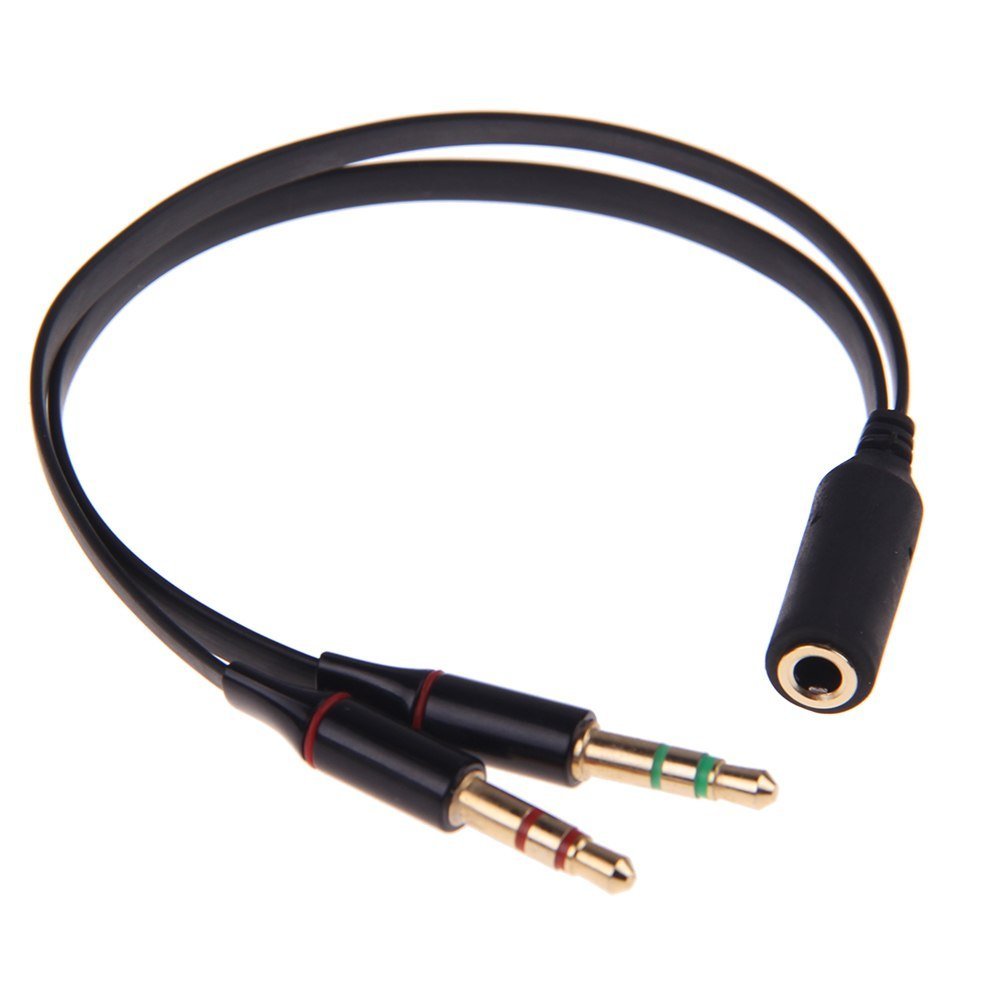
Several KX2/KX3 users have asked what I use as an adapter to go from an iPhone headset to the rig’s headphone and mic jacks.

Here it is.

This unit works beautifully with both my old and new iPhone headsets. The combination of the headset and this adapter take a tiny amount of space in my go-bag. Audio reports are great, even with speech compression set to max (MENU:TX CMP).

You’ll need to set MENU:MIC BIAS to ON, and I also recommend setting MIC BTN to OFF.

You can tap the XMIT button to start voice-mode transmit, or use VOX. See VOX menu entries in the owner’s manual.

Note: There’s a rumor that one legacy version of the iPhone headset was different from the others. I don’t have any info on this, but it means there’s a slight risk that this $6 adapter won’t work in your case. But it certainly works with the earpods I bought a couple of months ago.

73,
Wayne
N6KR

Thanks for sharing this, Mike! I’ve just placed an order for this little adapter. When doing field operations, I always use in-ear headphones, but a separate hand mic because I don’t like packing or wearing bulky headsets. I’ve a couple of earbud/mic sets (neither an Apple brand) that should work brilliantly with this adapter.

Click here to view on Amazon.com (affiliate link).

What is the Radio Hobby? One Perspective

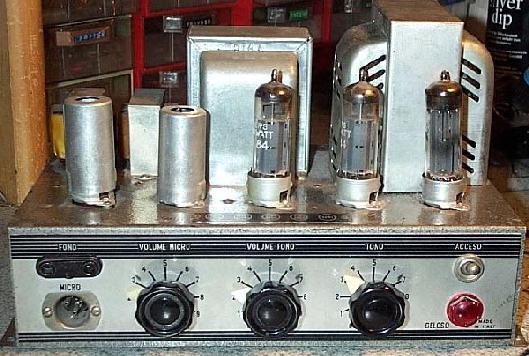
The Geloso G.215-AN

I have recently been re-exploring the hobby of photography, which is a lateral move from studying astronomy (my main interest being astrophotography). At one time in my life I was a semi-professional photographer, having studied photojournalism in college and dabbling in nature and street photography (as it is now named). And no, I was never a paparazzo!

Following a link from an article on today’s SWLing Blog I landed on an Italian radio/audio company’s archive, the company being Geloso.  The above image is an audio amplifier and it caused me to think about radios (and related equipment) in much the same way I have been currently thinking about photography. Allow me to explain.

I spent about a decade in photography back in the days of film, black and white and color. (This was back in the days when the earth was cooling and dinosaurs roamed the earth!) Film cameras are to modern-day DSLRs much like IBM PCs are to modern day Intel Pentium i7 computers — that is to say, technology has really changed! Seeing what modern cameras can do within the camera is rather astounding, and certainly far beyond what we could even dream of in the 70s. The same is true in radios, of course, with radios from the 40s and 50s in comparison to today’s rigs.

And yet, just like film cameras of old being used today producing incredible photographs, radios from the past can still produce incredible sound if maintained well and their operation understood. And yes, I am getting to my main point, but in an intentionally somewhat circuitous route!

As I have been learning about these modern cameras and watching copious videos on YouTube, I have heard a recurring theme come up. Back in my early days I, like many folks today, always believed the next lens or camera would take me over the top and allow me to produce incredible shots. Oh, I might not have stated it that way, but it certainly was present in recesses of my brain. Now mind you, I was producing good photographs, but I was always looking for those shots worthy of a portfolio, and thereby sometimes missing out on great shots right in front of me.

Having just recently  purchased a DSLR camera kit with two lenses, before I had even taken a handful of shots with it, I was starting to think, “What will I need to add to this setup to make it really good? Oops, old habits die hard! Today’s cameras (and optics) from the top 4 or 5 DSLR makers are all head-and-shoulders above what we had access to when I was in photography years ago. There is no reason to look for the absolute best optics unless you have literally thousands of dollars to spend for what are at best, modest improvements under specific shooting conditions. The talent is not in the camera or the lens, but rather in the person behind the camera.

The same holds true for radios today, whether receivers or transmitters. Sure, you can spend thousands of dollars on the top of the line receivers or transceivers, and under certain circumstances, such a purchase may be the right thing. But for most of us, which radio you use does not matter nearly so much as the skill of the operator using the radio. Both the camera and the radio are tools, nothing more. A skillful radio operator can pull signals out of the mud or work stations at the farthest reaches of the globe with a 1940s radio that has gorgeous audio with little to no filtering, or they can use a modern DSP-equipped, roofing filter-loaded rig to hear stations so close together a cat’s whisker could fit between them on the frequency dial. In both cases, it is the radio operator who makes the difference by understanding their rig and knowing how to get the best from it.

Now if you are the type of radio hobbyist who really enjoys playing with the newest radio to hit the market and can afford it, wonderful! You help the rest of us have options when we do decide it is time for a new rig. But if you are the type person who believes you can’t really enjoy radio without having that “other” radio with the slightly better specs derived from precise laboratory conditions with nothing to interfere with signal reception, you may just be missing out on what you have right in front of you.

Believe me, I am not one to judge because people in glass houses should not throw stones! I have simply been surprised at myself as these old instincts have arisen in me, when I thought I had put to rest such things! In the radio world I have resisted the siren call of enticing marketing for the latest whiz-bang radios, at least in these more recent years (!) and now must use that same resistance in my photography. In radio I have learned to get the best out of my gear, and the results are very satisfying. Here’s to hoping I can do the same behind the camera!

Robert Gulley, AK3Q, is the author of this post and a regular contributor to the SWLing Post.       Robert also blogs at All Things Radio.

Guest Post: Mark’s Micro Go-Box for the ICOM IC-7100

Many thanks to SWLing Post contributor, Mark Hirst, who shares the following guest post:


Micro Go-Box for the ICOM IC-7100

by Mark Hirst

You’ll be familiar I’m sure with the IC-7100 base unit and separate head unit design. It lends itself very nicely for vehicle installation.

Using it in any ‘portable’ situation however has always presented something of a challenge. A FT-857 or FT-891 can be carried as a single physical package with the head unit integrated into the body. The radios can sit and potentially operate on their tail in a backpack, with products like the Escort from Portable Zero making that process even easier.

I’ve had a few attempts at solving this portability conundrum, driven by a concern that there could be long term problems continually connecting and disconnecting the component parts for transport and operation, but knowing that a permanently assembled IC-7100 will always be an awkward dispersed structure.

My first solution was a Stanley 16 inch toolbox, which is fortuitously sized to accommodate the base unit and provides enough space to loop the original connecting cable and head unit. The box is not a bad fit, but certainly bulkier than necessary and leaves enough room for things to rattle around. When tilted vertically, the head unit can start moving.

Fast forward to this week when I discovered that the IC-7100 base unit will also fit inside a 5 litre XL storage box made by Really Useful Boxes:

http://www.reallyusefulproducts.co.uk/usa/
http://www.reallyusefulproducts.co.uk/uk/

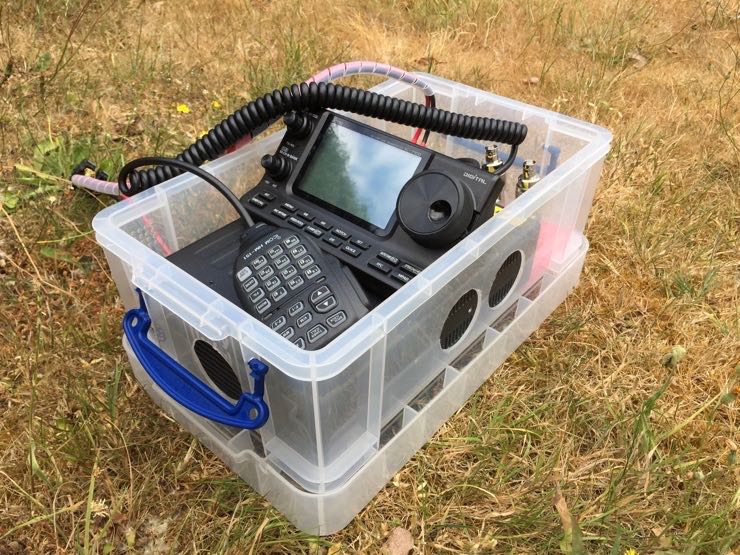
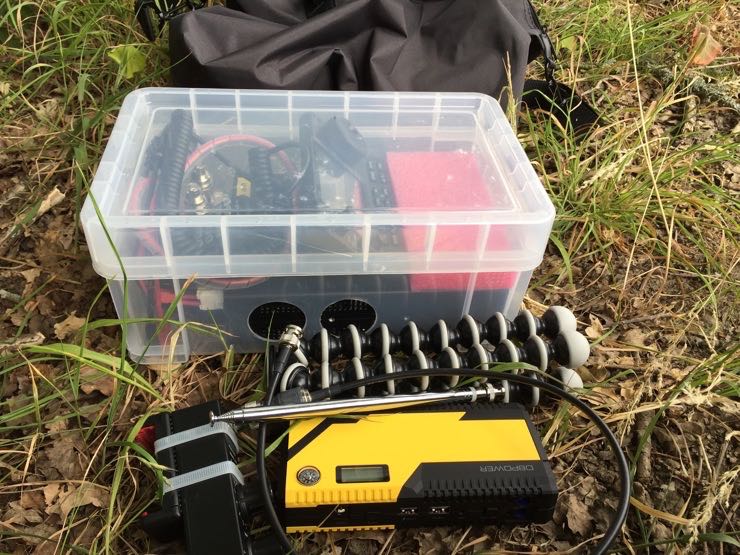
The XL version of the 5 litre box has a taller lid, and as you can see from the accompanying photos, accommodates the base unit with the head unit sitting on top of it in a ready to use configuration. The tolerances for height are also exact, the VFO knob very lightly touches the lid, so don’t put something heavy on the box:
Once the lid has been removed, the radio can operate directly from the container:
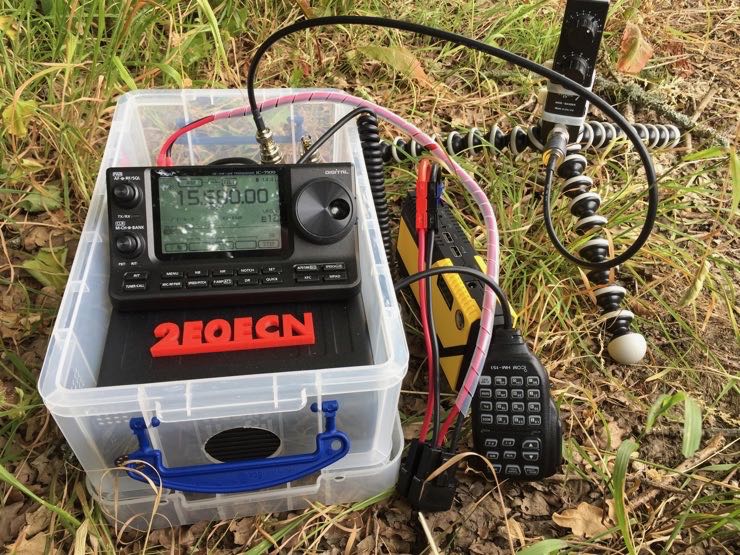
To make the whole thing fit, I used a 25cm CAT 6 cable in place of the original connection cable and a significantly shortened power lead. As luck would have it, I created the shortened power lead a while ago because I often put the battery right next to the radio.
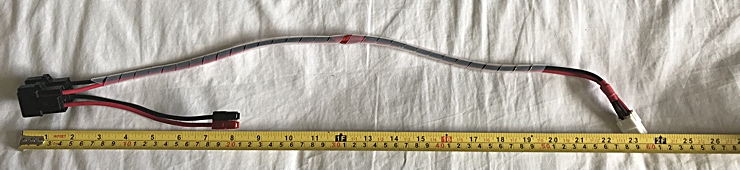
You can see that I removed a section between the power plug and the fuses, and now use the removed length as an extension should the battery be further away. Although it wasn’t my intention at the time, the main part is about 2 feet long, the secondary about 8 inches.

For transport, the power cable is coiled behind the head unit, ensuring the fuse holders sit in the void immediately behind it, while the microphone cable is coiled on top leaving the microphone resting inside its own coil. You can see the arrangement below:

In the next photo, you can see how the cabling emerges from the back of the base unit:
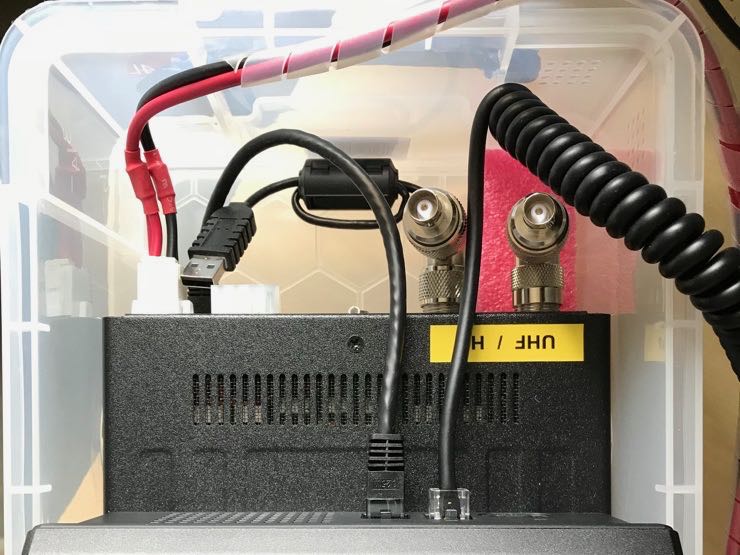
There’s just enough space for the power cable to leave the base and bend around without undue pressure, and likewise for the CAT 6 cable to curve round into the back of the head unit. Two angle connectors make the antenna ports accessible from above, while a short USB external drive cable provides access to the USB port for data modes and CAT control. A longer USB extension cable is attached to this short cable only when required, and the extension uses much more substantial ferrite chokes to mitigate noise from the computer.

To complete the transport package, I’ve cut out a kaizen style foam insert to make sure the base unit can’t move back into the cabling space, and another to make sure the head unit doesn’t slide towards the front.

The last problem of course is cooling. The fan is located in the front of the base unit, with slots along the sides and top to allow air flow. The box unfortunately is exactly the right size for the base, leaving no gaps for air to circulate. In the absence of a proper workshop or professional tools, I opted to use a hole cutter designed for putting pipes through wood panels. It turns out that plastic has a tendency to deform rather than cut under the blades due to friction heating. A sharp knife was essential in dealing with the effects of that deformation to produce the final smooth edges around the holes:

While I’m happy with the port exposing the front fan, the two holes on each side do not completely expose the side slots. Do I drill out the space between them knowing how tricky and flexible the plastic can be, and would a larger hole compromise the strength of the box? For now, I’m going to keep a careful eye for any temperature issues.

The current arrangement is to carry the box horizontally in a cheap travel bag:

Could the box be tilted vertically with the base unit nose down and carried in a back pack for longer excursions? Yes, but experience has told me that the lid latches on Really Useful Boxes have a tendency to pop open when you do that, so a luggage strap around the box may be required to prevent its very expensive cargo from spilling out. I’m also mindful that the box lid gently touches the VFO knob, so might put load on it in the vertical position.

The final result is something of a Swiss watch, and there isn’t much room for error. Things have to be arranged ‘just so’ to fit, but it does mean I can pack and pick the whole thing up in a handy container. The radio only needs a battery and antenna to be connected on site and then it’s ready to go.

There’s something oddly satisfying when unrelated objects come together like this. Who knew that this box was just the right size to fit the radio?

So, what do you think?


Thank you for sharing this project, Mark!

I love your Micro Go-Box: it’s practical, affordable and makes an otherwise awkward field radio easy to deploy and use. Looking at your photos, I realize that the IC-7100 does have one strong suit for field use. The IC-7100 front panel is tilted at a very comfortable 45 degree angle for use. 

Post Readers: What do you think?  Any other IC-7100 owners out there who take their rig to the field? Please comment!

Thai cave rescue employed ham-designed 87 kHz transceiver

(Source: Hackaday via bernieS)

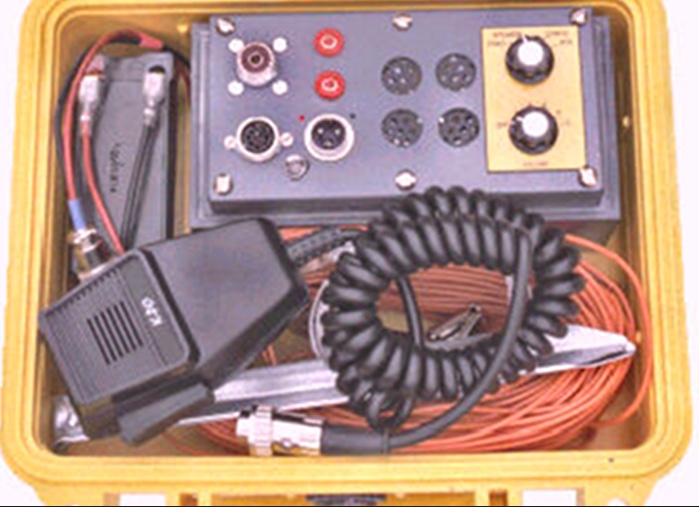
Unless you live in a cave, you’ve probably heard a little about the thirteen people — mostly children — trapped in the Tham Luang Nang Non cave in Thailand. What you may have missed, though, is the hacker/ham radio connection. The British Cave Rescue Council (BCRC) was asked for their expert help. [Rick Stanton], [John Volanthen] and [Rob Harper] answered the call. They were equipped with HeyPhones. The HeyPhone is a 17-year-old design from [John Hey, G3TDZ]. Sadly, [G3TDZ] is now a silent key (ham radio parlance for deceased) so he didn’t get to see his design play a role in this high-profile rescue, although it has apparently been a part of many others in the past.

The HeyPhone is actually considered obsolete but is still in service with some teams. The radio uses USB (upper sideband, not universal serial bus) at 87 kHz. The low frequency can penetrate deep into the ground using either induction loop antennas like the older Molephone, or — more commonly — with electrodes injecting RF energy directly into the ground.

You can find a very detailed article about the radio from 2001 if you want more details. The system is somewhat dated, but apparently works well and that’s what counts.[…]

Click here to read the full article at Hackaday.

Only 24 hours to work the special Y8 call signs

(Source: Southgate ARC via Ralf Bender)

The ex-DDR call-sign group from Y81A through Y89U, not used for 28 years has been issued especially for the WRTC Championship in Wittenberg, Germany.

BUT …. These call signs will ONLY be on the air for the 24 hours of the WRTC / IARU HF contest – after that these call signs may never appear on the air again – or perhaps only in another 28 years?

All stations are built and all competitors out on their sites waiting patiently to be able to use these very special call-signs from 1200 UTC on Saturday 14th. July.

The stations will be active on CW & SSB on all contest bands from 80m through 10m. Not only is this the ONLY opportunity to work these call signs, there’s also a range of awards available for working the WRTC stations.

Full award details, live streams, on-line scoreboard and a daily news report is available from the website at www.wrtc2018.de.

“Night of Nights” Returns Tonight!

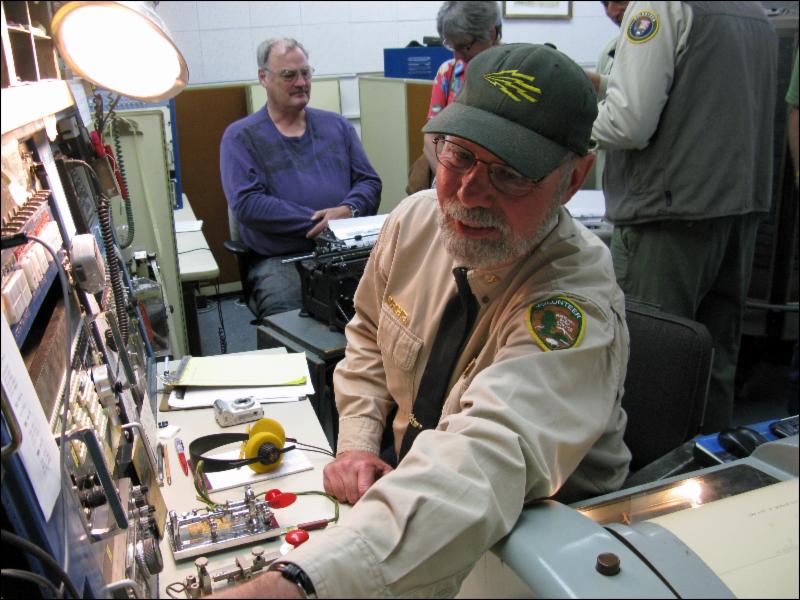
Chief Operator Richard Dillman at Position 1 (Source: Maritime Radio Historical Society)

Many thanks to SWLing Post contributor, Brian Smith (W9IND), who writes:

The cast may be smaller than in previous years, but the “Night of Nights” nostalgia show will go on. At 8:01 p.m. Eastern Time today (0001 UTC July 13), two maritime CW stations operated by the Maritime Radio Historical Society will begin transmitting Morse code on shortwave and medium wave bands, while the Society’s amateur radio station will be active on four ham bands.

Venerable KPH will reappear tonight in the company of KFS and ham station K6KPH, all transmitting from a century-old Marconi site at Bolinas, California. They’ll be directed from a 1930 RCA station at 17400 Sir Francis Drake Boulevard in Point Reyes National Seashore. Several previous participants will be absent this year, including ship-to-shore powerhouse WLO of Mobile, Alabama, and a quartet of Coast Guard stations.

The annual July 12 event commemorates the date in 1999 when commercial Morse code operations ceased in the United States. One year later, “Night of Nights” debuted in a defiant declaration that maritime CW stations would not go gentle into that good night.

Typically, the two 5 kw coast stations transmit “code wheels” (repeating messages), personal messages, and tributes to long-gone maritime stations and operators, remaining on the air till at least 0700 UTC. And K6KPH will not only be heard, but contacted by fellow amateur radio stations. A list of KPH, KFS and K6KPH frequencies can be found at www.radiomarine.org, including those used by ships. Reception reports go to P.O. Box 392, Point Reyes Station, CA 94956.

The public is welcome to observe today’s event and tour the facility at Point Reyes. Doors open at 3 p.m. local (Pacific) time, and Morse aficionados are invited to operate K6KPH. Whisper the words “true believer” for a peek at the Treasure Room!

https://www.nps.gov/pore/planyourvisit/events_nightofnights.htm

For a comprehensive list of frequencies please click here.

Many thanks for the notice, Brian! We’ll tune in!

Radio propagation may improve soon with region of solar flux

Many thanks to SWLing Post contributor, Mike Hansgen, who shares this latest Space Weather report from Tamitha Skov:

Space Weather jumps into action this week with two weak solar storms en route to Earth. NASA models predict they will hit starting July 9 and they could easily bring aurora to high latitudes, if not mid-latitudes. Amateur radio operators are also in for some fun as a new region rotates into view and brings with it a boost in solar flux, which will help radio propagation just in time for hurricane season. GPS users shouldn’t be affected by the low-level flaring of this region on Earth’s day side, but should stay vigilant near aurora and near the dawn-dusk terminators for glitches in their reception. Low-latitude GPS/GNSS reception might even improve under the influence of these weak solar storms. See details of the coming storms, when this new active region will be in view, catch up on aurora photos, and see what else is in store!

Click here to view on YouTube.