Category Archives: International Broadcasting

Breaking news: OIG Report on the Edward R. Murrow Transmitting Station

Fullscreen capture 3182016 51138 PM

I’ve just received a copy of the Office of Inspections (OIG) report on the VOA transmitting station in Greenville, NC. The full OIG report is now in the public domain as a PDF.

Here are a few highlights…

A summary of what OIG found:

  • The Broadcasting Board of Governors Special Committee on the future of shortwave broadcasting issued the report “To Be Where the Audience Is,” in August 2014. It concluded that the demand for shortwave broadcasting is declining in most of its audience markets. The report referred to transmission to Cuba twice, but fell short of recommending to close any Broadcasting Board of Governors shortwave transmitting stations.
  • The Edward R. Murrow Transmitting Station reports to the Office of Cuba Broadcasting and Office of Technology, Services, and Innovation. The dual reporting structure has not affected operations negatively.
  • Administrative operations for the Edward R. Murrow Transmitting Station were effective, except in management of human resources. Specifically, the station
    manager’s position description was outdated and the performance evaluations record keeping did not comply with Federal regulations.
  • The Edward R. Murrow Transmitting Station had effective internal controls processes in place. The Edward R. Murrow Transmitting Station management were
    cognizant of internal controls and provides effective oversight of operations.
  • The Edward R. Murrow Transmitting Station complied with the Broadcasting Board of Governors and applicable Federal regulations for contracting, property management, and safety. The Edward R. Murrow Transmitting Station complied with the Broadcasting Board of Governors review processes for unliquidated obligations and the purchase card program.
  • The security and emergency preparedness at the Edward R. Murrow Transmitting Station met the Interagency Security Committee, Office of Security, and Office of
    Technology, Services, and Innovation policies and standards. The employees participated in emergency drills and complete required insider threat training
    annually.
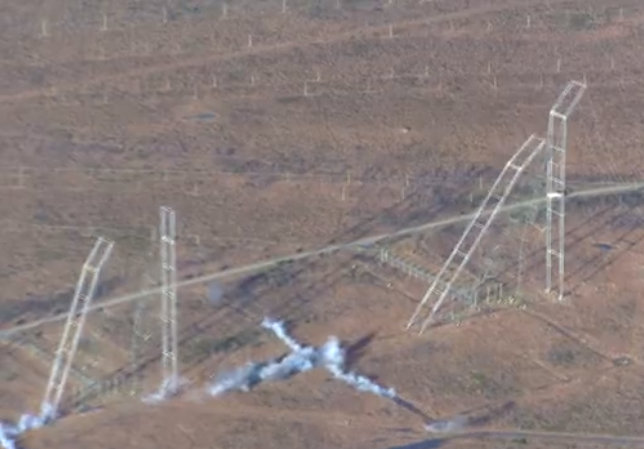
The Edward R. Murrow Transmitting Station's mail building, located in the center of the 2800 acres campus. (Click to enlarge)

The Edward R. Murrow Transmitting Station’s mail building, located in the center of the 2800 acres campus. (Click to enlarge)

Regarding the future of the station:

BBG has not evaluated the return on investment of the Station’s operations to determine its effectiveness in advancing the U.S. international media strategies. The BBG’s Special Committee report refers twice to transmissions to Cuba but falls short of recommending to close any BBG shortwave transmitting stations. Congress continues funding the Station’s budget even though on February 1, 2010, the BBG FY 2011 budget request proposed the closure of the Station.

Futhermore, in FY 2011, the Senate Committee on Appropriations asked BBG to submit a “multiyear strategic plan for broadcasting to Cuba to include an analysis of options for disseminating news and information to Cuba and a report on the cost effectiveness of each.”

The Office of Management and Budget’s Global Engagement Resource Guidance for FY 2015 and for FY 2016 address the need to modernize U.S. International media by “transitioning away from the use of shortwave radio where this platform is ineffective, toward more widely used media platforms like mobile, television, and the internet.” The United States International Broadcasting Act, Public Law 103-236, Section 303(a)(1) and (7) states that BBG has the responsibility to “be consistent with the broad foreign policy objectives of the United States” and “to effectively reach a significant audience.” Section 305(a)(7) states the Board is also authorized to “ensure that all broadcasting elements receive the highest quality and cost effective delivery services.” Given BBG’s limited resources and changes in technology as well as the significance of Cuba to U.S. national security objectives, BBG risks missing an opportunity to engage with Cuban audiences in a digital media environment.

Recommendation 1: The Broadcasting Board of Governors should prepare a written
cost/benefit evaluation of the Edward R. Murrow Transmitting Station to determine its
efficiency and effectiveness for continuing, reducing, or eliminating operations. (Action: BBG)

The full report:

Click here to download the full report as a PDF.

For a little context, this is the same station I’ve visited multiple times and even posted a photo tour of (click here to view) several years ago.

WRMI test transmissions for Radio Taiwan International

WRMI Logo(Source: WRMI on Facebook)

Friends, we’re doing another round of tests for Radio Taiwan International the nights of March 13, 14 and 15 (Sunday, Monday and Tuesday) in a new frequency of 11530 Khz.

The transmissions will be at 0000-0100 and 0200-0300 UTC (UTC Monday, Tuesday and Wednesday). Very grateful any observation on the quality of the reception in your area, and especially a comparison between the two hours. Thank you in advance.

Please send your reception reports to WRMI using the following email address: [email protected]

Photo tour of RAE transmitter site

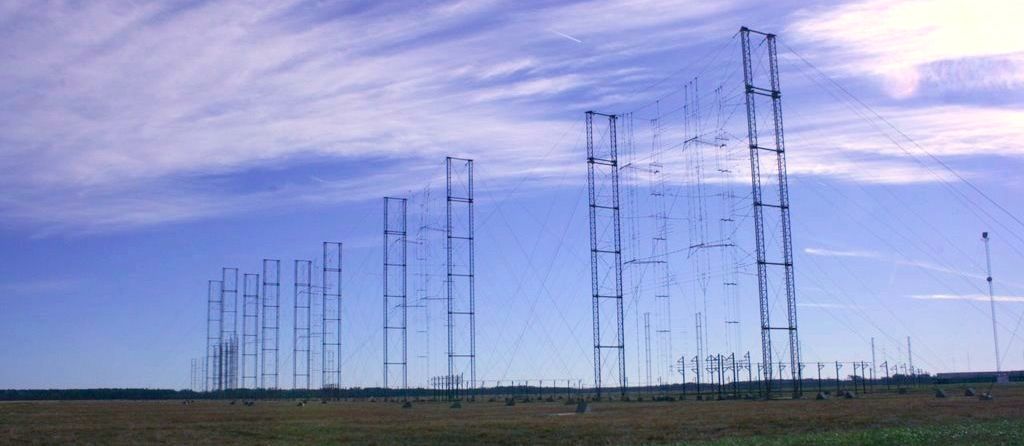
RAE Antenna farm (Source: RAE)

RAE Antenna farm (Source: RAE)

Many thanks to SWLing Post contributor, Andrea Borgnino, who shares a link to this photo gallery of Radiofusión Argentina al Exterior’s historic transmitter site.

RAE-Transmitter-Building

Note that the photos on the RAE site are rather large and may take patience to download depending on your Internet speed. On the plus side, the images are high resolution!

TX-RAE-15

Click here to view the full photo gallery at RAE.

Radio Time Travel: Brian’s 1974 shortwave radio recording

Many thanks to SWLing Post and SRAA contributor, Brian D. Smith (W9IND), for the following guest post and recording.

Note that Brian could use your help to ID a few unidentified broadcasters in this recording. If you can help, please comment:


HalliDial

Shortwave Radio 1974: Canada, Argentina, Spain, West Germany, Albania, utility stations

Want to know what shortwave radio sounded like in 1974?

This 55-minute recording, recovered from a cassette, was never intended to be anything but “audio notes”: I was an 18-year-old shortwave listener who collected QSL cards from international stations, and I was tired of using a pen and a notepad to copy down details of the broadcasts. I wanted an easier way to record what I heard, and my cassette tape recorder seemed like the perfect means to accomplish that goal.

But it wasn’t. I soon discovered that it was simpler to just edit my notes as I was jotting them down — not spend time on endless searches for specific information located all over the tape. To make a long story shorter, I abandoned my “audio notes” plan after a single shortwave recording: This one.

Hallicrafters S-108 (Image: DXing.com)

Hallicrafters S-108 (Image: DXing.com)

Still, for those who want to experience the feel of sitting at a shortwave radio in the mid-1970s and slowly spinning the dial, this tape delivers. Nothing great in terms of sound quality; I was using a Hallicrafters S-108 that was outdated even at the time. And my recording “technique” involved placing the cassette microphone next to the radio speaker.
Thus, what you’ll hear is a grab bag of randomness: Major shortwave broadcasting stations from Canada, Argentina, Spain, Germany and Albania; maritime CW and other utility stations; and even a one-sided conversation involving a mobile phone, apparently located at sea. There are lengthy (even boring) programs, theme songs and interval signals, and brief IDs, one in Morse code from an Italian Navy station and another from a Department of Energy station used to track shipments of nuclear materials. And I can’t even identify the station behind every recording, including several Spanish broadcasts (I don’t speak the language) and an interview in English with a UFO book author.

The following is a guide, with approximate Windows Media Player starting times, of the signals on this recording. (Incidentally, the CBC recording was from July 11, 1974 — a date I deduced by researching the Major League Baseball scores of the previous day.)

Guide to the Recording

0:00 — CBC (Radio Canada) Northern and Armed Forces Service: News and sports.
7:51 — RAE (Radio Argentina): Sign-off with closing theme
9:14 — Department of Energy station in Belton, Missouri: “This is KRF-265 clear.”
9:17 — Interval signal: Radio Spain.
9:40 — New York Radio, WSY-70 (aviation weather broadcast)
10:22 — Unidentified station (Spanish?): Music.
10:51— Unidentified station (English): Historic drama with mention of Vice President John Adams, plus bell-heavy closing theme.
14:12 — RAI (Italy), male announcer, poor signal strength.
14:20 — Unidentified station (Spanish): Theme music and apparent ID, good signal strength.
15:16 — Unidentified station (foreign-speaking, possibly Spanish): Song, “Chirpy Chirpy Cheep Cheep.”
17:00 — Deutsche Welle (The Voice of West Germany): Announcement of frequencies, theme song.
17:39 — Unidentified station (English): Interview with the Rev. Barry Downing, author of “The Bible and Flying Saucers.”
24:36 — One side of mobile telephone conversation in SSB, possibly from maritime location.
30:37 — Radio Tirana (Albania): Lengthy economic and geopolitical talk (female announcer); bad audio. Theme and ID at 36:23, sign-off at 55:03.
55:11 — Italian Navy, Rome: “VVV IDR3 (and long tone)” in Morse code.

Click here to download an MP3 of the full recording, or simply listen via the embedded player below:


Wow–what an amazing trip back in time, Brian! Thank you for taking the time to digitize and share your recording with us.

Post Readers: If you can help Brian ID the few unidentified stations in his recording, please comment!

Note that Brian is a frequent contributor to the Shortwave Radio Audio Archive. Click here to listen to his contributions. 

Empire of Noise: a documentary about jamming

Many thanks to SWLing Post contributor, Gary Wise (W4EEY), who writes:

I stumbled over an interesting documentary on radio jamming. You have probably seen it, but just in case you haven’t, here is a link.

I had not seen this before, Gary.  Thank you!

WBCQ moving from 5,110 to 5,130 kHz

wbcq-logoSWLing Post contributor, Paul Walker, who hosts a radio show on WBCQ, received the following message from the station yesterday:

The FCC has just informed Allan Weiner that the military needs our 5110 frequency.

So your show on Friday 3/11 (10pm Eastern – midnight) will be broadcast on 9330 and 5130.

WBCQ has been announcing this change on the air. Many thanks to Mike, who shared this video of Allan Weiner making the announcement last night:

Click here to view on YouTube.

DigiDX: a new digital broadcast via Channel 292

DigiDXMany thanks to SWLing Post contributor, Stephen Cooper, who shares the following news about the new DigiDX broadcast:

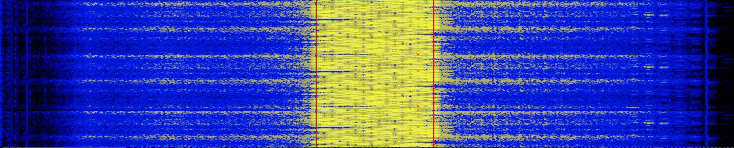
DigiDX is a 30 minute MFSK32 broadcast covering shortwave and DX news, radio related reviews, schedule information and listeners letters and after a success test broadcast to Europe, a broadcast for North America is planned for 0200 UTC Sunday.

Broadcasting from Channel 292 in Germany on 6070 kHz the time has been chosen to maximise chance of reception on the East Coast of North America and beyond.

The programme features the majority of the broadcast in MFSK32 but around 10 minutes of the broadcast is in the slower Olivia 64-2000 mode to test for resilience against bad propagation to North America and interference on 6070.

The tests to Europe on Channel 292 earlier this week showed good reception and near perfect decodes despite Radio China International and Vatican Radio being on the same frequency during some of the test.

To decode use FlDigi, MultiPSK or the Tivar Android app, just putting your radio next to the PC microphone or phone/tablet is enough to decode the broadcast. If you have decoded the VOA Radiogram before, DigiDX uses the same digital modes.

Please send reception reports and decodes of the text/images in the broadcast to [email protected], an e-QSL will be sent by email and on the next broadcast an e-QSL card will be broadcast over the air in MFSK32 mode as well.

For European listeners the second edition of DigiDX with an include e-QSL card from the last episode will be broadcast on 6070Khz at 1100 UTC. For information on further broadcast times like DigiDX on Facebook (https://www.facebook.com/digidx/) or follow on Twitter (https://twitter.com/Digi_Dx)

This is brilliant, Stephen! I’ll attempt to log DigiDX this weekend if conditions are fair!