Category Archives: Longwave

Radio Waves: AIR Doubles Broadcast Times, Radio Prague’s 2022 QSL Cards, Ham On The Moon, and Allouis Transmitter Silenced

Radio Waves:  Stories Making Waves in the World of Radio

Because I keep my ear to the waves, as well as receive many tips from others who do the same, I find myself privy to radio-related stories that might interest SWLing Post readers.  To that end: Welcome to the SWLing Post’s Radio Waves, a collection of links to interesting stories making waves in the world of radio. Enjoy!

Many thanks to SWLing Post contributors David Iurescia, Kris Partridge, and the Southgate ARC for the following tips:


AIR to double broadcast time for programmes in six languages (Deccan Herald)

Starting Monday, All India Radio (AIR) programmes in six neighbourhood languages, including in Dari, Pashto, Baluchi and Mandarin Chinese, will be available to listeners every day in the morning and evening. The AIR’s external services division has doubled the time for the programmes aired in Dari, Pashto, Baluchi, Mandarin Chinese, Nepali and Tibetan languages, the public broadcaster said in a statement on Sunday.

The programmes in these six languages will be aired on shortwave frequency and also live streamed on YouTube, NewonAir App, DD Free Dish, it said.

“The external services division of the All India Radio is expanding its transmission in six neighbourhood languages from January 3, 2022. These languages are Dari, Pashto, Baluchi, Mandarin Chinese, Nepali and Tibetan,” the public broadcaster said. [Continue reading…]

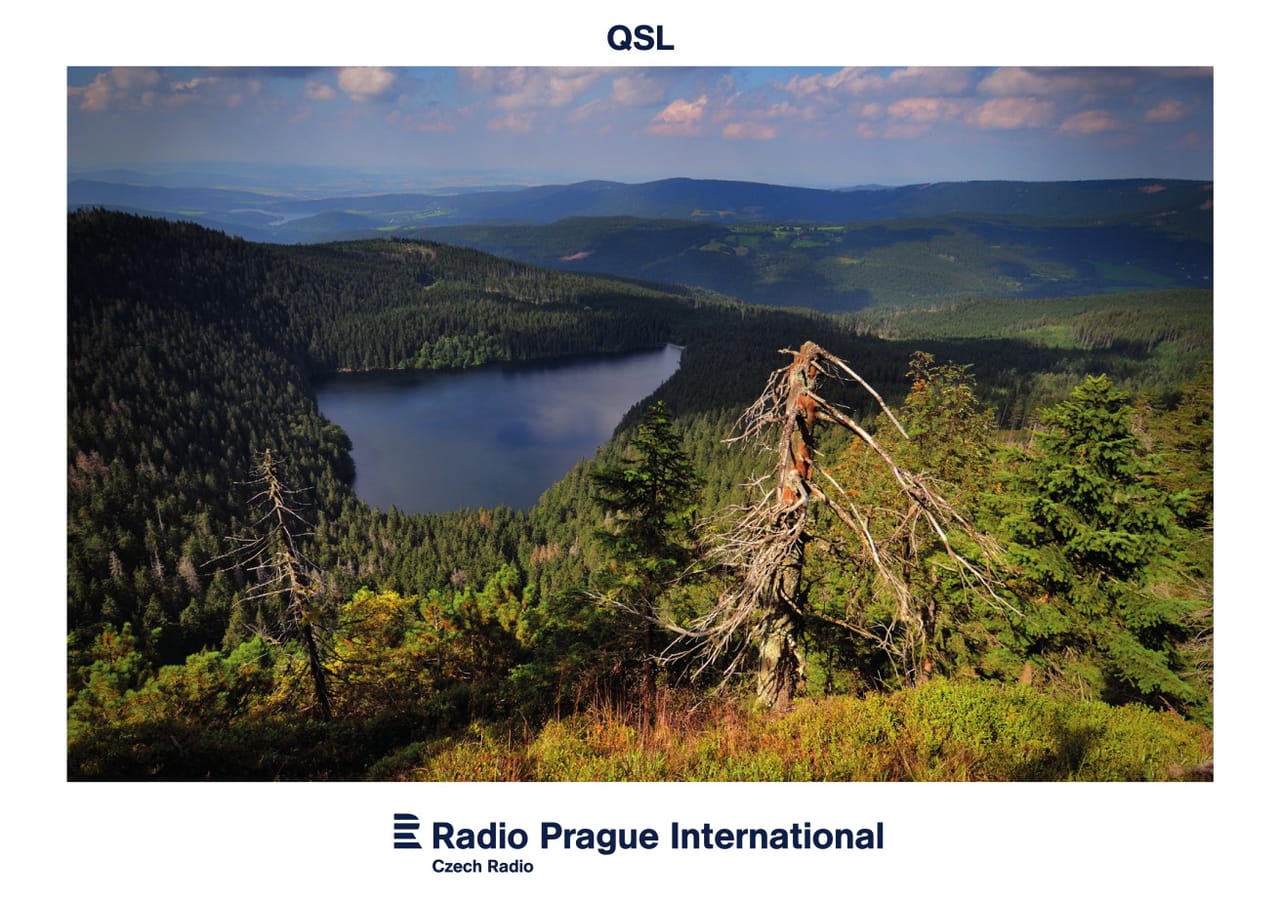
Radio Prague’s QSL Cards (Radio Prague)

The three letters – QSL – constitute one of the codes originally developed in the days of the telegraph. All codes consisted of three letters beginning with “Q”. Later some of these “Q” codes were adopted by radio-telegraphists and radio listeners. QSL means “contact confirmed” or “reception confirmed”. Continue reading →

Experimental Station WI2XLQ will recreate 1906 Fessenden transmissions again this Holiday season

Canadian Reginald Aubrey Fessenden in his lab believed circa 1906 (Source: Radio Canada International)

(Source: ARRL News)

Experimental Station will Recreate 1906 Fessenden Transmissions

Experimental station WI2XLQ will be on the air on 486 kHz AM for the Reginald Fessenden commemorative transmission. Brian Justin, WA1ZMS, is the licensee. He will transmit for 24 hours starting at 2000 UTC on December 24, with a repeat transmission starting at 2000 UTC on December 31. Justin will use a homebrew 1921-era MOPA exciter with Heising modulation, followed by a modern 500-W linear. The transmission will be the same as in past years — two violin pieces that Fessenden claims to have played as one of the very first voice transmissions from his Brant Rock, Massachusetts, radio lab site. “While doubt remains that such a transmission ever took place, Fessenden did perform some crude voice transmissions over a few miles distance in early December near Washington, DC, as a demonstration for the US Navy,” Justin said. “So, perhaps some credit is due Fessenden for his efforts to transmit the human voice in an era of spark transmissions.”

If you would like more information about Brian Justin and WI2XLQ, check out our interview with him in 2013. Indeed, I successfully heard the 2013 WG2XFG broadcast and posted this audio clip on the Shortwave Radio Audio Archive.

Ham Radio Workbench episode explores Diversity Reception

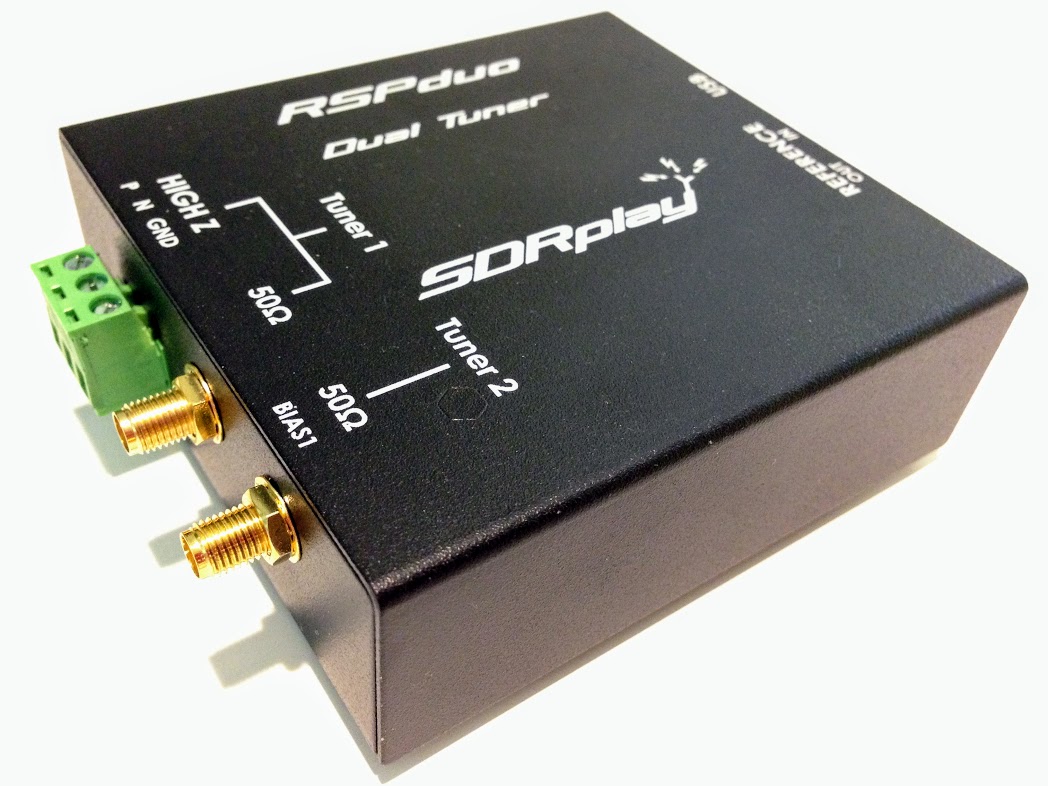
The SDRplay RSPduo

I just finished listening to the most recent episode of the Ham Radio Workbench with John Fallows (VE6EY) as a guest.

John is an SWL and Ham Radio operator and speaks at length about how he uses diversity reception to mitigate persistent local RFI (radio frequency interference).

If you have persistent issues with radio interference or if you’ve been curious about using diversity reception for mediumwave and shortwave DXing, I highly recommend listening to this episode. John has been known to frequent the SWLing Post and actually comes into the discussion primarily from an SWL’s perspective.

If you’ve tried diversity reception or a noise-cancelling system like the Timewave ANC-4+ in the past with mixed results, you’ll definitely benefit from listening to John’s best practices.

In addition, John points out that the excellent SDRplay RSPduo is a very affordable way to explore proper diversity reception.

How effectively can you mitigate RFI with diversity reception? Check out this video on YouTube queued up to the point where John does a live demo with his Anan SDR and loop antennas: https://youtu.be/vu8D87aVUTQ?t=2011 (I also recommend watching to full video presentation for even more detail.)

I’ve embedded the audio for the Ham Radio Workbench podcast below, but you can also find it along with show notes on the Ham Radio Workbench website.

Ham Radio Workbench is one of my favorite podcasts; if you like exploring a wide variety of technical topics, I highly recommend checking it out. It’s available on all podcasting platforms.

Also, check out John VE6EY’s YouTube channel and web site/blog.

Radio Waves: Radio Facsimile from the 1930s, Public Radio Saving Print, Unlicensed Experimental LW Radio, and RIP Tony Middleton & Milburn Butler

Radio Waves:  Stories Making Waves in the World of Radio

Because I keep my ear to the waves, as well as receive many tips from others who do the same, I find myself privy to radio-related stories that might interest SWLing Post readers.  To that end: Welcome to the SWLing Post’s Radio Waves, a collection of links to interesting stories making waves in the world of radio. Enjoy!


A Look Back at the Radio Newspaper of the Air (Radio World)

Radio facsimile technology never fully caught on, but what if it had?

In the beginning, there were newspapers.

And then radio arrived, challenging the newspapers’ journalistic monopoly.

At first, many newspapers fought the new competitor, refusing to print radio news or program schedules. But some went in the opposite direction, deciding to operate their own radio stations to augment their businesses. And finally, a few brave pioneering publications went even farther: They tried to deliver their newspapers via radio facsimile.

In the early 1930s, radio facsimile looked like the dream application for newspapers. They could use their own local radio stations to deliver newspapers directly to consumers during overnight hours. It would eliminate the cost of printing and distribution and shift those costs onto consumers, who would provide their own printers and paper.

This led several radio stations and newspapers to experiment with facsimile transmission during the late 1930s.

THE FINCH SYSTEM

The person most responsible for this technology was William G. H. Finch. He worked for the International News Service and set up their first teletype circuits between New York, Chicago and Havana. He became interested in facsimile machines and eventually amassed hundreds of patents. [Continue reading the full article…]

How public radio is trying to save print (The Verge)

Why Chicago Public Media and the Chicago Sun-Times are exploring a merger

The Chicago Sun-Times needs help. After being bought and sold several times over the last decade, the 73-year-old paper is looking for a more stable home to continue its award-winning reporting — and it may have finally found it in an unexpected place: a radio station.

Chicago Public Media, which owns the radio station WBEZ, is currently in talks with the Sun-Times to merge. A final deal would combine their newsrooms and audiences in hopes of creating a financially stable enterprise for both teams. Similar mergers and acquisitions have become a common way to bolster the struggling print industry, but if radio were to take on a major newspaper, that would be a first.

“Audio is a growth business,” says Jim Friedlich, chief executive of The Lenfest Institute for Journalism, who advised CPM on the potential merger. “Now Chicago Public Media and other media with audio roots have both the wherewithal and the self-confidence to take a bold step like this.”

Since 2004, US newspapers have shut down at a rate of 100 per year, a pace that’s only accelerated since the start of the pandemic. To stay afloat, some smaller newsrooms have given up independence, being bought by news conglomerates or becoming joint entities with other local outlets — and public radio and TV stations have increasingly offered themselves up as partners. New York Public Radio acquiring the website Gothamist was one of nine similar deals in recent years, triggering researchers to document the trend by creating the Public Media Mergers Project. Public radio has been a particularly strong force, holding its ground amid digitization and the podcasting craze (partially because it’s participated in it), and it might be strong enough to help print do the same thing. [Continue reading…]

The low-down on long-wave: Unlicensed experimental radio (Hackaday via the Southgate ARC)

In the 125 years since Marconi made his first radio transmissions, the spectrum has been divvied up into ranges and bands, most of which are reserved for governments and large telecom companies. Amidst all of the corporate greed, the ‘little guys managed to carve out their own small corner of the spectrum, with the help of organizations like the American Radio Relay League (ARRL).

Since 1914, the ARRL has represented the interests of us amateur radio enthusiasts and helped to protect the bands set aside for amateur use. To actually take advantage of the wonderful opportunity to transmit on these bands, you need a license, issued by the FCC. The licenses really aren’t hard to get, and you should get one, but what if you don’t feel like taking a test? Or if you’re just too impatient?

Well, fear not because there’s some space on the radio spectrum for you, too.

Welcome to the wonderful world of (legal!) unlicensed radio experimentation, where anything goes. Okay, not anything but the possibilities are wide open. There are a few experimental radio bands, known as LowFER, MedFER, and HiFER where anyone is welcome to play around. And of the three, LowFER seems the most promising.

LowFER, as the name would suggest, contains the lowest frequency range of the three, falling between 160 kHz and 190 kHz, with a whopping wavelength of around one mile. Also known as the 1750-meter band, this frequency range is well-suited for long transmission paths through ground wave propagation, a mode in which the radio signals move across the surface of the earth. This can easily carry even low-power signals hundreds of miles, and occasionally through some atmospheric black magic, signals have been known to travel thousands of miles. These ground wave signals also travel well across bodies of water, especially salt water.

Read the full Hackaday item at:
https://hackaday.com/2021/10/19/the-low-down-on-long-wave-unlicensed-experimental-radio/

RAE bids farewell to its historic English voice, Tony Middleton (RAE)

We regret to inform our listeners that our colleague Juan Antonio “Tony” Middleton passed away in Buenos Aires due to health complications, at the age of 82. His distinctive British accent is part of the history of RAE, where he hosted the English-language program for almost three decades. English-speaking listeners around the world remember his warmth and clarity on the air, not to mention his classic opening line: “This is the international service of the Argentine Radio”.

Born in Argentina and son of British immigrants, he ventured into acting in the English language with the group “Suburban Players”, while he was engaged in various commercial activities with his family. In 1981 he had the opportunity to join RAE as a substitute, thanks to his impeccable English and his pleasant voice. In 1983 he joined as a regular and went on to become head of the English-language department at the station, until his retirement in 2008. [Continue reading…]

Milburn Garland Butler Dec 1, 1935 – Oct 10, 2021 (Dignity Memorial)

Mlburn Garland “Gil” Butler was born December 1, 1935 in Bradenton, Florida. He attended local schools, where his mother was a teacher. He grew up in a community where electrification was still being developed, where the Saturday morning movies were an all-day entertainment for kids, and where families would gather in the town square on Sundays for band music and ice cream. After a brief stint in the Army (serving as a quartermaster at a base near Washington, D.C.), Gil Butler went to college in Colorado, returning to Florida where he graduated from the University of Florida with a degree in radio engineering. Along the way, he met and after a whirlwind courtship married Judith Bunten, who would become his lifelong companion. Gil Butler began working as a DJ at a small radio station in Bradenton, Florida in the early 1950s, spinning disks from the very beginning of Rock and Roll. His love of music of all sorts, from Jazz to Rock to Classical, his collection evolved through several formats (LP, cassette, CD, and MPs), and his special chair was always surrounded by the music he would enjoy while reading in the evening. Professionally, Gil moved up to larger stations and more challenging positions in radio and television; working for radio stations around the Tampa Bay area. His first TV gig was as a general reporter for WTVT in Tampa. From there, he moved to WXYZ in Detroit, Michigan, before moving to Silver Spring in the Washington D.C. where he worked as a White House Correspondent for local CBS affiliate, WTOP, covering Washington politics under presidents Nixon and Ford. During this period, Gil appears briefly in Timothy Crouse’s The Boys on the Bus (a recounting of the White House Press Corps during the Nixon Era). He was one of the six “Knights of the Green Ottoman,” named for an item of furniture in the 1972 White House press complex, where the newsmen would gather and share notes. In one passage, he is described: “Gil Butler… the reporter for TV station WTOP, who was chuckling over a volume of Mencken…” This description will surprise no one who knew him, as Gil was a voracious reader. He was always in the middle of a massive nonfiction volume about politics, military history or the Space Race. After WTOP, in 1978, Gil began his ultimate career at the Voice of America, the United States Information Agency’s international radio network. Over a nearly three decade career with Voice of America, he covered 68 countries, working abroad in Cairo, Egypt, Beiruit Lebanon, Beijing, China, London, England, as well as covering the State Department and Pentagon during his time at home between foreign assignments. At the Voice of America’s 40th Anniversary Celebration, Gil received the Meritorious Honor Award for his work in Cairo covering the assassination and funeral of Egyptian President Sadat and its aftermath. Twenty-seven years later, Voice of America News ran a story looking back at that work and the restraint and integrity he exercised in waiting for confirmation before reporting that Sadat had been killed. [Continue reading…]


Do you enjoy the SWLing Post?

Please consider supporting us via Patreon or our Coffee Fund!

Your support makes articles like this one possible. Thank you!

Radio Waves: Radio Prague Special Broadcast, WNP Marks 100 Years, Ham Interference, and RTE on Longwave

Radio Waves:  Stories Making Waves in the World of Radio

Because I keep my ear to the waves, as well as receive many tips from others who do the same, I find myself privy to radio-related stories that might interest SWLing Post readers.  To that end: Welcome to the SWLing Post’s Radio Waves, a collection of links to interesting stories making waves in the world of radio. Enjoy!

Many thanks to SWLing Post contributors David Iurescia, Ronnie Smith, Troy Riedel, Jack Dully, and the Southgate ARC for the following tips:


Radio Prague asks, “Would you like to be featured on our broadcast?” (Radio Prague via Facebook)

Our 85th anniversary is coming up on August 31st! We’re celebrating the occasion with a special broadcast that day and would love to hear from you – our listeners. If you’d like to send us your greetings, please record a message and send an audio file via email (to [email protected]) or Facebook. Due to time constraints, your recording should be around 30 seconds long. Please include your first name, where you live, how long you’ve been listening, and what you like most about Radio Prague Int’l.

We look forward to hearing from you!

Sailing Vessel with Ham Radio History Marks 100 Years (ARRL News)

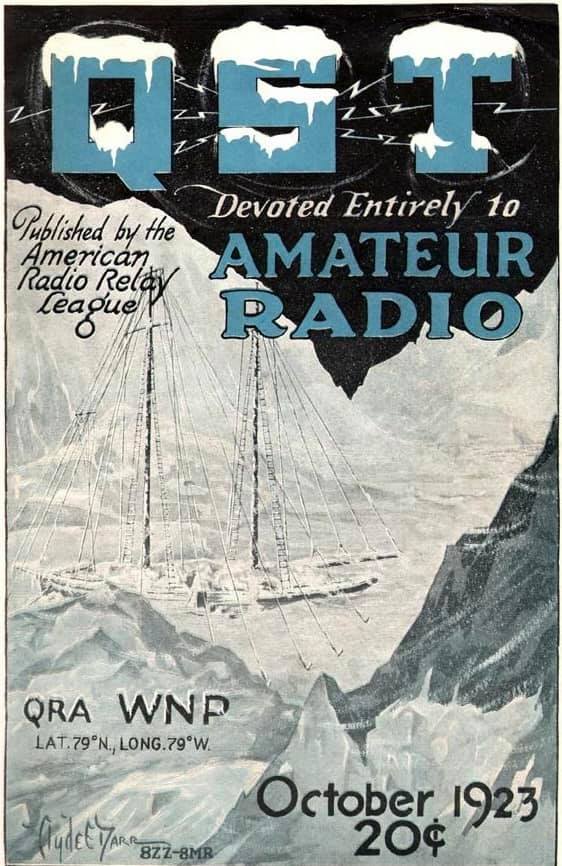
The schooner Bowdoin is a century old this year. Now owned by the Maine Maritime Academy (MMA) as a training vessel, the ham radio history of the 88-foot (LOA) Bowdoin is often neglected. Constructed in Maine specifically for Arctic exploration, the vessel relied on amateur radio for communication during explorer Donald B. MacMillan’s Arctic Expedition of 1923 and on the MacMillan-McDonald-Byrd Expedition of 1925 — thanks in part to ARRL co-founder Hiram Percy Maxim, W1AW. The venerable vessel, the official vessel of the State of Maine and the flagship of Maine Maritime Academy’s Vessel Operations and Technology Program, recently underwent a complete hull restoration and refitting and has done a little touring to mark its centenary. Its home port is Castine, Maine.

The longwave transmitters MacMillan used on his earlier missions had proved “unable to penetrate the screen of the aurora borealis,” then-ARRL historian Michael Marinaro, WN1M (SK), explained in his article, “Polar Exploration,” from the June 2014 issue of QST. In 1923, MacMillan turned to ARRL for help in outfitting his next expedition with better wireless gear. Marinaro recounted, “It was enthusiastically provided.” Maxim and the ARRL Board recruited Donald H. Mix, 1TS, of Bristol, Connecticut, to accompany the crew as its radio operator.

M.B. West, an ARRL Board member, designed the gear, which was then built by amateurs at his firm, Zenith Electronics. The transmitter operated on the medium-wave bands of 185, 220, and 300 meters, running 100 W to a pair of Western Electric “G” tubes. Earlier exploratory missions had used gear that operated on longwave frequencies. The shipboard station on board the Bowdoin was given the call sign WNP — Wireless North Pole. [Continue reading…]

The Machines That Built America (History Channel)

In 1893, sending information across America is a time-consuming process. Letters travel slowly by land, and those who can afford it, send telegrams along a limited network of fixed wires. But two rival inventors have the same idea for improving things: wireless communication. Nikola Tesla is one of the most famous and successful thinkers of his day, single-handedly changing the way electricity is supplied and generated. Guglielmo Marconi is a young, uneducated Italian inventor who ignores scientific consensus and goes with his gut. Both want to rid the world of wires and send messages through the air. With millions of dollars on the line, the two men battle to dominate the new market and bring radio to the masses. [Click here to view episode on the History Channel.]

Woman fights to have ham radio operations banned after potential interference with insulin pump (WFTV)

MARION COUNTY, Fla. — A Marion County woman is taking on her neighborhood association, in a matter she said puts her health at risk.

Michelle Smith, a Type 1 Diabetic, and a consultant determined that her neighbor’s ham radio hobby might have interfered with the doses of insulin being pushed out from her pump.

The 55+ community where she lives hired that consultant and told the neighbor to shut down his amateur radio station.

But a copy of the community’s rules shows a change was put in place that could pave the way for other similar antennas to be installed.

9 Investigates learned that Smith’s complaint went all the way to the state level.

She wants the Florida Commission on Human Relations to make a determination whether the community’s board and management is doing enough to protect her and others with medical devices.[…]

RTE on long wave 252 kHz back on air (Southgate ARC)

RTE carried out essential maintenance of the Long Wave transmitter in Clarkstown, Co. Meath for two months during which period RTE Radio 1 was not available on 252 kHz.

This essential maintenance of the transmitter was due to be carried out in 2020, but was postponed due to Covid-19 restrictions. For the health and safety of those carrying out the works, the transmitter had to be switched off for the works period. Any overhaul has to be completed during the summer months when there is good light and weather conditions.

Transmissions commenced once again last Monday with an output of 500 kiloWatt during daytime and 100 kiloWatt at nighttime.

During this shutdown, one could receive Radio Algeria transmitting on the same frequency with 1.5 megaWatt during the day and 750 kiloWatt at night, broadcasting a varied program.


Do you enjoy the SWLing Post?

Please consider supporting us via Patreon or our Coffee Fund!

Your support makes articles like this one possible. Thank you!

Radio Waves: Shedding Light on the Hindenburg, Chip Shortages, NPR at 50, and July 4th SAQ Grimeton Transmission

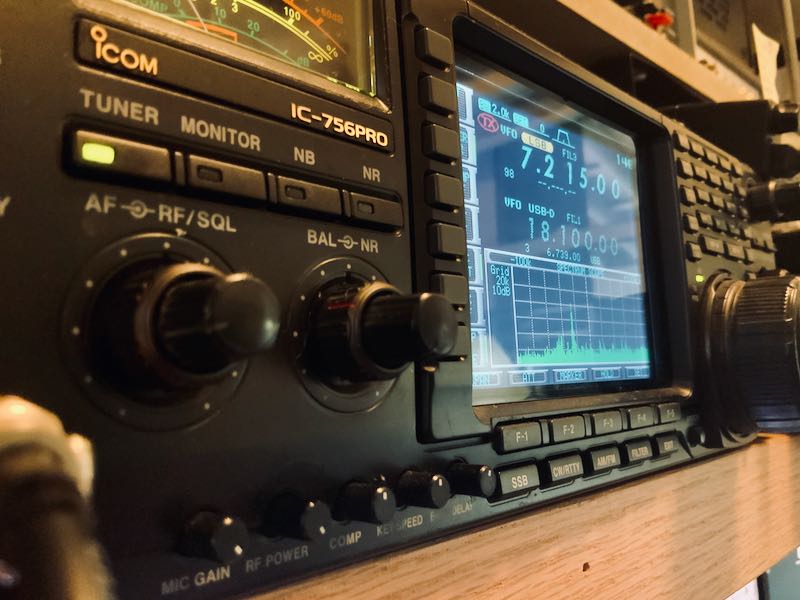
Icom IC-756 Pro Transceiver Dial

Radio Waves:  Stories Making Waves in the World of Radio

Because I keep my ear to the waves, as well as receive many tips from others who do the same, I find myself privy to radio-related stories that might interest SWLing Post readers.  To that end: Welcome to the SWLing Post’s Radio Waves, a collection of links to interesting stories making waves in the world of radio. Enjoy!

Many thanks to SWLing Post contributors Ron, Rich Cuff, and the Southgate ARC  for the following tips:


Radio Amateur’s Vintage Home Movie Film Sheds Light on Hindenburg Disaster (ARRL News)

Vintage home movie film provided by New Jersey radio amateur Bob Schenck, N2OO, was the highlight of a PBS documentary about the Hindenburg disaster. The film, shot by his uncle Harold Schenck, may provide clues as to what initiated the disastrous 1937 fire that destroyed the airship Hindenburg and claimed 35 lives as the German zeppelin was landing at Lakehurst, New Jersey. Harold Schenck tried to interest government investigators in his film, shot from a different angle than newsreel footage that begins only after the fire was well under way, but it was largely overlooked. “Nobody ever asked for it,” Bob Schenck explains in the documentary.

The Schenck film is the highlight of a PBS “NOVA” documentary, Hindenburg: The New Evidence, that investigates the issue in considerable depth in an effort to unlock the secrets of the cold case. The program aired on May 19 and remains available for streaming.

“My dad had bought this nifty Kodak camera — a wind-up movie camera, 8 millimeters — and he couldn’t come [to the Hindenburg landing] because he worked,” Bob Schenck recounted during the documentary. “So, he asked my uncle and my mom if they would take some shots and see the Hindenburg land.”

Bob Schenck approached Dan Grossman, an expert on airships, including Hindenburg, in 2012 during a commemoration of the disaster that forever memorialized radio reporter Herbert Morrison’s plaintive on-air reaction, “Oh, the humanity!” The NOVA documentary not only shares Schenck’s footage, which provided new clues to re-examine the cause of the explosion. The documentary also reviews scientific experiments that helped investigators come to a fresh understanding of what set off the fire. [Continue reading…]

Will chip shortage hit ham radios ? (Southgate ARC)

Glenn O’Donnell K3PP of Forrester Research notes the chip shortage may have a more serious impact than first thought and gives Amateur Radio rigs as an example of what might be affected

Self-described as a “ham radio nut,” O’Donnell discussed one of his hobbies to explain how the sway of tech titans could impact smaller companies as industries compete for limited resources.

“In this hobby, the newer radio “toys” are advanced technology, but the hottest radio might sell 5,000 units per year. If Apple wants 100 million chips, but the little ham radio company wants 5,000, Apple wins!” O’Donnell said.

Read the article at
https://www.techrepublic.com/article/global-chip-shortage-the-logjam-is-holding-up-more-than-laptops-and-cars-and-could-spoil-the-holidays/

NPR at 50: A Highly Selective History (Washington Post)

The network’s half-century evolution from an audio experiment to a media powerhouse

Today NPR is one of Washington’s most familiar and influential media companies, operating out of a gleaming, ultramodern broadcast facility on North Capitol Street. Its radio programs, online content, and podcasts reach millions of people around the world. But when it launched 50 years ago, in April 1971, National Public Radio was a decidedly scrappy enterprise.

How did a modest radio project from a bunch of audio idealists evolve into the multimedia behemoth that we now spend countless hours listening to? To celebrate NPR’s anniversary, we’ve put together a look at its history and transformation. Please note: If you would like to imagine the whole thing being read to you in the voices of Nina Totenberg and Robert Siegel, we won’t object. Click here to read the full article…

SAQ Grimeton Transmission on July 4th (Southgate ARC)

The annual transmission event on the Alexanderson Day with the Alexanderson Alternator from 1924, on VLF 17.2 kHz CW with the call sign SAQ, is scheduled for Sunday, July 4th, 2021.

The Alexander Grimeton Association are planning to carry out two broadcasts to the world from the old Alexanderson alternator SAQ. Only required staff will be in place, due to the ongoing pandemic.

Transmission schedule:

  • Startup and tuning at 10:30 CET (08:30 UTC) with a transmission of a message at 11:00 CET (09:00 UTC)
  • Startup and tuning at 13:30 CET (11:30 UTC) with a transmission of a message at 14:00 CET (12:00 UTC)

Live Video from World Heritage Grimeton Radio Station
Both transmission events can be seen live on our YouTube Channel.
The live video starts 5 minutes before the startup and tuning.
https://mailchi.mp/aff85163e64f/alexanderson-day-2021?e=2c0cbe870f


Do you enjoy the SWLing Post?

Please consider supporting us via Patreon or our Coffee Fund!

Your support makes articles like this one possible. Thank you!
Guest Post: A visit to Museo Marconi in Villa Griffone, Pontecchio, Bologna


Many thanks to SWLing Post contributor, Ferruccio Manfieri (IZ1096SWL), who shares this report and excellent photo tour from a visit to the Museo Marconi in Bologna, Italy in 2018.

Today is International Marconi Day, so this is a very welcome, and timely post:


A visit to Museo Marconi in Villa Griffone, Pontecchio, Bologna

by Ferruccio Manfieri (IZ1096SWL)

Bologna, in Northern Italy, is renowned to be the seat of the oldest University in Europe and in the world (the Alma Mater Studiorum) and its historic, artistic and culinary heritage. From a scientific perspective, Bologna is the birthplace of Guglielmo Marconi as well as the place of his first experiments in transmission.

The inventor, born in Bologna on April 25th, 1874, was the son of an Italian father (Giuseppe, a wealthy landowner) and an Irish mother (Annie Jameson, of Jameson’s Whiskey family). At the age of 20, Marconi began to conduct experiments in radio waves, building much of his own equipment in the attic of his home at the Villa Griffone in Pontecchio (in the Bolognese countryside).

Marconi received his final resting place in Villa Griffone Mausoleum, an enterred crypt hosting his porphyr sarcophagus. The building was donated to the Guglielmo Marconi Foundation in 1941 after the  death of the inventor (on the 20th of July 1937).

Sadly, Villa Griffone and the Mausoleum suffered heavy damages from WWII bombings and pillages and were patiently rebuilt in post-war years. Today, Villa Griffone is reborn as a hub of research and divulgation activities, hosting Guglielmo Marconi Foundation, the Marconi Museum, a library and two research groups on communication systems.

On the 26th of april 2019 I visited with my family the Museum hosted in the original building (a short trip from Bologna, 20 minutes by public transport)

Villa Griffone and the Marconi Mausoleum

The visit began with a nice stroll in the Villa gardens, home with the nearby hill of the Celestini of the first long-range and not in line of sight transmission experiment in 1895. Marconi managed to send signals over a distance of 2 km, beyond a hill situated between the transmission equipment (to which he had added a grounded vertical antenna) and the reception apparatus (characterised by an extremely sensitive coherer).

Villa Griffone gardens and “Hill of Celestini”

We were in the very spot Marconi was when he transmitted his three signals to the receiver operated by his brother and the gardener behind the hill. Nearby, the replica of eight meter wooden pole with the attached metal boxes used as antenna.

Marconi’s first “long range” antenna – replica

This experiment in universally aknowledged as the birth of radio transmission (and, by the way, the rifle shot used as a confirmation of the reception was the very first QSL…).

Our valent host and guide to the visit was the Director of the Museum, Barbara Valotti, who thoroughly described us (with knowledge, passion and communication skills) the historical framework of Marconi’s biography and works. A more engineering oriented and hands-on visit to the working replicas laboratory was subsequently hosted with passion and knowledge by Adriano Neri I4YCE.

In the Auditorium Dr. Valotti  showed us two videos on the first transmission experiment and on the Republic incident in 1909, on of the first application of Marconi radiotelegraphy in an incident at sea, whose success (no lives were lost in the aftermath of the collision thanks to the coordination of rescue efforts via radiotelegraphy) gave a boost of popularity to radiotelegraphy and to the engineer, eventually leading to the Nobel prize in physics later that year.

A frame of the “Republic” video

This part of the visit emphasized his interest in real technological applications of his inventions and their commercial potential. Marconi was a “modern” mix of engineer (with an unhortodox, non-academic formation) and entrepreneur, ready to see the new potential applications of technologies in the society.  Interestingly, Dr. Valotti underlined that the main focus of Marconi research was always the point-to-point trasmission and not the broadcast.

Hanging on the ceiling of the auditorium, a replica of the kite used by Marconi to lift an emergency antenna in the first transoceanic transmission from Poldhu to St Johns Newfoundland in 1901.

Yacht “Elettra” – memorabilias

The visit continued to the “silkworm room”, the original room (once used to breed silkworms) where Marconi held his laboratory and performed his experiments. The room was full of instruments replicas to show the laboratory as in the young Marconi years.

“Silkworm room” – Marconi’s first laboratory (original place,  instrument replicas)

“Silkworm room” – Marconi’s desk (replica)

It was also possible to replicate the main experiments with educational working replicas.

Marconi transmitter – educational replica

Headphone and coherer used in the first transoceanic transmission (replicas)

The second phase of the visit was a more engineering-oriented explanation of the principles of radio telegraphy conducted by Adriano Neri I4YCE in a didactic laboratory on working replicas of the main epoch instruments.

Experiment table with working replicas: coherers, a wire decoder, a Marconi receiver

Instruments in the educational laboratory

With passion and competence, Mr. Neri explained us in a simple way (there were some very interested young people in the group) the cable telegraphy principles and the sequence of experiments and discoveries that led Marconi to his inventions.

In a detailed and fascinating exposition we saw applications of a Morse writer, the induction coil, the coherer and the first Marconi spark transmitter, all assembled in the end to transmit in the room some morse signals in the air.

Live demonstration of signal transmission by Adriano Neri . Against the wall a Marconi spark transmitter (note the antenna and ground plates), on the table: a Marconi receiver (with a coherer) connected with a Morse writer.

The laboratory, as the whole museum, hosts a huge number of working replicas (a wonderful collection in itself, handmade by Maurizio Bigazzi with rigorous standards of adherence to the original designs and, if possible, reuse of original parts) and some original equipment.

Ship wireless telegraph room – working replica

A last section of the museum is devoted to radio communication during the war (showing a WWI airplane-ground communication system) and radio broadcasting, with original sets of great interest like a 1923 Marconiphone (still working, we had a live demonstration receiving RAI programs) and a Ducati radio (the same Ducati company of motorbikes, based in Bologna).

WWI plane radio and ground receiver

1923 Marconiphone, working original set

Ducati radio

We spent all the morning in the Museum with great fun and interest from all the family.

I highly recommend a visit to the Museum for the place,  its significance in the history of radio transmission and the competent and passionate exposition of the historical and technical themes related to Guglielmo Marconi.

A wealth of information (also in english) can be found of the Guglielmo Marconi Foundation website (www.fgm.it).

A detailed gallery of the Museum can also be found on the new Museum website (www.museomarconi.it)