Shortwave listening and everything radio including reviews, broadcasting, ham radio, field operation, DXing, maker kits, travel, emergency gear, events, and more
The price is 8 GPB plus 3.50 GPB for shipping. After PayPal currency conversion, I paid $17.63 US shipped from the UK–a very fair price. The kit is supplied with 5 meters of antenna wire, a high impedence earphone fitted with crocodile clips, and two double crocodile clip leads. Each unit is also tested prior to shipping. The seller also has a 100% positive rating on eBay.
I’ll certainly make a post about the radio once I receive and build it. While there aren’t as many blowtorch broadcast stations to hear these days via a crystal set, with an ample length of antenna wire, you may be surprised what you will hear. Certainly a fun and lightweight item to take camping or place in your bug out bag. No batteries required!
Update: Since making this post, it appears the item number has changed since the seller had to list a new lot of kits. Below, I’ve made two links that search eBay based on the description, not item number:
Search via eBay US (best if you’re in the USA, but scroll to bottom of screen to see this item under “International Sellers”)
“About a month ago, our station received a fascinating email. It came from a Norwegian man named Tore Johnny Braatveit. He wrote: “I am one of those people who still really enjoys hunting for long-distance radio signals on the AM band. I am glad to tell you that I was able to pick up the AM signals of KOAC in arctic Norway.”
Braatveit sent us a recording of what he heard, and there’s no mistaking our litany of OPB stations beamed more than four thousand miles away.
Braatveit, who said we can call him TJ, says the serendipity of the search is what makes collecting radio signals appealing. “It’s the same as for a hunter or a fisher,” said Braatveit, “They know what they want, but they don’t know what they will get.”
Braatveit has been DXing – a hobby to receive, record and identify faraway broadcasts – since the early 1980’s. DX-ers use receivers along with computer software to collect the signals before reaching out to the stations with “reception reports” to verify what they picked up, hence the email he sent us.”
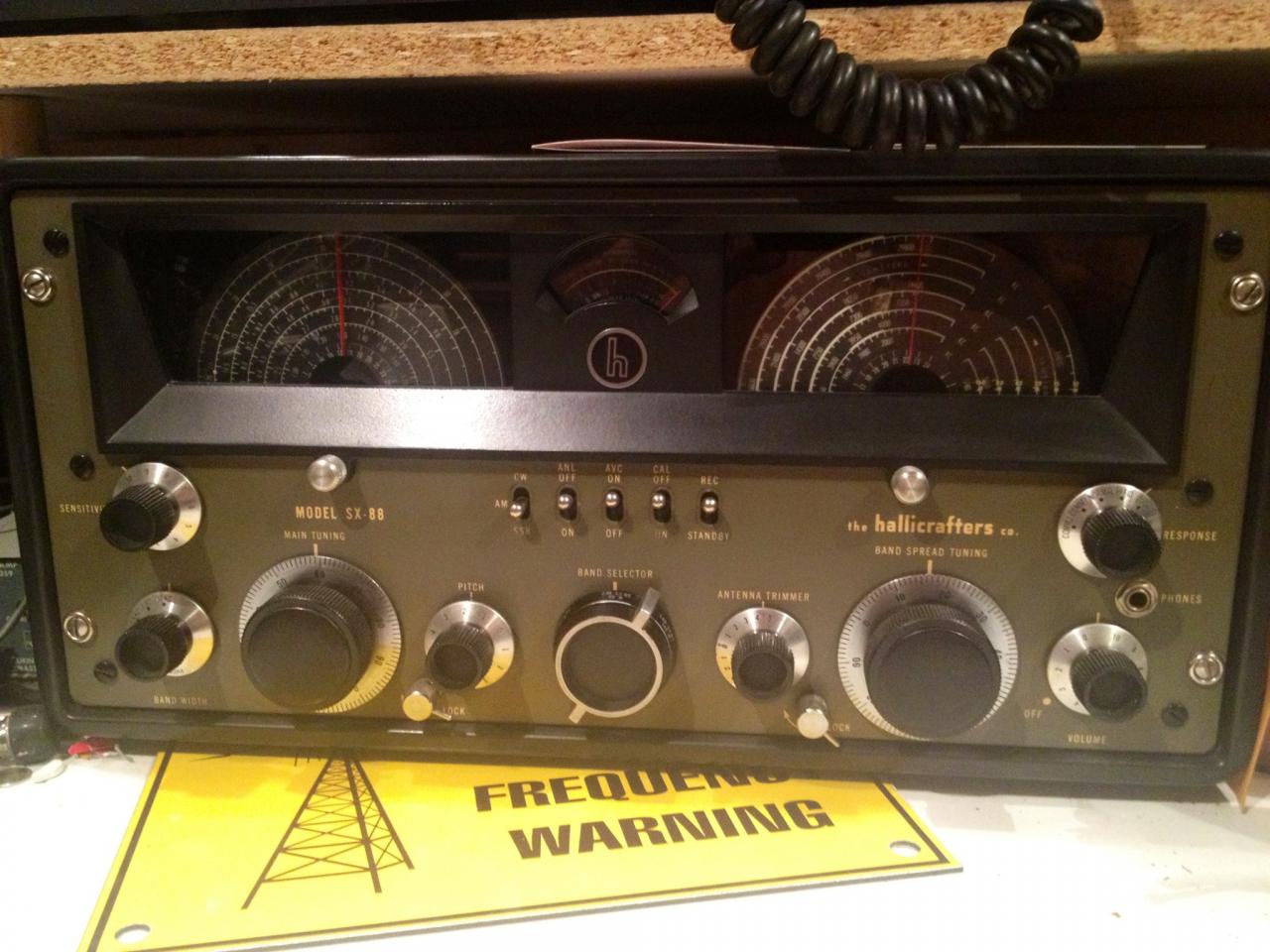
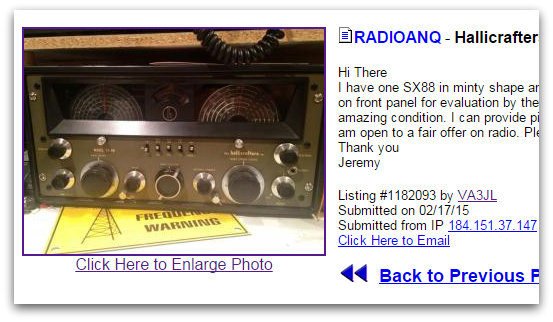
Hi [t]here, I have one SX88 in minty shape and is one of a handful that came in military green on [the] front panel for evaluation by the military. This is an exceptional radio in amazing condition. I can provide pics for someone who is seriously interested. I am open to a fair offer on radio. Please, no low-ballers. We all know what [it’s] worth…
“We all know what it’s worth“–?
Well, it just so happened that my good friend (and Elmer, or ham radio guru) Mike Hansgen (K8RAT) had recently provided me with a little history lesson on the subject of the SX-88, so I did know what this rig is worth: a great deal of money.
But curiosity got the best of me, so I contacted Jeremy (a nice fellow, by the way) and asked what he was expecting to receive in exchange for his Hallicrafters SX-88? Jeremy’s reply:
“…$5,500 USD will take it. It is a very rare unit; it was… only one of about 6 [painted green]…for presentation to the military for evaluation.
That price is firm. [I] will not negotiate downward, and shipping [from Ontario, Canada] is extra.”
Osterman’s wonderfully comprehensive guide mentions that the SX-88 is a “highly regarded, rare and collectible model.” As for the rarity of the SX-88, he describes it thus: “Extremely Scarce.” The used price range he gives is from $3,500-7,000 US.
After thanking Jeremy for his response, he replied:
“It’s a lot of money for a receiver for certain, but it is a fantastic shortwave receiver as the audio that comes out of it is amazing.
It has 10 watts of audio and into a big speaker–it is second to none. The fidelity is amazing and it is the king of its kind. [For those who like] tube rigs, it is the best of its kind.
For ham purposes on AM it is amazing, and on CW I find it incredible to use.
[W]hen they built this thing they intended to pull all [the] stops out and build the best radio they could for the day with the military in mind. It was an engineering marvel for the day.
Anyway, I have played with it for years now and need to thin out the herd.”
Impressive. And while I just don’t have that kind of money to fork out for a receiver, I did ask myself the question: “If I had $5,500 to blow, would I get that Hallicrafters SX-88?”
And my answer? Yes. In fact, I would personally drive to Jeremy’s home in Ontario and bring it back; no way I’d trust it to a parcel carrier or the post office…
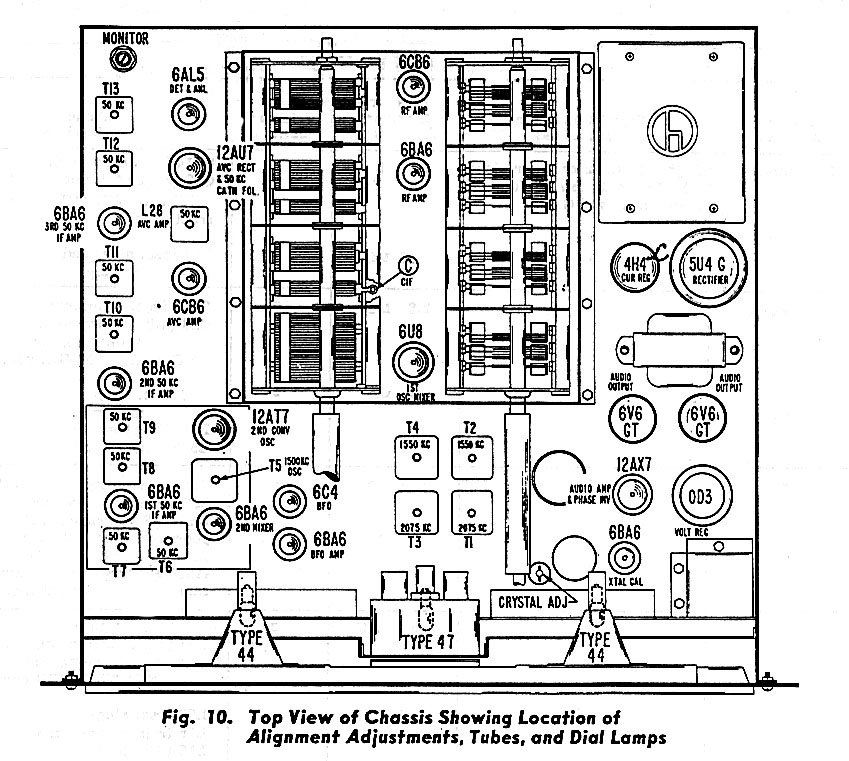
Click to enlarge (Source: AntiqueRadio.org)
Come on, you may say. For a guy who rarely pays over $50 for a vintage receiver, how could you possibly justify that kind of financial and time commitment–?
Well, let’s think of it this way. I remember when when I paid well over two thousand for my first laptop in college. How much is it worth now? Maybe twenty dollars–?
Many people have retirement funds in investments, some of which are in a variety of innovative companies that they actually patronize–for example, Apple or Microsoft. But how often can you find an investment that you can actually play with? One which you can turn on, tune in, work the controls, and enjoy?
Yes, I’m sure this is just the sort of justification voiced by many a vintage car collector…So, why not for a museum-worthy radio? After all, they’re not making these anymore.
I expect this Halli will not only hold its value, but will probably increase in value over time.
Ah, well; fun to ponder. My question to you: Would you buy a $5,500 vintage receiver if you had it to spare?
If your answer is yes, and you do have the money, then you might want to contact Jeremy.
I’m very curious if there are any SX-88 owners among our readership? If so, please comment with your thoughts about the ’88!
And for the rest of us, just so we can revel in the vicarious pleasure of ownership, I’ve included some additional information about the Hallicrafters SX-88 below, including two videos.
[Update: Please note that this survey has been closed, but the audio samples–labeled Radio A and Radio B–will remain to allow others the opportunity to make an evaluation prior to reading the PL-680 review.]
The results from the PL-680/PL-660 reader surveys (here and here) have been pouring in! As of this posting, well over 200 readers have participated by listening to and evaluating the two receiver comparison surveys. Thank you!
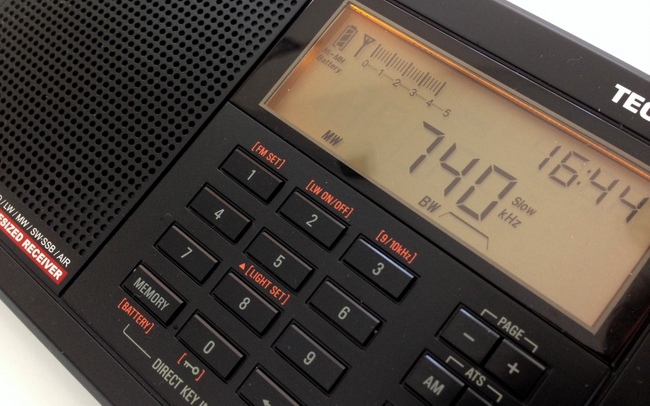
Yesterday evening, I spent time comparing the Tecsun PL-660 and PL-680 with medium wave reception in mind. I recorded dozens of samples and picked four broadcast recordings I felt best represented receiver performance. Note that this will be my final survey before I post the PL-680 review later this week.
To participate in this survey, start by simply listening, then fill out the form that follows with your choice of “Best Radio” for each broadcast. All of these medium wave samples were recorded in the evening hours, which I believe is more indicative of receiver sensitivity, selectivity and AGC. Notice that I indicate distance to target station (as the crow flies).
Audio Samples
750 AM – WSB Atlanta, Georgia, USA (171 mi/275 km)
Below you’ll find a short video of my 1945 Scott Marine Radio Model SLR-M playing Tommy Dorsey and his Orchestra’s jazz-infused version of “March of the Toys” from Victor Herbert’s holiday classic “Babes in Toyland.”
It’s a little holiday time-travel I cooked up for you on this great vintage rig. I’m actually playing the song via an SStran Model AMT3000 AM transmitter I built from a kit (more on that in a future post). The transmitter has been set to 1410 kHz, to which the SLR-M is tuned.
Though the microphone on my Flip Video camera makes the sound in this little recording tinny (you’ll have to trust me that, live, it’s remarkably warm and rich), it does feel a bit like radio time-travel to hear a 1940s-era song played on a 1940s era-radio. This is just how WWII servicemen might have heard this music.
Check out this charming article about rediscovering radio by Anthony M. Castelletti in The Buffalo News:
“As a child in the 1960s, I enjoyed listening to distant radio stations, I suppose initially for no reason other than because they came from far away. It was a young boy’s hobby based on the accidental discovery of 1050 CHUM in Toronto. Remember, this was quite a feat for a one-transistor, pocket AM radio without an antenna that was the product of 1950s technology. I soon discovered that if I took that little radio outside, even more distant stations were right there on that dial.
Along with my beloved hometown Buffalo Bisons, I also became a fan of the Fort Wayne Komets hockey team, not due to any connection to Indiana, but rather due to my ability to listen to their games on WOWO-AM. This was soon followed by CKLW from Windsor, Ont., a rock ’n’ roll station as powerful as my hometown favorite KB 1520.
It took a couple of years of playing with that little radio for me to figure out that if I snuck outside and listened to the in-dash radio in my father’s Chevy, without starting the car and giving myself away of course, broadcasts from faraway places like New York City, Chicago and on rare occasions Florida, Georgia, Tennessee and other places I had never visited, were right there at my finger tips.
It also didn’t take long for my father to find out why the battery in his car had suddenly died. This was followed by a calmly delivered, yet lengthy and technically detailed lecture from my father, an electrician, on the effects of using a car battery without doing anything to charge said battery.”
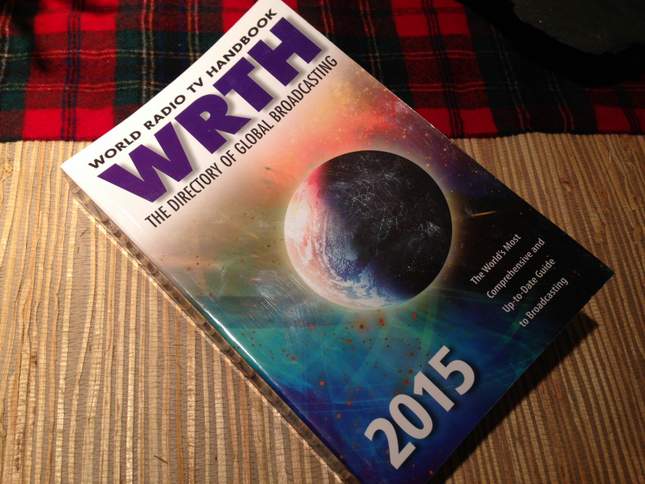
I received my copy of the 2015 World Radio and TV Handbook (WRTH) directly from the publisher last week. As many SWLing Post readers know, I always look forward to receiving this staple radio reference guide each year. While other reference guides have dropped out of the scene, WRTH has remained strong and the publication’s quality has been wonderfully consistent. In fact, I noticed in the Editorial that this is 69th edition of WRTH: obviously, a publication with longevity.
WRTH’s team of noted DXers from around the world curate frequencies and broadcaster information by region; while I’m not sure how they orchestrate all of this, the end result is truly a symphony of radio information. In addition to broadcaster listings, WRTH’s radio reviews, feature articles, and annual HF report make for excellent reading.
But the WRTH isn’t just a frequency guide: the publication always devotes the first sixty or so pages to articles relating to various aspects of the radio hobby. Following, I offer a quick overview of these.
The first article always features a WRTH contributor (indeed, it’s this very network of contributors that make WRTH and its listings such a success): this year, Mauno Ritola tells us how he got interested in the hobby and what being a contributor means to him. Many of you will recognize Mauno’s name–he’s quite a prominent Finish SW and MW DXer (and a very nice fellow, as well).
The second set of articles is always my favorite: WRTH receiver reviews.
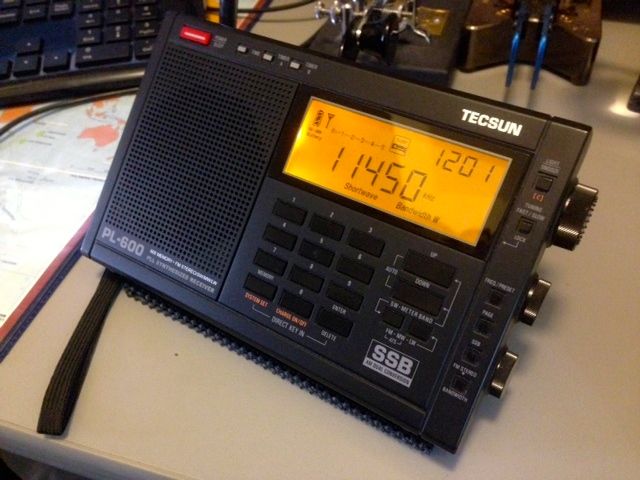
This year, WRTH reviewed the CommRadio CR-1a (un update of their very positive CR-1 review last year). They also review the Tecsun PL-600(above), the SDRplay software defined radio, the MFJ-1046 Preselector, and the Apache ANAN-10. The 2015 WRTH also has a special review section that features two HF noise and loop antennas: the AOR LA400 indoor loop and the Wellbrook ALA 1530S+ Imperium Loop (which wins the WRTH Award for Best Antenna). As I’ve come to expect from this publication, these are all great comprehensive reviews.
The SDRplay
The following article is “Wooferton: 70 Years on the Air,” written by Dave Porter, one time Senior Transmitter Engineer at the site. In a few pages, you’ll gather the technological history of the site, dating back to a rather bumpy start in WWII.
Following this, noted DXer and WRTH contributor, Max van Arhem, speaks to The Future of DXing. He proposes that with the decline of international broadcasting on the shortwaves, there is still much challenge in the hobby–especially by broadening DXing in the FM and medium wave bands. [Indeed, I’ve certainly seen an increase of questions about medium wave DXing here on the SWLing Post. I hope to cover more of these topics in 2015.]
Lord Howe Island
WRTH often features a snapshot of the radio scene in various parts of the world. This year, WRTH Contributor, David Foster, writes about his recent trip to remote Lord Howe Island and what he discovered about the radio landscape there. As a keen traveler myself, I found his article fascinating (Lord Howe Island is now on my travel list!).
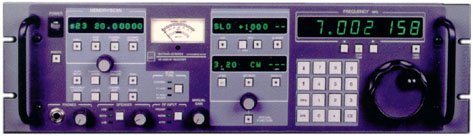
As a bonus, WRTH includes a feature/review of the benchmark Watkins-Johnson 8711A receiver. Not only does the article speak to the mechanics and virtues of the 8711A, but it also places this particular model within the context of the Watkins-Johnson legacy.
The final sections of articles are dedicated to the WRTH Digital Update and HF propagation report/forecast.
As expected, this is another great edition of the World Radio TV Handbook. As I’ve said many times, though I use online frequency databases fairly regularly, there is just no replacement for a good printed frequency guide–especially for all of my off-grid DXing.
For DXers who collect QSL cards, you’ll find that broadcaster contact information in WRTH is often more up-to-date than a broadcaster’s own website.
Not only does WRTH contain more in-depth information on broadcasters and schedules, but it makes for quick reference, and doesn’t require a computer or Internet connection–much like, well, your shortwave radio.