Category Archives: New Products

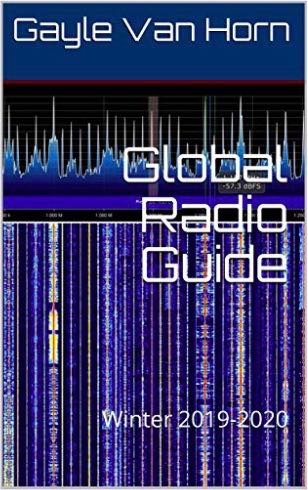
The Global Radio Guide: Winter 2019-2020

Many thanks to SWLing Post contributor, Dan Ervin (KB0RTQ), who writes:

Just in time for the new year, the Winter 2019-2020 edition of the Global Radio Guide is available on Amazon in e-book form for $8.99.

Click here to view on Amazon.com (affiliate link supports the SWLing Post).

I first learned about this guide thanks to you and the SWLing Post, and their content and “Hour by Hour” listening guide reminds me of the old “Passport to World Band Radio” of days gone by.

73, and here’s to a wonderful 2020!

Thank you so much for the tip, Dan! I should mention that the guide also has a substantial introduction section with articles, propagation forecasts, and product reviews.


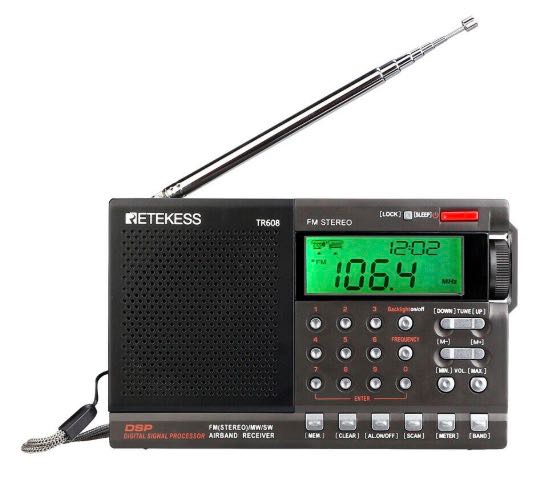
Mike reviews the Retekess TR608 AM/FM/AIR/SW receiver

Many thanks to SWLing Post contributor, Mike S, who shares his assessment of the Retekess TR608. Mike writes:

For this model, the company marketing electronics under the Retekess brand seems to be using a different supplier compared to the previous digital-radio-plus-memory—card-player products. The result is a more traditionally styled multiband DSP radio which runs on (gasp) traditional AA batteries. Its feature set takes inspiration from the Radiwow R108 and original CCrane Skywave, but with mixed results (albeit at a fraction of the price). It delivers decent performance for its price class but more serious listeners would be advised to spend a little more on a more established model.

Pros

    • Usual set of features: sleep timer, alarm, scanning, auto memory fill.
    • Uses replaceable alkaline or NiMH “AA” cells.
    • Decent sensitivity across the board.
    • Full shortwave coverage.
    • Frequency display is large and contrasty.
    • Dial light is effective and can be disabled. Display is readable without it, even in dim light.
    • No annoying keypad “beep”, so no mad rush to discover how it can be disabled.
    • Speaker can play reasonably loud without distortion.
    • FM reception is solid with good frequency response and stereo reception through headphones; this also activates a display indicator.
    • MW/SW reception is NOT plagued by digital hash bleeding through from the processor as with most other models in this price range!

Cons

    • Significantly larger than expected.
    • Unfortunately the added cabinet space is not utilized for a more wide-range speaker; audio is tinny.
    • Clumsy mounting of one spring in the battery compartment on my sample makes it almost impossible to insert the third AA battery without risking damage.
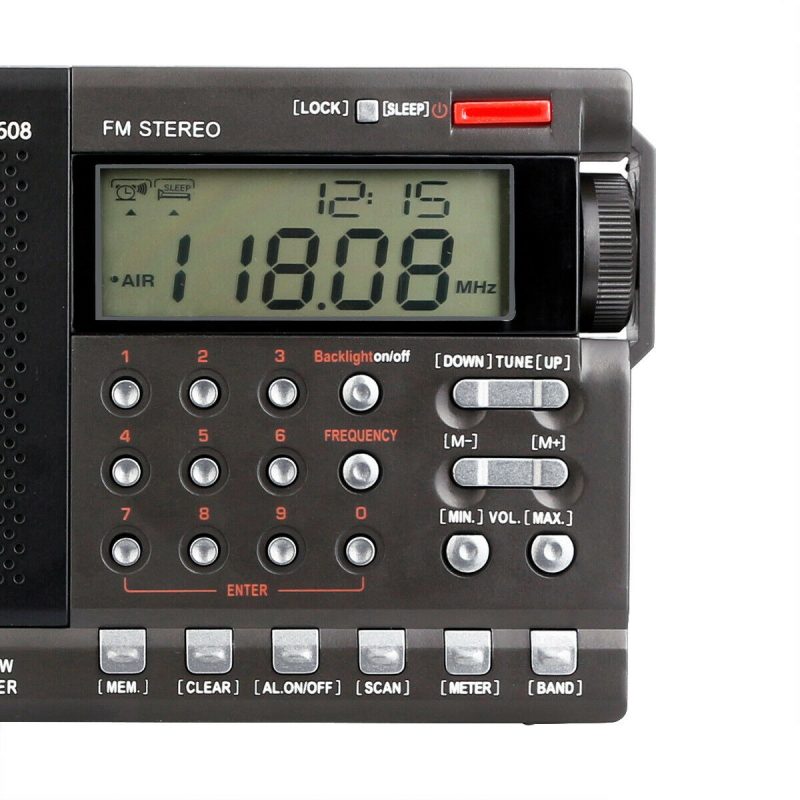
    • Many keypad buttons are so tiny and almost flush with the cabinet, that they are difficult to press.
    • Lens over LCD display is molded and unpolished with moiré distortion at some viewing angles.
    • Air band reception marred by birdies, bleed-through from other bands, and lack of squelch.
    • Volume control defaults back to level “10” under some circumstances (the manual warns about this).
    • Confusing 2-level LOCK function requires close attention to almost microscopic indicator on LCD.
    • No battery level indicator.
    • Although the manual advises that batteries can be charged using the 4.5V coaxial socket, no charging indicator is obvious.
    • Rotary knob, used for both tuning and volume adjustments, has no detents and so can easily spin off target.
    • Assigned function (no indication) depends on whether the tuning or volume buttons on the keypad were the last to be used.
    • No fine tuning outside of pre-programmed increments.
    • MW selectivity is a bit too wide for congested night reception.
    • MW reception occasionally exhibits weird artifacts; ghost images, sputtering audio on marginal signals, and “processed” sounding voice audio. Don’t know if these are DSP or AGC related, or a mixture of both. I have observed the same thing with the Eton Mini and other inexpensive portables using marginal DSP implementations.

SHOWSTOPPER ALERT: MW band channel assignments marred by 9kHz-centric firmware bug. Even after changing to 10kHz channel spacing (undocumented), the CPU still “thinks” in 9kHz assignments for direct input. Entering FREQ-1-0-1-0-FREQ should get you to 1010 kHz; but it actually lands on 1018 kHz because that is the nearest channel in the 9kHz band plan. You are now stuck in frequency step hell, as the up-down frequency keys still operate in 10KHz mode but do not know they are now off bandplan. UP/DOWN yield 1028/1008, not 1020/1000. The only way to recover is to enter a MW frequency that is the same in both bandplans, or to power off and double-reset the step rate resulting in all memories being lost.

Thank you so much for the review, Mike.  It sounds like this little receiver isn’t ready for prime time yet. The issues with frequency steps on the mediumwave band is certainly a show-stopper for anyone in North America. Indeed, it sounds like mediumwave reception, in general, is mediocre at best. At least the receiver isn’t plagued with internal noises.

With pricing around $29.99-$39.99 it’s certainly a bargain radio. But I’m sure you’re thinking what I’m thinking: you pay for what you get.

The Retekess TR608 can be purchased on eBay or Amazon.com (affiliate link).

KiwiSDR update brings integrated DRM reception!

Many thanks to SWLing Post contributor, Mark Fahey, who shares the following tweet from KiwiSDR:

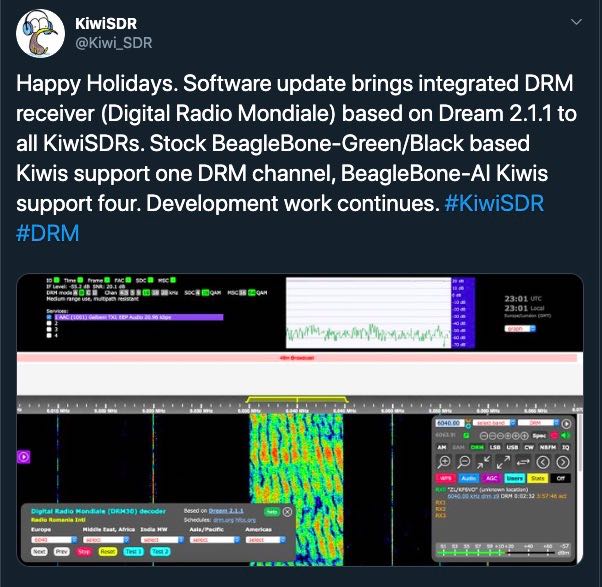
“Happy Holidays. Software update brings integrated DRM receiver (Digital Radio Mondiale) based on Dream 2.1.1 to all KiwiSDRs. Stock BeagleBone-Green/Black based Kiwis support one DRM channel, BeagleBone-AI Kiwis support four. Development work continues.”

Ironically, I had only recently published a post asking if anyone had ever attempted to decode DRM using a KiwiSDR. Turns out, several readers had by porting the IQ audio output into the DREAM application. Now that KiwiSDR will have a native DRM mode, this will no longer be necessary.

Many thanks, Mark, for sharing this tip! As you say, this is “mega news!”

Icom IC-705 price and availability

Note: We will update this post as pricing information is confirmed by retailers.

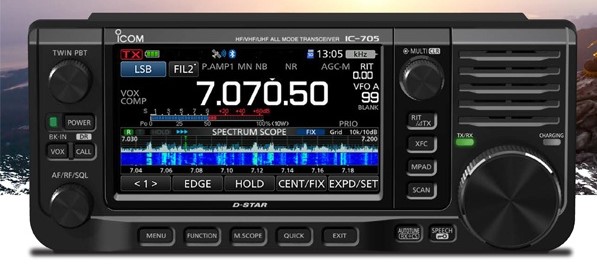
Many thanks to several SWLing Post readers who have been carefully tracking the price of the Icom IC-705 transceiver which is expected to start shipping around the second quarter of 2020.

Pricing in Japan: 124,800 yen

Paul Evans notes that the price in Japan, according to this Icom Japan press release [PDF], is 124,800 yen + tax. That’s roughly $1150-1200 USD.

Pricing in UK: £1200.

In addition, ML&S have recently posted updated details from Icom UK and have noted that they “anticipate a price of around £1200 (£1000.00 excluding VAT).” To put that in perspective, the IC-7300 is currently being offered for the same price and it’s been on the market a while now.

This could mean that after the IC-705 has been on the market for a while, discounts could place it well below that of the IC-7300. Of course, if history is an indicator, early adopters will likely pay the top price.

Pricing in US: [TBD]

No confirmation yet from US retailers, but at this point, I would bet we could see pricing around $999 USD. That would be a competitive starting point. Of course, once we have confirmation from retailers we’ll update this with actual figures.

Other regional pricing

We will update this post with pricing and availability once we confirm details. Please comment with any tips!


Do you enjoy the SWLing Post?

Please consider supporting us via Patreon or our Coffee Fund!

Your support makes articles like this one possible. Thank you!

Radio Deal: New Retekess TR608 AM/FM/SW/AIR intro price of $29.99 US shipped

Many thanks to SWLing Post contributor, John Palmer, who writes:

Hi Thomas,

Just noticed that Retekess has introduced a new AM/FW/SW/Airband! receiver and it’s on sale at a special introductory price ($29.99) till the end of Dec 2019.

Interesting that this one has the commercial aviation band (118-138MHz).

Click here to view on eBay.

Thanks for the tip, John!

Post Readers: Please share your review of this new portable if you grab one!

Just ordered the new $149/$199 uBITX v 6.0 QRP transceiver

Many thanks to SWLing Post contributor, Pete (WB9FLW), who notes that Ashhar Farhan (VU2ESE) has recently announced the availability of the uBITX v 6.0–as Pete notes, “just in time for the Holidays!

Pete shared the following message from Farhan:

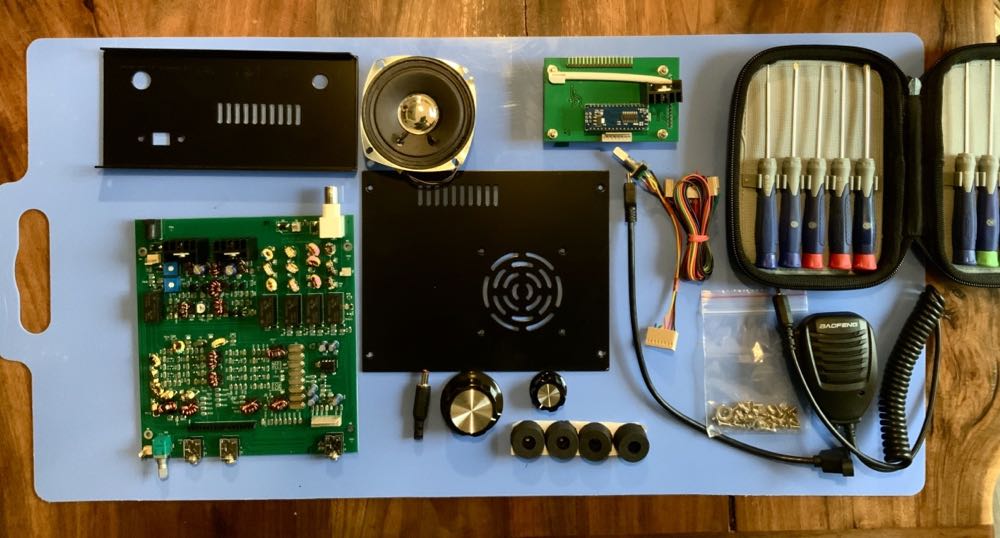
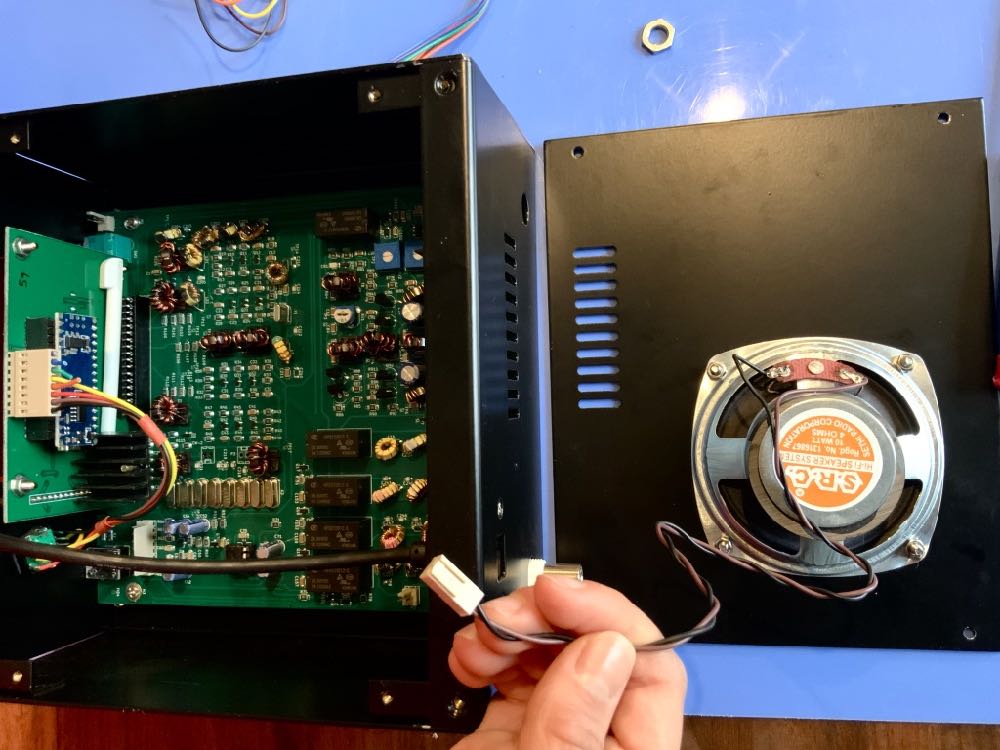
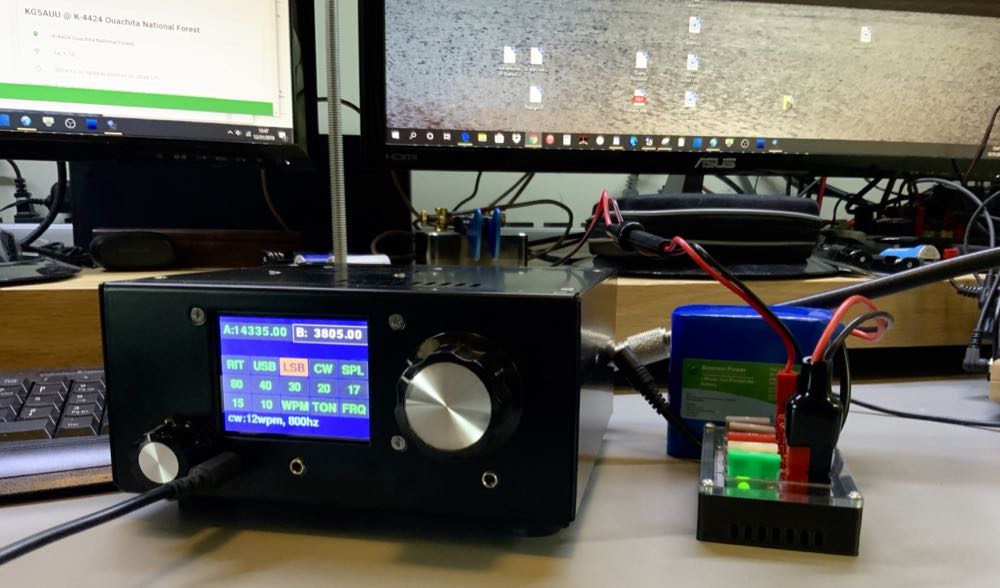
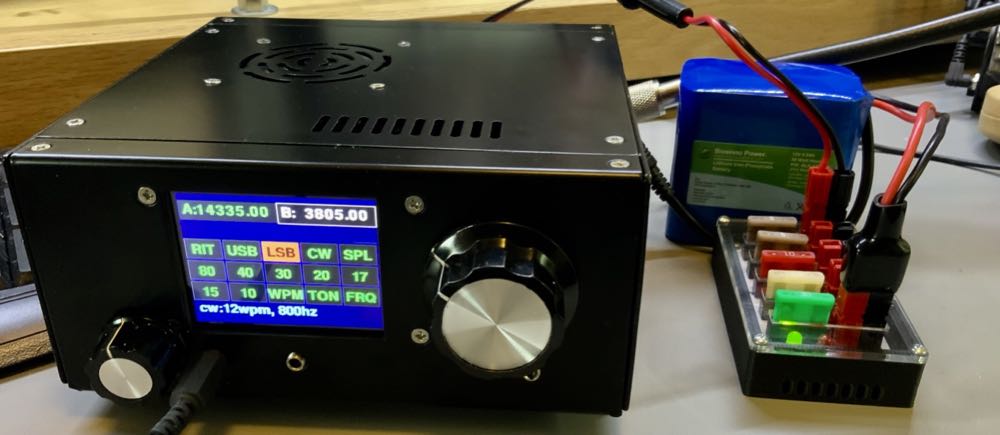
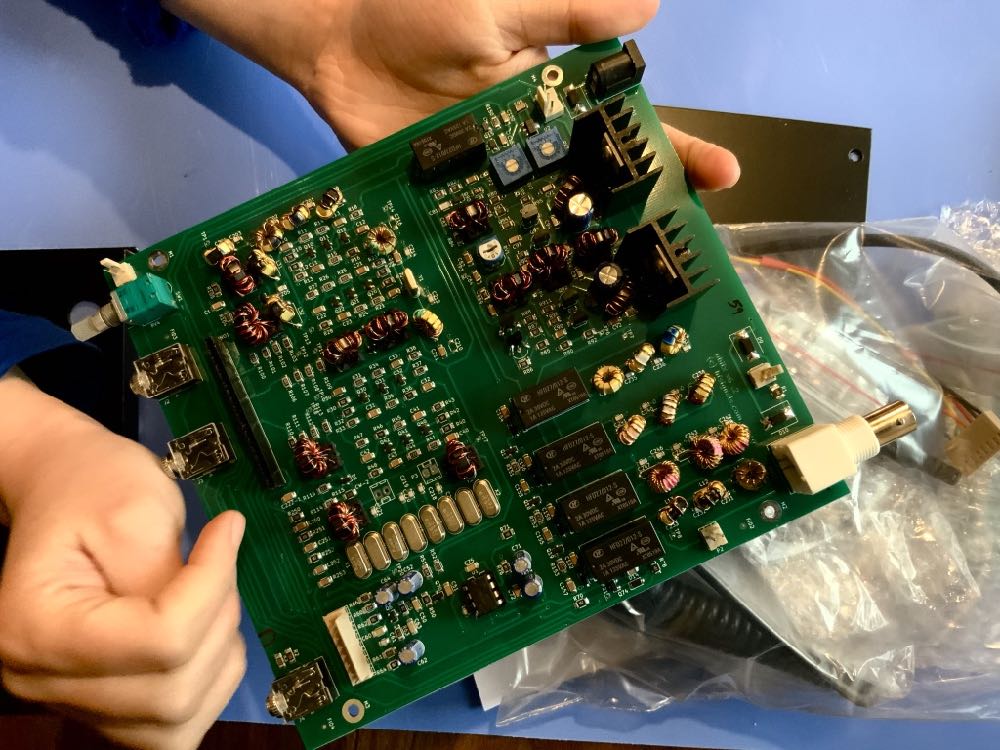
Here is what [the uBITx v 6.0] looks like :

And of course, you can buy it on hfsignals.com. The shipping will happen from Tuesday onwards. We have a limited supply of the first 200 boards. The rest is for after Christmas.

The most important thing about this revision is that the Radio circuitry is almost unchanged. We have incorporated the connectors on the PCBs. So, this kit needs none of the confusing soldering. You snap in the TFT Raduino onto the main board, plug the power and antenna from the back, snap on headphones, plug in the mic (supplied with the kit) and off you go!

It is offered in two kits now : The basic kit (150 USD) is without the box (like old times) but with a microphone and two acrylic templates for the front and back panels.

The Full kit (199 USD) has the box with speaker, mounting hardware etc. Both are described on the website.

Now, about the TFT display:

For those who are using the 16×2 display and you would like to upgrade, you will have to do three things:

Add a heatsink to the 7805 of the raduino

Buy [here] and hook it up as per [this article].

Grab the new Arduino sketch from https://github.com/afarhan/ubitxv6

Background:

I have been hacking away at adding a TFT display for the Arduino for sometime. Finally, I managed to do this with a really inexpensive 2.8 inch TFT display that uses a controller called the ILI9341. The display update is slow but, clever guy that I am, the display very usable. it uses the same pins that earlier connected to the 16×2 LCD display. This display is available everywhere for a few dollars.

Many thanks, Pete, for sharing this announcement. The price was simply too attractive to me, so I just purchased the full kit for $199 US. (Thanks for being the good enabler you are, Pete!)

Update – 30 May 2020: Many thanks to Armin Sander who notes that the uBITX V6 full kit price has increased to $209 US.

I’ll post an update when I receive the transceiver and assemble it. I do hope this is a workable little radio–it would be pretty amazing for newcomers to the hobby to be able to get on the HF bands for a mere $200 US. I also love the fact that this is all based on open-source, hackable technologies.

Cambridge Consultants design a prototype $10 DRM receiver

DRM broadcast (left) as seen via a KiwiSDR spectrum display.

Many thanks to SWLing Post contributor, Michael Bird, who shares the following news via Cambridge Consultants:

Digital launched, ever so long ago, with TV and radio. So what’s the big story? It’s that the last piece of the digital jigsaw is finally in place: a system called Digital Radio Mondiale (DRM), designed to deliver FM-radio-like quality using the medium wave and short wave bands.

We’re familiar with AM on medium wave and accustomed to the horrible buzz, splat, fade away and back again. But it does have a great advantage in that it will reach for hundreds of miles from a single transmitter. That’s a lot easier than FM or DAB, which both need transmitters every 30 or 40 miles. No fewer than 443 DAB transmitter sites are needed to cover the UK alone.

So take a modern digital scheme, apply some clever (and low cost) computing power, and you can get good sound for hundreds of miles. You get to choose radio stations by name instead of kilohertz, and you can even receive text and pictures. Emergency warning and information features are also built into DRM.

Great technology. But will it fly? Is it available for everyone?

The new news is that India, through its national broadcaster All India Radio, has invested in and rolled out a national DRM service, live today. Just 35 transmitters cover that large country. New cars in India have DRM radios in them now. Other countries like South Africa, Malaysia and Brazil are likely to follow India’s lead.

But something’s missing. The radios that can receive DRM are still prohibitively expensive, especially for those markets that would benefit most. So vast swathes of the world remain unconnected to the services that DRM can provide. Where’s the cheap portable that you can pick up from a supermarket to listen to the news or sport?

Cambridge Consultants has just held its annual Innovation Day, where we throw open our doors to industry leaders and reveal future technology. One of our highlights was the prototype of a DRM design that will cost ten dollars or less to produce, addressing that vital need for information by the 60-ish per cent of our global population that doesn’t have internet or TV. It’s low power, so can run from solar or wind-up.

This design will be ready in 2020, available for any radio manufacturer to licence and incorporate into its own products. We’re doing our bit to make affordable radios for every corner of the globe!

Click here to read this post at the Cambridge Consultants website.

Michael also shares this piece from Radio World regarding this project.

I must admit: there have been so many proposed low-cost DRM receiver designs that never came to fruition, it’s easy to be skeptical. I assume the $10/9 Euro design will be for the receiver chip only–not the full portable radio, of course. They plan to bring this to fruition in 2020, so we’ll soon know if they succeed.