Category Archives: Nostalgia

“When Switzerland broadcast Esperanto around Europe”

Many thanks to SWLing Post contributor, David Iurescia (LW4DAF), who shares this article from swissinfo.ch regarding the history of the Esperanto language service of SWI. The following is an excerpt:

Esperanto

Esperanto (literally “one who hopes”) was the brainchild of Polish Jewish ophthalmologist Ludwik Lejzer Zamenhof, who published his first brochure in the language in 1887. He wanted it to become a second language for everyone.

The Swiss Esperanto Society was founded in 1903.

The Universala Esperanto-Asocioexternal (Universal Esperanto Association) was founded in Geneva in 1908. It is now based in Rotterdam.

The association says: “Based on the number of textbooks sold and membership of local societies, the number of people with some knowledge of Esperanto is in the hundreds of thousands and possibly millions”. Around 1,000 people speak it as their first language.

Esperanto has a relatively simple grammar with no exceptions to its rules. Its vocabulary is derived primarily from Romance languages and to a lesser extent from Germanic and Slavic languages.

“Beyond Europe, no regular Esperanto broadcasts take place,” the memo noted. The one exception was a special broadcast for Esperantists in Brazil on January 31, 1953.

Baur – who worked on the Swiss Broadcasting Corporation’s Esperanto programmes until 1991 – had reckoned there was a great interest in Esperanto in Brazil. The memo noted that the response to the one-off, five-minute broadcast was “thoroughly gratifying”, resulting in 25 letters (17 from Brazil, eight from other countries with reception).

“But from the beginning we stressed that even if people really liked it, it wouldn’t result in the introduction of Esperanto broadcasts in South America since, given the nation-joining aims of Esperanto, it would be contradictory to add a third language to a continent of only two languages which are more or less mutually comprehensible,” it said.

Aims of the broadcasts

The Bern memo explained that the main aim of the Esperanto broadcasts had always been “to reach the intelligentsia behind the Iron Curtain, who successfully bridged their linguistic diversity – especially in southeast Europe – through Esperanto”.

It added: “Our Esperanto broadcasts can therefore spread information about Switzerland and its ideas and ideals in an unobtrusive manner in those otherwise closed regions – as long as broadcasts in those regions’ national languages don’t make sense for us.”

It’s hard to say how many people listened to these broadcasts, none of which sadly have been saved in the SBC archives. According to the 1953 memo, Bern received two or three confirmations of reception a week, mostly from those countries behind the Iron Curtain. “Their relative rarity can be explained by the great risk most probably faced by the letter-writers,” the memo said.

Then, at the end of January 1965, the shock news was announced that the 16 Esperanto programmes a month would no longer be broadcast for financial reasons.

The Swiss Esperanto Societyexternal said this was a “heavy loss for the Western world”. “A reduction from four weekly programmes to two or even one would certainly have met general understanding, but it is highly regrettable that the Swiss Broadcasting Corporation has decided to pull the Esperanto programmes completely,” it said.

Not dead yet

That happened next is not clear from the archives. We do know, however, that – if the programmes did indeed stop – at some point they started up again in some form and frequency because in the late 1980s Swiss Radio International (SRI), as the Short-wave Service was renamed in 1978, was sending transcription tapes with Esperanto material around the world.[…]
Click here to read the full article.

2019 Huntsville Hamfest photos: Flea Market

Yesterday (Saturday, August 17), was the first day of the Huntsville Hamfest in Alabama.

Over the years, I’ve heard from a number of friends that Huntsville is a must-see hamfest. And, boy, were they right! Turns out the Huntsville Hamfest is one of the largest hamfests in North America.

The entire event is held in the amazing Von Braun Center and is fully air conditioned–a good thing as temperatures were pushing 100F/37.8C yesterday!

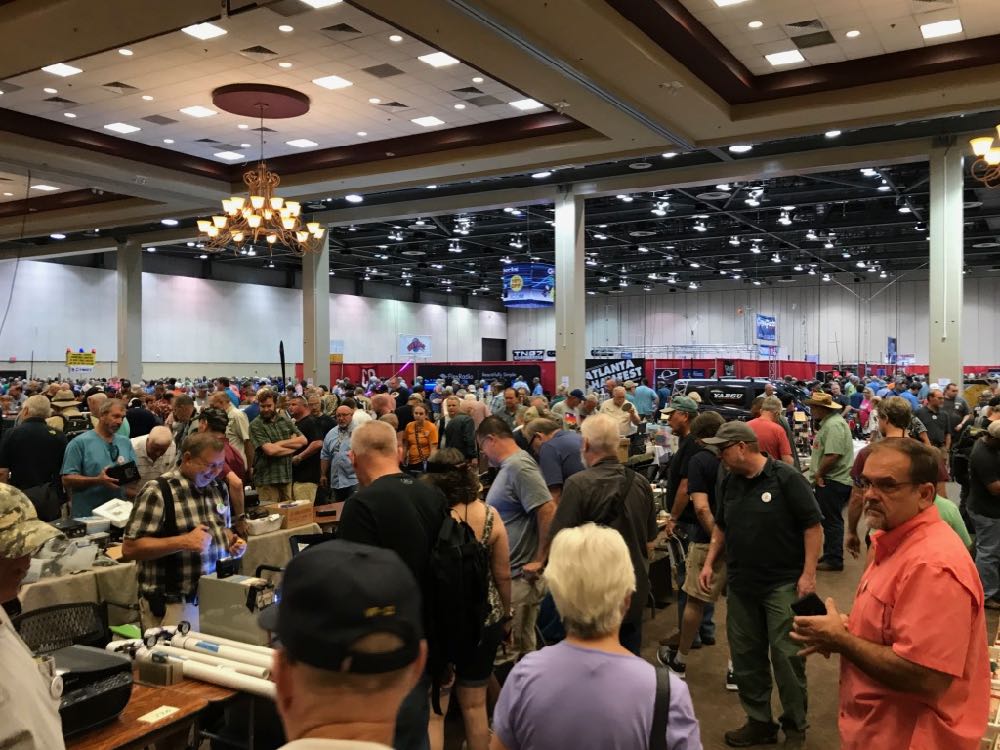
I took a number of. photos in the flea market area of the hamfest. In truth, though, this is only a small sampling of what was there. I told a friend that–in terms of selection and radio density–this was one of the best hamfest flea markets I’ve ever seen. If you were looking for ways to rid yourself of your hard-earned cash, this was the place to do it!

Click on the photos in the gallery below to enlarge each image. Note that I plan to take photos of the vendor/club areas today and hopefully post them tomorrow:


Do you enjoy the SWLing Post?

Please consider supporting us via Patreon or our Coffee Fund!

Your support makes articles like this one possible. Thank you!

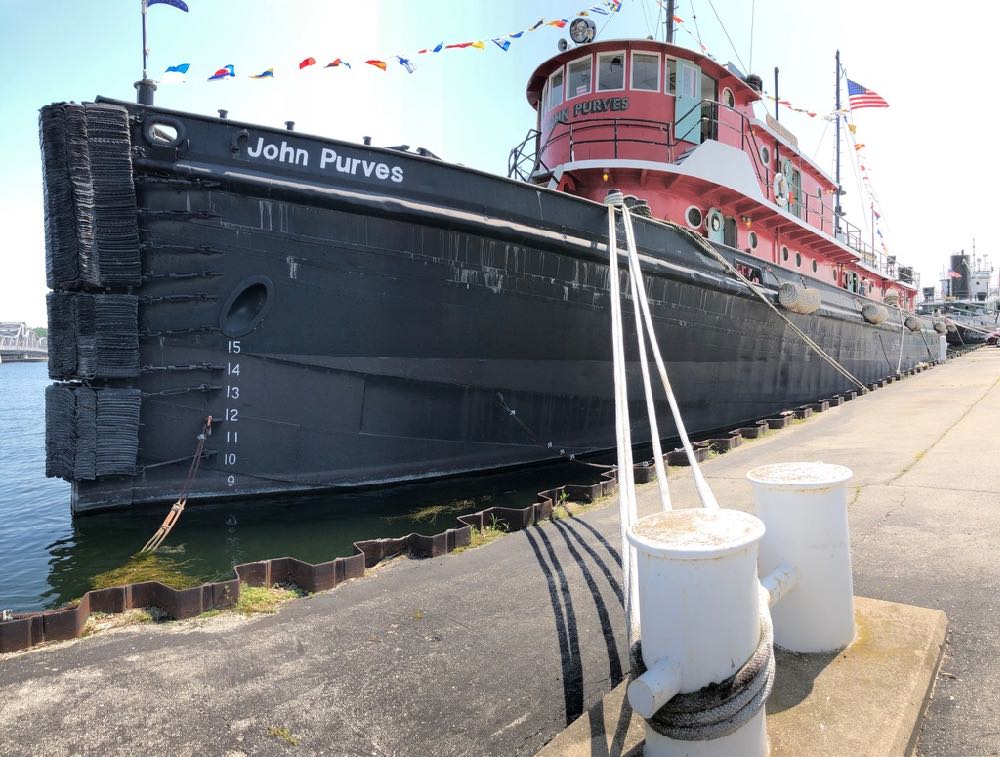
Classic portables onboard a 1919 Great Lakes tugboat

Many thanks to SWLing Post contributor, Phil Ewing, who writes:

I know you’re always on the lookout for trips and visits so I thought of you when we were up in Wisconsin last week. There’s a maritime museum up in Sturgeon Bay, on the peninsula, that includes a 100 year-old tug. You can go aboard and climb all up and down…and they’ve got some great radios in the crew cabins as part of the displays of what life was like back when the ship was working.

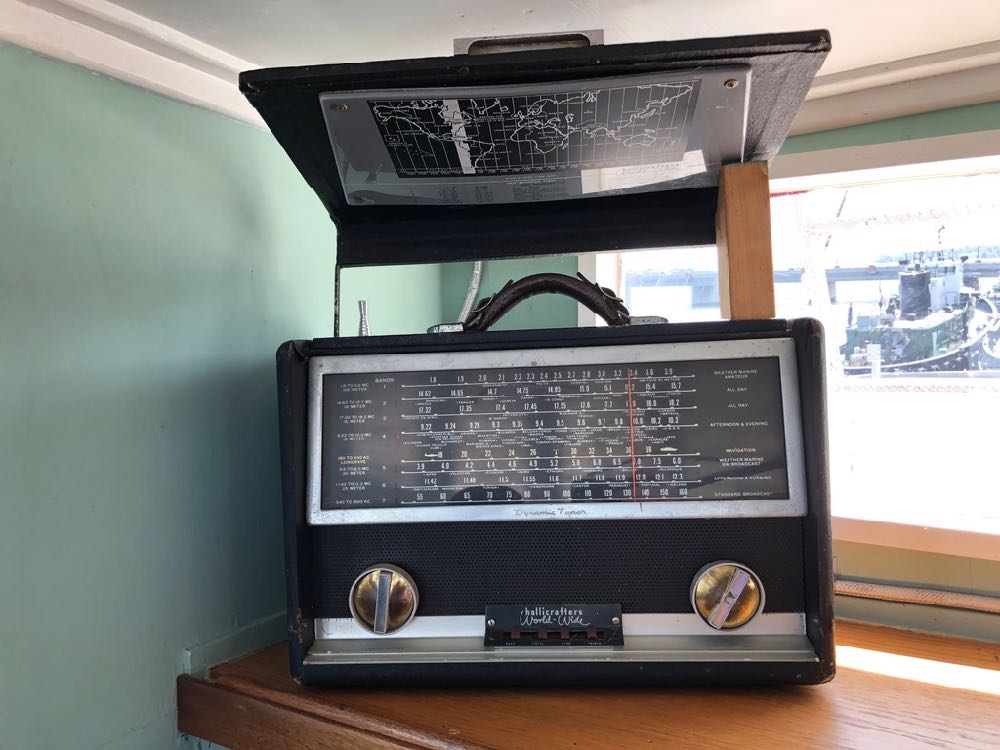
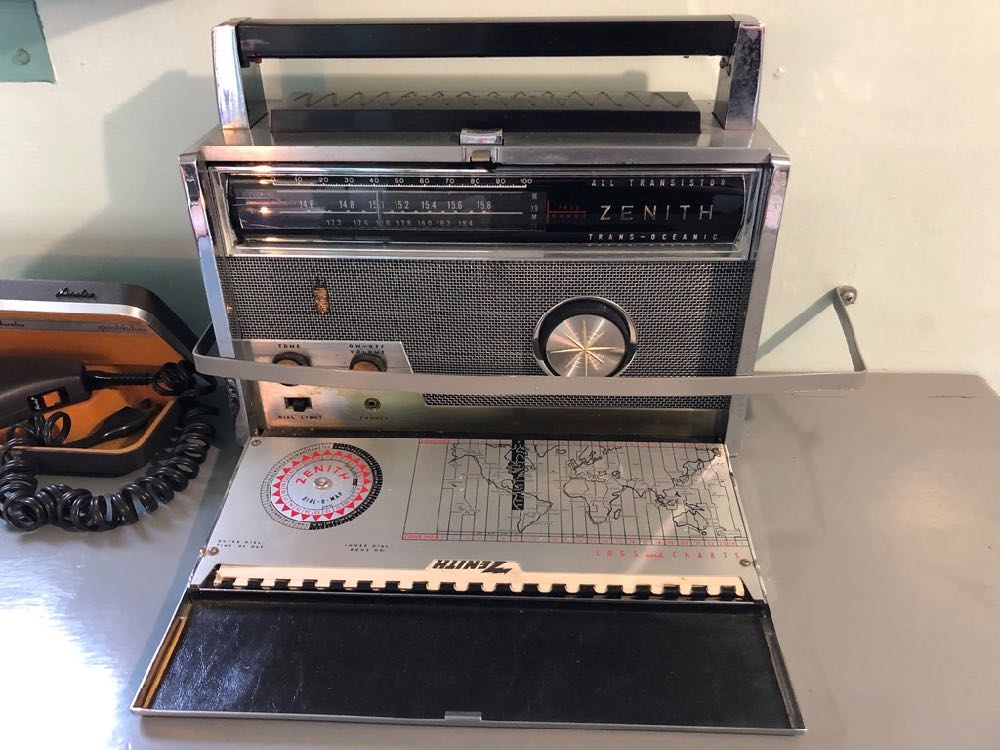
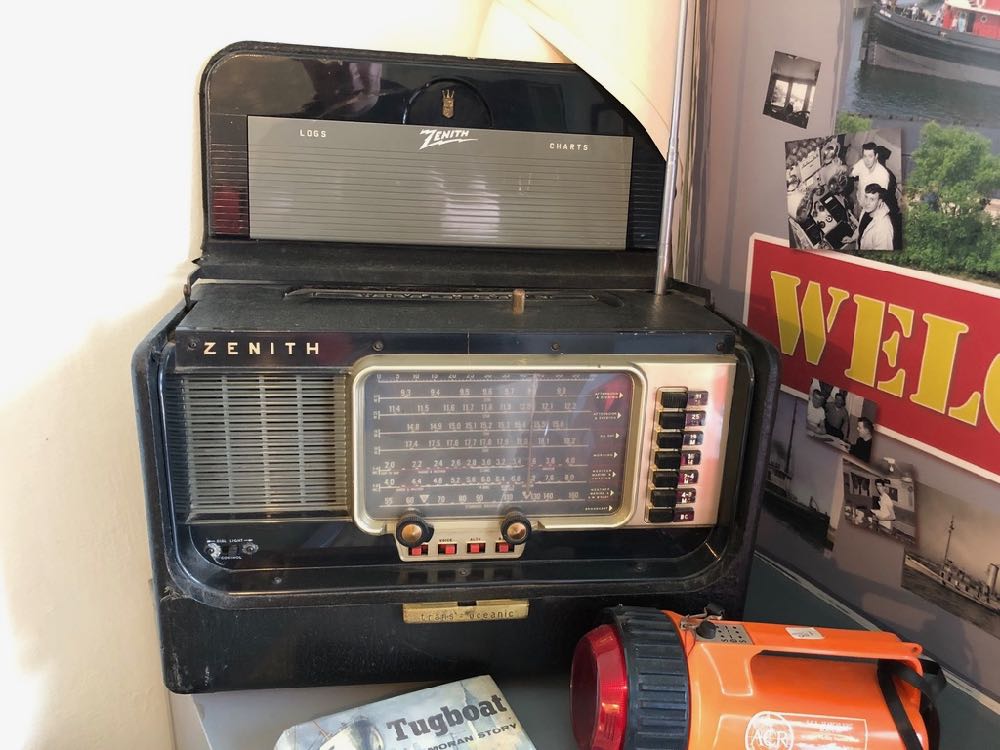
There were a number of standard but interesting normal transistors but what really caught my eye were the Hallicrafters World Wave in the pilothouse and a fantastic pair of Trans-Oceanics in the cabins of the chief engineer and the captain.

The purpose of the visit really isn’t the radios — it’s about the working life of the Great Lakes and an old ship — so discovering them was a fantastic lagniappe.

[T]he appeal of shortwave in these circumstances is clear: Imagine you’re in the middle of Lake Superior towing a barge full of logs to be pulped, or some other unglamorous but essential Great Lakes cargo — maybe a barge full of big rocks to build a breakwater in, say, Sheboygan — and you come off watch in the middle of the night. Life on a ship can be deadly monotonous and deeply lonely but then picture yourself tuning in to the international band on your luxurious Zenith set … not bad since the iPad won’t be invented for another 40 or so years.

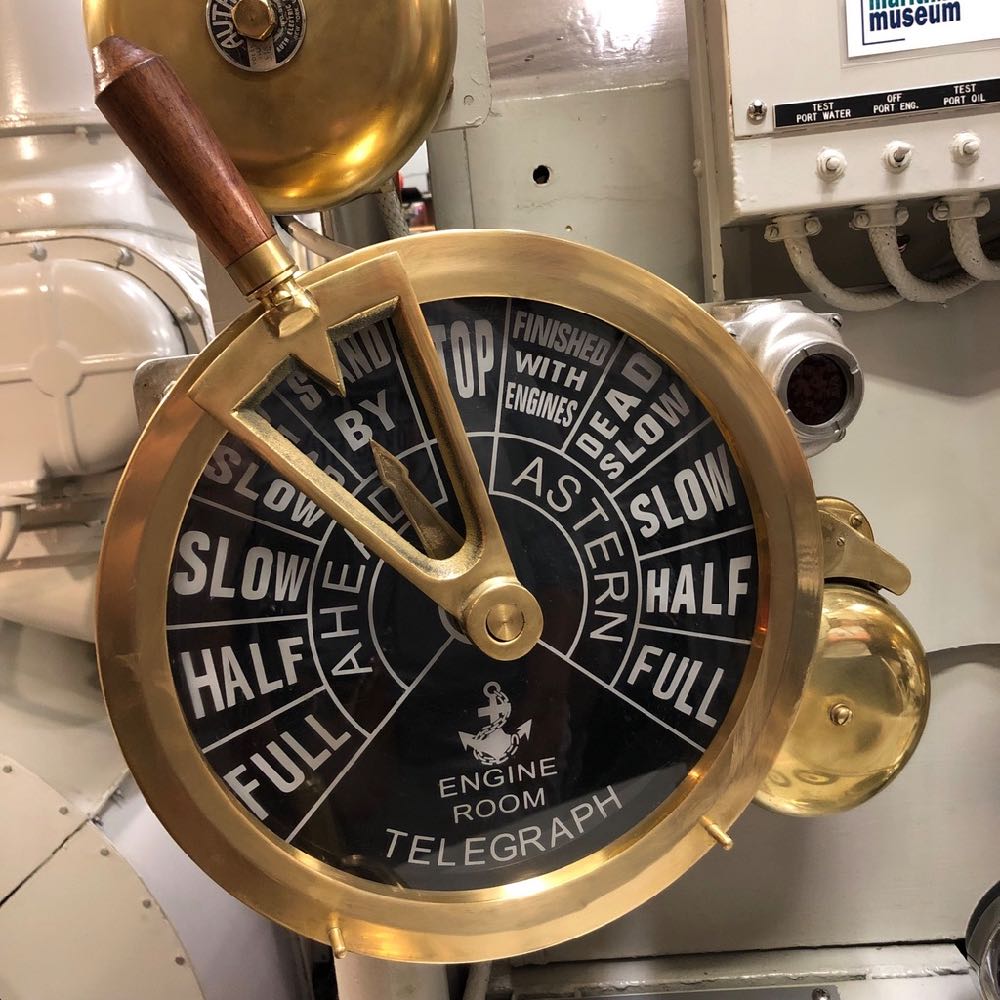
These pix also depict the engine order telegraph, which the captain in the pilothouse used to signal commands to the engine room. There was one for each of the two main engines, and duplicates in the pilothouse.

The captain moves the handle so that it indicates the speed he wants (e.g., Ahead Full) and the bottom needle on the telegraph in the engine room moves, ringing a bell. This is why an engineer might report he was ready to sail by saying he was standing by to “answer bells.” The engineers would select the speed on the engines and then move their own handle on their own telegraph to correspond with the captain’s order, signaling to the pilothouse they’d completed the instruction.

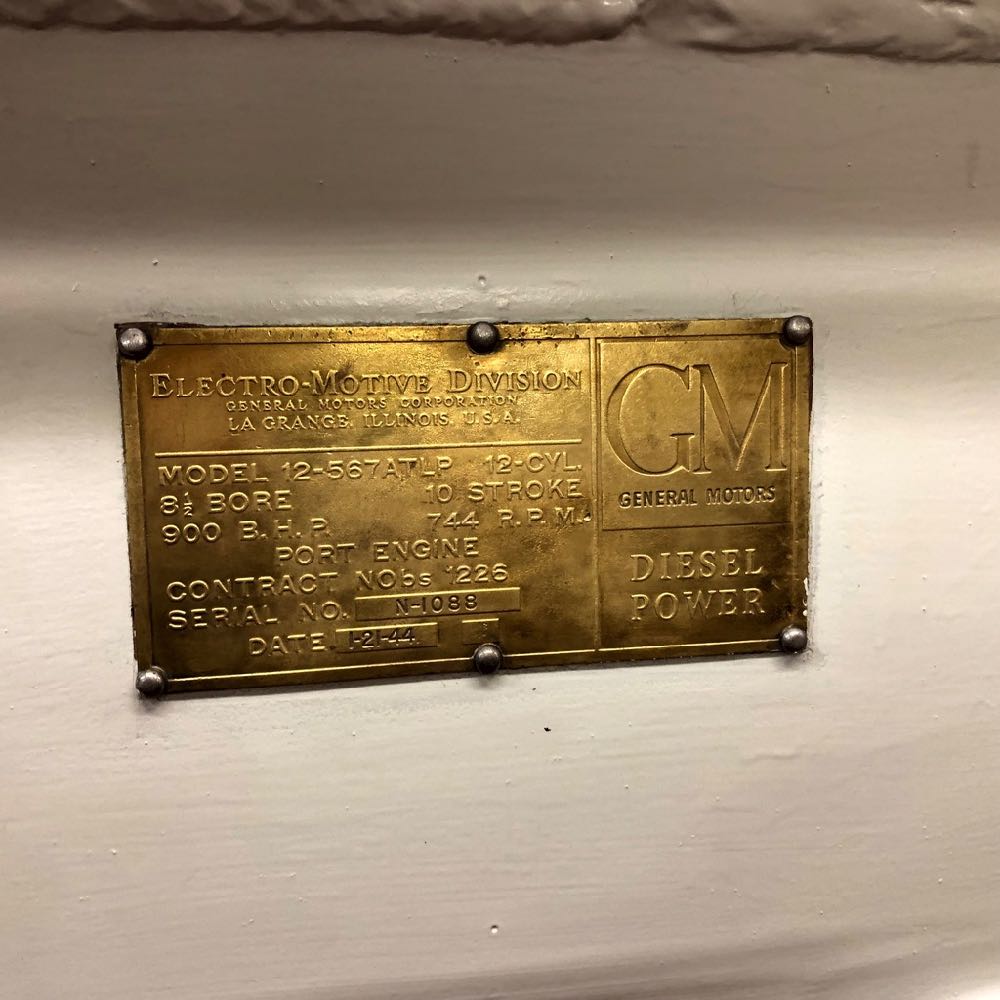
The engines are the white things pictured behind the telegraph and on which was stamped the brass plate also photographed here. The diesel engines were made by the Electro Motive Division of GM and replaced this ship’s original steam propulsion system. EMD is most famous for its pioneering and legendary freight locomotives, which led the way in “dieselization” after WWII in converting many railroads from their romantic but much less efficient and much dirtier steam power. But the company also made marine diesel engines as evidenced here and these served this ship for another three decades or so — just think about that. There also are still EMD GP30 locomotives from the 1960s still in service in some places in the U.S., according to what I read in this month’s Trains magazine.


Fascinating, Phil––what terrific vintage kit! Thanks for sharing those wonderful photos and descriptions with us. 

Yes, I can imagine SWLing would have been a vital entertainment outlet for those on working ships in the Great Lakes. No doubt they had access to a number of strong mediumwave stations on the coast, as well. What a way to while away the off-hours.

Click here to follow @PhilEwing on Twitter.

Photos from the 2019 Berryville Hamfest

Many thanks to SWLing Post contributor, Dan Robinson, who shares this excellent photo gallery from the Berryville Hamfest. Dan notes:

You will notice one photo in particular — of a rare Skanti R-8001 and a Telfunken E1500.

The Skanti, which went for only $600, is now comfortably sitting in my radio shack!

Wow! What an impressive collection of radios at this flea market. Looks like Berryville is worth the trip for anyone with an interest in vintage radio.

Thank you so much for sharing these pics, Dan!


Do you enjoy the SWLing Post?

Please consider supporting us via Patreon or our Coffee Fund!

Your support makes articles like this one possible. Thank you!

1963 Film features the Rugby Radio Station

(Source: Southgate ARC)

Rugby was not a conventional radio station but a communications hub transmitting radio telephony, including the now obsolete telex service that later gave way to fax

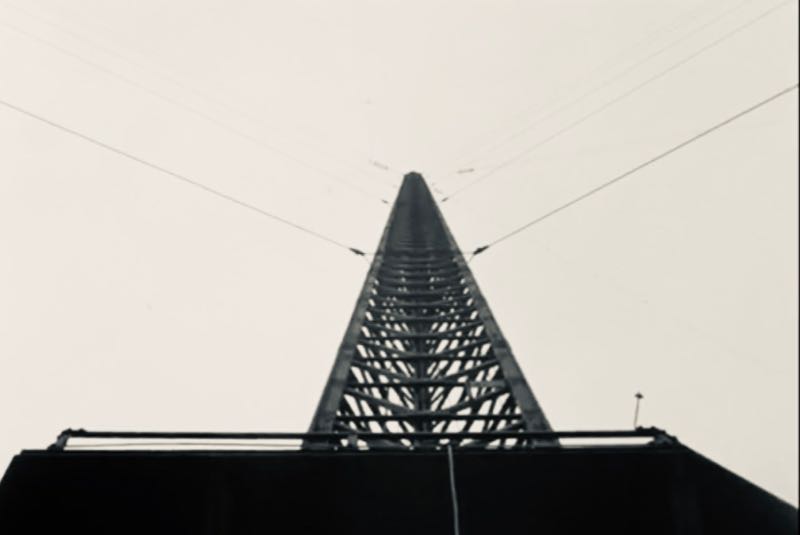
The 800 ft high masts had been a landmark since the 1920s and, as reporter David Rees finds out, maintaining them is tough, particularly during the coldest winter of the twentieth century. As one rigger says, “The wind doesn’t have time to go round you, it goes straight through you.”

Eighty years of broadcasting history came to an end when Rugby Radio Station was closed in 2007.

Watch the 1963 Rugby Radio Station at
https://player.bfi.org.uk/free/film/watch-rugby-radio-station-1963-online

Rugby Radio Station
https://en.wikipedia.org/wiki/Rugby_Radio_Station

Post Readers: Please note that this film is a region-blocked video and only viewable in the UK. If one were to know such things, a way to circumvent this would be to watch it using a VPN located in the UK. 🙂

You might also read this Rugby Radio book review by Dave Porter found in our archives.

A photo tour of the 2019 WCARS hamfest

Yesterday, I attended the WCARS hamfest in Waynesville, North Carolina, with my friend Sébastien (VA2SLW) who is currently on vacation in the area.

The WCARS hamfest is a smaller regional hamfest, but it attracts a lot of folks from the mountain regions of north Georgia, Tennessee, South Carolina, North Carolina, and beyond.

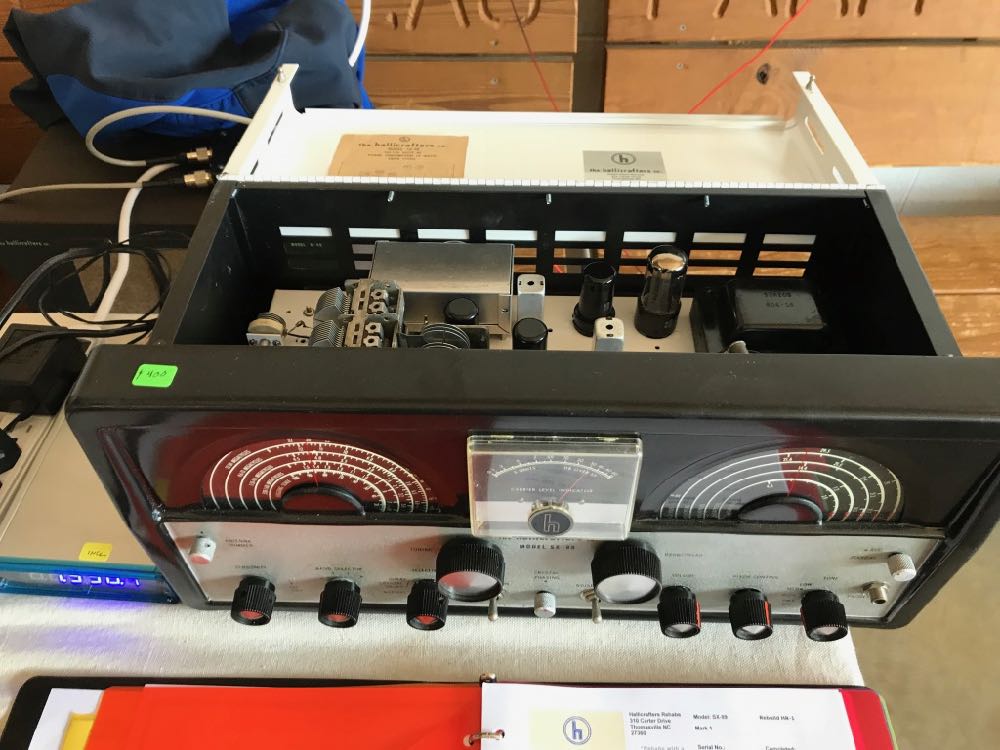
The WCARS hamfest flea market always has quite a variety of radios, including a number of great vintage models. I’ve been very lucky in the past finding excellent deals, too. This year, I (reluctantly) passed up a few deals knowing I’m also attending the Huntsville Hamfest in August and the Shelby Hamfest in September.

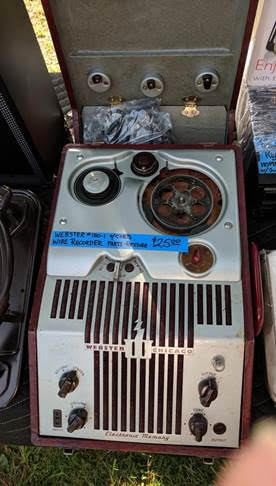
Below, you’ll find a selection of photos from the hamfest. Note that you can click on the image to enlarge it and I attempted to include price tags when possible:


Do you enjoy the SWLing Post?

Please consider supporting us via Patreon or our Coffee Fund!

Your support makes articles like this one possible. Thank you!

Bill’s NJARC swap meet deal and some tailgate photos

Many thanks to SWLing Post contributor, Bill Hemphill (WD9EQD), who writes:

This morning (Saturday July 20), I went to the New Jersey Antique Radio Club (NJARC) Summer Swap Meet.

They typically hold three Swap Meets each year at various locations This time it was at the InfoAge Science

History Learning Center in Wall, NJ. The InfoAge Center has many exhibits including:

  • InfoAge Space Exploration Center
  • World War II Radar
  • Marconi Wireless Room
  • Radio and Television Museum
  • Vintage Computers
  • plus much more

Check out this link.

If you are ever in the area, I highly recommend a visit to it.

The Swap Meet was held outdoors and it was a hot humid morning – 80 degrees at 6 am with 90 percent humidity. By 9 am it was 90 degrees. But it was worth the hour trip.

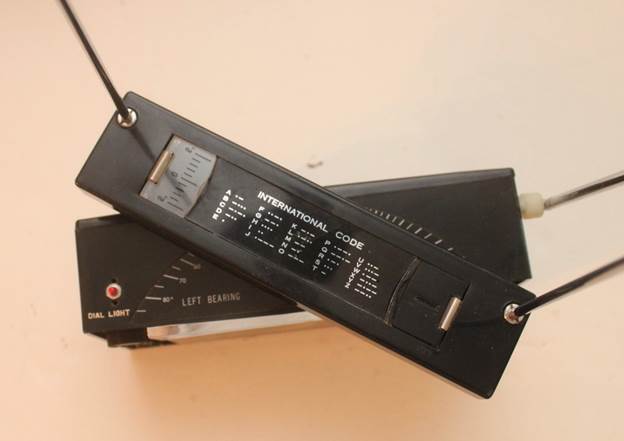
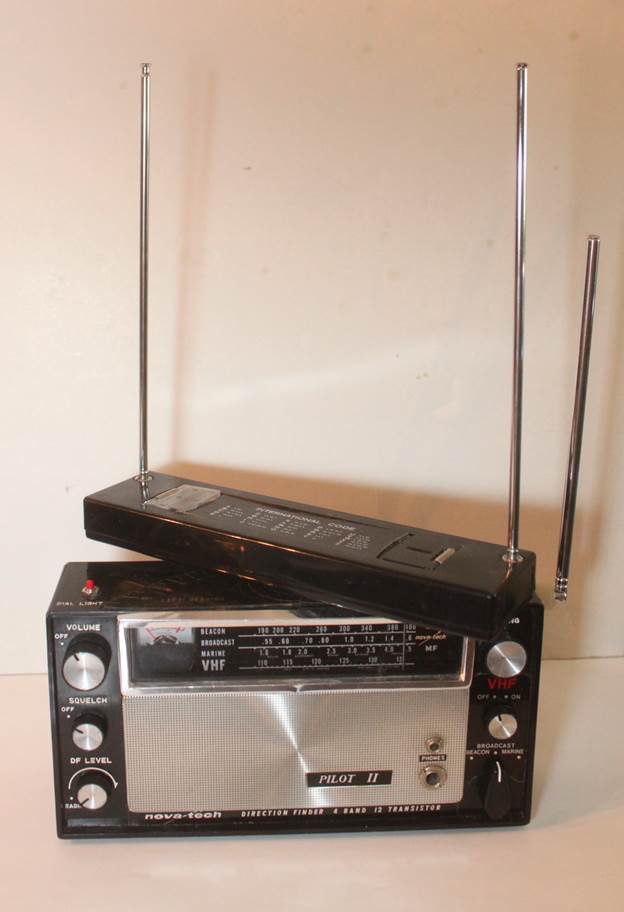
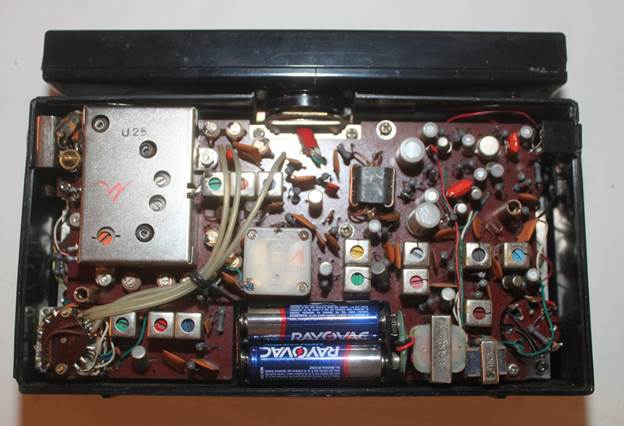
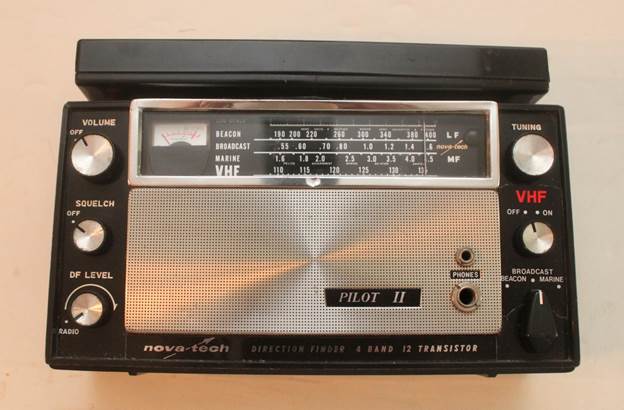
I acquired one new radio – the Nova-Tech Pilot II Direction Finding 4 Band transistor radio. It’s in great condition and is working. It’s an interesting radio.

The four bands are Beacon (190-400 kHz), Broadcast (550-1600 kHz), Marine (1.6-4.5 MHz) and VHF (108-136 MHz).

There is a rotatable antenna on the top that is used to get your bearing. The top of the radio has the Bearing in degrees. It includes Squelch and DF Level controls; both can be switched off. The DF Level is the RF Gain and I read somewhere that when it is activated the AGC is switched off.

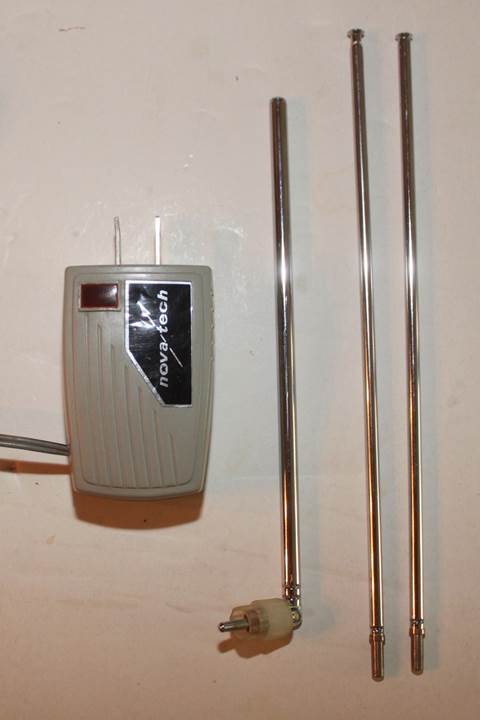
I was very fortunate in that the radio came with the three telescoping antennas – all in perfect condition. It also included the original AC Power Adapter.

All for only $25. A great bargain.

The radio seems very sensitive on the Broadcast Band.

I tuned it to my standard test weak station – WALK, 1370, in Patchogue, NY. This station is a 500 watt repeater station to WHLI, 1100 in Hamstead, NY. With most of my radios, I can barely hear a station in the noise. The exception is the Panasonic RF-2200 which can pick it up the best. The Pilot II could pick up a readable signal of WALK.

Very impressive.

Below are some photos of the radio.

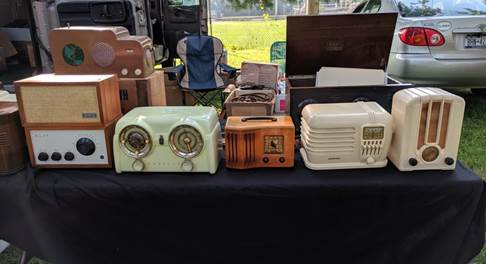
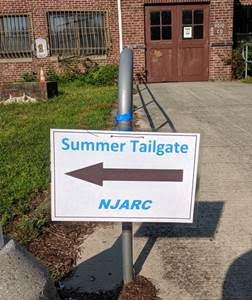
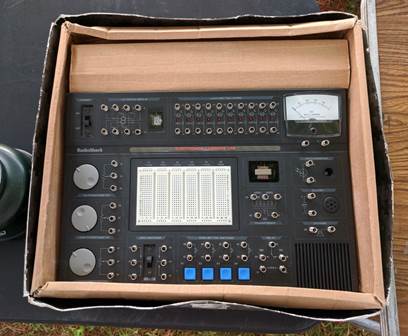
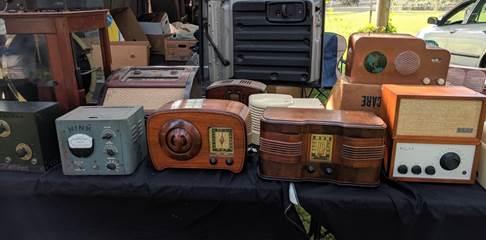
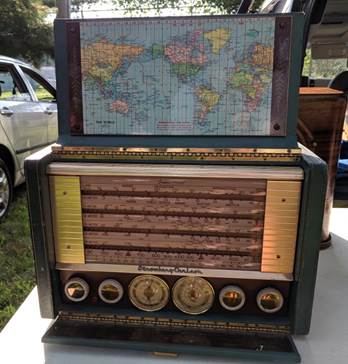
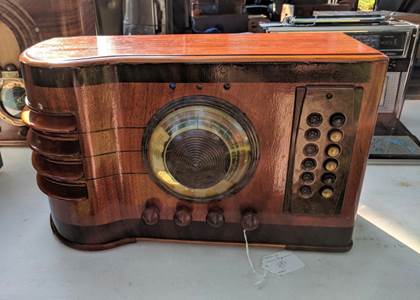
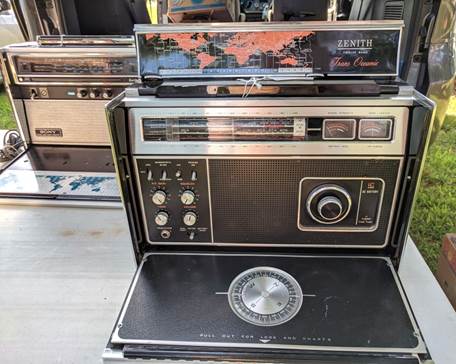
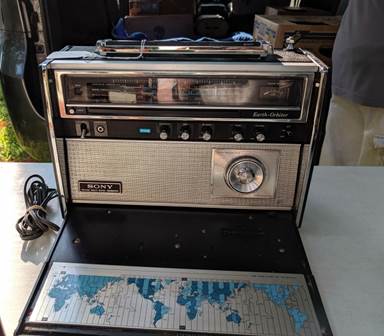
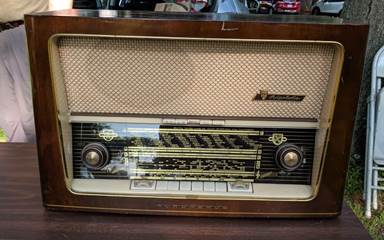
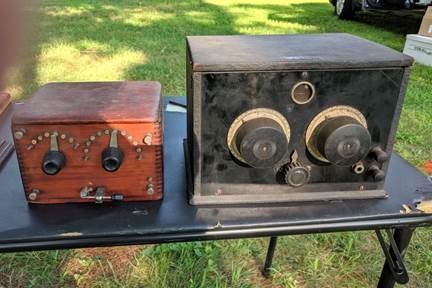
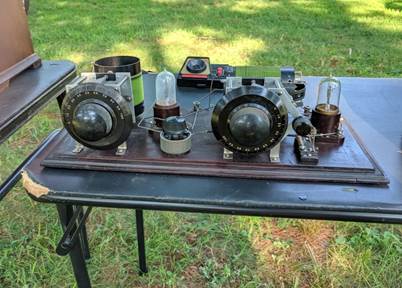
Bill also included the following photos from the New Jersey Antique Radio Club (NJARC) swap meet:

Thanks for sharing this, Bill! No doubt, you snagged a fantastic deal on the Nova Tech Pilot II. My dear friend Michael Pool (who passed away earlier this year) acquired one and loved it. Here’s a link to his guest post about this cool DF receiver.

Thanks for sharing the photos and links to the NJARC swap meet. Looks like an event I’d certainly love to attend!

Post readers: Have you attended any swap meets recently?  Any good finds?  Please comment!


Do you enjoy the SWLing Post?

Please consider supporting us via Patreon or our Coffee Fund!

Your support makes articles like this one possible. Thank you!