Category Archives: Radio History

Radio Waves: Arecibo Failure Caught on Video, Heathkit Employee Reminisces, Radio at 100 Series, and FCC to Require Email on Applications

Arecibo Observatory’s 305-meter telescope in November 2020 (Credit: University of Central Florida)

Radio Waves:  Stories Making Waves in the World of Radio

Because I keep my ear to the waves, as well as receive many tips from others who do the same, I find myself privy to radio-related stories that might interest SWLing Post readers.  To that end: Welcome to the SWLing Post’s Radio Waves, a collection of links to interesting stories making waves in the world of radio. Enjoy!

Many thanks to SWLing Post contributors Ned Wharton, Pete Eaton, Zack Schindler, and Dave Zantow for the following tips:


NSF releases footage from the moment Arecibo’s cables failed (ARS Technica)

Today, the National Science Foundation released video taken at the moment the Arecibo Radio Observatory’s cables failed, allowing its massive instrument platform to crash into the dish below. In describing the videos, the NSF also talked a bit about the monitoring program that had put the cameras in place, ideas it had been pursuing for stabilizing the structure pre-collapse, and prospects for building something new at the site.

A quick recap of the collapse: the Arecibo dish was designed to reflect incoming radio radiation to collectors that hung from a massive, 900-ton instrument package that was suspended above it. The suspension system was supported by three reinforced concrete towers that held cables that were anchored farther from the dish, looped over the towers, and then continued on to the platform itself. Failure of these cables eventually led to the platform dropping into the dish below it.

[…]The video of that collapse comes from a monitoring system put in place in the wake of the cable failures. Due to the danger of further cable breaks, the NSF had instituted no-go zones around each of the three towers that supported the cables. With no personnel allowed to get close enough to inspect the cables, the staff started monitoring them using daily drone flights, one of which was in progress during the collapse. In addition, a video camera was installed on top of the visitor’s center, which had a clear view of the instrument platform and one of the support towers.

Continue reading full article.

Heathkit: An Employee’s Look Back (Electronic Design)

Lessons of a successful electronic business—an interview with Chas Gilmore, former Heath executive.

For those of you who do not know or remember, Heath Company was the largest kit company in the world. Heath designed and put practically every type of electronic product into kit form. Its products, called Heathkits, were exceptionally popular and many are still in use today.

Over the years, Electronic Design has published many Heathkit-related articles and blogs. Recently, I had a chance to talk with Chas Gilmore, who was a Heath executive. For those of you who fondly remember Heathkit and miss its products, here’s a look back at this amazing company and the lessons it offers.

Chas, what was your affiliation with Heath?

A recent physics graduate, I joined Heath in 1966 as an engineer in the Scientific Instruments department. This was a new group designing laboratory instruments supporting the Malmstadt/Enke, Electronics for Scientists program. The kit business was making great strides.

The audio department was about to introduce the AR-15 FM receiver/amplifier. It had rave reviews, putting Heath in the top tier of the Audio/HiFi market. At the same time, the Ham (amateur radio) department was updating the phenomenally successful SB-line of an HF SSB receiver, transmitter, and transceiver, and modernizing the popular $99 single-band SSB transceiver line[]

Radio at 100 & Roots of Radio Series (Radio World)

Zack writes:

Found this interesting series at Radioworld called “Radio at 100”. It is 29 different articles about the history of broadcasting in the USA. A lot of your readers might enjoy these;
https://www.radioworld.com/tag/radio-at-100

Another great series at Radioworld that your readers might be interested in “Roots of Radio”:

https://www.radioworld.com/columns-and-views/roots-of-radio

ARLB038 FCC to Require Email Addresses on Applications (ARRL Bulletin 38 ARLB038)

Amateur radio licensees and candidates will have to provide the FCC with an email address on applications, effective sometime in mid-2021.

If no email address is included, the FCC may dismiss the application as defective.

The FCC is fully transitioning to electronic correspondence and will no longer print or provide wireless licensees with hard-copy authorizations or registrations by mail.

A Report and Order (R&O) on “Completing the Transition to Electronic Filing, Licenses and Authorizations, and Correspondence in the Wireless Radio Services” in WT Docket 19-212 was adopted on September 16. The new rules will go into effect 6 months after publication in the Federal Register, which hasn’t happened yet, but the FCC is already strongly encouraging applicants to provide an email address.

When an email address is provided, licensees will receive an official electronic copy of their licenses when the application is granted.

The Report and Order can be found in PDF format online at, https://www.fcc.gov/document/fcc-adopts-electronic-licensing-report-and-order

Under Section 97.21 of the new rules, a person holding a valid amateur station license “must apply to the FCC for a modification of the license grant as necessary to show the correct mailing and email address, licensee name, club name, license trustee name, or license
custodian name.” For a club or military recreation station license, the application must be presented in document form to a club station call sign administrator who must submit the information to the FCC in an electronic batch file.

Under new Section 97.23, each license will have to show the grantee’s correct name, mailing address, and email address. “The email address must be an address where the grantee can receive electronic correspondence,” the amended rule will state. “Revocation of the station license or suspension of the operator license may result when correspondence from the FCC is returned as undeliverable because the grantee failed to provide the correct email address.”
NNNN
/EX[]


Do you enjoy the SWLing Post?

Please consider supporting us via Patreon or our Coffee Fund!

Your support makes articles like this one possible. Thank you!

David shares a recording of the RTE longwave interval signal

Many thanks to SWLing Post contributor, David Shannon, who writes:

Hi Thomas

A little treat for my fellow readers of your blog (is that the right word?). The RTE interval signal, a rendition of O’Donnell Abú (“O’Donnell Forever”), that is played at 0529 daily, apart from the weekend when it’s played at 0629 (even interval signals need a lie in) and received on longwave here in Scotland.

I know that longwave broadcasting is a very European thing with the exception of the likes of Mongolia (holy grail stuff for me) but it’s where my fascination for the bands started way back in 1978/9.

Sláinte mhaith gach duine
(Irish Gaelic for good health everyone)

That’s a beautiful interval signal, David. Thank you so much for sharing it with your fellow Post readers! There are few things in this world that make me feel more nostalgic than an off-air recording of an interval signal. Go Raibh Maith Agat!

“QSL: How I Traveled the World and Never Left Home” by Ronald W. Kenyon

A few weeks ago, I was contacted by author Ronald W. Kenyon who has written non-fiction books covering a variety of subjects, but primarily collections of essays and albums of photography.

He was very proud to announce that his latest book, QSL: How I Traveled the World and Never Left Home, focuses on his pursuit of DX during his youth.

Kenyon is a radio archivist at heart.  He has carefully preserved QSL cards that he received between 1956 and 1961–a time period many of us consider the zenith of international broadcasting and DXing.

From Ronald W. Kenyon’s collection

Kenyon’s book presents color reproductions of over 100 vintage QSL cards—most displaying both front and back—issued by 89 shortwave stations in 75 countries. For the uninitiated, he includes an introduction that acquaints with shortwave radio listening, submitting listener reports, and obtaining QSL cards. Radio enthusiasts will be familiar with these topics, but this addition is an important one since we often forget that we’ve a niche pursuit and for many of his readers, this will be their first introduction.

From Ronald W. Kenyon’s collection

Kenyon sent me a pre-sales sample of his book. It’s what I’d call a “coffee table” paperback. The format is 8.5 x 8.5 inches which gives each QSL image proper page space to be presented. The color reproduction and print in this publication is excellent.

I’ve thoroughly enjoyed taking in Kenyon’s book at a very leisurely pace. It’s divided into three main sections:

  • Section One of his book is a gallery of 107 vintage QSL cards from radio stations in 78 countries.
  • Section Two features SWL and ham radio cards.
  • Section Three features seasonal greeting cards sent to listeners by radio broadcasters from nine countries.

There’s even an appendix featuring, “A Letter from Antarctica,” which recounts how Kenyon was linked to a British meteorologist at a base in Antarctica via a radio station in Montevideo, Uruguay of all places. A fabulous example of how radio–especially in the late 50s and early 60s–was a fabulous medium for connecting listeners across vast distances.

I’m a nostalgic fellow–especially during the Thanksgiving and Holiday season. I’ll admit: this wonderful, simple bit of radio nostalgia is just what the doctor ordered as we celebrate the season. We all can relate to and enjoy Kenyon’s gallery of radio nostalgia and history. Indeed, my hope is that his book will encourage others to document their radio journey as well.

Being a limited print, full-color, 150 page book, the price will be $35 US. However, the author has offered 10% off his book if ordered before December 31, 2020. That will lower the price to $31.50 US via Amazon.com or £23.95 via Amazon.co.uk.

If you enjoy browsing QSL cards like I do, you’ll love QSL: How I Traveled the World and Never Left Home. Certainly, a fabulous gift idea for the radio enthusiast in your world.

Amazon purchase links

(Please note that some of these are affiliate links that also support the SWLing Post)

Note that this book will appear on other regional Amazon sites over time. Simply search Amazon for “QSL: How I Traveled the World and Never Left Home” or the author, Ronald W. Kenyon.

Radio Waves: Guardians of Early Recordings, VOA Firewall, New DRM-Based HF Station, and Breakfast on BBC Essex Features Amateur Radio

Radio Waves:  Stories Making Waves in the World of Radio

Because I keep my ear to the waves, as well as receive many tips from others who do the same, I find myself privy to radio-related stories that might interest SWLing Post readers.  To that end: Welcome to the SWLing Post’s Radio Waves, a collection of links to interesting stories making waves in the world of radio. Enjoy!

Many thanks to SWLing Post contributors Kim Elliott, Benn Kobb, and the Southgate ARC for the following tips:


Meet the guardians of the world’s earliest musical recordings (LA Times)

The voice seeps in as if from another dimension, hissy and distant, like an AM radio broadcaster transmitting through late-night static.

“‘The Ambassador March’ by Brown’s Orche-streee for the Los Angeles Phonograph Company of Los Angeles, California,” a man announces with a gentlemanly accent. After a moment’s scratchy pause, a violinist opens with a melody, and a small orchestra jumps in. Led by a Long Beach-based bandleader named E.R. Brown, the song dances along for two minutes.

The fidelity is primitive by today’s high-definition audio standards, a quaint toss-away. But “The Ambassador March” and the Coke-can-sized wax cylinder upon which it was etched into permanence in the late 1800s open a portal to another era.

That wax cylinder and others like it — rescued from rural estate sales and dusty attics — have survived earthquakes, heat waves, mold and indifference. They feature Mexican folk songs; military band marches; minstrelsy songs of the kind that preceded American blues, folk and country music; and the voices of former Lincoln cabinet members, Southern senators, popes, preachers and comedians. Their survival is emblematic of a revolution that allowed sound to be freed from its origins. Once untethered, the world would be forever changed.[]

US international broadcasting: Rebuilding the firewall in the new administration (The Hill)

by Kim Andrew Elliott

President-elect Joe Biden, who as a senator had a key interest in U.S. international broadcasting, is looking at its future.

He named Richard Stengel, former undersecretary of state for public diplomacy, to head the transition team for the U.S. Agency for Global Media (USAGM). Under USAGM are the Voice of America, Radio Free Europe/Radio Liberty Inc., Radio Free Asia Inc., Office of Cuba Broadcast (Radio/TV Martí to Cuba) and Middle East Broadcasting Networks Inc. (the Arabic-language Alhurra TV and Radio Sawa).

With government officials under President Trump instructed not to cooperate with Biden’s teams, the transition for the time being will have to be done from afar. The Trump-appointed USAGM CEO Michael Pack, whose leadership has fomented several controversies since he was installed in June, might decide to be a benign, if uncooperative, caretaker until the new management comes in. Or he could impose personnel changes and alterations in content that could diminish the credibility of the USAGM entities, a situation that could take years to repair.

During his campaign, Biden promised to fire Pack. Pack might try to serve out the three-year term stipulated in the legislation that replaced the bipartisan Broadcasting Board of Governors (BBG) with a politically appointed CEO (Pack being the first). If such an attempt ends up in court, a June Supreme Court decision overruling the fixed term of the director of the Consumer Finance Protection Bureau, a victory for the Trump administration, could, ironically, be the undoing of any plans by Pack to stay on at USAGM.

Pack has already left his mark by rescinding the firewall “rule” published in June by the outgoing BBG. The rule, however, was not an act of Congress or a presidential directive. It was simply language placed in the Federal Register “to codify and memorialize definitions and practices associated with the firewall.” On such shallow roots, this tree was easy to fall. In October, Pack issued a repeal, which waved away the firewall rule as readily as it was instituted.[]

A New HF Station that’s Similar, but Different (DRMNA.info)

On October 21, 2020, DPA Mac LLC filed a FCC license application for a new, DRM-based International Broadcast Station to be located in Maple Park, IL. The principal is San Francisco entrepreneur Seth Kenvin and its technical consultant is Tamir Ostfeld of Raft Technologies, an Israeli developer of low-latency HF systems for so-called algorithmic trading.

No station devoted to algorithmic trading has ever been authorized for regular commercial operation in the U.S., as there is no formal radio service or spectrum allocation for that purpose. Several such stations have been licensed in the Experimental Radio Service (ERS), which is ostensibly for scientific studies only.

If the FCC licenses DPA Mac, it will be the first such station to make the transition from the ERS to regular, non-experimental licensing. This station would be the successor to experimental station WI2XXG. Other than the license document, the FCC has withheld most of WI2XXG’s records from public disclosure since it was first licensed in 2017.

DPA Mac is similar to other DRM stations on which we previously reported: WIPE in Alpine, NJ, which is built and is waiting on its FCC license; and WPBC, proposed for Batavia, IL. With regard to their use for non-broadcast, private data transmissions, those stations made general and non-descriptive representations to the FCC. On the other hand, DPA Mac’s license application is fairly transparent. The station aims to transmit “investment data from points within the United States to locations outside the United States carried over a channel immediately adjacent to the HF broadcasts…a low-power, low-latency digital data transmission service provided to private investors, including small- and medium-sized firms.” [Continue reading…]

Amateur radio on BBC Radio Essex

On Tuesday, November 24, CB and amateur radio featured in Sonia Watson’s popular Breakfast show on BBC Radio Essex

Among those interviewed was the Chair of Essex Ham, Pete M0PSX, who talked about the resurgence of interest in amateur radio.

Listen to the interview at 1:38:20 in this recording
https://www.bbc.co.uk/sounds/play/p08xv7dv

You can find out more about amateur radio and the free Essex Ham Foundation Online training course at
https://www.essexham.co.uk/train/foundation-online/

You can follow Essex Ham on Twitter at
https://twitter.com/EssexHam


Do you enjoy the SWLing Post?

Please consider supporting us via Patreon or our Coffee Fund!

Your support makes articles like this one possible. Thank you!
1979 ANARC Convention live recording featuring keynote by Rudy Espinal of Radio Clarin

Shortwave Radio Audio Archive contributor, Tom Gavaras, shares some of the most amazing off-air, studio, and personal recordings our archive.

Recently, he submitted a very unique recording. Tom notes:

Rudy Espinal of Radio Clarin (Dominican Republic) keynote speech at 1979 Association of North American Radio Clubs (ANARC) convention held in Minneapolis, Minnesota. Convention took place in June 1979.

In this recording, you’ll hear a number of familiar names (including an early shout-out to our friend Kim Elliott).

I was in elementary school at the time of this convention, so it’s amazing bit of audio time travel for me.

Do you recognize any names in this recording? Do you remember Radio Clarin? Did you attend the 1979 ANARC Convention?  Inquiring minds want to know! Please comment!

Radio Waves: 100 Years of Radio, Maritime Radio Communications, AU2JCB Special Event Station, and 20th Anniversary of Ham Radio on the ISS

Radio Waves:  Stories Making Waves in the World of Radio

Because I keep my ear to the waves, as well as receive many tips from others who do the same, I find myself privy to radio-related stories that might interest SWLing Post readers.  To that end: Welcome to the SWLing Post’s Radio Waves, a collection of links to interesting stories making waves in the world of radio. Enjoy!

Many thanks to SWLing Post contributors Dennis Dura, Dan Robinson, Datta Deogaonkar, and the Southgate ARC for the following tips:


Commercial Radio Is 100 Years Old. Can It Survive? (Inside Hook)

Four industry veterans weigh in on how they’d “fix” a medium that remains popular but lacks innovation

The first broadcast from a commercial radio station took place on November 2nd, 1920. Here’s how I imagine listeners responded to the debut of KDKA-AM in Pittsburgh:

Nov. 2: This is amazing! I can hear someone from hundreds of miles away talking through this device! The world will never be the same!

Nov. 3: They’re playing “Wang Wang Blues” again already?

The joke here is twofold: First, there’s a popular song called “Wang Wang Blues” from 1920. And second, by day two, KDKA had already developed the repetitive play-the-hits format that would become one of its hallmarks for the following century.

The first commercial broadcast actually related to the election — it was the idea of a radio manufacturer, Westinghouse, to offer up programming to go along with their newfangled tech (a century later, Apple and Sonos thought exactly the same thing). The first commercial broadcast featured updated results of the Harding-Cox presidential race “before [people] read about it in the newspaper,” as this PBS retrospective notes.

One hundred years later, commercial radio still holds a place in American daily life. The average American still listens to about 106 minutes of radio per day (with the coronavirus and its attendant lockdowns projected to increase that number), and there are more than 15,000 stations in this country alone.

We’re certainly listening to radio differently: according to Statista, 57% of Americans do so online, whether by streaming, downloads, satellite or digital radio. If you asked me how I listen to radio, I’d offer up services like Apple Music 1, Sonos Radio and Dash Radio; podcast downloads from ESPN Radio; online streaming of overseas entities like BBC 1 and Triple J or any occasional college station like WSOU; NPR stations for news and commentary (and music if it’s KCRW); and for new music, a DJ-free experience via Spotify’s New Release Radar playlist. In other words, while audio-only, passive-listening medium has survived and thrived for a century, which is astounding and worthy of celebration, the need for traditional, turn-the-dial “commercial” radio is decidedly on the wane.[]

Radio Officers: our past is our future, our way is to be Radiomen

Many thanks to Dan Robinson who shares this excellent site devoted to maritime communication officers: https://trafficlist.altervista.org/

Special event station commemorating Aacharya Jagadish Chandra Bose

Sir, I want to mention with great pride that I am (VU2DSI) celebrating the birthdate 30 November of Aacharya Jagadish Chandra Bose- every year with a special callsign- AU2JCB for the last 15 years. He is well known as the “Father of Wireless Communication” in the world of science.

AU2JCB will operate from 20 Nov 2020 to 15 DEC 2020.

The Details of operation

Period: 20 NOV 2020 to 15 DEC 2020

Frequencies: 10 M– 28545, 28510,28490. 21 M—21235, 21310, 21350. 20M—14210, 14250, 14310. 40 M—7040, 7150. 80 M — 3710. IN FM MODE—– 6M –50800, 51500. 10 M—29700.

QSL— Direct to VU2DSI, “SURABHI” MEHERABAD. AHMEDNAGAR.414006. INDIA.

This year VU2EVU & VU2XPN will operate with AU3JCB & VU5JCB call-signs respectively.

From Kolkatta, VU3ZHA & VU3MZE will operate with AT2JCB & AU8JCB call-signs respectively. Ten more stations will operate from Kolkatta with JCB in the prefix.

Aacharya J.C.BOSE:

https://www.cv.nrao.edu/~demerson/bose/bose.htm

http://www.qsl.net/vu2msy/JCBOSE.htm

http://au9jcb.angelfire.com for info about Aacharya J.C.BOSE & his work.

https://ethw.org/Jagadish_Chandra_Bose

Regards, HAPPY DEEPAWALI to & all.

DATTA

VU2DSI (AU2JCB).

20th anniversary of first ham radio operation from ISS (Southgate ARC)

On November 13, 2000, the ISS Expedition-1 crew turned on the ARISS Ericsson radio for the first time and completed several contacts with ARISS ground stations around the world to validate the radio communications system

These inaugural contacts launched an incredible two-decade operations journey on ISS, enabling ARISS to inspire, engage and educate our next generation of explorers and provide the ham radio community a platform for lifelong learning and experimentation.

In celebration of the ISS 20th anniversary, ARISS was part of an ISS Research and Development Conference Panel session entitled “20 years of STEM Experiments on the ISS.”  The video below, developed for this panel session, describes our program, celebrates our 20th anniversary, conveys some key lessons learned over the past 20 years and describes the ARISS team’s vision for the future.  Enjoy watching!

20 years of continuous operations is a phenomenal accomplishment.  But what makes it even more extraordinary is that ARISS has achieved this through hundreds of volunteers that are passionate in “paying it forward” to our youth and ham radio community.  On behalf of the ARISS International team, I would like to express our heartfelt thanks to every volunteer that has made ARISS such an amazing success over the past 20 years. Your passion, drive, creativity and spirit made it happen!!

Congratulations ARISS team!!!

Frank H. Bauer, KA3HDO
ARISS International Chair

Watch ARISS 20th Anniversary


Do you enjoy the SWLing Post?

Please consider supporting us via Patreon or our Coffee Fund!

Your support makes articles like this one possible. Thank you!
Links for a deep dive into BBC radio history

Many thanks to SWLing Post contributor, Kris Partridge, who writes:

Last night I sent the link to the SWLing Droitwch item to a former colleague. He replied this morning, reply below, and includes a couple of useful links. I’m very sure the SWLing Post knows about MB21.

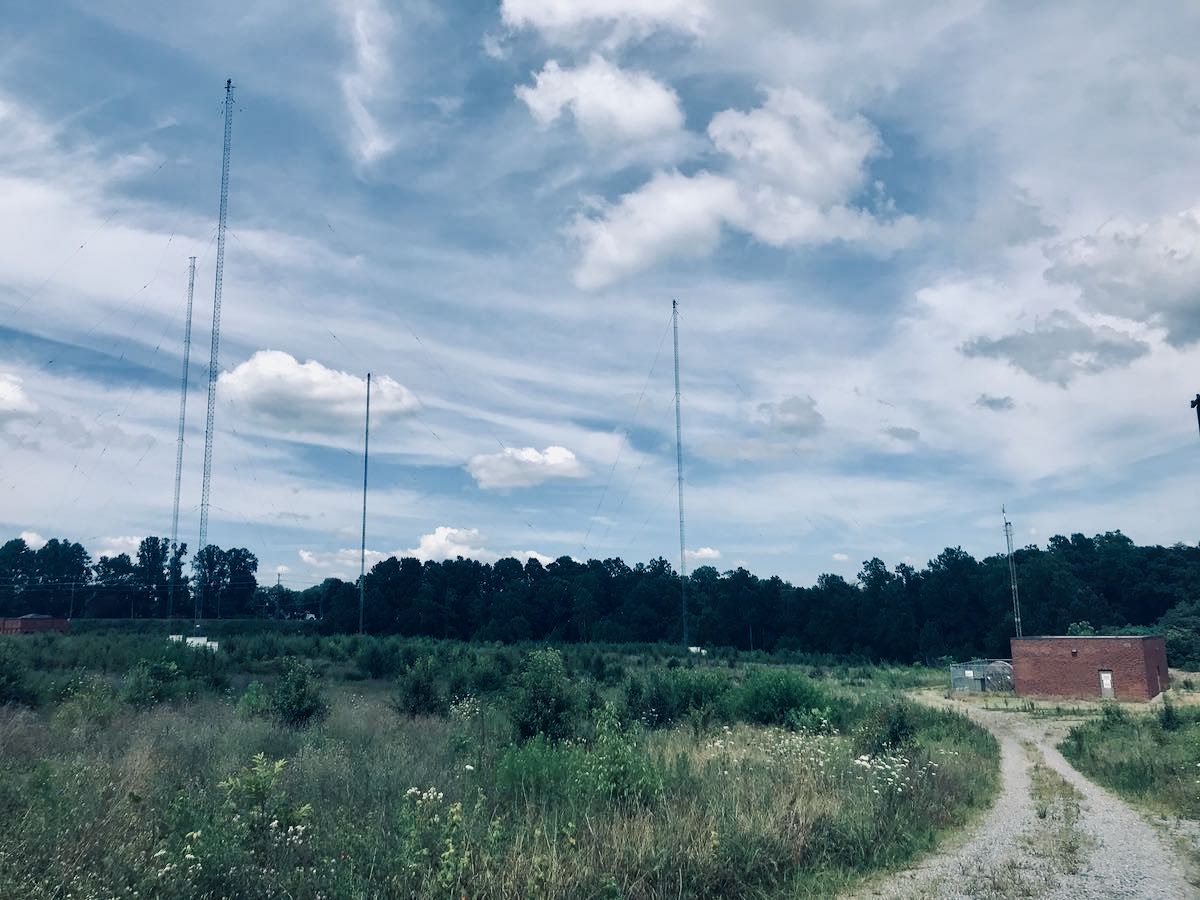
Thinking that maybe the item on Crowbourgh will be of interest to SWLing readers. It contains the ‘magic’ word “Aspidistra” ! Lot of SW history there.

[From my former colleague:]

You’re probably aware of the “Tricks of the Trade” articles that Dave Porter has also published. http://bbceng.info/Technical%20Reviews/tott/tott.htm

Dave was also able to provide some useful contacts for my mb21 colleague Martin Watkins who was compiling a page about the history of Crowborough. http://tx.mb21.co.uk/gallery/gallerypage.php?txid=2495

Thank you so much for the link to Dave Porter’s “Tricks of the Trade” and MB21! What a wonderful deep dive into radio history!