Category Archives: Radio History

Shortwave Radio Recordings: A Tale of Two Cities via Global 24

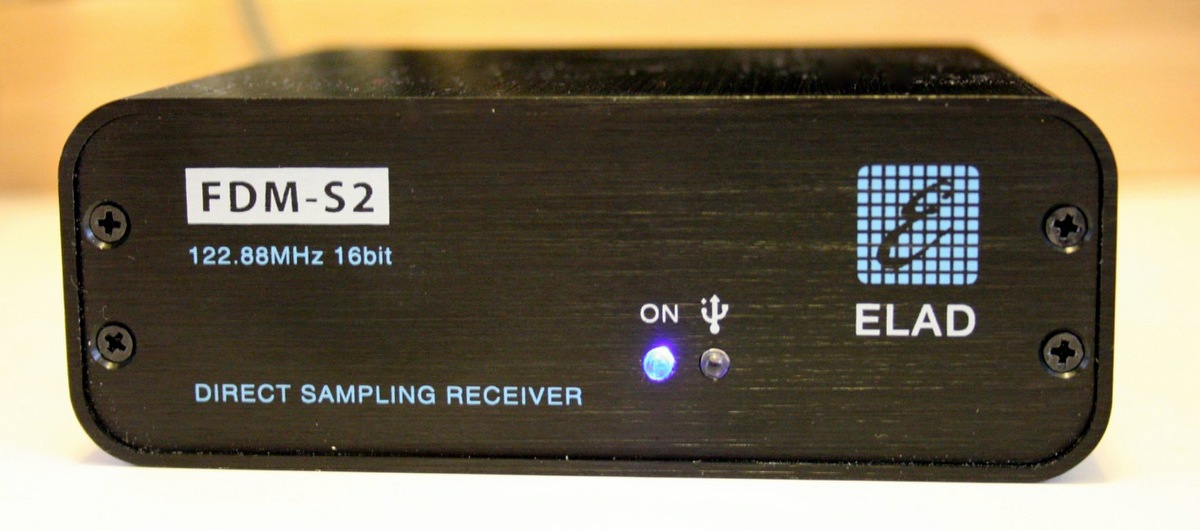
Elad-FDM-S2-FrontPanelTuesday morning, I tuned my WWII era BC-348-Q to Global 24 on 9395 kHz. The signal, via WRMI’s transmitter, was quite strong.
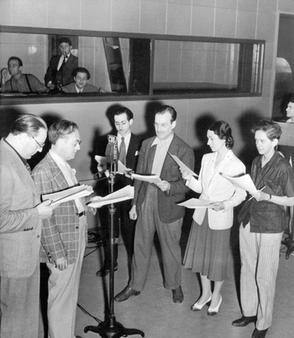
The company rehearses Treasure Island, the second program in The Mercury Theatre on the Air series, presented July 18, 1938 (Source: Wikipedia)

The company rehearses Treasure Island, the second program in The Mercury Theatre on the Air series, presented July 18, 1938 (Source: Wikipedia)

At 2:00 UTC, I heard an announcement that The Mercury Theatre on the Air radio play of A Tale of Two Cities was about to begin.

Not wanting to miss an opportunity to record this timeless Dicken’s classic, I quickly switched over to the Elad FDM-S2 SDR to record the broadcast live. Fortunately, I captured the full broadcast and the fidelity is almost as good as a local station.

For your listening pleasure this New Year’s Day, please enjoy A Tale of Two Cities by The Mercury Theatre on the Air courtesy of Global 24:

Click here to download the recording as an MP3.

Happy New Year, everyone!

Trevor Baylis: a CBE in the New Year Honours list

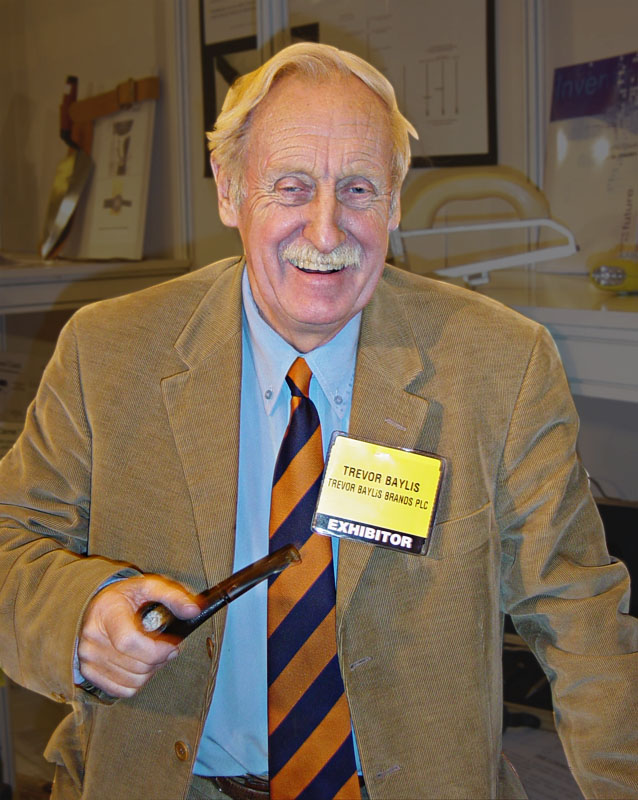
Trevor Baylis (Source: Wikimedia Commons)

Trevor Baylis (Source: Wikimedia Commons)

Inventor of the clockwork radio, Trevor Baylis, has been made a CBE in the New Year Honors list.

Mr. Baylis very much deserves this honor as his inventions have directly and indirectly fueled many self-powered innovations we enjoy today.

I’m honored to have spoken with Mr. Baylis over the years; he’s a brilliant, caring fellow with a sharp mind for solving problems and inventing solutions. Indeed, his advice has been invaluable for my charity, Ears To Our World. [Thank you, Trevor!]

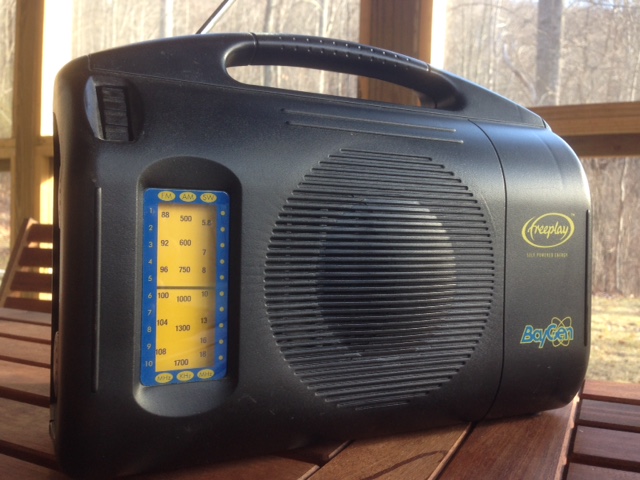
I’m proud to own an original Freeplay/BayGen clockwork radio; somehow, winding up this radio and listening to it play from that released energy never gets old. Indeed, it’s still magic to me.

FreePlay-BayGen-Radio

Read the full news item about Trevor Baylis at the BBC News Technology site:

Inventor Trevor Baylis has been made a CBE in the New Year Honours list.

Best known for creating the Baygen wind-up radio, Mr Baylis was honoured for services to intellectual property.

Throughout his colourful life, which involved a stint as a stuntman, Mr Baylis has spent much of his time inventing or involved with engineering.

Most recently he has campaigned to make the UK a more hospitable place for inventors, and is seeking to help them safeguard their creations.

Continue reading on the BBC website…

Jonathan’s interviews with Gerry Wells

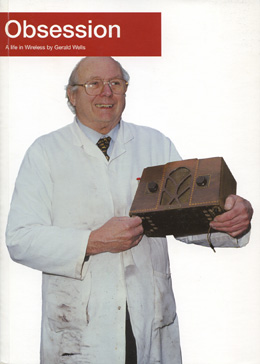
sup-obsessionGerald Wells, the Curator of the British Vintage Wireless & Television Museum passed away on December 22nd, 2014. In our previous post about his passing, I pointed to a brilliant BBC radio documentary which featured Mr. Wells.

Last week, Jonathan Marks posted his own tribute to Gerry Wells on Critical Distance. Jonathan’s post includes two half-hour interviews with Mr. Wells from 1986/1987.

Jonathan has kindly allowed me to embed an excerpt from his post, below, along with his interviews.

Jonathan writes:

“Sad to note that the Curator of the British Vintage Wireless & Television Museum, Gerald Wells, passed away on December 22 2014.

At the end of the 1960’s Gerry gave up his job as an electrical contractor. He could see wireless sets being discarded and felt there was a need for a “Vintage Wireless Museum”. The Museum for Vintage Wireless came into existence in 1974 and was later expanded to include Television.

I made a couple of half hour documentaries with Gerry in 1986/1987, hearing the stories of how radios were built and got their names. Other documentaries focused on his life as a lifelong radio engineer.

I remember visiting the UK’s Vintage Radio Wireless Museum in Dulwich, South London as though it were yesterday. It’s just an ordinary terraced house from the outside, but inside its a celebration of the tube (Valve) radio, especially in the era 1920-1950. What’s more, Gerald Wells, was one of the world’s experts on valves – and had a flood of stories about the famous names I heard second-hand as a child. Did you know that Vidor Batteries were named after the manufacturers two daughters? And what were the better brands of radios.

Enthusiasts in the UK have since made a DVD about Gerald which I can recommend. Part Two of this programme was made in Dulwich one year later is also here on this blogpost. I am sure you could visit Gerald 1000 times and still take away new and different stories about this era of broadcasting. Anyone restoring early iPods? Thought not.”

I encourage you to check out Jonathan’s full post on Critical Distance. I’m always amazed at the number of topics Jonathan has covered in his radio career and, especially, his tenure at Media Networks. You’ll find hundreds of recordings like the ones above at the Media Network Vintage Vault

Treasure trove of radio nostalgia

AmericanRadioHistoryMany thanks to SWLing Post reader, Jarno, who shares a link to AmericanRadioHistory.com where you’ll find hundreds of issues of popular radio magazines from the 20th century. All of the issues are downloadable PDFs, thus can be viewed on any computer, smart phone, or tablet PC.

I find it amazing that many, if not all, of the magazines are even searchable. I could (and probably will) spend hours looking through and downloading these issues; I’ve been reading through the 1930s-era Short Wave Radio magazine this morning, and enjoying it thoroughly.

Many thanks for the tip, Jarno!

Video: 1940s-era holiday treat from Tommy Dorsey (c/o a vintage rig)

Tommy_dorsey_playing_trombone

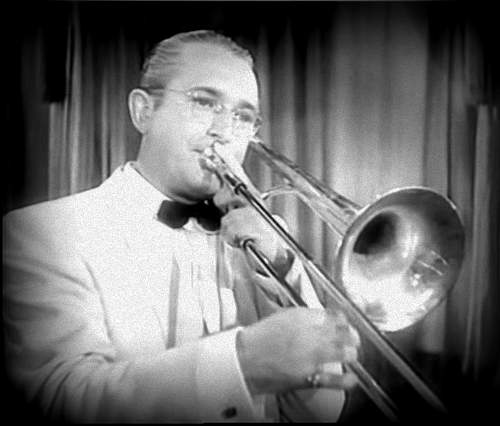
Below you’ll find a short video of my 1945 Scott Marine Radio Model SLR-M playing Tommy Dorsey and his Orchestra’s  jazz-infused version of “March of the Toys” from Victor Herbert’s holiday classic “Babes in Toyland.”

It’s a little holiday time-travel I cooked up for you on this great vintage rig. I’m actually playing the song via an SStran Model AMT3000 AM transmitter I built from a kit (more on that in a future post). The transmitter has been set to 1410 kHz, to which the SLR-M is tuned.

Though the microphone on my Flip Video camera makes the sound in this little recording tinny (you’ll have to trust me that, live, it’s remarkably warm and rich), it does feel a bit like radio time-travel to hear a 1940s-era song played on a 1940s era-radio. This is just how WWII servicemen might have heard this music.

For your holiday enjoyment: “March of the Toys” by Tommy Dorsey and his Orchestra:

Gerry Wells 1929-2014

100818142710_gerry_wells_466x262_nocredit

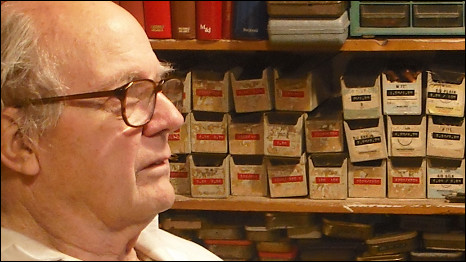
Gerry Wells (1929-2014) Source: BBC World Service

Very sad to learn that Gerry Wells, Curator of the British Vintage Wireless & Television Museum passed away on December 22, 2014.

We featured Gerry Wells in this post from 2011; the included radio documentary is a must-listen.

Many thanks to the Southgate ARC for sharing the information below:

(Source: Southgate ARC)

The Curator of the British Vintage Wireless & Television Museum, Gerald Wells, passed away on December 22

At the end of the 1960’s Gerry gave up his job as an electrical contractor. He could see wireless sets being discarded and felt there was a need for a “Vintage Wireless Museum”.

The Museum for Vintage Wireless came into existence in 1974 and was later expanded to include Television.

1994 Channel 4 TV documentary about Gerry Wells
http://www.southgatearc.org/news/january2011/gerry_wells_video.htm

British Vintage Wireless and Television Museum, West Dulwich, London
http://www.bvwtm.org.uk/


David Goren’s Cold War mix

ShortwaveologyFeeling nostalgic for the Cold War?  David Goren recently posted the following audio mix and description on his excellent website, Shortwaveology.net:

“This mashup of vintage cold war propaganda (mostly) from Radio Moscow’s North American Service was made for The Schizophonic Archive, a part of The Bureau of Memories: Archives and Ephemera, an exhibition curated by the anthropological collective Ethnographic Terminalia in December 2014. Thanks to Kim Andrew Elliot, Jack Widner, Marie Lamb, David Bodington, Jeff Place and Smithsonian Folkways for the recordings. Special thanks to Tom Miller and Ethnographic Terminalia.”

Readers: There are many more audio goodies at Shortwaveolog.net–go check’em out!