Category Archives: Radios

The New York Times: breaking news and antique radios

NYTimes-AntiqueRadios

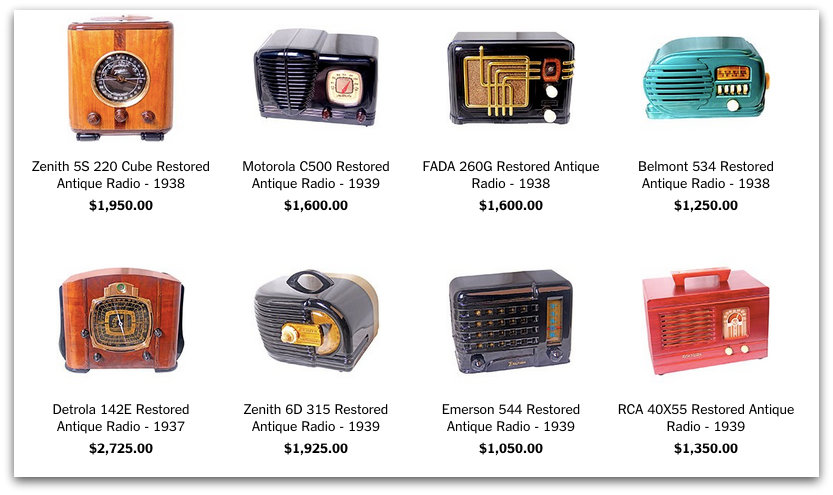
Many thanks to my buddy, David Goren, who recently discovered that the New York Times Store is now selling fully-restored antique radios.

Pricing is not for the faint of heart–at time of posting, prices ranged from $395 to $23,000 US.  Each radio is beautifully presented, with a full description, and carries a one year restoration warranty. For an additional $95, many models can be modified with an AUX in audio jack.

While these radios are well outside my meager vintage radio budget, I must say that I’ve thoroughly enjoyed looking at the photos and reading the descriptions.

Click here to view on the NY Times Store.

Icom introduces the IC-7300

Icom-IC-7300

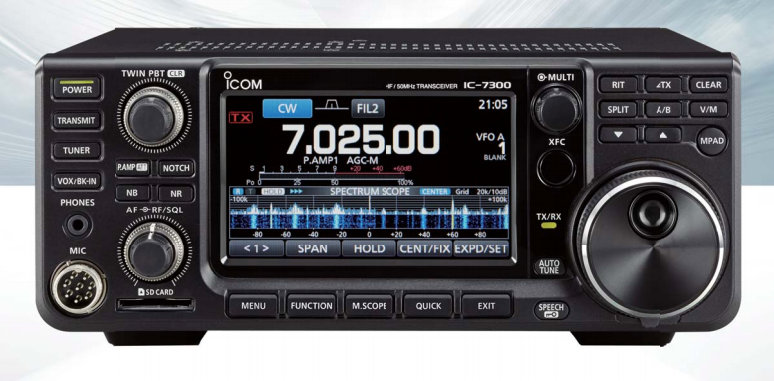
Icom introduced a new general coverage transceiver this year at the Tokyo Hamfair: the Icom IC-7300.

Icom has released a preliminary spec sheet (click here to download), but no pricing information yet. The IC-7300 will most likely be the least expensive Icom transceiver with a full spectrum display.

At first glance, I like the form factor and touch screen display–the panel appears to be less cluttered than many other large-display models. The ‘7300 has dedicated knobs for passband tuning and AF/RF gain (major plus in my book). It also comes with a built-in automatic antenna tuner.

I’ll post more info once Icom releases pricing and availability.

You can follow IC-7300 updates by bookmarking this link.

Bob’s review of the C.Crane CC Skywave

CCrane-CC-Skywave

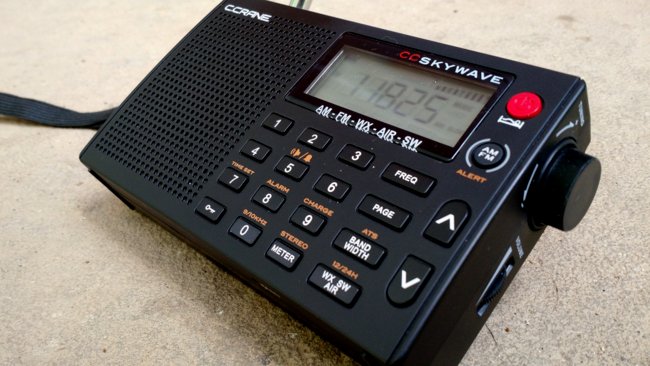
SWLing Post reader, Bob C., recently shared his review of the C.Crane CC Skywave portable radio:

Well, I just received my new CC Skywave radio and it’s terrific! I own a lot of portable radios (including several Tecsun DSP sets), and the Skywave is a new favorite and will likely become my standard radio for travel.

Good fit and finish, great ergonomics, and easy to use. I was pleased to find that, despite what’s written in the ads and on the back of the radio, you can set the radio to receive FM down to 76 MHz by selecting the a 9 kHz MW spacing.

Great for international travel. The following is my brief review (by band):

Mediumwave

The Skywave is far better than any of the Tecsuns and is almost as good as the C Crane 2E (my best MW receiver). At my location (40 miles N of Chicago), the distant groundwave fringe includes WLW, WJR, and KTRS (St. Louis) – in descending order of reception potential. Most radios can get a whisper of WLW (though not discernible), while the other two are rare. The C Crane 2E gets WLW and WJR well enough that you can listen; KTRS is detectable. The Skywave gets WLW and WJR and you can tell that KTRS is there. That indicates that the Skywave is among the best. And there are no birdies nor whistles on the band. Nice.

FM

Just as sensitive and about 99% as selective as any of the Tecsun DSPs. The shorter antenna doesn’t seem to hamper reception at all. And, with no soft muting and a more logical tuning setup, it’s a pleasure to work with. Lastly, the stereo reception threshold on the C Crane DSP chip is significantly lower than that on any of the Tecsun rigs, so most signals decode stereo and simply sound better. Where I live, I have tons of signals that are 0.2 MHz apart (i.e. 101.9 Chicago, 102.1 Milwaukee, 102.3 Waukegan – and local) – the Skywave has no trouble separating these and providing a usable signal for all three.

Shortwave

Seems to do just fine. I have not had any overload issues with my unit and can pull in all as many SW signals and most of my other small portables. The lack of SSB is an inconvenience, I suppose, but I guess you can’t have it all!

NOAA/Weather radio

This band is great to have and is perfectly functional. I will say that this isn’t my most sensitive WB radio, but it’s not deaf by any definition. It’s just a little less sensitive to distant fringe WB stations than some of my other sets. But it does dependably pull in anything within 60 miles, so we’re only talking about ability to pull in distant fringe signals (which can be fun).

Air

I’ve played around with this a little and it definitely works better than expected. O’Hare tower is about 25 miles away and I get it clearly, along with aircraft that are (from what I can tell) basically anywhere within about 60 miles. The ability to scan is very helpful; however, catching a signal when someone is broadcasting is tricky. A little online research into local ATC frequencies goes a long way toward having fun on this band. The Skywave seems to work the Air Band better than the G6 and G3, my only other radios with this band.

So, overall, this radio has been a very pleasant surprise. No disappointments whatsoever. Kudos to C Crane Company for doing such a fine job with yet another radio.

Thanks so much for sharing your thoughts on the CC Skywave, Bob! Like you, I really love this little radio for travel and gave it a favorable review several months ago.

That’s an excellent tip about widening the FM frequency range down to 76 MHz by selecting 9 kHz steps on mediumwave. Brilliant!

Readers should be aware that some Skywave owners have noted a vulnerability to overloading and imaging in urban markets or where blowtorch stations are nearby. If your listening post fits this description, you may want to hold off until C.Crane has addressed the issue.

The CC Skywave can be purchased directly from C. Crane. It is also available at Universal Radio and Amazon.com.

Jeff finds a solution for sticky preset buttons on the CC-Radio 2E

CCradio 2e

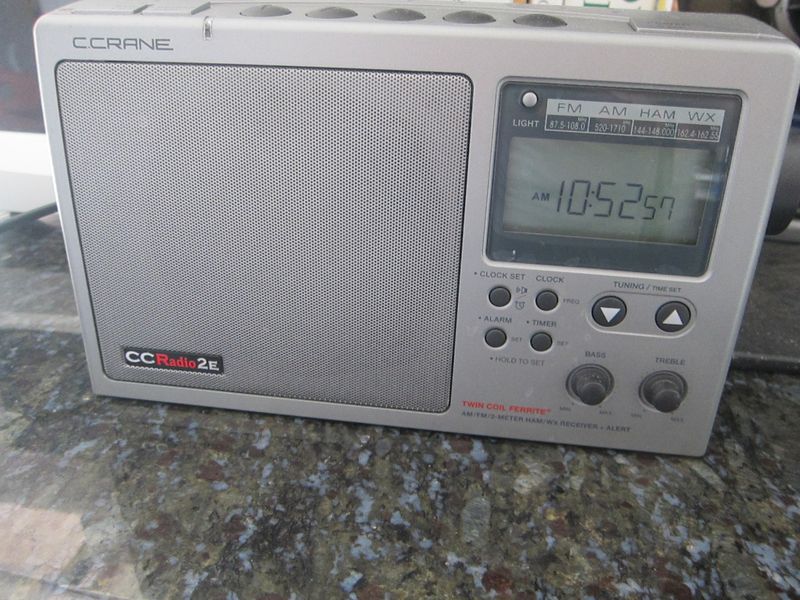
Jeff, over at the Herculodge blog, recently posted that the preset #2 button on his C.Crane CC-Radio 2E had become so sticky, it was almost to the point of not being functional.

One of his readers suggested that he use Deoxit spray to remedy the sticky button and it worked!

Deoxit is amazing stuff and something I suggest any radio enthusiast keep handy. Years ago, I had an Icom IC-735 I thought needed a new power button;I had to press and hold the button for the power to turn on. I searched for a replacement botton for weeks. When I reached out to a friend who is an electronics technician, he suggested that I open the chassis and try spraying the button with Deoxit.

I did, and it worked beautifully.

Deoxit is not the cheapest contact cleaner around, but it is the brand I trust the most. It comes in both a spray and liquid form.

Tecsun PL-880: Evans notes signal meter and other discrepencies

PL-880 (1)

SWLing Post reader, Evans (in Greece) writes:

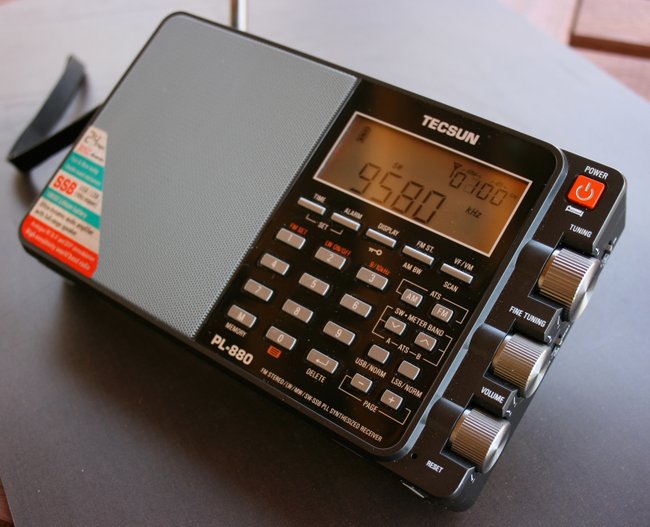
I would like your opinion regarding two strange points we noticed in two different Tecsun PL-880 models, which a friend and I have recently purchased. In particular:

  1. The signal meter is supposed to measure up to 99dBu (my Tecsun PL-390 s-meter goes indeed up to 95-97dBu for very strong amateur signals in my area included mine in mw zone). The point is that for both devices (both of which have 8820 firmware) the signal meter does not exceed 85 dBu and in particular my Tecsun PL-880 signal meter does not goes over 70dBu (ie. even lower measurement). Why this behaviour?

  2. Another strange point is that my friend’s Tecsun receiver displays for a “quiet” frequency (mw) a noise level of about 10-12dBu, while my Tecsun device shows only 2-3dBu noise (same frequency in the same spot!). We both tried the threshold muting adjustment (key 9) and this worked a bit but with minor results in sensitivity, especially for my Tecsun PL-880 receiver. Is it possible to adjust the noise level so that it can be 10-12dBu instead of being only 2-3dBu and hence better sensitivity? And is it possible to adjust the maximum signal level (99dBu instead of 85dBu or even worse 70dBu for my device)?

  3. I have noticed that the hidden feature regarding the external mw antenna didn’t work in my case, even though I did resets an tried many times. I pressume, hence, that maybe Tecsun disabled this hidden feature. Is there any modification available to “add something” into the radio hardware in order to be able to listen mw/lw frequences with external antenna and thus, increase sensitivity?

Many thanks for your questions, Evans. Since my PL-880 is a first production run unit, I’m hoping readers who’ve recently purchased the Tecsun PL-880 might comment.

I suspect Tecsun engineers give little thought to calibrating the S meters. I’m very curious if there is a hidden feature to do this, but I’m guessing this is limited only to those who can program the DSP functionality of the chip inside.

DSP noise may come from clock and data line harmonics

ATS-405-9580kHz

In response to our review of the Sangean ATS-405–which noted DSP noises on 800 and 1600 kHz–SWLing Post reader, Steve Yothment, comments:

“Yes, modern radios usually have a micro communicating with the DSP IC through I2C communications.

The inter-IC communications includes a clock and data line. The clock for I2C is typically 400 kHz nowadays. Harmonics from this clock line are probably the source of the interference.

The manufacturer should have designed the product to ensure that this interference does not occur. It may be that they resolved it at one time but with limited manufacturing quality and component substitutions that often occur in mass production, the problem is occurring now even though it may have looked OK earlier in development. At least, that is my experience with such things. (I used to design car radios for the Panasonic Company.)

You can learn more about the I2C bus at https://en.wikipedia.org/wiki/I%C2%B2C.

Many thanks for your comments, Steve! I recall a similar metronomic sound on another DSP-based radio, but can’t remember which model. I need to dig through my reviews as I’m sure I noted this. I believe checking 400, 800 and 1600 kHz will become a standard checklist item when I review DSP-based radios.

A repair story: Vlado’s fix for the classic Sony ICF-SW100

Sony-ICF-SW100In June, I made a small leap of faith and purchased a (dead) Sony ICF-SW100 from Universal Radio (see the listing on right).

ICF-SW100-Used-NonWorkingYou see, for many years, I’ve dreamed about owning this wee little receiver, now a classic among tiny radios, but used ones are typically too expensive for my modest budget.

This time, seeing the ad at Universal, I spoke with Universal Radio directly to obtain more details about their defunct unit; while they simply didn’t know what was wrong with the Sony, they were able to very accurately describe its cosmetic and functional condition…I took a deep breath, and decided to take a chance on it anyhow.

In full disclosure, I have a secret weapon in my camp:  my talented friend, Vlado (N3CZ), who is not only the most adept electronics engineer/technician I’ve ever known, but one who truly welcomes a challenge.  The thought had occurred to me as I admired the wounded Sony, Wonder if Vlad would like to take this on–?

The answer, of course, was Yes!  So I dropped the DOA Sony off at Vlad’s home last week. He disassembled the radio, only to discover that my ICF-SW100 was a victim of the (dreaded) damaged ribbon cable.

A short history of the Sony ICF-SW100 and SW100S

These radios are indeed brilliant, incredible performers for their miniscule size.  Yet the first generation of ICF-SW100 radios–those produced before the fall of 1997–have a design weakness: the ribbon cables which connect the upper and lower portions of the radio’s clamshell design eventually fail. Multiple openings and closings bend and cut the cables, rendering the otherwise remarkable little radio useless.

SWLing Post contributor, Dan Robinson, recently shared his knowledge about the ICF-SW100 series. Dan notes:

SW-100 Seekers Beware

As shortwave veterans know, the classic SONY miniportables — SW-1, SW-100(S) and  SW-07, represented some amazing technological achievements. SONY managed to  shrink some fantastic technology into these receivers, including (with the last two in the line) — SYNC capability. The SW-07, which was the last of these receivers, still brings some high prices on Ebay.

But if you are searching for the ICF-SW-100S there are some things to consider and beware of. As everyone knows, the SW-100 suffered from the well-known ribbon-cable failure problem. SONY addressed this problem in later serial numbers, and changed the design of the radio case.

Modified SW-100s have a notch where the top cover meets the base.

There are some dishonest sellers out there who are trying to pass off older version SW-100s as modified ones. Usually, the tip-off is that the photograph in the Ebay auction will be dark or out of focus, so it’s hard to tell if the radio is the modified version or not.

It has become quite rare to find an original SONY modification kit, which includes a new top cabinet of the SW-100. And some sellers are trying to get as much as $300 for these, though they rarely sell at this level.

This repair kit was on eBay at time of posting.

ICF-SW100 modification kit found on eBay at time of posting.

It’s also becoming rare to see SW-100S radios new-in-box. I had two of these, sold one and kept the other.

If you’re after one of these marvel radios, do what everyone should do when considering items on Ebay — ask many questions about [the] cosmetic condition, accessories, serial numbers, etc.

Universal Radio, a trustworthy seller I know, had fully disclosed the model number and problems with this radio, so I knew exactly what I was buying. Dan has a very good point, though: unless you know the seller to be honest, do your research and ask questions!

The ailing ICF-SW100

Vlado discovers the faulty ribbon cable.

Vlado discovers the faulty ribbon cable (click to enlarge)

Back to my ailing unit:  Vlado delivered the news about the ribbon cable via text message, and though I was well aware that the chances were high that was the ribbon cable, I was a little bummed, to say the least, to get the formal diagnosis.

Why? As Dan mentions above, you’ll find that the SW-100S upgrade kit Sony produced in the 1990s is no longer available new; sellers typically list these kits at prices in excess of $300 US.  Out of my budget.

But Vlado, ever the intrepid engineer, had no idea I would be disappointed with this news; he was just giving me this FYI via text. Indeed, he seemed entirely unfazed, as in, hey, no serious internal damage here…

Another hour passed. Then came another message from Vlad; this one simply said: “Call me.”

Oh no, I thought. But I called, and Vlado answered cheerfully, “Hello? Tom, is that you? Sorry, I can’t hear you very well because your SW100 is playing too loudly. Hang on–let me turn the volume down!”

Vlad installs the replacement ribbon cable (click to enlarge)

Vlad installs the replacement ribbon cable (click to enlarge)

“What!?!” I responded, in utter disbelief.

Yes, he’d got it working!  It seems that Vlad had unearthed an old DVD player in his garage that he’d kept merely for parts. He opened it up, identified a ribbon cable with the right pitch, then cut and folded the cable to fit into the SW100.  Ingenious!

That’s Vlado for you!

And should I be interested in replacing this used cable with a new one–or in repairing other Sonys–Vlad directed me to eBay listings for new cables which only total about $20, shipped. Truthfully, I’m in no hurry, as this one is functioning perfectly and changing out the ribbon cable seems to have no effect on stored memories, etc. With a single affordable eBay purchase of multiple cable sets, it occurred to me that Vlad would have enough replacement cables to repair the SW100 many times over…

So I bought the cables.  (This one for the narrow cable and this one for the wider one.)

My “new” Sony ICF-SW100

Needless to say, I’m very pleased with my “new” (to me) SW100. It’s a little masterpiece of receiver engineering in such a tiny package.  And since the ICF-SW100 is unquestionably the smallest portable I own–and is one of the few I own with a proper line-out jack–it may very well become my go-to radio for one bag travel.

Listening to the 'SW100 before I pack it for my next trip.

It’s in the bag: listening to the ‘SW100 before I pack it for my next trip!

Stay tuned the review…

Vlado’s radio E.R.:  the doctor is in

Sony-ICF-SW100-Open2As I’ve said, Vlad is one of the most adept repair technicians I’ve ever known.  At my prompting, he’s kindly agreed to let me promote his services here on the SWLing Post. Vlad acknowledges that he “likes a challenge,” adding that he enjoys nothing more than making repairs even when”parts are scarce” and radio”surgery” is required.  Moreover, his bench fees will be quite reasonable, especially considering what you receive: new life for a failing radio. So, if you’ve got an ailing rig on your hands, and don’t mind waiting for Vlad to get to it, send it to his radio emergency room, where radios (like my Sony) have life breathed back into them once again.

Long live the Sony ICF-SW100!  And long live Dr. Vlado, who makes this possible with his creative (and nearly miraculous) repairs.

To contact Vlad, simply contact me with a description of your radio and its problem and I’ll put you in touch with Vlado.