Category Archives: Radios

SDR Primer Part 3: From High-End SDR Receivers to SDR Transceivers

The following article originally appeared in the October 2018 issue of The Spectrum Monitor magazine:


Welcome back to the world of SDRs once again

In September we began of our three-part Primer on Software-Defined Radios (SDRs). Part One (September) focused on the nomenclature and components of a functioning SDR system; Part Two (October) took a look at some affordable SDR station options that will propel you into the world of SDRs for less than $200 US. This month, in Part Three––our final installation––we’ll dive a little deeper into the SDR rabbit hole, and investigate higher-end SDRs as well as ham radio transceivers with embedded SDRs.

Investing in SDR hardware

As we mentioned in Part 2 of our primer, gaining entry into the world of SDRs can be quite affordable. With merely $200 or less, you can fully explore the radio spectrum with an SDR that has truly excellent performance characteristics.

So, why would you pay more?

Let’s consider this.  If, say, you happen to live in an RF-dense environment, such as a busy city, if you live near strong broadcaster(s), and/or if you’re a DXer who’s seeking benchmark performance, then you might wish to devote a little more of your cash to your SDR hardware.

When you pay more for an SDR, the additional cost is typically going toward the hardware rather than the software. Indeed, my favorite SDR (software) applications are absolutely free, and pair with a number of benchmark SDRs. But good hardware is vital to performance. The lineup of SDRs––that is, the receiver hardware––discussed below typically has better filtering, preselectors, shielding, and receiver architecture focused on HF performance. They also tend to offer a more robust front end, lower noise floor, and better dynamic range. All of this, of course, results in better performance overall. Some of these SDRs also offer unique specialty features, like built-in web servers.

The following SDRs are carefully hand selected, and in my view, represent a balance between price and performance. And again, this is by no means a comprehensive list; it’s simply a selection of what you’ll find currently available on the SDR market.

So, without further ado, we’ll begin our discussion with “black box” SDRs, then move on to  SDR transceivers and transceivers with embedded SDRs.

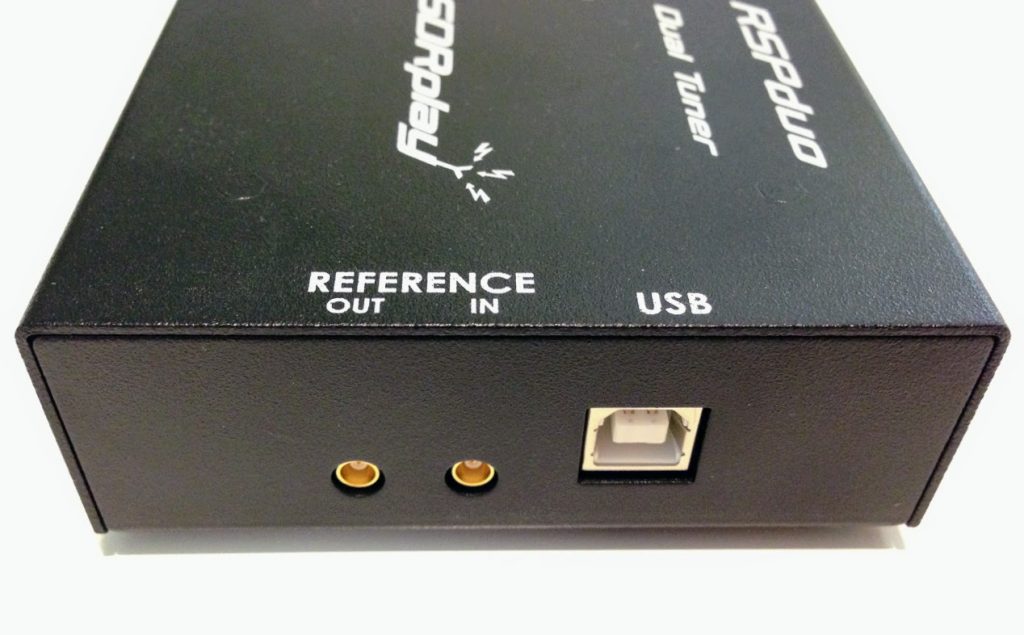
SDRplay RSPduo
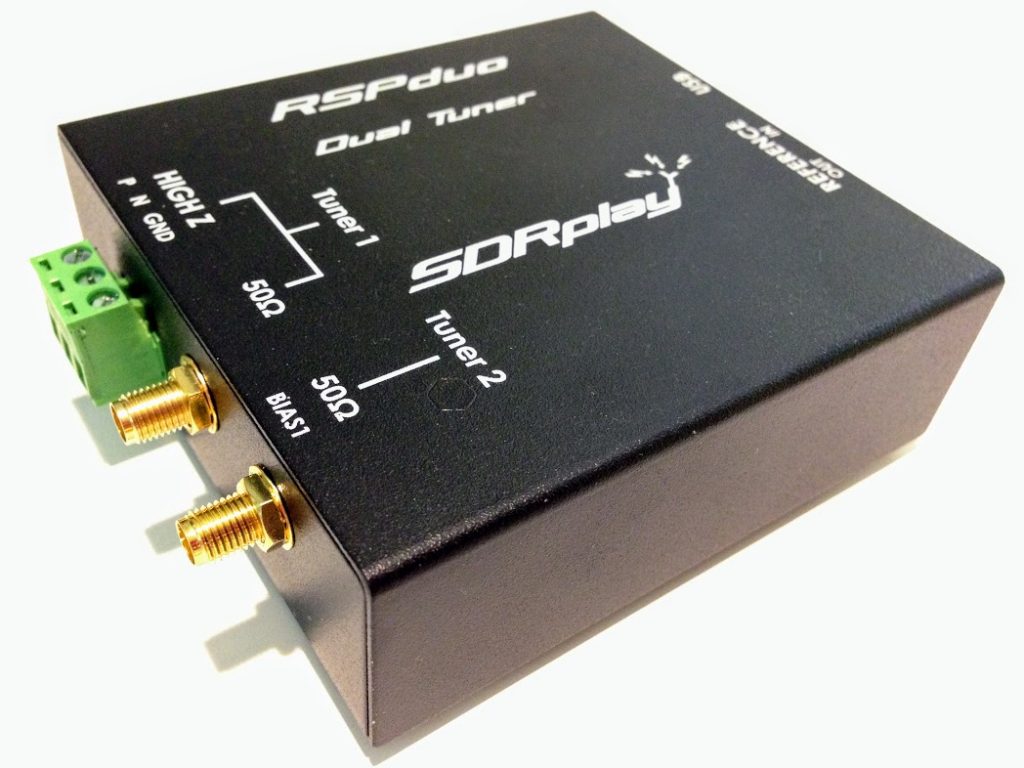
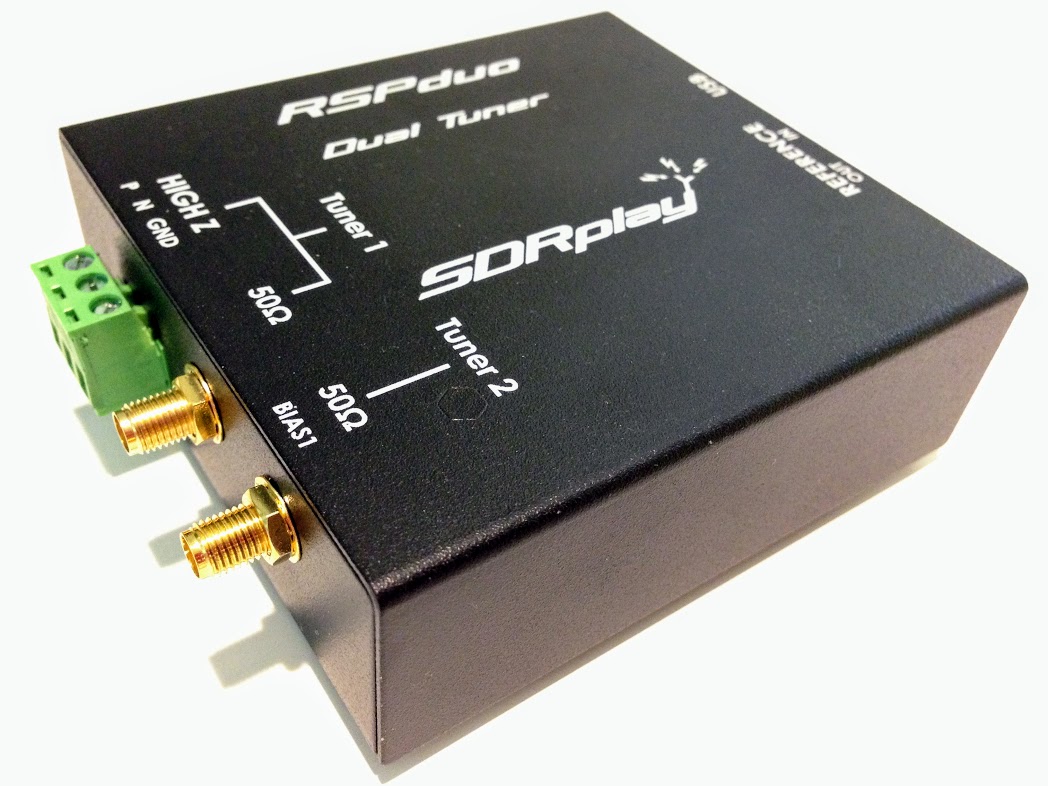
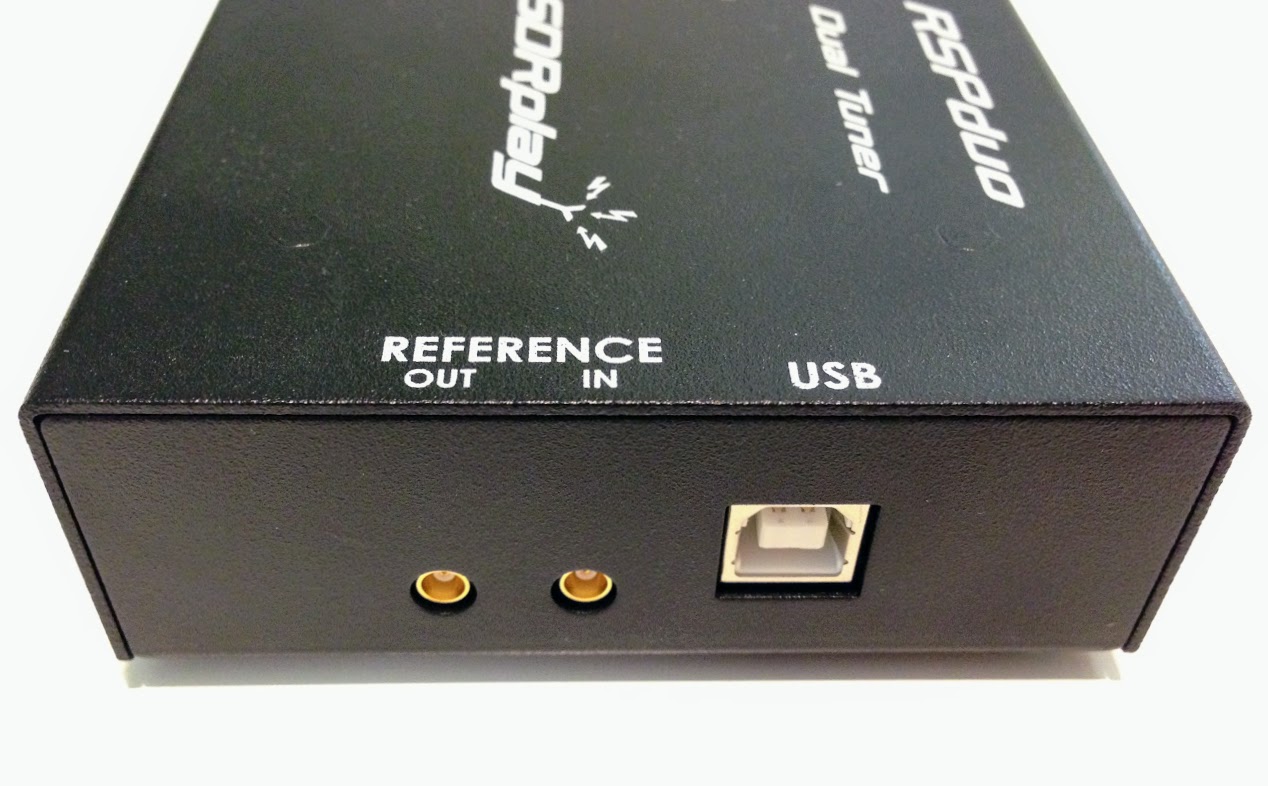
The SDRplay RSPduo

In May of this year (2018), the UK-based SDR designer and manufacturer SDRplay released their latest receiver: the SDRplay RSPduo.

What sets this little black box apart from the competition is just what its name implies:  the duo is a dual tuner SDR.  In other words, it’s two independent SDRs rolled into one.

Being the price leader in the world of SDRs, SDRplay retails the RSPduo for $279.95. And, I must add, it’s a true bargain for a feature-packed 14-bit high-performance device.

The RSPduo’s tuners can operate individually, anywhere between 1kHz and 2GHz, with up to 10MHz of working bandwidth. You could also set up the RSPduo so that both tuners can operate simultaneously, again between 1kHz and 2GHz, with up to 2MHz of bandwidth per tuner. The RSPduo has a high-stability reference along with external clocking features which makes this SDR an affordable option for industrial, scientific, as well as educational applications. It’s housed in a quality steel enclosure.

SDRplay’s development team is already working on new features such as true diversity reception, which will be included as a free upgrade to their popular SDRuno proprietary application.

To be clear, there is no other sub-$300 SDR on the market that currently has true dual-tuner functionality. Thus, the RSPduo is a good value, in my opinion––and an inexpensive upgrade to a proper dual-receiver SDR––so if this is something you’d like to add to your shack, go ahead!  Bite the bullet, and acquire an RSPduo. Likely you won’t regret it.

Check out the RSPduo via:

KiwiSDR
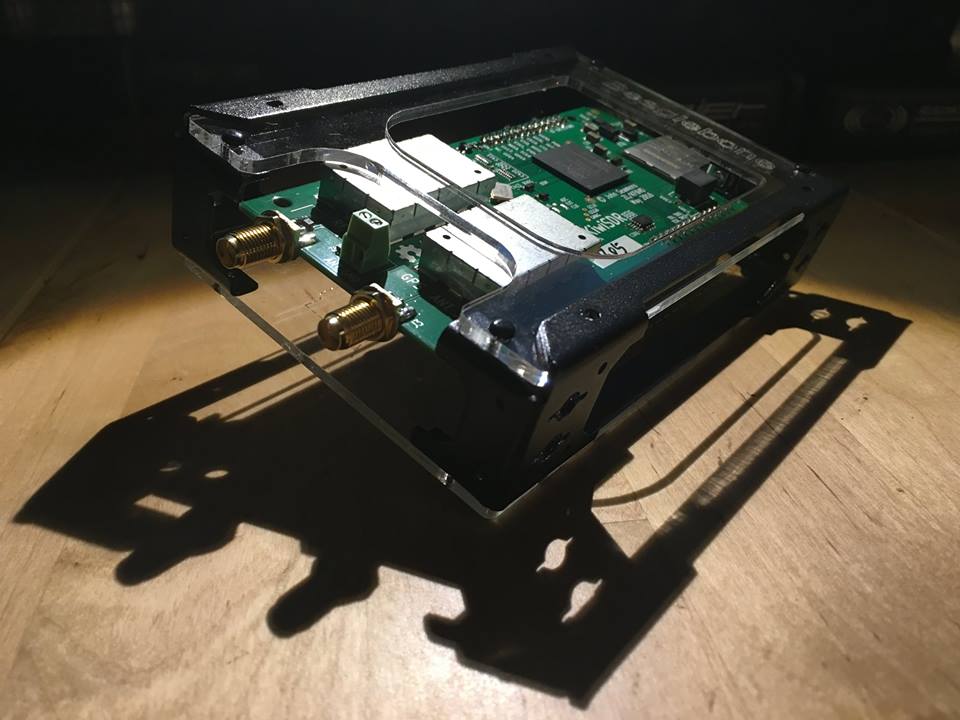
Photo by Mark Fahey

Like the RSPduo, the KiwiSDR has a unique feature that makes it stand out among the other receivers mentioned here: it is designed to be fully controlled via a web-browser-based SDR application. Not only can you use your KiwiSDR locally, but you can share it with the world via the KiwiSDR network. You can configure the KiwiSDR to allow up to eight simultaneous guest users, assuming only that you have access to the modest amount of Internet bandwidth this requires.

The KiwiSDR ships as a simple modular kit, and requires no special tools to assemble: the SDR is a custom circuit board (known as a “cape”) that you connect to BeagleBone Green or BeagleBone Black mini computer. (Click here to learn more about the BeagleBone).

The KiwiSDR is available in two versions: the SDR cape, alone, and a more complete version which includes the SDR cape, BeagleBone computer, enclosure, and GPS antenna. Both versions include all SDR software loaded on a micro-SD card.

Although the KiwiSDR might sound like an experimenter’s receiver since it requires a degree of assembly and configuration––at least, a bit more so than the other units I review here––it’s actually fairly simple to assemble, install, and put on the air. In fact, the only challenge that you might face is that of setting up your router for global access to your KiwiSDR. It does require either a static IP address or (more commonly) an IP address forwarding service. Check out the support documentation in advance to make sure your Internet connection will work.

The KiwiSDR covers from 10 kHz to 30 MHz, thus is not a wideband receiver like the SDRduo. Like the SDRs that follow, it focuses its performance on HF and lower bands.

I find it incredible that for just $299 US, you can purchase the full KiwiSDR kit––one that includes everything you need to put your SDR on the air and online. Because of this, I believe the KiwiSDR has become the dominant web SDR platform currently on the market. Perhaps this remarkable fact overshadows the fact that the KiwiSDR is also a superb performer, touting a brilliant dynamic range as well as overall excellent sensitivity and selectivity.

As my friend and fellow radio listener Mark Fahey, an early adopter of the KiwiSDR, is quick to point out, the KIwiSDR is unique in that it doesn’t connect to a PC or other computer to operate. It’s a stand-alone:  just connect an antenna, DC supply, and network cable, then you’re ready to go. All of the “work” is delivered by the piggyback BeagleBone CPU.

What’s not to love? While the web-based SDR application is full-featured, it does lack spectrum recording and some other advanced controls. This is due to the relatively modest processing power of the onboard CPU. That said, The KiwiSDR application does contain features/functionality via extensions that are fairly impressive.

Additionally, when updates are rolled out for the KiwiSDr application, these take effect globally. Only recently, for example, audio recording and amazing TDoA (Time Distance of Arrival) functionality were added.

Oh, and one more thing before we move on: the KiwiSDR is the only SDR I know that is exclusively controlled by a web-based SDR application for both the online guest and the local user/owner. There is no separate downloadable application.  Thus, whether you’re using your own local KiwiSDR or an online SDR, the user experience is exactly the same. It’s seamless and user-friendly…just as it should be.

Want to try the KiwiSDR before purchasing? Easy! You can browse and select any one of two hundred KiwiSDRs online on SDR.hu.

Check out the KiwiSDR via:

ELAD FDM-S2/FDM-S3
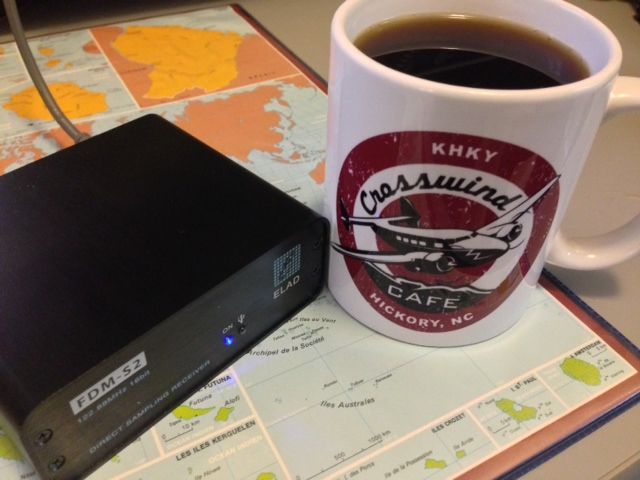
Italian-based SDR manufacturer, ELAD, has built a solid reputation over the years for truly pushing the SDR performance envelope in the $500-$1000 market.

I have owned their Elad FDM-S2 for four years now (check out my full review in the November 2014 issue of The Spectrum Monitor). The FDM-S2 continues to impress and to hold its own among more recent competitors––a true indication of excellent engineering and hardware.

The FDM-S2’s frequency coverage is 9 kHz-52 MHz, 74-108 MHz, and 135-160 MHz. I should note here that besides being a great HF and mediumwave performer, the FDM-S2 is an FM DXer’s choice receiver; FM performance on this rig is just superb.

ELAD supports all of their SDRs with their own proprietary application which, of course, is designed to take full advantage of the SDR’s available performance. The ELAD application is feature-packed and even includes built-in DRM decoding. Interestingly, it will allow the FDM-S2 to be used as two completely independent tuners in “double DDC mode”––the working bandwidth of each tuner, in this case, is 384 kHz, and each can be placed within one of the FDM-S2’s input ranges.

In truth, I like pairing my FDM-S2 with the excellent (and free) SDR Console SDR application; I prefer its user interface and recording functionality over the ELAD application.

If you live in an RF-dense area, you might consider one of ELADs external pre-selection filter systems to keep the FDM-S2 from overloading in the presence of very strong signals.

The FDM-S2 is currently priced at $529 US.
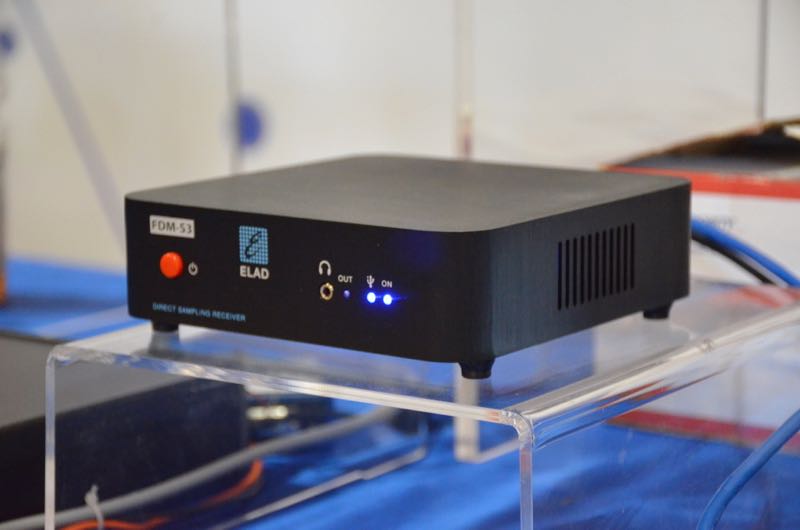
Photo of the new ELAD FDM-S3 from the 2018 Hamvention

Note that ELAD will soon be releasing the newest addition to their product line: the FDM-S3. I know very little about the FDM-S3, but I do know ELAD is promising groundbreaking performance and dynamic range, setting a new benchmark for the $1000 price bracket. We do know the FDM-S3’s processing bandwidth is an impressive 24.576 MHz––wide enough to include the entire FM broadcast band!

I’m not sure if FM DXers will be able to take advantage of spectrum recording at a 24 MHz bandwidth, because I suspect it could push 24GB of data per minute. The FDM-S3 may well keep up, but I’m not sure the typical computer hardware can handle that kind of data transfer…it may be likened to, in radio terms, drinking from the proverbial fire hose!

However: ELAD will be sending me a loaner FDM-S3 to review in the coming months, so stay tuned for more on this DXer’s dream rig!

The current FDM-S3 price, by the way, is 949.90 EUR.

WinRadio Excalibur
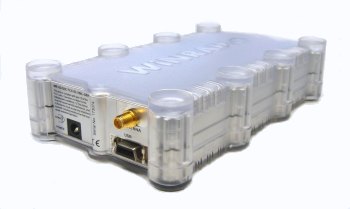
The WinRadio Excalibur

My first foray into the world of benchmark SDRs was made with the Australian-made WinRadio WR-G31DDC Excalibur. And although this SDR has been on the market for the better part of a decade, it still outperforms many of its competitors.The Excalibur’s frequency range is 9 kHz to 49.995 MHz, providing absolutely stellar performance across the spectrum.

It’s a favorite SDR in my radio shack, despite the fact that it can only be fully controlled by WinRadio’s own proprietary SDR application (at least, I know of no other compatible applications). On the plus side, the WinRadio application is one of my favorites.

The application’s file size is extremely compact––only a 9MB download. The user interface is logical, ergonomic, and responsive. Other than SDR Console, it has some of the best recording functionality available today.

I’ve logged more airtime with the Excalibur than with any other SDR I own, mainly because of its superb overall performance, responsive application, and recording functionality. I use the Excalibur as a benchmark for receiver evaluations and find that very few can match its solid performance.

The WinRadio Excalibur can be purchased through a number of distributors worldwide for about $950.

Enablia TitanSDR Pro
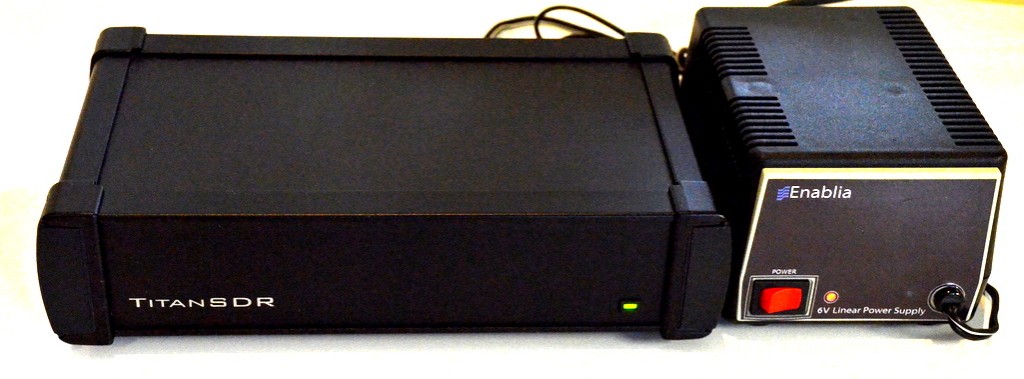
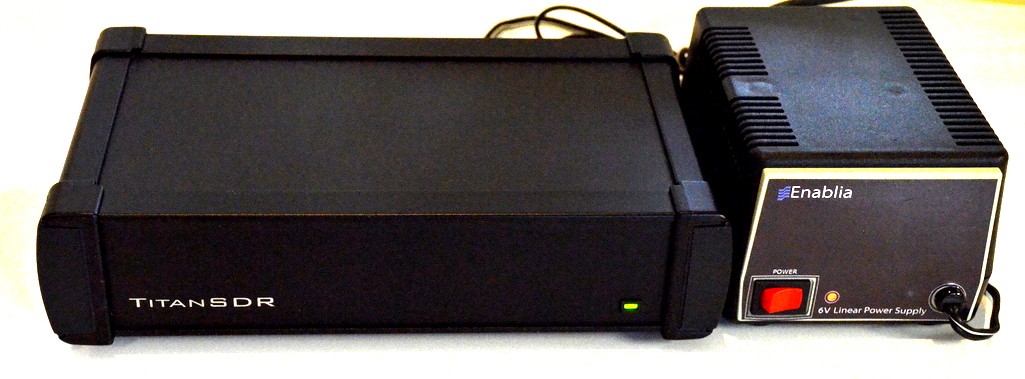
The Enablia Titan SDR Pro is an outlier product in our SDR Primer series, in that it retails in excess of $2,000. However, it’s the highest performing SDR I’ve ever tested. Serious weak-signal DXers will likely be quite pleased with this rig.

And speaking as a radio archivist, the Titan has the most powerful set of audio and spectrum recording features I’ve used, to date. Selectable spectrum recordings can be made from within the wide working bandwidth, and it can run up to four fully-independent SDR receivers, simultaneously.

The Titan comes with 16 frequency preselectors onboard, and a 9 kHz to 32 MHz frequency coverage. Its front end is simply bullet-proof, and thus could be operated in a demanding RF environment.

The TitanSDR ships with a brilliant proprietary application. It’s designed to make managing the Titan’s multiple virtual receivers and four independent SDR receivers as straightforward (and easy!) as possible. As I said in my review, Enablia engineers quite successfully accomplished this. The only downside is that only the TitanSDR application can run only the TitanSDR; no other third-party apps work with it. In addition, when making spectrum recordings, the file format is unique and the header information is actually stored in a separate file. This means when you are transferring a set of spectrum recordings, the header file must also be accounted for.

Of course, there is the daunting price tag of the TitanSDR, which makes it clear that this was a receiver designed for government and commercial use, in particular, for signal intelligence.  Thus it’s likely no surprise that the basic version of the TitanSDR retails for 1380 EUR, the TitanSDR Pro for an even heftier 1970 EUR.

To be fair, there are not many readers who would consider the TitanSDR Pro, but I thought it worth mentioning as it demonstrates a clear case of hardware becoming an innovation’s primary focus.

Enablia’s website is quite basic, so I would recommend you contact them directly to ask for a price quote if you’re interested in one of their TitanSDRs.

Other SDRs

The SDRs above represent merely a small slice of SDR market availability. There are several other notable manufacturers and SDRs worth considering, thus worth noting.
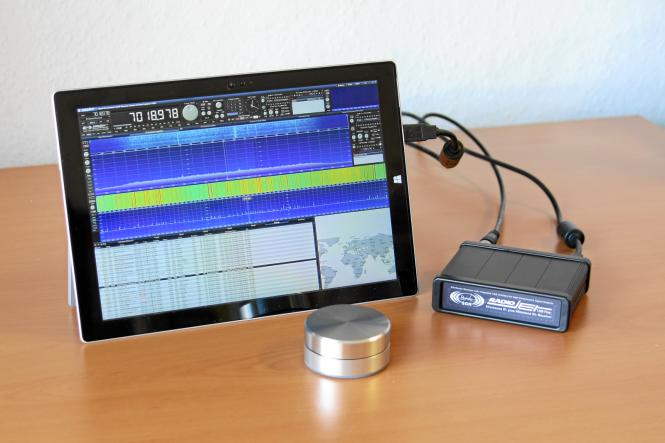
The Bonito Radiojet 1309 Plus

Germany-based Bonito manufactures a number of SDRs, antennas and components that are highly regarded among DXers. Bonito’s “hybrid” SDRs pack a lot of performance yet require very little in terms of computer resources.  Their latest SDR, the Bonito RadioJet 1309 Plus covers 0.02 MHz to 1600 MHz with a spectrum display that can be widened to 3.2 MHz. I have not personally evaluated the RadioJet 1309 Plus, but I did review an early version of the RadioJet (the 1102S) that lacked the additional IQ-receiver of the 1309. I found it an impressively sensitive and selective receiver with excellent audio characteristics. Click here to read that review.

The RFspace Cloud-IQ

RF Space has been manufacturing SDRs longer than many other manufacturers, and the company offers a number of products, including the SDR-IQ, the NetSDR+, the Cloud-IQ, and––soon to come––the CloudSDR.

In Part 2 of our primer, we mentioned the AirSpy HF+ which packs impressive HF performance. Airspy also manufactures the Airspy R2 and Spyverter R2–this $218 US combination produces a compact SDR package with excellent dynamic range and superb frequency stability.
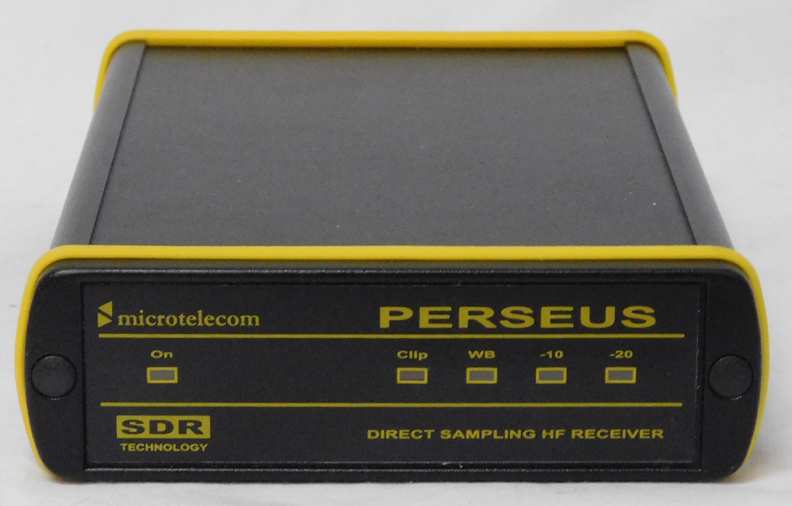
I’m also fond of the classic Microtelecom Perseus SDR, which I’ve seen sold used for approximately $700 US. WinRadio, too, offers higher-end SDRs with a wider frequency range and working bandwidth than the Excalibur––so if your budget allows, you might consider these.

Regardless, keep in mind that if you want to use your monetary resources efficiently, there is no need to splurge for higher-end SDRs unless your use and application demands increased performance. Before you pull the trigger to buy such a rig, I would simply take into consideration the unit’s frequency range, working bandwidth, and performance characteristics, as well as taking the time to read plenty of user reviews. This increases the odds that you’ll get just what you want.

SDR Transceivers

So far, I’ve only mentioned SDR receivers in this primer, but there is a healthy selection of “black box” type SDR transceivers on the market, as well. By “black box,” I mean the transceiver itself (all of the hardware) housed in a box––with, of course, the relevant ports for antennas, data, power, mics, CW keys, and a number of peripherals. These SDRs almost always require a computer for operation, although lately manufacturers are beginning to offer optional touch-screen front panels which can bypass the need for external computer operation.

Unlike the world of tabletop radios, where it might be less expensive to invest in a general coverage transceiver rather than a dedicated receiver, SDR transceivers almost always cost more than an equivalent SDR receiver.

Also note that SDR transceiver applications do not always include audio and spectrum recording functions.  In addition, their working bandwidth might be more narrow that other receive-only SDRs, although they may offer more virtual receivers and spectrum “slices.”

Finally, SDR transceiver applications tend to be proprietary; when you purchase the transceiver, you’re also likely receiving the only SDR application that will interface with it. Hypothetically, if you purchase an SDR transceiver and the company that produced it goes under, you might have issues when the application is no longer updated with operating system upgrades and iterations.  The lesson here is that I believe you should try to stick with the healthiest companies and those with solid, large user bases. This increases the likelihood that the application will be supported in the future.

Low-cost, low power SDRs for the experimenter

We’ll start with the least expensive SDR transceivers designed with the experimenter in mind, that can, with a little adaptation, also be employed by ham radio operators as very low-power transceivers.
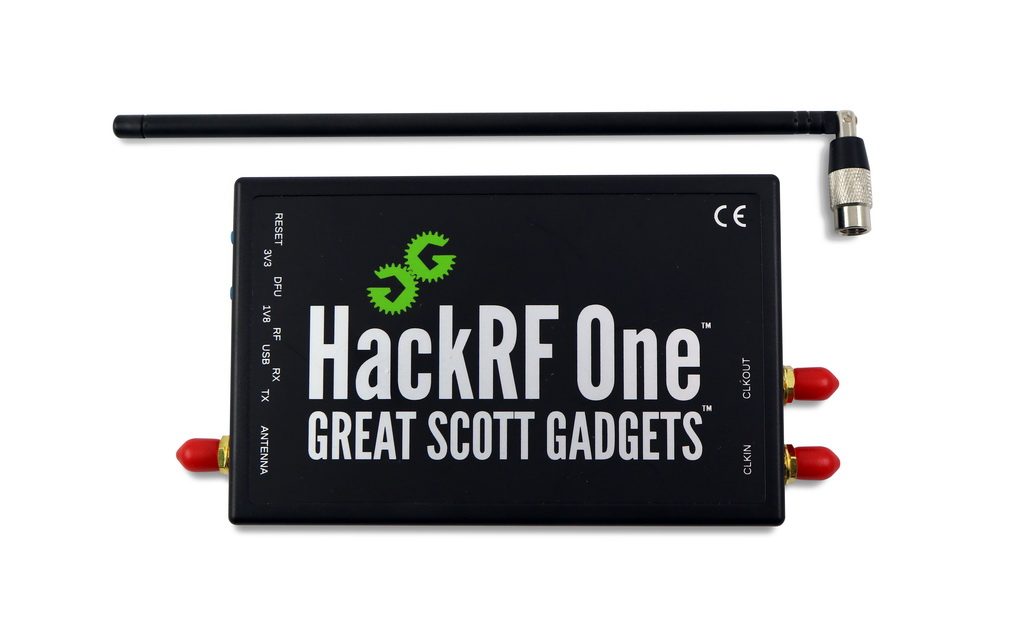
The HackRF One ($299) by Great Scott Gadgets is an excellent SDR. It has an incredibly wide frequency range (1 MHz to 6 GHz), and can transmit anywhere from 3 mW to 30 mW depending on the frequency. That’s flea power, true, but if your goal is to experiment in your local surroundings, it’s typically more than enough output. The HackRF is open-source and sports a large user community that have employed it in dozens of applications. The HackRF was one of the first SDRs to really give experimenters a full tool set to manipulate the world of wireless.

Check out the HackRF One via:
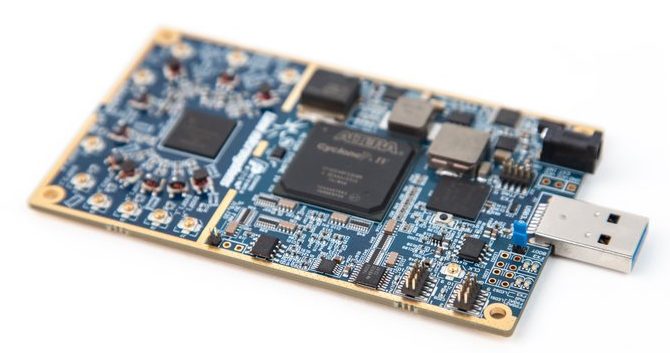
The LimeSDR board

The LimeSDR ($299) is another crowd-funded project that has been incredibly popular.  Like the HackRF, it is a low-cost, open-source SDR platform that can be used to support just about any type of wireless communication standard. What makes the LimeSDR unique is that it is integrated with a Snappy Ubuntu Core, which means users can simply install applications from an app store to increase functionality. As LimeSDR states, their platform “gives students, inventors, and developers an intelligent and flexible device for manipulating wireless signals, so they can learn, experiment, and develop with freedom from limited functionality and expensive proprietary devices.

Again, only consider the HackRF of LimeSDR if your main goal is to experiment with the world of wireless. If you’re looking for a full-featured SDR transceiver intended for ham radio, read on.

Ham Radio SDR Transceivers

The Flex Radio booth at the 2018 Hamvention.

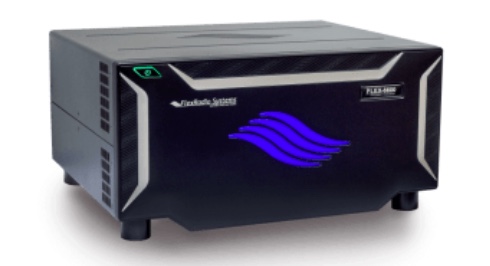
Without a doubt, the dominant name in the world of US ham radio transceivers is Texas-based Flex Radio.  Flex has been around since the very earliest days of SDR transceivers and has produced a wide variety of high-performance rigs. In recent years, their product development and production has focused on higher-end transceivers with the discerning DXer and contester in mind. Their signature series SDRs pack incredible performance, yet can be operated from modest PCs since most of the processing horsepower and hardware are all within the radio chassis. Flex has also developed a fully wireless touch-screen Maestro Control Console that can be used over a local network, or even the Internet, to seamlessly control a remotely-connected Flex SDR. Flex Radio SDRs can cost anywhere from $2,000 – $7,500 US.
The Flex-6600

Gary Wise (W4EEY), my go-to guy for all things Flex Radio, also notes:

“One of Flex’s newest models, the Flex-6600, includes 7th Order Contest Band Bandpass Filters and dual Analog to Digital Converters. Which means that, using this radio, one can listen on one band while transmitting on another. Contesters call this ‘Single Operator Two Radio’ operation, and if you can do it successfully, it leads to big contest scores. Having this functionality in one box, without additional controllers and interfaces, is remarkable.”

Indeed.
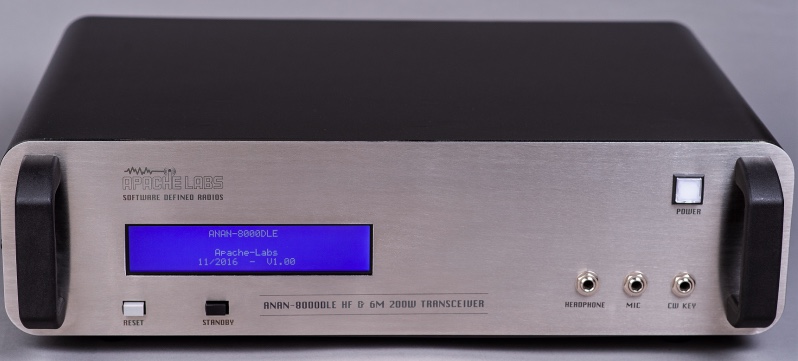
Two other SDR transceiver manufacturers with large user bases are the Sweden-based SunSDR and India-based Apache Labs. Both companies produce high-performance SDRs and, like Flex, set benchmarks in terms of transceiver performance. I will not comment at length about either company because I’ve not had the opportunity of personally testing their products, but I encourage you to search online reviews about their products.

Tabletop SDR transceivers
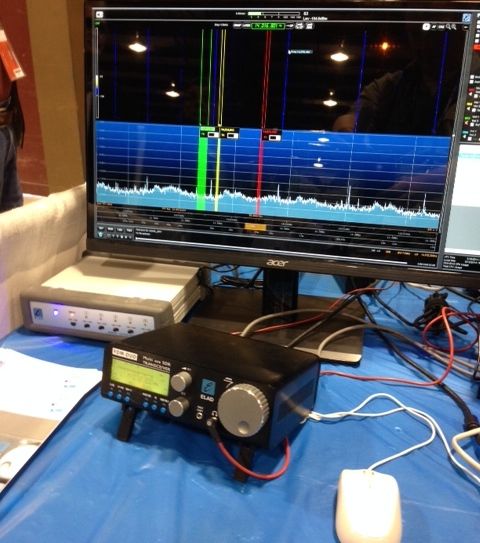
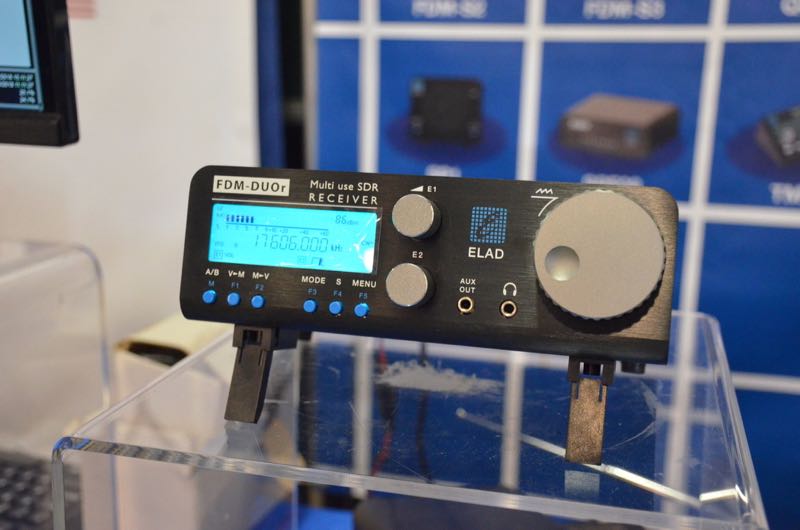
The Elad FDM-DUO transceiver is both a stand-alone tabletop and fully-functioning SDR when paired with a PC.

There are a number of full-featured tabletop SDR transceivers on the market. One of the first SDR manufacturers to build a fully self-contained tabletop model with PC integration was ELAD, with their FDM-DUO QRP transceiver. Tabletop SDRs at the time of the FDM-DUO’s release were very limited in their functionality when connected to a PC. Some of them had stripped-down applications and lacked features like spectrum recording and multiple virtual receivers. The FDM-DUO, when connected to a PC running ELAD’s software, gives the user full control of the SDR.  Indeed, the experience is identical to that of using the FDM-S2 mentioned above, however the DUO is also a transceiver. Since the DUO’s release, other SDR manufacturers have designed models with full SDR application integration.
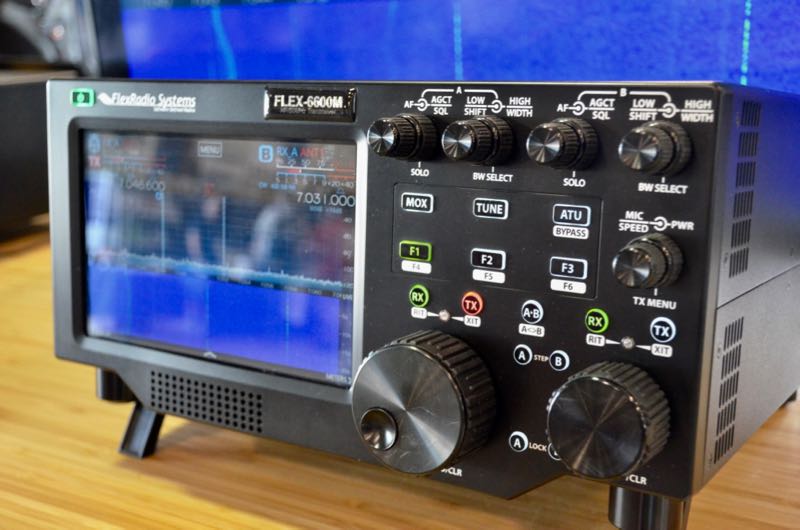
The Flex 6600M is a handsome standalone SDR transceiver.

Recently, Flex Radio introduced their Flex “M” Signature Series SDR Transceiver. These tabletop SDRs can be configured with most of the SDR receivers Flex currently produces. Their displays are impressive and useful; indeed, the spectrum waterfall resolution and size is one of the best I’ve seen on a tabletop transceiver.  The front panel is large and sports a number of controls, the design harkening back to large contest-grade transceivers like the Ten-Tec OMNI VII and Orion series.
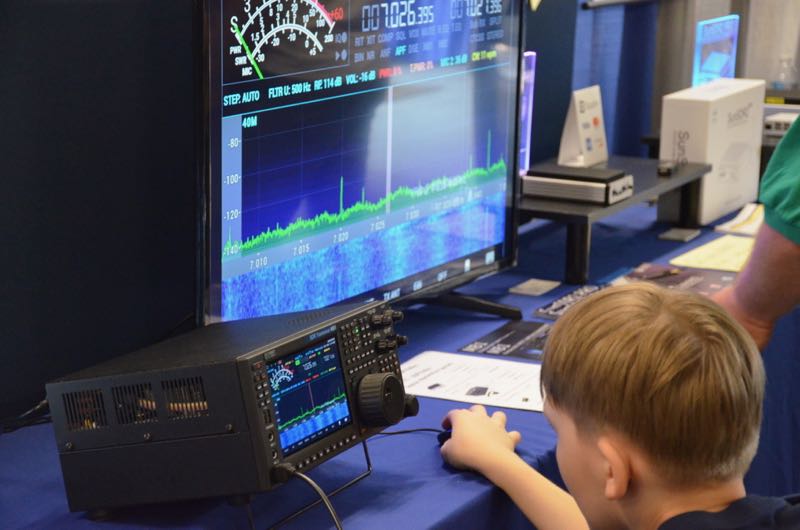
The SunSDR MB1 at the 2018 Hamvention.

This year at the Hamvention in Xenia, OH, I had a chance to check out the SunSDR MB1. Like the Flex M series, the MB1 sports a comprehensive front panel and an amazing assortment of connections on the back panel. As I took a tour of this radio––and it really did require a tour, it’s so densely feature-packed––I was most impressed by the thought that went into this stand-alone SDR transceiver. I love the front panel display, graphics, and overall ergonomics. I understand it will also deliver benchmark performance; indeed with prices starting at a steep $7,000 US, I would expect nothing less!

SDR transceiver summary

As we’ve pointed out in this part of our primer, pure SDR transceivers are a product for radio operators willing to invest more financially in order to take advantage of the advanced functionality and performance a true SDR can provide. At present there are surprisingly few players in the pure SDR transceiver market; this is a product category ripe for expansion. And as more manufacturers get into the game, I believe competition will direct prices into even more affordable territory.

Transceivers based upon SDR technology

The final category we’ll discuss is transceivers based upon SDR technology.  It’s a sign of the times, indicating the direction that all enthusiast-grade transceivers and receivers are likely heading.
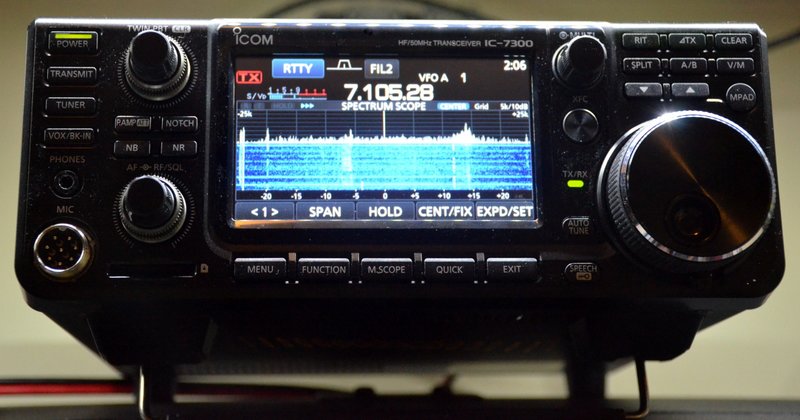
The Icom IC-7300 transceiver

Because the fact is, whether or not you feel inclined to embrace SDRs in your radio world, you may be surprised that you already have: for many years now, radio manufacturers have built their transceivers and receivers on SDR and I/Q quadrature down-sampling technology. All of the transceivers introduced in the past few years that sport on-board spectrum displays––like the Icom-IC7300, Icom IC-7610, and the new Yaesu FT-DX101D––are, of course, based on SDR technology.
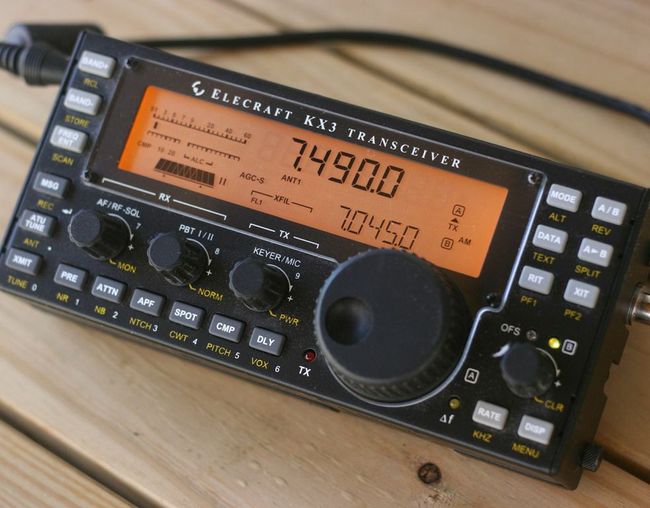
Many others, like the Elecraft KX3 and KX2, which look much more like a traditional radio, are also based on SDR architecture. Indeed, almost all of the major manufacturers implement SDR technology in their current product lines. Manufacturers have caught on, learning how to leverage SDR technology in a way that maximizes receiver performance while keeping the overall price more affordable than comparably-performing legacy radios of former days.

Yet while these radios are SDRs at their core, they often are limited in their functionality when connected to a PC; most can be completely controlled by a PC and many can even export their I/Q data, but usually they won’t offer the working bandwidth and the advanced functionality of a true SDR transceiver.

Conclusion
If I’ve piqued your curiosity about the world of SDRs, and have yet to add one to your shack, I would encourage you to invest in an SDR receiver––at the very least, in one of the affordable rigs mentioned in Part 2 of this series.

Speaking for myself, I was once a “knobs and buttons” radio operator who thought I’d never want to control a radio through a computer and monitor. But when I hesitantly invested in my first SDR, I found it eye-opening––not to mention somewhat democratizing, in that it sets all radio listeners on the same level, as the spectrum becomes visually understandable, and thus accessible, to all who encounter it. I found that if you love to listen, also being able to look at your audio, especially when editing or archiving, but any time you’re tuning around through the spectrum,  just clarifies and enhances your overall radio experience. I soon became hooked…and have never looked back.

Now, I can assure you, I’ll never again be without an SDR. The ability to visualize our radio spectrum via SDR’s virtual window is truly illuminative.  What’s more, I’d even venture to speculate that you may share in finding the experience, if you’ll forgive the colloquialism, pretty darn cool.

Do you enjoy the SWLing Post?

Please consider supporting us via Patreon or our Coffee Fund!

Your support makes articles like this one possible. Thank you!

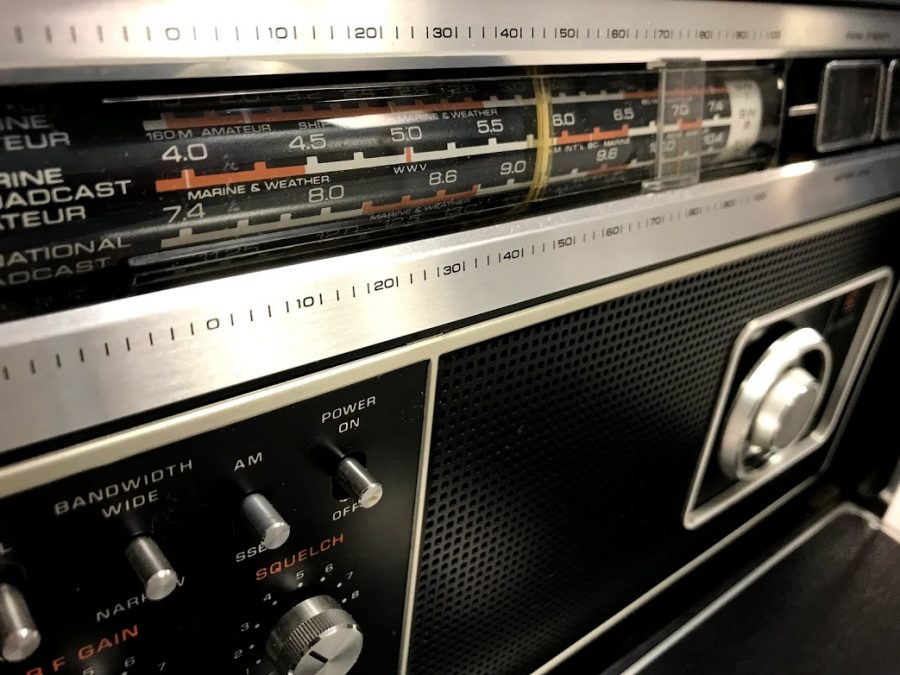
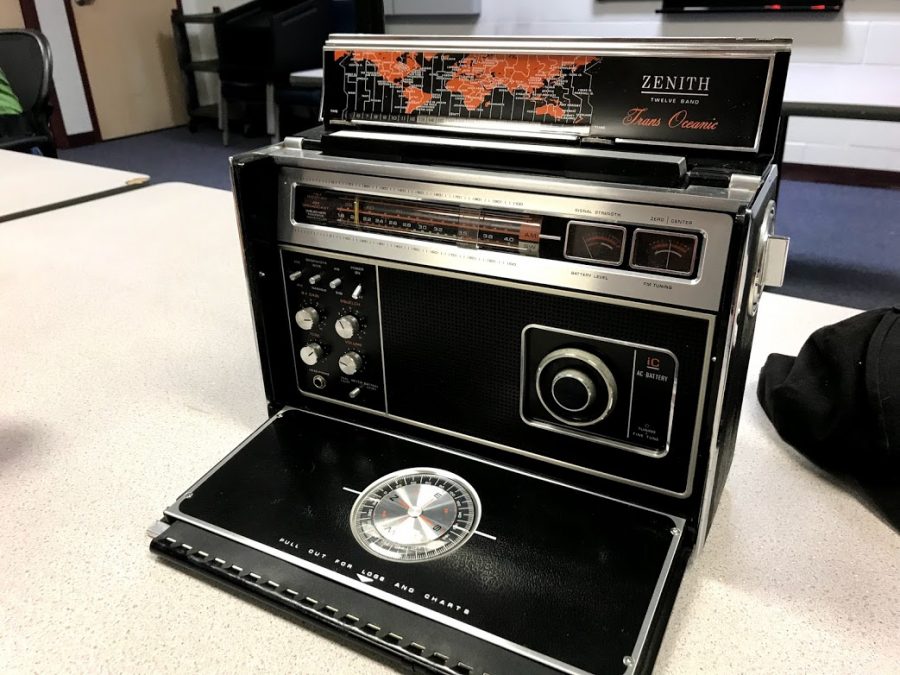
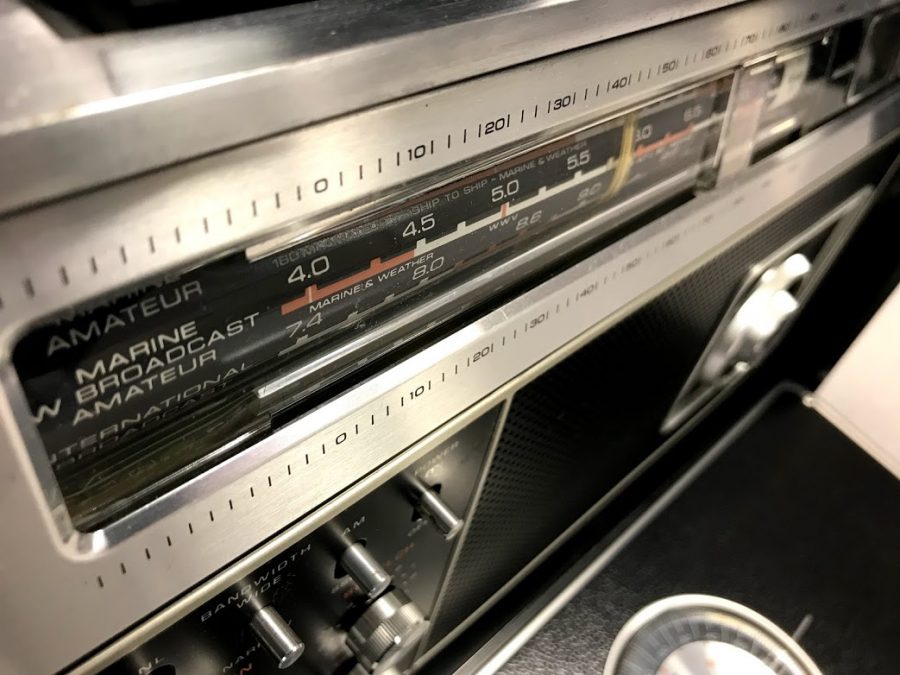
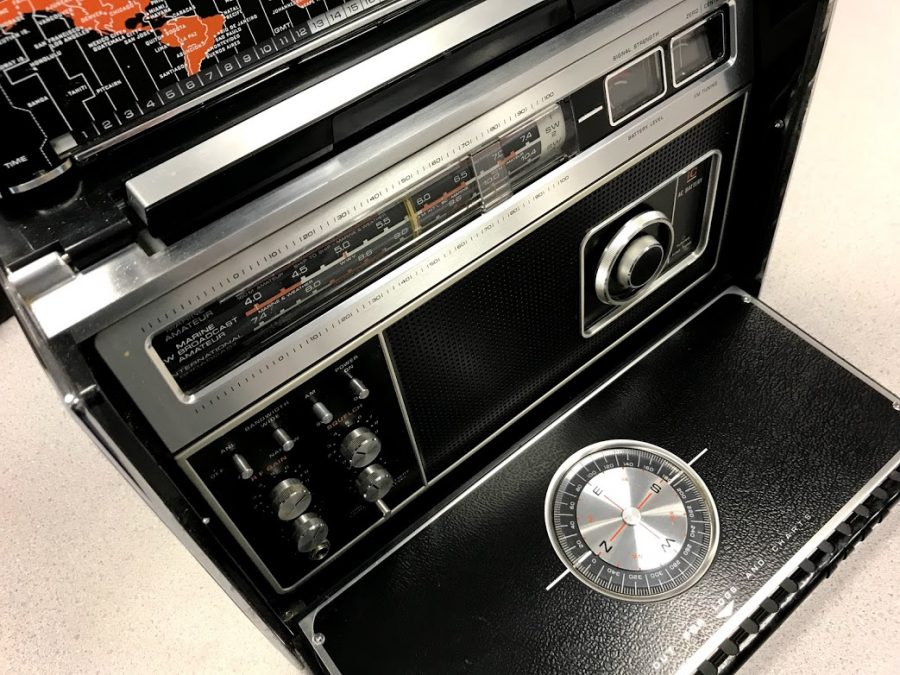
The gorgeous Zenith Model R-7000-2 Trans-Oceanic

Tuesday night, I attended a local radio club meeting with buddy Vlado (N3CZ).

Neither of us had ever attended this particular club, although we both knew a number of the members.

What was the first thing I spotted when I entered the meeting room? A pristine Zenith Model R-7000-2 Trans-Oceanic! Talk about a good omen!

Turns out there are no less than two Trans-Oceanic collectors in this group of about two dozen ham radio operators. The owner of this Model R-7000-2 told me that he has every Trans-Oceanic including the coveted Clipper and Bomber models.

I’m not sure I had ever seen the Model R-7000-2 in person. It’s a striking radio and the last in the line of the Trans-Oceanic sets–this model was produced in 1981.

Of course, I had to snap a few photos of this beauty.

Speaking of beauties, this Zenith enthusiast also brought his copy of the John H. Bryant and Harold N. Cones seminal volume: The Zenith Trans-Oceanic, the Royalty of Radios. (A book I highly recommend.) On one of the pages I rediscovered an image of my favorite 1930s/40s actress, Myrna Loy:

I first fell in love with Myrna Loy watching the classic film series: The Thin Man. I’m a massive fan of Loy/Powell films. Here’s the trailer from the first of the Thin Man series:

Any Post readers own the Trans-Oceanic Model R-7000-2?  Any one else in love with Myrna Loy? Please comment!

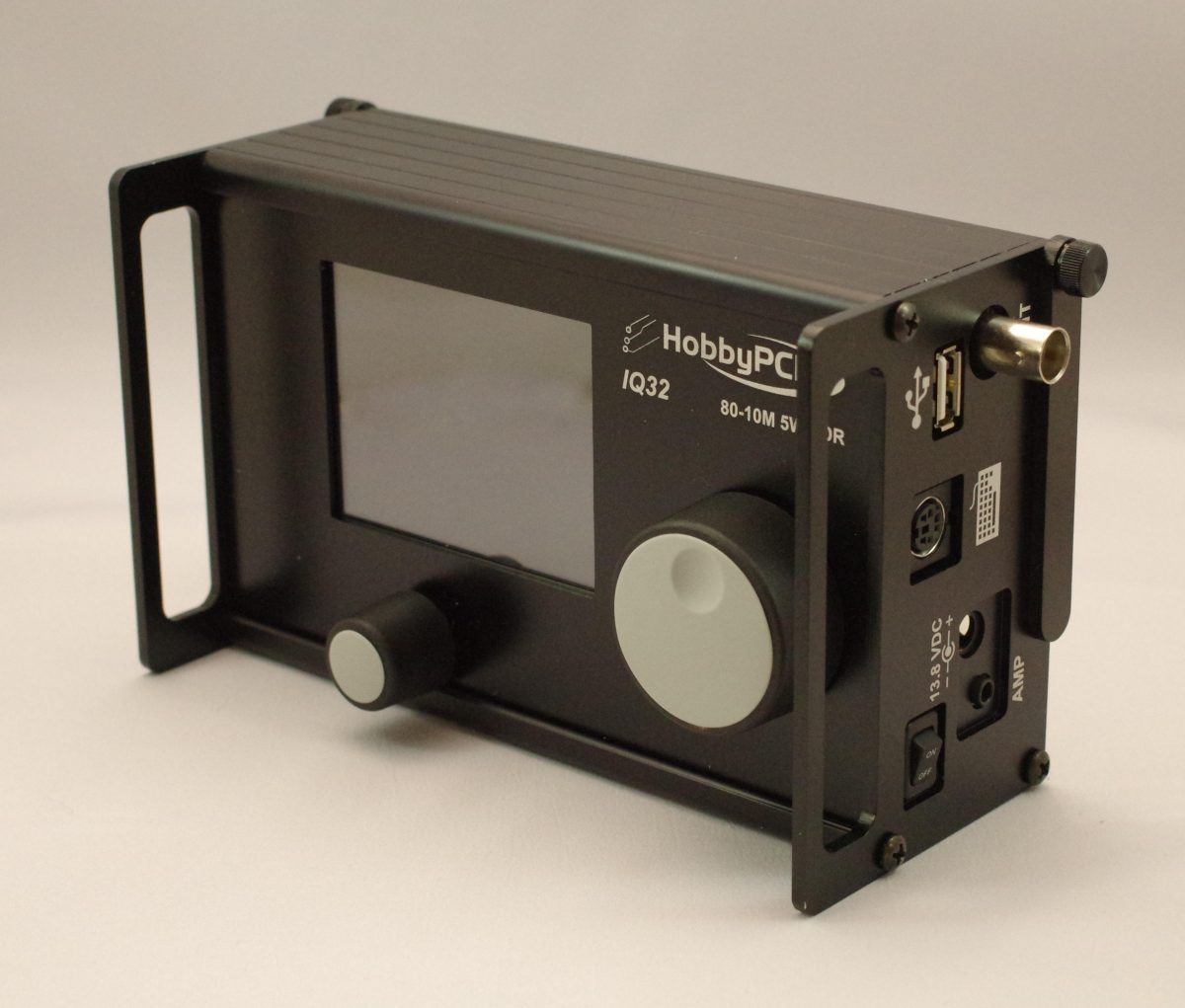
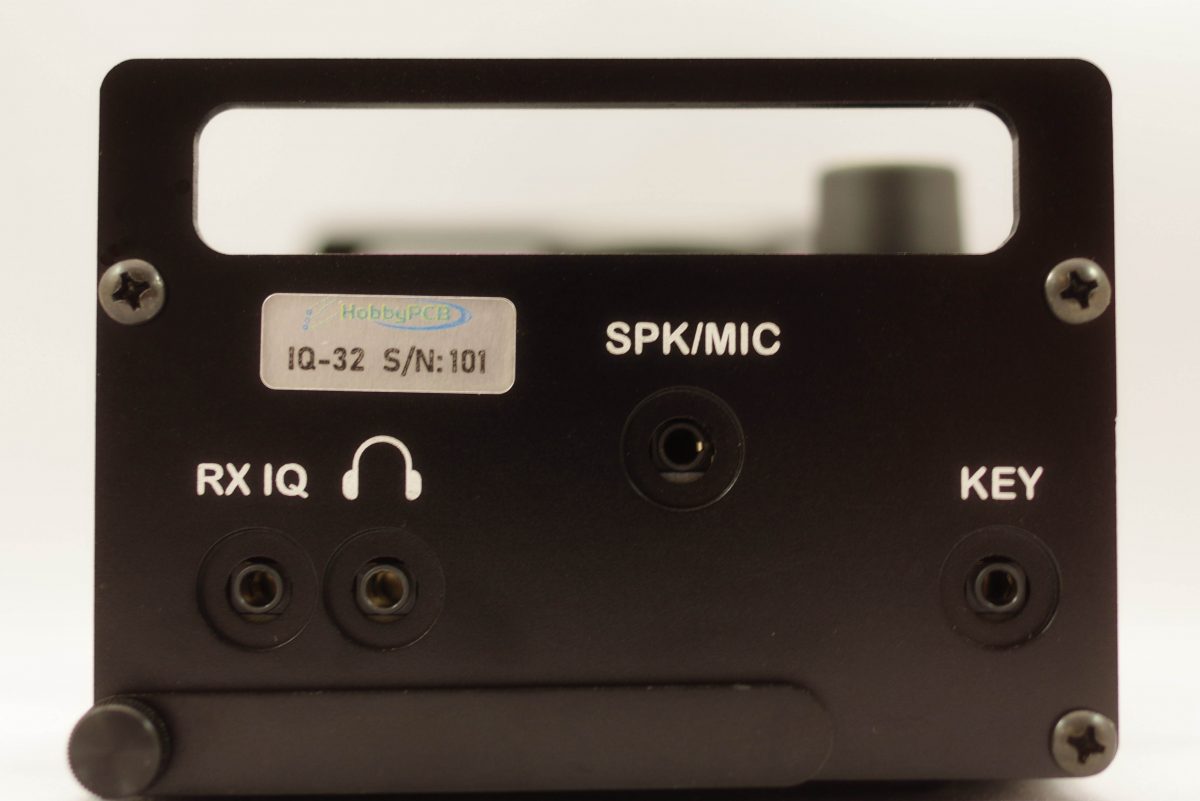
The HobbyPCB IQ-32: A general coverage portable QRP transceiver with color touch screen now shipping

Many thanks to SWLing Post contributor, Pete (WB9FLW), who shares the following information regarding HobbyPCB’s much-anticipated portable transceiver which is now shipping.  The price is a competitive $529.00.

The following information comes from the HobbyPCB website:

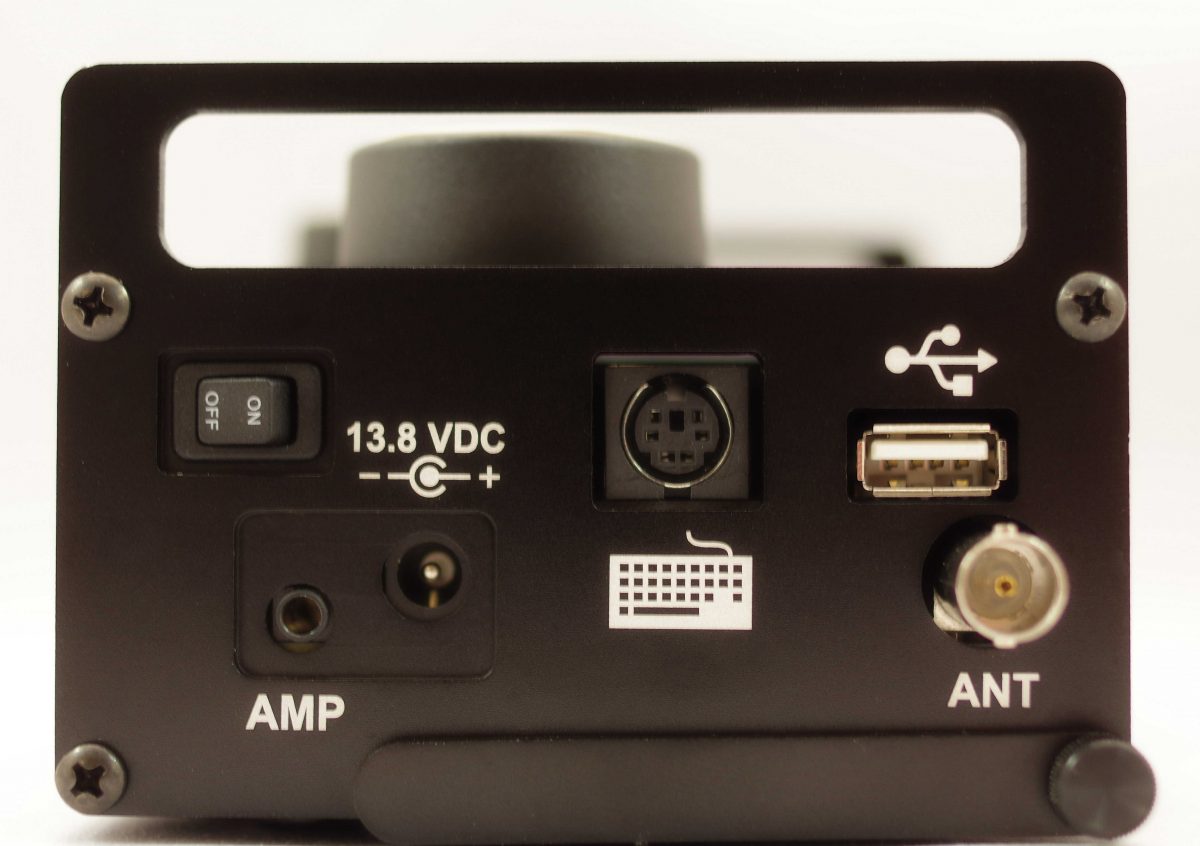
The IQ32 is 5W output, 80-10M Amateur Radio transceiver with powerful 32 bit processing providing high-end features at an entry level price. The IQ32’s 3.2″ color LCD touch-screen display and dual control knobs provide an enjoyable operating experience in a robust package.

Available for immediate delivery!

Introducing the HobbyPCB IQ32 HF transceiver, based on the high performance RS-HFIQ RF system, the receiver in the IQ32 consists of 5 band-pass filters to reject out-of-band signals, an LNA with frequency dependent gain and a conventional quadrature down-converter. The transmitter features a Class A, 5W power amplifier with individual low-pass filters for each band to exceed FCC requirements for spectral purity.

The IQ32 features a large, color, touch-screen display providing an enhanced user interface and informative spectrum and waterfall displays found on radios costing much more. With a powerful STM-32 DSP processor, the IQ32 transceiver has variable filtering, multi-mode AGC, memory functions, built-in PSK encode/decode with keyboard support.

5W not enough power? Add a HARDROCK-50 to your station to boost up to 50W. The IQ32 and HARDROCK-50 seamlessly integrate together for a powerful mobile/base station!

Simple upgradeable firmware, no connection to a computer required, no drivers, no cables. Simply insert a thumb-drive with the appropriate file and the IQ32 updates its own firmware.

Specifications

  • Frequency Range: 3-30MHz (performance guaranteed on 80/60/40/30/20/17/15/12/10M ham bands)
  • Sensitivity: MDS < -128 dBm on 80M dropping to < -135 on 10M
  • Noise Figure: < 8 dB
  • TX Power: 5W typical, 4W minimum
  • LO Feed-thru: < -50 dBc @ 5W output
  • Spurious and Harmonics: < -50 dBc typical
  • DC Power: 13.8VDC, 2 amp max
  • Size: 172mm x 105mm X 75mm
  • Weight: < 700 grams
  • Display: 3.2″ Color LCD Touchscreen
  • Modes: USB, LSB, CW, PSK 31
  • DSP Processor: STM-32, 32 Bit

Click here to download the manual.

Pete also notes:

If one already has the RS-HFIQ board fear not an upgrade kit is available:

https://hobbypcb.com/products/hf-radio/iq32-upgrade

Thank you for sharing this, Pete!

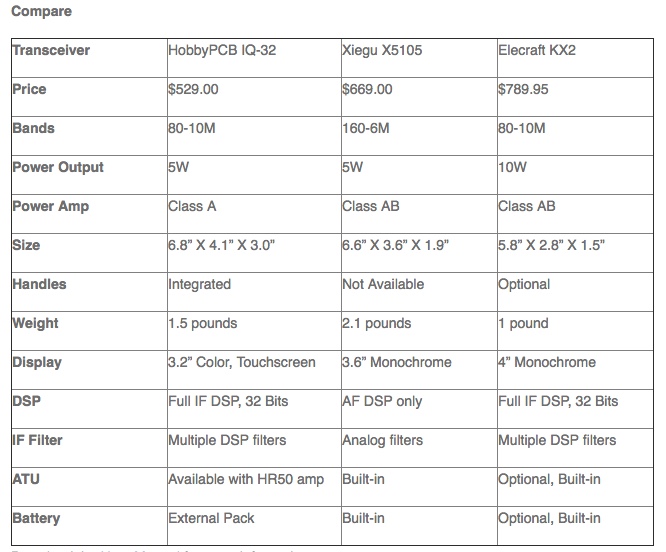
I may see about grabbing an IQ-32 to evaluate. I’m very curious how its receiver might stack up to the Elecraft KX2, the CommRadio CTX-10 and the LnR Precision LD-11. (Please note that these links lead to my other radio site, the SWLing Post.)

It doesn’t appear that the IQ-32 has an AM mode, but I would still like to see how it might handle broadcast listening on the shortwave meter bands using ECSS.

I love the portable form factor and the fact that it ships with stand-off handles to protect the front face of the radio.

Video:

Check out WA2EUJ’s IQ-32 presentation from the 2018 Hamvention on YouTube:

Click here to check out the IQ-32 product page at HobbyPCB.

Have any Post readers purchased the IQ-32?  Please comment!

Do you enjoy the SWLing Post?

Please consider supporting us via Patreon or our Coffee Fund!

Your support is greatly appreciated. Thank you!

Joseph Hovsepian: Montreal’s “Radio Doctor”

Many thanks to SWLing Post contributors Scott Gamble and Bill Mead who both share the following story via the CBC News:

Joseph Hovsepian says he is part of the last generation that knows how to repair electronics

Joseph Hovsepian has been repairing? radios for so long that he claims that he can sometimes smell the problem.

“When I pick up a radio, I turn it on or I plug it in and the way it smells, the way it sounds or doesn’t sound, the way it crackles and fades away, all these things are recorded in my brain and I know exactly how to start and how to fix it,” he said.

Since 1960, Hovsepian has been fixing radios, turntables and other electronic gadgets from his Parc Ave. repair shop.

The 79-year-old sees himself as part of the last generation of people trained in the art of repair.

“We have lost the ability to touch things, fix things, repair them and feel good for doing it,” he said.

For almost his entire life, Hovsepian has been tinkering with radios. He built a crystal radio when he was 12, and his first tube radio at 15.

[…]He believes that today’s electronics lack the warmth that the old radios offered. Hovsepian said smartphones look dead to him compared to old technology.

“Even the sound of the old radios, a little scratch here, a little scratch there…This is radio.”[…]

Click here to read the full article at CBC News.

This is a charming story and I think Post readers can certainly understand why radio seems to be in a class of its own. I feel very fortunate that I’m friends with two people who repair radios for others, my buddy Charlie (W4MEC) and Vlado (N3CZ). Both are kind enough to show me the ropes as they troubleshoot problem sets.

Post readers: Do you live somewhere with a radio repair shop? Have any readers ever visited Mr. Hovsepian’s shop in Mile End? Please comment!

SDR Primer Part 2: Exploring the world of SDRs for $200 or less

The $22 RTL-SDR paired with a Raspberry Pi and employed as an ADS-B receiver/feeder.

The following article originally appeared in the July 2018 issue of The Spectrum Monitor magazine:


Welcome back to the world of SDRs

Last month we covered Part One of our three-part primer on software-defined radios (SDRs). While last month’s Part One focused on the nomenclature and components of a functioning SDR system, Part Two will take a look at some affordable SDR station options that will propel you into the world of SDRs for less than $200 US. We’ll cover Part Three in November, and we’ll dive a little deeper into the rabbit hole and cover higher-end SDRs and ham radio transceivers with embedded SDRs.

SDRs are affordable

Photo by Kody Gautier

If there’s one thing I’d like you to take away from this part of our primer, it’s that SDRs are truly affordable. For less than the price of a typical full-featured shortwave portable, you can own an SDR that covers almost all of the listening spectrum, and that does so with excellent performance characteristics.

We’re lucky to live in a time of phenomenal radio innovation. When I first jumped into the world of SDRs, the least expensive SDR that covered any of the bands below 20 MHz was about $500. That was only a few years ago, in 2010 or so.

Yet in the past three years, affordable SDRs have become the dominant radio product on the market.  And these modestly-priced products have made the barrier of entry into the SDR world crumble overnight.

Today, even a $100 SDR has more features, more frequency range, and more functionality than a $1000 SDR from just a decade ago.  Times have changed dramatically; indeed, the pace of innovation in this craft is simply amazing.

Before we begin looking at some choice sub-$200 SDRs, I’d just like to direct your attention to the first part of our SDR Primer (click here to read). Specifically, I’d like you to note one element I discussed in that article:  the vital importance identifying your goals as an SDR owner. In other words, how do you plan to use your SDR? If you’re only seeking an SDR to listen to local ham radio repeaters, track cubesat satellites, or gather ADS-B information from aircraft, a $25 SDR will more than suffice. If you wish to use the SDR as a transceiver panadapter, or you wish to chase weak signal DX on the HF bands, then I’d suggest you invest a bit more.

I’d also like to remind you, as I noted in the previous article, that this primer will be limited in the SDRs I highlight. The reason for this is simple:  there now exists a vast ocean of SDRs on the market (just search eBay for “SDR” and you’ll quickly see what I mean) so all models simply can’t be included in this introductory foray. I’ll be focusing here on several SDRs that cover the HF spectrum and above. I’ll also focus on SDRs with which I have personal experience, and which I consider to be “enthusiast” grade among a healthy community of users. Of course, this part of the primer will only include HF-capable receivers that cost a total of $200 or less.

Let’s take a look at what’s on the market in order of price, starting with the most affordable.

$10-$25: The RTL-SDR dongle

No doubt, many of you reading this primer have purchased an RTL-SDR dongle. Over the years, I’ve owned three or four of them and have even purchased them for friends. These dongles originally appeared on the market many years ago as mass-produced DVB-T TV tuner dongles based on the RTL2832U chipset. Very soon, users discovered that with just a little hacking, the dongle was capable of much, much more than its original intended purpose.

The dongle resembles a USB memory stick. On one end, you’ll find a standard USB connector.  On the other, you’ll find an antenna port, typically SMA, to which one connects an antenna. Although it goes without saying, here’s a friendly reminder: make sure you’re choosing an antenna to match the frequency range you’re exploring!

I’ve seen this older model of RTL-SDR being sold for $9 at Hamvention.

Early RTL-SDR dongles couldn’t cover the HF bands or lower, but many models can now cover a gapless 500 kHz all the way to 1.75 GHz.

So, what can you do with an RTL-SDR dongle?  In short, quite a lot! Here are a few of this simple device’s many applications and uses in our hobby.  It can:

  • become a police radio scanner
  • monitor aircraft and ATC communications
  • track aircraft with ADS-B decoding and read ACARS short messages
  • scan trunking radio conversations.
  • decode unencrypted digital voice transmissions such as P25/DMR/D-STAR.
  • track maritime boat positions like a radar with AIS decoding.
  • track and receive weather balloon data
  • connect to VHF amateur radio
  • decode APRS packets
  • receive and decode GPS signals
  • utilize its rtl-sdr as a spectrum analyzer
  • receive NOAA weather satellite images
  • and so much more––! This list is not fully comprehensive by any means.  Check out this list of projects at RTL-SDR.com.

And, of course, you can listen to any signals between 500 kHz up to 1.75 GHz––essentially, most of the radio listening landscape.

Is $25 still a little high for your budget? RTL-SDR dongles can be found for as low as $10 US, shipped, on eBay. While the cheapest of these dongles may suffice for some radio applications, I’m partial to the dongle produced by RTL-SDR.com, since they’re built in a tough metal enclosure, have thermal pad cooling, as well as extra ESD protection. Amazon has an RTL-SDR.com dongle starter package with antenna options for about $26. That’s, what, the price of three hamburgers? Two orders of fish and chips? And worth it.

Many third-party SDR applications support the RTL-SDR dongle, but my favorite is SDR# (click here to download).

So, the major pros of this little SDR are 1) obviously, the price; 2) many, many uses; and 3) the fact that it’s the most popular SDR on the market, with a massive online user base.

What about negatives? Well, to be frank––aside from the dongle’s budget-busting versatility––the fact is that “you pay for what you get.” You’re investing just $10-$27 in this receiver, so don’t expect exceptional performance especially on anything lower than 50 MHz. On HF, for example, the RTL-SDR could easily overload unless you employ external filtering.

Indeed, I’ve never used the RTL-SDR for HF DXing, but I currently have three dongles in service 24/7:  two as ADS-B receivers, and one as a receiver for the LiveATC network. And these work hard. Indeed, It’s a workhorse of a device!

I suggest you grab an RTL-SDR and use it as an accessible step into the world of SDRs, and as an affordable single-purpose tool to unlock the RF spectrum!

Click here to check out the RTL-SDR blog SDR dongle via Amazon (affiliate link).

$99: The SDRplay RSP1A

When you invest a modest $99 US (or $120 shipped), and purchase the RSP1A, you take a major step forward in the SDR world.

UK-based SDRplay is an SDR designer and manufacturer that focuses on enthusiast-grade, budget wideband SDRs. SDRplay designs and manufactures all of their SDRs in the United Kingdom, and over the past few years, they’ve developed a robust user community, extensive documentation, and, in my humble opinion, some of the best tutorial videos on the market.

SDRuno windows can be arranged a number of ways on your monitor.

Although the RSP series SDRs are supported by most third-party SDR applications, SDRplay has their own app: SDRuno. Moreover, SDRuno is a full-featured, customizable application that takes advantages of all of this SDR’s performance potential and features. I should mention that installing the RSP1A and SDRuno is a pure plug-and-play experience:  just download and install the application, plug in the RSP1A to your computer, wait for the USB driver to automatically install, then start SDRuno. Simplicity itself.

While the RSP1A is SDRplay’s entry-level wideband SDR, it nonetheless plays like a pro receiver and truly pushes the envelope of performance-for-price, and for other SDR manufacturers, sets the bar quite high. The RSP1A is a wideband receiver that covers from 1 kHz all the way to 2 GHz; equally pleasing the longwave DXer, HF hound, tropo-scatter hunter, and even radio astronomer. This affordable SDR really covers the spectrum, quite literally. Not only does the RSP1A cover a vast frequency range, but its working bandwidth can be an impressive 10 MHz wide and via SDRuno, the RSP1A will support up to 16 individual receivers in any 10 MHz slice of spectrum. All this for $99? Seriously? I assure you, yes.

Think of the RSP1A as the sporty-but-affordable compact car of the SDR world. It delivers performance well above its comparatively modest price, and is fun to operate. In terms of DX, it gets you from point A to point B very comfortably, and is a capable receiver which will help you work even weak signals––and very reasonably!

If you’re looking to explore the world of SDRs, would like a capable receiver with great LW/MW/HF reception to do it with, but also want to keep your budget in check, you simply can’t go wrong with the RSP1A.

Check out the RSP1A via:

$167 US (125 GBP): FUNcube Dongle Pro+

Many years ago when I ventured into the world of SDRs, one of the only affordable SDRs which covered the HF bands was the FUNcube Dongle Pro+.

The Funcube Dongle Pro+, which resembles the RTL-SDR “stick” type dongle, was originally designed as a ground receiver for the FUNcube Satellite (cubesat) project initially made possible by AMSAT-UK and the Radio Communications Foundation (RCF). The original Funcube dongle did not cover any frequencies below 64 MHz, but the Funcube Dongle Pro+ added coverage from 150 kHz to 1.9 GHz with a gap between 240 MHz and 420 MHz.

In full disclosure, I’ve never owned a FUNcube Dongle Pro+, but I have used them on several occasions. I believe you would find that it is prone to overloading if you use a longwire antenna that’s not isolated from the dongle. In other words, during such use it seems to be subject to internally-generated noise. In my experience, the Pro+ worked best when hooked up to an external antenna fed by a proper coaxial cable.

To be clear, with the advent of SDRplay and AirSpy SDRs, the FUNcube Dongle Pro+ is no longer the budget SDR I would most readily recommend.

Still, the Pro+ is a very compact dongle that has a great history, and around 2012 really pushed the performance-for-price envelope. It still has many dedicated fans. No doubt, this product has had a huge influence on all of the sub $200 SDRs currently on the market, thus we owe it a debt of gratitude.

Click here to check out the FUNcube Dongle Pro+.

$169 US: SDRplay RSP2 & RSP2 Pro ($199):

The SDRplay RSP2 Pro

In 2016, after the remarkable success of the original RSP, SDRplay introduced the RSP2 and RSP2 Pro SDRs. The RSP2 is housed in an RF-shielded robust plastic case and the RSP2 Pro is enclosed in a rugged black painted steel case. In terms of receivers and features, the RSP2 and RSP2 Pro are otherwise identical

The RSP2 and RSP2 Pro provide excellent performance, three software-selectable antenna inputs, and clocking features, all of which lend it to amateur radio, industrial, scientific, and educational applications; it is a sweet SDR for $169 or $199 (Pro version). I know of no other SDRs with this set of features at this price point.

The RSP2 series has the same frequency coverage as the RSP1A. Of course, to most of us, the big upgrade from the SDRplay RSP1A is the RSP2’s multiple antenna ports:  2 x 50-Ohms and one High-Z port for lower frequencies.

The SDRplay RSP2 with plastic enclosure.

As with all of SDRplay’s SDRs, their own application, SDRuno, will support up to 16 individual receivers in any 10 MHz slice of spectrum.

Bottom line? Since the RSP2 has multiple antenna ports––and two antenna options for HF frequencies and below–the RSP2 is my choice sub-$200 SDR to use as a transceiver panadapter. (Spoiler alert: you’ll also want to check out our summary of the recently released $279 RSPduo from SDRplay in this review or in Part 3 of our primer before pulling the trigger on the purchase of an RSP2 or, especially, an RSP2 Pro!)

Check out the RSP2 via:

$199 US: AirSpy HF+

Sometimes big surprises come in small packages. That pretty much sums up the imminently pocketable AirSpy HF+ SDR.

The HF+ has the footprint of a typical business card, and is about as thick as a smartphone. Despite this, it’s a heavy little receiver––no doubt due to its metal alloy case/enclosure.

AirSpy’s HF+ was introduced late 2017. Don’t be surprised by its footprint which is similar to a standard business card to its left, this SDR is performance-packed!

Not to dwell on its size, but other than my RTL-SDR dongle, it’s by far the smallest SDR I’ve ever tested. Yet it sports two SMA antenna inputs: one for HF, one for VHF.

The HF port is labeled as “H” and the VHF port as “V”

When I first put it on the air, my expectations were low.  But I quickly discovered that the HF+ belies its size, and is truly one of the hottest sub $500 receivers on the market! Its HF performance is nothing short of phenomenal.

The HF+ is not a wideband receiver like the FunCube Dongle Pro+ or RSP series by SDRplay. Rather, the HF+ covers between 9 kHz to 31 MHz and from 60 to 260 MHz only; while this is a relatively small portion of the spectrum when compared with its competitors, this was a strategic choice by AirSpy. As AirSpy’s president, Youssef Touil, told me,“The main purpose of the HF+ is [to have] the best possible performance on HF at an affordable price.”

Mission accomplished.  Like other SDRs, the HF+ uses high dynamic range ADCs and front-ends but enhances the receiver’s frequency agility by using high-performance passive mixers with a robust polyphase harmonic rejection structure.  The HF+ was designed for a high dynamic range, thus it is the best sub-$200 I’ve tested for strong signal handling capability on the HF bands.

You can very easily experiment and customize the HF+ as well; easy access to the R3 position on the circuit board allows you to make one of several published modifications. “During the early phases of the design,” Yousef explains, “R3 was a placeholder for a 0 ohms resistor that allows experimenters to customize the input impedance.” He goes on to provide in-depth clarification about these mods:

“For example:

  • A 300 pF capacitor will naturally filter the LW/MW bands for better performance in the HAM bands
  • A 10µH inductor would allow the use of electrically short antennas (E-Field probes) for MW and LW
  • A short (or high value capacitor) would get you the nominal 50 ohms impedance over the entire band, but then it’s the responsibility of the user to make sure his antenna has the right gain at the right band
  • A custom filter can also be inserted between the SMA and the tuner block if so desired.”

Since the introduction of the HF+, it has been my recommended sub-$200 receiver for HF enthusiasts. If you want to explore frequencies higher than 260 MHz, you’ll have to look elsewhere. Also, note that longwave reception is not the HF+’s strong suit––although modifications to R3 and future firmware upgrades might help with this! Additionally, the HF+’s working bandwidth is 660 kHz; quite narrow, when compared with the RSP series, which can be widened to 10 MHz.

AirSpy also designed the free application SDR# to take full advantage of their receivers’ features and performance.

The AirSpy application (a.k.a. SDR#)

Installing the HF+ and getting it on the air is pure plug-and-play. While SDR# is a powerful and fluid SDR application, I actually use SDR Console more often, as it supports most of my other SDRs as well, and offers advanced virtual receiver and recording functionality.

If you’re an HF guy like me, the HF+ will be a welcome addition to your receiver arsenal. It’s a steal at $200.

Click here for a full list of AirSpy distributors.

Conclusion

If you haven’t gathered this already, it’s simply a brilliant time to be a budget-minded radio enthusiast. Only a few years ago, there were few, if any, enthusiast-grade sub-$200 SDR options on the market.  Now there are quite a number, and their performance characteristics are likely to impress even the hardest-core weak-signal DXer.

Still, some hams and SW listeners reading this article will no doubt live in a tougher RF environment where built-in hardware filters are requisite to prevent your receiver from overloading. Or perhaps you desire truly uncompromising benchmark performance from your SDR. If either is the case, you may need to invest a little more of your radio funds in an SDR to get exactly what you want…and that’s exactly where I’ll take you November in the final Part Three of this SDR primer series.  Stay tuned!

Stay tuned for more in Part Three (November). I’ll add links here after publication.

Do you enjoy the SWLing Post?

Please consider supporting us via Patreon or our Coffee Fund!

Your support makes articles like this one possible. Thank you!

Can’t escape the noise? Take an impromptu DXpedition via the KiwiSDR network!

While I love the Panasonic RF-B65, the Voice of Greece and a St. Ambroise Oatmeal Stout: this combo can’t fight the persistent radio interference here at the condo.

Some of you might recall that I’m spending the months of August and September in a condo near Québec City, Canada. We love it here, though it does present some radio challenges. Unlike our rural/remote mountain home in the States, I’ve always had to cope with QRM (manmade radio interference) here at the condo. Not surprising.

I typically bring my PK Loop antenna–it helps lower the noise a tad and is easy to take out on our balcony for optimal reception. Lately, though, the QRM has been even worse on the balcony than inside the condo (more on that in a future post).

Some North American and European stations punch through the noise when propagation is favorable (especially the Voice of Greece and Radio Romania International) but there have been evenings where nothing could penetrate the wall of noise.

One way I escape the noise, of course, is to take my radio to a picturesque remote location for the afternoon or evening. It’s amazing the number of signals you can pull out of the ether when the noise floor is so low.

Back at the condo, though, there’s no easy way to escape the noise.

Or is there?

Impromptu DXpeditions

Perhaps 21st century problems require 21st century solutions.

This year–especially here at the condo–I’ve spent a great deal of time exploring the KiwiSDR network.

For those of you not familiar, the KiwiSDR is a self-hosted WebSDR which operates much like a mini U Twente WebSDR. KiwiSDR owners install their SDRs at home–or in other favorable locations–then share control of their SDR with the world via the the Internet.

Like the U Twente WebSDR, KiwiSDRs allow multiple simultaneous users to control the SDR independently of each other. Each KiwiSDR can allow up to four simultaneous guests (the U Twente WebSDR can allow hundreds of simultaneous users, but it’s also a university-supported bespoke SDR with fantastic bandwidth!).

Over the past few years, the KiwiSDR network has grown almost exponentially. There are Kiwi SDRs on every continent save Antarctica (someone remedy that, please!).

Each red pin represents a KiwiSDR installation.

Other than the fact that the SDR audio is piped through the Internet–and you can’t walk outside and adjust the antenna–there is no difference between using a KiwiSDR remotely or locally.

In fact, the KiwiSDR only has a web browser-based application, there is no downloadable application for local use. So quite literally, the experience of controlling and using a KiwiSDR locally or globally is identical.

And it’s so much fun! I browse the KiwiSDR network via the map above, select an interesting location, and virtually travel there for an impromptu DXpedition. I can travel to India, Italy, Japan, New Zealand, or Hawaii via the network and be back in time for dinner here in Canada without breaking a sweat or even using frequent flyer miles!

I’ve found that the combo above makes for an immersive experience. I use Bose Quiet Comfort noise-cancelling headphones paired with my iPad Air (which I have enclosed in a Zagg Rugged Book). With a reasonable Internet connection, it truly feels like I’m there.

Of course, you don’t need an iPad, or any special equipment. The KiwiSDR application works with pretty much any computer, tablet or smart phone that has a web browser. For the best experience, however, I would suggest connecting a good external speaker, bluetooth speaker or headphones.

I know many of you are thinking, “But Thomas! This isn’t real radio!”

But I would argue that it is real radio! It’s a real radio, connected to a real antenna that you’re simply controlling via the Internet with a web-based SDR application. Instead of the audio going through a sound card into your headphones, it’s going into a soundcard, piped through the Internet, then into your headphones.

Give it a try! You might find an impromptu DXpedition is the perfect remedy to your QRM and RFI blues!

Post readers: Any heavy KiwiSDR users out there?  Or do you oppose using WebSDRs? What are your thoughts? Please comment!

Do you enjoy the SWLing Post?

Please consider supporting us via Patreon or our Coffee Fund!

Your support makes articles like this one possible. Thank you!

Justin Moore on Making Music with Radios

Many thanks to SWLing Post contributor, Justin Patrick Moore (KE8COY), who is a radio host, radio enthusiast and musician. At my request, Justin has shared the following article excerpts from his blog that discuss the convergence of music and radio:


Imaginary Landscapes

The development of telecommunications technology and electronic circuits had a major impact on the creation of new musical instruments from the very beginning, but it was only in 1951 that a composer first got the idea that the radio itself could be used as a musical instrument.  Since then the use of radio as a source for live, unpredictable sound, music, and voice has become commonplace across the genres of contemporary classical music, and various styles of electronic, rock and pop music. Using the radio as an instrument has become part of what composer Alvin Curran has called a “new common practice” and is just one of many methods being used to create the sonic backdrop of the landscape we now inhabit in this age of electronic multimedia.

“It’s not a physical landscape. It’s a term reserved for the new technologies. It’s a landscape in the future. It’s as though you used technology to take you off the ground and go like Alice through the looking glass.” John Cage wrote this about his series of Imaginary Landscape compositions. Imaginary Landscape No. 4 was first performed in 1951 and is scored for 12 radios played by 24 musicians, two on each radio, one to control the tuning, the other to control the volume. It is a great example of indeterminate music. The only guarantee about the piece is that no performance of it will never be heard the same way. This is guaranteed because John incorporates chance operations to determine how much the dials of each radio are to be turned by each performer. The novelty of each performance is also guaranteed by the nature of radio itself. Depending on the place and time of a performance, the things coming out of the radio speakers are going to be different. During its premier concert at Columbia University’s McMillin Theater those in the audience heard the word “Korea” over and over again, as well as snippets of a Mozart violin concerto, news about baseball, static, and silence. The performance took place around midnight and many of the stations in New York had already gone off the air for the night.  Of course the silence never bothered Cage, who considered  in an integral part of the experience. He had said that “silence, to my mind is as much a part of music as sound.”

Read the full article at Sothis Medias.

The Radiophonic Laboratory

Radio is the perfect medium for the diffusion of electronic music. The unpredictable sounds coming from radios are also a perfect source material. In many cases the production studios available at broadcast facilities made them the first laboratories for the scientific investigation of sound, for the sole purpose of making music, to be used by electronic music pioneers. Likewise these stations became the first to introduce electronic and other avant-garde music to the public. Such was the case with Westdeutscher Rundfunk, or WDR, the German public broadcasting institution located in Cologne. Their Studio for Electronic Music was the first of its kind in the world and became an epicenter for musicians working in the new medium. On the broadcasting side the WDR promoted new music through unique programming that included radio lectures, the playing of live and recorded music, and commissioning new works from composers working in the field.

Read the full article at Sothis Medias.

Telemusik

As the world caught wind of the work being done at the WDR’s Electronic Music Studio, other radio stations and broadcasting corporations followed suit. NHK (Nippon HosoKyokai) in Japan built their electronic music studio in 1955, directly modeling it on the one at WDR. In 1958 the BBC created their famous Radiophonic Workshop. (I blame starting to watch Doctor Who as a ten year old, with its strange soundtrack and incidental music, for what became my lifelong fascination with electronic music.) The studio at NHK was just over ten years old when they invited Karlheinz Stockhausen over to work there and create two pieces for their airwaves.

When he arrived in Japan Karlheinz was severely jet lagged and disoriented. For several days he couldn’t sleep. That’s when the strange hallucinatory visions set in. Laying awake in bed one night his mind was flooded with ideas of  “technical processes, formal relationships, pictures of the notation, of human relationships, etc.—all at once and in a network too tangled up to be unraveled into one process.” These musings of the night took on a life of their own and from them he created Telemusik.

Read the full article at Sothis Medias.

Kurzwellen

Starting in the early 1960s Karlheinz Stockhausen composed several instrumental works which he called “process compositions”. These did away with traditional stave notation and instead used symbols including plus, minus, and equal signs that indicated the successive transformations of sounds that were otherwise unspecified or unforeseeable by the composer. In this way he brings elements of improvisation into the fold of Western classical music where the strict adherence to a fixed score left little room for interpretation by musicians. The scores in his process pieces don’t dictate specific notes or ways of playing but rather specify the way a sound is to be changed or imitated. Taking a cue from his studies of information theory Stockhausen created a way of writing music that is similar to computer programming. The program “determines the way information is processed while leaving the choice of information to be processed to the individual user.” (Maconie 1990, 156-157)

Stockhausen’s process pieces include Plus-Minus (1963), Prozession (1967), Kurzwellen, and Spiral (both 1968). Eventually they led to the text based processes of his intuitive music compositions in the cycles Aus den sieben Tagen (1968) and Für kommende Zeiten (1968–70).

Kurzwellen (Short waves), the third of the process pieces also marks the beginning of Stockhausen’s magnificent voyage using shortwave receivers as a medium for musical transportation. The formal procedures in Kurzwellen (and the others) are fixed. Stockhausen thinks of these not as fixed in the way Beethoven’s Fifth symphony is a fixed piece that will sound the same to a greater or larger degree from recording to recording or performance to performance. Only the processes themselves are fixed. These are indicated primarily by plus, minus, and equal signs and constitute the composition.

Yet the sound materials themselves, like the knobs on the tuners, are variable. The process scores can be followed and bring about very different results each time they are played and yet somehow still sound similar. The sound material coming in from the shortwave radios is unpredictable. Yet the prescribed processes themselves can be heard from one performance to another as being “the same”. These developments in musical theory and practice make live performances and new recordings exciting events.

Read the full article at Sothis Medias.