Category Archives: Radios

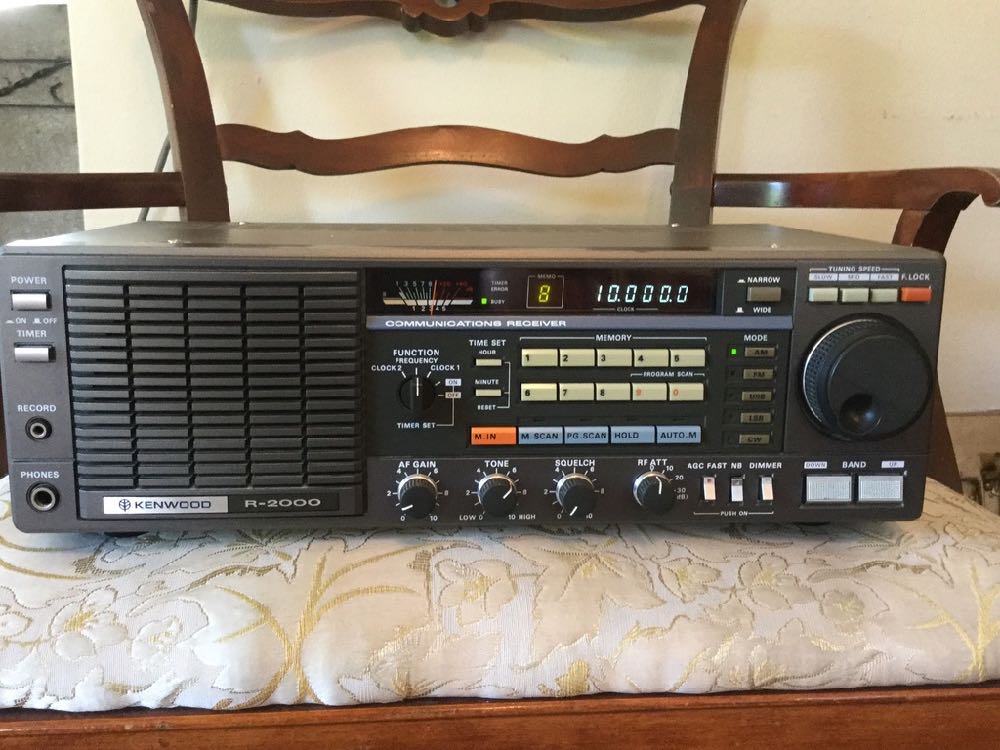
Kenwood R-2000: Luke’s simple fix for a frozen encoder

Many thanks to SWLing Post contributor, Luke Perry, who writes:

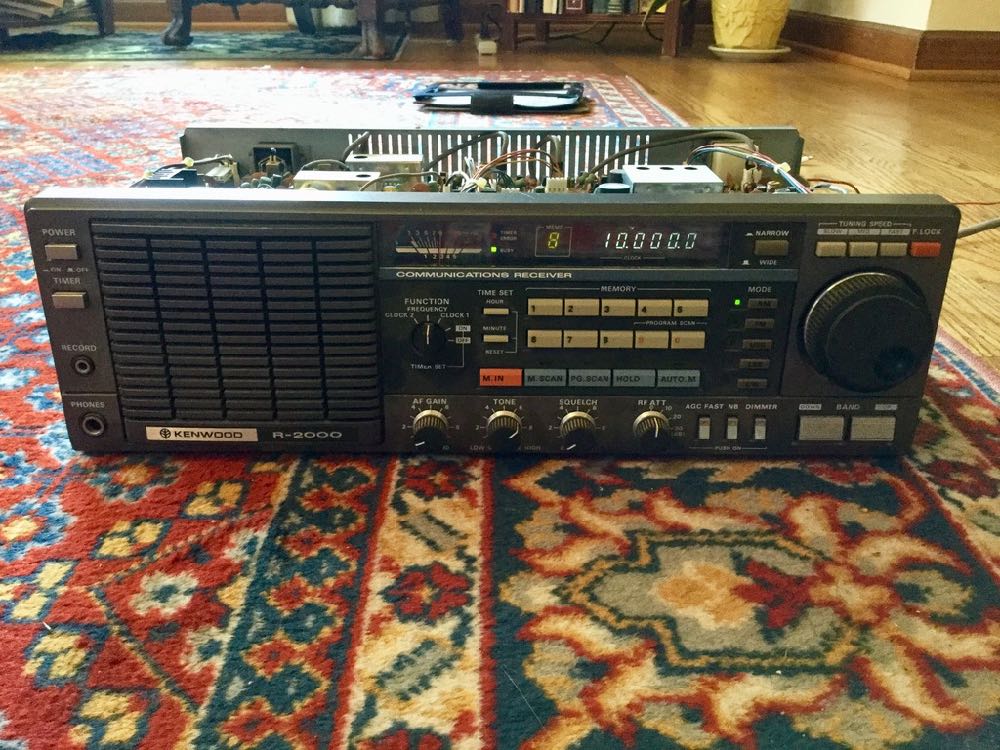
Hi Thomas, I thought I would share with the people on the SWLing Post my new radio purchase.

I needed a receiver with a noise blanker as you might (or might not) recall my issue that I was having with electrical noise at my listening location. So I saw this on the local Craigslist for $50 and called right away and I was lucky to be the first one to respond.

The seller was the original owner and he had bought it back in the 80’s after coming back from Saudi Arabia so he could listen to the BBC. It was fully working but when I got home I noticed that tuning dial was not working and this set does not have direct frequency input for some reason.

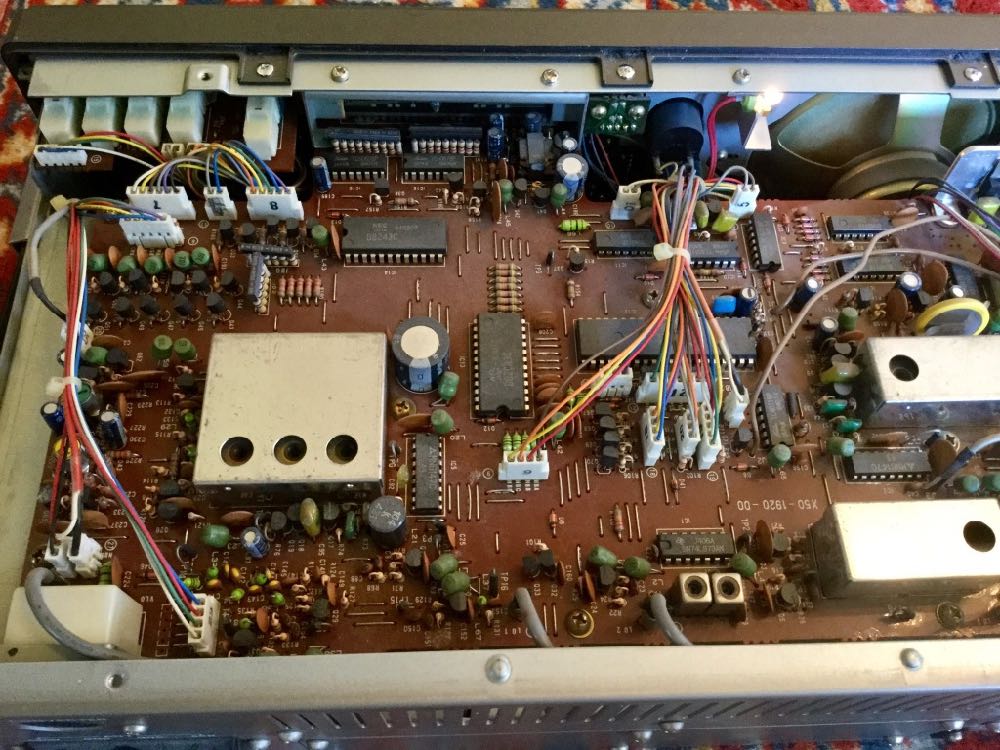
I went online and scoured the internet for a possible fix and found a old posting that said to adjust the pots on the encoder board behind the main tuning knob. I found a service manual online and located the position of the board and thankfully that was the fix. But for some reason the position that they both were in was not the correct position so I don’t know if someone had been in there before but I doubt it.

Anyway, I am very happy with the purchase and the noise blanker seems to really work as I could not listen to any frequencies above 5 MHz on my old radio due to RFI. Also, the R-2000 seems to be very sensitive just from the small wire antenna that I have been using so I plan to get a better antenna and I am hoping to get some good DX catches.

Anyway, I thought I would share the news of my new purchase and hopefully the fix for the tuning knob might be of some use to others down the road.

I’m so glad you found the fix for the encoder function, Luke. Thank you for sharing because, no doubt, others will be searching for this solution. Sounds like it was a simple enough fix and certainly did the trick. If you ever need to re-cap the R-2000, you can find kits like this one to make the process easier. If you don’t want to do the work yourself, my friend Vlado recaps radios for a very reasonable price.

I’m sure you know you really snagged a deal grabbing that R-2000 for $50! Wow!

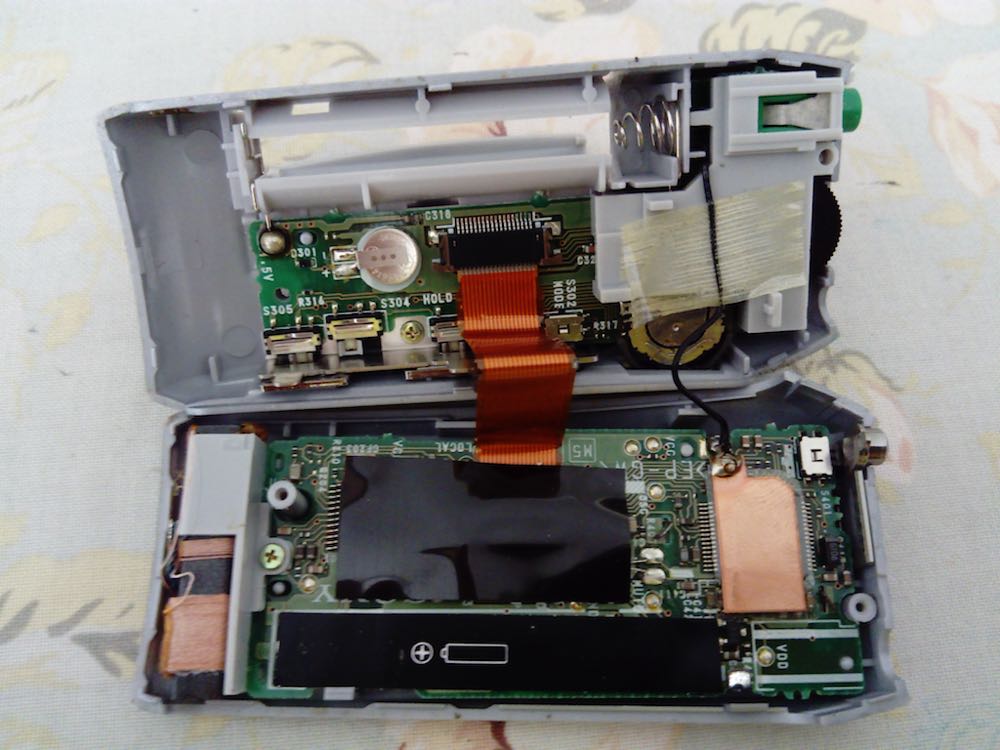
Olivier is pleased with the Sony SRF-M95, shares internal photo

Many thanks to SWLing Post contributor, Olivier Tkaczuk (F4BXV), who writes:

Hello, my name is Olivier TKACZUK 36 years F4BXV and I live in the north of France.

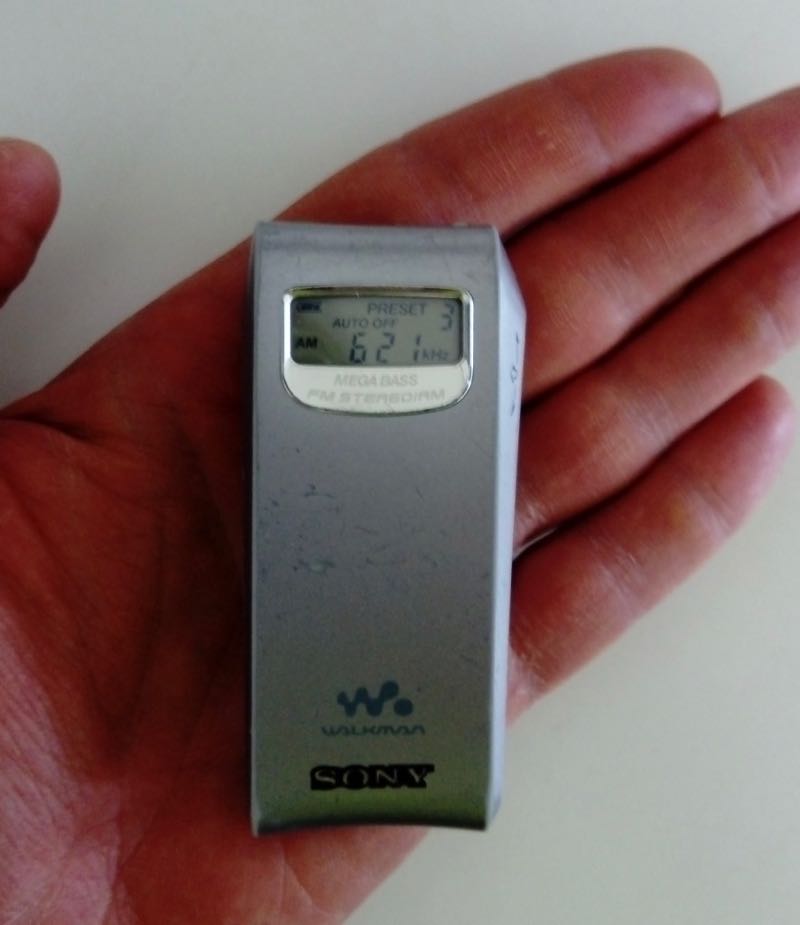
Just to present my last Sony SRF-M95 AM/MW bought on eBay for 13 euros.

[I regularly receive] Absolute Radio in England…and also Radio Nacional de España.

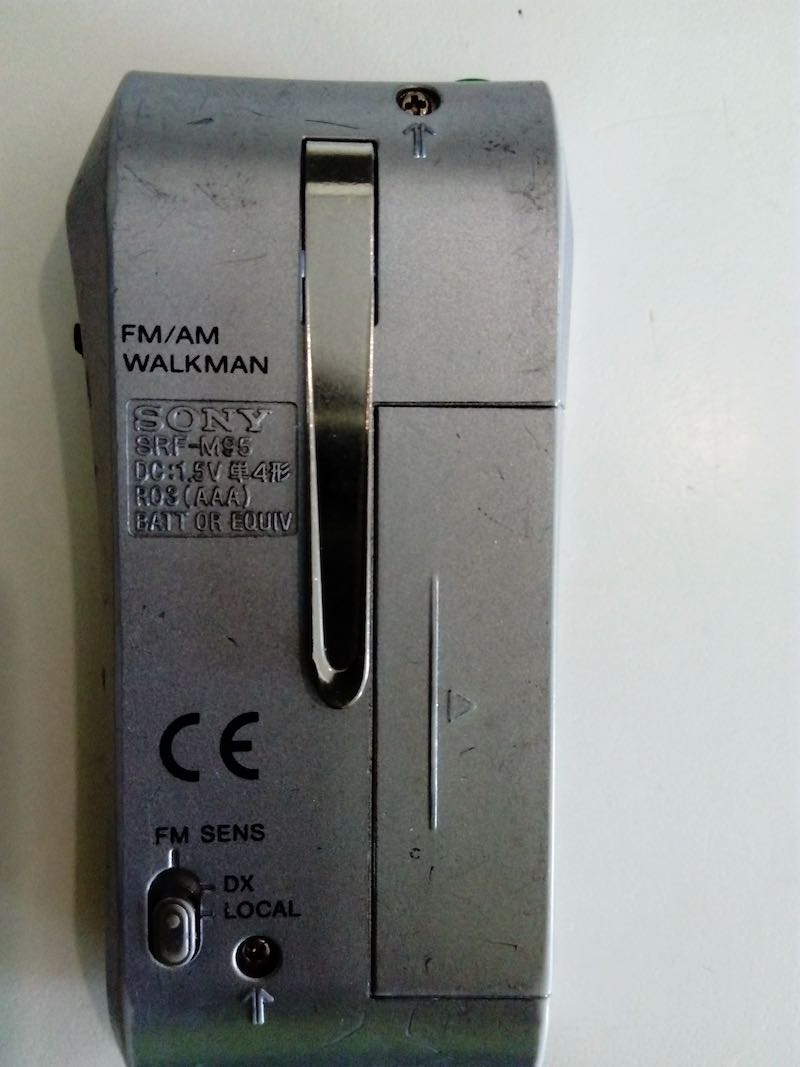
[H]ere is an internal photo:

Thank you for your website it gives me taste on the radio.73’s Olivier F4BXV

Many thanks, Olivier! I’ve always loved this über-compact AM/FM radios. They remind me of the small radios I used to sneak into school when I was a kid! Sounds like the SRF-M95 is a capable little receiver as well–thanks for sharing the photos.

Glad you’re enjoying the SWLing Post!

Click here to search eBay for the Sony SRF-M95.

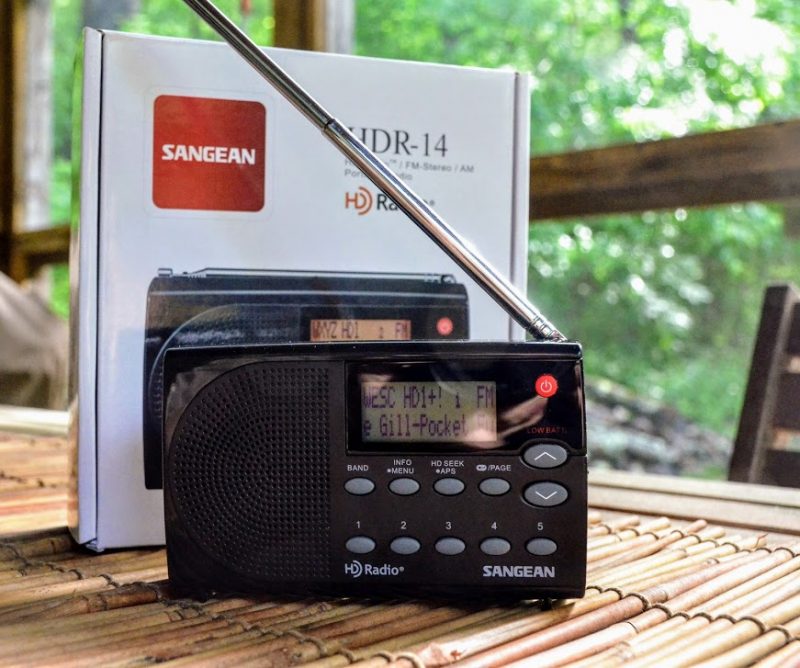
Mike’s review of the Sangean HDR-14 AM/FM HD Radio

Sangean HDR-14 (left) and the C. Crane CC Skywave SSB (right) (Photo: Thomas)

Many thanks to SWLing Post contributor, Mike S, who comments with his short review of the Sangean HDR-14. Mike writes:

Well, I did something I said i would not do, triggered by Amazon’s tendency to introduce impossibly low prices on things for a couple of days, I sprang for the HDR-14. I have used it side by side with its direct competitor (the Nicetex “SPARC” SHD-TX2) for a few nights and a couple of days. Interesting little device.

As has been pointed out by those that read the specs, it is barely larger than the CC Skywave overall. It is made of the same soft, shiny black plastic as the larger Sangean portables (it is alternately a fingerprint magnet or a scuff magnet) but has a much less solid feel. The swivel-out foot on the bottom is a welcome addition and works well.

I have not yet played with other features (memories, etc) except to note that somebody has finally gotten it right in that memory locations store the chosen FM multicast channel instead of just the frequency.

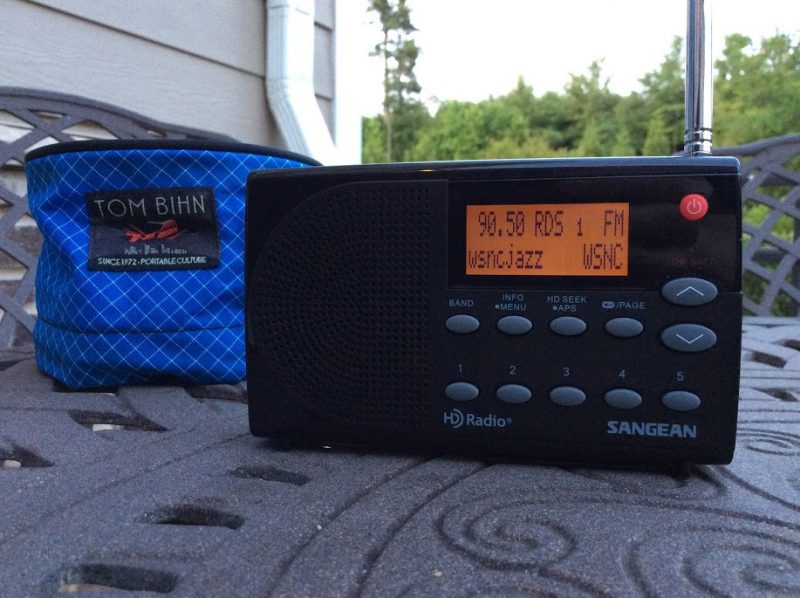
The Sangean HDR-14 RDS display (Photo: Thomas)

Performance is a mixed bag. This is NOT an HDR-16 crammed into a smaller cabinet; not surprising, really, considering the amount of real estate available for circuitry. Analog FM and HD capture are right up there with the the larger sets and similar to the SPARC. I am unable to reproduce the spurious FM image problem noted by a lone Amazon reviewer. Audio is “just OK” out of the speaker with a harsh emphasis on treble – the SPARC portable is MUCH better with its passive radiator – but just fine for headphones or an external speaker.

However, for AM, that reviewer was spot on. The noise floor on AM is a tad too high and the native sensitivity a tad too low; resulting in “just OK” useable sensitivity on the band especially compared to the SPARC. I had no trouble with AM-HD on the only two stations in NYC metro (WCBS and WINS); however, it was unable to even detect the HD carrier from known stations in nearby cities that I was able to get >50% on the HDR-16 and HDR-18. The selectivity is better than the SPARC due to the DSP active for bandwidth adjustment; witness that I was able to clearly separate stations in Connecticut (600) and Philadelphia (610) from the splatter of local powerhouses at 570 and 620. Unfortunately too, analog AM reception is plagued with DSP artifacts reminiscent of earlier Tecsun sets which can even manifest in odd distortion in adjacent-channel splatter that bleeds into the tuned signal. The fact that the audio circuit/speaker accentuate the treble, make this even more annoying – the “ticks” from adjacent channel splatter are so harsh that you might think the speaker cone is damaged and vibrating.

I’m still waffling on whether to keep this one. It’s a nice little set which is sure to become a collector’s item, and its FM performance really is exemplary. But I kinda view the inclusion of the AM band as its raison d’être and in that regard it could certainly do better.

Thanks for your review, Mark!

It’s interesting that you couldn’t reproduce FM overloading or imaging. I have noted images on the FM band and it hasn’t been in a market as congested as that of NYC. It’s only noticeable when listening to stations adjacent to strong signals, however. It’s almost as if the FM filter is a little too wide.

I also agree about analog AM reception.

My HDR-14 review has been delayed due to a very hectic schedule, but I plan to complete it in the next couple of weeks! Thanks again, Mike!

Guest Post: Mark’s Micro Go-Box for the ICOM IC-7100

Many thanks to SWLing Post contributor, Mark Hirst, who shares the following guest post:


Micro Go-Box for the ICOM IC-7100

by Mark Hirst

You’ll be familiar I’m sure with the IC-7100 base unit and separate head unit design. It lends itself very nicely for vehicle installation.

Using it in any ‘portable’ situation however has always presented something of a challenge. A FT-857 or FT-891 can be carried as a single physical package with the head unit integrated into the body. The radios can sit and potentially operate on their tail in a backpack, with products like the Escort from Portable Zero making that process even easier.

I’ve had a few attempts at solving this portability conundrum, driven by a concern that there could be long term problems continually connecting and disconnecting the component parts for transport and operation, but knowing that a permanently assembled IC-7100 will always be an awkward dispersed structure.

My first solution was a Stanley 16 inch toolbox, which is fortuitously sized to accommodate the base unit and provides enough space to loop the original connecting cable and head unit. The box is not a bad fit, but certainly bulkier than necessary and leaves enough room for things to rattle around. When tilted vertically, the head unit can start moving.

Fast forward to this week when I discovered that the IC-7100 base unit will also fit inside a 5 litre XL storage box made by Really Useful Boxes:

http://www.reallyusefulproducts.co.uk/usa/
http://www.reallyusefulproducts.co.uk/uk/

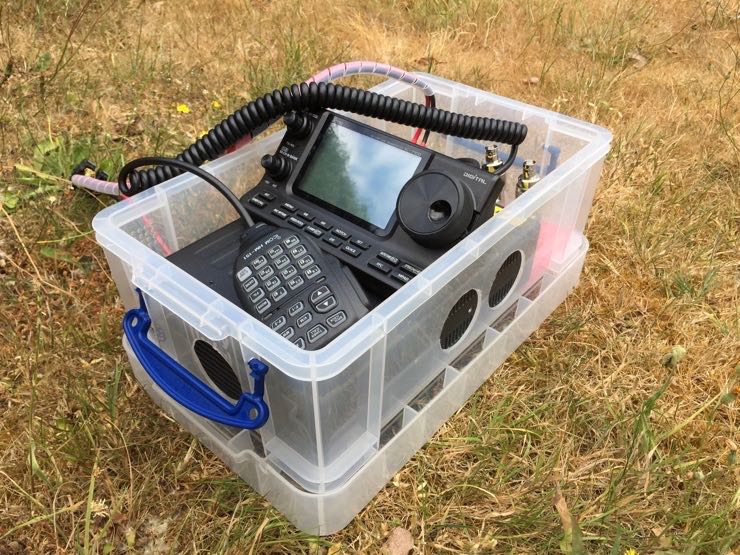
The XL version of the 5 litre box has a taller lid, and as you can see from the accompanying photos, accommodates the base unit with the head unit sitting on top of it in a ready to use configuration. The tolerances for height are also exact, the VFO knob very lightly touches the lid, so don’t put something heavy on the box:
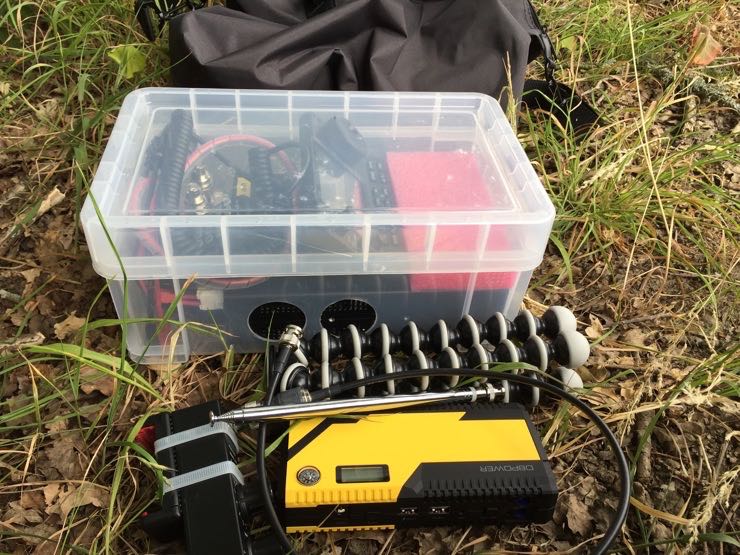
Once the lid has been removed, the radio can operate directly from the container:
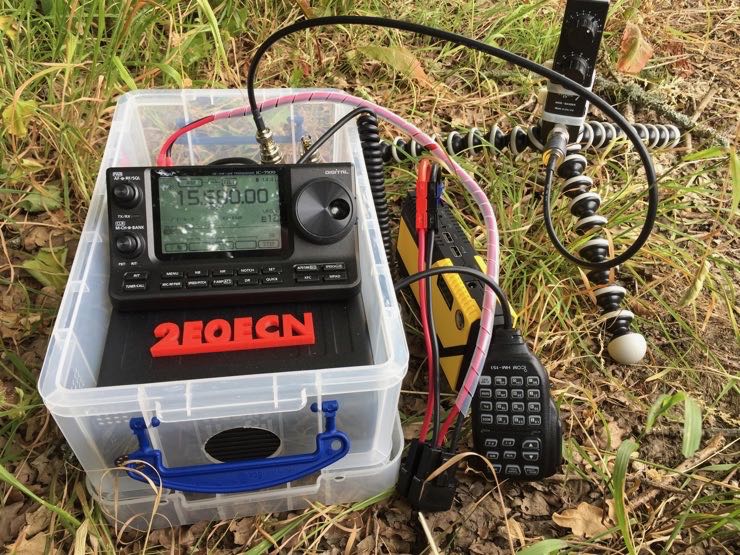
To make the whole thing fit, I used a 25cm CAT 6 cable in place of the original connection cable and a significantly shortened power lead. As luck would have it, I created the shortened power lead a while ago because I often put the battery right next to the radio.
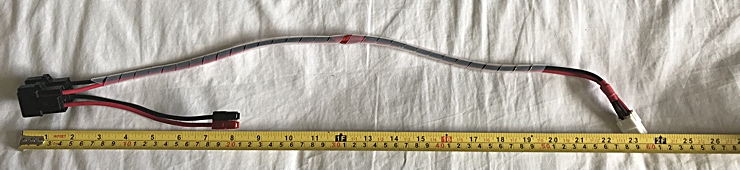
You can see that I removed a section between the power plug and the fuses, and now use the removed length as an extension should the battery be further away. Although it wasn’t my intention at the time, the main part is about 2 feet long, the secondary about 8 inches.

For transport, the power cable is coiled behind the head unit, ensuring the fuse holders sit in the void immediately behind it, while the microphone cable is coiled on top leaving the microphone resting inside its own coil. You can see the arrangement below:

In the next photo, you can see how the cabling emerges from the back of the base unit:
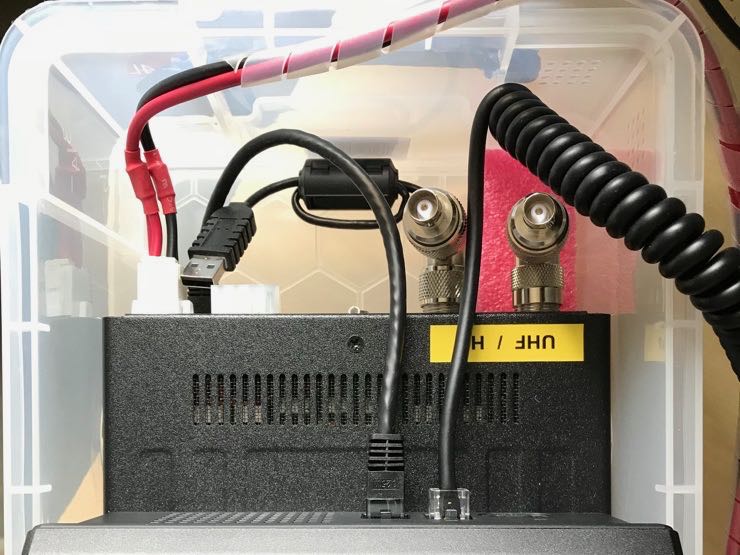
There’s just enough space for the power cable to leave the base and bend around without undue pressure, and likewise for the CAT 6 cable to curve round into the back of the head unit. Two angle connectors make the antenna ports accessible from above, while a short USB external drive cable provides access to the USB port for data modes and CAT control. A longer USB extension cable is attached to this short cable only when required, and the extension uses much more substantial ferrite chokes to mitigate noise from the computer.

To complete the transport package, I’ve cut out a kaizen style foam insert to make sure the base unit can’t move back into the cabling space, and another to make sure the head unit doesn’t slide towards the front.

The last problem of course is cooling. The fan is located in the front of the base unit, with slots along the sides and top to allow air flow. The box unfortunately is exactly the right size for the base, leaving no gaps for air to circulate. In the absence of a proper workshop or professional tools, I opted to use a hole cutter designed for putting pipes through wood panels. It turns out that plastic has a tendency to deform rather than cut under the blades due to friction heating. A sharp knife was essential in dealing with the effects of that deformation to produce the final smooth edges around the holes:

While I’m happy with the port exposing the front fan, the two holes on each side do not completely expose the side slots. Do I drill out the space between them knowing how tricky and flexible the plastic can be, and would a larger hole compromise the strength of the box? For now, I’m going to keep a careful eye for any temperature issues.

The current arrangement is to carry the box horizontally in a cheap travel bag:

Could the box be tilted vertically with the base unit nose down and carried in a back pack for longer excursions? Yes, but experience has told me that the lid latches on Really Useful Boxes have a tendency to pop open when you do that, so a luggage strap around the box may be required to prevent its very expensive cargo from spilling out. I’m also mindful that the box lid gently touches the VFO knob, so might put load on it in the vertical position.

The final result is something of a Swiss watch, and there isn’t much room for error. Things have to be arranged ‘just so’ to fit, but it does mean I can pack and pick the whole thing up in a handy container. The radio only needs a battery and antenna to be connected on site and then it’s ready to go.

There’s something oddly satisfying when unrelated objects come together like this. Who knew that this box was just the right size to fit the radio?

So, what do you think?


Thank you for sharing this project, Mark!

I love your Micro Go-Box: it’s practical, affordable and makes an otherwise awkward field radio easy to deploy and use. Looking at your photos, I realize that the IC-7100 does have one strong suit for field use. The IC-7100 front panel is tilted at a very comfortable 45 degree angle for use. 

Post Readers: What do you think?  Any other IC-7100 owners out there who take their rig to the field? Please comment!

Sony CRF-330K fetching top dollar on eBay

Many thanks to SWLing Post contributor, Mario Filippi (N2HUN), who writes:

Saw this Sony receiver at a current high price on eBay:

Interesting that it has a cassette recorder, although back in those days cassettes were popular and other radios had ’em installed to record your favorite shows or to just use as a player.

Yes indeed, Mario! I remember absolutely lusting after a few radio models with built-in cassette recording features when I was much younger. It would have made off-air recordings much easier!  Of course, the most affordable (and accessible) model I remember in the past couple of decades was the vulnerable Sangean ATS-818cs or RadioShack DX-392.

I’ve never seen a pull-out cassette tray like the CK-330K’s:

It appears this Sony CRF-330K only has a few hours left of bidding at time of posting. There’s a bit of a bidding war going on, it seems, based on the bid history.

Click here to view on eBay.

I assume the CK-330K is a performer. Perhaps our resident expert, Dan Robinson, will share his comments?

Thanks for the tip, Mario!

Share your photos on Boat Anchor Tuesday!

Yesterday, as I took a little time to curate a massive collection of photos I took at the Museum of Radio and Technology, I posted a few “boat anchor” (heavy metal vintage radio) photos and labelled them “Boat Anchor Tuesday” on Twitter and Facebook.

Much to my surprise, I received a number of comments and emails with readers asking for more Boat Anchor Tuesday pics!

So I’ve decided to make it a feature here on the SWLing Post. After all, anyone who knows me knows that I’m a massive fan of boat anchors!

Your photos on Boat Anchor Tuesday!

Please send me a photo (or a few) of your favorite boat anchor. Every Tuesday, I’ll feature a reader’s boat anchor here on the SWLing Post.

If you can, include a few sentences about the radio: how you obtained it, what you like about it or any memories. We radio nostalgic people love this stuff!

Please send photo(s) and radio blurb to my email address found on our Contact page. I only plan to post one radio per week, so these will be scheduled far ahead to post automatically.

Jeff discovers that the Sangean WR-2 loses time when playing radio

Many thanks to SWLing Post contributor, Jeff McMahon, who writes:

I wanted you to know that my Sangean WR-2 keeps perfect time when I don’t play the radio, but when I do play the radio I lose 25 minutes; the clock is 25 minutes slow in other words. I’ve read other complaints from Sangean owners, including from those who own the Sangean HDR-18. Some say it has something to do with RDS. Have you heard of this problem? It’s annoying because I have to reset my clock every morning.

Wow–an otherwise excellent radio that prominently features a clock should never have this problem. This problem essentially renders the clock useless.  I’m not sure what would cause this unless it’s incorrectly pulling time data from the RDS function?

Post readers: Have you noticed this fault in the WR-2, WR-18 or other similar models? Please comment.