Shortwave listening and everything radio including reviews, broadcasting, ham radio, field operation, DXing, maker kits, travel, emergency gear, events, and more
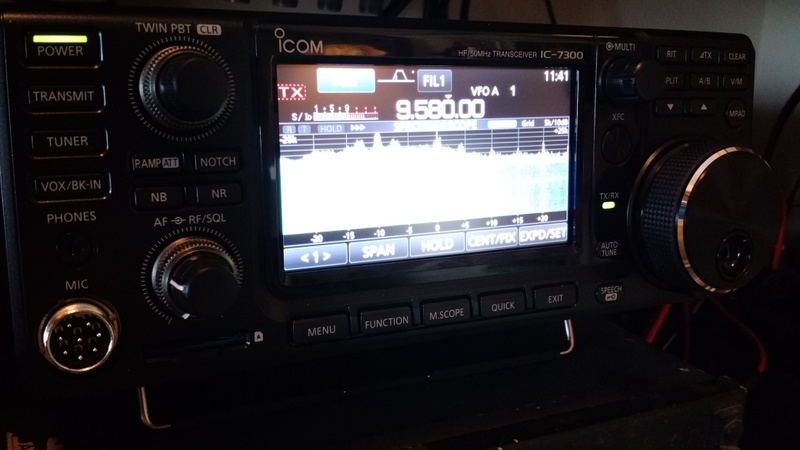
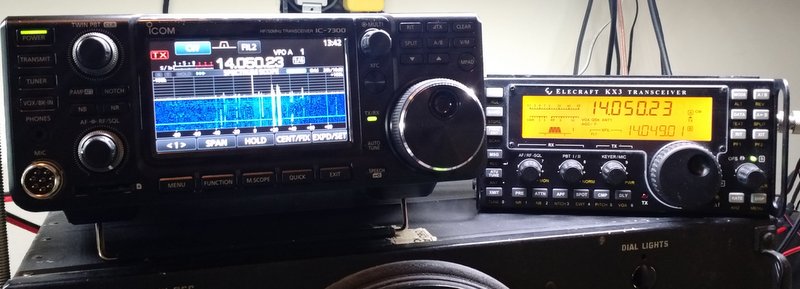
Before completing my review, I thought I might fit in one more quick comparison–this time, comparing the Icom IC-7300 to my Elecraft KX3 and focusing on SSB and CW reception.
Recording notes and disclaimers
The Icom IC-7300 offers native digital audio recording, which means that it records both transmitted and received audio to an inserted SD card.
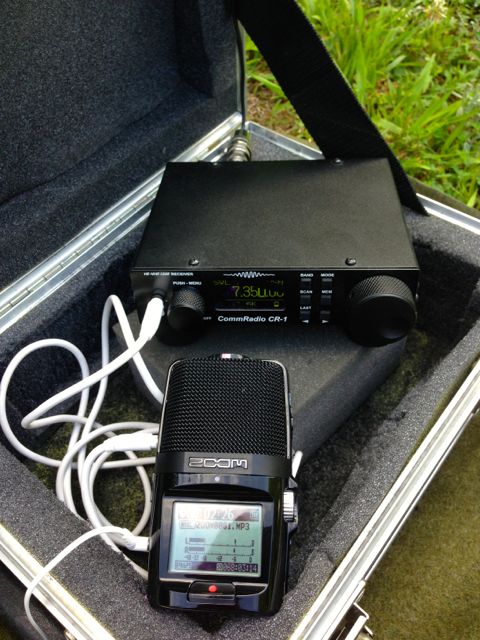
The Elecraft KX3 does not have a built-in recorder (indeed, most transceivers do not) thus I made in-line recordings using my Zoom H2N digital recorder.
I did no post-processing of the audio other than converting .wav files to .mp3.
Both receivers shared my large outdoor omni-directional horizontal delta loop antenna for each test.
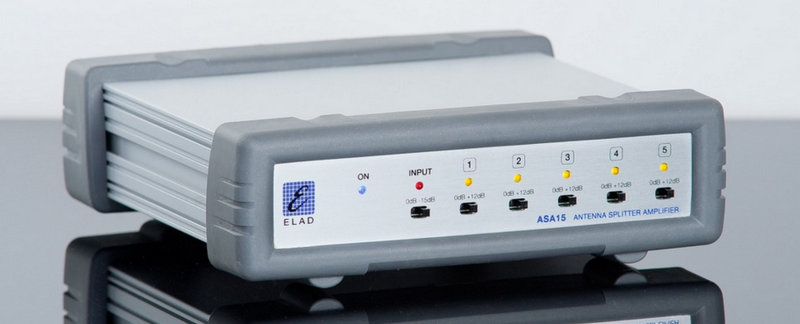
The Elad ASA15 Antenna Splitter Amplifier
To keep the comparison on as equal footing as possible, the receivers shared the same antenna through my Elad ASA15 antenna splitter amplifier. Though the ASA15 has both 12dB amplification and –15dB attenuation, I employed neither.
The ASA15 allowed me to make the following recordings simultaneously.
In each case, I tried to set up both radios using the same filter widths, AGC settings, and (as much as possible), audio level. I didn’t engage a noise-reduction feature on either rig.
I also didn’t employ any type of audio equalization on either rig–still, you’ll note that one radio produces a more “flat” response than the other.
Please vote!
At the end of this post, I have an embedded a survey in which you can vote for the sample recordings you like best. Each recording is clearly labeled to denote that it’s either from “Radio A” or “Radio B” (chosen at random).
Last night at about 00:10 UTC, I was pleased to hear the interval signal of one of my favorite pirate radio stations: Radio Casablanca.
“Rick Blaine” fired up his AM transmitter and pumped out some amazing WWII era music on 6,940 kHz for about one hour and a half. Radio Casablanca only pops up a few times a year, so I always feel fortunate to grab the broadcast (click here to listen to previous recordings).
Signal strength varied over the course of the broadcast and the bands were quite noisy–still, the Casablanca signal punched through quite well at times.
Close your eyes and imagine what it must have been like to hear the great bands of the era over the shortwaves…
In the past, receiver shoot-outs in which I’ve provided sample audio for “blind” comparison––meaning, the listener does not know which audio sample is associated with which radio––have produced particularly positive feedback from Post readers.
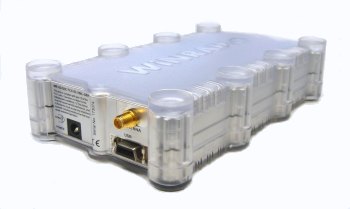
I have a number of SDRs (software defined radios) in the shack at the moment, but I picked the Excalibur because it’s the closest in price ($900 US) to the IC-7300 ($1500) as compared to my Elad FDM-S2 ($520) or the TitanSDR Pro ($2500).
Recording notes and disclaimers
Both the WinRadio Excalibur and the Icom IC-7300 offer native digital audio recording (nice touch, Icom!). The Excalibur simply records the AF to a file on my PC’s hard drive, while the IC-7300 records the audio to an SD card which I can later transfer to my PC.
I’ve been using the Excalibur since 2012, so I’m very familiar with its recording feature. I was not, however, familiar with the IC-7300’s digital recorder, so prior to making recordings, I checked to make sure its recorded audio was a fair representation of its live audio. To my ear, the IC-7300 recorded audio was nearly identical to that of the live audio, so I used the 7300’s internal recorder rather than one of my external recorders.
Both receivers shared my large outdoor omni-directional horizontal delta loop antenna for each test.
The Elad ASA15 Antenna Splitter Amplifier
To keep the comparison on as equal footing as possible, the receivers shared the same antenna through my Elad ASA15 antenna splitter amplifier. Though the ASA15 has both 12dB amplification and –15dB attenuation, I employed neither.
The ASA15 allowed me to make the following recordings simultaneously.
In each case, I tried to set up both radios using the same filter widths, gain, AGC settings, and (as much as possible), audio level. I didn’t engage a noise-reduction feature on either rig.
Note: the only exception to the radios’ equal treatment was in the AM mode recordings, in which I used the WinRadio’s AM Sync (AMS) mode. Why? Frankly speaking, 99% of the time during which I use the Excalibur, I do employ its AMS mode as its AM mode often sounds “hot” and over-driven when band conditions are as noisy, as they were last night.
The IC-7300 does not have AM synchronous detection (AMS mode), but I felt it compared very favorably to the Excalibur in AMS mode. The IC-7300 would have easily beat the Excalibur in this test had I only used the Excalibur’s AM mode. In the end, as a shortwave listener, the goal is to compare the total capabilities of broadcast performance between the two receivers (thus using sync mode if available, to maximize broadcast listening performance).
Please vote!
At the end of this post, I have an embedded a survey in which you can vote for the sample recordings you like best. Each recording is clearly labeled to denote that it’s either from “Radio A” or “Radio B” (I had my wife draw names from a hat to determine which radio would be labeled as A or B).
Since there are quite a few recordings, I’d suggest jotting down your notes separately before completing the survey.
The following recordings were made on the 40 meter ham radio band yesterday evening. Both radios have the same filter width: 250 Hz in CW, 3 kHz in SSB.
Note that the following mediumwave recordings were made during the morning hours (grayline). The strong station is the closest AM broadcaster to my home; it’s not a blow-torch “Class A” type station, merely the closest local broadcaster.
In the “weak” sample, I tuned to 630 kHz, where multiple broadcasters could be heard on frequency––but one was dominant.
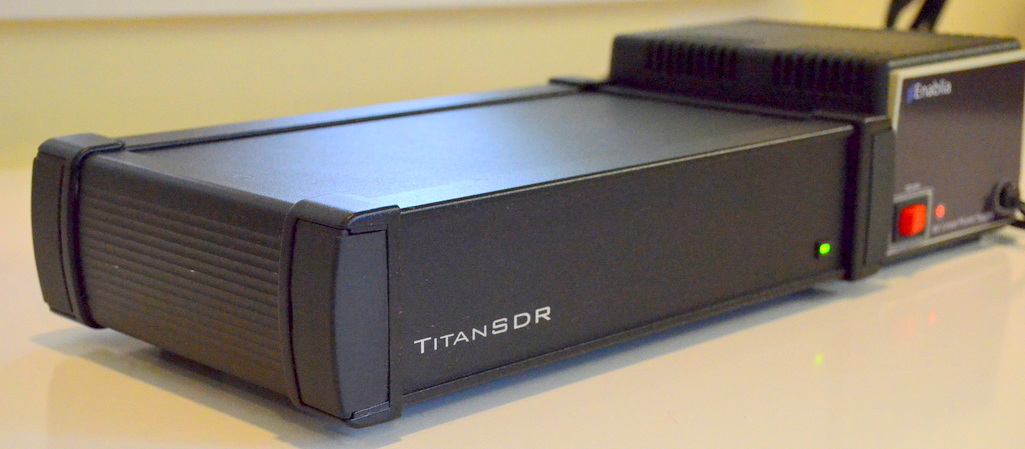
Last year, I reviewed the TitanSDR Pro by the Italian manufacturer, Enablia,. I was very impressed with not only this receiver’s performance, but also its accompanying application’s user interface. I also noted in the review that the TitanSDR is pricier than many other benchmark SDRs on the market ($1380-1970 EUR) but it is, after all, essentially a military-grade SDR that has been ported to the enthusiast/ham radio market.
I’ve been using and testing updates to theTitanSDR Pro for a year now, and I continue to be just as impressed with this receiver––and, especially, with the company who manufactures it, Enablia.
I wondered at the time of my initial review how supportive Enablia might turn out to be; I knew time would tell. Since my original review last year, Enablia has been regularly updating the TitanSDR application, adding many features requested by its users. This shows a remarkable degree of responsiveness, and I now feel safe to say that that Enablia is an exceptional manufacturer with an exceptional product.
Only recently, I received an update which added two notch filters per narrowband channel, memories that retain AGC and notch filters settings, and sessions that retain AGC settings. I understand Enablia is also preparing updates that improve upon memory management, user interface, audio defaults, as well as offering a few tweaks to the existing feature set.
Overall, Enablia developers are certainly making this signal intelligence SDR cater to the ham radio and enthusiast market even better than before.
Though I use a number of SDRs, I reach for the TitanSDR any time there are multiple-band openings since it can record spectrum and audio across the entire LW/MW/SW landscape. Unlike my other SDRs, it’s not limited to an (already generous) 2-6 MHz recording/listening window.
For example, on Thursday night I had a lot on my listening/recording plate as there were a number of band openings. I had the TitanSDR tuned to:
the 31 meter band,
the 20 meter ham radio band,
the 49 meter band (specifically monitoring South American stations), and even
Surprisingly, all of this recording wasn’t taxing my PC, nor the TitanSDR.
The TitanSDR application is highly stable and uses resources efficiently. Indeed, in the past year, to my knowledge the TitanSDR application hasn’t crashed even once, despite my rigorous demands of it. Since it runs nearly 24/7 in my shack, on a four-year old PC (third generation i5 Win 7), that’s saying a lot.
SWLing Post reader, Tony Roper, is also a heavy TitanSDR user and recently posted this 30+ minute video demonstrating some of the TitanSDR’s new features. Note that his screen capture software produced fairly low audio, so you’ll need to turn up the volume to hear his commentary:
In short, I stand by my conclusions drawn last year in my TitanSDR review: although pricey compared to the competition, for those who can afford the price tag, the TitanSDR is a worthy hard-core DX machine that is especially useful to need a receiver with a bullet-proof front end, to weak-signal DXers, and to radio archivists like yours truly.
If you can manage to capture the final broadcast (or any of the Belarus broadcasts between now and then), please consider submitting the recordings to the archive.
Many thanks to SWLing Post contributor, Steve Yothment, who writes:
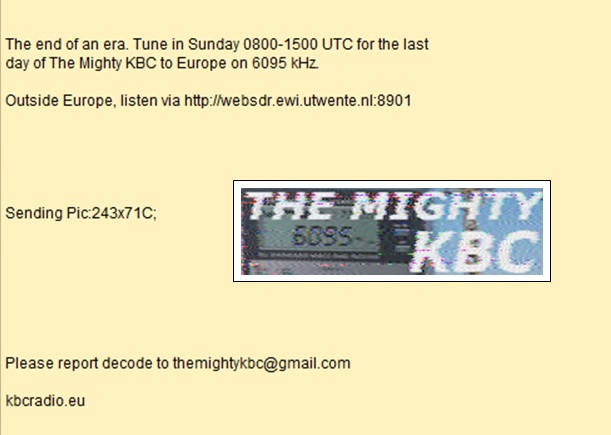
[Below, you’ll find] my reception report for the digital decode of the Fldigi message by Dr. Kim Elliott on The Mighty KBC (6040 kHz) Saturday night:
I took Kim Elliott’s suggestion and listened to The Mighty KBC on 6095 kHz on Sunday morning using the Utwente WebSDR which receives signals in Enschede, in the Netherlands.
The Mighty KBC finished their last broadcast on 6095 kHz at 11:00AM our time. I recorded their program, but the file is big. So, attached is the last 4 minutes of their program (click here to download), as received by the WebSDR:
It’s too bad that The Mighty KBC is shutting down!
Many thanks for both your decoded message and your recorded audio, Steve! I agree: it is too bad the KBC had to shut down their 6095 kHz broadcast.
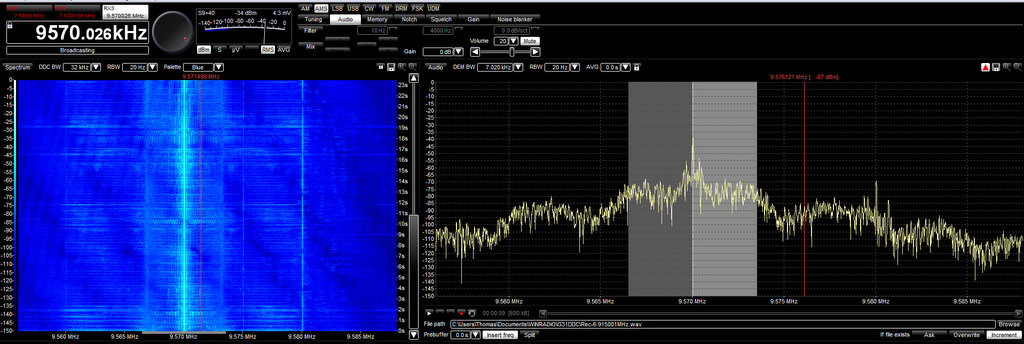
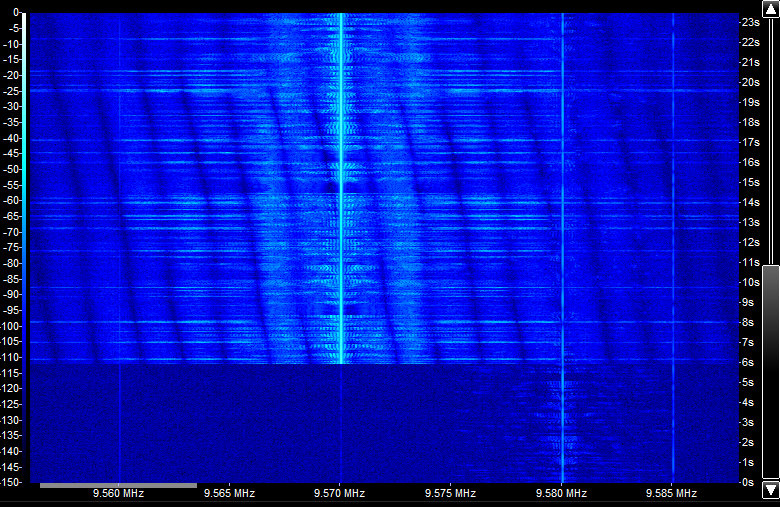
Each morning, I enjoy listening to Radio Australia on 9,580 kHz, but I’m forced to tune elsewhere due to interference when China Radio International starts broadcasting on 9,570 kHz, via Radio Havana Cuba’s relay.
Hypothetically I should be able to mitigate any adjacent interference from CRI by listening to Radio Australia’s upper sideband. But unfortunately, RHC’s transmitters spew spurious emissions a full 20 kHz on either side of their carrier. It’s most annoying.
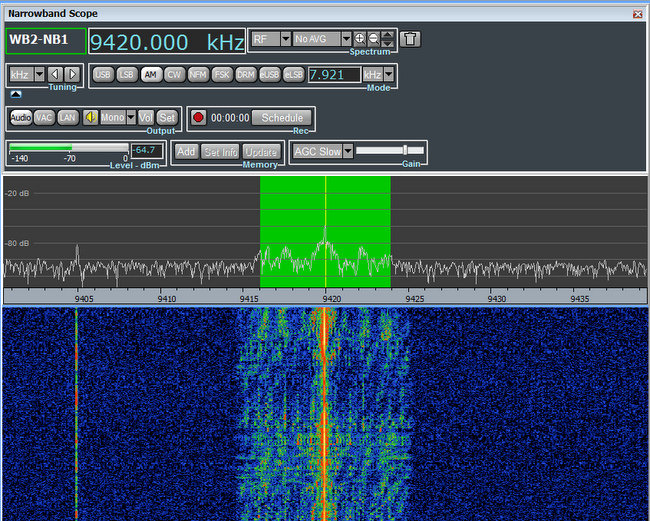
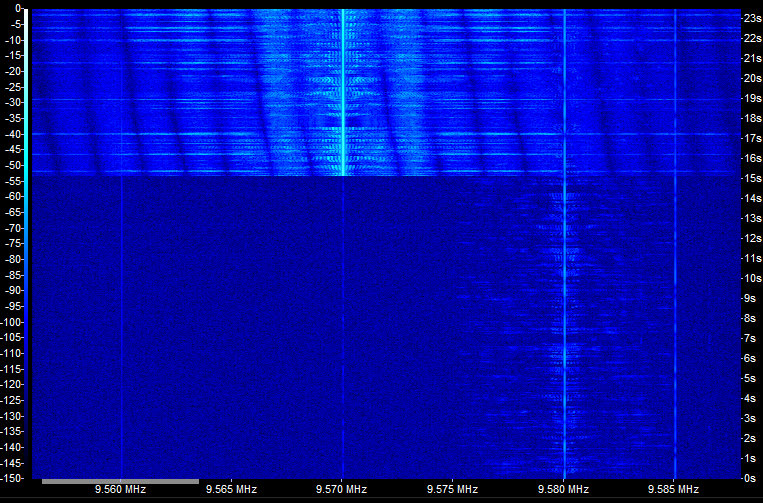
Here’s what my waterfall looked like when CRI signed off:
Notice how clear the 35 kHz waterfall window became (that’s Radio Australia centered on 9850 kHz):
The reason for this is clear: obviously, some of RHC’s transmitters are in need of care–and they’re not the only ones.
Radio Cairo
I’ve received a number of requests from Radio Cairo to post notices about their English language broadcasts. Normally, I’m quite happy to post press releases, but in each case I’ve mentioned that their English broadcasts are almost impossible to understand. For years, RC has had a problem with AM modulation (I assume) and, to my knowledge, have never addressed it.
I’ve sent RC feedback on a number of occasions; in response, I’ve received only the inconclusive reply that they’re “looking into the situation.”
To underscore the point, on Sunday Andrea Borgnino shared the following video/audio of Radio Cairo via Twitter.
There are other broadcasters that emit messy signals, but Radio Havana Cuba and Radio Cairo are the most noticeable in my listening area. And, it seems, neither broadcaster is in any hurry to address their ongoing problems.
In Radio Cairo’s case, especially, the broadcaster is simply wasting money by attempting to broadcast a signal that can neither be received nor interpreted. It’s rather sad. Ultimately, one has to wonder why they bother to broadcast at all…
Radio Havana Cuba, China Radio International, and Radio Cairo (among others) take note: a little care of your radio transmitters will go a long way toward increasing your listenership.
What you can do: Consider contacting broadcasters when when you become aware of transmitter problems. Despite RC’s notable exception, oftentimes a broadcaster may not be fully aware of the issue––thus your feedback is necessary to help correct the problem.

 The Elecraft KX3 does not have a built-in recorder (indeed, most transceivers do not) thus I made in-line recordings using my Zoom H2N digital recorder.