Shortwave listening and everything radio including reviews, broadcasting, ham radio, field operation, DXing, maker kits, travel, emergency gear, events, and more
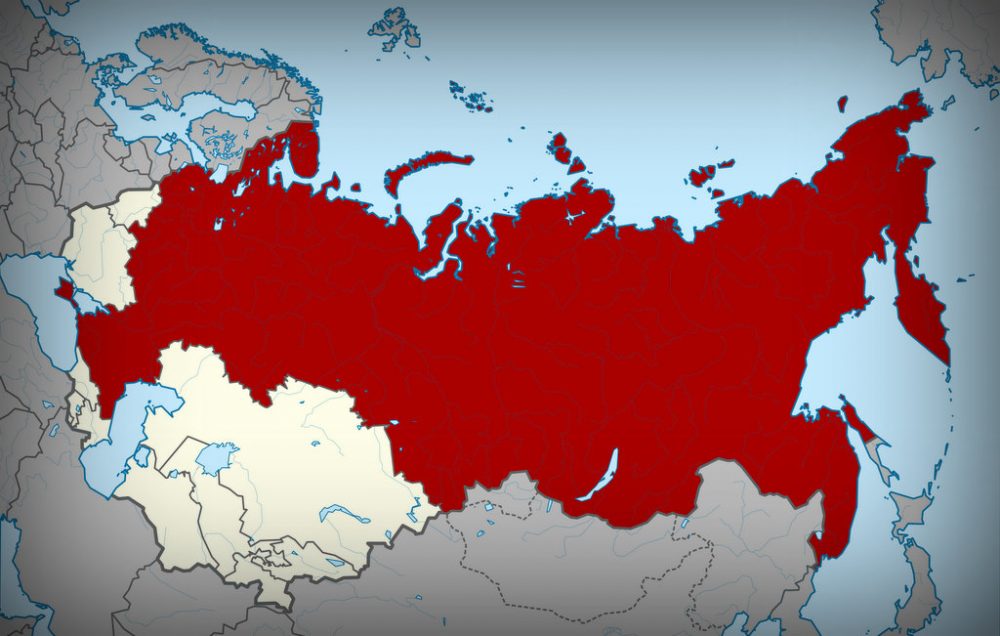
We’ve just posted yet another excellent recording by Jim Jordan to the Shortwave Radio Audio Archive. This Cold War recording of Radio Moscow dates back to September 19, 1984.
Jim notes:
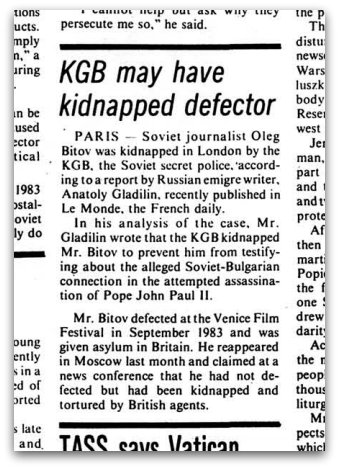
A nice Cold War piece from Radio Moscow on the double defection of the Soviet journalist Oleg Bitov. The real story behind it was revealed ten years later [click here to read article].
Also, check out this short mention in the Ukrainian Weekly:
THE UKRAINIAN WEEKLY SUNDAY. NOVEMBER 4,1984
Jim’s recording was made using a National Panasonic RF-2200 tuned to 9.5 MHz around 08:10 UTC. The location was South Shields, UK.
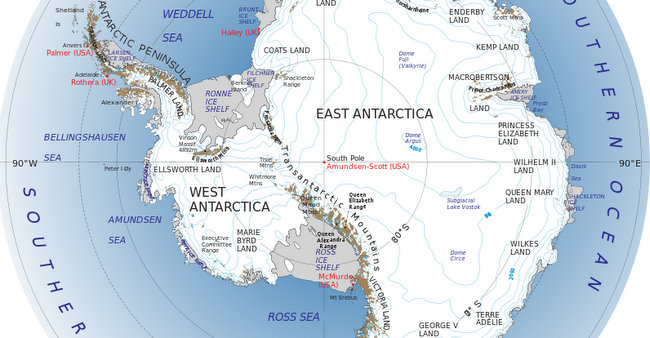
Every year, the BBC broadcasts a special program to the scientists and support staff in the British Antarctic Survey Team. The BBC plays music requests and sends special messages to the small team of 40+ located at various Antarctic research stations. Each year, the thirty minute show is guaranteed to be quirky, nostalgic, and certainly a DX-worthy catch!
After the successful listener event last year, I’m calling on all SWLing Post readers and shortwave radio listeners to make a short recording (say, 30-60 seconds) of the BBC Antarctic Midwinter Broadcast today and share it here at the Post (frequencies and time below).
The recording can be audio-only, or even a video taken from any recording device or smart phone. It would be helpful to have a description and/or photo of your listening environment and location, if possible.
If you submit your recording to me, I will post it here on the SWLing Post–and insure that the British Antarctic Survey receives the post, too. The recordings will be arranged by geographic location.
The broadcast will take place from 2130-2200 UTC today on the following frequencies (thanks to Alokesh Gupta for the tip):
5,985 kHz WOF 300 kW / 184 deg to Antarctica English
6,035 kHz DHA 250 kW / 203 deg to Antarctica English
7,360 kHz ASC 250 kW / 207 deg to Antarctica English
UPDATE: 9,720 kHz WOF 300 kW (Thanks to Richard Langley who notes that, per Glenn Hauser’s DXLG group, this frequency is not confirmed.)
Halley VI: The British Antarctic Survey’s new base (Source: British Antarctic Survey)
I’m sure there will be live reports in the SWLing Post chat room during the broadcast. Please sign in and share your report as well!
I’m uncertain if I’ll be able to receive the broadcast this year–I’m traveling at the moment in Québec, but will have my trusty Sony ICF-SW55 and C.Crane CC Skywave in tow.
I’ll plan to seek out a quiet park away from man-made noise and give listening a go!
The Midwinter broadcast is one of my favorite programs of the year. I suppose, in part, this is because it happens on June 21–the Summer/Winter solstice–which also happens to be my birthday!
No seasoned shortwave DXer can forget one of the most distinctive interval signals ever–the “barnyard animals” which marked the beginning of the broadcast day of Radio Botswana, Gaborone, for decades.
On its long-time frequency of 4820 kHz, Botswana was an occasional catch for me from the Seattle USA area. I yearned for clearer, more reliable reception of this station and other Africans which my East Coast USA DXer pals enjoyed!
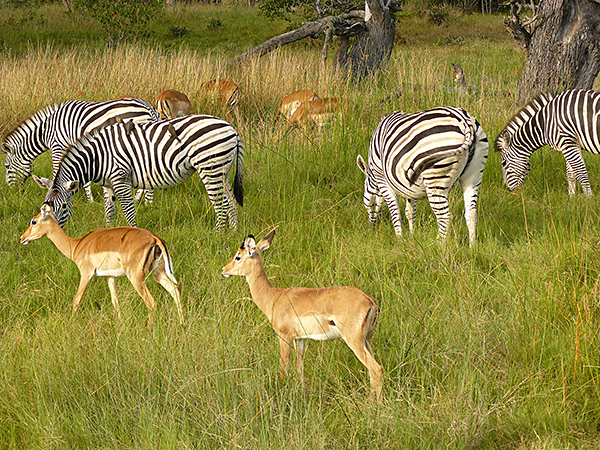
Zebras mingle with other animals at Chobe National Park, Botswana.
It was always fun–and a DXing challenge–to catch Radio Botswana’s interval signal and sign-on announcements, but it was typically mid winter for reception in Seattle. Propagation on 60 meters needed to be favorable to enjoy anything other than a weak, barely listenable signal. Imagine my surprise and excitement when on the evening of December 27, 1987 I came upon the following signal booming in on 4820 kHz, far, FAR better than any previous Botswana reception. Indeed, their signal that evening surpassed in clarity even the Papua New Guinea and Indonesian “regulars” I would hear on the tropical bands from the Northwest USA.
This recording begins with the famous barnyard animals interval, the beautiful Botswana national anthem (Fatshe leno la rona, or This is Our Land in English) and is followed by a full list of broadcasting frequencies and times in English and the (presumed) Setswana language. That information is followed by a flute instrumental version of the Christian hymn Beautiful Savior, which introduces a short devotional or scripture message. The 10 minute recording wraps up with an a cappella children’s choir.
Great Circle route from the Gaborone transmitter to Seattle receiver location.
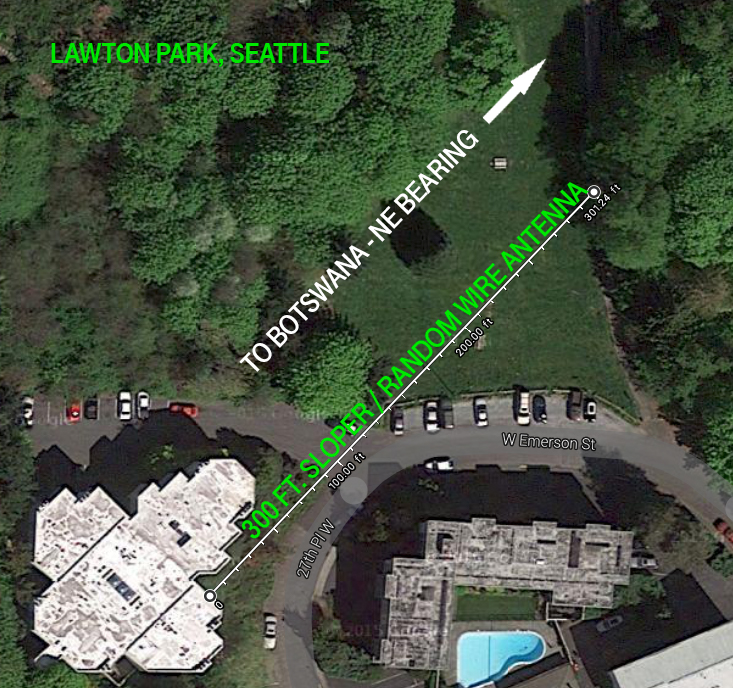
My receiving setup for this 1987 recording was an ICOM IC-R70 and a 300 foot long random wire antenna. Such a long antenna is unusual for the middle of an urban area, but I took advantage of living in a 3rd floor apartment across from a small city park. One midweek day, while most folks were at work, I managed to string out this long antenna with very small diameter braided steel wire from the 3rd floor apartment balcony to a distant treetop. This “sloper” antenna had significant directivity to the northeast, which happens to be the bearing for many African stations heard from the Pacific Northwest USA. The small diameter wire was suspended so high that it was virtually invisible from ground level.
Antenna orientation for 1987 reception of Radio Botswana. I’m sure this urban location is plagued by QRM and radio frequency interference now in 2016! My ICOM IC-R70 receiver handled the strong signals from nearby MW & FM broadcasters surprisingly well with the addition of a Grove Tun3 Mini-tuner preselector.
I continued to log Radio Botswana occasionally on 60 meters until the station eventually left the air (early 2000s I think), but I never heard them again with such a strong, clear signal as in late December 1987!
Guy Atkins is a Sr. Graphic Designer for T-Mobile and lives near Seattle, Washington. He’s a regular contributor to the SWLing Post.
We’ve just posted yet another excellent recording by Tom Laskowski to the Shortwave Radio Audio Archive. I thought a number of Post readers might appreciate this one.
Tom notes:
KNLS – Anchor Point, Alaska, from what I believe is a test transmission on August 1, 1983. According to Wikipedia, KNLS signed on the air July 23, 1983. The program consists of the sign-on ID in English and Russian then is mostly a mix of Big Band music. This recording is 31 minutes long.
Tom’s receiver was a Sony ICF-2001 and he started recording at 09:00 UTC on 11.820 MHz. His location, at the time, was South Bend, Indiana (USA).
Radio Nederland’s “What’s New” was a Saturday night program that featured hits from the weekly Dutch Top 30. The show was co-hosted by American Bruce Parsons and Australian Graham GIll. Based on the charts from that week, this show aired on 6 November 1976. Shows like “What’s New” introduced me to pop/rock artists that didn’t receive airplay in the USA. It also introduced me to other shows on Radio Nederland later on, such as “His And Hers,” “Happy Station,” and especially “Media Network.”
Many thanks to SWLing Post contributor, Paul Walker, who shares the following recordings of Radio Vanuatu and the Solomon Islands Broadcasting. Paul lives in Galena, Alaska, and records most of these broadcasts outside of his broadcasting studio:
3945 is much weaker then 7260 for some reason and Nikkei is on that channel till 0900 UTC, so about the only chance I have of hearing Vanuatu on 3945 CLEARLY is when Nikkei signs off.
Thanks for sharing your recordings, Paul! You’ve certainly done a fine job DXing in the northern latitudes all while standing next to a broadcast station.
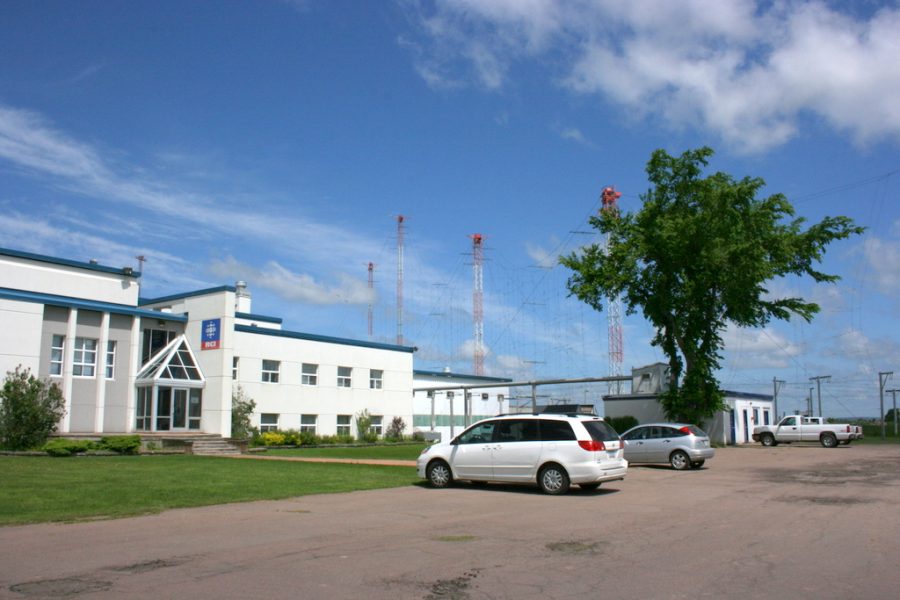
That’s my minivan parked in front of the RCI Sackville transmitting station in June, 2012. The site was closed by the end of 2012 and towers demolished shortly thereafter.
Recently, my friend and fellow archivist, London Shortwave, and I engaged in a discussion about creating a curated list of “endangered” shortwave radio stations.
The idea being we could use such a list to focus our efforts and those of the archiving community on recording broadcasters that were most likely to disappear in the near future.
London Shortwave published an excellent post about this on his blog.
Please comment either on London Shortwave’s blog, or on this post, and suggest any additional broadcasters we may have missed. Please include a link to news item(s) which may indicate the broadcaster faces closure.
Of course, this list and the categories are subjective–we’re simply using our best judgement in this process. Often, broadcasters can shut down with little or no notice.