Shortwave listening and everything radio including reviews, broadcasting, ham radio, field operation, DXing, maker kits, travel, emergency gear, events, and more
Recently, he shared a series I’m sure many of you remember. Tom writes:
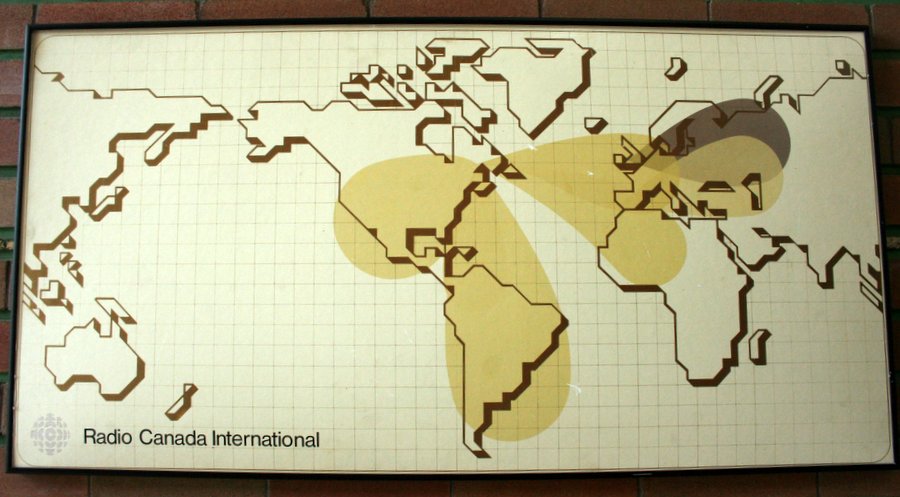
“My first contribution of many recordings I have of Radio Canada International’s Shortwave Listener’s Digest hosted by Ian McFarland.”
“The first 12 1/2 minutes is Bonsoir Africa. The recording was made using a cheap GE portable. The audio quality isn’t great but it’s still very nostalgic listening to a program I recorded 34 years ago.”
This brings back many memories of one of my favorite shortwave programs–thank you, Tom!
The audio quality actually reminds me of one of my first analog portables, Tom! Nostalgia at its best.
Many thanks to SRAA contributor, Tom Laskowski, who shares the following recording and notes:
A few snippets from my old shortwave tapes that were too short to upload individually. These were made using a GE portable multi band that had poor selectivity, hence the annoying ute during the BBC clip.
Times of individual clips are:
00:00 – 01:59: 1979, July 19 – RCI, frequency announcements in English and french.
01:59 – 09:51: 1979, July 20 – BBC, newscast, bothered by an annoying utility station.
09:51 – 11:38: 1981, August 28 – VOA, science news item about Voyager 2
11:38 – 14:52: 1981, August 29 – VOA, science news item about Voyager 2
I was packing up to leave my ship and return to the USA this week when the latest SWLing Post e-mail showed up with info about SSR’s final broadcast literally seven minutes before he was to come on the air. I’d already broken down the receiving gear, but it came back together in record time, and I was able to get the recorder going with a minute before the transmission started.
Many thanks to SWLing Post and SRAA contributor, Tom Laskowski, who shares this recording of the Voice of America; recorded on July 20, 1979 at 0500 UTC on the 31 meter band. Tom notes:
“The first 4:30 is from a VOA newscast that aired before the main part of the program. The main recording was presented on the 10th anniversary of the Apollo 11 moon landing. I enjoy listening to this every year on the landing anniversary.”
Note that Tom has been sharing a number of shortwave recordings from the late 1970s. All of his recordings are being published on the Shortwave Radio Audio Archive. Tom: thanks so much for being a part of the shortwave archive community.
If you have recordings you would like to share with the world as well, please contact me.
Last week, I received a tip from SWLing Post contributor, Dan Robinson: Radio Biafra, a new clandestine station, was audible on 15,560 kHz via the Universite Twente Web SDR.
Despite miserable propagation conditions, I tuned my receiver to 15,560 kHz and was surprised to hear a weak signal from Radio Biafra, here in North Carolina. I recorded a few minutes before conditions changed and Biafra’s signal began to fade.
This was the first time I had logged Radio Biafra, so I was amazed to have copy clear enough to understand.
Radio Biafra also known as Voice of Biafra, is a radio station that was originally founded by the government of the Republic of Biafra but is currently operated by Mazi Nnamdi Kanu. Believed to have had its first transmission before the Nigeria-Biafra war, the radio station was instrumental in the broadcast of speeches and propaganda by Chukwuemeka Odumegwu Ojukwu to the people of the Republic of Biafra.
[…]Radio Biafra currently transmits via the internet and shortwave broadcast targeted majorly around Eastern Nigeria. Radio Biafra claims to be broadcasting the ideology of Biafra –”Freedom of the Biafra people”.
[…]Radio Biafra has been met with mixed reactions. While some critics have criticized the station for “inciting war” through its programmes and “preaching hate messages” against Nigeria which it refers to as a “zoo”, an editor for Sahara Reporters wrote in defence of the radio station after he compared Radio Biafra with the British Broadcasting Corporation Hausa service.
On 14 July 2015, it was reported in the media that the radio station had been jammed because it did not have a broadcast license from the Nigerian Broadcasting Commission. However, the radio station in a swift reaction labelled such claims as “lies” and went on to release its new frequency details to the public.
After a 2005-13 hiatus, I have rediscovered a childhood hobby and your reviews have helped me find my way to the post-Sony portable shortwave radio markets.
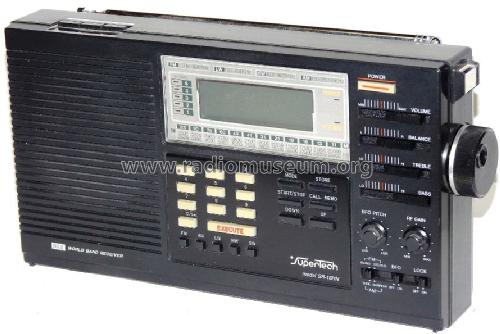
First, I obtained my “childhood dream” radio (Sony ICF 2001D), because at the time I made these recordings I was still in school and 1300 DM would have equaled over 1 year of pocket money, so a Supertech SR16HN had to do. I thought I got some fine results with this Sangean-Siemens re-branded receiver then, using a CB half-length antenna, a random wire, and much endurance.
The Supertech SR16HN (photo: Radiomuseum.com)
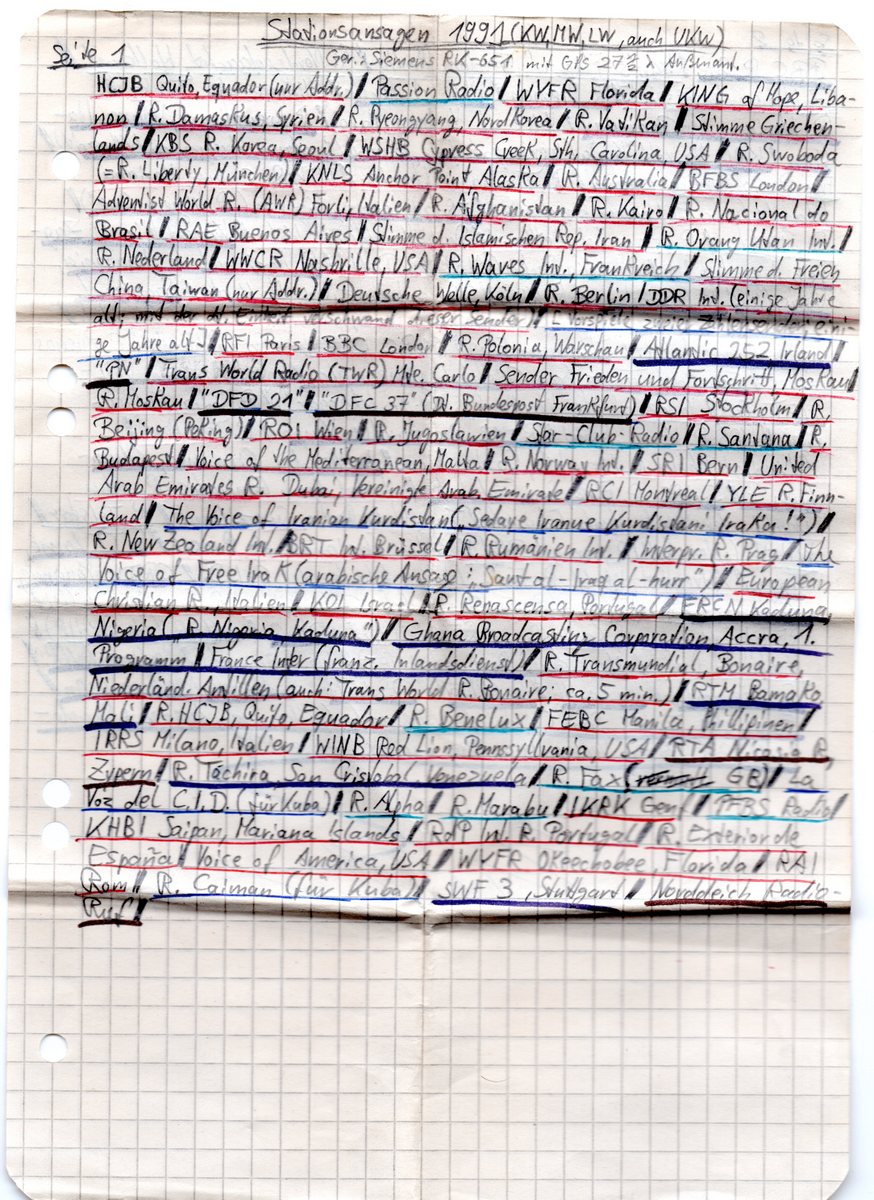
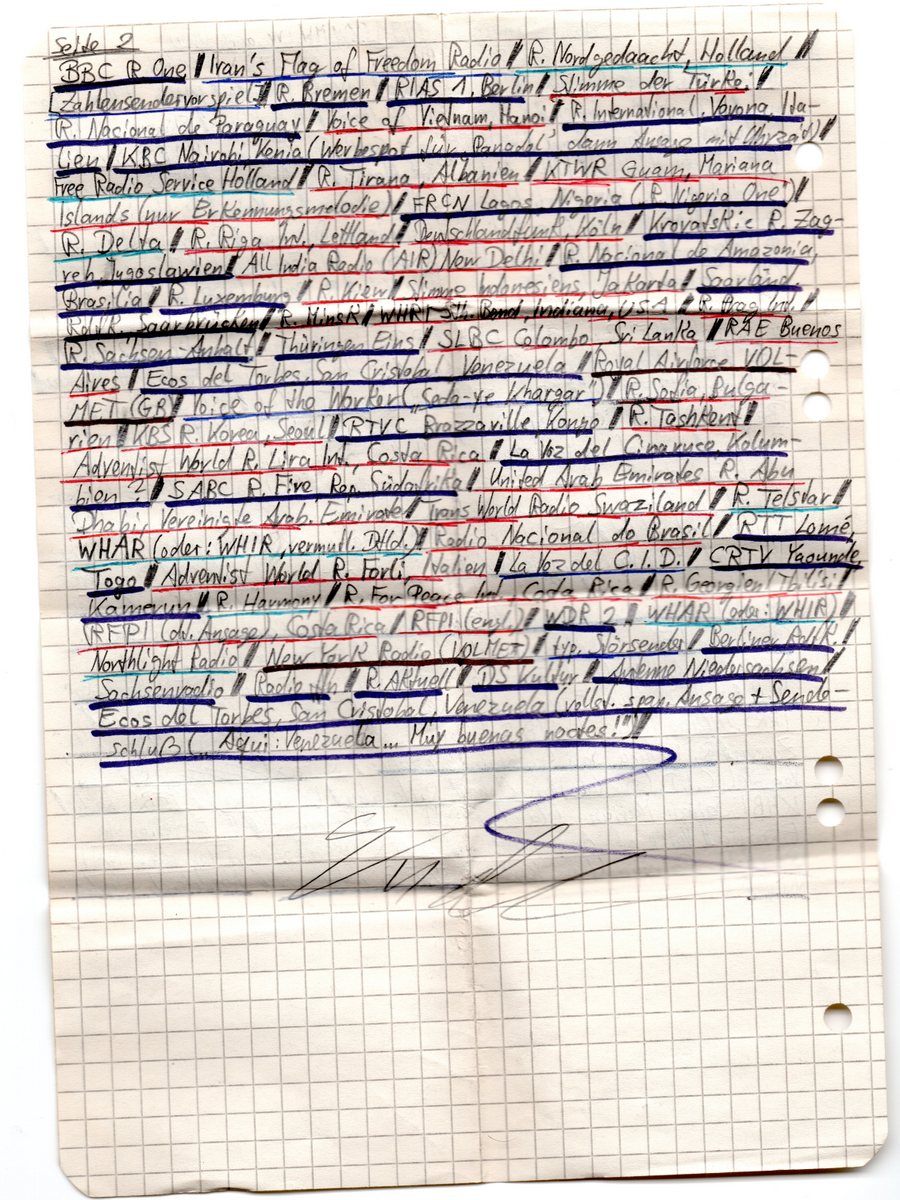
I kept regular logs throughout the years, wrote to 50 international and pirate stations for QSL and compiled this cassette.
A few years before I got that trusty SR16HN, however, I recorded a few number stations (such as G3, Four Note Rising Scale etc) with an ordinary radio cassette recorder, and in 1991 I put them onto this tape as well. The other recordings are done with the same radio placed right in front of the SR 16HN.
Feel free to make use of these recordings. Most of it are the well-known international state-owned shortwave stations of the past; plus European pirates; plus number stations; and at the end, a few (off-topic) local Am and FM stations interval signals.
As I said, this collection I made shortly after the Wende/reunification period, when all former-GDR state broadcasters changed their names, sometimes more than once.
Please continue your good work on the blogs! Weather permitting I am often outside cycling and always have the tiny Sony ICF 100 with me (which I call my then-student’s dream radio of the later 90ies).
Cassette Side 1
Frank’s original hand-written notes. Click to enlarge.
Wow! Frank, what a treat to listen to all these station IDs!
I had forgotten how many interval signals have changed over time and how many, of course, have disappeared. This tape represents a flood of nostalgia for me.
I should add, too, that I’ve enjoyed hearing so many IDs in German. It’s funny, but we all get hooked on listening to language programming from our native or second languages. It makes me realize just how many broadcasters used to have German language services.
Again, many thanks, Frank, for taking the time to digitize these recordings and scan your original hand-written notes. This stuff is invaluable, in my book!
Despite dismal propagation, I was quite happy to receive a relatively strong signal earlier this week (31 August 2015) from Channel Africa, starting around 16:40 UTC on 15,235 kHz.
This recording begins with the French language service (already in progress), followed by the English language service. Receiver used was a WinRadio Excalibur connected to a large horizontal delta loop antenna.