Category Archives: Shortwave Radio

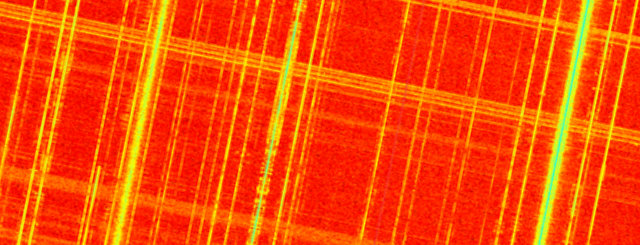
Pre-Detection Recordings: Any in existence, declassified and accessible–?

Many thanks to SWLing Post contributor, Chip, who writes:

I remember reading a number of years ago that the NRO/NSA was the largest consumer of magnetic tape, utilized for pre-detection recordings of various spans of spectrum, all over the world.

I’m wondering if those tapes become declassified at some point, and if they are available through FOIA requests. Were they just bulk erased, destroyed or sold at GSA auction along the way.

Do you know if anyone has ever queried into their existence, and if they have been electronically preserved to some other digital medium?

The idea that our government records huge chunks of spectrum, fuels thoughts in my mind of huge spans of non-classified spectrum from across the years. All the DX shortwave outlets captured for posterity.

Thank you for sharing this note, Chip.

Of course, I’ve always been interested in adding recordings like this to the Radio Spectrum Archive. If these recordings exist, I would love to see them added to the Internet Archive–who stores Radio Spectrum Archive recordings– so that they could be shared and enjoyed by all.

Post readers: If you have any information on this, please comment!

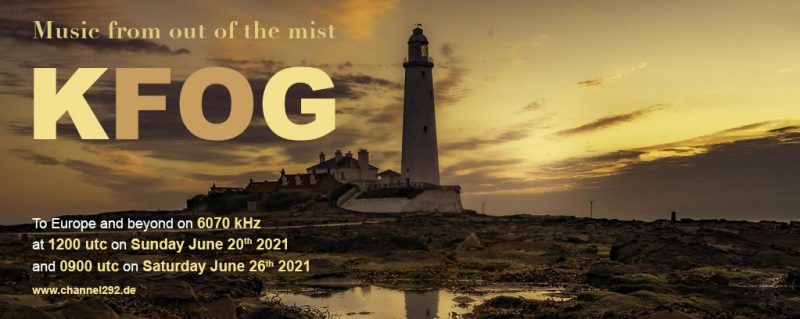
KFOG broadcasts on June 20th and 26th, 2021 via Channel 292

Many thanks to SWLing Post contributor, Pete Madtone, who shares the following:


KFOG takes to the high seas via Channel 292 on Sunday June 20th 2021 at 1200 UTC (11am UK time) and on Saturday June 26th at 0900 utc (8am UK time) on 6070 kHz. Expect tunes in a nautical style and “see the glimmer from a distant lighthouse, as the buoys ding and the (radio) waves crash onto the rocky shore. This is music from the mist!” as they say at KFOG HQ.

Expect a mix from One Deck Pete called “A mix from across the Pond” with tunes from Kiyoko, Honeychild & DJ Olive, BOATS, Robert Mellin and The Congo’s. Grab yourself a lifejacket and a shortwave radio and tune in. If the shortwave radio is a problem tune in here at the alloted time. If you haven’t a lifejacket we’re sorry but we can’t help you with that!

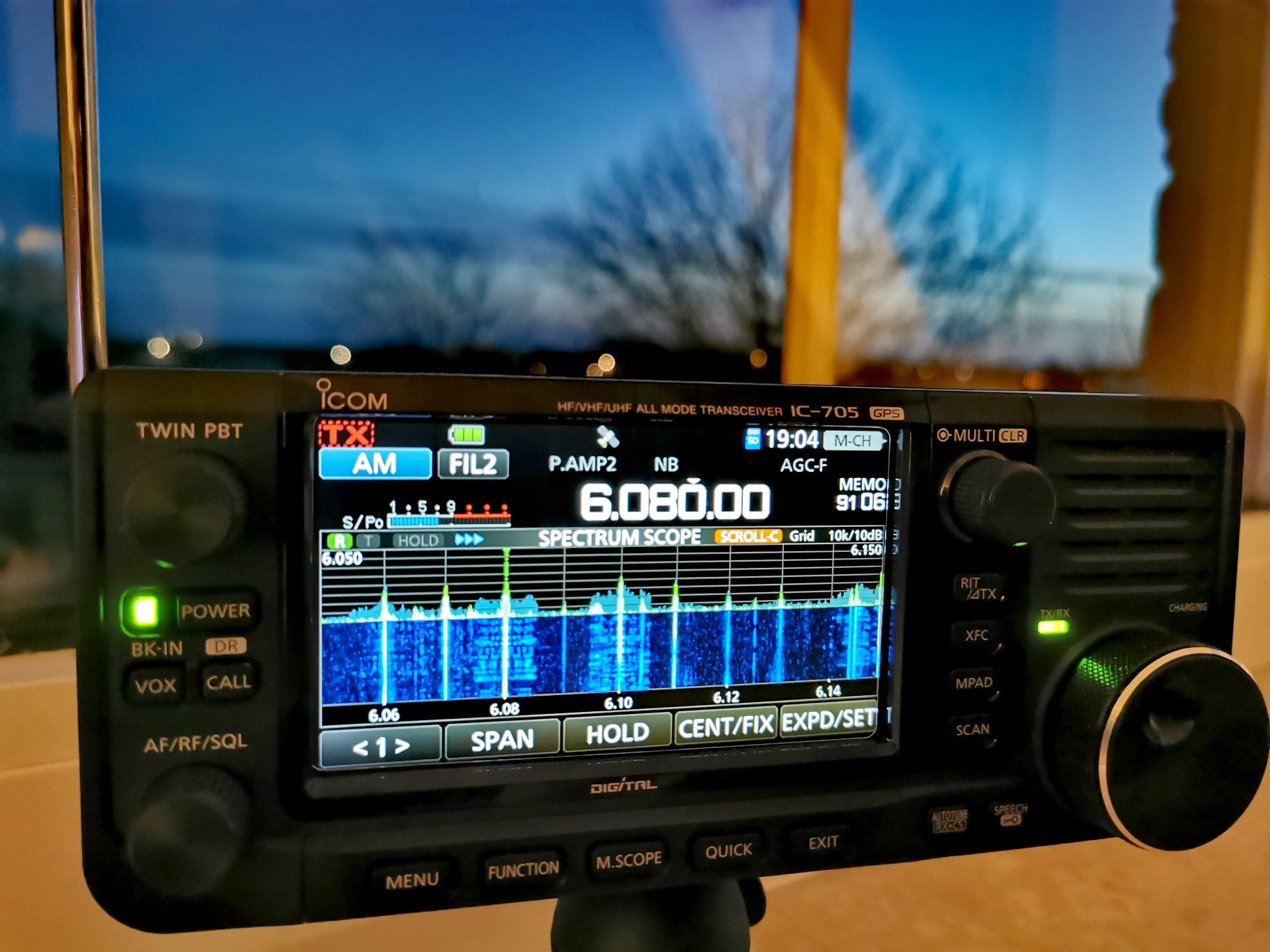
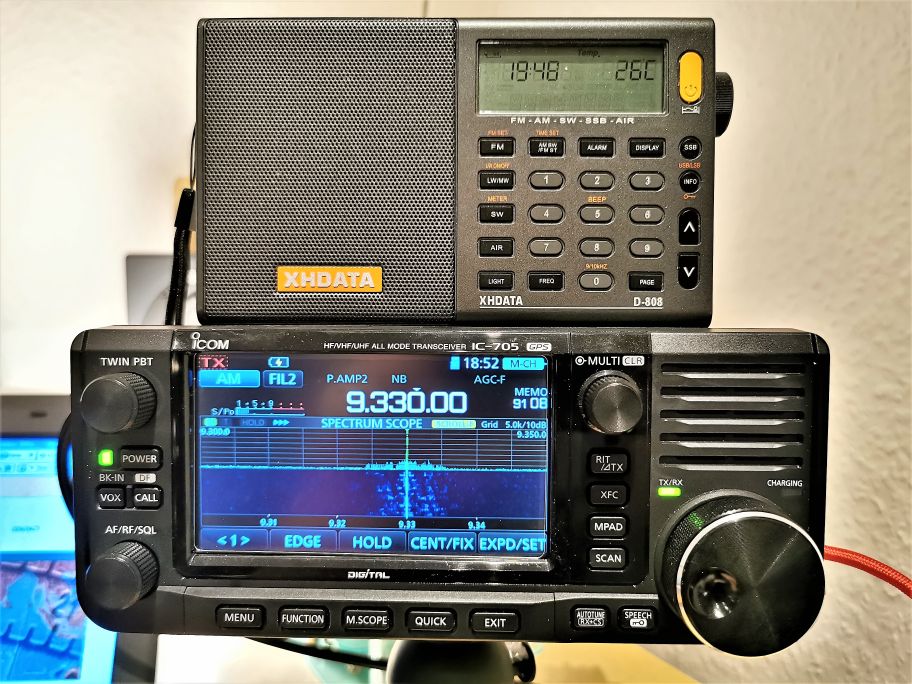
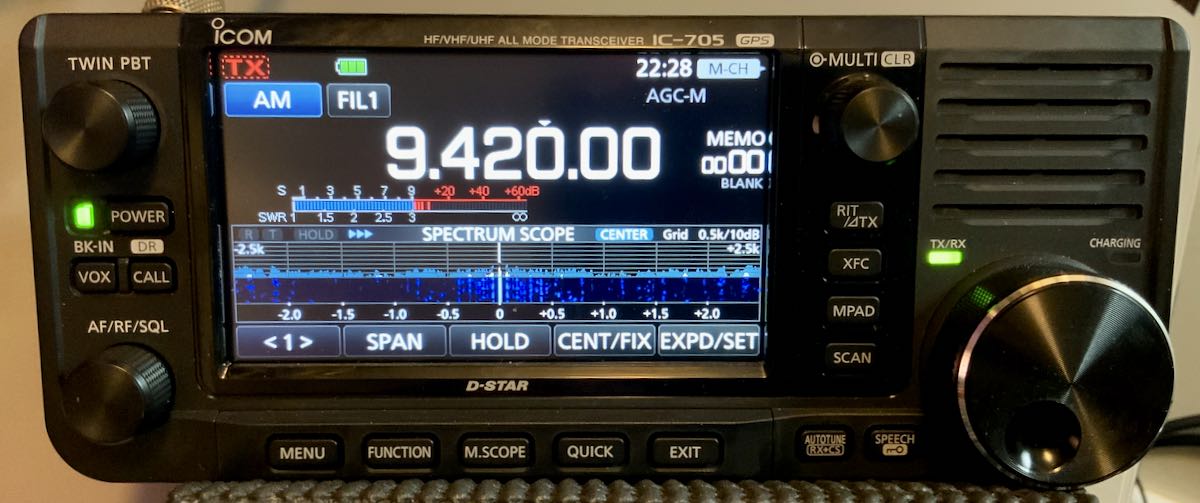
The Icom IC-705: Is this really a new holy grail SWL/BCL receiver?

Many thanks to SWLing Post contributor, 13dka, who shares the following guest post:


The Icom IC-705: Is this really a new holy grail SWL/BCL receiver?

by 13dka

When Thomas got wind of its development in 2019 he immediately asked “could the Icom IC-705 be a shortwave listeners holy grail receiver?”. I usually wince a little when I hear “holy grail” because it means very different things to different people, it’s also a moving target with many people aiming at the spot where it was decades ago. But Thomas certainly had a very level-headed assembly of technical performance, quality and practicality requirements in mind when he used that term, and I thought he might be onto something!

There are some excellent, trustworthy reviews of the IC-705 out there. The following is not one of them, I just want to share an opinionated breakdown on why I think this is an interesting radio for SWLs/BCLs indeed, also deliberately ignoring that it’s actually a transceiver.

Jumping shop

While the era of superhet/DSP-supported tabletop holy grails ended with the discontinuation and sell-off of the last survivors more than a decade ago, powerful PC-based SDR black boxes were taking over the mid-range segment and it became very slim pickings for standalone SWL receivers: Thomas just recently summed up the remaining options here.

Between the steady supply of inexpensive yet serviceable Chinese portables, upgraded with a least-cost version of DSP technology, and the remnants of the high end sector there’s very little left to put on the wish list for Santa – that doesn’t need to be paired with a computer that is.

No surprise that SWLs/BCLs in search of new quality toys with tangible controls are taking a squint over the fence to the ham transceiver market: Hams are still being served the best and the latest in radio technology in all shapes and sizes, and even entry-level rigs usually come with feature-rich general coverage receivers. But transceivers never had SWLs much in their focus in the past decades, and particularly not BCLs: Frontend adaptation, additional AM filters, switches and functions would’ve meant increasing costs and so transceivers were never perfected for that purpose. DSP and SDR technology allowed for improvements on that without actually adding (much) hardware and so some interesting alternatives surfaced in the past years, but most of them still come with little downers, at least for BCLs.

Continue reading

Radio Waves: The silence of RCI, Cox Radio Hit by Ransomware, Asheville Radio Museum Reopens, and New Aluminium-Ion Battery Chemistry

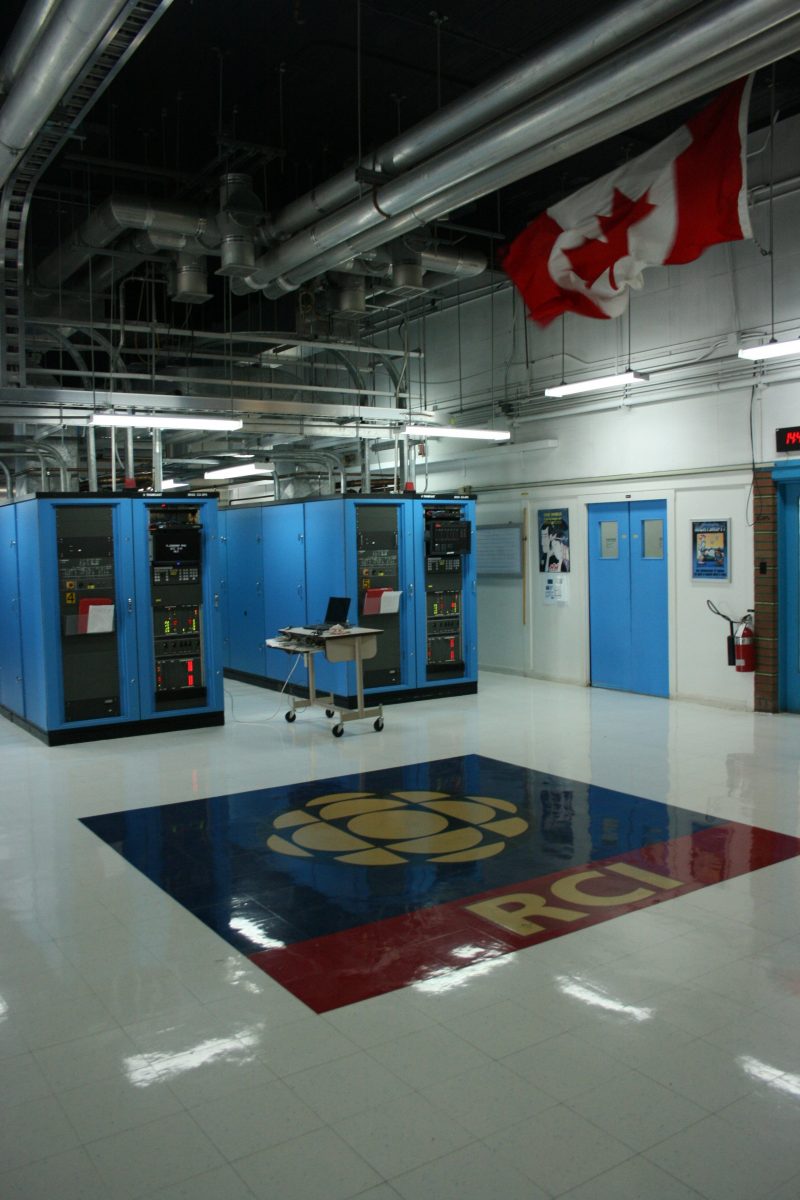
Photo from the RCI Sackville transmitter site in 2012, a few months prior to its closure.

Radio Waves:  Stories Making Waves in the World of Radio

Because I keep my ear to the waves, as well as receive many tips from others who do the same, I find myself privy to radio-related stories that might interest SWLing Post readers.  To that end: Welcome to the SWLing Post’s Radio Waves, a collection of links to interesting stories making waves in the world of radio. Enjoy!

Many thanks to SWLing Post contributors Troy Riedel, NT, Tracy Wood and the Southgate ARC for the following tips:


The silence of Radio Canada International (Open Canada)

The former head of CBC News laments the evisceration of CBC’s international service and Canada’s shrinking voice in the world

For a country that once regarded itself as one of the world’s leading middle powers, Canada’s voice on the international scene is a strikingly quiet one these days. It reminds me of the line from that famous “dead parrot” sketch in Monty Python: “bereft of life, it rests in peace.”

The latest sign of this is the decision by CBC/Radio-Canada to implement changes that have effectively smothered Radio Canada International (RCI), its fabled global audio and online service that has helped serve as “Canada’s Voice to the World” for more than a half century.

In a December announcement replete with CBC doublespeak, the CBC unveiled a “major transformation” of RCI that, it claimed, would ensure RCI remains “a strong and relevant voice” in this century’s media landscape. Not surprisingly, the practical impact of these changes is precisely the opposite.

Flipping RCI’s historic mission on its head, the service will now focus more on ethnic minorities within Canada rather than on continuing to produce programs tailored uniquely for international audiences. More than half of RCI’s beleaguered staff have been laid off.

This latest CBC battering of RCI — a pattern that has gone on for decades — triggered considerable criticism. In February, a group of 32 prominent Canadians sent an open letter to Prime Minister Justin Trudeau and other senior government ministers urging that the CBC scrap its planned strategy and appoint an independent committee to plan a rebuild of the international service: “In an interconnected world in search of truth, facts and honest journalism, countries like Canada cannot abdicate their role on the world stage.” Its signatories included former prime minister Joe Clark, former foreign affairs minister Lloyd Axworthy, former UN ambassador Stephen Lewis, actor Donald Sutherland and author Naomi Klein. Continue reading…

Live streams go down across Cox radio & TV stations in apparent ransomware attack (The Record)

Live streams for radio and TV stations owned by the Cox Media Group, one of the largest media conglomerates in the US, have gone down earlier today in what multiple sources have described as a ransomware attack.

The incident took place earlier this morning and impacted the internal networks and live streaming capabilities for Cox media properties, such as web streams and mobile apps. Official websites, telephone lines, and normal programming remained running but some live programming could not go on air as scheduled.

“This morning we were told to shut down everything and log out our emails to ensure nothing spread. According to my friends at affiliate stations, we shut things down in time to be safe and should be back up and running soon,” a Cox employee shared in a private conversation earlier today. Continue reading…

Asheville Radio Museum reopens to public after months-long pandemic closure (WLOS)

The Asheville Radio Museum reopened to the public Saturday, June 5, following a months-long closure due to the pandemic.

The museum, located on the campus of A-B Tech, and closed in November to follow the campus’s COVID-19 protocol to protect students and staff.

Asheville Radio Museum boasts a premier collection of vintage radios with the goal to educate, demonstrate and fascinate visitors about the importance of the radio, which was named the second most important invention of the twentieth century on the Science Channel.

Saturday’s reopening was highlighted by the addition of newly-procured radios as well as refreshed displays throughout the museum. Continue reading…

Aluminium-Ion battery development (Southgate ARC)

The Graphene Manufacturing Group in Brisbane, Australia together with the University of Queensland have according to the GMG website developed a Graphene Aluminium-Ion Battery energy storage technology that has up to three times the capacity of a lithium-ion battery and can charge up to sixty times faster.

The battery was created by inserting aluminium atoms into perforations made in graphene planes.
The company claims that because the batteries lack an upper Ampere limit that would otherwise cause spontaneous overheating, the batteries are also safer. The stable base materials also facilitate their recycling later.

The company hopes to bring these cells to market by the end of 2021 or early 2022

https://graphenemg.com/


Do you enjoy the SWLing Post?

Please consider supporting us via Patreon or our Coffee Fund!

Your support makes articles like this one possible. Thank you!

Icom IC-7300 and IC-705 SWL frequency files?

Many thanks to SWLing Post contributor, Dave, who writes asking if any Icom IC-705 or IC-7300 owners have created a database of SWL frequencies that could be imported into memory. I think this is a great idea as both transceivers are quite capable shortwave listening receivers.

If you have a database file and would like to share it, please comment!

Carlos seeks clarity about another CW station

Many thanks to SWLing Post contributor, Carlos Latuff, who writes:

Today (June 5, 2021) I heard another mysterious CW transmission here in Rio Grande do Sul coast, this time on 8779 kHz, 18h31 UTC.

I did some research and this frequency is related to Rome Radio (which is no longer transmitting in CW) and a marine channel (ITU821) related to Cape Town Radio but I’m not sure:
https://capespectrum.wordpress.com/hf-marine/

I’m sure your readers will solve this puzzle as well.

Thanks for sharing, Carlos!

Post readers: Can you help Carlos ID this station? Please comment!

Radio Waves: Shedding Light on the Hindenburg, Chip Shortages, NPR at 50, and July 4th SAQ Grimeton Transmission

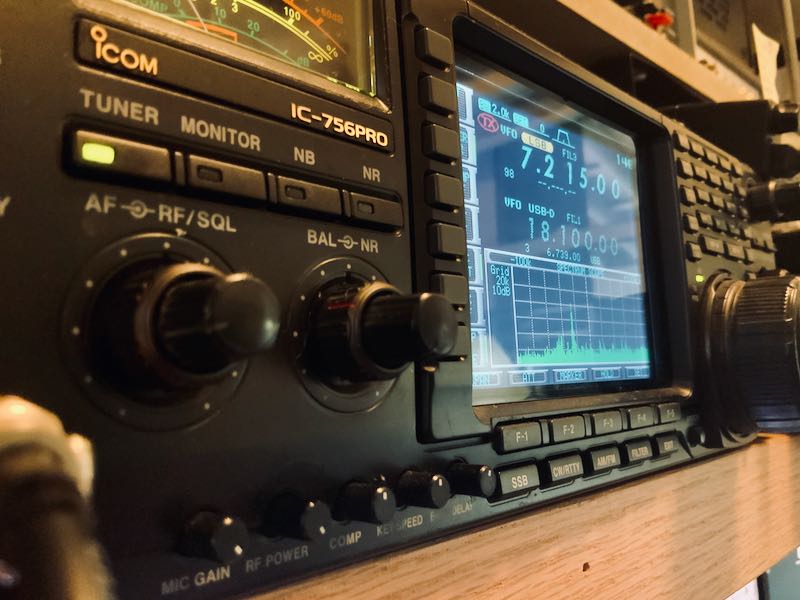
Icom IC-756 Pro Transceiver Dial

Radio Waves:  Stories Making Waves in the World of Radio

Because I keep my ear to the waves, as well as receive many tips from others who do the same, I find myself privy to radio-related stories that might interest SWLing Post readers.  To that end: Welcome to the SWLing Post’s Radio Waves, a collection of links to interesting stories making waves in the world of radio. Enjoy!

Many thanks to SWLing Post contributors Ron, Rich Cuff, and the Southgate ARC  for the following tips:


Radio Amateur’s Vintage Home Movie Film Sheds Light on Hindenburg Disaster (ARRL News)

Vintage home movie film provided by New Jersey radio amateur Bob Schenck, N2OO, was the highlight of a PBS documentary about the Hindenburg disaster. The film, shot by his uncle Harold Schenck, may provide clues as to what initiated the disastrous 1937 fire that destroyed the airship Hindenburg and claimed 35 lives as the German zeppelin was landing at Lakehurst, New Jersey. Harold Schenck tried to interest government investigators in his film, shot from a different angle than newsreel footage that begins only after the fire was well under way, but it was largely overlooked. “Nobody ever asked for it,” Bob Schenck explains in the documentary.

The Schenck film is the highlight of a PBS “NOVA” documentary, Hindenburg: The New Evidence, that investigates the issue in considerable depth in an effort to unlock the secrets of the cold case. The program aired on May 19 and remains available for streaming.

“My dad had bought this nifty Kodak camera — a wind-up movie camera, 8 millimeters — and he couldn’t come [to the Hindenburg landing] because he worked,” Bob Schenck recounted during the documentary. “So, he asked my uncle and my mom if they would take some shots and see the Hindenburg land.”

Bob Schenck approached Dan Grossman, an expert on airships, including Hindenburg, in 2012 during a commemoration of the disaster that forever memorialized radio reporter Herbert Morrison’s plaintive on-air reaction, “Oh, the humanity!” The NOVA documentary not only shares Schenck’s footage, which provided new clues to re-examine the cause of the explosion. The documentary also reviews scientific experiments that helped investigators come to a fresh understanding of what set off the fire. [Continue reading…]

Will chip shortage hit ham radios ? (Southgate ARC)

Glenn O’Donnell K3PP of Forrester Research notes the chip shortage may have a more serious impact than first thought and gives Amateur Radio rigs as an example of what might be affected

Self-described as a “ham radio nut,” O’Donnell discussed one of his hobbies to explain how the sway of tech titans could impact smaller companies as industries compete for limited resources.

“In this hobby, the newer radio “toys” are advanced technology, but the hottest radio might sell 5,000 units per year. If Apple wants 100 million chips, but the little ham radio company wants 5,000, Apple wins!” O’Donnell said.

Read the article at
https://www.techrepublic.com/article/global-chip-shortage-the-logjam-is-holding-up-more-than-laptops-and-cars-and-could-spoil-the-holidays/

NPR at 50: A Highly Selective History (Washington Post)

The network’s half-century evolution from an audio experiment to a media powerhouse

Today NPR is one of Washington’s most familiar and influential media companies, operating out of a gleaming, ultramodern broadcast facility on North Capitol Street. Its radio programs, online content, and podcasts reach millions of people around the world. But when it launched 50 years ago, in April 1971, National Public Radio was a decidedly scrappy enterprise.

How did a modest radio project from a bunch of audio idealists evolve into the multimedia behemoth that we now spend countless hours listening to? To celebrate NPR’s anniversary, we’ve put together a look at its history and transformation. Please note: If you would like to imagine the whole thing being read to you in the voices of Nina Totenberg and Robert Siegel, we won’t object. Click here to read the full article…

SAQ Grimeton Transmission on July 4th (Southgate ARC)

The annual transmission event on the Alexanderson Day with the Alexanderson Alternator from 1924, on VLF 17.2 kHz CW with the call sign SAQ, is scheduled for Sunday, July 4th, 2021.

The Alexander Grimeton Association are planning to carry out two broadcasts to the world from the old Alexanderson alternator SAQ. Only required staff will be in place, due to the ongoing pandemic.

Transmission schedule:

  • Startup and tuning at 10:30 CET (08:30 UTC) with a transmission of a message at 11:00 CET (09:00 UTC)
  • Startup and tuning at 13:30 CET (11:30 UTC) with a transmission of a message at 14:00 CET (12:00 UTC)

Live Video from World Heritage Grimeton Radio Station
Both transmission events can be seen live on our YouTube Channel.
The live video starts 5 minutes before the startup and tuning.
https://mailchi.mp/aff85163e64f/alexanderson-day-2021?e=2c0cbe870f


Do you enjoy the SWLing Post?

Please consider supporting us via Patreon or our Coffee Fund!

Your support makes articles like this one possible. Thank you!